Tag Archive | birds calgary blog

Friday Fun!

See if you can identify the bird in the photograph below; then let us know what you think by posting a comment.

The bird in this photograph is a large, noisy and conspicuous shorebird typical of the prairie sloughs. Do you know what it is? Let us know what you think in the comment section.

Posted by Matthew Sim

5 Must-see birds: July

July is another great month to go birdwatching in the Calgary region. By now, most birds are in the process of raising hungry families while others, such as hummingbirds and certain shorebirds, start their southward migration in late July. Our must-see birds for July are as follows:

1. Western Grebe

Featured before in one of our previous posts (Grebes, Grebes, Grebes), the Western Grebe is a gregarious grebe that is easily recognized thanks to its contrasting black and white plumage, thin green-yellow bill and slender neck. Colonial nesters, the Western Grebe is usually found on medium to large lakes such as Frank Lake ( Glenmore reservoir during migration) where they mainly consume small fish.

A pair of Western Grebes, front, on a crowded Frank lake.

2. Rose-breasted Grosbeak

The male Rose-breasted Grosbeak, a beautiful black-and-white songbird with a rosy red breast, lives up to its name. The female is a brownish-streaked bird with yellow wing linings. Emitting a robin-like song, only richer, more energetic and more rapidly delivered, both male and female Rose-breasted Grosbeak sing.  This bird may be seen in the Glenmore and the Weaselhead area or at Griffith Woods along the banks of the Elbow River in southwest Calgary.

Adult male Rose-breasted Grosbeak feeding a juvenile.

3. Canvasback

The largest diving duck found in the province, I find Canvasbacks to be very beautiful.  The male is resplendent with a canvas coloured back and a chestnut head and neck.  This species prefers lakes and ponds with emergent vegetation and vegetated margins. Weed lake is a good place to observe these ducks. The Canvasback uses its long sloping bill to strain seeds from the mud on the bottom of ponds.

4. Wilson’s Phalarope

The only shorebirds that normally swim,  the sex roles are reversed in phalaropes, the female being larger and more colorful than the male; a black stripe going down from the eye, down the side of the neck and then merging into chestnut. Favouring sloughs and shallow lakes where wet meadows and grassy marshes are present, the Wilson’s Phalarope may be seen on most southeast sloughs and lakes.

5. Cinnamon Teal

Our final bird for the month of July is the Cinnamon Teal, a conspicuous cinnamon red duck that is striking in the right light. This teal prefers shallow lake margins, marshes and ponds; on larger bodies of water, it is never found very far from shore. Look for Cinnamon Teal in early July, before they molt, in the southeast sloughs, Frank Lake, or in Fish Creek at Burnsmead, among other spots.

Let us know which of these birds you saw this month! Happy Canada Day!

Posted by Matthew Sim

The Lookout

In South Glenmore Park, just where the trail drops down into the Weaselhead, there is a path leading through the bush to a spot with two benches.

Not only does it provide a great view of the pond and Weaselhead, but someone has turned it into a feeding station for the birds.  I have been there a few times, and there is always birdseed on the rails and ground, and oranges in the trees.  If you sit still and are patient, you get great close-up views of the birds.  These pictures were taken on June 17, and we saw 23 species from the lookout that day.  Here are some of them.  You can click on the pictures to enlarge them.

Downy Woodpecker:

Hairy Woodpecker:

Clay-colored Sparrow:

Black-capped Chickadee:

Rose-breasted Grosbeak:

Brown-headed Cowbird:

Some small mammals got in on the action as well.  Red Squirrel:

Least Chipmunk:

A Pine Siskin and a Red-breasted Nuthatch squabble over a good feeding spot:

Pine Siskin:

Red-breasted Nuthatch:

White-breasted Nuthatch:

Finally, this little Red Squirrel rested his head on his hands while he patiently waited his turn at the feeder:

Posted by Bob Lefebvre

Movie Monday: Common Goldeneye

At Valleyview Park pond in SE Calgary, I recently saw a single Common Goldeneye chick trailing after its mother.  I took a little video of the pair.  Watch the instinctive reaction of the chick when it hears the “sputter” call of a Red-winged Blackbird.  It obviously hasn’t yet learned that this sound doesn’t mean danger!  (Sorry about the helicopter noise.)

Posted by Bob Lefebvre

Perfect Pelicans

Last Tuesday when I was down at the Bow River, I was witness to a great birding spectacle; photogenic pelicans putting on a show of flying, landing and swimming. I was able to count up 27 of these social and gregarious birds at one time, half of them circling in the sky while the other half loafed around on the banks of the river. Among the world’s largest birds and gracing the air with a wingspan of over 2 meters, the American White Pelican can swallow fish up to 30cm (12 inches) long and must eat 2 kg (4 lbs) of fish a day.

Several Pelicans made a show of coming in for a landing.

They came closer and closer…

Until it seemed as though they were right beside me…

Their feathers were absolutely stunning against the blue sky.

This Pelican was demonstrating the mechanics of a good landing…

Before finally putting down the landing gear.

If you look carefully at this last photo, you may just be able to make out a Franklin’s Gull at the far right of the screen. This gull was flying at roughly the same altitude as the pelicans and shows the massive size difference between the two. After Tuesday, Pelicans have become a bird I love to watch.

Posted by Matthew Sim

Birds of the Weaselhead

Last week we went for a walk through the Weaselhead area of SW Calgary.  It was very wet and the rivers were high, but we did manage to find some nice birds.

The creek near the junction with the Elbow River.

Eastern Phoebes are nesting under both of the wooden bridges…

There are lots of Least Flycatchers in the area…

It appears that Beavers have chewed through this retaining wall, just to make it easier for them to get from the forest to their pond…

We saw this male Calliope Hummingbird do its spectacular U-shaped display flight, where it climbs to a height of about 80 feet, and then dives rapidly towards the ground, and up again…

We never saw any Pileated Woodpeckers, but there is evidence of their activities on many of the big trees…

Cliff Swallows at their mud nests under the bridge over the Elbow River…

A Spotted Sandpiper was feeding on top of some logs in the river…

Cedar Waxwings were busy flycatching along the waterways…

And there were several Red Squirrels, looking for handouts…

Posted by Bob Lefebvre

Photo Feathers: Rose-breasted Grosbeak (?)

I took these pictures in the Weaselhead/South Glenmore area on Friday June 17.  I have seen male Rose-breasted Grosbeaks there before so I assumed this was a female Rose-breasted, but it’s possible that it is a Black-headed Grosbeak or hybrid, or a juvenile.  All opinions on its ID are welcome in the comments.

Posted by Bob Lefebvre

Bird Profile: Western Kingbird

A large flycatcher with a yellow belly, pale grey head and breast and a black tail with white stripes down the sides, the Western Kingbird is one of my favorite birds. Eating mostly insects, the Kingbird is always ready to snatch its next meal; whether from a perch or on the ground.

Nesting in tall cottonwoods along river valleys, the Western Kingbird can be difficult to find in Calgary. Probably the best spot in the city to look for this neat bird is Lafarge Meadows, in Fish Creek, south of 22x where they nest.

More social than other kingbirds, at times, several pairs of Western Kingbird may be found nesting in the same tree. They readily attack crows, ravens, hawks and other larger birds that can be potential predators to them and their young.

The Western Kingbird has a distinguishing lemon yellow belly.

Posted by Matthew Sim

Photo Feathers: Loon Pair

Photos taken at Livingston Creek Ranch Golf Course, Sunday June 5, 2011.

Posted by Bob Lefebvre

May Species Count – Longview Area

One of the areas that I surveyed for the May Species Count on Sunday May 29 was the Longview area, an hour SW of Calgary.  I was worried that I wouldn’t be able to get to some of the best birding spots due to the wet weather, but the conditions were pretty good.  There was water flowing across some of the side roads but I did get through.

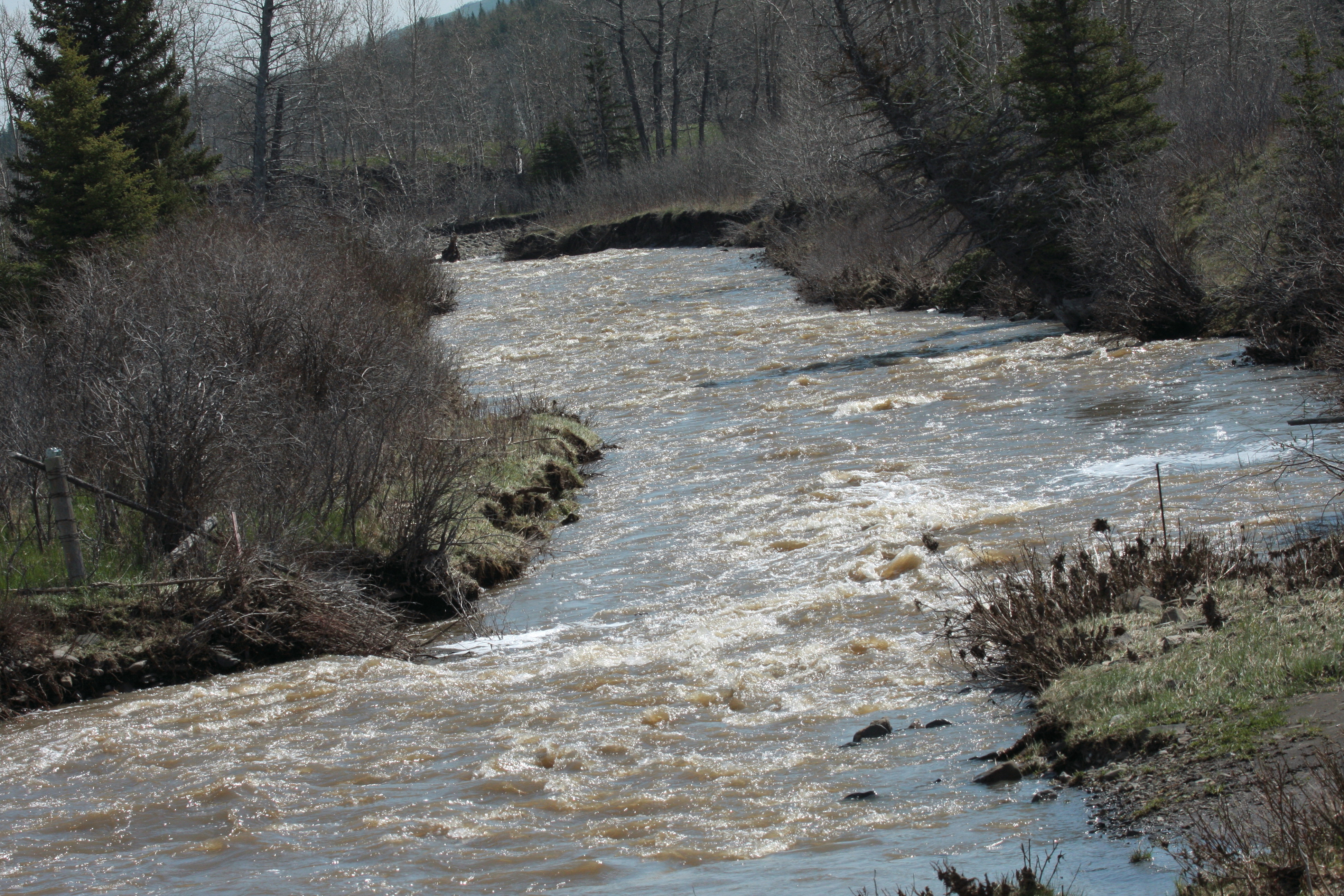
This creek was very high…

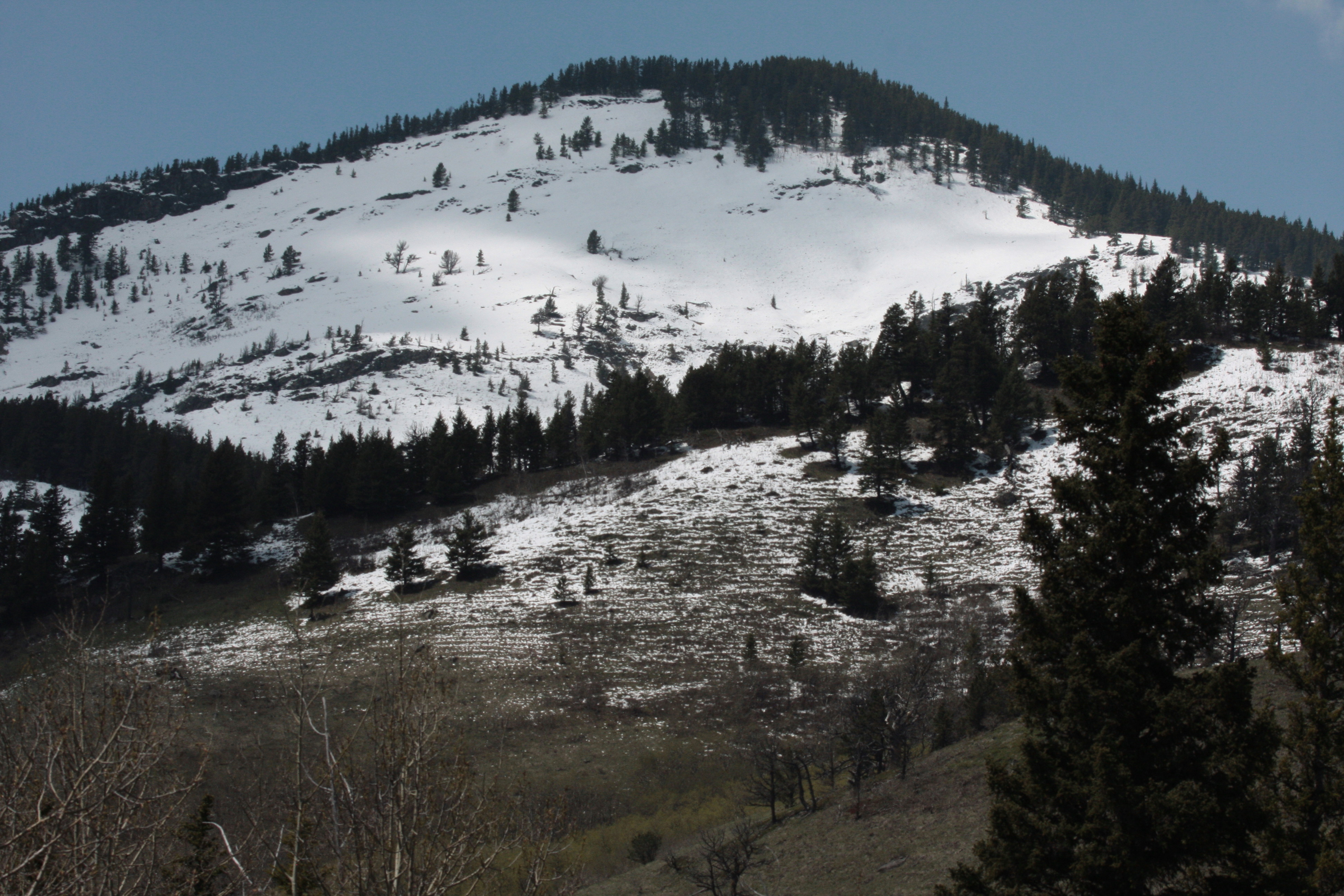
There was still quite a bit of snow at high elevations…

The Bar U Ranch road, looking west to the mountains…

I managed to find 75 species, which is a good total for that territory.  I was quite frustrated near the end of the day by my inability to find a House Sparrow anywhere in the town of Longview!  No House Finches there either.  I also saw about 35 Black Terns in a pond that was just out of my territory, and they refused to come over to a perfectly good pond on my side of the boundary.

But I did have some unexpected birds as well, including two Red-breasted Mergansers.  Here are some other highlights (as usual, you can click on the photos to enlarge them).

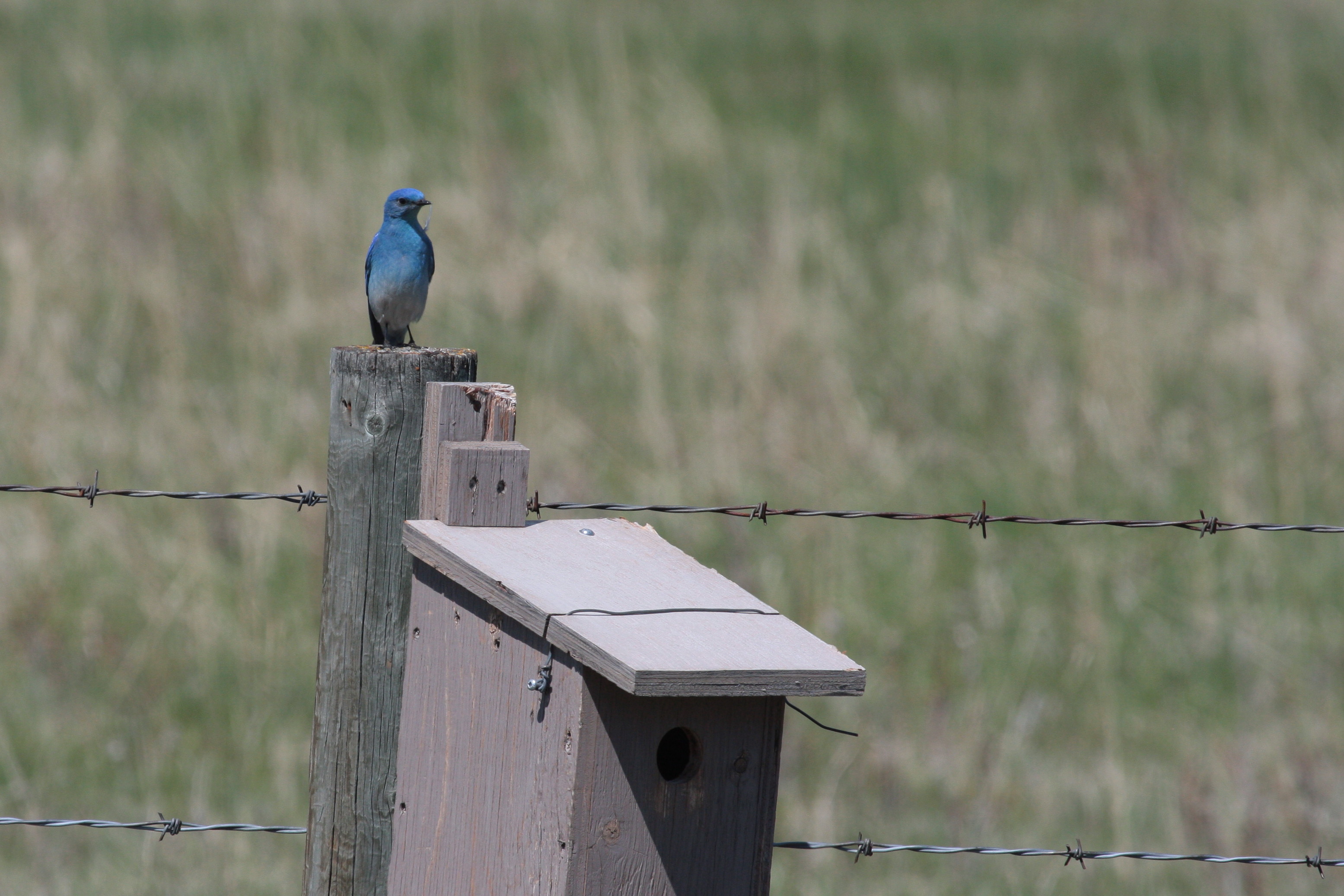
Mountain Bluebirds are commonly seen near the bluebird boxes…

Female Mountain Bluebird…

Tree Swallows are nesting in many of the Bluebird boxes…

I got a good look at this Red-eyed Vireo…

Male Red-naped Sapsucker…

Because of the high water, there were few shorebirds other than Spotted Sandpipers and a few of these Wilson’s Snipe…

I was pleasantly surprised to find a pair of Harlequin Ducks on the Highwood River at the Green View campground…

I only saw one pair of Green-winged Teal, but this male swam very close to me…

The final surprise of the day was this beautiful Red Fox, which seemed to be completely unconcerned with my presence, and walked right by me…

Posted by Bob Lefebvre