Archive by Author | admin

Lafarge Meadows – Flooding, baby birds, and a tern for the better

Posted by Dan Arndt

The final week of the Friends of Fish Creek Spring Birding course once again took us to the south end of Fish Creek Provincial Park, specifically, to the Boat Launch and south to Lafarge Meadows sloughs, which Matthew Sim has recently posted about. It was a good finish to a great course, and I am looking forward to joining a new group of fresh-faced and enthusiastic birders as fall migration is in full swing by September.


We started off with a new bird for our group (and for myself) for the year. Just north of the boat launch were a trio of American White Pelicans, one of which decided it was a bit too rainy for his liking and flew off before I took this photo. The water level both on the Bow River and in the sloughs adjacent to the pathway were incredibly high, and in some areas of the city, the weekend of June 24th was a time of some minor, or not so minor flooding. It seemed that the pelicans didn’t mind it so much, as they were seen regularly at this point all week long.

American White Pelican

American White Pelican

As we got looks at these gorgeous white birds, we couldn’t help but notice that a family of Tree Swallows had set up a nest inside one of the horizontal access gate poles. This male stood guard while the female was on the nest deep inside the gate.
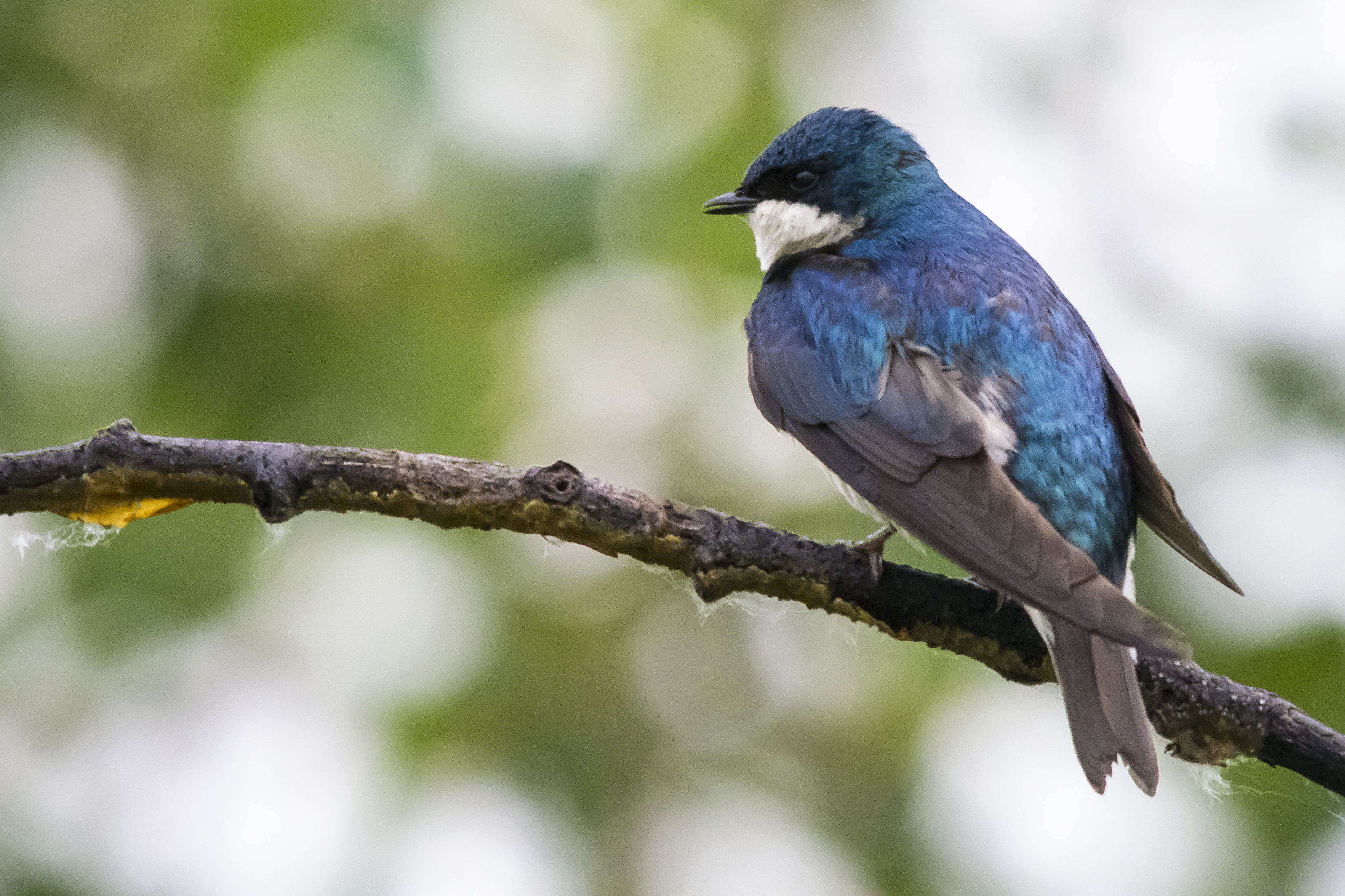
Tree Swallow

Tree Swallow

Just south of the boat launch, on the west side of the path, there are normally three large sloughs on the north side of 22X. Because of the flooding, they all had merged into one incredibly large slough, and this Black Tern, along with three of its buddies, were making short work of the small fish, arthropods, and worms that were found within.

Black Tern

Black Tern

As we headed underneath the 22X bridge, and emerged on the other side, we stayed close to the river in hopes of spotting another of our target species for the day, the Western Kingbird. While not quite what we were looking for, this Eastern Kingbird was harassing (or being harassed by?) a Black-billed Magpie. Inter-species territorial disputes are always fun to watch.

Eastern Kingbird

Eastern Kingbird

Eastern Kingbird

Eastern Kingbird

While having great views of one species of the tyrant flycatchers is always good, not fifty meters away we were greeted by the sound of at least three Western Wood-Pewees harassing a family of Common Ravens, not to far from their likely nest site. Once again, inter-species territory disputes are the rule of the day!

Western Wood-Pewee

Western Wood-Pewee

Western Wood-Pewee

Western Wood-Pewee

As we headed further south along the river bank, we began heading into a bit more open grasslands and sloughs, and got much closer views of a number of waterfowl and other wetland birds. As we rounded one corner, we saw a Spotted Sandpiper give a bit of a broken wing display before flying up off her nest and, seemingly, abandoning it. We got some very good views of the nest, albeit brief, before moving off to a safe distance. We weren’t twenty meters away before the doting mother was back down on top of her clutch of eggs.

Spotted Sandpiper nest

Spotted Sandpiper nest

Meanwhile, this female Common Merganser was not about to leave her perch no matter how close we got to her. This is the same female and nest that Paul and I noted on the May species count.

Common Merganser female

Common Merganser female

The closer we got to the southernmost sloughs at Lafarge Meadows, the more the landscape changed from woods to grassland. Savannah Sparrows became the norm, compared with the Song Sparrows and Clay-colored Sparrows back to the north, and we even got a few good looks at a few Yellow-headed Blackbirds, clearly indicating that we were in a well developed wetland.

Savannah Sparrow

Savannah Sparrow

Yellow-headed Blackbird

Yellow-headed Blackbird

No visit to the wetlands in the spring would be complete without seeing the assorted ducklings, and we got quite a treat on that front! Not only did we see a trio of Common Goldeneye chicks, but also a female Hooded Merganser with her brood in tow!

Common Goldeneye chicks

Common Goldeneye chicks

Hooded Merganser chicks

Hooded Merganser chicks

Hooded Merganser (female)

Hooded Merganser (female)

And last but not least, this Blue-winged Teal was eager to show off his namesake, and sat patiently while not one, not two, but five photographers got good, clear shots of the blue flight feathers that inspired his name.

Blue-winged Teal (male)

Blue-winged Teal (male)

A great note to end off another great season of birding.


Over the summer, I have a number of various blog posts planned, mostly based around a few road trips and birding trips I have planned here and there. I look forward to sharing my stories and photos with all of you all summer long!


Good birding!
Rare Bird Alert Calgary: July 9

Have you seen an unusual bird in Calgary?

If it is on this Reportable_Birds (PDF), please report it to the Nature Calgary Rare Bird Alert line at 403 221-4519 and leave a message after the beep at the end of the recording. If you would like some help with species identification, email us at birdscalgary@gmail.com.  To report injured wildlife call the Calgary Wildlife Rehabilitation Society at 403 239-2488, or the Alberta Institute for Wildlife Conservation at 403 946-2361.

Compiled by Terry Korolyk

July: CHUKAR, 2 have been seen regularly over the last 2 weeks, Signal Hill SW Calgary, Bruno Legier.
July 5: EURASIAN COLLARED DOVE in North Haven NW Calgary, Steve Kassai, and a pair at Shephard SE Calgary, Terry Korolyk.

GREAT EGRET at Southview Lake, west of Darwell AB, Bill Benford.
July6: LONG-BILLED DOWITCHERS, GREATER and LESSER YELLOWLEGS at Frank Lake, E of High River, Jill Brar.
July 7: RED-NECKED PHALAROPES (28), Cattleland Feedlot Slough, N of Strathmore TK.                    GREATER and LESSER YELLOWLEGS in good numbers at a slough SW of the Chestermere Lake dam, TK.

July 8: SANDHILL CRANE W of Hwy 22, W of Cochrane, Dan Arndt

South Glenmore Park – Grosbeaks and Hybrids

Posted by Dan Arndt

Back in June, the Friends of Fish Creek Birding Course took an excursion into the west end of South Glenmore Park. We’d been nearby just weeks beforehand when Bernie Diebolt’s group spotted a couple of Black-headed Grosbeaks, and Gus that by that time, both the Black-headed and Rose-breasted Grosbeaks would be back. While I normally have a map, I didn’t track this walk, so just the photos will have to do.

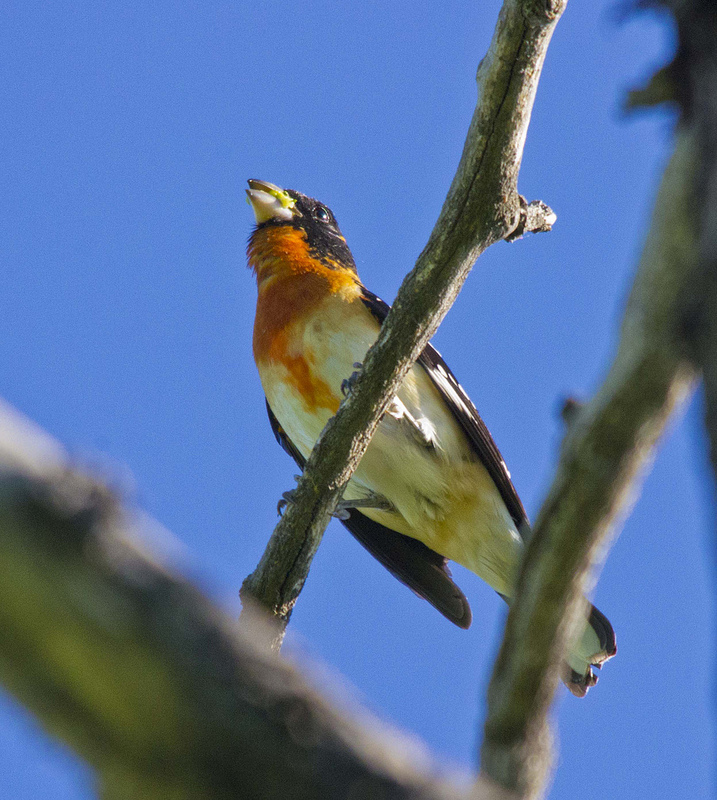
Starting off at the parking lot at the west end of 90th Avenue SW we walked along the top of the south bank before dipping down onto the hillside. The mosquitos were out in force that early in the morning, and while there were plenty of birds calling, many of us were regretting our lack of bug spray. The American Robins, Warbling Vireos, and various thrushes were calling once again up and down the slope, but one of our first birds of the day was this beautiful hybrid Black-headed X Rose-breasted Grosbeak, who flew from tree to tree responding to our recorded Rose-breasted Grosbeak calls.

Black-headed X Rose-breasted Grosbeak Hybrid

Black-headed X Rose-breasted Grosbeak Hybrid

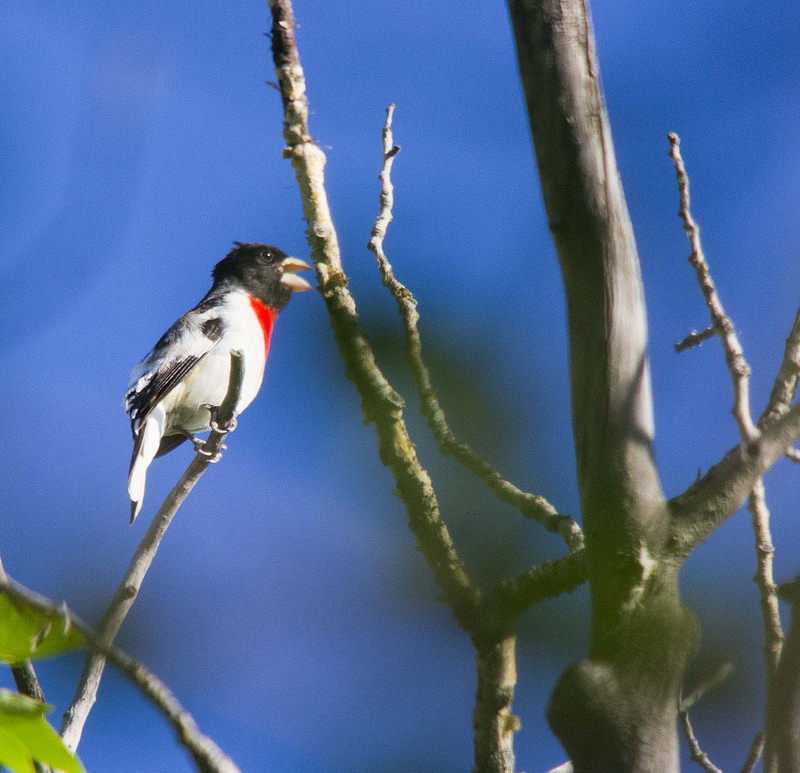
While this one called to us from nearby, we could hear Rose-breasted Grosbeaks calling from both up and down the slope, and we elected to hunt down the down-slope caller, as it was along the route we were already following. Another lifer for me, though we didn’t get the greatest views…

Rose-breasted Grosbeak

Rose-breasted Grosbeak

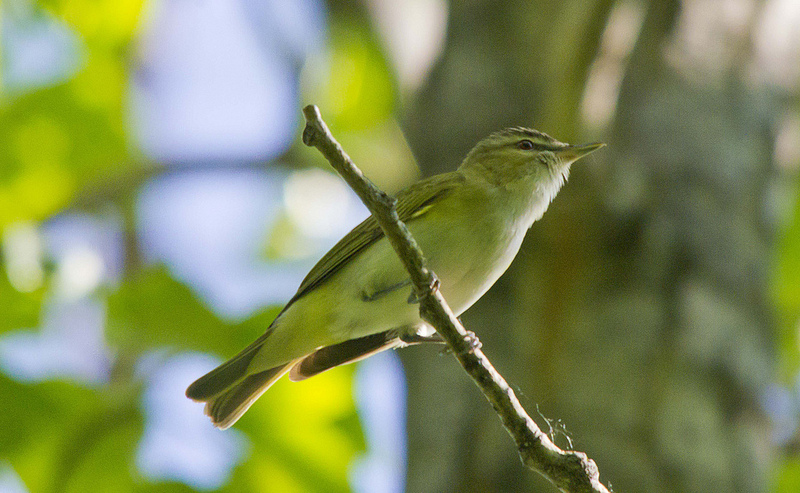
While we were listening for the calls of this male, we could hear a Red-eyed Vireo calling nearby as well, and upon playing some calls for it, it too flew in to investigate.

Red-eyed Vireo

Red-eyed Vireo

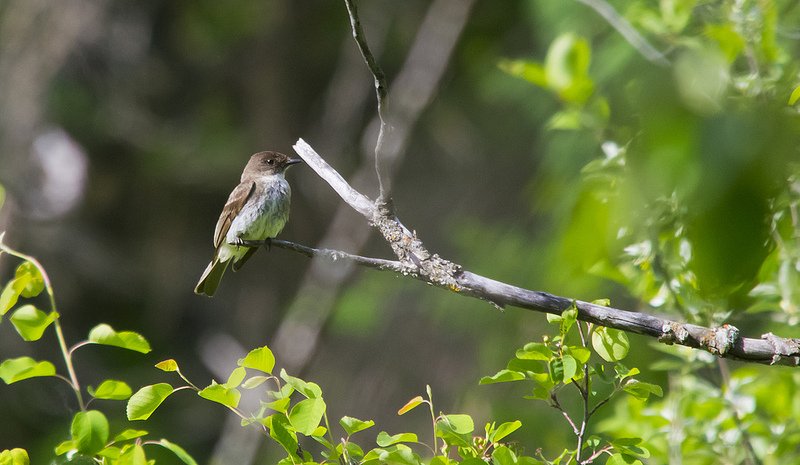
Along the rise and down to the east end of the beaver ponds at the southernmost point of the Weaselhead, we were greeted by another Eastern Phoebe nesting under one of the bridges in the area.

Eastern Phoebe

Eastern Phoebe

A trek back up the hill netted a beautifully serene viewpoint overlooking much of the Weaselhead, sporting a couple of benches, bird feeders, and even quite a few birds (and other visitors) enjoying the treats provided for them. Definitely a place I’ll be back to. We even spotted what we’re pretty sure was a Ruby-throated Hummingbird, but no one was able to snap a photo in time!

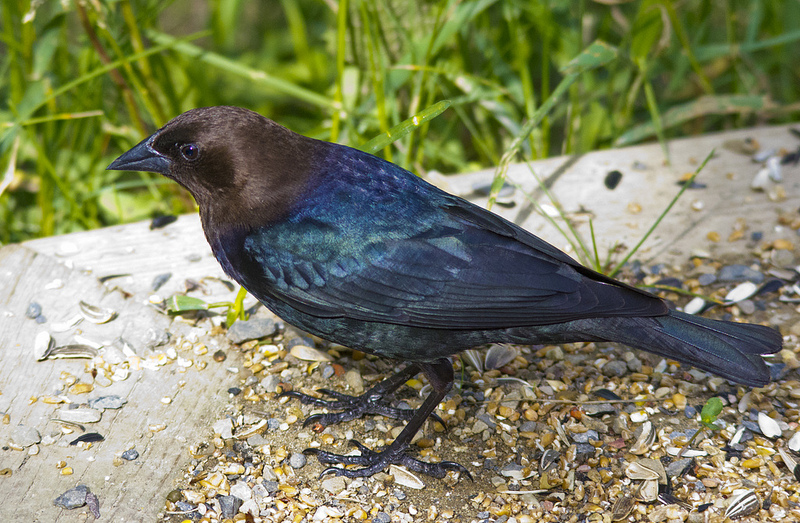
Male Brown-headed Cowbird

Male Brown-headed Cowbird

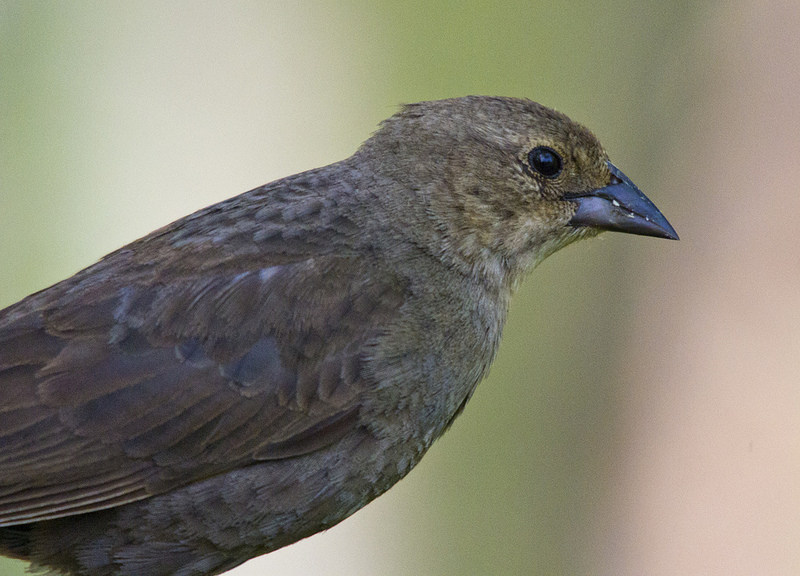
The male and female Brown-headed Cowbirds seemed to not even care that we had intruded upon their feeding station.

Female Brown-headed Cowbird

Female Brown-headed Cowbird

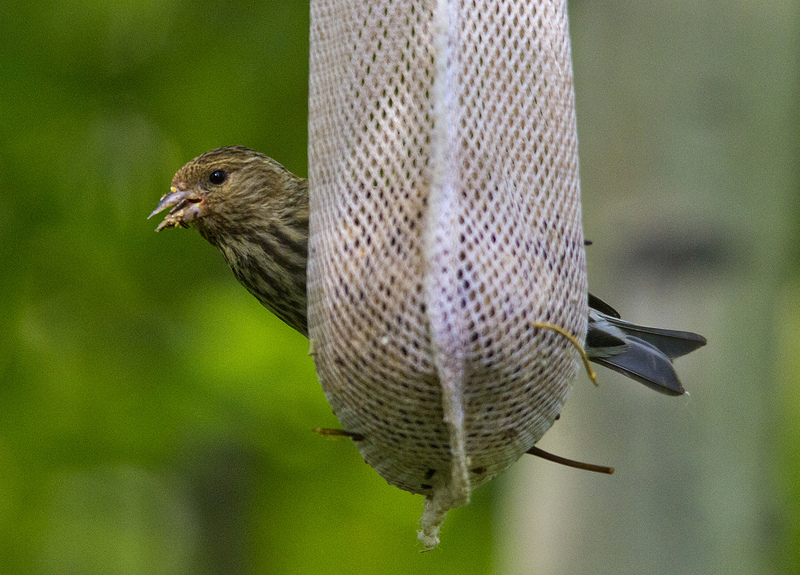
While the Pine Siskins hid behind the tube feeders, hoping to guard themselves from prying eyes.

Pine Siskin

Pine Siskin

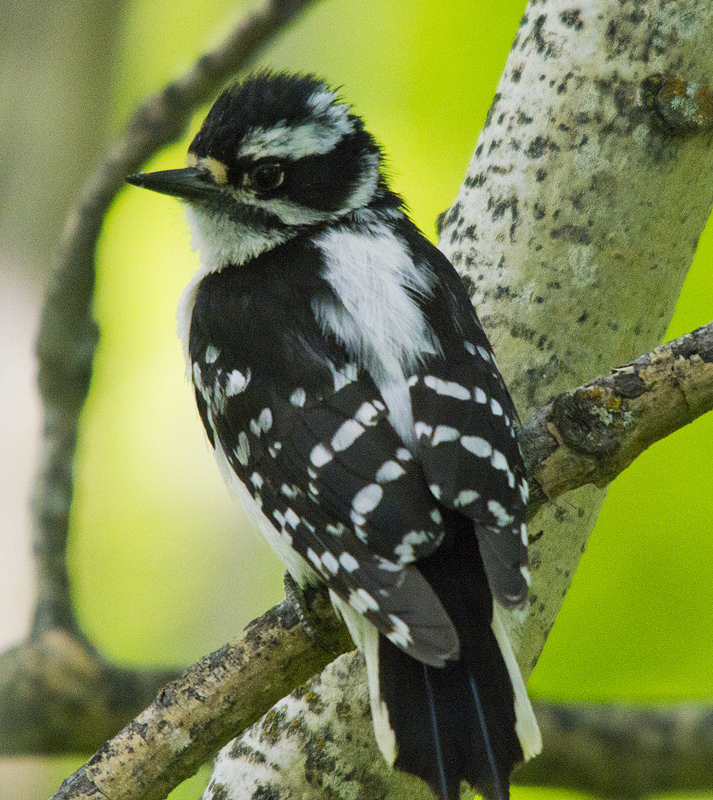
And of course, no feeder in the mixed spruce and deciduous forest is complete without a woodpecker sighting. This Downy Woodpecker was waiting for us, and stuck around for some photo ops before the crowd became too much for it.

Downy Woodpecker

Downy Woodpecker

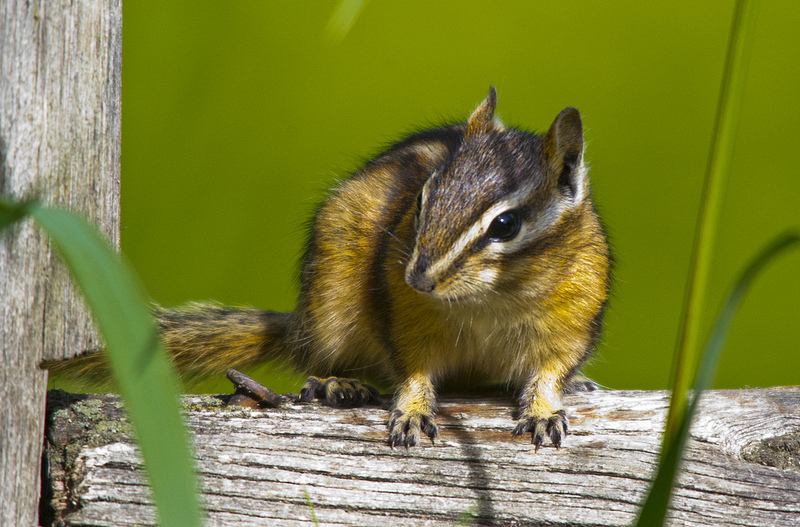
Last but not least are the mammalian visitors to the feeders. We had no less than three of these nervous and scurrying Least Chipmunks at our feet at any given time.

Least Chipmunk

Least Chipmunk

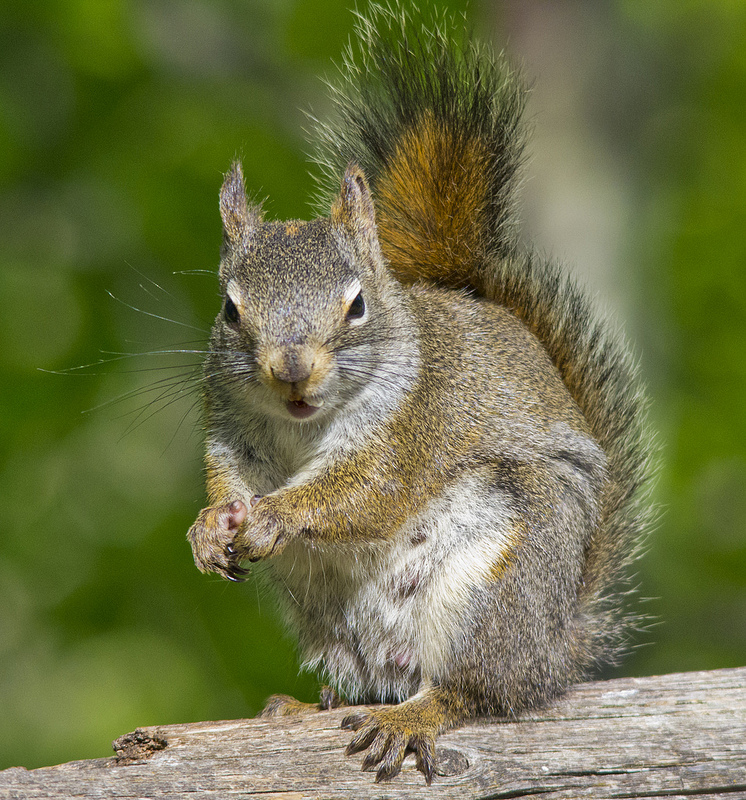
Most memorable though, was this Red Squirrel that continuously gave us the Stare of Deathâ„¢ any time we disturbed its feeding schedule.

Red Squirrel

Red Squirrel

While this wasn’t yet our last trip with the Friends of Fish Creek, we were heading into the final weekends… which I will finish up later this week!

Good birding!

Birding the Lafarge Meadows ponds

Posted by Matthew Sim

In the last few weeks, I have made several trips on my own down to the sloughs at Lafarge Meadows. There is always action there; be it coots feeding young ones, Pied-billed Grebes fishing, Ruddy Ducks courting, Red-necked Grebe diving or Yellow-headed Blackbirds chasing every other bird.

One of my favorite parts about the Lafarge Meadows sloughs are the Red-necked Grebes. I have counted as many as 4 pairs at a time on the ponds and have also enjoyed watching them court side by side.

Red-necked Grebe

The Red-necked Grebe is not the only grebe that can be seen at the ponds. The smaller Pied-billed Grebe also calls the sloughs home.

Pied-billed Grebe

So far, I haven’t seen any young Red-necked Grebes but I have seen several families of Pied-billed Grebes.

There are also several other families on the ponds, including Mallards and Common Goldeneyes.

Common Goldeneye family

And while I was enjoying these great sights; I couldn’t forget the birds that truly make a southern Albertan slough like the Ruddy Duck, the American Coot, the Yellow-headed Blackbird- and of course, on the mammal side of things, the Muskrat.

A Ruddy Duck- attempting to fly like an eagle?

Baby American Coot, looking nothing like an adult.

Yellow-headed Blackbird

Muskrat

Wednesday Wings: Chukar

Seen by McKenzie Amerongen and her family in the SW West Springs district on Friday, June 27/12.

Rare Bird Alert Calgary: July 2

Have you seen an unusual bird in Calgary?

If it is on this Reportable_Birds (PDF), please report it to the Nature Calgary Rare Bird Alert line at 403 221-4519 and leave a message after the beep at the end of the recording. If you would like some help with species identification, email us at birdscalgary@gmail.com.  To report injured wildlife call the Calgary Wildlife Rehabilitation Society at 403 239-2488, or the Alberta Institute for Wildlife Conservation at 403 946-2361.

Compiler Terry Korolyk

June 27

CHUKAR, one bird seen by McKenzie Amerongen in the West Springs area of Calgary, and one on the 28th by Carly Marshall in the Glamorgan area.

June 28 PEREGRINE FALCON, downtown Calgary, a fledgling, north side of the Hyatt Hotel

June 29 RUBY-THROATED HUMMINGBIRD, Griffith Wood Park, by Bill Wilson

June 30 LONG-BILLED DOWITCHER, west of Hwy.24,on Hwy. 560, by BW.

July 1 TENNESSEE WARBLER(6), in spruce trees along Spruce Drive, by Penny Smith.

GREATER YELLOWLEGS(10) and LESSER YELLOWLEGS(200) are being seen in good numbers in sloughs E. and SE of Calgary. Reported by Terry Korolyk.

The next scheduled update of the bird alert is on Thurs., Jul 5.

Rare Bird Alert Calgary: June 28

Have you seen an unusual bird in Calgary?

If it is on this Reportable_Birds (PDF), please report it to the Nature Calgary Rare Bird Alert line at 403 221-4519 and leave a message after the beep at the end of the recording. If you would like some help with species identification, email us at birdscalgary@gmail.com.  To report injured wildlife call the Calgary Wildlife Rehabilitation Society at 403 239-2488, or the Alberta Institute for Wildlife Conservation at 403 946-2361.

Compiled by Terry Koryluk

JUN 19

GREATER YELLOWLEGS – Lafarge Meadows in east Fish Creek PP, seen by Gus Yaki and the FFCPP

JUN 23

LESSER YELLOWLEGS – 20 at Pakowki Lake in southeastern Alberta reported by Earle Covert and Ken Orich

JUN 25

GREATER YELLOWLEGS – 2 at a wetland on Rge Rd 284 southeast of Carstairs, Terry Korolyk
BLUE-HEADED VIREO – in aspens on Rge Rd 284 about 5 km south of Hwy 581 southwest of Carstairs. TK
SAY’S PHOEBE – at a farm on the south side of Yankee Valley Boulevard about 5 km east of the Airdrie airport, TK

The next scheduled update of the bird alert is on Mon, Jul 2.

State of Canada’s Birds

Canada’s bird populations have been heavily influenced by human activity, in ways that have helped some species, and hindered others, according to a first-of-its-kind national report on the state of Canada’s birds.

The State of Canada’s Birds report draws on 40 years of data – from professionals and citizen scientists – to present an overview of how Canada’s birds are faring. It summarizes the status of Canada’s bird populations for eight biomes, including the boreal forest, prairies, Arctic and oceans. The report provides a scientific tool to help public agencies and conservation groups identify the most significant conservation opportunities to ensure healthy ecosystems.

The report finds that there are fewer birds now than in the seventies – overall populations have declined by 12%, but changes vary among species. Some species groups are doing well, while others are declining. Overall, more species are decreasing (44%) than increasing (33%). Declines have been particularly severe for grassland birds, migratory shorebirds and aerial insectivores (birds that catch insects in flight) all of which have declined, on average, more than 40%.

However, other species populations have expanded, illustrating that direct conservation efforts can have a positive impact. The ban on pesticides in the 1970s has helped raptors like the Peregrine Falcon, Osprey and Bald Eagle recover. Effective management of wetlands and hunting has aided waterfowl like ducks and geese.

Birds are a crucial indicator of ecosystem health. Healthy bird habitat provides vital environmental services, including food and fuel, clean air and water, fertile soil, pest and disease control, pollination of plants, and a stable, moderate climate.

The State of Canada’s Birds
 report is a collaborative effort of the North American Bird Conservation Initiative in Canada (NABCI-Canada), whose members include federal, territorial and provincial governments, conservation NGOs, and private sector organizations.

The State of Canada’s Birds is available online at www.stateofcanadasbirds.org .

Report Findings

The report highlights several changes in Canadian bird populations since 1970. These include:

• On average, Canadian breeding bird populations have decreased 12% since 1970, the year effective monitoring began for most species.
• Of all bird species, 44% have declined, 33% have increased and 23% have remained stable.
• Grassland birds, including longspurs, meadowlarks, Sprague’s pipit, Greater Sage-Grouse and others, are in decline due largely to a loss of habitat.
• Aerial insectivores – birds that catch insects in flight – are declining more steeply than any other group of birds, but the causes of the decline are unknown.
• Overall, shorebirds have declined by almost half, while Arctic shorebirds in particular, including the endangered Red Knot, have declined by 60%.
• Increasing raptor populations, such as the peregrine falcon, point to the success of direct intervention.
• Waterfowl populations have increased in part due to successful management of hunting and wetlands.
• Conserving Canada’s birds requires concerted efforts by all sectors of society, including individuals, corporations, non-government organizations and governments, both in Canada and internationally.
• Ongoing efforts and resources are needed to maintain the successes in groups such as waterfowl, and to ensure effective conservation of all the other bird species in Canada.

Nature Canada Press Release

Rare Bird Alert Calgary: June 25

Have you seen an unusual bird in Calgary?

If it is on this Reportable_Birds (PDF), please report it to the Nature Calgary Rare Bird Alert line at 403 221-4519 and leave a message after the beep at the end of the recording. If you would like some help with species identification, email us at birdscalgary@gmail.com.  To report injured wildlife call the Calgary Wildlife Rehabilitation Society at 403 239-2488, or the Alberta Institute for Wildlife Conservation at 403 946-2361.

Compiled by Terry Koryluk

Jun 16

LEAST TERN – flying over Bow River at Inglewood Bird Sanctuary,reported by Penny Smith and 11 members of a Nature Calgary field trip.

Jun 21

AMERICAN PIPIT – Ptarmigan Cirque in Highwood Pass in Kananaskis Country – Marcel Gahbauer
PACIFIC WREN – as above
TOWNSEND’S SOLITAIRE – as above
TIMBERLINE SPARROW – 2, as above
FOX SPARROW – as above
GRAY-CROWNED ROSY-FINCH – as above

Jun 23-24

BLACK-BILLED CUCKOO – calling near Stevesville Bridge in eastern Alberta, reported by Gerald Romanchuk
LECONTE’S SPARROW – near Bow Valley Ranch in Fish Creek Prov Park; one adjacent to the bikepath just south of the ranch and another along the chainlink fence across from the access road to the ranch and visitor’s centre

The next scheduled update of the bird alert is on Thu Jun 28.

Birds and Beers Reminder and Update

Just a reminder to RSVP if you’re planning to attend Birds and Beers this coming Thursday night!

A few clarifications for those of you who will be attending:

1) This event is strictly BYOB. From what I understand, some snacks will be provided by our gracious host, but drinks and any other food you might require will be on you!

2) This is also an all-ages event. Since we’re at a private location, anyone is welcome to come, bring their children, and just have a nice relaxing evening with like minded birders.


See you on Thursday!