Archives

Family Time For The Birds

I had a day off this last Tuesday so I took the opportunity to go biking and birding in Fish Creek Provincial Park. It was a beautiful morning; the sun was out, the sky was blue, the birds were singing and the weather was warm; finally! I got to Fish Creek at around 8:30 a.m. entering the park just off the intersection of Canyon Meadows drive and Acadia . I was preparing to go down the steep hill into the park only to find that the trail was flooded! Instead I followed the trail around the ridge until I entered the park beside the ranch.I did some random wandering on small paths through Fish Creek, finding a pheasant, a kingfisher, several catbirds and 3 Yellow-bellied Sapsuckers, among other birds. I then carried on to bridge number 11, leading to Hull’s Wood. Rounding a bend in the path I was surprised to see a male Pileated Woodpecker, just  meters from the path. Before I could get my camera out of my bag, he had flown further away; apparently he was surprised to see me!

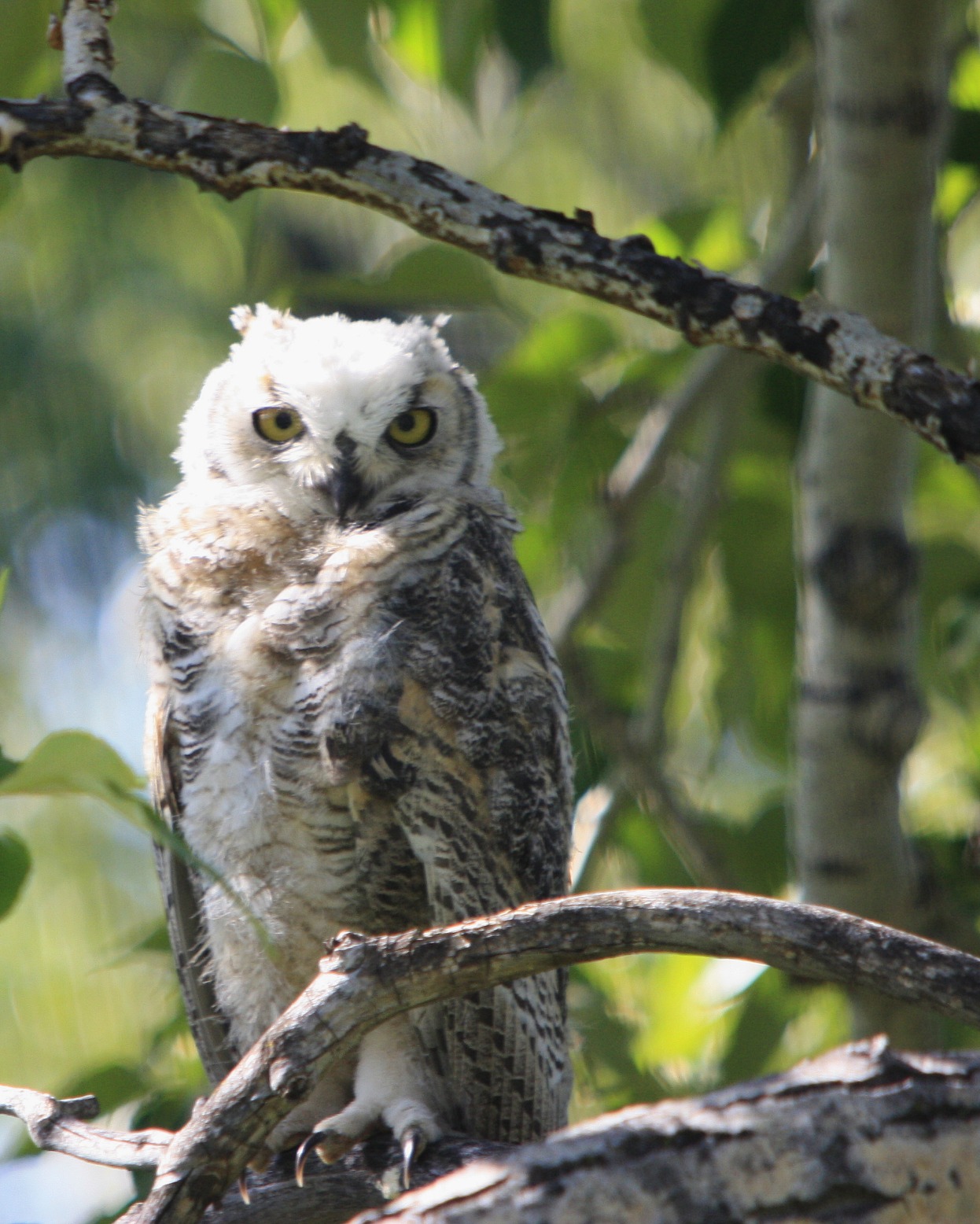
I reached Sikome Lake and rode my bike up the hill, in hopes of finding some Great Horned Owls and their owlets; I was not disappointed! There in their regular tree, was the Great Horned Owl family, two young ones and one adult.

As I continued my circuit, I found some more interesting birds, including some Green-winged Teal.

And the Pelicans! The water is so high in the river that pelicans are everywhere; I was able to count up to 27 pelicans at one time, half in the water, half circling in the sky, their bright white feathers contrasting magnificently with the clear blue sky. Another post on the pelicans will follow this one. However, this day, was truly the day of families. At one secluded spot near the river, I found 4 different nests all within a couple of feet of each other. The first belonged to a Downy Woodpecker, the second to a House Wren and the last two to Tree Swallows.

At the Downy Woodpecker nest, the male would visit the hole every couple of minutes and would be instantly greeted with the call of the hungry young in the inside. He continued his work incessantly, feeding his ever hungry offspring.

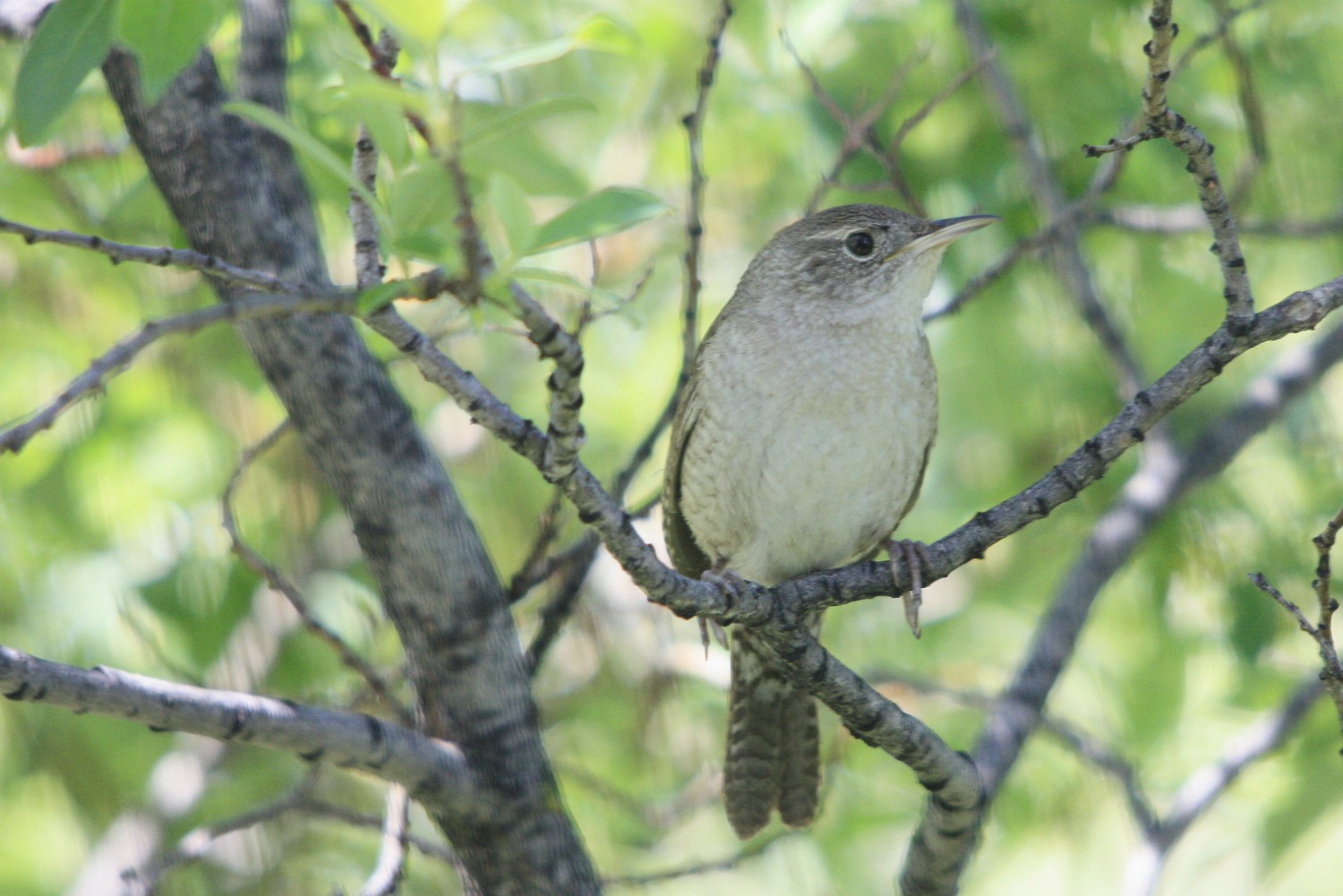
The House Wrens hardly ever came in and out of their nest but the male was always nearby, singing very loudly and stopping only for the occasional break.

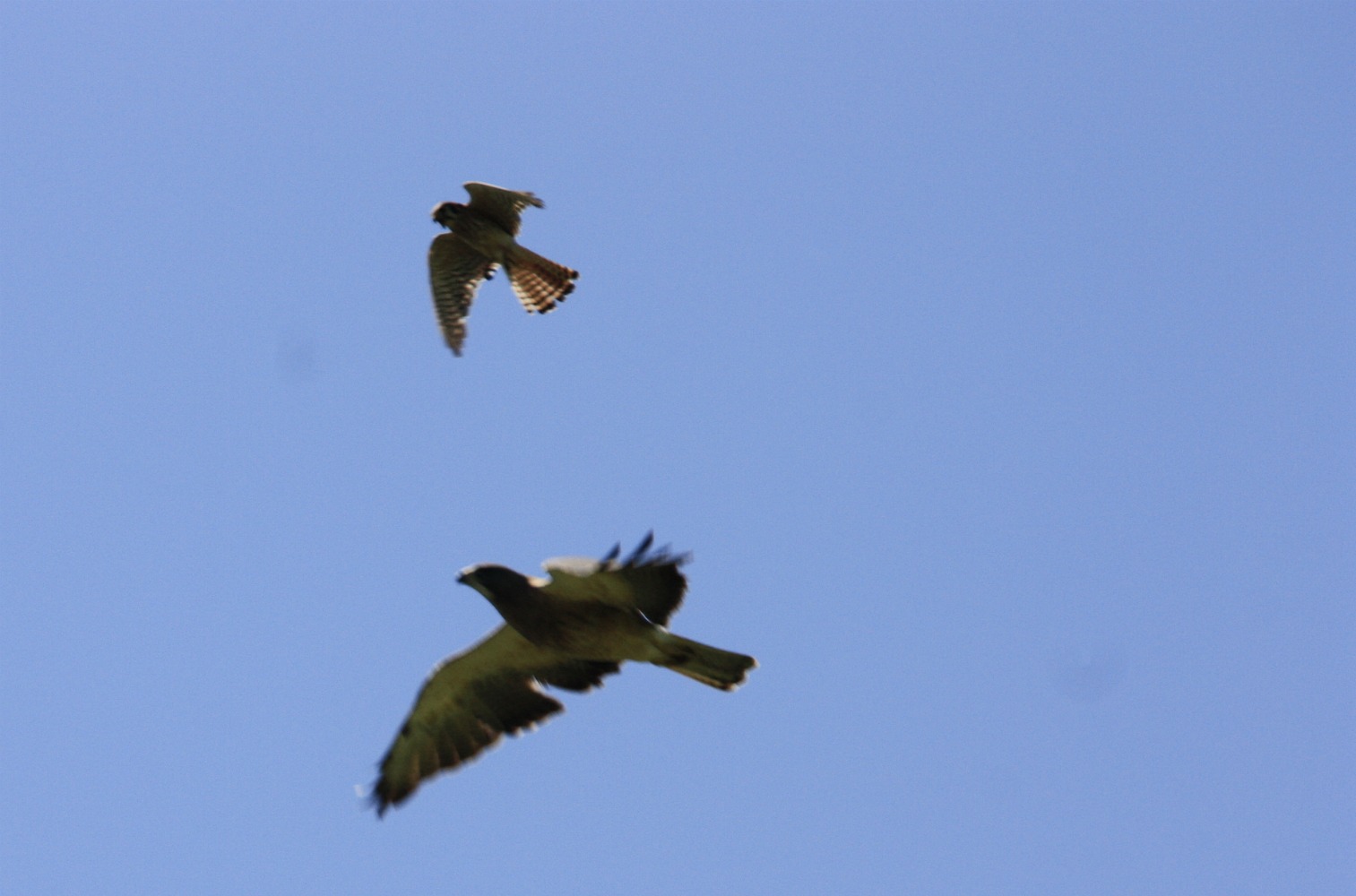
The Tree Swallows would vigorously defend their nests from potential threats, such as the kestrel that flew over several times. The Kestrel in turn would chase away a Swainson’s Hawk that could have been a potential threat to the Kestrel’s family.

As I was leaving the park in late morning I came across a coyote sitting on a hill, looking very content as well as many Savannah Sparrows singing.

Family time for the birds is a busy time of year; I saw 52 species of birds that morning and I had luck as I got to see  some of them raising their families.

Posted by Matthew Sim

Rare Bird Alert Calgary: June 20

Have you seen an unusual bird in Calgary? If it is on this Reportable_Birds (PDF), please report it to the Nature Calgary Rare Bird Alert line at 403 221-4519 and leave a message after the beep at the end of the recording. If you would like some help with species identification, us email us at zoxox@shaw.ca  To report injured wildlife call the Calgary Wildlife Rehabilitation Society at 403 239-2488, or the Alberta Institute for Wildlife Conservation at 403 946-2361.

This Bird Albert was recorded on Jun 20, 2011.

JUN 15

BAND-TAILED PIGEON: reported by Carrie Mashon at a feeder at her home in Dorothy, AB. Not seen after June 15

JUN 16

SHORT-EARED OWL – Ron Kube saw one on Twp Rd 192 north of Frank Lake
VEERY – Gus Yaki and Friends of Fish Creek heard one in Weaselhead

JUN 17

BLACK-BILLED CUCKOO – POSSIBLE – reported by Terry Korolyk who saw a large dull brownish bird with a very long brownish tail moving in a deciduous tree on either Auburn Rd, Adrian Rd or 7 St visible above a gray sound barrier wall from Southland Drive just west of Blackfoot Trail.
LONG-BILLED CURLEW – south of Hwy 566 on Hwy 9 northeast of Calgary, by Corinne Griffin

The next scheduled update of the bird alert is on Thu Jun 23.

Rare Bird Alert Calgary: June 16

Have you seen an unusual bird in Calgary? If it is on this Reportable_Birds (PDF), please report it to the Rare Bird Alert line at 403 221-4519 and leave a message after the beep at the end of the recording. If you would like some help with species identification, us email us at zoxox@shaw.ca  To report injured wildlife call the Calgary Wildlife Rehabilitation Society at 403 239-2488, or the Alberta Institute for Wildlife Conservation at 403 946-2361.

This Bird Alert was recorded on Thursday June 16 at 10 am.

Bird Sightings:

June 9:
GREAT GRAY OWL, CONNECTICUT WARBLER, WILLOW FLYCATCHER at Pearanod? Wildlife Hab. S of Grand Valley Rd & Rge 52, SW of Cochrane , Dwight Knapik.

June 13:
BAND-TAILED PIGEON for the last week at the home of Carrie Mashon ? (403
822-2216) near Dorothy (near Brooks) .
CALLIOPE HUMMINGBIRD (3), EASTERN PHOEBE, Weaselhead area of FCPP, Gus Yaki and
FFCPP.

June14:
SPOTTED TOWHEE, CALLIOPE HB, E. PHOEBE, as above.
THAYER’S GULL (possible) Glenmore Res near the Yacht Club, Terry Korolyk.

The next scheduled update of the Bird Alert is on Monday June 20.

Bird Profile: Western Kingbird

A large flycatcher with a yellow belly, pale grey head and breast and a black tail with white stripes down the sides, the Western Kingbird is one of my favorite birds. Eating mostly insects, the Kingbird is always ready to snatch its next meal; whether from a perch or on the ground.

Nesting in tall cottonwoods along river valleys, the Western Kingbird can be difficult to find in Calgary. Probably the best spot in the city to look for this neat bird is Lafarge Meadows, in Fish Creek, south of 22x where they nest.

More social than other kingbirds, at times, several pairs of Western Kingbird may be found nesting in the same tree. They readily attack crows, ravens, hawks and other larger birds that can be potential predators to them and their young.

The Western Kingbird has a distinguishing lemon yellow belly.

Posted by Matthew Sim

Rare Bird Alert: June 13

Have you seen an unusual bird in Calgary? If it is on this Reportable_Birds (PDF), please report it to the Rare Bird Alert line at 403 221-4519 and leave a message after the beep at the end of the recording. If you would like some help with species identification, us email us at zoxox@shaw.ca  To report injured wildlife call the Calgary Wildlife Rehabilitation Society at 403 239-2488, or the Alberta Institute for Wildlife Conservation at 403 946-2361.

This Bird Alert was recorded on Monday June 13 at 10:20 am.

Bird Sightings:

June 9:
LUZULI BUNTING (male) in the yard of Michael Woertman, Wintergreen Est. Bragg Creek.
BLACK-HEADED GROSBEAK (male) for 4 days, as above.
Unidentifed HUMMINGBIRD, south Glenmore Pk, Gus Yaki and FFCPP.
YELLOW RAIL , Horse Creek Rd slough about 9 km N of Hwy 1A, Dwight Knapik.
WHOOPING CRANE (3) flying over Okotoks, Keri Kesha.

June 11:
RUBY-THROATED HUMMINGBIRD (2 males) at Country Garden Greenhouse, L. Springbank Rd. Laurie Moore.
RED-TAIL HAWK, rufous morph. east of McElroy Slough, east of Chestermere Lake, Terry Korolyk.
Sterna TERN sp. at Chestermere Lake west side, TK.
WESTERN GREBE, at Chestermere Lake east side, TK.
CASPIAN TERN (pair) west end of Glenmore Res,have been there most of May, TK.

June 12:
RED-TAILED HAWK (dark morph) that was in the Raven Rocks area of FCPP through May, was at Votier’s Flats parking. TK.

The next scheduled update of the Bird Alert is on Thursday June 16.

Sunday Showcase: Great Horned Owls

Posted by Matthew Sim
Backyard Birds: Yellow Warbler

Have you seen a flash of yellow in your yard lately?

The Wood Warbler family is famous for their diversity in plumage, song, feeding and breeding biology. All of them are small birds with long, thin bills used for snapping up insects and larvae. Perhaps one of the easiest to identify is the Yellow Warbler, which has more yellow in its plumage than any other member of the family.

In spring breeding season, males have rusty streaks on the breast and flanks, a bright yellow face with conspicuous black eyes, and yellow upperparts. They are known to build another nest on top of an old one when Brown Cowbird eggs appear in it, which can result in up to six different layers.

Yellow Warblers can be seen around the city from mid May to mid September. These birds are widespread in most shrubby and second-growth habitats in North America, where they can be seen quickly hopping from branch to branch. This bird was busily flitting from the saskatoons and lilac shrubs to the poplar trees in my yard.

Posted by Pat Bumstead

Showcase Sunday: Horned Grebe

More wonderful photographs from Rob English.  Thanks for sharing Rob! (Click images for a larger view).

Rare Bird Alert: June 2

Have you seen an unusual bird in Calgary? If it is on this Reportable_Birds (PDF), please report it to the Rare Bird Alert line at 403 221-4519 and leave a message after the beep at the end of the recording. If you would like some help with species identification, us email us at zoxox@shaw.ca  To report injured wildlife call the Calgary Wildlife Rehabilitation Society at 403 239-2488, or the Alberta Institute for Wildlife Conservation at 403 946-2361.

This report was prepared on Thursday, June 2.

May 29
— LARK BUNTING, One on 402Ave.SW,E.of 288, W.of Millarville, by Terry Korolyk. One W.of Nanton along Meridian Rd, by Mike T.
— BOBOLINK(2)(M),W.of Nanton along Meridian Rd, by M.T.

May 29/30
— SABINE’S GULL(30),SE Frank Lk. Bob Worona. For details, call Bob at 403-984-7655.
— MEW GULL, Glenmore Reservoir, reporter not known.

May 31
— RUBY-THROATED HUMMINGBIRD, in backyard of Richard Rappel, High River.
— WESTERN KINGBIRD, La Farge meadows, E.Fish Creek PP, by Dave Vernon.

June 1
— BLACK-THROATED BLUE WARBLER, S.Glenmore park, west end, Ray Wershler et.al.
— LARK BUNTING, Fish Creek PP,west of Votier’s Flats , by Peter Roxburgh.

Other recent reports included a BOBOLINK SE of Frank Lk. and a LARK
SPARROW N.of Strathmore. No details available on these reports.

The next scheduled update of the Bird Alert is on Monday, June 6.

Grebes, grebes, grebes

Grebes are a worldwide family of aquatic diving birds with lobed toes, making them strong swimmers. There are 22 species of Grebe found across the world with 6 of those being found here in Alberta. Grebes are very clumsy on land and therefore spend most of their time on the water, staying there to feed, sleep and court. One of the oldest living family of birds, they can dive down 6m below the surface and can remain submerged for up to 30 seconds, where they search for small fish, aquatic insects and crustaceans to eat.

Of the 6 species of Grebes that live in Alberta, 5 of these can be seen in the Calgary region; above is the Horned Grebe, an attractive grebe that may be seen in Calgary on the Mckenzie Towne Ponds, which is where I saw this one last week.

Similar to the Horned Grebe is the Eared Grebe which can be distinguished from its close relative by its yellow feathered “ears” instead of compact “horns”. I find that one of the best places to see Eared Grebes is at Frank Lake, near High River.

The Western Grebe, together with Clark’s Grebe (which is only seen in the far south of Alberta), is a very large grebe. Below, is a procession of birds; from left to right; first is an Eared Grebe, then a Western Grebe, followed by another Eared Grebe and another Western Grebe. After that is a Franklin’s Gull and an Eared Grebe bringing up the rear.

The Pied-billed Grebe is the most common grebe in North America; it is also very intelligent. When apprehensive, the Pied-billed Grebe will sink slowly, expelling air from the body and feathers to lower their gravity, then they will swim with only their head above the water, facilitating an escape if need be. The adult Pied-billed Grebe is similar to the juvenile (juvenile below), except it will have uniformly colored cheeks and a black ring on its beak.

The last Grebe that can be seen in Alberta is the Red-necked Grebe, a large noisy bird with a broad black crown, white cheek patches and chestnut neck.

Grebes are a very varied family of birds and all are beautiful; makes sense when you find out that they are related to loons; a family of birds that amaze many people!

Posted by Matthew Sim