Winter leaps upon us in a flash. One minute, it seems, it is a very distant shape looming faintly on the horizon. Suddenly, before we know it, winter has struck, leaving us wondering where the summer went. In Texas, the same seems to happen with wintering birds. One day, only the year-round residents who call Texas home can be seen. The next day, countless wintering birds of all shapes and sizes are everywhere, confusing even the most attentive eye.

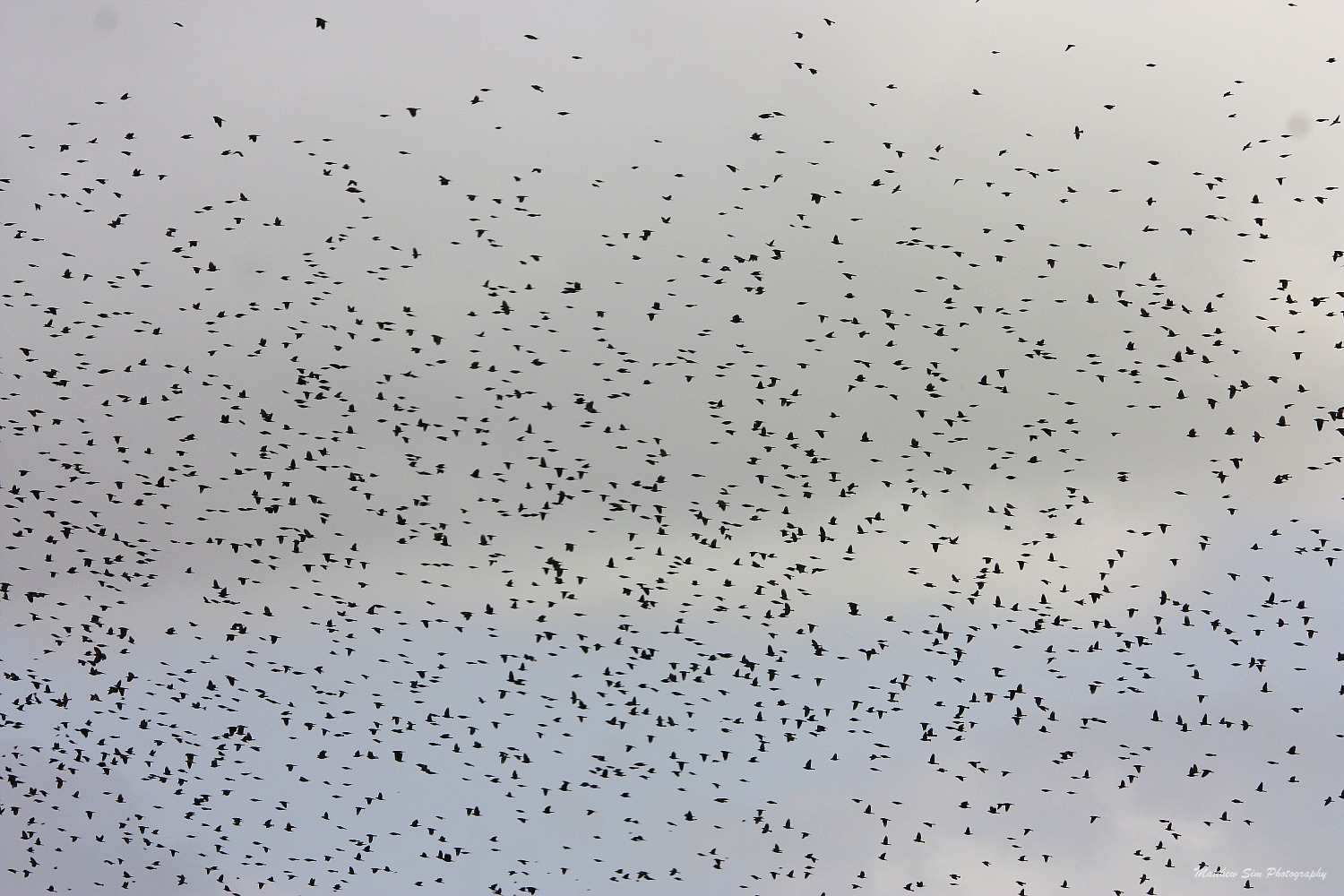
Countless blackbirds flock together during the winter
On a recent trip to Brazos Bend State Park here in Texas, about an hour southwest of Houston, we observed some spectacular flocking in action. Literally thousands upon thousands of blackbirds; Red-winged Blackbirds, Brown-headed Cowbirds, Common Grackles and European Starlings congregating on some farmer’s fields. They swarmed and swirled, seemingly in perfect coordination, lifting off and landing as a unit. And yet, this is not a sight you can readily behold on these bird wintering grounds. You don’t see flocks of thousands of these species doing this in the summer, so why do they do it in the winter???

These blackbirds have quite a few reasons for doing this in the winter but these flocking habits also have numerous downsides. First of all, on the positive side, foraging is greatly improved by the large flock as opposed to a single bird or a small group. The more eyes you have working together, the easier it is to find food! More eyes can also mean more safety from would-be predators, and trust me, there are a lot of them!

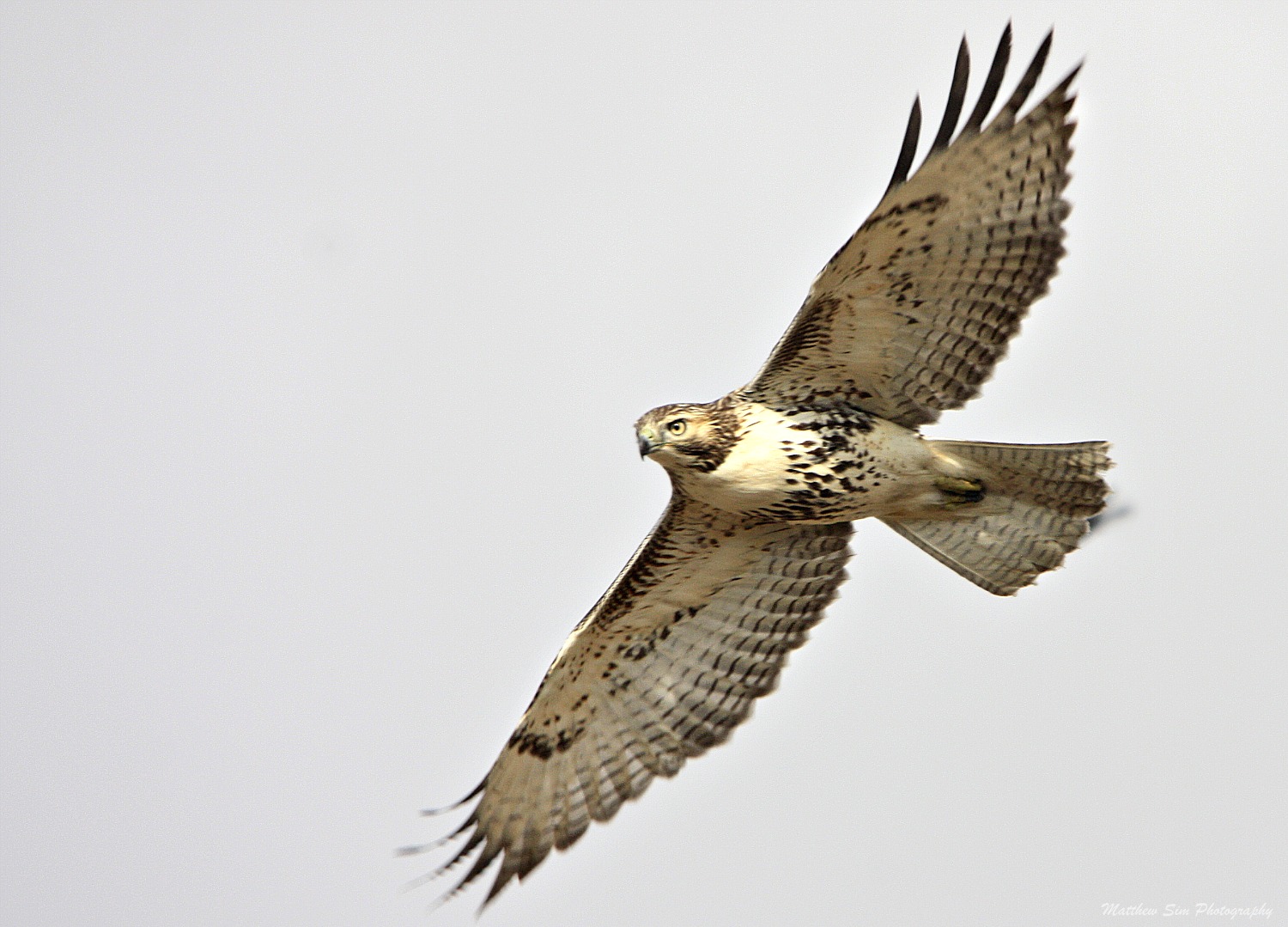
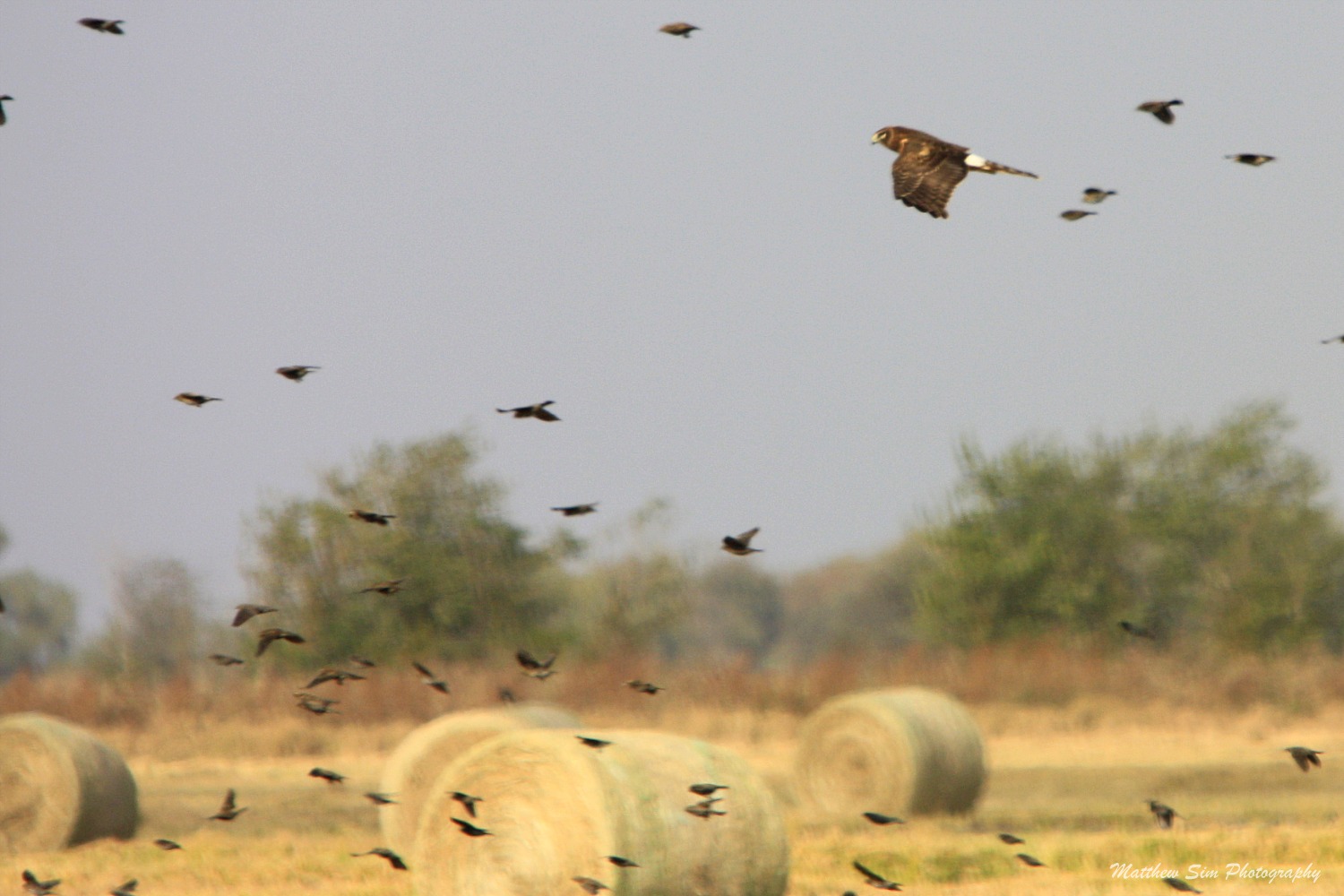
This brings us to one of the downsides of wintering flocks. Predators. Lots of them. Where there is food, there are consumers, waiting to, well, consume the food. Raptors see these blackbirds as one huge buffet just waiting to be sampled. In a small farmer’s field, we counted up to 20 raptors: about 10 Caracaras, many Red-tailed Hawks, several White-tailed Hawks, a Turkey Vulture and a couple of Northern Harriers, all exploring the delightful opportunity of a full stomach all winter long. If these hawks were to stick with the group of blackbirds, they could potentially always find one or two to pick off from the pack. The more birds in a flock, the more noise and commotion they make, rendering them easily visible targets.

Large concentrations of any living thing invariably bring with them two other depreciating factors; disease and competition. Avian diseases can be spread very quickly in such large flocks and may sometimes ravage a great portion of the local species. More birds might find better food sources but if there isn’t enough to go around, there simply isn’t enough. Weaker, slower and sick birds often will be the first to go hungry as they cannot compete with the healthier individuals.

It was definitely a neat sight to behold, especially when a raptor would plunge into the center of the throng, sending up explosions of blackbirds. One of the White-tailed Hawks that we spotted, an immature, had a very full crop (a muscular pouch near the throat used to store food), showing us that it had been eating well recently.
In the end, the advantages of these congregations greatly outweigh the disadvantages and it is a bewildering sight that will continue to captivate many a fortunate observer.
Posted by Matthew Sim