Archives

New Year’s Day Bird Count 2013

Posted by Bob Lefebvre

Once again I participated in the Fish Creek Park half-day bird count on New Year’s Day. Though not an official Christmas Bird Count, it is now in its 20th year.  Six teams spent the morning counting birds in different parts of this huge park, and then we met at noon to compile the results.

This year I joined Phil Cram’s team in the east end of the park.  We covered the Bow Valley Ranch, Sikome, LaFarge Meadows, and Hull’s Wood areas.

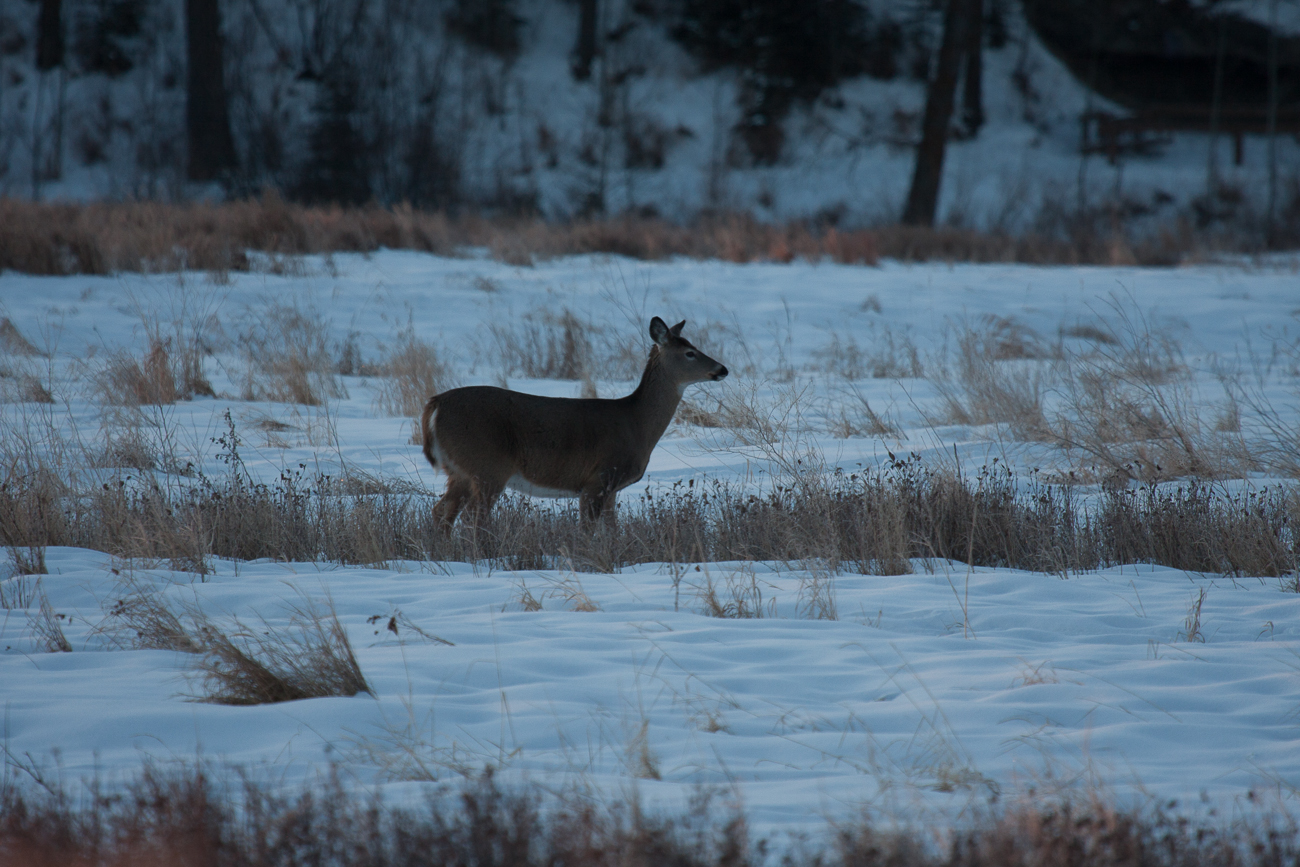
It was a beautiful mild sunny day, but we found it pretty quiet when we started at Bow Valley Ranch. We did have six White-tailed Deer pass through before sunrise.
IMG_5228

The first mammal of the day – and year.

We failed to find any roosting Great Horned Owls in the row of spruces, and it took a while before we heard even a chickadee. Eventually we heard some White-winged Crossbills in the tall spruces.
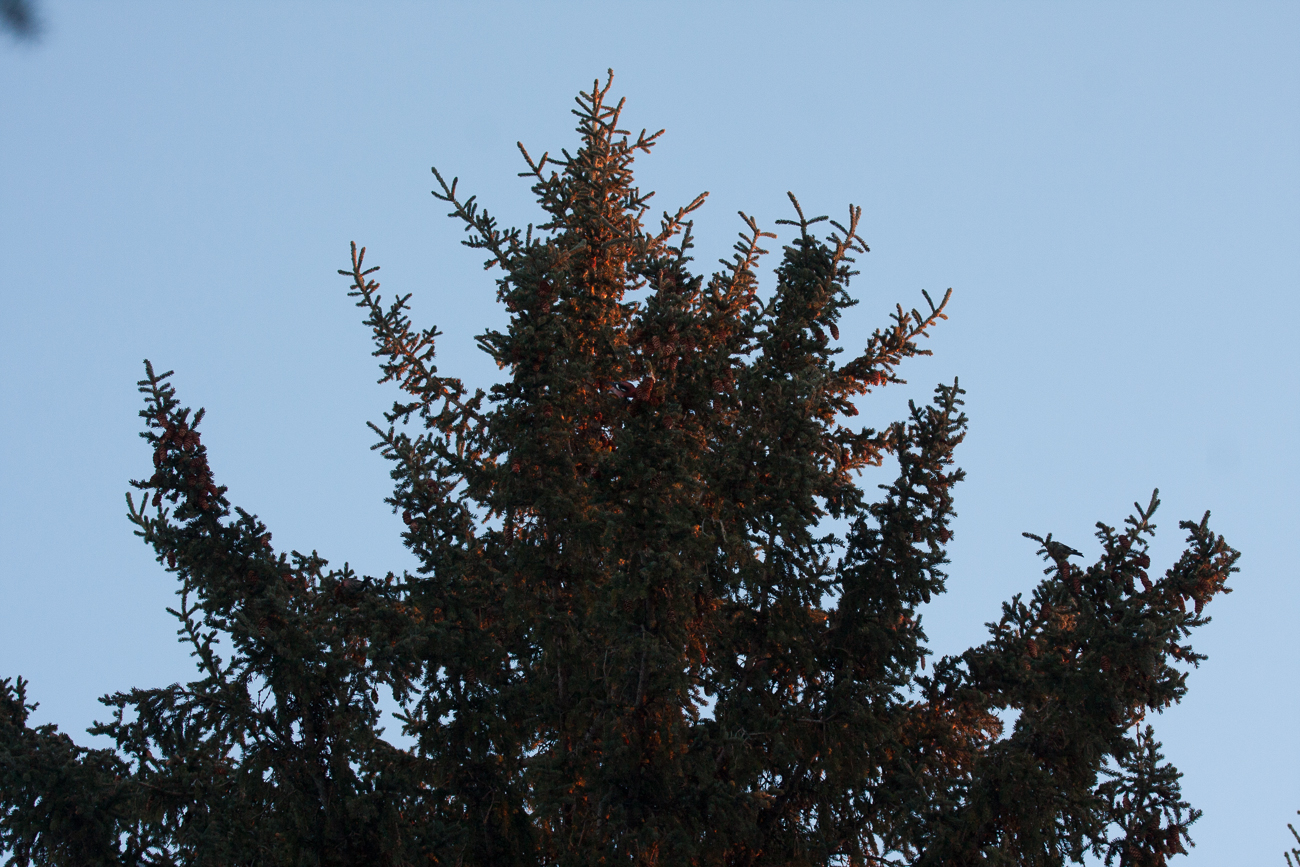
IMG_5225

Yes, there are crossbills in this photo.

Next we heard the high-pitched call of the Brown Creeper, and found four of them in the area.
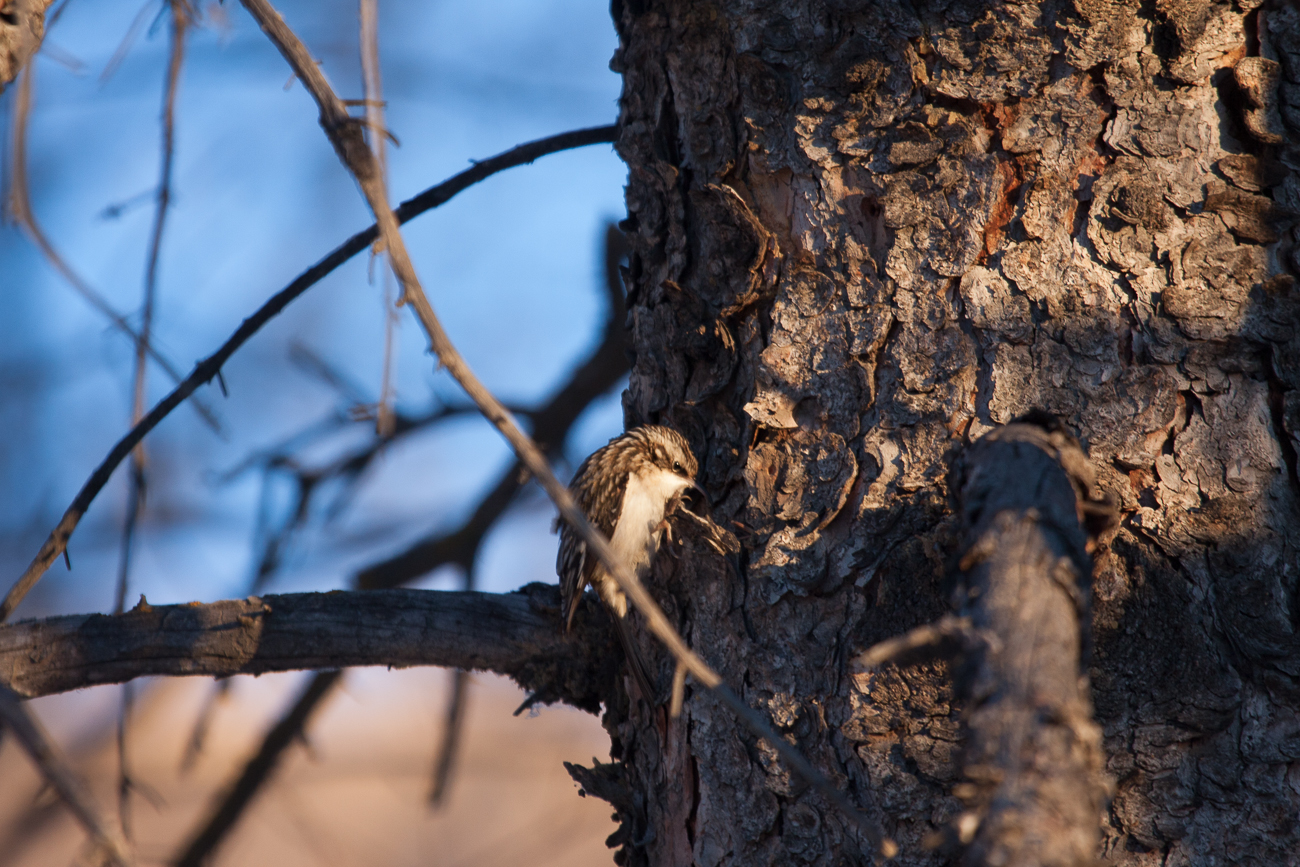
IMG_5242

Brown Creeper.

Heading over to Sikome, we quickly found the two Great Horned Owls that roost there every winter in the trees behind the buildings.
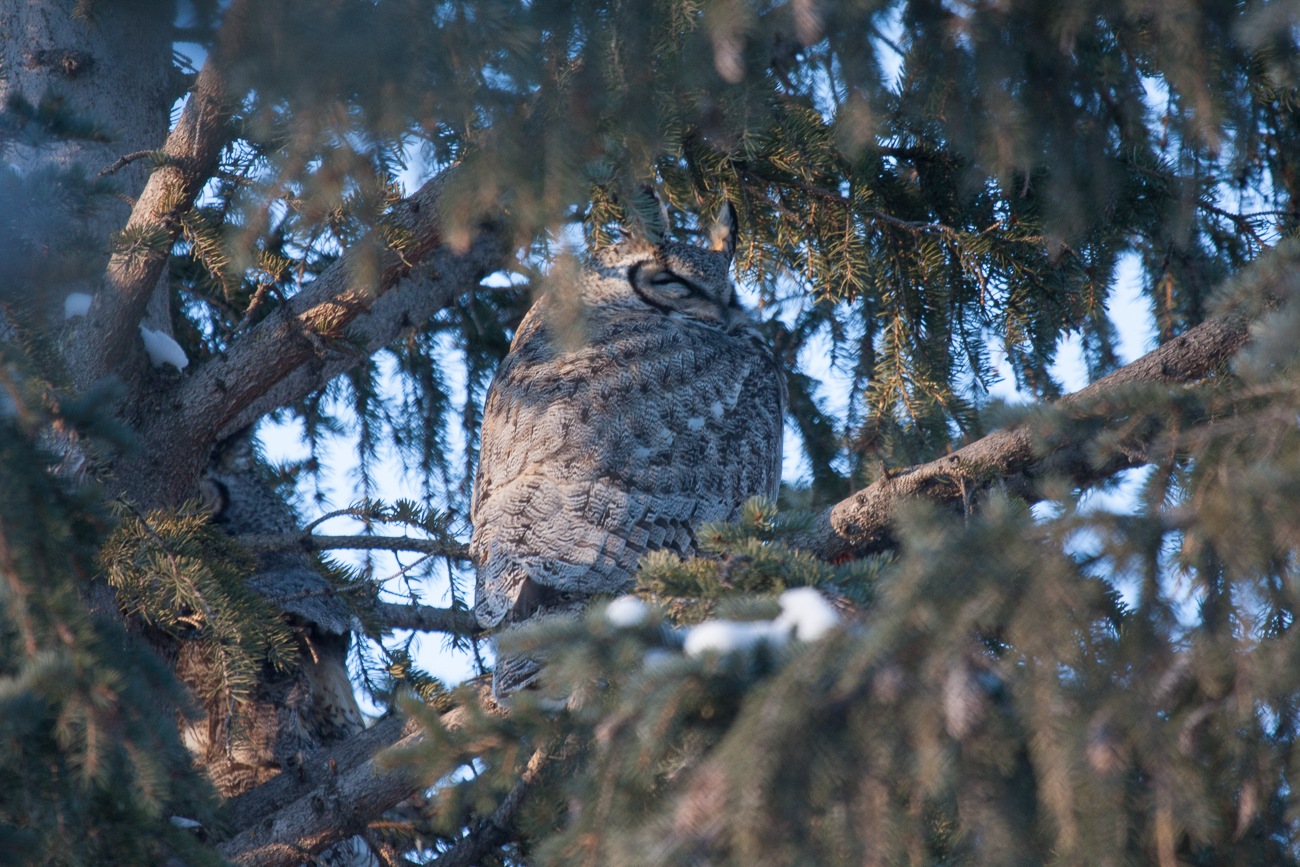
IMG_5251

There are two owls here – one of them is doing its spruce-bark impersonation.

Again, the area was pretty quiet.  We did get a flicker and this Downy Woodpecker (but failed to find a Hairy Woodpecker or White-breasted Nuthatch, which are often seen there).
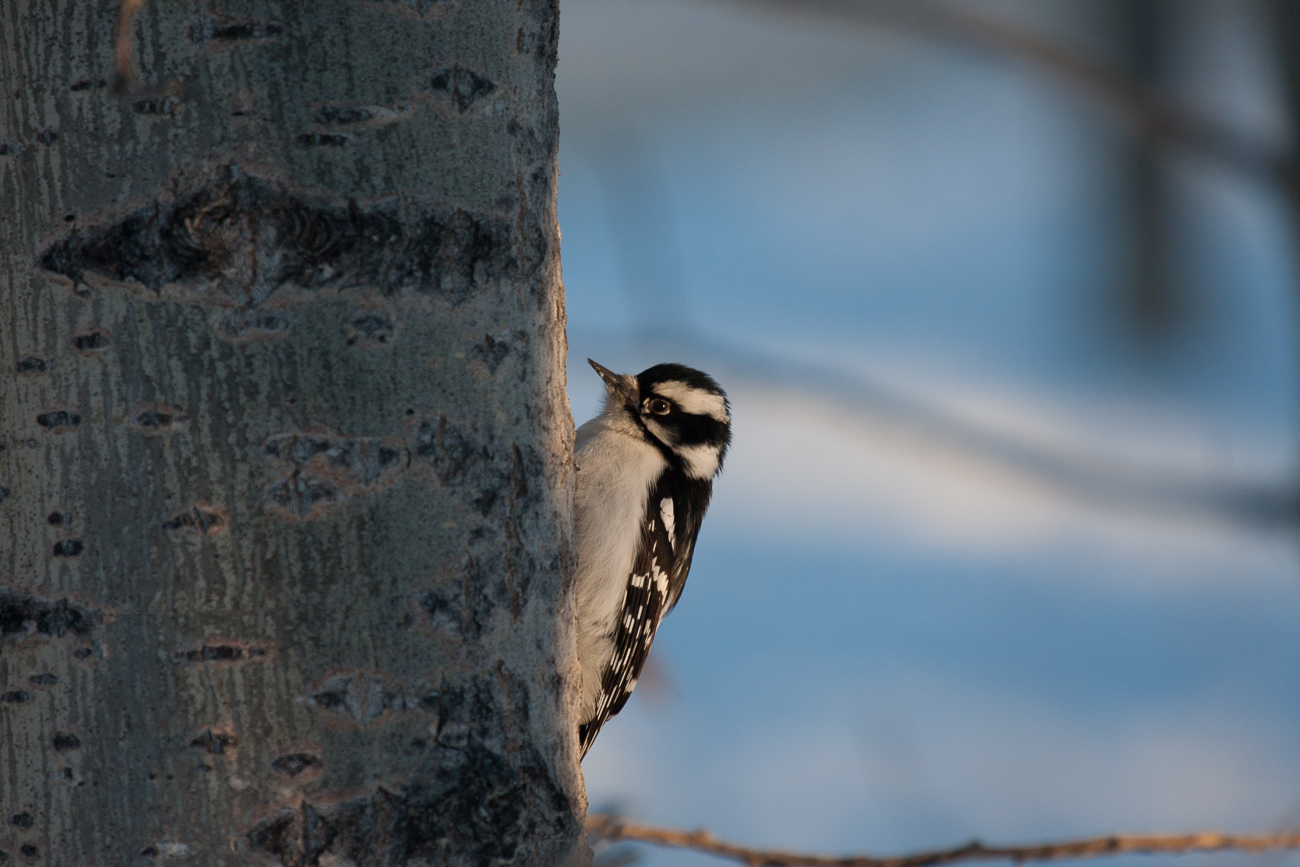
IMG_5260

Downy Woodpecker.

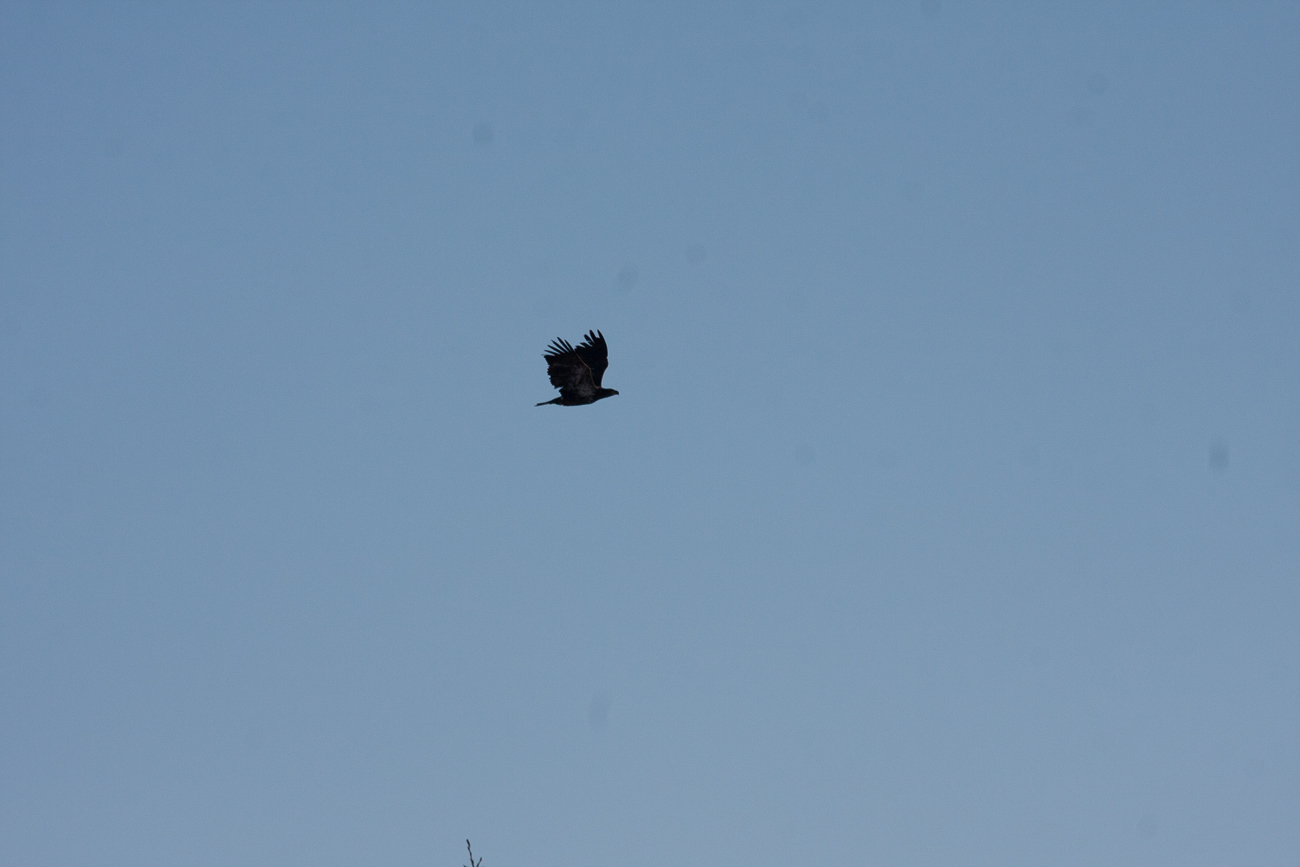
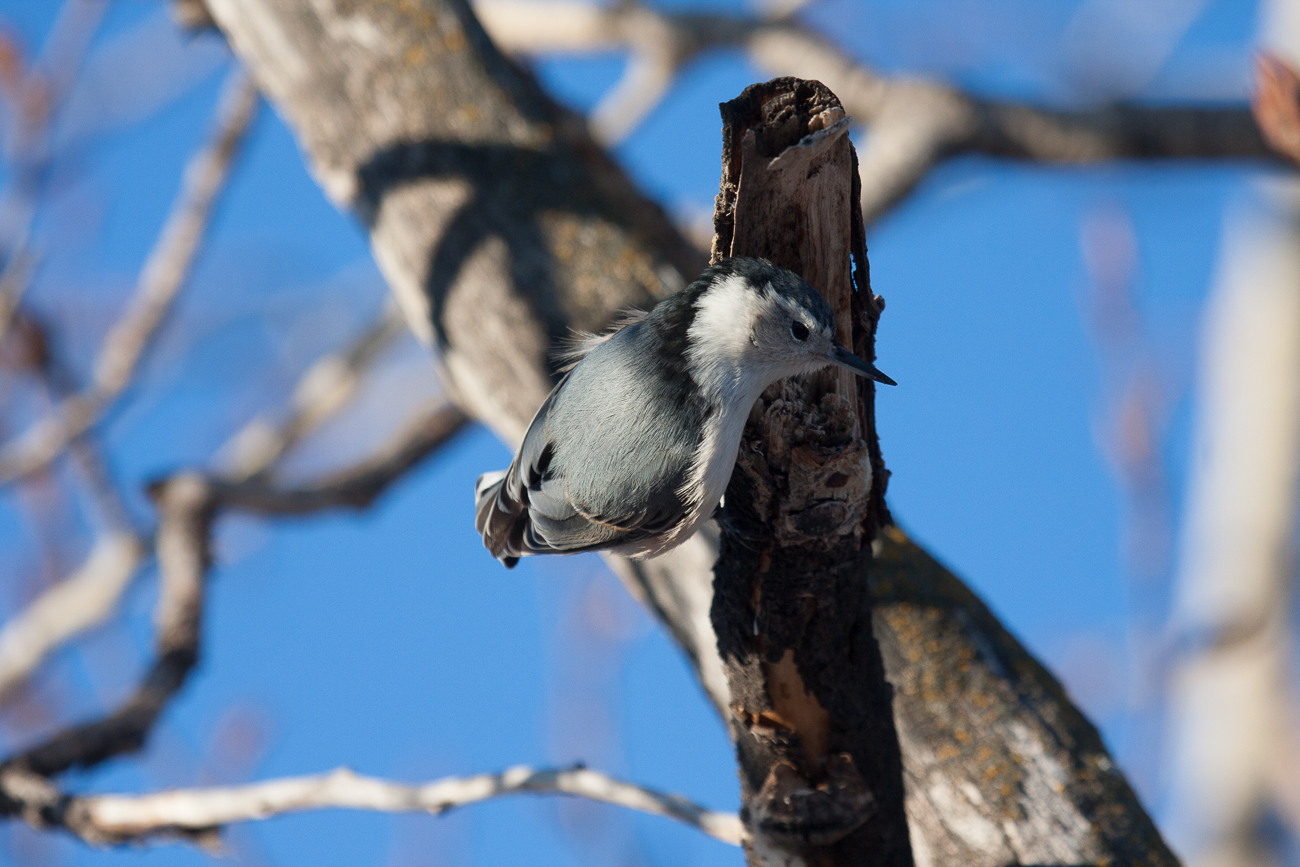
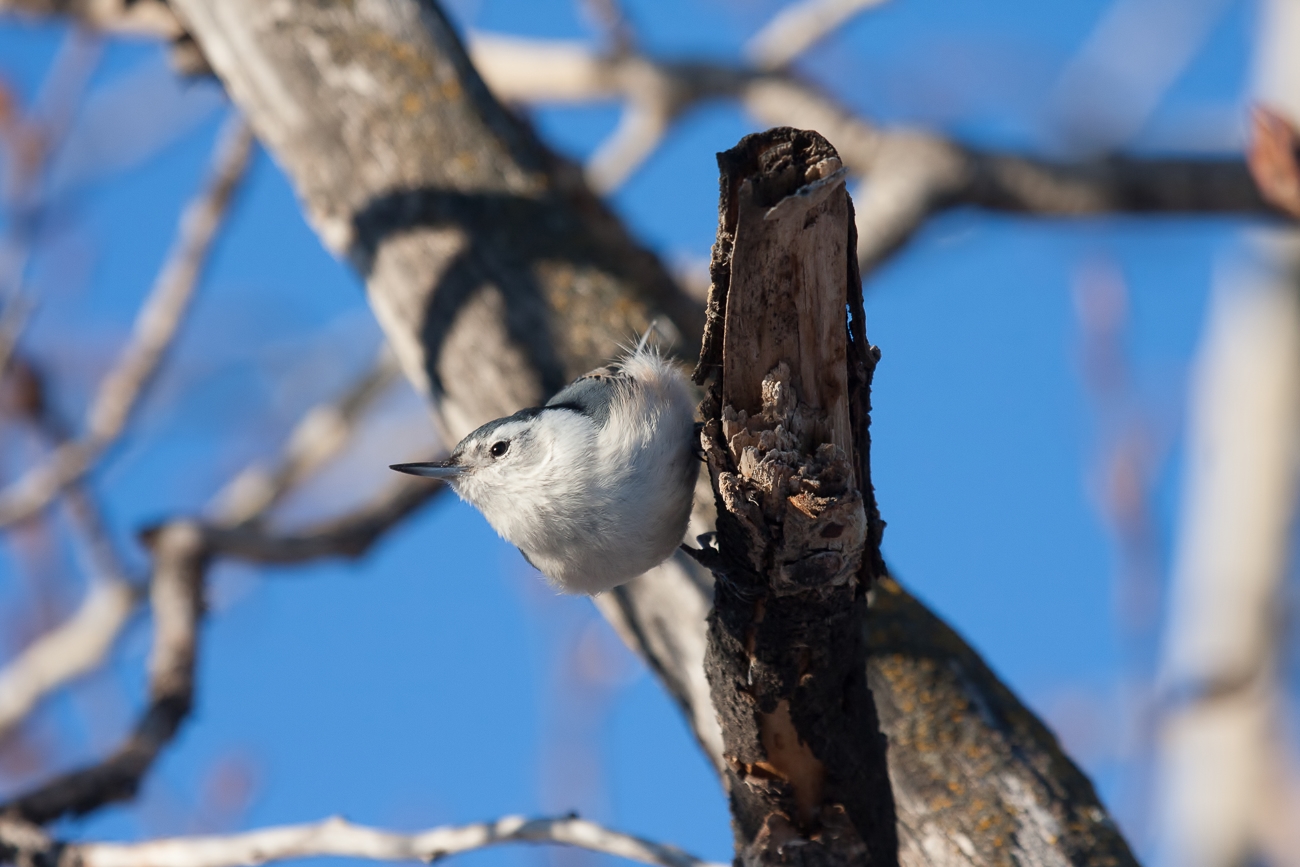
Over at the Boat Launch we had four White-breasted Nuthatches, and a flyover of a young Bald Eagle.
IMG_5294

IMG_5296

IMG_5267 (2)

Immature Bald Eagle.

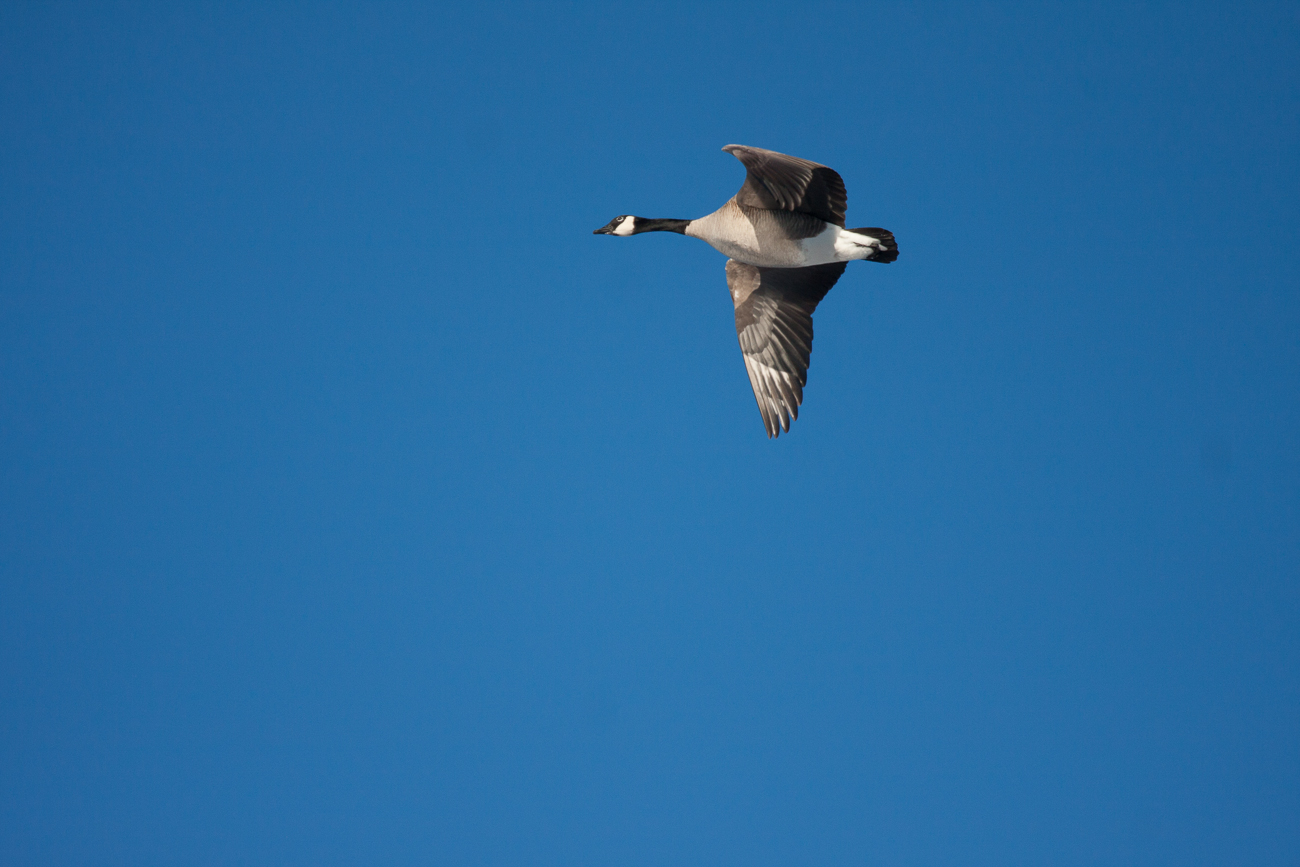
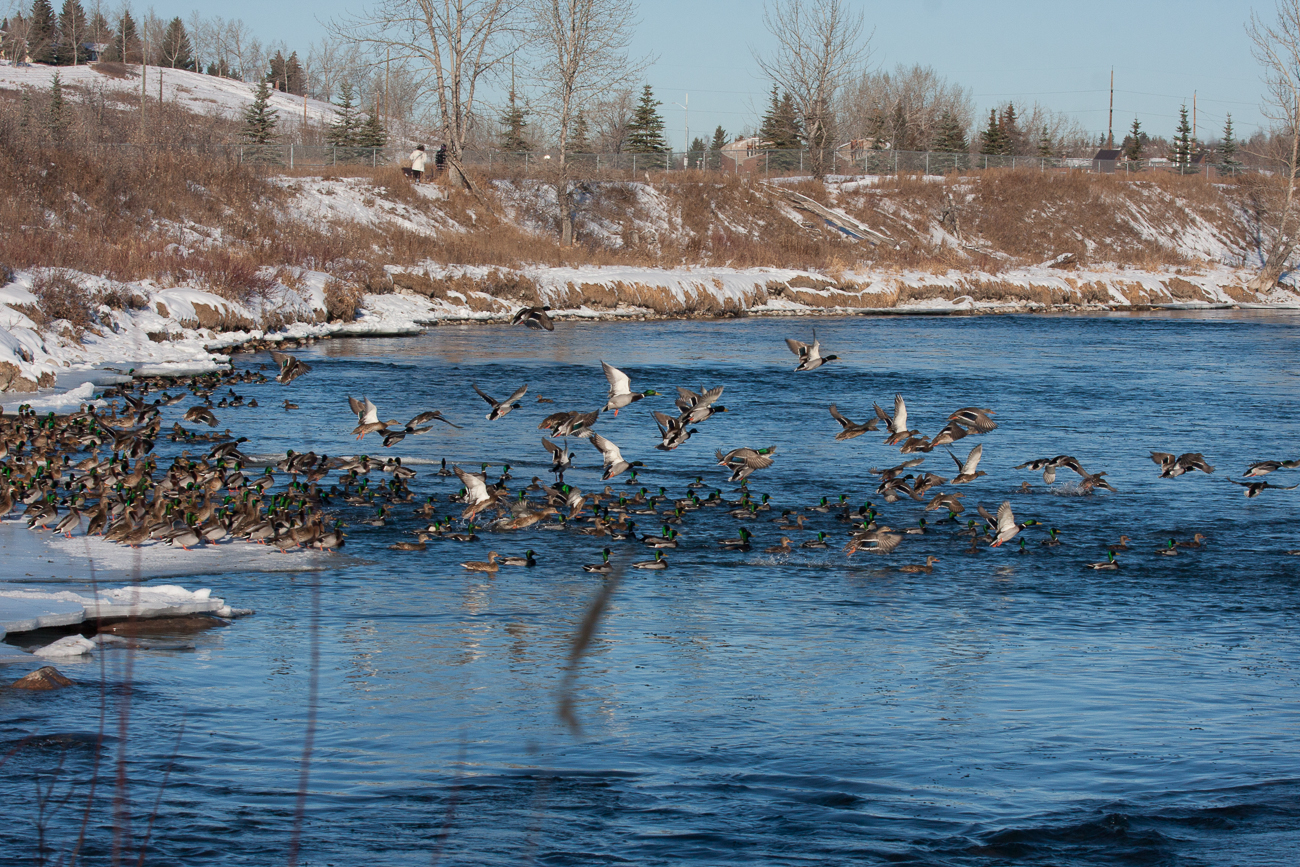
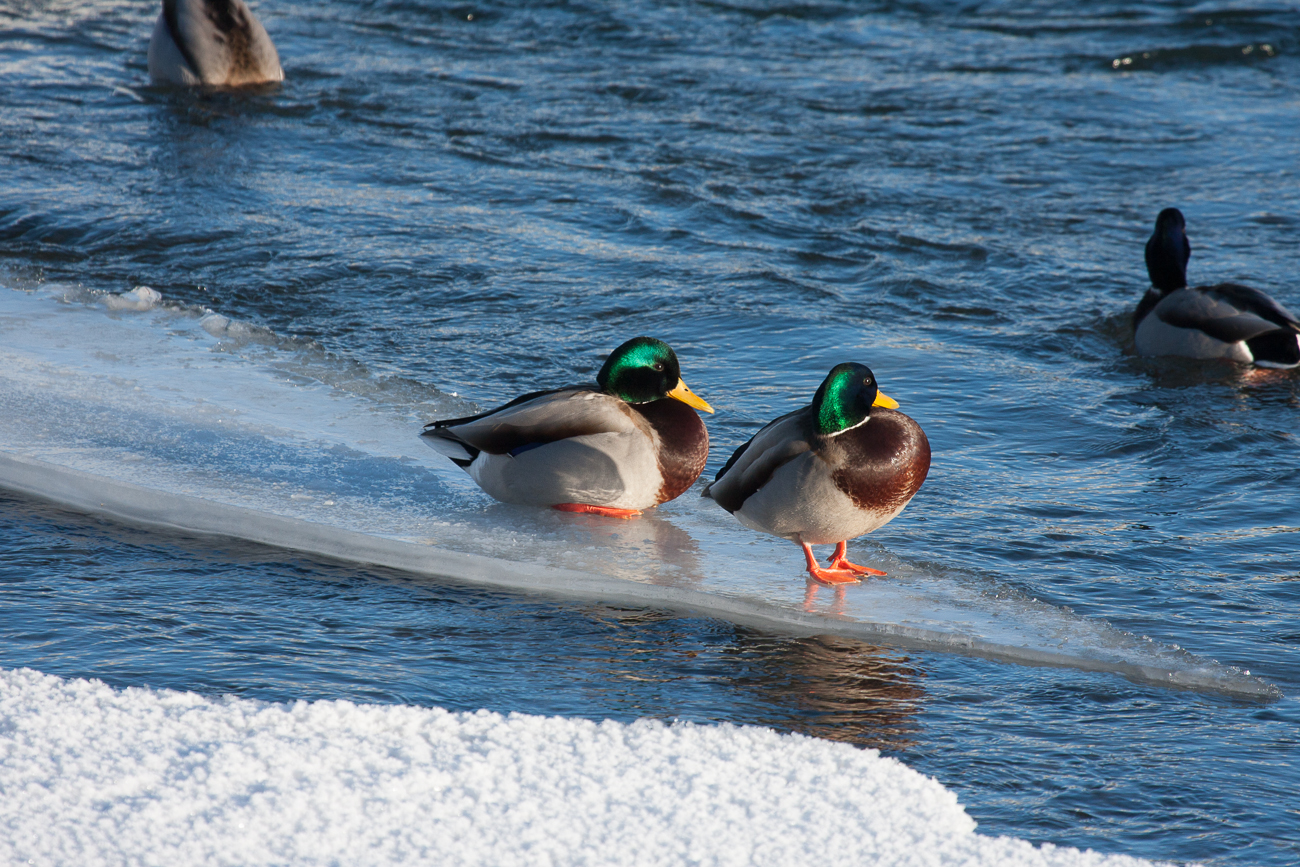
On the river we failed to find anything besides Canada Geese, Mallards, Common Goldeneyes, Buffleheads, and Common Mergansers. We had hoped for Killdeer, Barrow’s Goldeneyes, and perhaps some other species of ducks.
IMG_5312

Mallards on the ice.

IMG_5321

Canada Goose flying over.

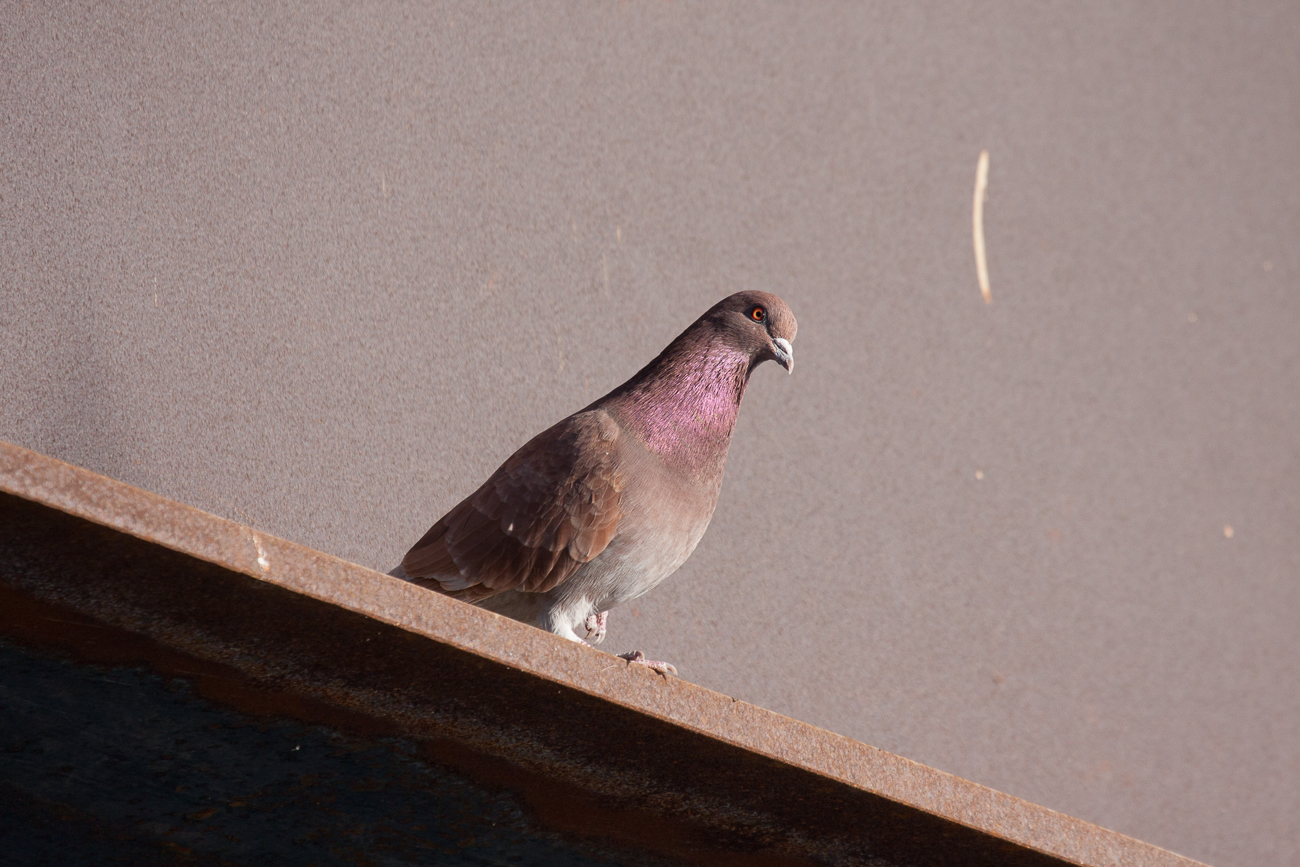
At the highway 22X bridge we checked for Rock Pigeons – in these bird counts every new species is important. You never know if any of the other groups will see one or not.
IMG_5314

Rock Pigeon, with colours that match the rust on the bridge.

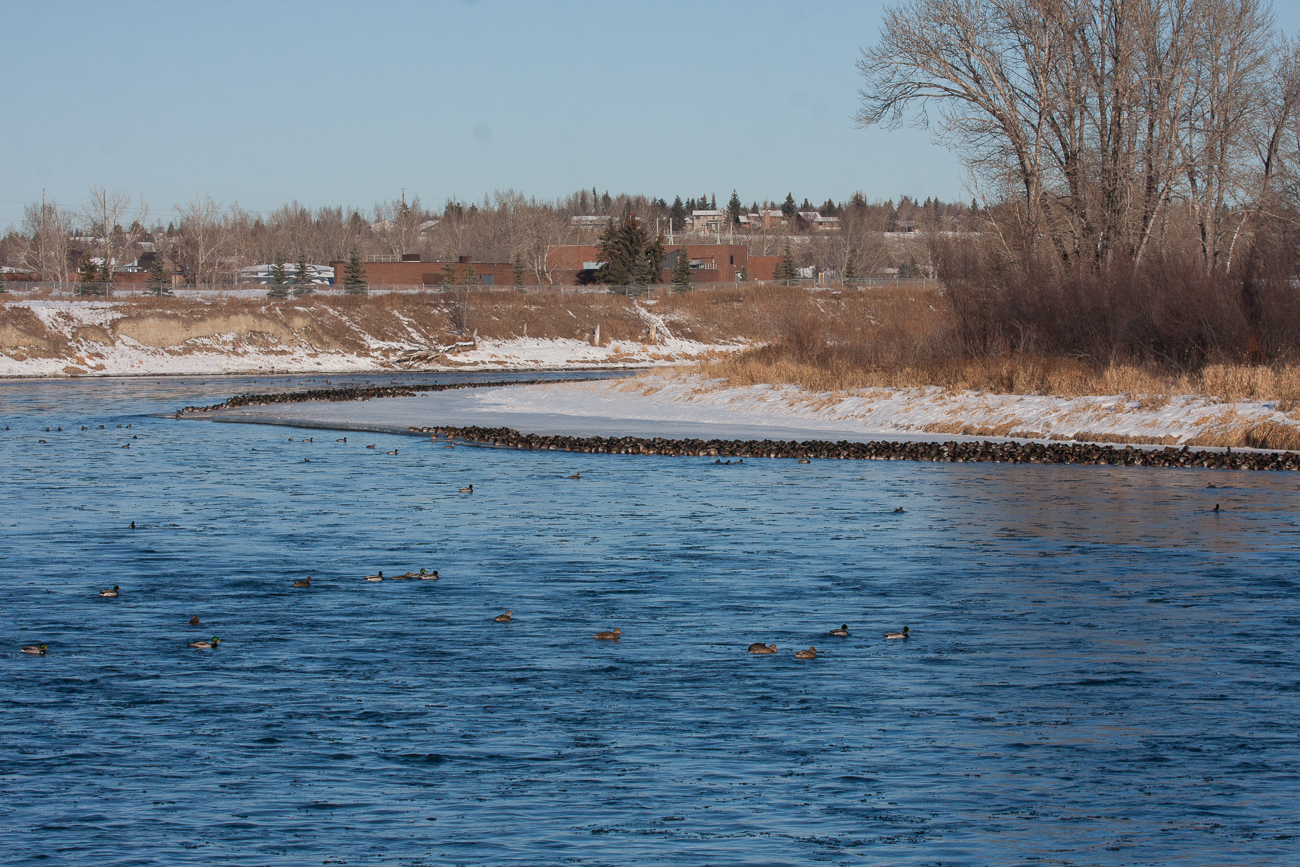
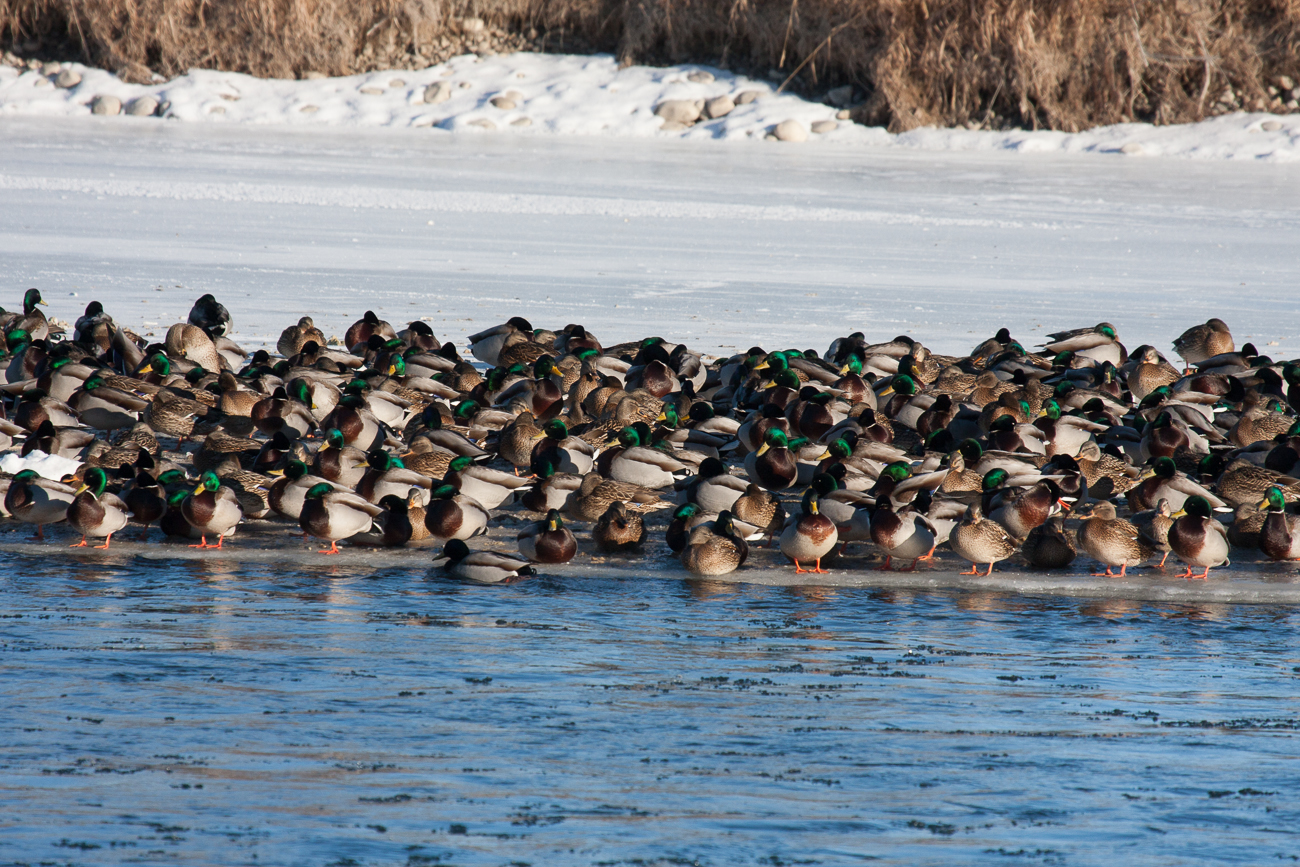
Our final stop of the morning was at Hull’s Wood, where we saw a staggering number of Mallards – about 8000 (some of them were outside our territory and were counted by another group of birders). Again, there were few other species except the usual.
IMG_5324

IMG_5323

IMG_5326

Our best bird of the day was the last, a Northern Goshawk that was being harassed by magpies on the hillside.  We didn’t get great looks (and no photos) before it departed.

In the end we had 19 species of birds (and four mammals – Coyote, Eastern Gray Squirrel, and White-tailed Jackrabbit in addition to the deer). A good start to the new year.

2012 Blog Year in Review

The WordPress.com stats helper monkeys prepared a 2012 annual report for this blog.

Here’s an excerpt:

19,000 people fit into the new Barclays Center to see Jay-Z perform. This blog was viewed about 160,000 times in 2012. If it were a concert at the Barclays Center, it would take about 8 sold-out performances for that many people to see it.

Click here to see the complete report.

Finding Birds with eBird

Posted by Bob Lefebvre

Note: You don’t have to be an eBird user or have an eBird account to do this. Anyone with an internet connection can use eBird as a resource, so please read on.

eBird, the online database of bird sightings, has many useful features that birders can use to study patterns of bird movements in time and space. The one I use the most is the Interactive Range and Point Maps. This shows a map of all sightings reported for a particular species for any place and time specified. You can set the time period to be as long or as short as you like, and thus see the distribution of the bird.

By setting a short time period of the most recent month or two, you can find out what is being seen in your birding area right now. I will run through an example of the process to show how you can easily find out exactly where your target bird has been seen.

Step 1: Go to the eBird Website home page. (In the example it is eBird Canada, but you could also use the US site.) Your screen will look something like this:

eBird article p1

.

Step 2: Click the “Explore Data” tab. There will be three choices: Range and Point Maps, Bar Charts, and Line Graphs.

eBird article p2

.

Step 3: Select “Range and Point Maps” to bring up the world map.

eBird article p3

.

Step 4: Specify the date range for your search.  Click the “Date” tab (which is defaulted to “Year-Round, All Years) to select a time period. In the example, I set it to December only of the current year. It was early December when I did this example, so only sightings from the previous few days would be shown. Then click “Set Date Range” in the green box.

eBird article p4

.

Step 5: Select the target species. A new screen has come up with the date range set to “Dec-Dec, Current Year”. Go to the “Species” box and type in the bird. I used “Snowy Owl” in the example. As you type, various species possibilities that fit what you have typed so far will show in the blue box below. Once the correct species name appears in the blue box, click it to select the species.

eBird article p5

.

Step 6: Zoom in on the map to see sightings in your area. You could also at this point set the location (to Calgary, for example) in the upper right-hand box, but it is just as easy to zoom in on the Calgary area by double-clicking your mouse or scrolling your mouse wheel until you get close. Any area that is purple on the map will have at least one Snowy Owl sighting.

eBird article p6

.

Below, I have zoomed in to the Calgary area. Paydirt! Snowy Owls have been reported inside the two purple rectangles. Now I just have to zoom in a little closer on them to see the exact locations.

eBird article p7

.

Step 7: Get the sighting data from a point location. The two red teardrops show the exact locations reported for Snowy Owls. By clicking on them, you bring up the sighting information. In the example, I clicked the westernmost teardrop and discovered that it was Daniel Arndt who reported one owl on December 1. You could now scroll in some more to see a close-up map of the area with the names of the roads. But you can also get more information from Dan’s checklist.

eBird article p8

.

Step 8: See the checklist from the reported sighting.  Click “Checklist” next to the name of the observer, to bring up all the particulars of the sighting. If there had been other species seen at that location, they would have been listed there.

eBird article p9

.

Step 8: See the location on a Google map. On the above screen, click “Map” at the end of the location line to get a Google map with the precise location and GPS coordinates. You can now drive to the exact spot where Dan saw this owl, where, if you’re lucky, it will be still be sitting on the same pole.

eBird article p10

.

Give this a try to see how easy it is to find out what’s being seen in your area. Of course, the only sightings you’ll find are those submitted by eBird users, so the more people using eBird, the better!

Links:

eBird Canada

eBird US

Calgary Christmas Bird Count – Weaselhead

Posted by Dan Arndt


It may seem a bit repetitive, but a week following our last Friends of Fish Creek Autumn Birding course, my Christmas Bird Count area was also down in the Weaselhead. Our route took a bit longer though, and covered a huge amount of area, and took the better part of the day. We had some really great helpers this time around, as we usually do, and had some awesome birds, a few fewer species than our usual number, and a few different species than we had turn up last year, but all in all, it was a beautifully warm day, and a good time was had by everyone involved. Hope you enjoy these photos I took while we were out!

Merlin

Merlin

Merlin coming in for a landing

Merlin coming in for a landing

This Merlin gave us quite a show, hunting while we watched from the bridge over the Elbow River. I believe that it was hunting one of the many Bohemian Waxwings we saw that day.

American Robin

American Robin

A nice surprise for us was the often spoken-of and quite legendary American Robin. We do have a few that end up trying to spend their winters here in Calgary, and just a week prior, one of Gus Yaki’s groups had a flock of fifty of them. I was happy just to see one!

Pileated Woodpecker

Pileated Woodpecker

This male Pileated Woodpecker gave us a few flybys throughout the day, but in the grove we usually find Boreal Chickadees he flew in for a closer look. We played a few calls which he came to investigate even closer, allowing us a bit better vantage.

Boreal Chickadee

Boreal Chickadee

We headed back towards the South Glenmore Park side of the park and stopped for lunch, and it seemed this little Boreal Chickadee wanted some lunch as well.

Golden-crowned Kinglet

Golden-crowned Kinglet

Another gorgeous little Golden-crowned Kinglet, the first one we saw that day, was spotted just before lunch. After lunch we heard another dozen or so in the dense spruce on the south slope of the Glenmore Reservoir.

Red Squirrel

Red Squirrel

And of course, what day in the Weaselhead would be complete without a few adorable Red Squirrels hamming it up for the camera.


Sunday Showcase: Wood Ducks

Two of the resident male Wood Ducks at the Inglewood Bird Sanctuary.  Photos taken in summer 2012 by Laurie Rutter.

Wood Duck-1-wm

Wood Duck-wm

Reflections on my New Years Resolution

Posted by Dan Arndt

As I mentioned in a previous post, I made a New Year’s Resolution to see 200 species of birds in the Calgary Region. I had no real idea of how difficult a proposition this would be, and if I’d known the lengths I would end up going to to get there, I might have reconsidered it. In the end, it turned out to be an improvised “Big Year” of sorts. While I’m not really sure where the records sit exactly, or what the highest number would be for the traditional 80km May Species Count circle in the Calgary area in the calendar year, I do know that I learned a whole lot about the species that live in my home town, the best places to go to track down certain types of birds, and that there are some places, for one reason or another, that seem like they’d be the perfect habitat for wildlife that seem to be somewhat devoid of birds.

80km circle centred in downtown Calgary

80km circle centred in downtown Calgary


As I write this, my 80km Calgary circle Patch List on eBird sits at 236. I’m happy with that number. It’s a nice, even number, and my original hopes of 200 are long in the past. After finding my Upland Sandpiper, I spent a bit of time searching Confederation Park, Chestermere Lake, and various other places to add a few new birds to my list. It seems that my excursions outside the city ended up being far more fruitful than my quick jaunts just up the hill to the warbler paradise of Confederation Park, as I found #205, Loggerhead Shrike, thanks to fellow blogger Matt Sim coming across this family of 5 just east of Chestermere Lake.

Loggerhead Shrike - species #205

Loggerhead Shrike – species #205

As fall set in, and the cold and dark became more prevalent as the days wore on, I knew the days of adding multiple species to my list were in the past. Fall migration turned out to be a bit disappointing as I had hoped to tack on at least 4 or 5 species of migrating songbirds to my list, but as the Glenmore Reservoir closed up, I, along with many in the Calgary birding community were surprised to find a good number of vagrants showing up. From the three scoter species (White-winged Scoter, Surf Scoter, and Black Scoter) to the Pacific Loon (which I missed, sadly) and Red-throated Loon (which I managed to find on multiple days) topped off with a fairly large flock of Long-tailed Ducks at the beginning of November.

White-winged Scoter - My 219th species seen this year in Calgary

White-winged Scoter – My 219th species seen this year in Calgary

Dunlin at Weed Lake - Species #224 for the year

Dunlin at Weed Lake – Species #224 for the year

Long-tailed Duck - This group of four seemed to be fairly comfortable getting close to the shore, and many excited birders - #227

Long-tailed Duck – This group of four seemed to be fairly comfortable getting close to the shore, and many excited birders – #227

Add to that an Anna’s Hummingbird a few days later, a few late gulls into mid-November, a few “catch-up” species in a couple of places I hadn’t visited as much earlier in the year, and to top it all off, a rogue Steller’s Jay in mid-December, and here I am at 236. I certainly missed a few species that I expected to find, but ended up with a well-rounded list and far exceeding my original goal!

Anna's Hummingbird - #228

Anna’s Hummingbird – #228

Mew Gull amongst a number of Ring-billed Gulls - #231

Mew Gull amongst a number of Ring-billed Gulls – #231

Steller's Jay - a fairly rare bird in these parts, and my last new tick for the year. - #236!

Steller’s Jay – a fairly rare bird in these parts, and my last new tick for the year. – #236!

So this ends my birding year in Calgary, and I am looking forward to starting all over again in 2013. I know there’s still a week left for me to find some of my nemesis birds, but tomorrow (December 25) I’m heading off to the Mayan Riviera for a couple of weeks, and so my year total will sit comfortably at 236. I plan to do a whole lot of vacationing, a bit of birding here and there, and just taking it easy in the sun, and maybe thinking about another birding resolution for 2013!

Calgary Christmas Count in Inglewood

Posted by Bob Lefebvre

Last Sunday was a great day to be out counting birds. The weather was pleasant for the most part, and the sun came out, allowing for a few good photographs. I was covering the Inglewood Golf Course, Inglewood Bird Sanctuary, Pearce Estate, and adjacent areas with Ian Neilson and Troy Bourque (both excellent photographers). At the end of the day I checked out the zoo grounds by myself – counting only wild birds.

We started the day walking the golf course and spent about two and a half hours checking the Bow River and looking for passerines. (We had permission from the club to be on their grounds for the count – you don’t need permission to walk the riverbank, but it is a very difficult walk in spots.) There were plenty of Canada Geese and Mallards on the river, plus a few Common Goldeneyes, but nothing else.

Troy Mallards

Mallards on the river.  Photo by Troy Bourque

On the golf course itself we did find one mixed flock of several Black-capped Chickadees, three White-breasted Nuthatches, a Golden-crowned Kinglet, and a Brown Creeper. A Rough-legged Hawk made a low flyover – the first RLHA I recall seeing in this part of the city. Across the river we spotted an adult Bald Eagle, which then flew over us, and was joined by its mate. The pair settled in the same tree on the golf course where they have nested for the past few years (they always overwinter and spend a lot of time near this tree).

Troy Eagle 1

Bald Eagle on the Inglewood Golf Course.  Photo by Troy Bourque

_96B2724

One of the adult eagles. Photo by Ian Neilson

_96B2664 - Version 5 (1024x683)

Eagle on takeoff.  Photo by Ian Neilson

A little farther along we came upon a porcupine perched in a Water Birch at eye level, feeding. The porcupine didn’t mind us at all, so the photographers got some very close shots!

_96B2562 - Version 2 (1024x909)

You don’t see these every day!  Photo by Ian Neilson

Troy Porcupine 1

Don’t you just want to give him a big hug?  Photo by Troy Bourque

_96B2625 - Version 2 (1024x830)

Photo by Ian Neilson

Troy Porcupine 2

Our best mammal of the day.  Photo by Troy Bourque

It was some pretty tough walking through the snow and brush along the river, so we stopped for a rest and a hearty breakfast at the clubhouse. Then we were off to the Inglewood Bird Sanctuary across the river.  It was the middle of the day and pretty quiet. The chickadees were aggressively looking for handouts of seeds as usual, but we offered only to take their portraits.

Troy me

Can you please hold still for 1/500 of a second?  Photo by Troy Bourque

IMG_4550 (2)

Photo by Bob Lefebvre

We had an unusually low number of woodpeckers for the day – no Downies, only one Northern Flicker, and this bird.

IMG_4576 (2)

Hairy Woodpecker at IBS.  Photo by Bob Lefebvre

After the sanctuary Ian had to depart, and Troy and I had a quick walk around Pearce Estates, which was even quieter than IBS. Then Troy had to leave, and I rushed over to cover the zoo before it got dark. The zoo grounds attract quite a few wild birds because there is a lot of food scattered around for the zoo animals, and lots of cover. It was a little strange to be rushing past Snow Leopards and Siberian Tigers with hardly a glance, but taking note of every House Sparrow.

IMG_4598

Mallards.  Photo by Bob Lefebvre

Over half of the European Starlings reported on the count were at the zoo – 56 out of 109, which is a fairly low number for starlings on the Calgary count.

IMG_4630

European Starlings in winter plumage.  Photo by Bob Lefebvre

As the light started to fade, I heard a Golden-crowned Kinglet in a stand of Spruces, but couldn’t see the bird. I remembered something that Dan Arndt had told me – kinglets will respond strongly to a playback of their call even in winter – so I played the call on my smart phone app. Within a fraction of a second, three aggressive little kinglets materialized right in front of me, flitting about, vocalizing, and flaring their crown feathers.

IMG_4640 (2)

Golden-crowned Kinglet.  Photo by Bob Lefebvre

IMG_4638

Here you can even see some of the red in the centre of the golden crown.  Photo by Bob Lefebvre

Then it was off to Arthur and Donna Wieckowski’s to compile the data and enjoy a great chili dinner. For a while it looked like we were going to have a low number of species for the count, but as the last few routes reported, we ended up with 65 species, exactly on our average for the last twenty years.

It was a very long day of birding but also very enjoyable, as always!

Furry Friday: Red Squirrels

Posted by Bob Lefebvre

Red Squirrels always seem to strike interesting poses.

RESQ 1 (1024x656)

RESQ 2 (1024x683)

IMG_1938 (3)

IMG_4041 (4)

Sunday Showcase: Sharp-shinned Hawk

This Sharp-shinned Hawk was keeping a close eye on the feeders in this Brentwood yard on November 10, 2012.  Photos by Eric White.

_MG_1384 resize

_MG_1380 resize

Furry Friday: American Pika

Bob Lefebvre photographed these Pikas at Rock Glacier Trail in Peter Lougheed Provincial Park in September 2012. You can see why one of their common names is ‘rock rabbit.’

IMG_4100 r

IMG_4068 r

IMG_4080 r

IMG_4090 r

IMG_4095 r

IMG_4096 r

IMG_4102 r