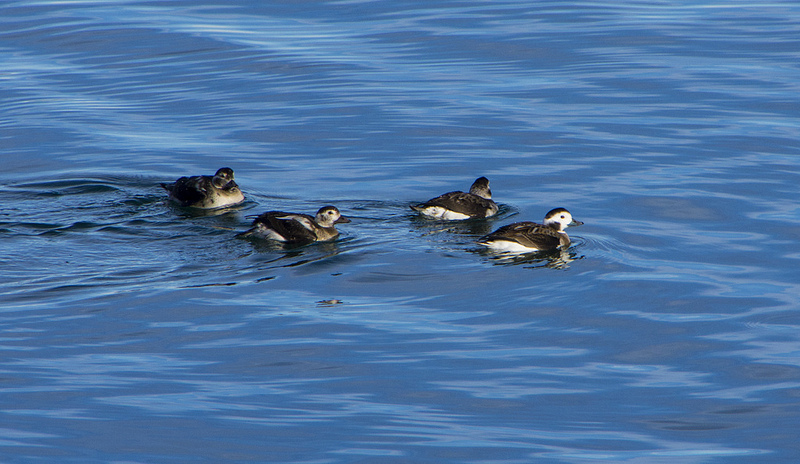
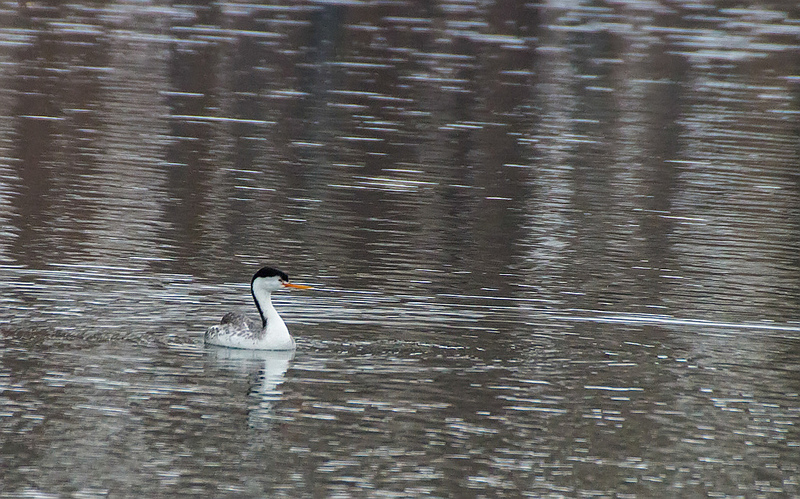
Four of the six Long-tailed Ducks seen from the Rowing Club on the Glenmore Reservoir. November 4, 2012
Thanks for reading!
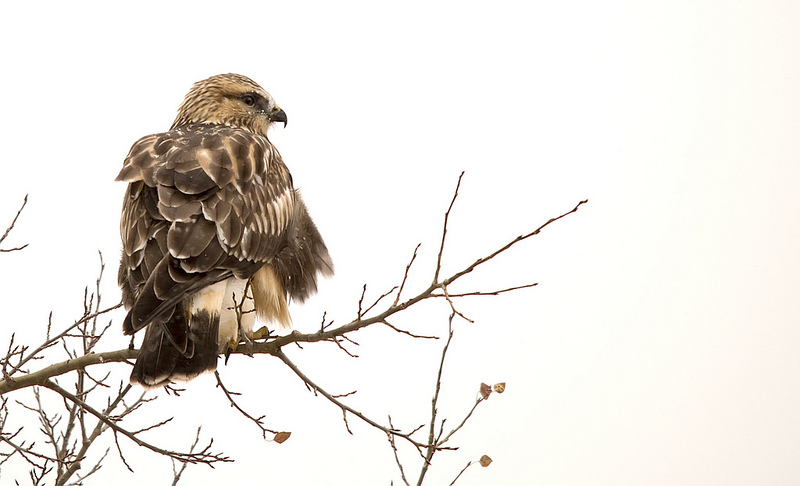
Logan Gibson spotted this adult Golden Eagle on November 4 about 5 km west of Turner Valley.  It had been feeding on carrion and flew to this tree to clean its talons before flying off.
Watch for more of Logan’s photography on the Alberta Birds Facebook group.
Posted by Dan Arndt
Located on the eastern edge of Calgary, Elliston Park boasts the distinction of being the second largest body of water in the city limits, with a 20 hectare storm-water retention pond, stands of poplar, ash, and spruce located around the lake, and in the course of the week, over fifty species of birds were seen on or around the lake.
When I woke up on Sunday morning to head out to the lake, I was greeted by a bright, sunny sky, with great light, above-zero temperatures, and a very good feeling that it would be an incredible walk, and how right I was!
When we arrived at the park, it was nearly completely full of geese, ducks, and gulls galore. The western half of the lake had frozen over, and the eastern end was still open, making the area where the ice meets the water the congregation point for the various waterfowl, with the gulls resting just behind them.
We headed around the north end of the lake first, into the poplars and aspen that border the fence on 17th Avenue SE, in hope of catching some Common Redpolls, or maybe a finch species or two. We were delighted when we came across this Townsend’s Solitaire that stopped to take a look at us and then flew right by.
As we cleared the first stand of trees we got a great view of the rest of the lake, and all the birds out on the water and on the ice.
As we neared the east end of the lake, it became clear that we were getting a little too close for comfort for the large numbers of Canada Geese. Either that, or it was just their time to take off and go forage the surrounding fields for breakfast.
In the northeast bay of the reservoir we got wonderful looks at a pair of grebes that aren’t often seen together, though both have been seen regularly all summer. These grebes had been seen in this bay all week, and the excellent light and close proximity made even my stand-by 18-250 lens get close enough for some good shots! On top of that, there were quite a few Hooded Mergansers in the lake, and these three also posed nicely to have their photo taken.
As we rounded the lake, we found this small flock of House Finches, which gave us a bit of trouble with identification. They sure looked like House Finches, but their vocaluizations were very unusual and sounded more like Purple Finches. In fact, one of the males was much deeper red, almost purple, unfortunately none of the photos I snapped of that one turned out, so here’s the other, more normal looking male.
Â
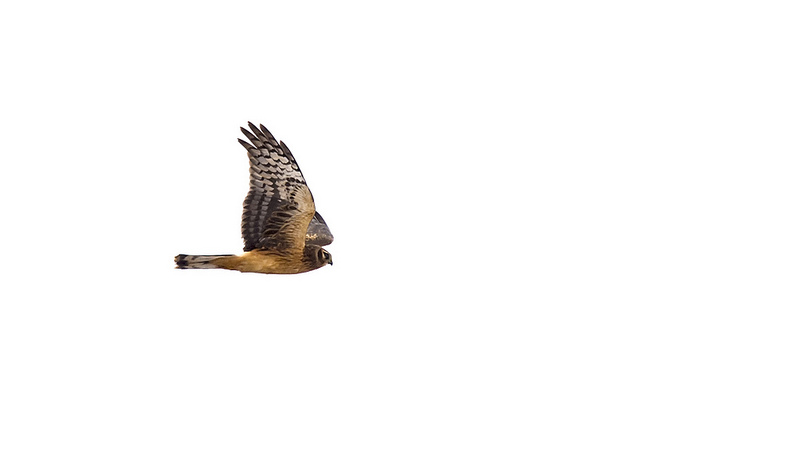
As we continued south and walked along the east shore, we had brief glimpses of a Northern Harrier harassing some gulls on a large pond east of the park, a rather noisy Blue Jay, and many more good looks at a few straggling Ruddy Ducks, Lesser Scaup, Green-winged Teal, and even a close overflight of Common Mergansers. The last of the waterfowl we picked out from the crowd was a lone Barrow’s Goldeneye, picked out by the crescent shaped patch behind the bill, the spotted pattern on the back, and lastly by the green, rather than purple iridescence of the head plumage of the Common Goldeneye. Quite a sight to see!
Our last, and I would say possibly best bird of the day was this lone Golden-crowned Kinglet. I heard its distinctive “seet” calls in the last stand of spruce trees before the parking lot, and decided to pull out my phone and turn on my Sibley Guide app and see if it would come in for a visit. Here are the results:

This curious Golden-crowned Kinglet was beginning to display the orange streak hidden beneath its bright yellow crest.
Thanks once again for reading! Have a great week of winter birding!
Posted by Dan Arndt
Another week, another trip into the wilds of Calgary’s Parks. It was a familiar sight when we assembled at the parking lot at South Glenmore Park, but the difference of a week of sub-zero temperatures turned the open water of the Glenmore Reservoir into a nearly birdless and iced over expanse.
Unfortunately for me, my 150-500mm Sigma lens is once again out for repair, and I didn’t get too many shots of the other birds we had in close proximity to us, so I’ve decided to throw in some photos that I’ve taken elsewhere this year to substitute for the birds we saw on this walk.
We walked from the Boating Club west along the edge of the reservoir, then up into the woods representative of the Boreal Forest biome, then continued west into a finger of Aspen Parkland before returning to the main pathway and returning to our rides.
One of our first sightings from the top of the hill was a Northern Shrike, which appeared to be a juvenile, and quite possibly the same one we saw perched in the exact same spot the week before.
Along the edge of the reservoir we looked out and saw a pair of Bald Eagles attempting to hunt, time and time again. As we neared their roost, we stopped amongst a group of Black-capped Chickadees and happened to spot a Brown Creeper flocking in with them!
The constant din of honking Canada Geese heavily into their migration and low flyovers allowed us some nice close shots, but even better were the groups of Tundra and Trumpeter Swans that also flew back and forth from the west end of the Reservoir, which still had a good amount of open water.
We ascended the hill, and stopped for a few minutes to feed the Black-Capped Chickadees, Red-breasted and White-breasted Nuthatches, and enjoyed their calls and antics while they ate their fill.
We walked through the Boreal Forest biome and as we crossed into the edge of the Aspen Parkland we paused as we heard not only Golden-crowned Kinglets, but also Boreal Chickadees and Brown Creepers. Quite the sight!
Our final addition of the day, as we neared the western-most extent of our walk, was a flock of more than sixty Bohemian Waxwings decorating a completely defoliated aspen like so many leaves. It was quite the sight and a definite cap to our great day of winter birding!
By Ernie Allison
Ernie Allison loves nature. More specifically, he loves birds and wants to teach others how to appreciate them, too. To help further this mission, he writes for the Perky Pet bird feeder provider, birdfeeders.com .
Many bird enthusiasts wish they could help more with bird conservation efforts, but they just don’t have the money to donate to national and international foundations set up for the cause. Luckily, there is a lot you can do in your own back yard to help birds and nature in general. Here are some simple steps you can take to enjoy nature and protect it at the same time.
Bird Feeders
While it is true that birds survived before people started using bird feeders to feed them, the presence of bird feeders have changed the habits of many species.  A few birds that would naturally migrate during the winter may choose to overwinter if you make food available (Overwintering Birds of Calgary). This means that by researching what birds are native to your area, you can provide the right food to keep them healthy during the winter. Fat is hard for them to come by in cold weather so suet, peanut butter, and other fatty treats are best.
White-breasted Nuthatch at suet feeder. Photo by Pat Bumstead
Northern Flickers will come to suet feeders. Photo by Bob Lefebvre
This does not mean that you should only feed birds in the winter. Truthfully, in the summer there is more competition because there are more birds around, so by feeding year-round, you will be more effective, as well as get to see more variety of species. This is also a good way to get birds in the habit of visiting your yard.
Millet feeders attract house sparrows, blackbirds, cowbirds and not much else. So if your goal is to attract a variety of birds, a millet feeder alone will not do the trick. In order to attract a variety of birds you must have a variety of feeders and food types.
Pine Siskins eating niger seed. Photo by Pat Bumstead
House Finches and Dark-eyed Junco. Photo by Bob Lefebvre
However, the activity around your millet feeder will attract the attention of other birds. Other birds will land nearby to see what is going on. Once they see that the sparrows have found millet to eat in a safe place, they will check your yard for other types of food. If the type of food these birds are looking for is available, they may decide to feed in your yard as well.
Be sure that you know what kind of birds will be attracted to your feeder. Certain feed attracts Rock Pigeons, which are not only annoying, but it is illegal to feed them in some areas. While Alberta and Calgary are not among these places currently, it is always good to check out your local laws to be sure.
American Goldfinch eating a niger seed/sunflower seed mix. Photo by Bob Lefebvre
Mourning Doves at sunflower chip feeder. Photo by Pat Bumstead
The types of birds you see will depend on the type of food you provide. Black-capped chickadees will be most attracted to oil-sunflower seeds, but will also visit suet feeders occasionally. House finches and nuthatches also enjoy sunflower seeds, so this is a good choice if you want to attract a variety of birds with one type of food. Woodpeckers enjoy suet feeders most. Make sure your feeder is properly anchored and has bars and places for the birds to cling to. Saucer feeders are effective for woodpeckers as well, and woodpeckers have even been seen at hummingbird feeders.
Northern Flickers on nut feeder. Photo by Bob Lefebvre
 White-crowned Sparrow. Photo by Bob Lefebvre
Wildlife Garden
A great way to help out the avian creatures in your area is to provide a natural environment where they can thrive. By installing plants that are native to your area, you promote the health of other local native species.
Be sure to provide water sources as well. These are great for the health of your garden and for attracting wildlife. Running water is less likely to lie stagnant and accumulate diseases, but there are many ponds and birdbaths that can be easily cleaned with a little effort.
American Robins are regular visitors to birdbaths. Â Photo by Bob Lefebvre
House Finch bathing in a fountain. Â Photo by Bob Lefebvre
You can also design your landscaping in a way that allows smaller birds to be unseen by predators when they are at your feeders. By having multiple levels of trees and shrubs, you promote a safe, diverse environment.
If invasive species are growing in your lawn or garden, remove them by hand. Chemicals harm native species and animals as well. By taking the time to weed by hand, you are protecting the environment, not exchanging one evil for another.
By leaving rotten trees, grass clippings, and other debris in specific areas, you can attract wildlife. You also keep those materials out of the landfill by allowing them to compost in your yard. There are ways you can arrange it so that it’s not an eyesore. The bugs and worms that are attracted to these areas will draw birds and other creatures, which can lead to some great photo opportunities.
Ruby-throated Hummingbirds are attracted to flower gardens. Photo by Pat Bumstead
Common Grackles feeding on the ground. Photo by Pat Bumstead
While house sparrows are the most common species attracted to birds in the Alberta area, by doing a bit of research, you can set your sights on rarer birds. There is an abundance of wildlife in this area, so take these steps to protect it and enjoy it at the same time.
Swainson’s Thrush. Photo by Pat Bumstead
Varied Thrush. Photo by Bob Lefebvre
Baltimore Oriole feeding on oranges. Photo by Bob Lefebvre
Harris’s Sparrow. Photo by Bob Lefebvre
Posted by Dan Arndt
The last 48 hours in Calgary have seen a massive shift in temperature and weather. On Friday the temperature took a dive from 15 degrees Celsius down to -5 C, followed by Saturday being interspersed with heavy snow, high winds, and a steady decline in temperature. On Saturday night the temperature took another drop, and upon waking up on Sunday morning, there was a good 2 centimeters of snow accumulation. I knew right away that the birding was going to be great on the Glenmore Reservoir, and I was not disappointed. Nearly 4000 birds were seen out on the water, many of which came in for good, close views, but the majority of them were too far to get usable photos. Luckily for us, some of the less common ones were close enough to see quite well!
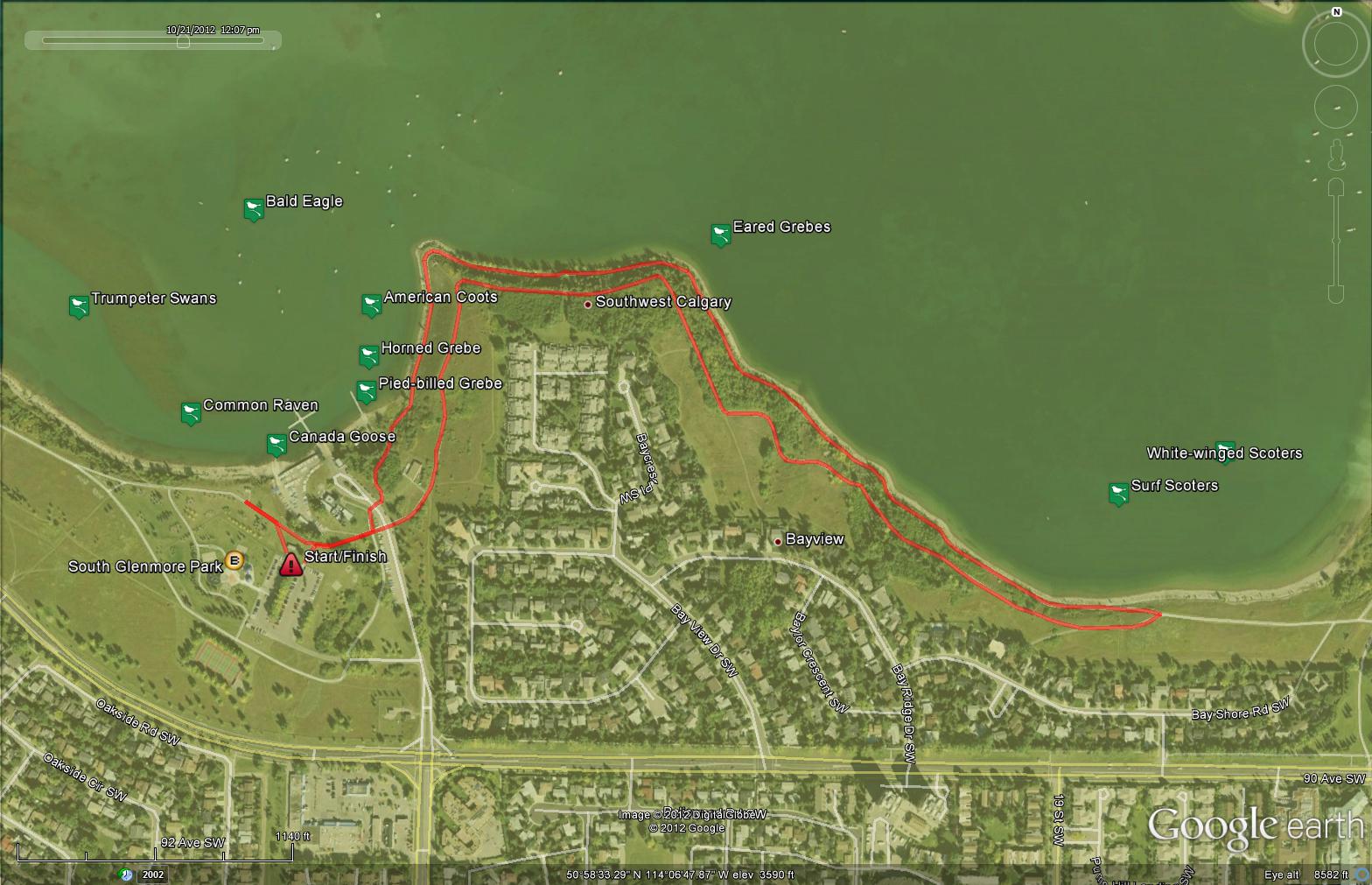
By far the majority of the birds were on the west side of the reservoir, but the Surf Scoters, White-winged Scoters, Common Loons and lone Double-crested Cormorant were in the better-protected eastern bay, closer to the Bayview neighborhood.
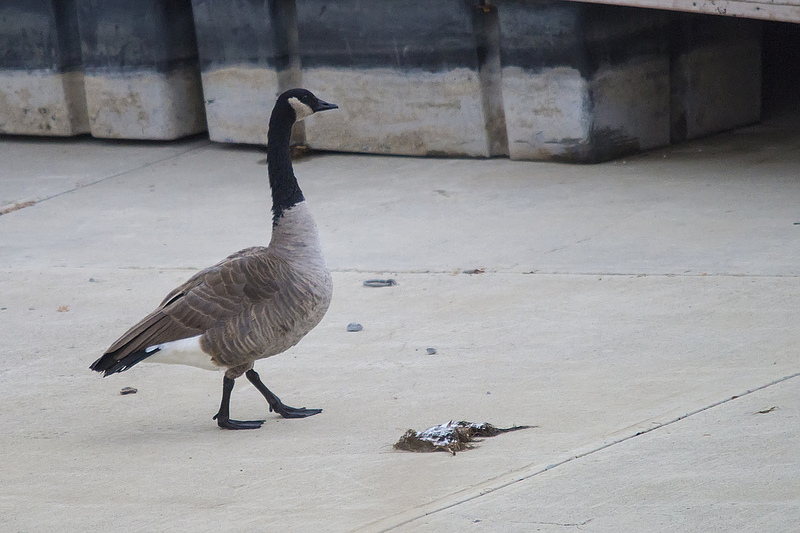
By far the most numerous birds were the American Coots, which had flocked together overnight to number over 1500 individuals in flocks between 20 and 300. We were greeted at the starting point by this Canada Goose who decided that, for once, it would be appropriate to use the boat launch ramp.
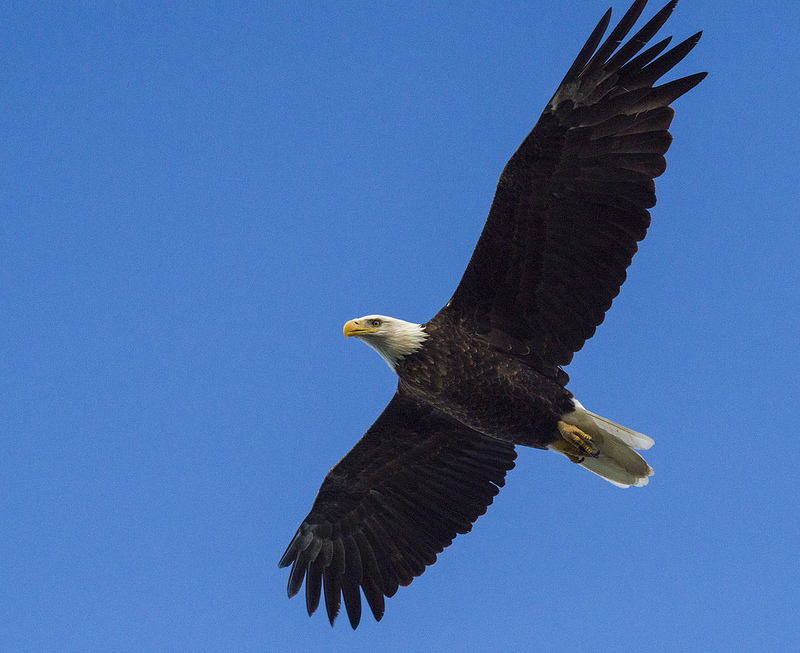
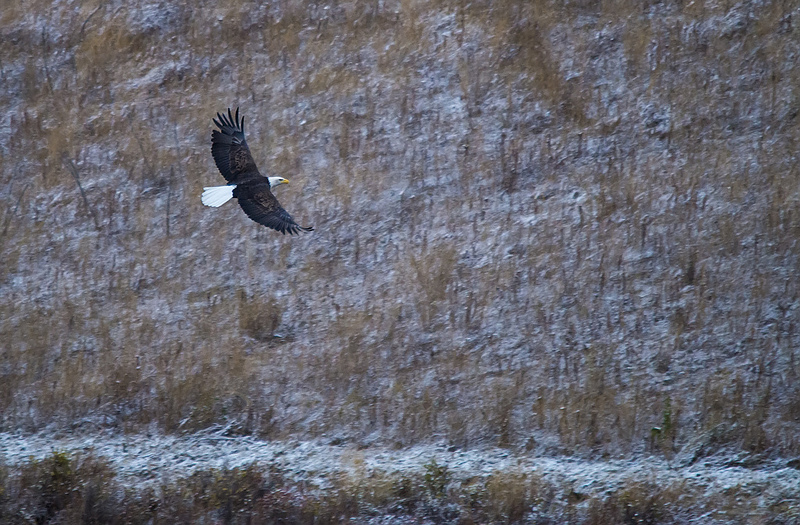
We also had a perfect vantage point to watch this Bald Eagle and its mate harass one of the larger flocks of American Coots in hopes of picking off a straggler.
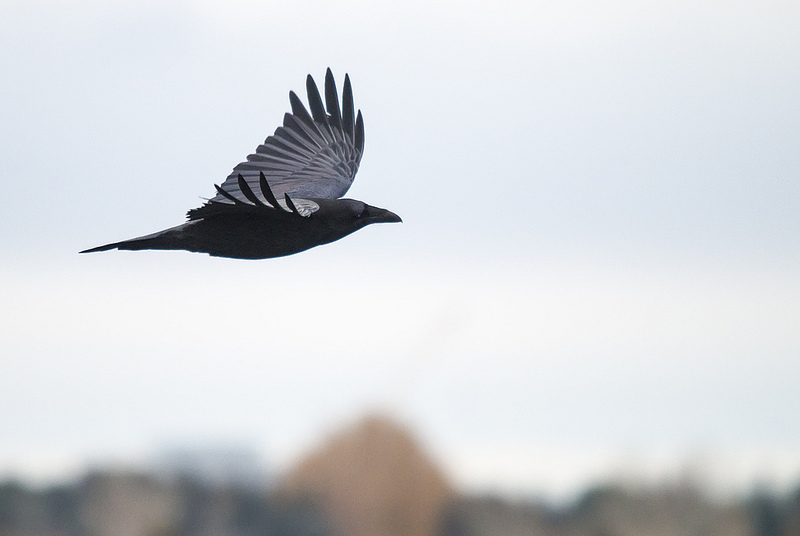
Shortly followed by this Common Raven and its mate flying into the spruce above the Glenmore Canoe Club to harass the Bald Eagles who had set down moments before.
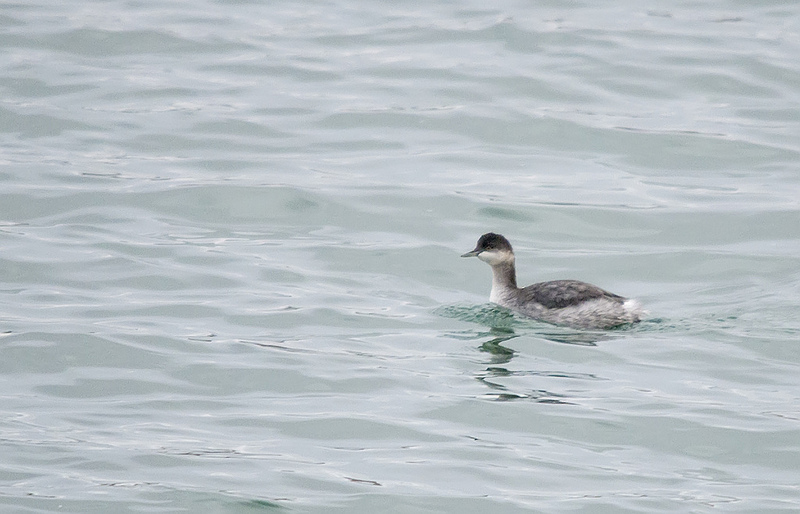
As we scanned the flocks of American Coots, we saw interspersed in their numbers a few Green-winged Teal, Gadwall, Northern Shovelers, and American Wigeons. The main highlight though were the occasional Horned and Eared Grebes that flocked together and seemed to spent as much, if not more time under water diving for vegetation to fuel their migration south.
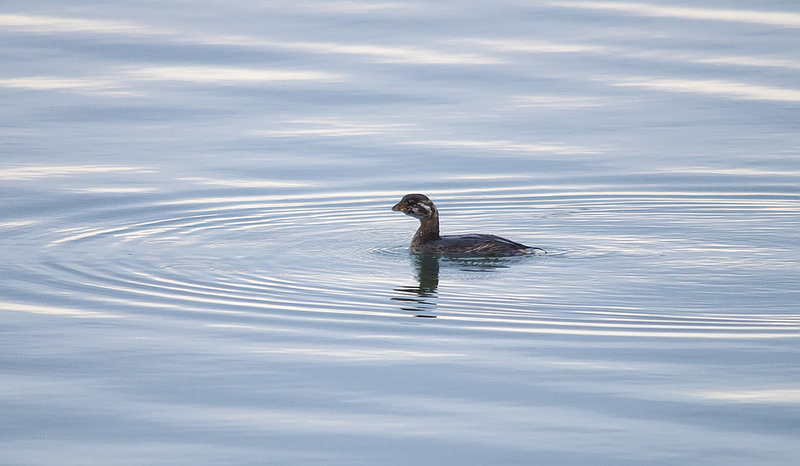
At the east side of the Canoe Club, we found this lone Pied-billed Grebe taking refuge near the docks, resting up and staying hidden from predators.
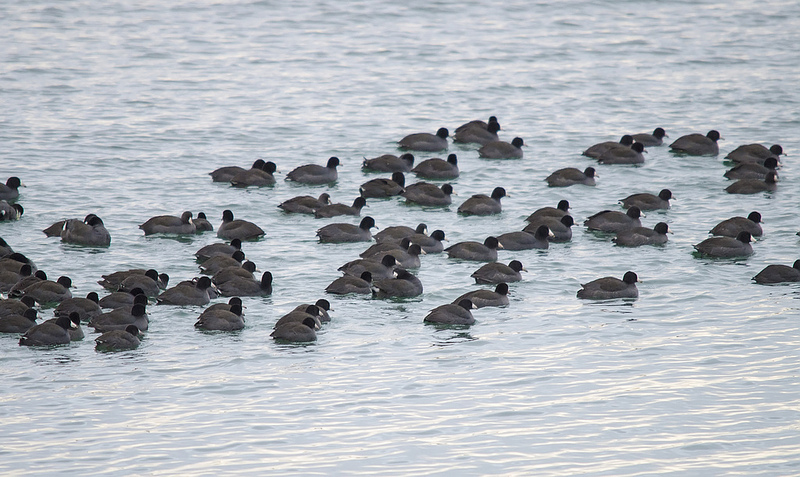
As we neared the end of the point, we came up right against the largest raft of American Coots, and we even managed to pick out a few juveniles just coming into their adult plumage. In the photo below are at least two American Coots whose heads are light grey as opposed to the fully matured individuals with the black head plumage.
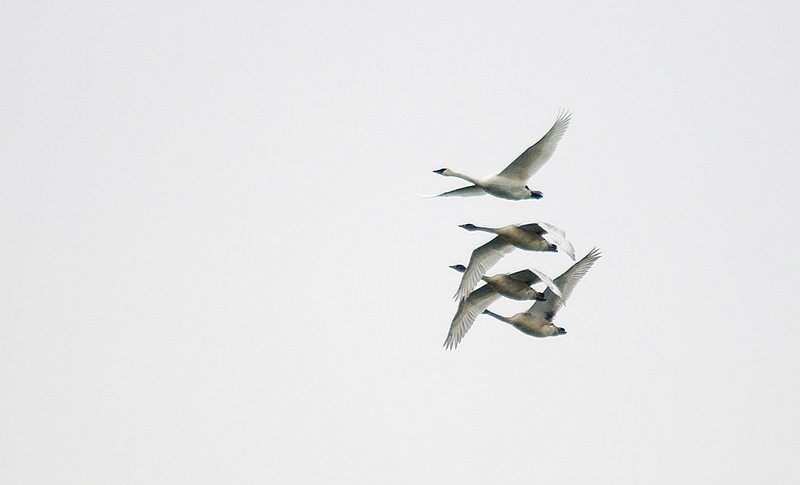
Moments later a few Trumpeter Swans that we saw on the very far end of the reservoir took off and flew directly toward us. They slowly veered south, but not before getting close enough to allow us to get a few flight shots.
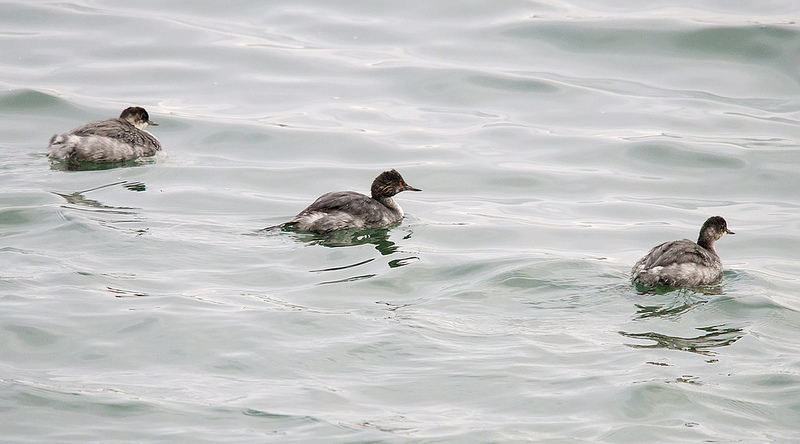
Working our way on to the east, these three Eared Grebes thought it would be a good learning experience to show us what their breeding plumage looks like, as opposed to their usual non-breeding plumage we’d seen so far for the day.
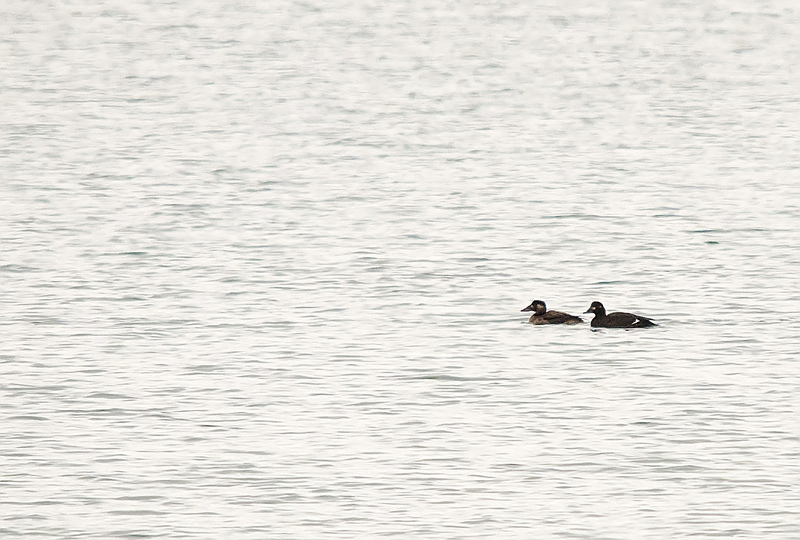
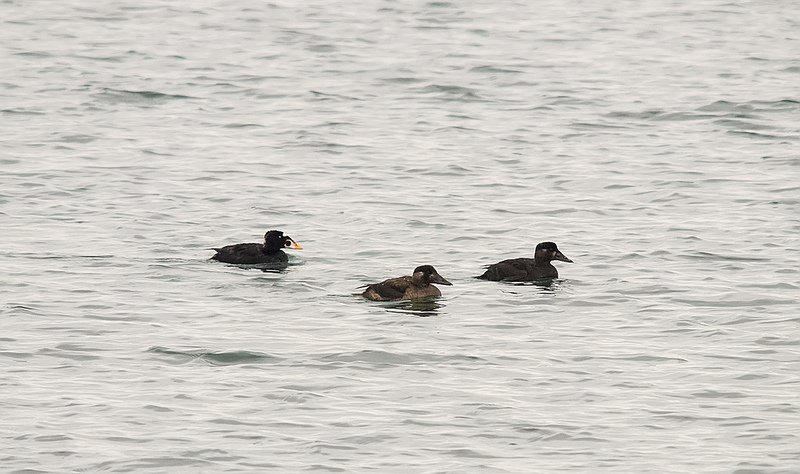
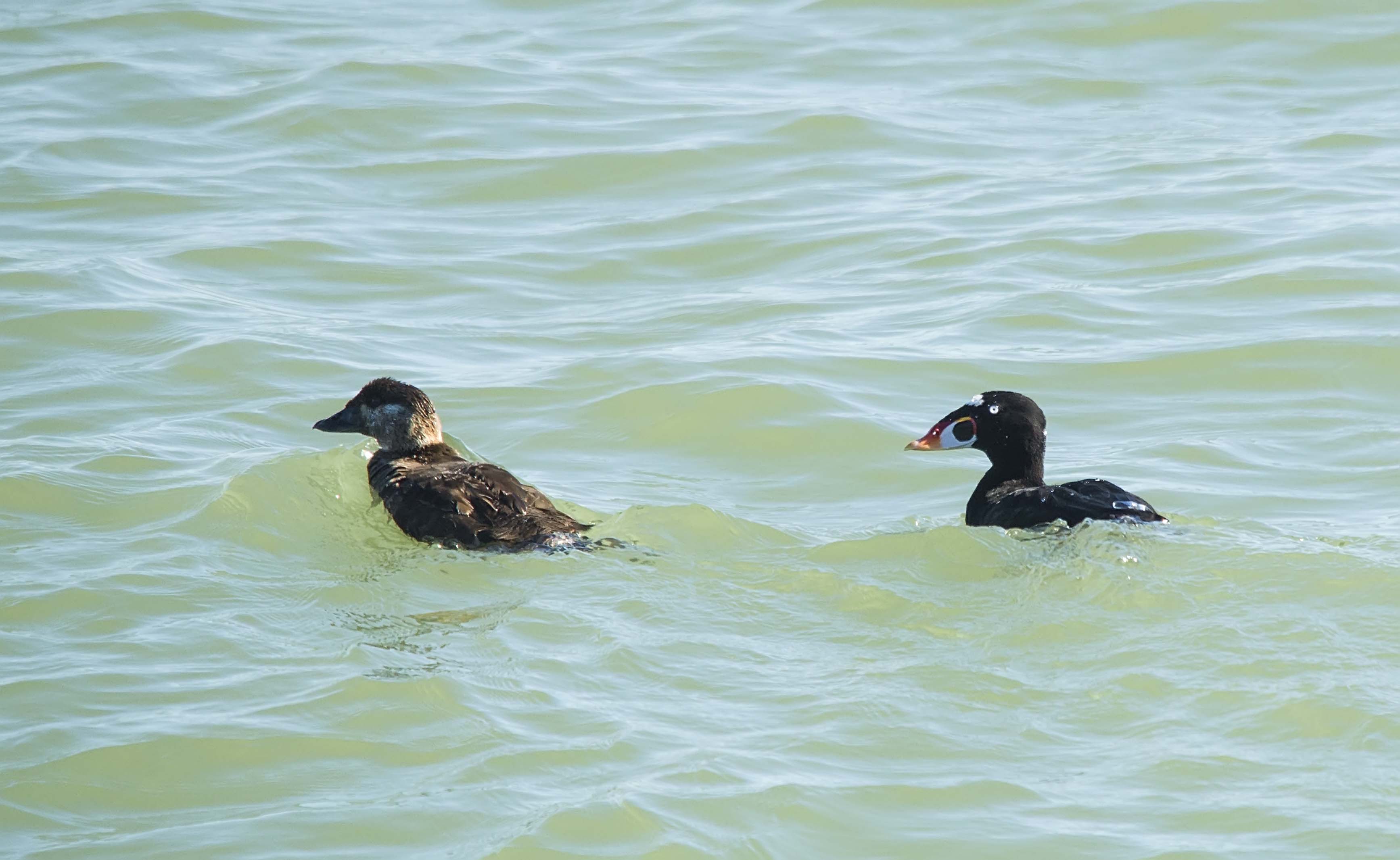
The true highlight of the day though was a group of Surf Scoters and White-winged Scoters in the east bay. While I’ve seen White-winged Scoters a bit closer this year on the Reservoir, and Surf Scoters much earlier during the May Species Count here in Calgary, and even closer on the Iona Jetty in Vancouver, it was a real treat to be able to show these uncommon migrants to our group attendees. This is the very best part of leading these groups and why I love birding. These teachable moments and exposure to new birds like this are more than worth the slight discomfort of the cold.
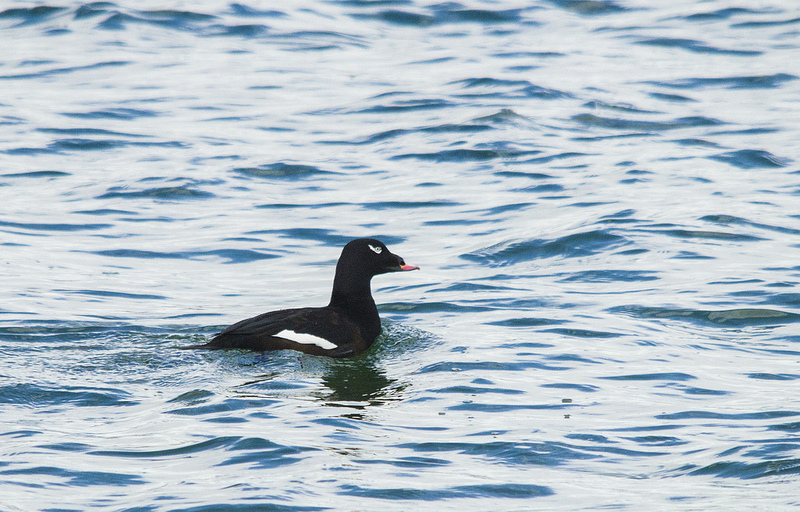
Last Saturday I spent some time down on the Glenmore Reservoir and was able to get much closer to a pair of White-winged Scoters, and managed to snag this shot of an adult male in much better light conditions.
And these Surf Scoters are from Iona Jetty in Vancouver, B.C. in early September of this year.
Have a great week, and good birding!
Posted by Matthew Sim
It has been a while since I last did a famous birders post but today, we have a very special expert birder and naturalist who some, if not most of us know personally; Gus Yaki.
Gus is a lifelong naturalist who has had a profound effect on numerous Calgarians, Albertans and people from across Canada and many other countries, including me. In November 2009, I was just starting to get seriously into birding and enjoying nature when I went on a Nature Calgary field trip to Fish Creek PP led by Gus; he did such a great job leading the trip that he helped to propel me into the world of birding.  Gus leads many trips throughout the year whether they be birding, botany or anything else dealing with nature, you can see some excursions that he will be leading for Nature Calgary in the near future  here.
Originally from North Battleford Saskatchewan, Gus used to walk 3 miles to school each day and got to learn and enjoy local fauna and flora this way. He started a nature tour service and, in 1983, led a trip around North America, following in the footsteps of Roger Peterson and James Fisher who had gone 30,000 miles around North America 30 years earlier. As Peterson’s and Fisher’s journey was immortalized in the book Wild America, so Gus’ trip was immortalized in the book, Looking for the Wild, written by Lyn Hancock, who was on the trip with Gus. Gus is very active in all conservation, birding and overall nature aspects of Calgary and, for me, is undoubtedly qualified as a famous birder.
Below are some questions I asked Gus about various aspects of his birding and natural life and his responses.
Note: Photos below courtesy of  http://www.stmu.ab.ca/
Posted by Dan Arndt
Another week, another great week of birding one of the incredible natural areas of Calgary. This time we headed down the Western Headworks Pathway, one of the primary irrigation canals of the Bow River, which extends all the way to Chestermere Lake and provides water to farms even further east and south from Calgary. Our walk took us from just south of 17th Avenue SE all the way to 50th Avenue SE and back again, all the while keeping us incredibly close to the birds and allowing for some decent shots despite the gray, gloomy skies and incredibly poor light all morning long.
One of the best sightings early on were this pair of Yellowlegs, one Greater and one Lesser, showing off the differences in overall body size, bill shape, and bill length.
Shortly after that we came across a large mixed flock of Mallards, Northern Shovelers, Green-winged Teal, and even a lone Northern Pintail was in the mix!
A constant reminder of just how close to the Bow River we were was the nearly incessant flocks of gulls, ducks, and even one large flock of nearly forty female and juvenile Common Mergansers.
One raft of Mallards seemed to weave in and out of a flock of American Wigeon and even involved a few Hooded Mergansers, but this lone Pied-billed Grebe nearly escaped our notice hidden amongst some vegetation.
At least two of the male American Wigeon were in full breeding plumage, but instead of the usual white crown on the bird, these Wigeon had yellowish crowns. Very strange.
Another bonus bird that hasn’t been seen on many of our walks for the past year are these Eurasian Collared Doves. While common in residential neighbourhoods, they aren’t often found in the usual spate of parks the Friends of Fish Creek courses will visit.
In contrast, these Rock Pigeons, while posing beautifully on a train bridge, are as common as, well, Rock Pigeons on our walks.
At the far south end of the walk we found our first Killdeer of the day, well hidden amongst the gravel and vegetation on the shore.
Our walk back was essenially better looks at many of the same birds, and as we came up alongside the Hooded Mergansers, something spooked them and flushed them up off the canal.