Archives

Q & A: Feeding Ducks

By Bob Lefebvre

Here at the Birds Calgary blog, we receive a lot of questions from bird-friendly folks throughout the province. We are going to start sharing some of them with our readers as just another way to spread bird knowledge. 

If you have a question, email us at birdscalgary@gmail.com.  We may post your question and our answer.  We won’t print your name or email address.

Q: I was wondering if there is anywhere in Calgary that is a good location to go and feed ducks on a lazy Sunday afternoon?

A: There are several good spots to observe ducks at close range in Calgary, but it actually is not a good idea to feed them.  Many people do feed them bread and similar items, but these are like junk food for ducks, with lots of carbohydrates but not enough minerals and protein to provide for proper health and growth.  This sort of artificial diet is especially bad for the ducklings once they hatch. Besides malnutrition, there are other problems associated with feeding them bread products, such as the spread of disease and the loss of natural behaviors.

However, there are healthy products you can feed to ducks.  They do well on grains like cracked corn, wheat, barley, and oats; high-quality birdseed; grapes (cut up); chopped lettuce; and frozen peas and corn.  Any such feeding should be done in moderation and cautiously, with every attempt made not to disturb the birds.
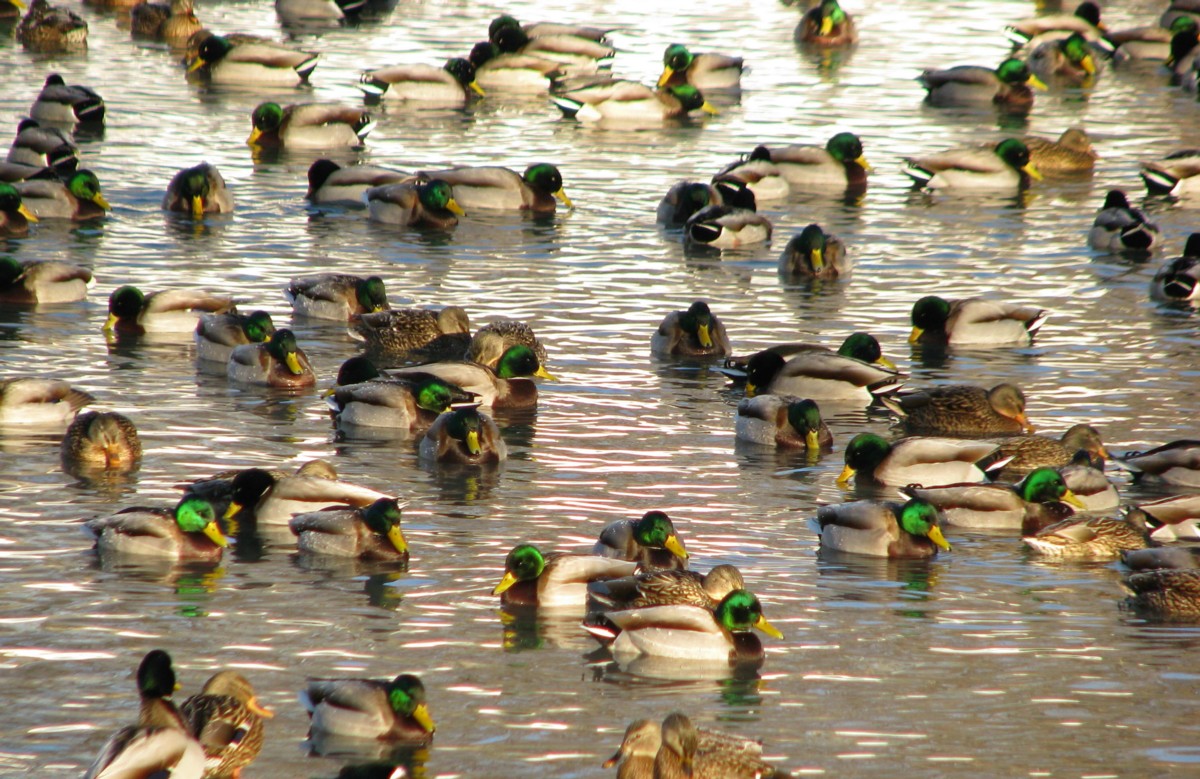
Mallards at the Inglewood Bird Sanctuary

There are many small ponds in parks in the city where waterfowl can be seen.  Good places include Prince’s Island downtown, Pearce Estate in Inglewood, and Confederation Park between 10 Street and 14 Street NW.  All of these have benches or grassy areas near the water.  There is also a great lagoon at the Inglewood Bird Sanctuary where you can observe Mallards, Canada Geese (and, in a few weeks, ducklings and goslings), the beautiful Wood Duck, and other ducks at close range, but it is illegal to feed wildlife in the sanctuary (it is also illegal in Fish Creek Park).  In any case I would encourage you to watch the birds but let them feed naturally wherever you go.
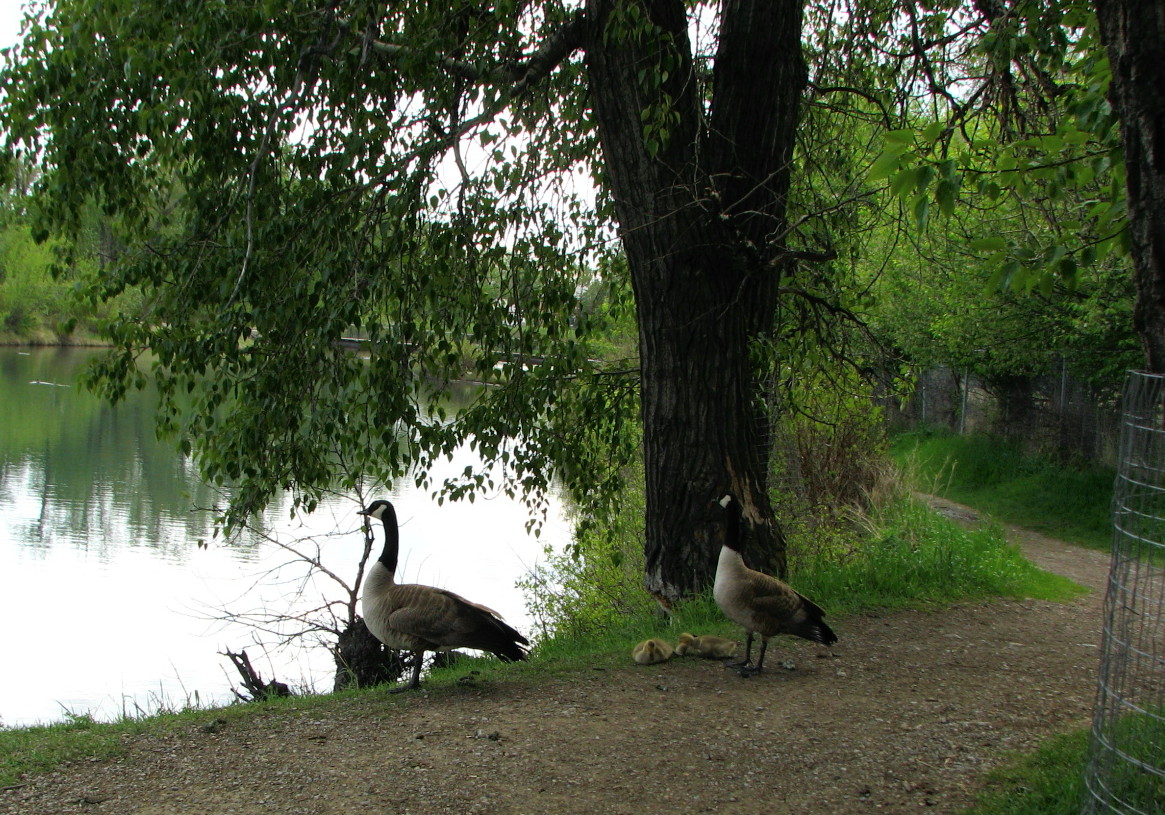
Canada Geese with goslings at IBS 
Spring Birding in South Glenmore Park and the Weaselhead

Posted by Bob Lefebvre

April marks the beginning of the spring session of the Friends of Fish Creek birding courses.  For this three-month session, Dan Arndt and I decided to lead a group at 7:30 a.m. on Sundays.  This might seem a little early to be going out in April, but by May and June the sun will be high before we get under way, and we hope to see and hear more birds than we would later in the day.

Dan is away for the first two weeks, so I will be reporting on what we saw, with photos provided by two of the course participants, Glenn Alexon and Paul Turbitt.

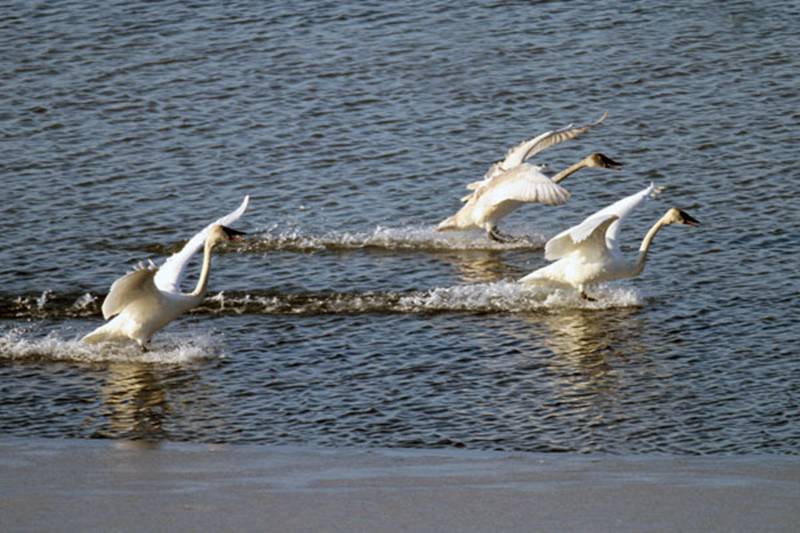
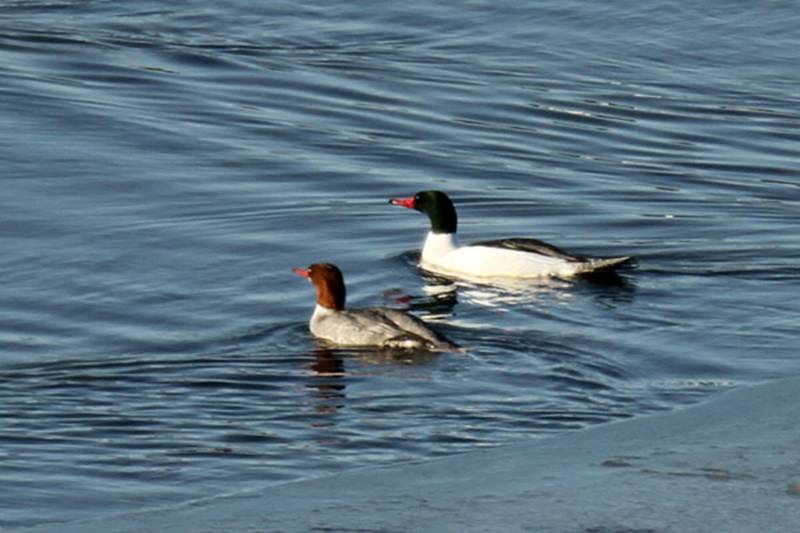
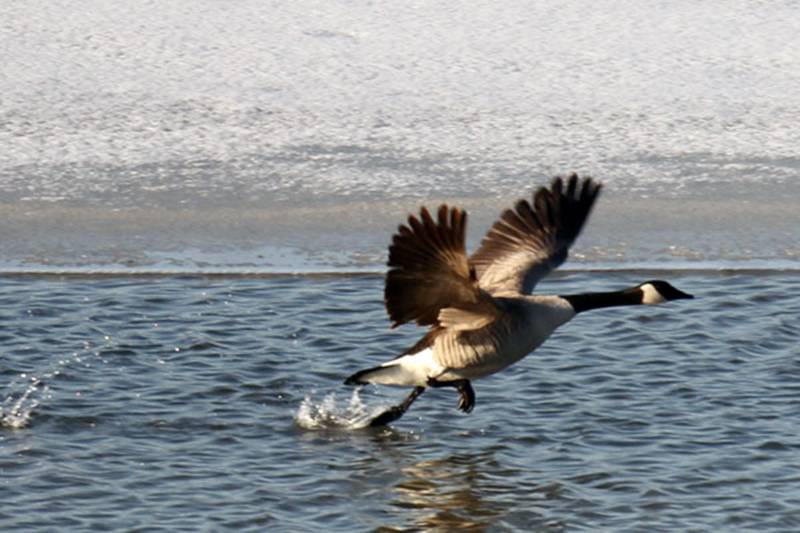
The first outing, on Easter Sunday, was in North Glenmore Park and the Weaselhead.  We spent about an hour checking the west end of Glenmore Reservoir first.  It is still almost completely frozen, with only a few small areas open in the west end, but there were some waterfowl there, notably some impressive Trumpeter Swans.

 Trumpeter Swans landing on the water.  Photo by Glenn Alexon.

Common Mergansers:  female (left) and male (right).  Photo by Glenn Alexon.

Canada Goose taking off.  Photo by Glenn Alexon.

Then we headed down in to the Weaselhead.  A highlight there was a Townsend’s Solitaire singing from the top of a very tall spruce.

Townsend’s Solitaire.  Photo by Glenn Alexon.

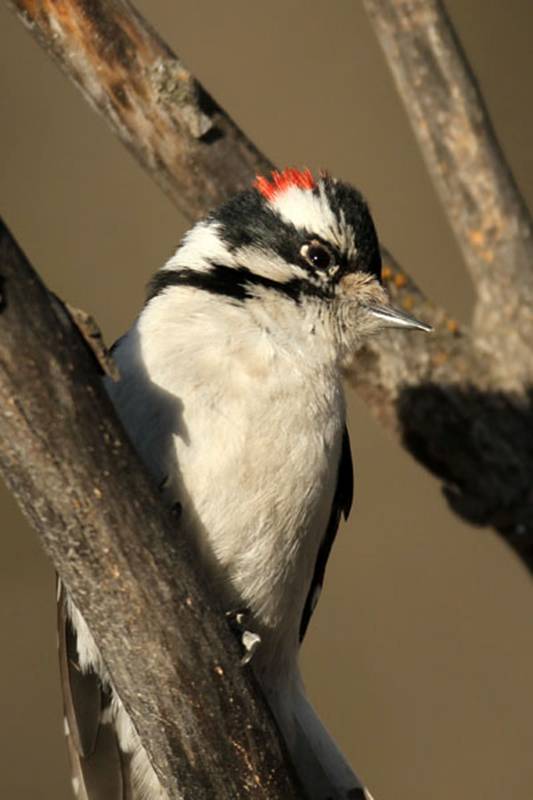
Male Downy Woodpecker.  Photo by Glenn Alexon.

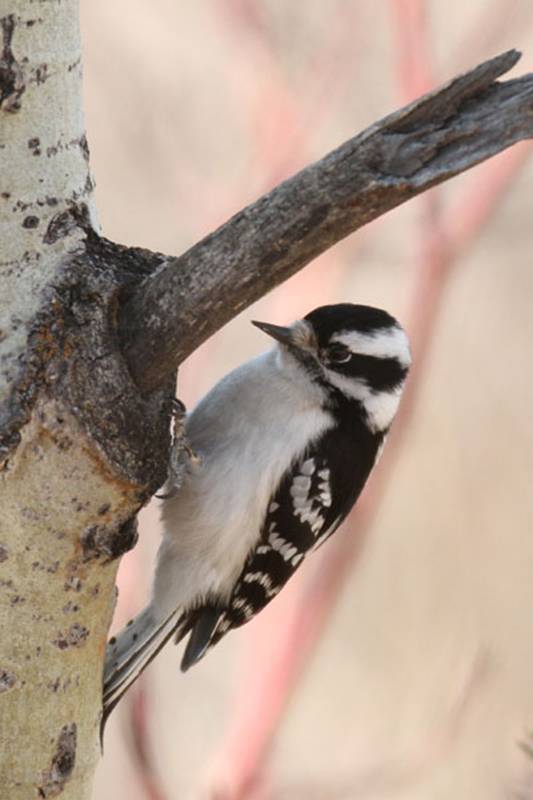
Female Downy Woodpecker.  Photo by Glenn Alexon.

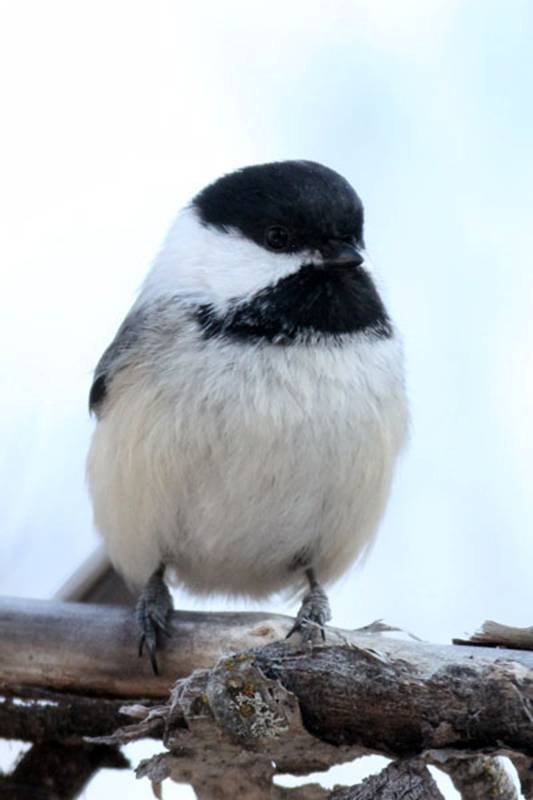
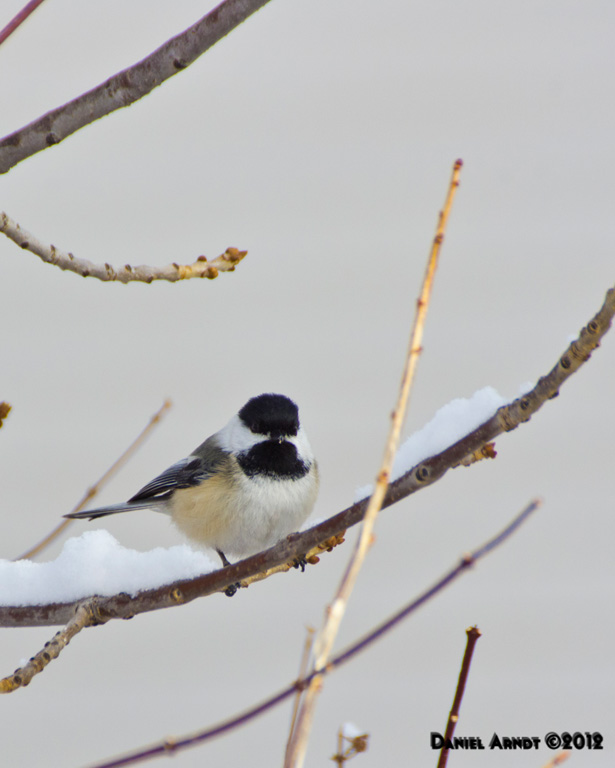
Black-capped Chickadee.  Photo by Glenn Alexon.

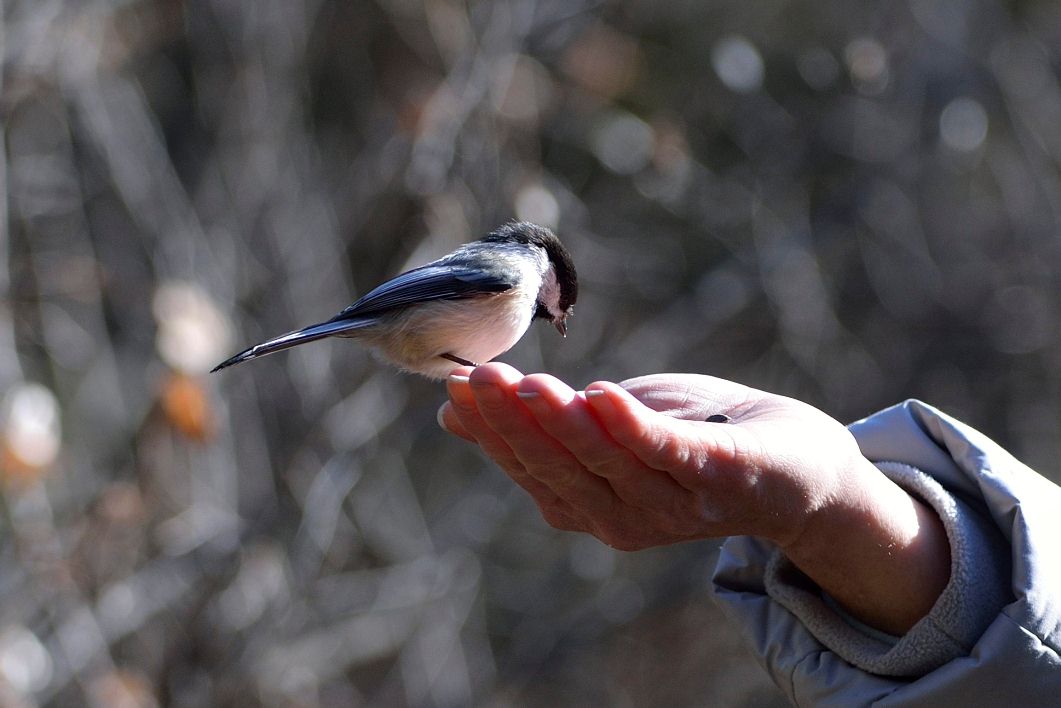
These chickadees expect to be fed.  Photo by Paul Turbitt.

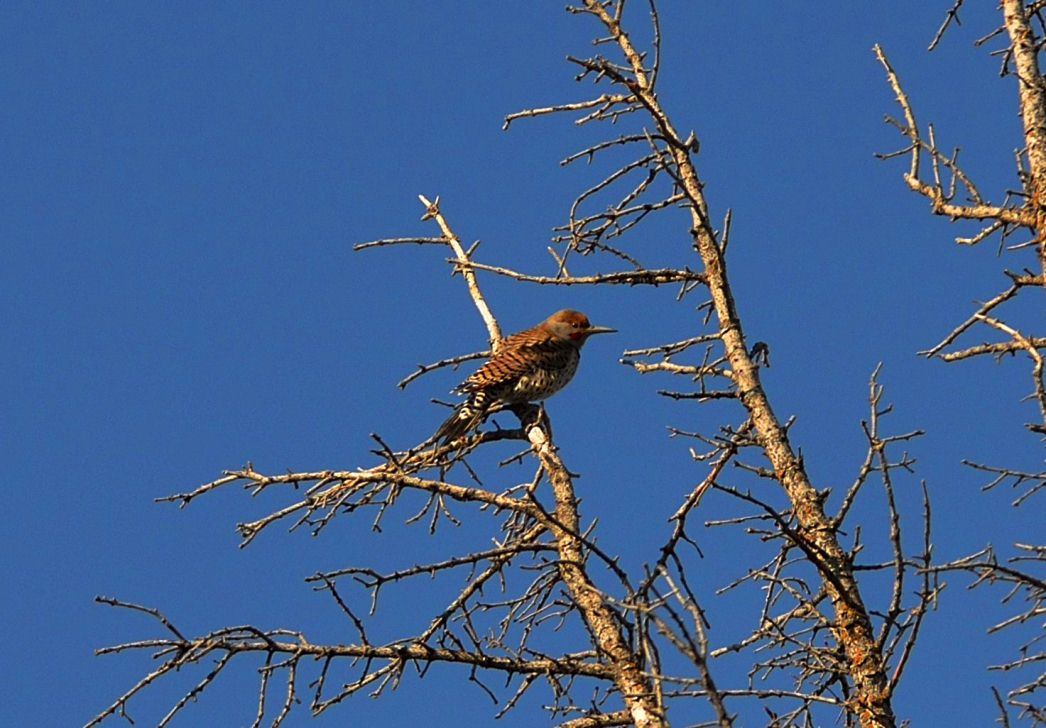
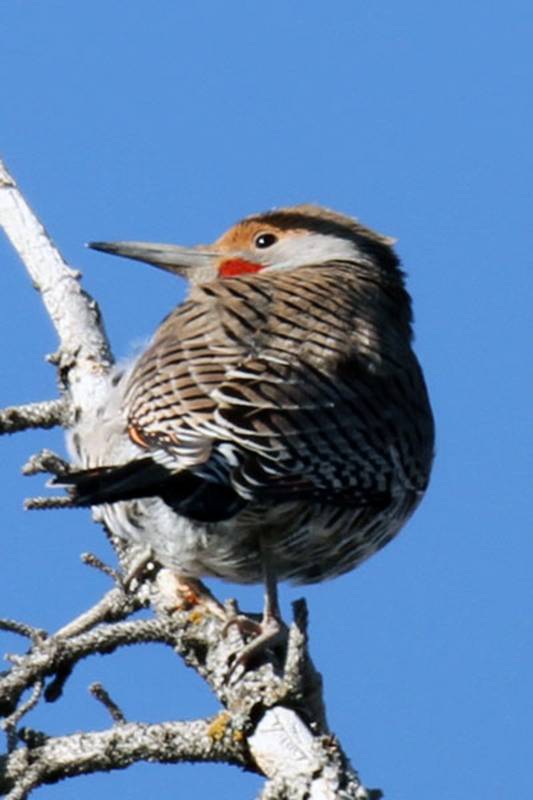
Northern Flicker.  Photo by Paul Turbitt.

Northern Flicker.  Photo by Glenn Alexon.

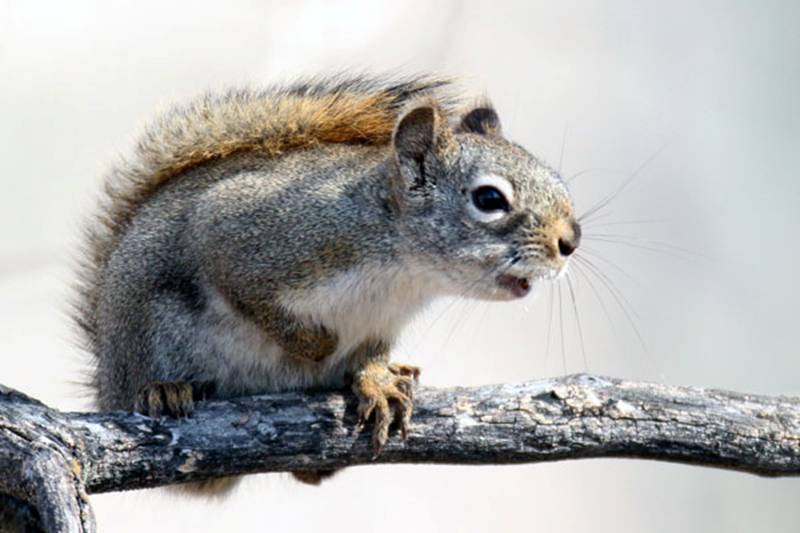
There were quite a few Red Squirrels around, and a couple of Least Chipmunks were also seen.

Red Squirrel.  Photo by Glenn Alexon.

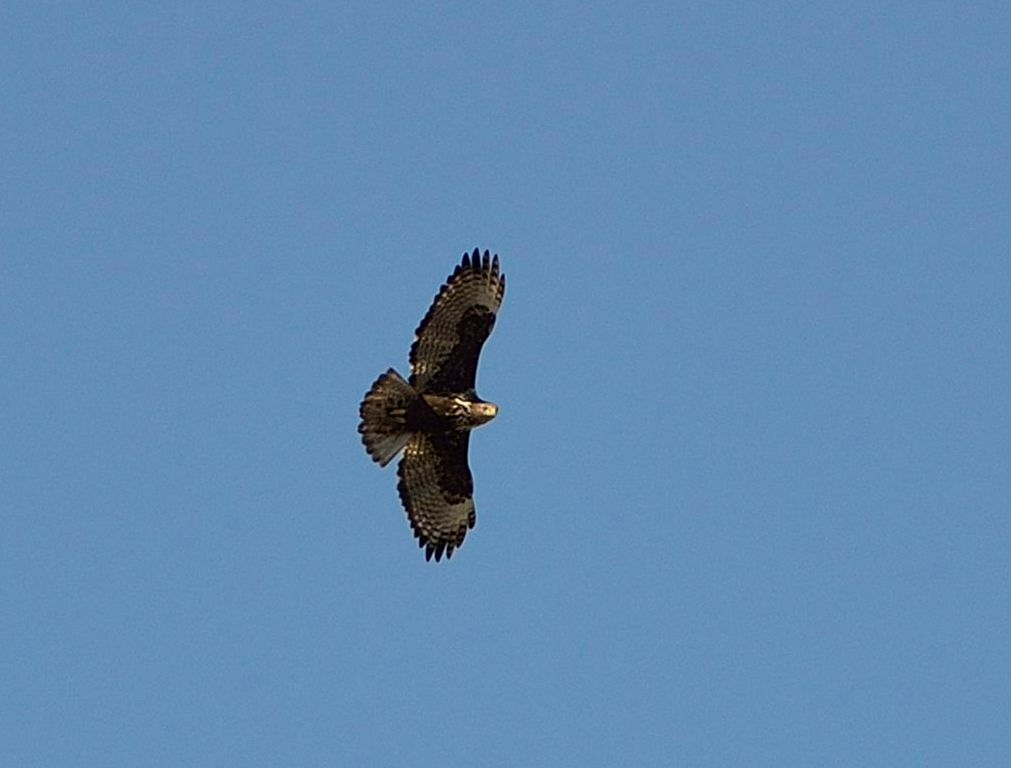
We saw three Red-tailed Hawks overhead, including this dark Harlan’s Hawk.

Harlan’s Red-tailed Hawk.  Photo by Paul Turbitt.

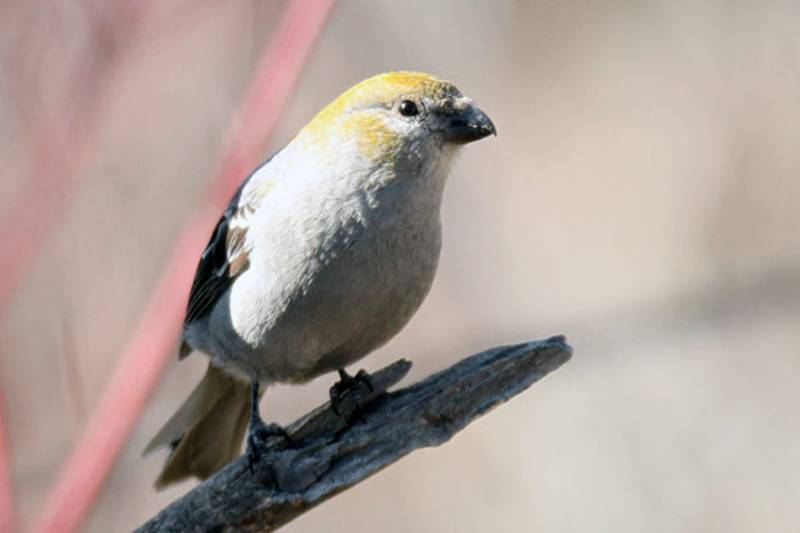
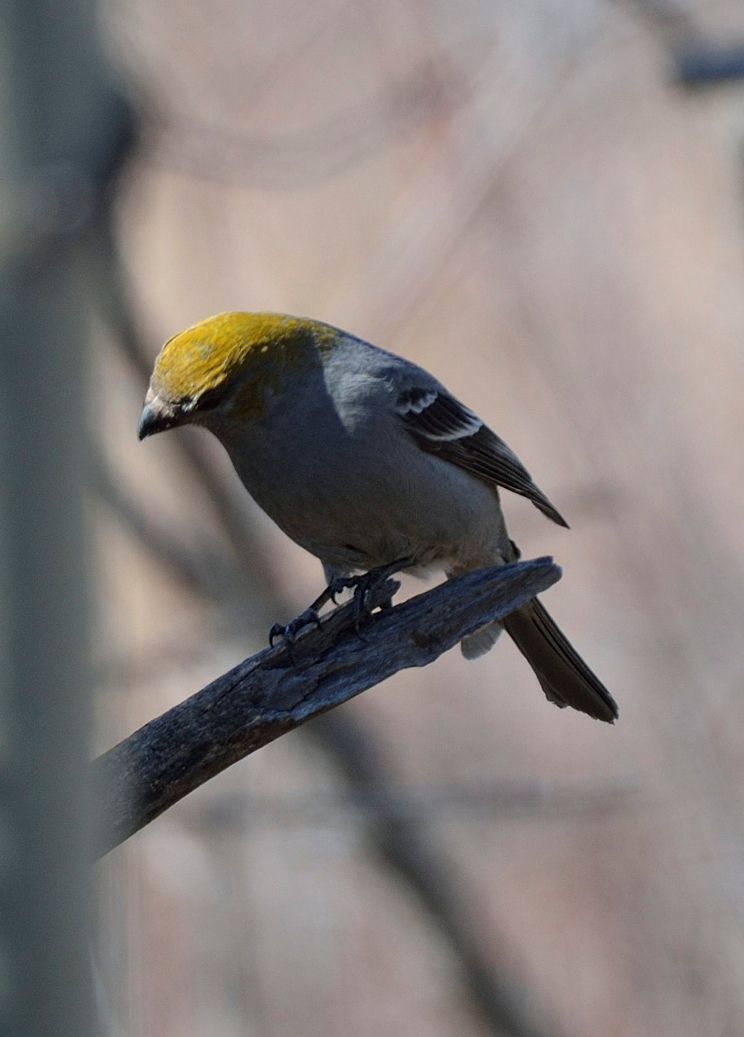
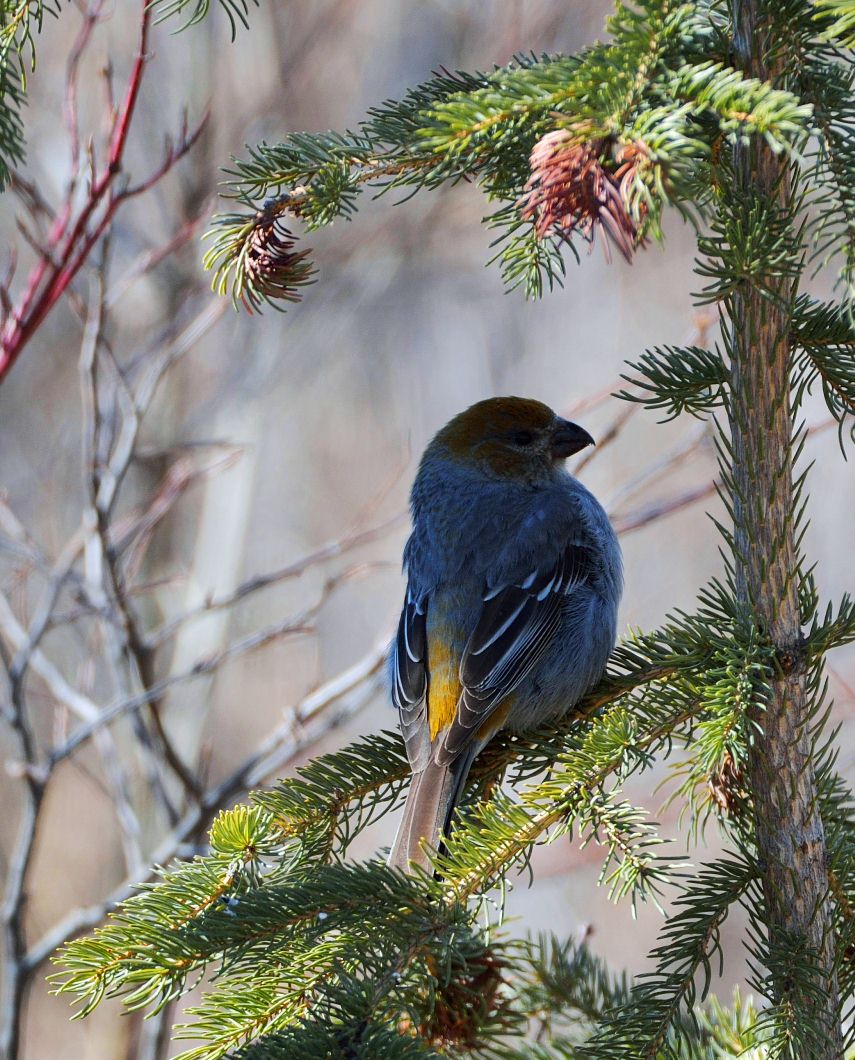
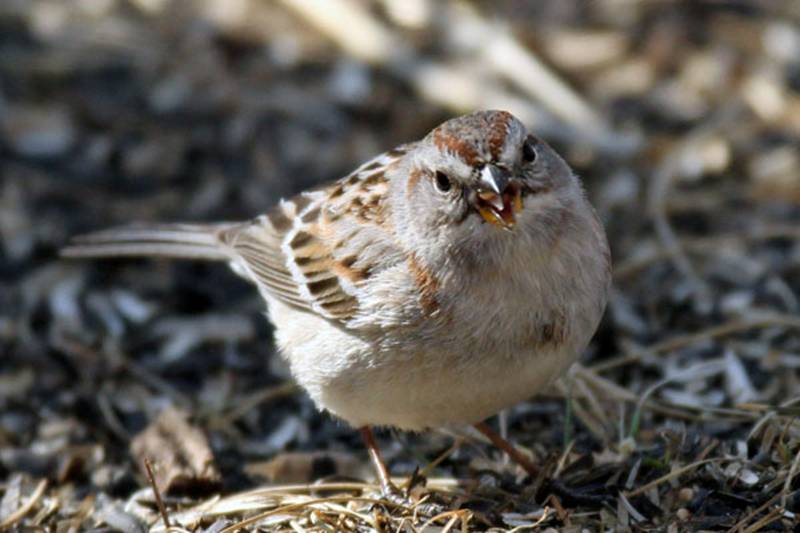
We had hoped to see Pine Grosbeaks and American Tree Sparrows at the feeders.  There were none around when we first went through, but on our last stop on the way back we found a pair of each.

Pine Grosbeak.  Photo by Glenn Alexon.

Pine Grosbeak.  Photo by Paul Turbitt.

Pine Grosbeak.  Photo by Paul Turbitt.

American Tree Sparrow feeding on the ground.  Photo by Glenn Alexon.

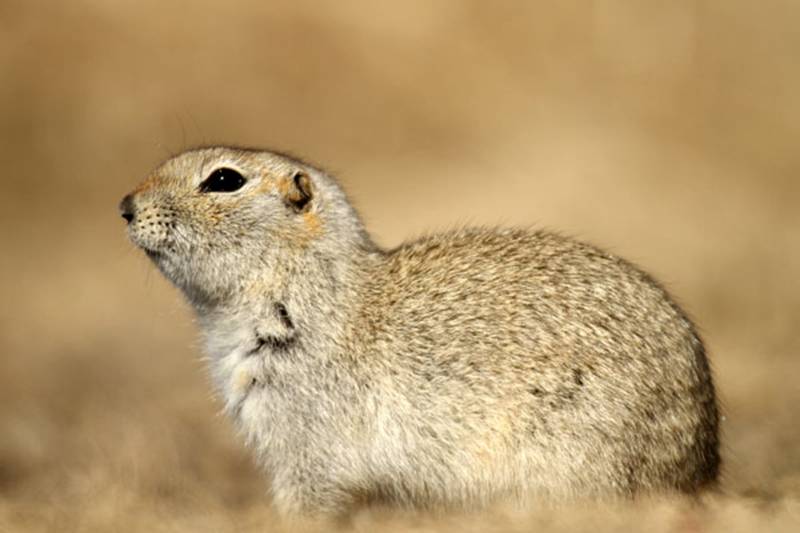
Back up by the parking lot, an early Richardson’s Ground Squirrel was the last species of the day.

Richardson’s Ground Squirrel.  Photo by Glenn Alexon.

In all, we saw 28 bird species and four mammals.  The eight groups who went to this area during the first week of the course collectively saw 48 bird species and six mammal species.  The Weaselhead is a great place for spring birding!

To see more of Glenn Alexon’s photos, go to his Flickr page.

To read about one of the Saturday morning course outings, go to David Pugh’s blog.

Lafarge Meadows – Finally!

Posted byDan Arndt

The final Sunday Morning excursion by the Friends of Fish Creek Winter Birding Course took us to Lafarge Meadows. After going there for the first time with the Fall course, I was looking forward to getting back there as the spring migrants began to filter through, and what a visit it was!

One of the birds that most non-birders consider a sure sign of spring, is the charismatic and well known American Robin, many of which were present and singing their spring song.

Another of the early migrants we were treated to at the beginning of the walk was the ever beautiful song of the aptly named Song Sparrow.

While the field marks weren’t easy to see from that distance, the song was so distinctive that there was no way you could mistake this bird for any other. Over at the boat launch we had some decent views of Common Mergansers (pictured below) and a pair of Lesser Scaup.

We then turned southward to head into LaFarge Meadows proper, checking a few of the ponds near the bridge where we found a few close-ups of some Lesser Scaup and American Wigeon.

As we edged further south along the river, we took note of the huge numbers of gulls both along the river, and in the ponds along the west side that were still frozen, and were greeted by some nicely posing Herring Gulls on a gravel bar in the Bow River, as well as a small number of another new bird for the year, the Franklin’s Gull.

Finally, as we headed back north toward the beginning of our route, I spotted a small bird atop a nearby tree, thinking it may be another sparrow, or maybe even an early swallow species, but was immediately alerted to its identity by the single sharp note of its call, identifying itself as a Northern Shrike!

As we reached the vehicles, all of us were forlorn at the prospect that this was our last walk of the season with that particular group, but all attendees were looking forward to the next round of courses, starting up immediately the following week! Travel will keep me away for the first two weeks of the course, from which I will post some photos on my regular schedule, and but until then, good birding!

Famous Birders: Roger Tory Peterson

Posted by Matthew Sim

In this Famous Birders post, we take a look at one birder who completely changed the face of birding as we know it today.

Roger Tory Peterson, is one of the most famous birders ever to have lifted a pair of binoculars. Except that a lot of the time, he didn’t even need binoculars. As he once said, “I can recognize the calls of practically every bird in North America. There are some in Africa I don’t know, though.” A master  of ornithology, Peterson is best known for his revolutionary field guides which were “the bridge between the shotgun and the binoculars in bird watching.”

Roger Peterson was born in Jamestown New York in 1908, the son of european immigrants. At the age of 11, birds became a part of his life when his 7th grade teacher taught the class about these remarkable little creatures. From that point on, Roger’s passion for birds and all other aspects of nature grew and grew. After finishing high school, Roger Peterson got a job painting furniture, working hard and saving his money for art school, which he hoped to attend. In 1925, Roger saw a notice about the next American Ornithologist’s Union meeting, to be held in New York City. He also saw that there would be an art show, to which he promptly submitted two paintings of his (both were accepted). At the meeting, Roger met many of the birders and bird artists of the time. Within a year of the meeting, Roger had two more paintings shown at the first American bird art exhibit and was soon meeting the big names and got involved in the big organizations of birding at the time. Within a few years, Roger was even writing his first field guide.

In the year 1933, Roger’s A Field Guide to the Birds found it’s way to Francis H. Allen’s desk, an editor for the publisher Houghton Mifflin. From that point on, there was no turning back. At first, only 2,000 copies were made, sold for 2.75$ a piece. Roger Peterson’s first field guide was a huge hit and within the first week, all 2,000 copies were sold, prompting more copies to be published. This was only the beginning of a very illustrious career for Roger and as of today, he has sold 7 million copies and 52 field guides make up the Peterson Field Guide System. In a time when shooting birds was as close to birding as it got, Roger’s field guides revolutionized the way people saw the natural world around them. What made Peterson’s field guides so successful is that they are simple to look at, with arrows pointing to distinguishing field marks that might help in identification. This simplicity helped many potential birders easily understand and identify what they were looking at.

Roger Peterson became one of the leading birders, nature artists and natural writers of his time and it is in part thanks to his work that so many people are involved in birding today; he truly was a great birder, perhaps, some argue, the best that there has ever been.

Photos courtesy wikipedia.

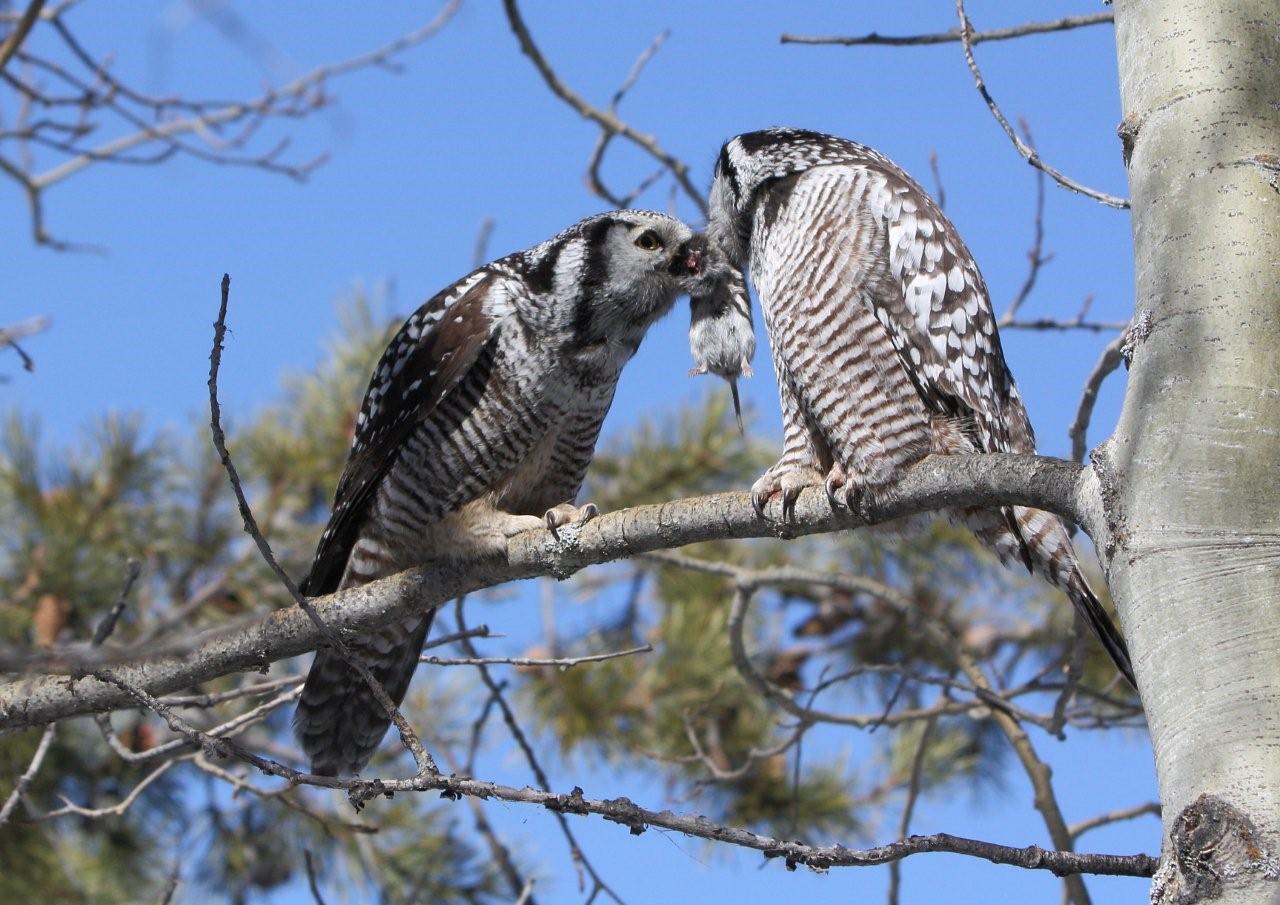
Sunday Showcase: Northern Hawk Owl Courtship

Photos by Rob English. Thank you for sending this fantastic sequence of pictures!

A Downtown Sanctuary in Inglewood

Posted by Dan Arndt

Inglewood Bird Sanctuary is quite probably the most well known birding locale within the city limits. As a new birder, it was an old standby for me, and helped me learn more about birds, and photography, in my starting years than any other place in the city. In the summer, barely two weeks would go by between visits, but I never found much to see in the winters. This course with the Friends of Fish Creek has opened my eyes to many more places within the city limits, but this place is one of the best “stand-by” locations I know of in a pinch, and quite often has a wide variety of unusual or first sightings within the city during migration, but also throughout the year.

Last weekend, on both Saturday and Sunday. I joined the Friends of Fish Creek birding course to assist Gus Yaki. Both days I saw new birds for the year, and had some great sights of old favourites.

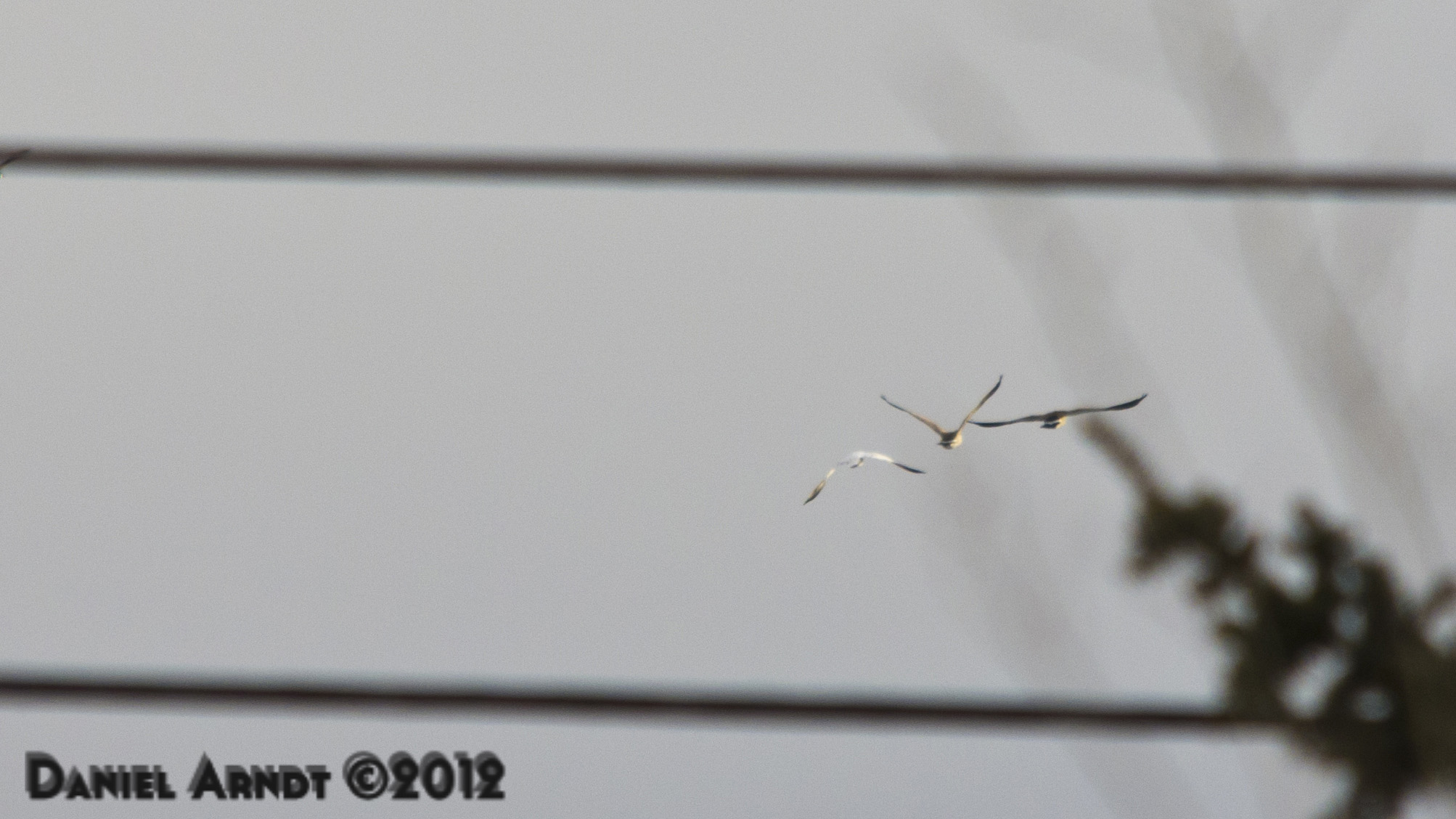
I’d definitely have to count among the highlights the Snow Goose I saw the first morning out. Though it wasn’t much more than a speck on the horizon, it was a new one for me. Nothing more than a recording shot of the sighting, but I loved it.

Snow Goose

Snow Goose on left, flying far and fast away from me.

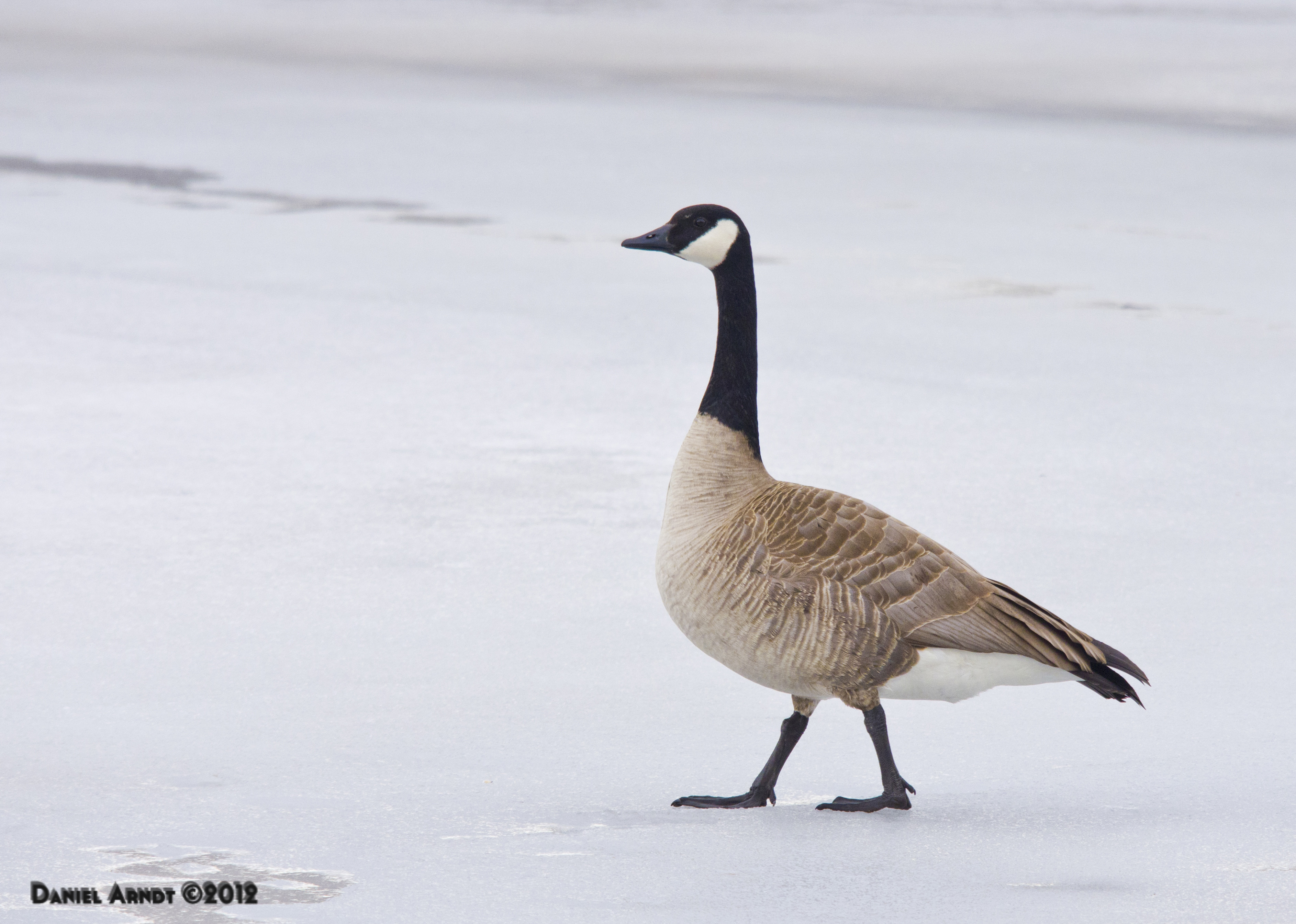
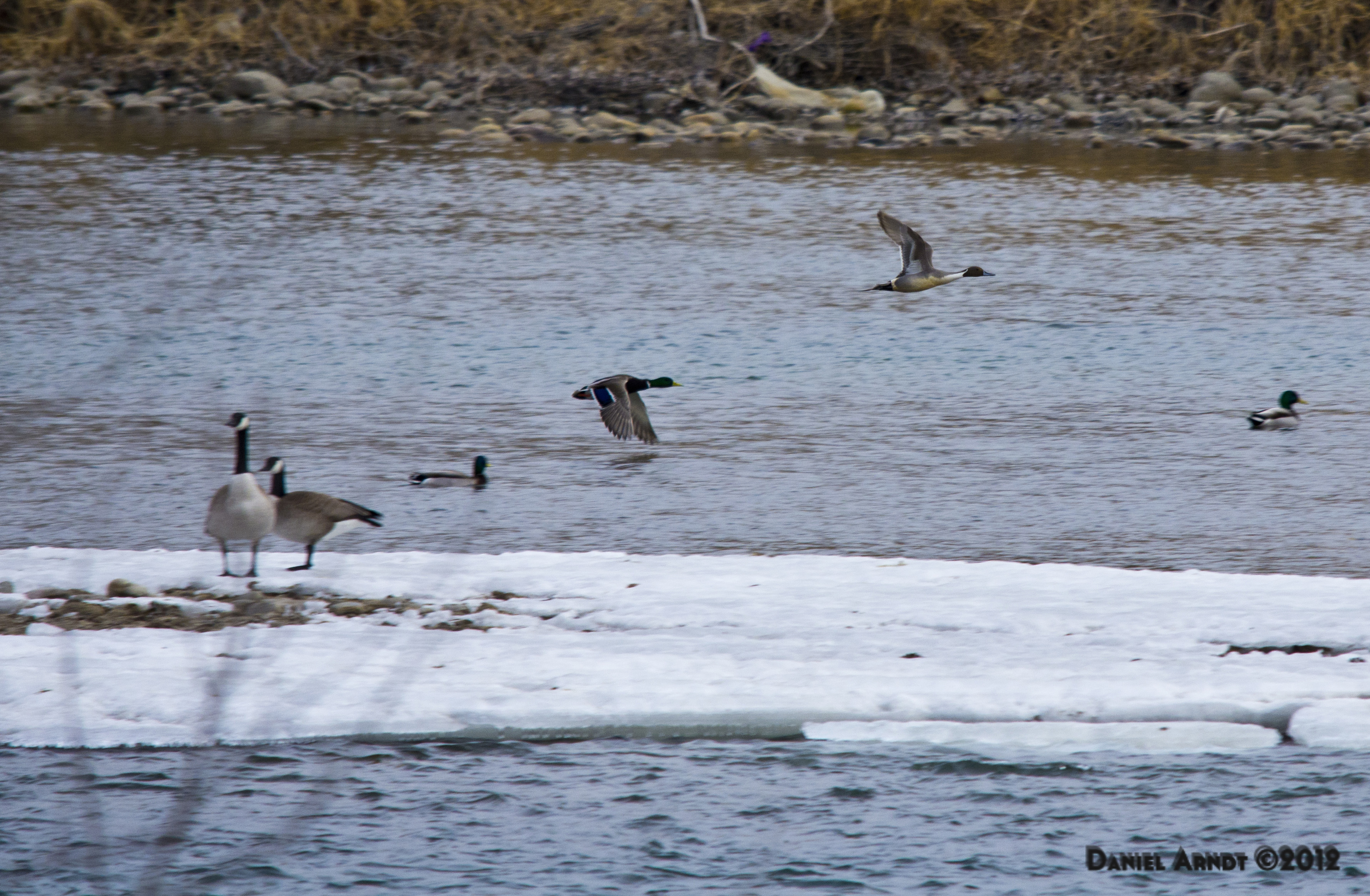
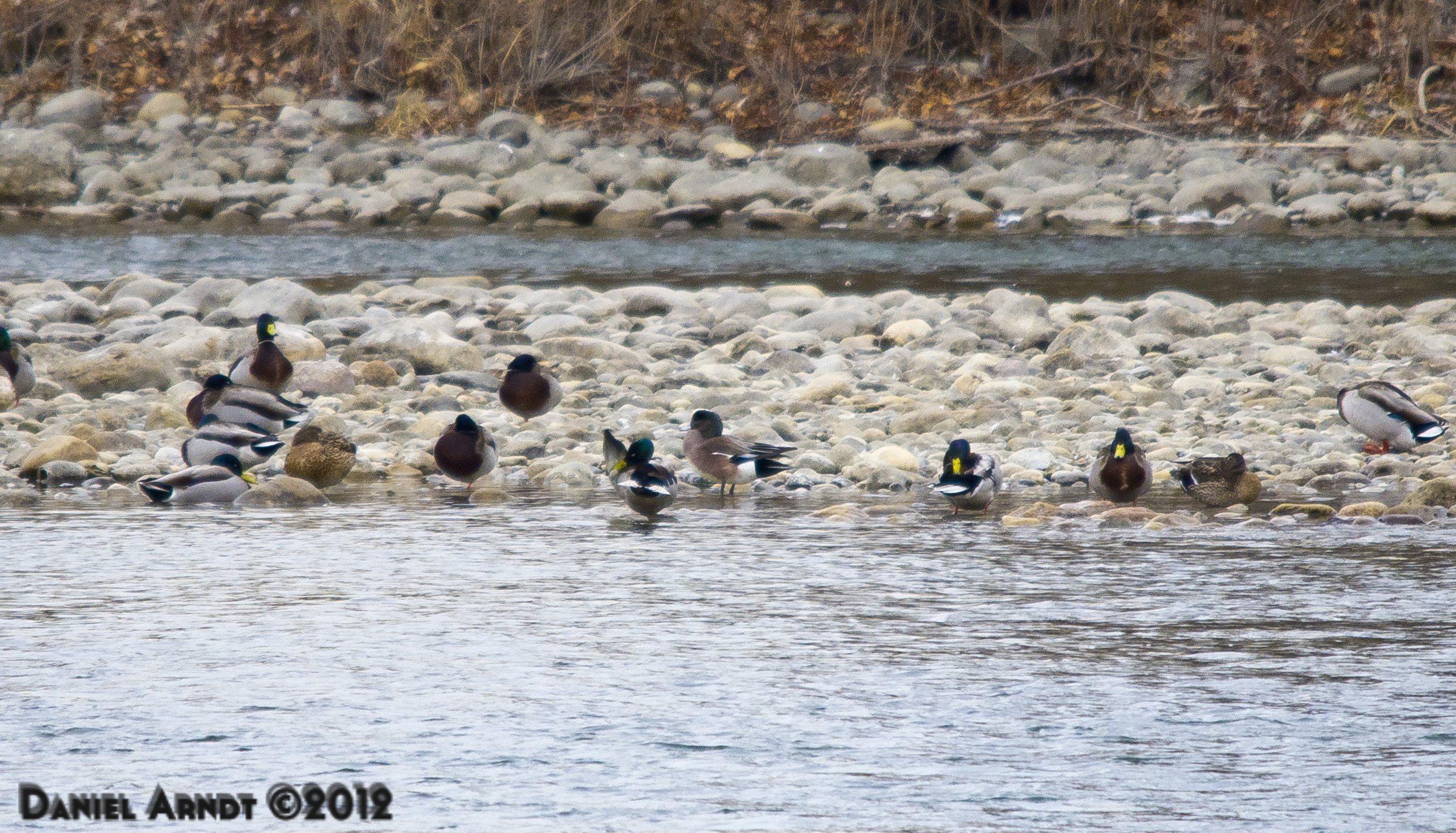
The Canada Geese were numerous on the river, but there were many new arrivals that were exciting to see, such as Northern Pintails, American Wigeons, and the first Ring-billed Gulls of the season.

Canada Goose

Canada Goose

Northern Pintail

Northern Pintail (top right)

American Wigeon

American Wigeon

Ring-billed Gulls

Ring-billed Gulls

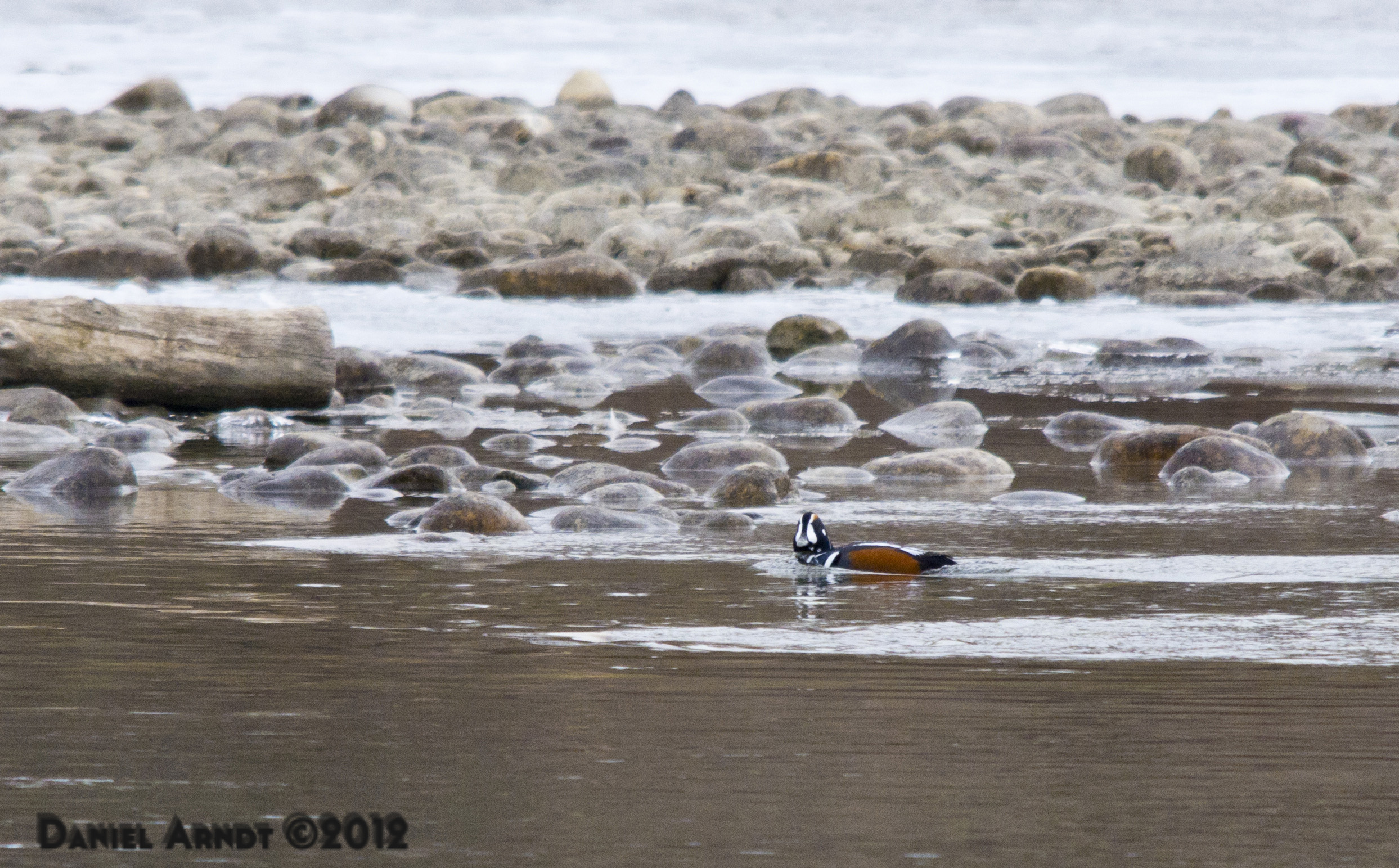
Another of the great sights to behold was the beautiful male Harlequin duck, which had successfully overwintered on the open water at the Inglewood Bird Sanctuary. It seemed that it was very enthusiastic with its mate choices though, as it has been seen chasing a female Mallard or two occasionally.

Harlequin

Harlequin

Harlequin chasing female Mallard

Harlequin chasing female Mallard

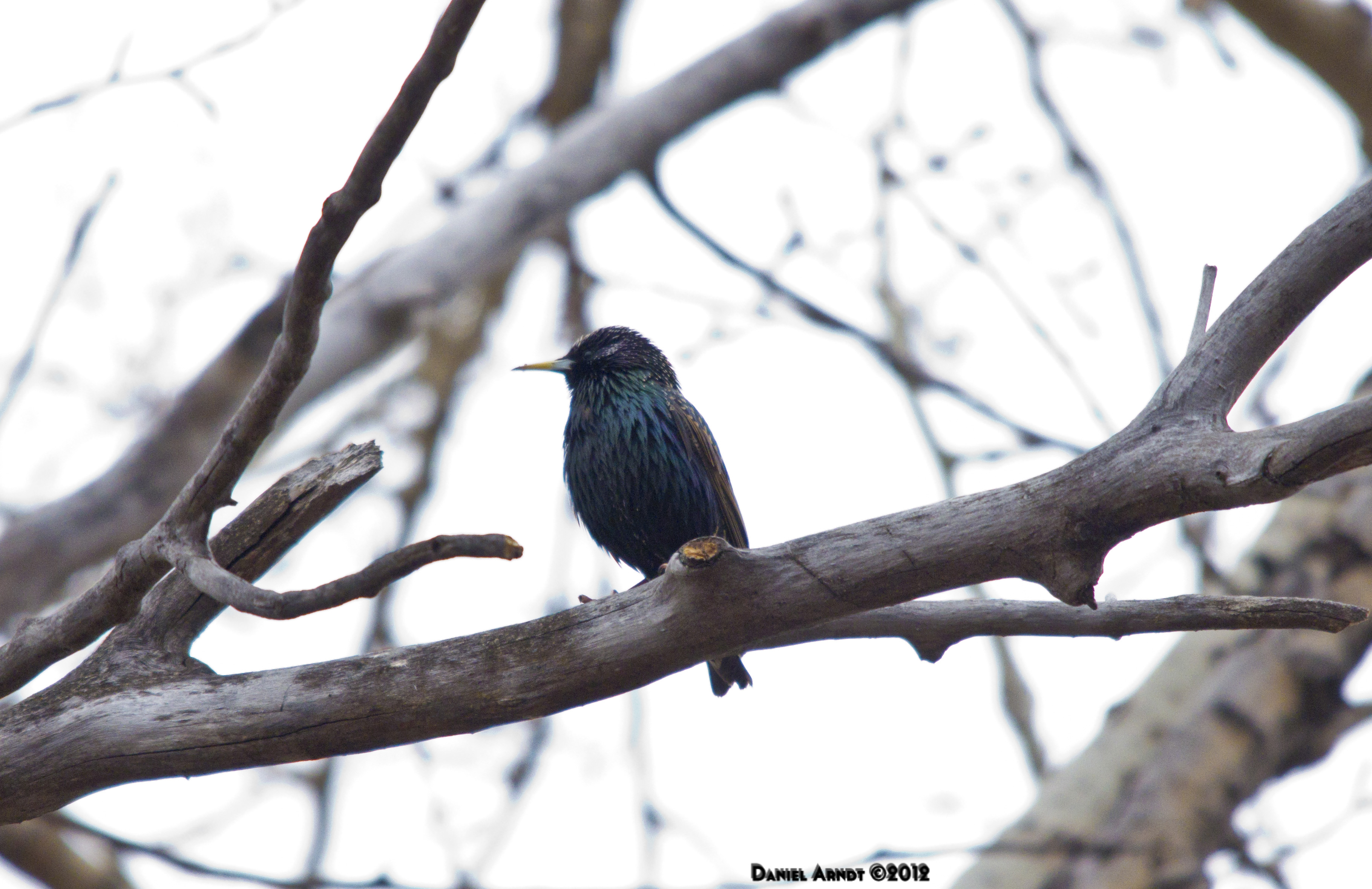
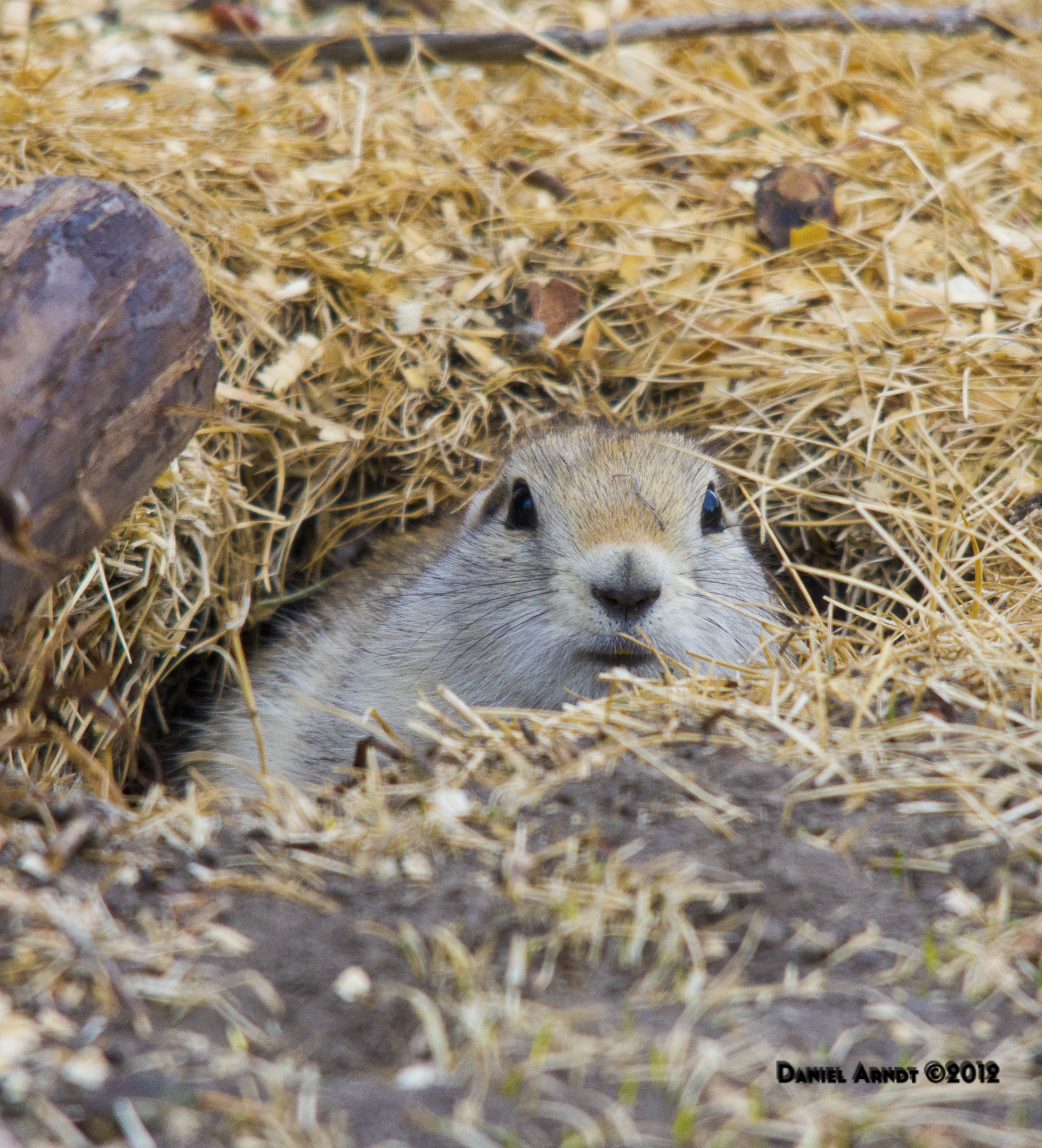
A few other old standbys were on hand each day at the sanctuary. The iridescent and beautiful European Starlings, the nest building Red-breasted Nuthatches, the vocal and displaying Northern Flicker, and of course the charismatic and always enjoyable Richardson’s Ground Squirrels, poking their heads out for the first time this year.

European Starling
Richardson's Ground Squirrel

Richardson's Ground Squirrel


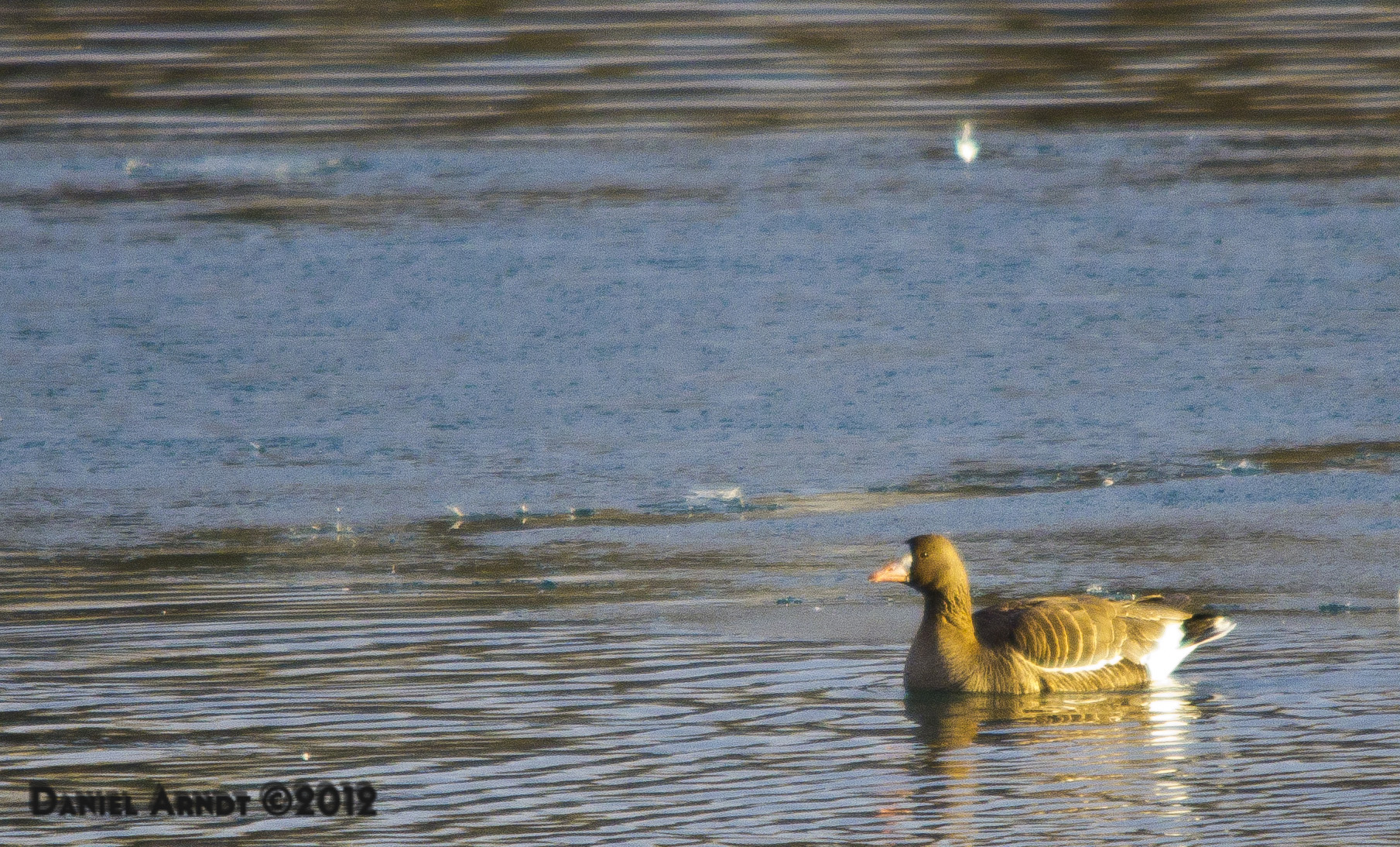
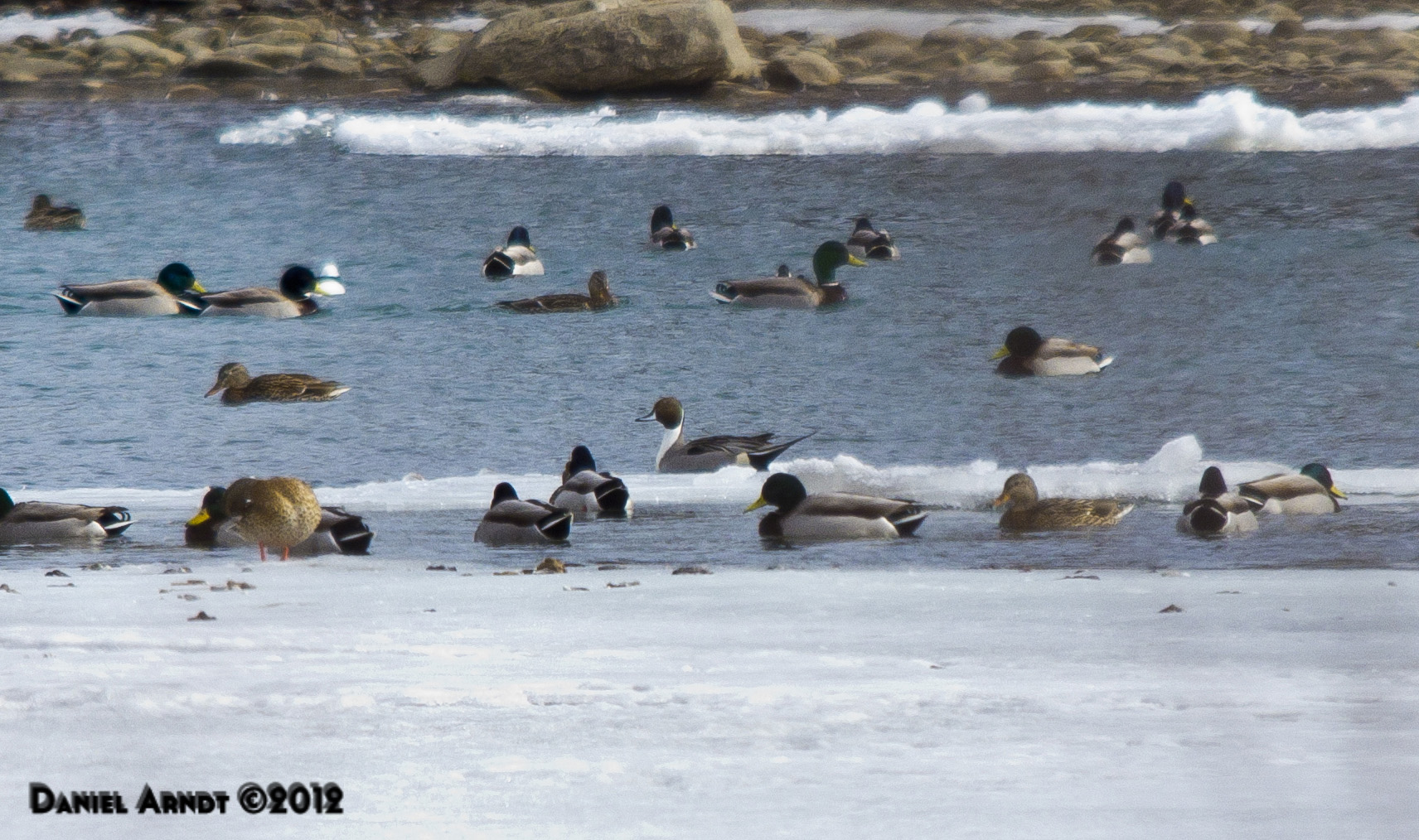
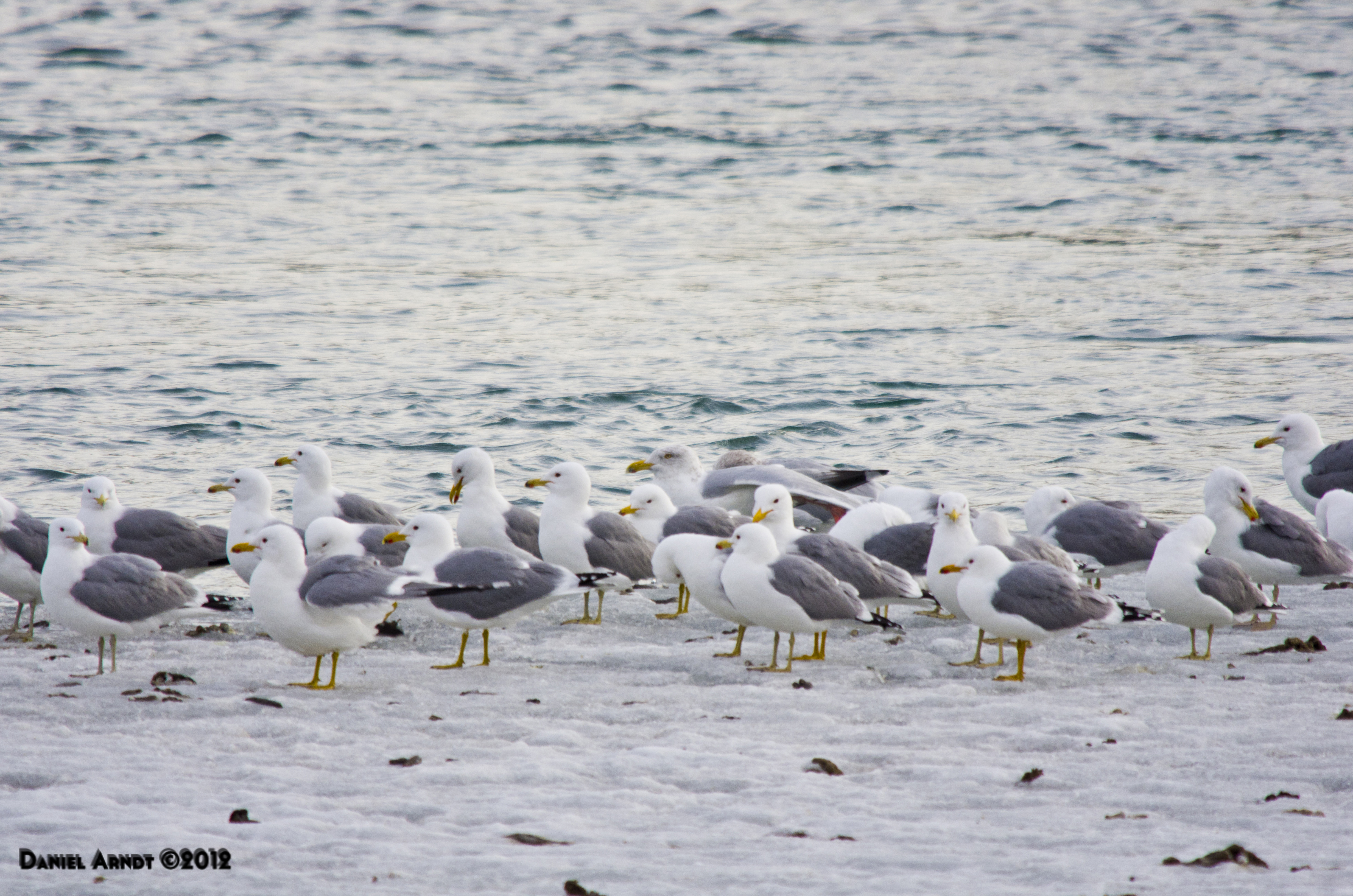
Sunday added again to the rogues gallery of fauna on display, from the Greater White-fronted Goose on the Bow River north of the Sanctuary, to the much better views of Northern Pintail, along with Herring Gulls, and a juvenile Northern Goshawk making quite a show of it.

Greater White-fronted Goose

Greater White-fronted Goose

Northern Pintail on Sunday

Northern Pintail on Sunday

Northern Goshawk

Northern Goshawk

Herring Gull

Herring Gull (middle rear) among California and Ring-billed Gulls

Another great week of birding! I’ll be back again this week to post the results of our excursion to Mallard Point yesterday, and the wonderful birds we saw there as well!


Good birding!