Archives

Rare Bird Alert Calgary: Jan 6

Have you seen an unusual bird in Calgary? If it is on this Reportable_Birds (PDF), please report it to the Nature Calgary Rare Bird Alert line at 403 221-4519 and leave a message after the beep at the end of the recording. If you would like some help with species identification, us email us at zoxox@shaw.ca  To report injured wildlife call the Calgary Wildlife Rehabilitation Society at 403 239-2488, or the Alberta Institute for Wildlife Conservation at 403 946-2361.

This report was prepared on Thursday, Jan 5.

Wednesday, JANUARY 4
–TOWNSEND’S SOLITAIRE (4) – Elbow River monthly survey by Gus Yaki and CFNS field trip
–RED-BELLIED WOODPECKER (1) – George Lane Park in High River by Jeff ____

Tuesday, JANUARY 3
–HOODED MERGANSER (1m) – Elliston Park in SE Calgary by Terry Korolyk and Bob Lefebvre
–NORTHERN PINTAIL (1m) – Ralph Klein Park in SE Calgary by TK
–KILLDEER (10) – 6 at Hull’s Wood, 1 at Bankside, 3 at Mallard Point,all in Fish Creek PP, by TK
–TOWNSEND’S SOLITAIRE (2) – Brittania subdivision in SW Calgary by Phil Cram
–RED CROSSBILL ( 25) – Britannia by PC

Monday, JANUARY 2
–LESSER SCAUP (1f, 1m) – Hwy 22x bridge over the Bow R by TK
–GREEN-WINGED TEAL (1f) – Mallard Point in Fish Creek PP by TK
–COMMON GOLDENEYE X BARROW’S GOLDENEYE (1m) – Policeman’s Flats, SE of Calgary off Dunbow Rd, by TK

Sunday, JANUARY 1
–KILLDEER (3) – Carburn Park by Jeff Bingham
The Fish Creek PP annual New Year’s Day Bird Count reported the following:
–REDHEAD (1)
–GADWALL (1)
–RED-TAILED HAWK (1)
–PRAIRIE FALCON (1) – Hwy 22x bridge over the Bow R
–KILLDEER (record 15)
–EURASIAN COLLARED-DOVE (1) – new for the count

19th Annual Fish Creek Park New Years Day Bird Count

Last week I was asked by Bob Lefebvre if I would be interested in participating in the Christmas Bird Count for Fish Creek Provincial Park, and I immediately jumped at the chance. I always look forward to the walks in Fish Creek Provincial Park, and I was very glad to be grouped once again with Gus Yaki, Bob Lefebvre, along with 11 other participants to do the count in the Marshall Springs area of Fish Creek.

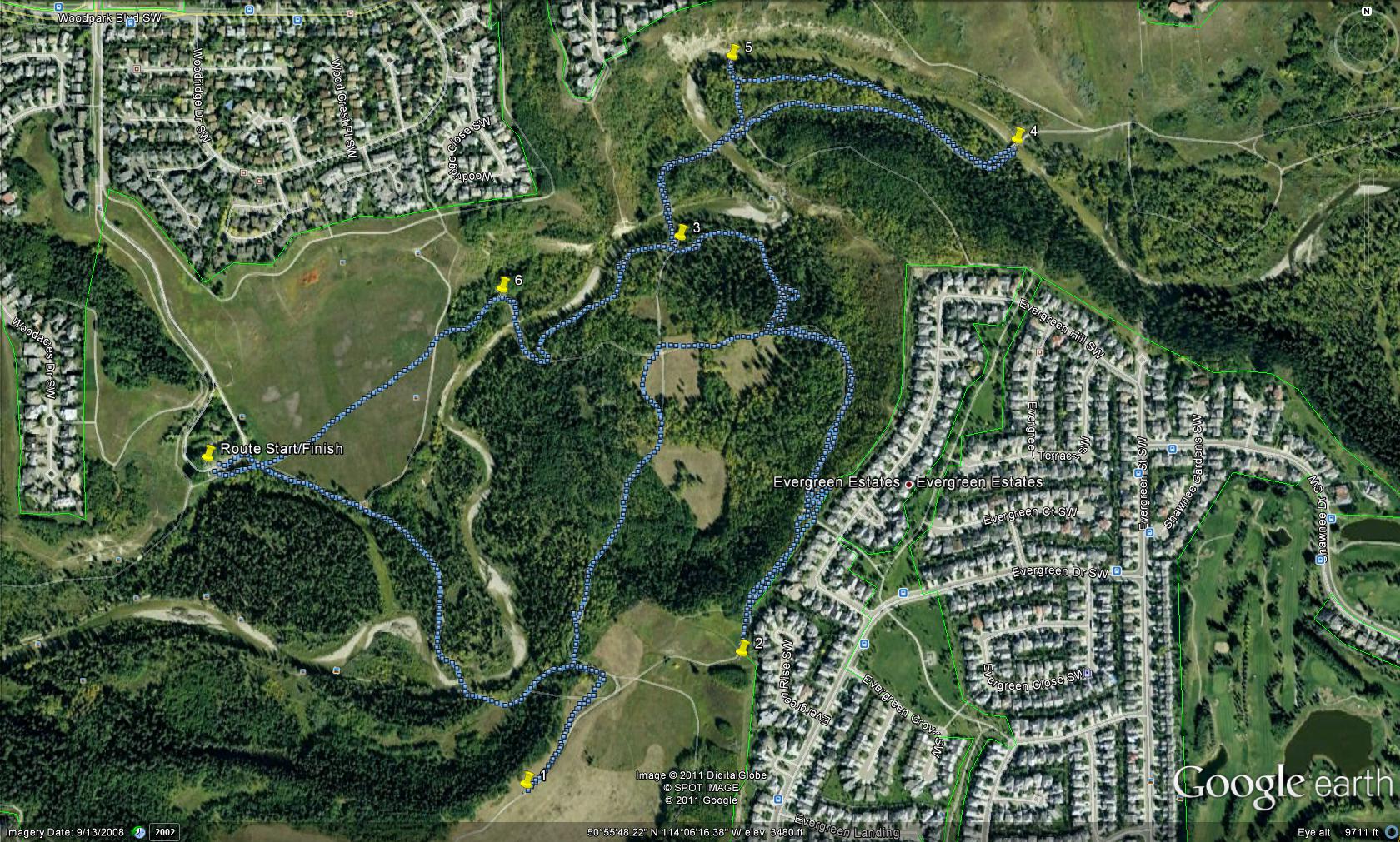
If you’re not familiar with the area, Marshall Springs is located between Bebo Grove and Votier’s Flats, on the west side of Fish Creek Park, just south of the Bow River. I started up the GPS on my phone and mapped out our walking route, to explain a bit more graphically the route we took. I’ll be experimenting with this format in future posts, so let me know how you like it!

Walking route taken through Marshall Springs

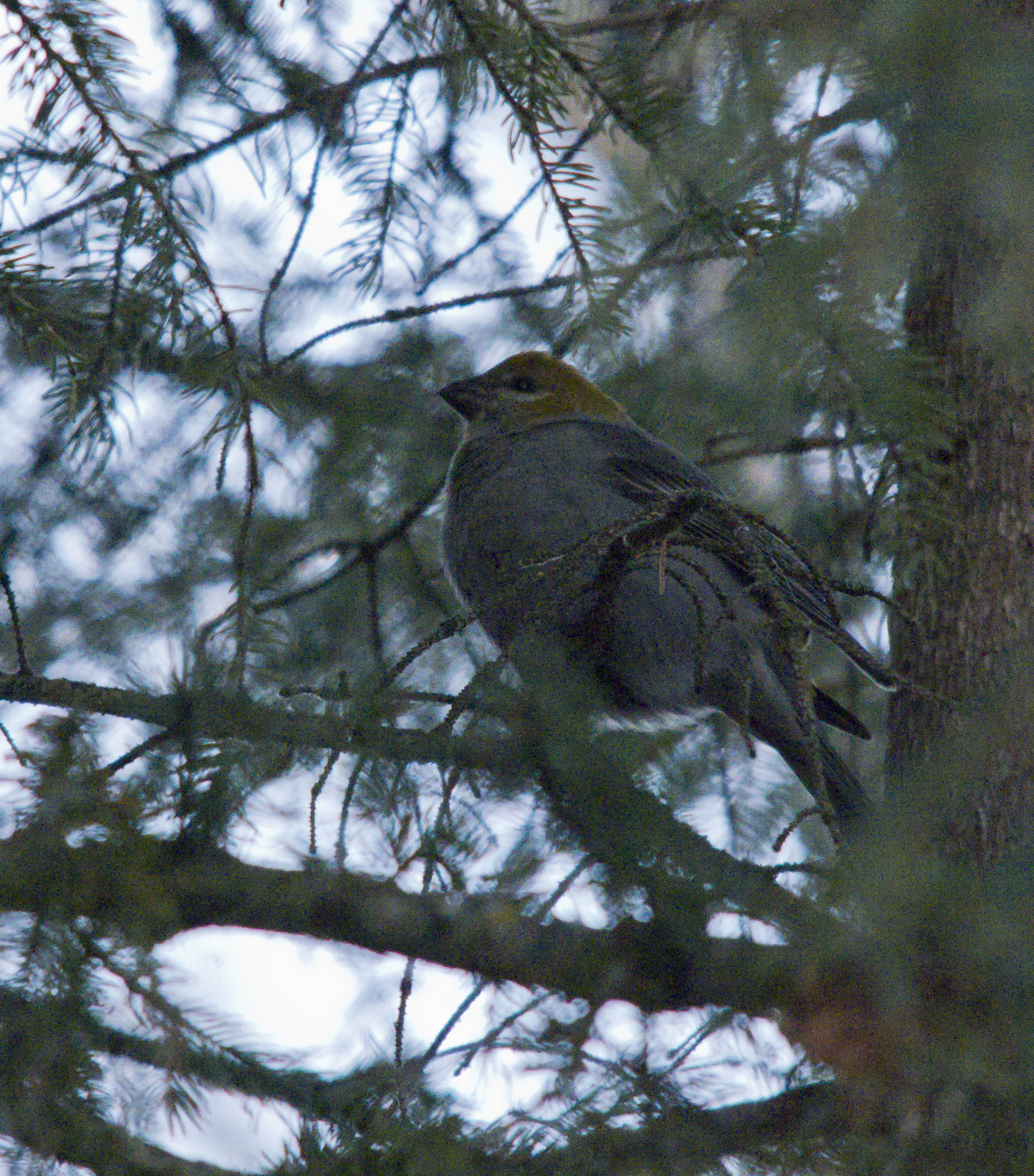
Starting at the parking lot to Bebo Grove, we trekked south through the woods, then crossed the river into the Marsall Springs area proper. On the whole, I didn’t end up taking as many photos as I would have liked to, mostly due to the relatively quiet morning we had in terms of both species present, and population. One of the first birds seen all morning was this Pine Grosbeak, along with one other, in the trees just north of the base of hill at the southern boundary of the park.

Pine Grosbeak

Pine Grosbeak

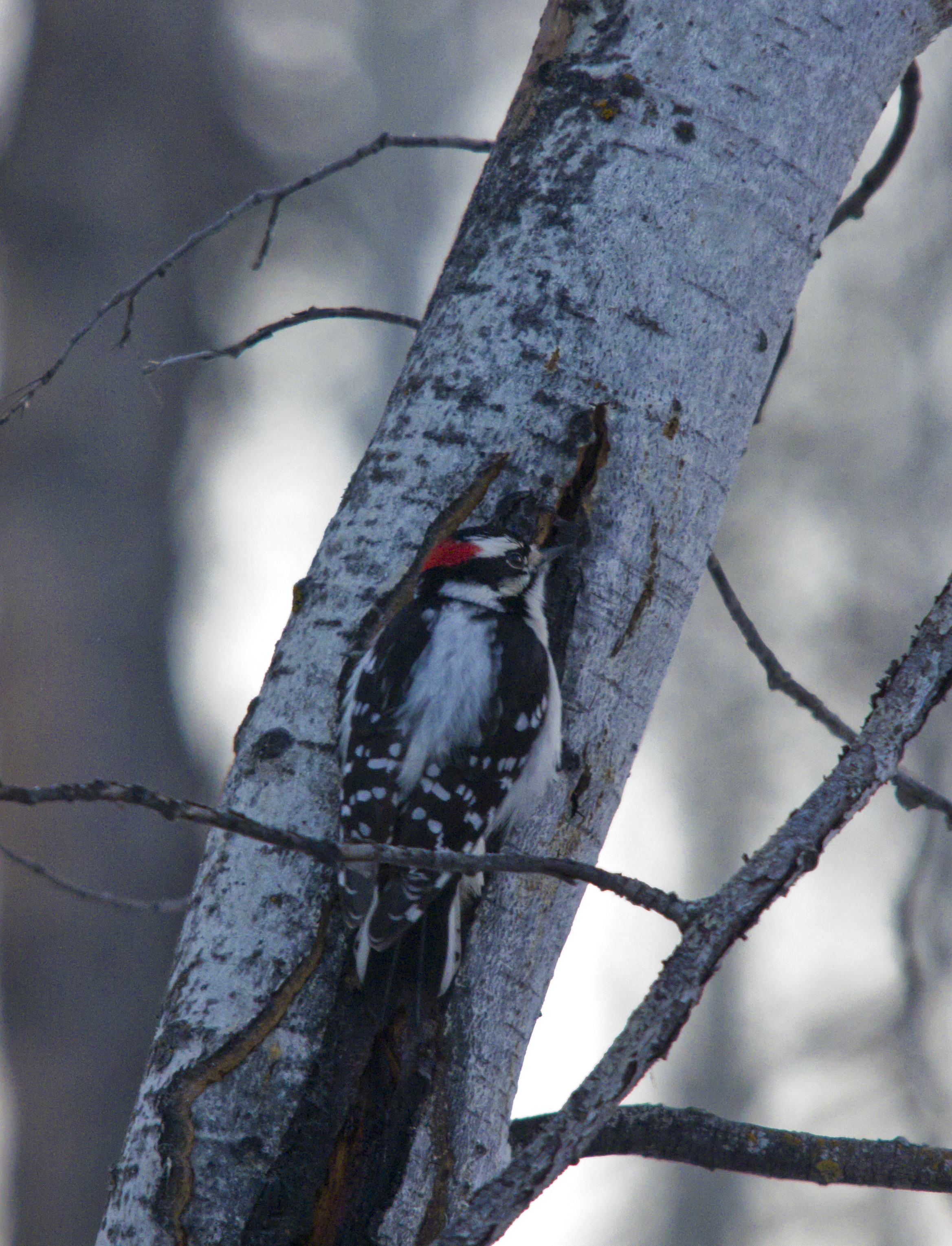
If there was any bird that I felt best described the walk though, I would have to say it was the Downy Woodpecker, the first of which we spotted shortly after the Pine Grosbeak, tap-tap-tapping away at the trees for some food.

Downy Woodpecker

Downy Woodpecker

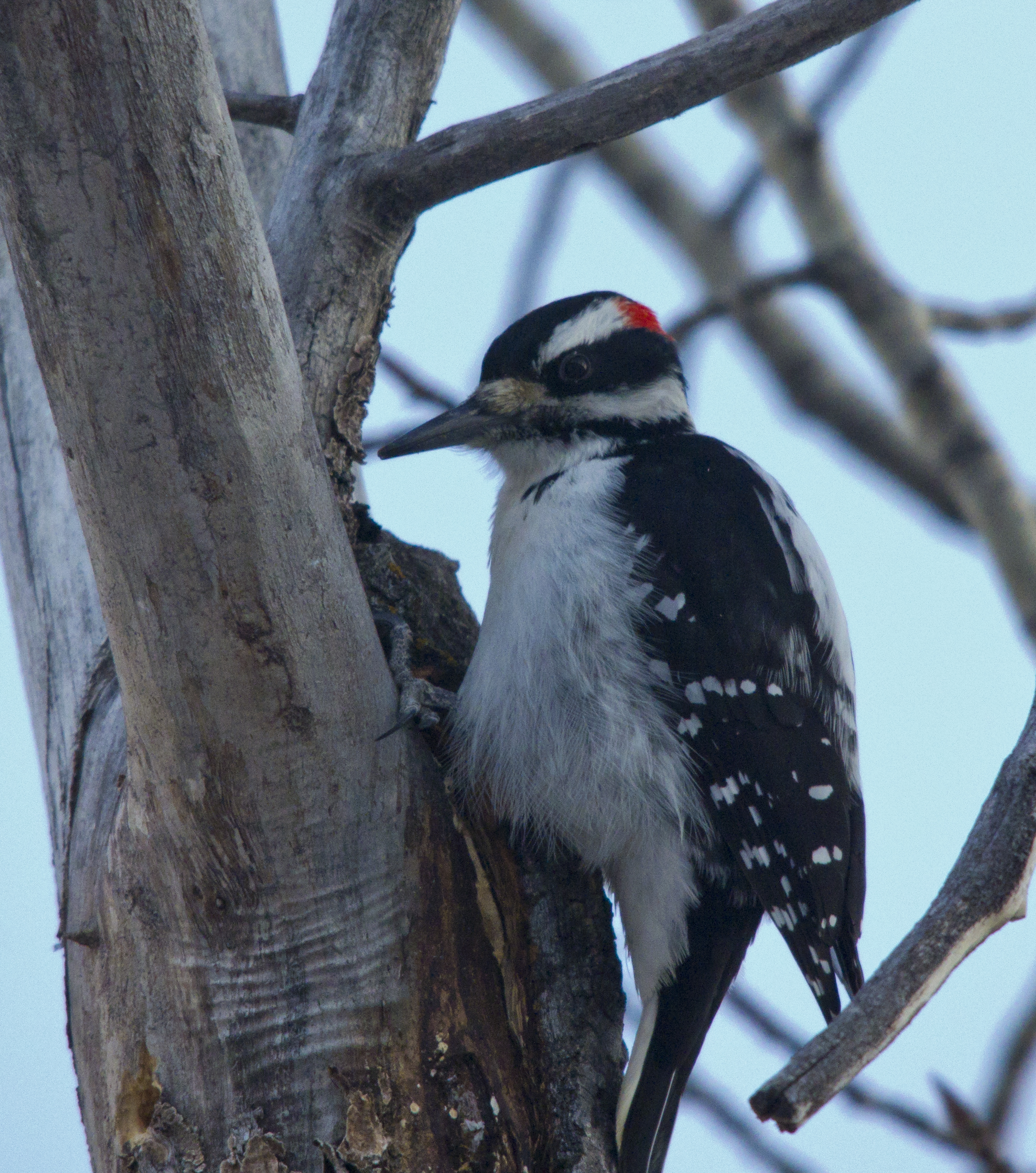
Followed shortly by our first sighting of a Hairy Woodpecker, also searching for food under the bark of the poplars and birch.

Hairy Woodpecker

Hairy Woodpecker

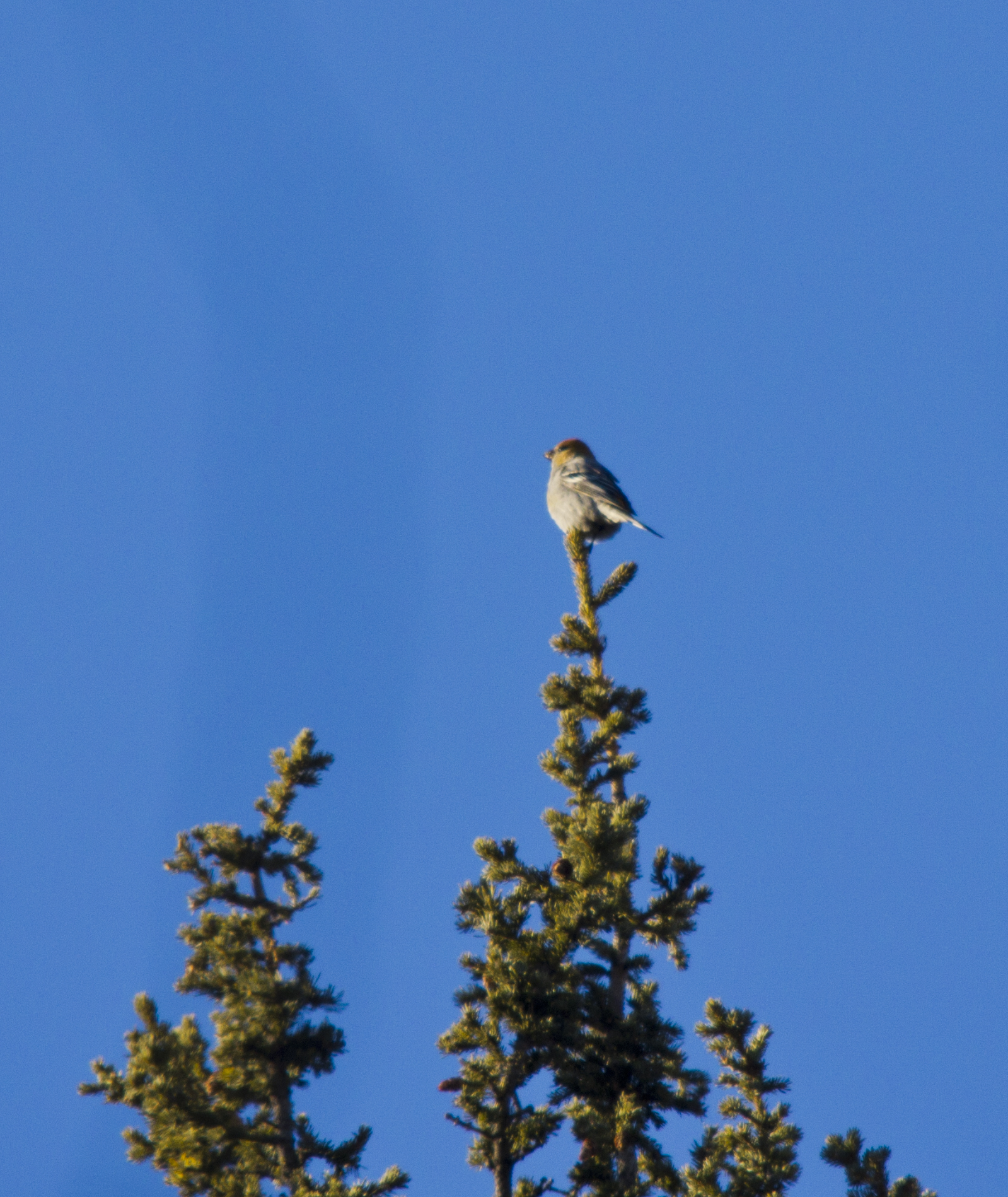
I don’t know whether it was the company, the conversation, or the lack of birds present, but most likely a combination of all three that found my next photos taken near the end of the walk, when this Pine Grosbeak called from a nearby treetop, and across the banks of Fish Creek this White-Tailed Deer grazed on the edge of the slope.

Pine Grosbeak

Pine Grosbeak

White-tailed Deer

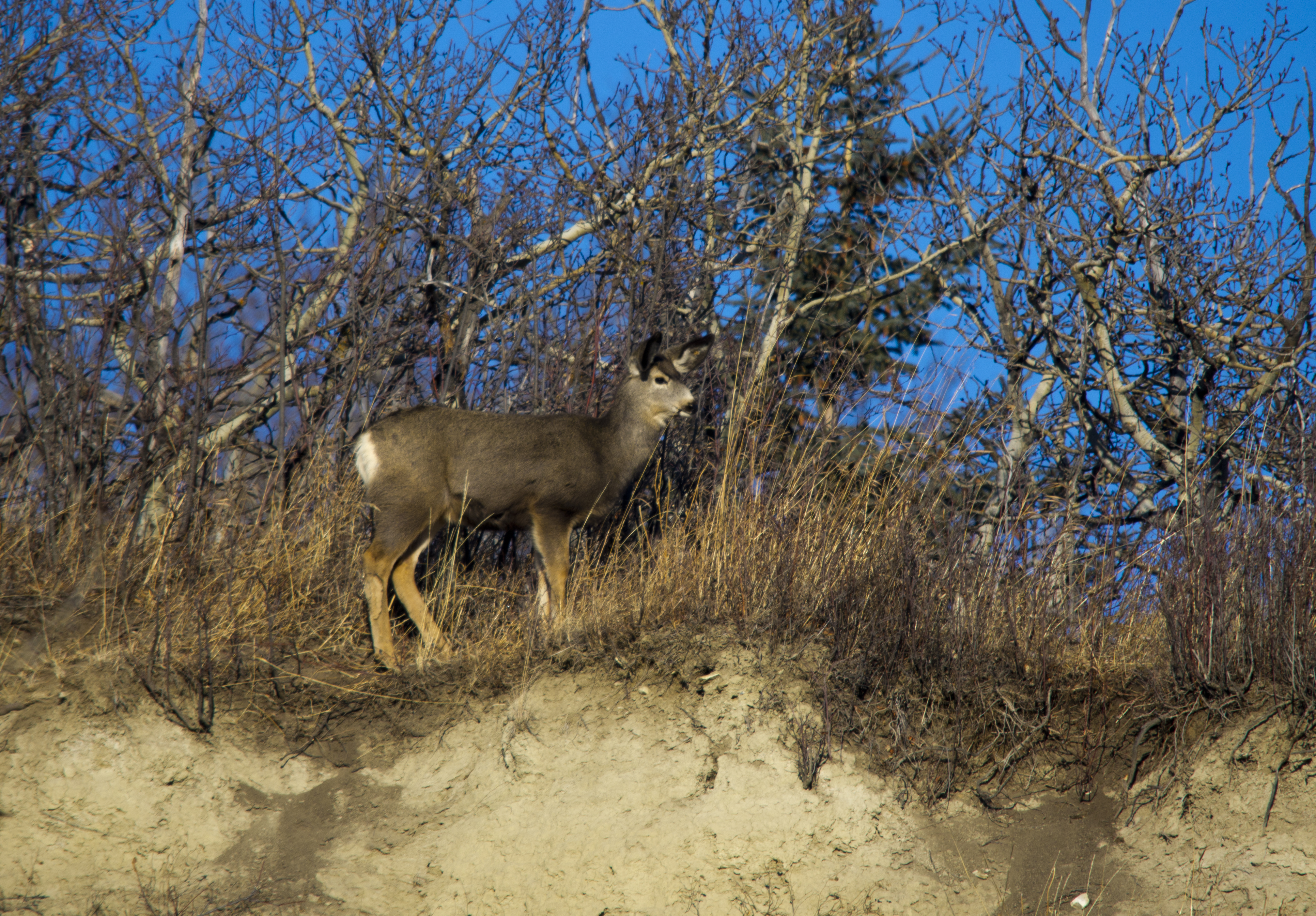
Mule Deer

We convened later with the larger group near the main office of Fish Creek Provincial Park to collaborate data and share any interesting finds. Our group though had a fairly small number of species and individuals, and aside from a large overflight of Bohemian Waxwings, we had less than 100 individual birds among 12 species in our count area, detailed below:

11 Downy Woodpecker

1 Hairy Woodpecker

45 Black-capped Chickadee

4 Red-breasted Nuthatch

1 White-breasted Nuthatch

2 Common Redpoll

2 White-winged Crossbill

100 Bohemian Waxwing

11 Common Raven

8 Black-billed Magpie

1 Brown Creeper

8 Pine Grosbeak

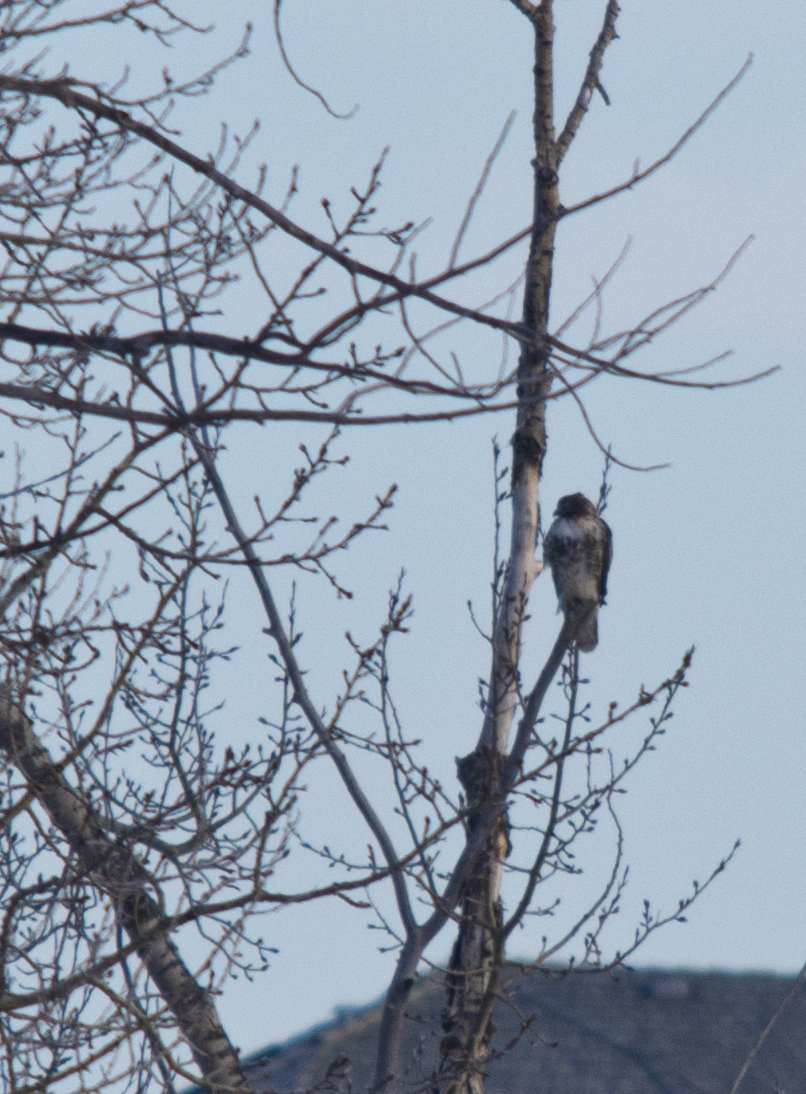
One bird did stand out from the crowd at the reporting though, which Bob and I  went in search of shortly after. I leave you with a (relatively bad) photo of a rare Winter Red-tailed Hawk, seen on the east end of Fish Creek Park.

Red-tailed Hawk

Red-tailed Hawk

Posted by Dan Arndt

A Canada Big Year

Four Calgary birders – Ray Woods, Brian Elder, Mike Mulligan and Phil Cram – are planning to do a Canada-wide Big Year in 2012.  A Big Year is an attempt to see or hear as many species of birds (and mammals in this case) as possible in a calendar year, in a specific geographic area.  Our four local birders are going to confine their activities to Canada, but they intend to see as much of Canada as possible, travelling to all the provinces and territories.

Their goal is to get 500 birds and mammals combined, and of course each of them has individual goals as well about extending their life lists or Canada lists, or seeing particular species.

They have started a blog to track their progress, and it’s going to be fascinating to watch their quest unfold.  They will begin here in Calgary on New Year’s Day with the Fish Creek Park bird count.

Northern Pygmy-Owl, one of the birds they hope see in the                             Calgary area in early January.             

There are already some posts on their blog giving details of their plans and itinerary.  Check it out at Fur & Feathers 500 – it will definitely be a blog worth following in the coming year.

Posted by Bob Lefebvre

Christmas Weekend Birding Road Trip!

Merry Christmas, dear readers!

This weekend I had the opportunity to seek out some of the gorgeous birds seen around Calgary that are a little rarer than usual. On Saturday, I took a circuitous route down to High River, but first stopped in Bragg Creek, and Turner Valley before reaching High River, then headed south to the small town of Azure, then finally up to Frank Lake before returning to my family’s place in High River for a pre-Christmas get together.

The route itself was beautifully scenic, and was an incredibly warm day thanks to a Chinook arch that hung over the Rockies. Unfortunately, the wind didn’t die down until early afternoon, keeping much of the activity down until I reached Turner Valley. I had a few birds on my list that I was searching for, but unfortunately had little luck with any of them. First and foremost was one of the many Snowy Owls that have been seen recently thanks to a record irruption this year, possibly due to a crash in the arctic lemming population. Secondly was a Northern Hawk Owl seen just west of Turner Valley, which unfortunately was nowhere to be found, despite being recorded just a week before. Driving back through Turner Valley and over to Black Diamond, three Rough-legged Hawks were seen on power poles and fence posts, but were far too wary for me to stop the vehicle and get my camera leveled before they flew off.

Black Diamond, Alberta

Black Diamond, Alberta

Two more were seen on the eastern edge of Black Diamond and again flew off before I could take a photo. I was becoming a little disheartened until I saw a slightly unusual form atop a power pole less than two hundred meters from the last Rough-legged Hawk that had flushed.

Gyrfalcon

Gyrfalcon

Gyrfalcon

Gyrfalcon

Gyrfalcon

Gyrfalcon

I’ve convinced myself that this is a Gyrfalcon, based on the general size, thick moustache bars, black hood, and presence of a prominent eyebrow not seen on a Peregrine Falcon, and it certainly does not display the streaking or barring on the chest one might see in a Sharp-shinned or Cooper’s Hawk.

Continuing on to High River, another three Rough-legged Hawks were spotted along the route, which ended up at George Lane Park, the location reporting the Red-bellied Woodpecker. Unfortunately, I wasn’t able to find it on this trip down, though it was getting a bit later on in the afternoon, but I will be back to find it again soon.

I headed down to Azure, where another Snowy Owl had been reported, and again I came up empty handed.

I decided Frank Lake would be a worthwhile destination despite the waning sunlight, and I got there with just a little over an hour of daylight left. Walking in from the main gate of Basin 1, it seemed eerily quiet, with the feathers from a recently killed pheasant or grouse littering the road. I thought for sure I would return empty handed from this location as well as it appeared that the entire lake had frozen over. I’m not sure if I would have been more upset had the entire lake been empty, but I did get a little bit of a twinge at my heartstrings when the only bird I found on the entire lake was this lone Tundra Swan. A little disheveled and dirty, it appears that this swan missed the larger flocks migrating south, or for some reason decided to attempt to winter here. I certainly hope that it survives.

Tundra Swan

Tundra Swan

Tundra Swan

Tundra Swan

Tundra Swan

Tundra Swan

I returned to High River to visit with my family, and vowed I’d see a Snowy Owl before Christmas was through, and I was not disappointed when I headed out on the afternoon of Christmas Day.

Just two days prior, Gus Yaki had reported that 8 (yes, 8!) Snowy Owls had been seen along Highway 9 between Drumheller and Irricana, on their return trip from the Drumheller Christmas Bird Count, so I thought for sure if I retraced their steps that luck would be in my favor.

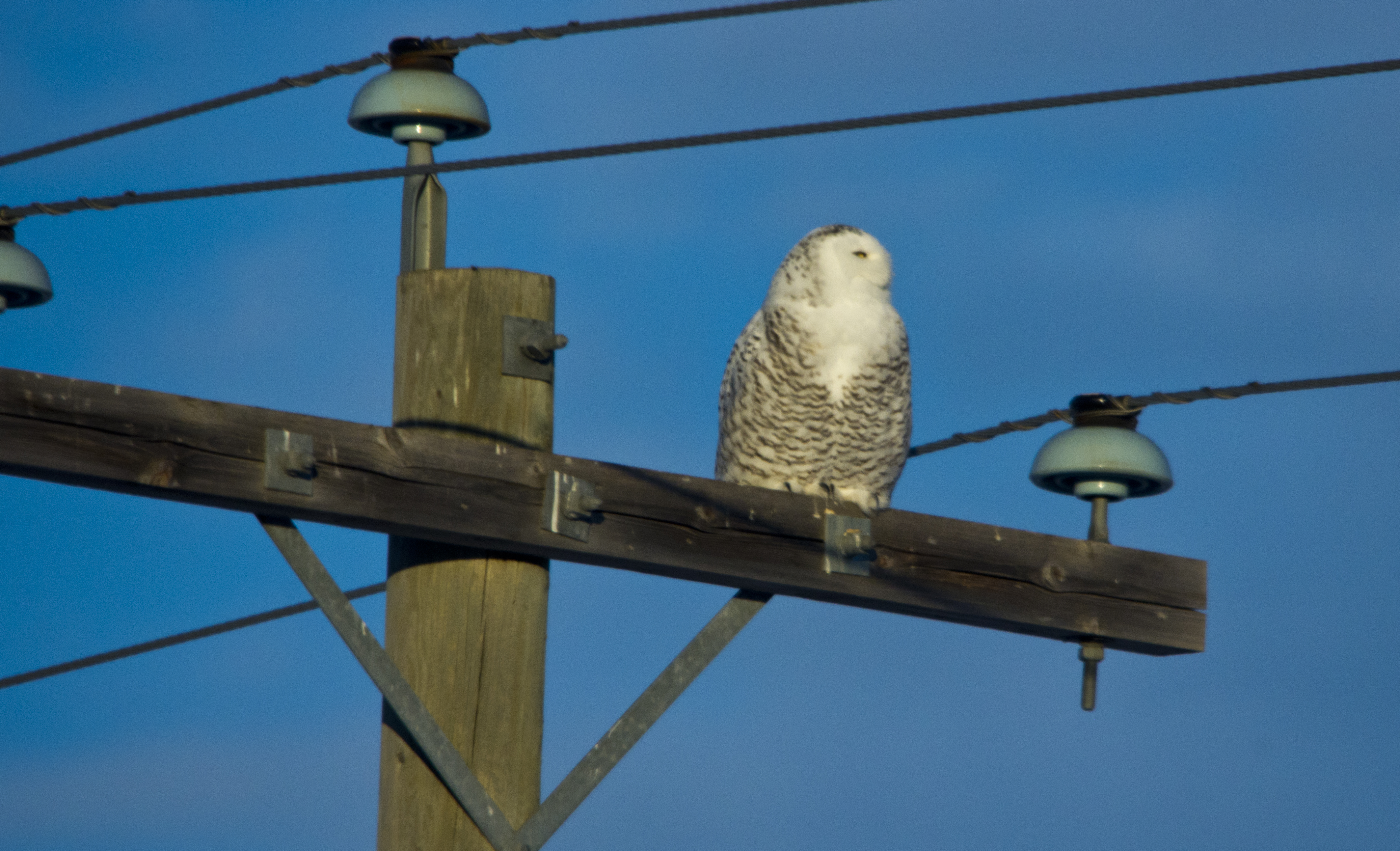
The first Snowy Owl was just before we reached Irricana on Highway 9. In fact, I almost missed it as I was coming up to a turn, but just happened to glance up and see this female high up on a telephone pole. After turning around and getting my camera set, she flushed, and set down a little further away near an operating gas well, but decided to flush once again and lighted atop a fence-post on the west edge of is well site.

Snowy Owl

Snowy Owl

Snowy Owl

Snowy Owl

The second was found a short while later, just off of Highway 21. This female flushed once from near the highway off to the nearby township road, and then returned to the Highway as I turned to head back to Calgary, affording a few choice views.

Snowy Owl

Snowy Owl

Snowy Owl

Snowy Owl

All in all, I consider the weekend a success, with three more species to add to my life list, and a few decent photos to remember them by.

Posted by Dan Arndt
Winter Killdeer

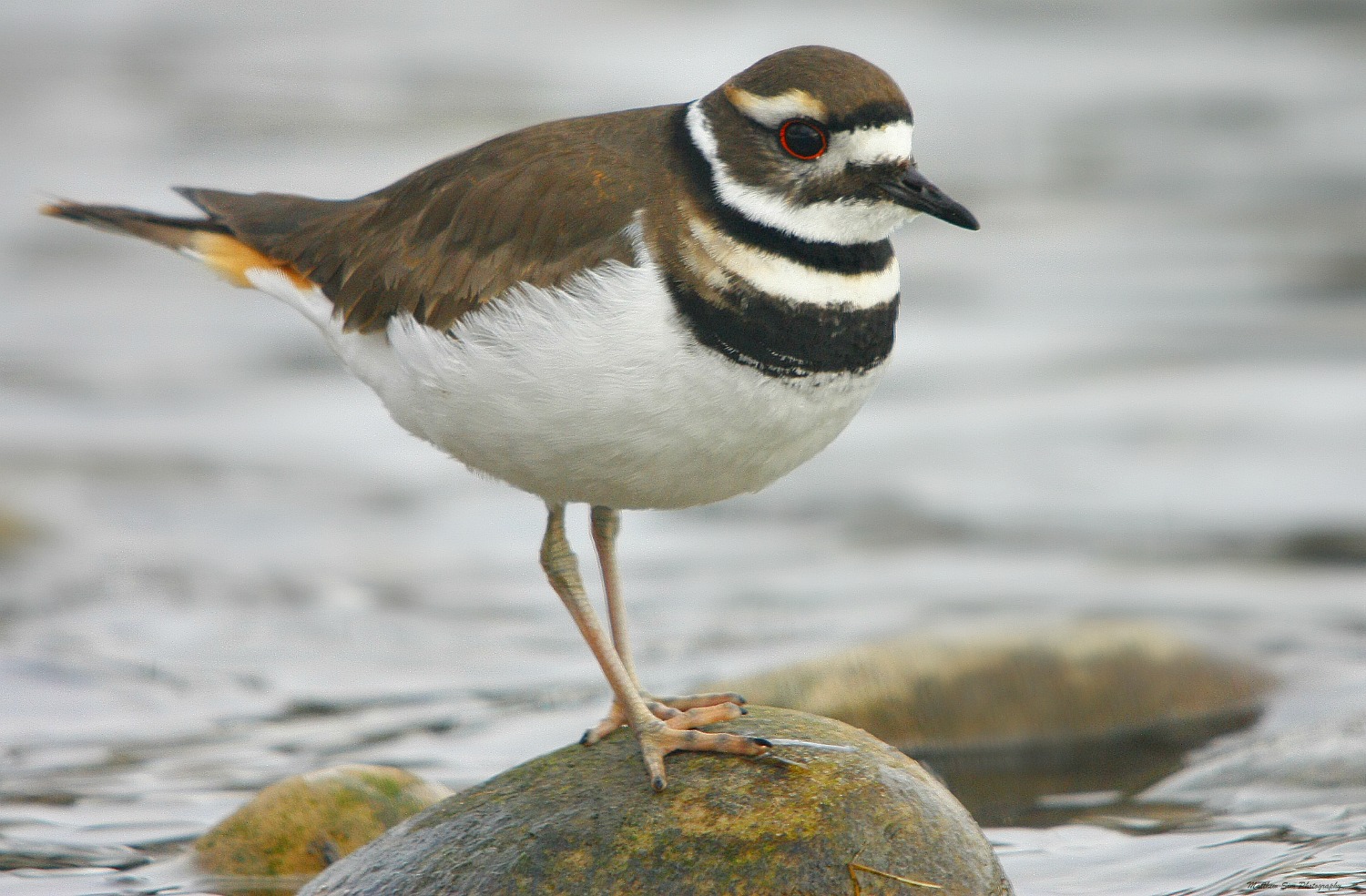
Last weekend on the Christmas Bird Count, I came across a very photogenic Killdeer. These abundant shorebirds, usually only stay the summer in Calgary, several birds, however, also stay the winter.

Despite our frigid winters, these hardy Killdeer seem to manage all right, we see them throughout the winter which must mean that they are surviving. They are definitely finding food, as can be seen in the photo below.

This Killdeer seemed to be finding enough food

At one point, I even saw this particular bird with a small morsel of food clenched in its beak.

This Killdeer was fearless and approached me; which is quite a nice change as a photographer! It also engaged in the species peculiar method of moving; they run for a few feet, stop, look around, flick their tail up, bob their head up and down a couple times, and then repeat this cycle over again.

Just finished a short run, the Killdeer stops, looks around and...

Bobs it's head out of the photo, leaving the photographer with an unusual result; but a good story!

Each year, Killdeer are seen wintering in Calgary, somewhere on the Bow River. Though it may seem like a daft idea to many of us, this species obviously are doing just fine!

A Merry Christmas to you from all of us here at the blog!

Posted by Matthew Sim

Schoolyard Swainson’s

Last July, right before I moved to Texas, I was treated to an incredible sight: a dark-morph Swainson’s Hawk perched on a fence in a school parking lot. This hawk was incredibly close to the sidewalk and allowed for some great photos, all the while sitting calmly on its perch.

 This hawk didn’t seem to be injured, it just seemed to be very tolerant of people. Supposedly, Swainson’s Hawks are accepting of human activity and tolerate even more in areas where this activity is more frequent. This species will often become accustomed to disturbance from humans, thus the higher level of tolerability. This hawk, however did still seem to be giving me the evil eye!

After a couple minutes, the impressive raptor, slowly turned away (above) and resumed its activities as if I wasn’t even there.

This is not the first time this year that a Swainson’s Hawk has allowed me to get very close to it, back in May, while we bloggers were doing the Big Sit, we observed a Swainson’s that allowed us to watch it from merely several feet away http://birdscalgary.wordpress.com/2011/05/15/swainsons-hawk/.

This was definitely one of the cooler birding parts of the summer!

Posted by Matthew Sim

Carburn and Southland Park Christmas Bird Count

This year, I also did the Christmas Bird Count; I was assigned the S1 route, encompassing both Carburn and Southland Park. We started the morning birding from the Eric Harvie bridge in Southland, right beside the dog park, before splitting up, 2 groups going south along the river (one on each side) and 2 groups going north along the river. The day was off to a good start as we observed 2 adult eagles and 2 immature eagles flying low overhead; the rising sun was beautiful, adding to the good beginning and silhouetting the many ducks and geese on the Bow River.

We observed thousands of Mallards, Common Goldeneyes and Canada Geese throughout the day with several hundred Buffleheads as well. There were also several Barrow’s Goldeneyes in these waterfowl flocks.

The Common Goldeneyes weren’t quite as numerous as the Mallards however they were still present in large numbers.

We continued to walk further down the river, spotting Redpolls, plenty of waterfowl, Killdeer, magpies and… RUSTY BLACKBIRD!!! As we were hiking along the river, we flushed up a brownish-black bird about the size of a Robin from the bank. It landed nearby at the top of a poplar where we all got good looks at it. Unfortunately, the same cannot be said for my photographs of this species! This blackbird, is an unusual bird in Calgary, explaining, perhaps, my excitement at the sighting (also, this was only my second time seeing this species).

We headed back to the meeting spot, the Eric Harvie Bridge, where we saw a Sharp-shinned Hawk and discovered that another group had found an American Wigeon. We then headed to our next stop, Tim Hortons! After warming up and getting refreshments at Tim Hortons, we headed out near the Glenmore bridge, where at a pullout, we walked out and did some more birding, turning up a Killdeer and a Hairy Woodpecker.

The next and final stop for our group was Carburn Park. Our goal at Carburn, was to find an American Pipit  that had been reported here a little while earlier. Though we couldn’t agree to the location where this bird had been seen, we did manage to find it. This happens to be the first pipit recorded on the Calgary CBC since its beginning, 59 years ago.

Also in Carburn, we found a pair of Great Horned Owls, that were extremely well camouflaged against the tree branches they were perched on, several more Barrow’s Goldeneyes and another juvenile eagle. I decided to head home early and only found out later that the rest of the group had also found a Northern Pintail and a Wood Duck in Carburn. I birded around my neighborhood, which was inside our count circle, and managed to add both species of crossbills, a robin and a Merlin to our list, among other species.

The pipit and the Rusty Blackbird were definitely the highlights of the day for me, however they were only two of the 33 species and 7924 individuals recorded by 10 counters in this particular area. Here are the complete results:

Canada Goose, 1500; Wood Duck, 1; American Wigeon, 1; Mallard, 3000; Northern Pintail, 1; Bufflehead, 150; Common Goldeneye, 2800; Barrow’s Goldeneye, 20; Common Merganser, 20; Bald Eagle, 5; Sharp-shinned Hawk, 1; Merlin, 1; Killdeer, 5; Rock Pigeon, 25; Great Horned Owl, 2; Downy Woodpecker, 5; Hairy Woodpecker, 2; Northern Flicker, 3; Black-billed Magpie, 125; American Crow, 3; Common Raven, 12; Red-breasted Nuthatch, 3; White-breasted Nuthatch, 3; American Robin, 1; Dark-eyed Junco, 1; Rusty Blackbird, 1; House Finch, 4; Red Crossbill, 12; White-winged Crossbill, 26; Common Redpoll, 25; House Sparrow, 110; American Pipit, 1.

Posted by Matthew Sim

It’s good to be back…

I flew in to Calgary from Houston last Friday night and was greeted by snow on the ground! Something that I haven’t seen since April. Never thought that I would be so excited to see snow. My first day back, Saturday, I took a walk around my neighborhood and was fortunate enough to see most of the locals; no not the neighbors, the birds.

First thing in the morning, I woke to see several Black-billed Magpies jumping and hollering about in the willow. Several Common Ravens flew overhead and 2 pairs of Chickadees visited the feeders. I was very happy to see the Black-capped Chickadees, nothing can compare with this species’ friendliness!

I have been following the reports from Albertabird still and I have seen all the reports of winter finches; I knew what a good year it was for these birds. I just didn’t know how good! In my hour or so walk, I saw more Crossbills then I did all last winter. I must have seen more than 100 crossbills!

Most of the crossbills were White-winged however there were a few Red Crossbills in the mix ( see photo above). I also observed many Pine Siskins that were flocking with the crossbills and feeding on the abundant cones.

My neighborhood, for some reason, never seems to be popular with Common Redpolls, however this year, within my first 24 hours of being back in Calgary, I had already seen 2 in my community. Also, we hosted a Pine Grosbeak, which is unusual for us. At one point, I was privileged to see several crossbills, a redpoll and many siskins on the ground just feet in front of me, licking up some sort of salt or rock from the ground.

Then, later on in the day, I discovered why my feeders were so empty. Three Sharp-shinned Hawks were all together in a tree. When 3 raptors start calling your neighborhood home, there are definitely going to be some songbird declines.

All in all, it’s good to be back!

Posted by Matthew Sim

Walking the Weaselhead


As a Calgary native, I consider it a particularly unfortunate state of affairs that it’s only in the last two years that I began exploring the Weaselhead. Accessed from either North or South Glenmore Park, it is quite likely one of Calgary’s most unique micro-environments, in which three species of hummingbird can be found in the summer, and the Boreal Chickadee can be found in winter. Hearing that it would be the location for our final birding walk of the autumn birding course, I was excited at the opportunity to see some new and exciting species.

It began by walking down the winding trail from the 37th Street parking lot at the western entrance to North Glenmore Park. After stocking one of the feeding stations, we briefly left, but rushed straight back when we noticed a robin-sized bird fly in and land on the ground at the feeder. It was another photo first for me to be able to snap some very close-up shots of a Pine Grosbeak. One of the distinctly beautiful birds both for its song and plumage, with a brutally sharp bite.

Heading down to the bottom feeder stations, we were delighted by the number of Black-capped Chickadees, White-breasted Nuthatches, and Common Redpolls taking advantage of the free food available at the feeders.
This Downy Woodpecker also was taking an interest in the feeders, and seemed entirely unfazed at how close we were able to get.
Across the bridge we were treated to the sight of a few more Common Redpolls, followed by Black-capped Chickadees and Red-breasted Nuthatches feeding at the fence-posts along the pathway.
I think our best bird of the day though was this Pileated Woodpecker who made an appearance and actually sat still long enough for us to get some shots of it.
The feeding station where the Boreal Chickadee pair had been seen all week was productive, but unfortunately the Boreal Chickadees didn’t show up. We did get some nice close views of the Red-breasted Nuthatches again, and the more common Black-capped Chickadees and a single Northern Flicker.
Finally we headed back, only seeing the same species at those feeders on the way back, and nothing in particular that really stole the show from the beautiful Pileated Woodpecker.
And that wrapped up the Autumn Birding course for us. In the new year, Bob Lefebvre will be leading a Sunday walk with the same group until mid to late April, and between now and then are a few important outings on my list, the biggest of which being the Christmas Bird Count, which I’ll post my photos and stories from next week.
Posted by Daniel Arndt.

Tips on Bird Photography

I think it is safe to say that most of us here have an interest in birdwatching. Some of us are also interested in photographing birds, documenting what we see and also enabling others to enjoy these sightings . Bird photography can be very tricky though and doesn’t always come out the way we want it to. Through trial and error as well as tips from other nature photographers, I have slowly learned different tricks of the trade and am still learning. Here is one trick that I have found helps me a lot.

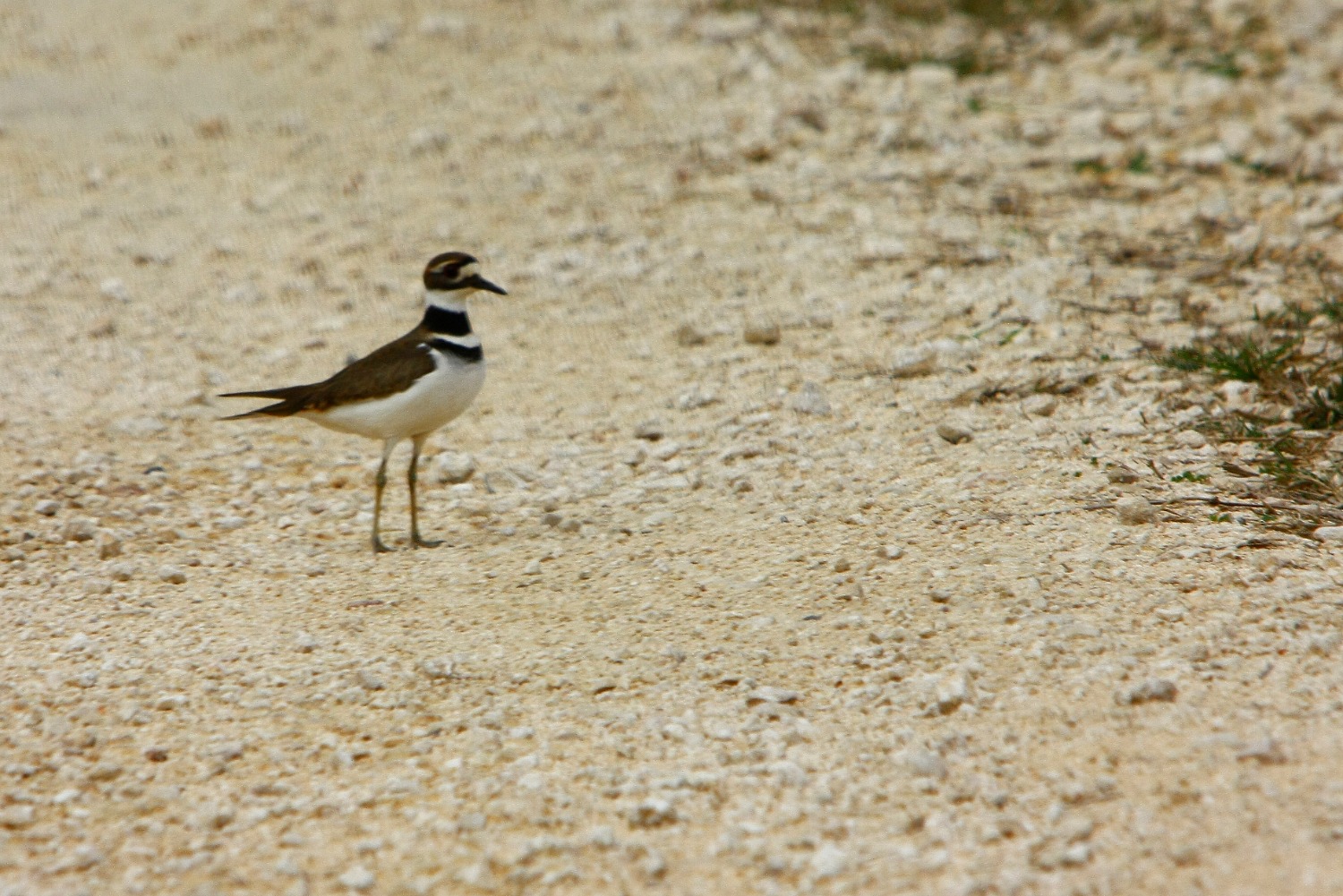
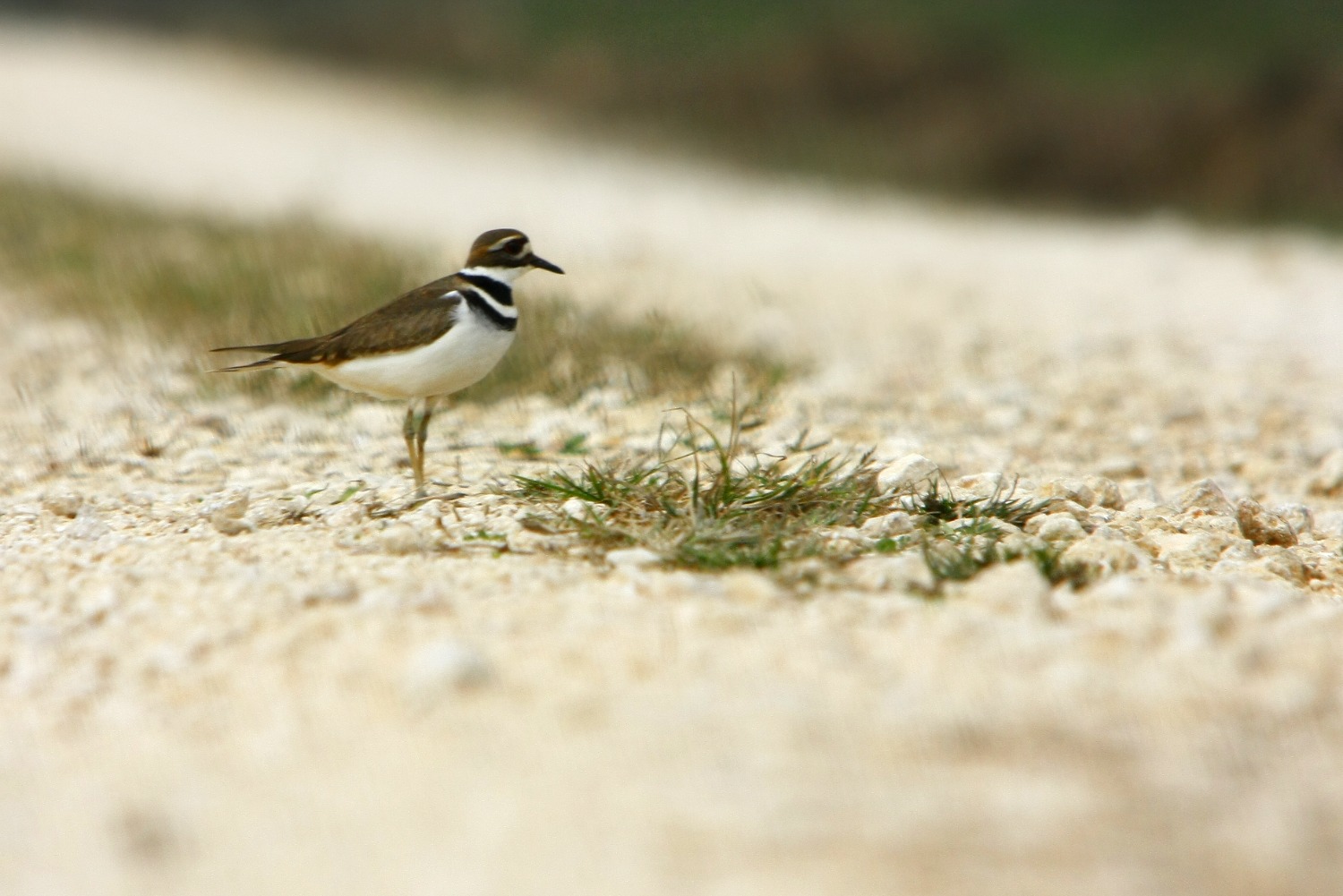
Take a look at the picture above. Probably doesn’t do much for you, right? Just a killdeer photograph, nothing exciting about the shot itself. What could have been done to make this a better photograph? I have found that getting low can often drastically improve the photo. Get down at eye level with the bird, you can often create better eye contact with the bird, bringing the viewer into a connection with the photo. The Killdeer will then seem more interesting, not only because of the lower angle, but because of the  change in the depth of field of the shot.

Depth of field (also known as DOF), is the term for the amount of distance between the closest and farthest objects that appear sharp in the photograph. In the second picture above, a shallower depth of field (meaning a blurry background) makes the photo less distracting and more pleasing to the eye. In the photo pictured below, I took it one step further, instead of simply kneeling, I lay on my stomach, creating a very shallow depth of field and therefore, a picture that is more likely to catch your eye than the first photo.

Changing the depth of field is a remarkably simple technique but incredibly powerful in the way a photo comes out. By getting low, chances are you can improve your bird photography.

Posted by Matthew Sim