Archives

Fall Migration on the Glenmore Reservoir

Posted by Dan Arndt

Before the 2013 flood, the Glenmore Reservoir was always a great place to see hundreds of migrating autumn waterfowl and waders. In 2013 and 2014 though, the birds did not return in large numbers. One of the primary contributing factors to this was that with the sheer volume of water pulsing through the reservoir in late June of 2013, the bottom of the reservoir would have been either completely scoured of vegetation, or covered with silty and sandy sediment, killing the vegetation and invertebrate life that would otherwise thrive there. By the fall of 2015 though, the birds began to return in fairly decent numbers, and this fall was once again extremely productive. In the wake of any natural disaster, eventually things return to some level of stability and normalcy, and it was great to be back birding in South Glenmore Park and along the edges of the reservoir.

As per usual, we headed over to the ridge overlooking the reservoir to see what we could find out there. While we did see a few hundred American Coots at the far west edge of the reservoir, and a few Eared, Horned, and Western Grebes in close, there wasn’t anything close enough to really get good looks at without a scope. Thankfully we heard the tell-tale chipping of some American Tree Sparrows and Dark-eyed Juncos feeding below the spruce trees nearby.

Dark-eyed Junco

Dark-eyed Junco

[exif id=”16218″]

American Tree Sparrow

American Tree Sparrow

[exif id=”16219″]

We had a pretty good-sized turnout that morning, and so we split up, with my group taking the top pathway up away from the reservoir first. Given the slight chill in the air, we were all thankful to be off the water’s edge until it warmed up later in the day!

Roosting near its usual nesting spot, and after having a decent discussion about the ways to best distinguish between a Common Raven and American Crow, we found this fellow sitting atop a favored perch. It gave a few calls of different types as we watched it, and then finally flew off to join another Common Raven as it flew into the nearby neighborhood.

Common Raven

Common Raven

[exif id=”16227″]

As we explored the park, we heard the wheezy, raspy call of a Boreal Chickadee, which seemed quite out of place this far from the Weaselhead and the dense spruce cover of the slopes of the reservoir. Upon our investigation though, we found it stashing plenty of seeds in a small cavity near one of the homes with bird feeders set out.

Boreal Chickadee

Boreal Chickadee

[exif id=”16220″]

We also stumbled across a pair of young Mule Deer bucks, foraging in the low willows that were numerous throughout the upper slope of the park. Both looked to be only a year or two old, with only brow antler tines. They didn’t seem particularly disturbed by us walking nearby, which allowed us to notice one particular… anomaly.

young Mule Deer buck

young Mule Deer buck

[exif id=”16228″]

young Mule Deer buck with growth

young Mule Deer buck with growth

[exif id=”16221″]

He didn’t appear to be in any discomfort or distress, but this fairly well “endowed” deer did seem quite unusual. I welcome any suggestions or explanations on what might have caused this particular anomaly to this young deer. My suspicions are that it’s some type of tumor or cyst that’s caused the swelling.

American Tree Sparrow

American Tree Sparrow

[exif id=”16222″]

Just as we were meeting up with our compatriots, we managed another good few minutes of looking at a couple of American Tree Sparrows feeding right alongside the pathway. These guys tend to be a lot more shy, so it was a bit surprising seeing them hold still with walkers, joggers and going by fairly regularly.

fish jaw and clavicle

fish jaw and clavicle

[exif id=”16223″]

Another mystery that we have yet to solve was this jaw and clavicle that we found on the edge of the reservoir. Again, I have my suspicions of its provenance, but would appreciate any comments and suggestions about what species was predated here on the edge of the Glenmore Reservoir. For scale, the clavicle was about 6-7 cm across, and the jaws were about 5-6 cm from back to front.

One of the birds that I had the hardest time identifying for the first few years of fall birding were the fall plumage Eared and Horned Grebes. I can’t tell you the number of times I would misidentify one or the other, and it wasn’t until the last year or so that I finally became comfortable telling them apart.

I’m going to leave these photos unlabelled for now, and I invite comments on what the putative IDs are on each of the birds below.

Fall Plumage Grebe 1

Fall Plumage Grebe 1

[exif id=”16225″]

Fall Plumage Grebe 2

Fall Plumage Grebe 2

[exif id=”16226″]

Fall Plumage Grebe 1 and 2 together

Fall Plumage Grebe 1 and 2 together

[exif id=”16217″]

When I look at a fall plumage grebe now, I look for four main features. First, I look at the head shape. Eared Grebes have a head that has a high crest at the front of the head, and slopes downward towards the back. Horned Grebes have a head that is more peaked at the back, and slopes up to that peak from the base of the bill. The second feature to look for is the shape of the bill. Eared Grebes have a pointed, dagger-shaped bill, that is ever so slightly curved upwards. Horned Grebes, on the other hand, have a thicker, more bullet-shaped bill, tipped with a very tiny white point.

Next I look at the plumage on the neck, back, and sides. An Eared Grebe has a much darker neck and face, with less distinct transition between white and black, and a more graduated blending between the back and the sides. The Horned Grebe, once again, is very sharply divided white and black on the face, neck, and usually on the back and sides. Lastly, the Eared Grebe has a light orange iris, and the Horned Grebe has a blood-red iris.

Sunday Showcase: Birds of Carburn Park and IBS

Bird and mammal photos taken by Tony LePrieur on September 11, 2016. The Wood Duck and Great Blue Heron were at Inglewood Bird Sanctuary, and the rest were at Carburn Park.

image6

Osprey.

image2

Wood Ducks.

image1

Great Blue Heron.

image4

Belted Kingfisher.

image3

Wilson’s Warbler.

image5

Yellow-rumped Warbler.

image7

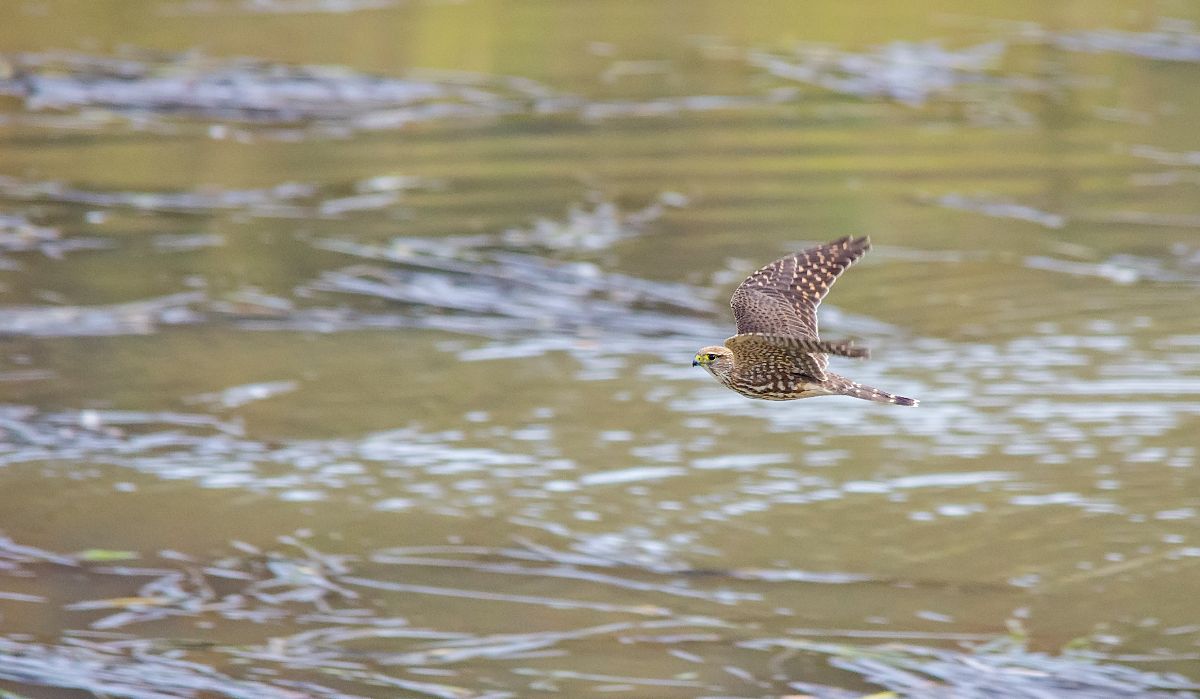
Merlin.

image8

Eastern Gray Squirrel.

image9

American Mink.

Do you have some bird photos you’d like to share? Send them to our email address and we may post them on the blog.


Sunday Showcase: Carburn Park, September

Photos by Tony LePrieur, taken at Carburn Park in Calgary on September 4-5, 2016.

Can you identify the warblers? Put your ID’s and reasons in the comments.

image9

House Wren.

image2

Fall Warbler #1.

image3

Fall Warbler #2.

image4

Fall Warbler #3.

image5

Fall Warbler #4.

image6

Least Flycatcher.

image7

Least Flycatchers.

image8

Great Horned Owl.

image10

White-tailed Deer.

The end of Winter in the Weaselhead and North Glenmore Park

Posted by Dan Arndt

For our last outing for our Friends of Fish Creek Winter Birding group, we headed to the Weaselhead and North Glenmore Park to see what winter birds remained, and if any spring migrants had shown up around the Glenmore Reservoir and in the Weaselhead itself. While many of our winter birds had already left, a few die-hards were still around in good numbers, and we definitely were not disappointed with the numbers of spring birds we found all around the park.

Weaselhead - March 20, 2016

Weaselhead – March 20, 2016

We headed down into the Weaselhead first thing, checking the feeders along the way. I had headed down before our group to fill some of the feeders, and managed to spot an overwintering American Goldfinch, but when the rest of our group headed down as a whole all of the feeders were completely devoid of activity. Part of the reason for the vacancy is that now that the weather has turned, the birds were not quite as reliant on the feeders as insects had begun to hatch, and caches stored during the winter would provide plenty of food. We did have one little fellow who turned up, as always, at the tail end of the winter session.

Least Chipmunk

Least Chipmunk

[exif id=”15440″]

Fresh from his winter hibernation, this Least Chipmunk seemed completely oblivious to our presence as he stuffed his face full of black-oil sunflower, peanuts, and various other seeds I’d placed at the feeder earlier in the morning. I just love how much character these little mammals have, and how single-minded they can be when they first wake up.

female Hairy Woodpecker

female Hairy Woodpecker

[exif id=”15441″]

While she wasn’t right at the feeder, this Hairy Woodpecker was hanging out nearby, hammering a hole in the side of this tree to pick out a tasty meal.

male House Sparrow

male House Sparrow

[exif id=”15442″]

A little further down the path and across the bridge we found this male House Sparrow and his mate picking out some twigs, grass and leaves to make their nest for the coming season. Given where they were loafing about, they may have even been considering setting up shop in one of the Cliff Swallow nests on the bridge!

American Tree Sparrow

American Tree Sparrow

[exif id=”15443″]

American Tree Sparrow

American Tree Sparrow

[exif id=”15444″]

Before we turned around to head back up the hill, we stopped and checked the logs and information signs that have been used all winter as a feeding station, and sure enough we found some American Tree Sparrows singing away in the brush, and coming out to feed. These little sparrows have an amazing song, and are just as striking to look at.

American Wigeon

American Wigeon

[exif id=”15445″]

We headed back up the hill and off to the east end of the Glenmore Reservoir to find our returning migrants, and were not disappointed on the first pond. A pair of American Wigeon were floating along the back end of the pond, well away from the Canada Geese and Mallards who were clearly set up on their nesting territories closer in.

White-winged Crossbill

immature White-winged Crossbill

[exif id=”15446″]

White-winged Crossbill

immature White-winged Crossbill

[exif id=”15447″]


White-winged Crossbill

immature male White-winged Crossbill

[exif id=”15448″]

While we were scanning the ponds for waterfowl, sparrows, and anything else we could find, we heard a flock of late White-winged Crossbills in the spruce trees to the north, picking through the few remaining cones that had made it through the winter. Both males and females were in fine form, with the majority of the birds being immature, and as always, seemed to be completely oblivious to our presence.

Canada Geese harassing some Mallards

Canada Geese harassing some Mallards

[exif id=”15449″]

These Canada Geese seemed to have their feathers ruffled by the Mallards (in the shade of the rock on the left). It wasn’t until the Mallards had simply had enough and moved on that the geese left them alone. Seeing these inter-species interactions is always a treat, and late winter and early spring can lead to some great opportunities for this behaviour.

Great Horned Owl

Great Horned Owl

[exif id=”15450″]

Our best surprise of the day was coming across this male Great Horned Owl high up in a spruce trying to have a nap… until we disturbed him. He wasn’t pleased to see us. At all.

Common Goldeneye

Common Goldeneye

[exif id=”15452″]

These Common Goldeneye (and a very confused Mallard) were still trying to display for the few remaining single females, though most others of their kind we’d found this late in the winter/spring season. Despite that, at least two of them seemed to making a positive impression!

Dark-eyed Junco

Dark-eyed Junco (Oregon)

[exif id=”15453″]

One of our last birds of the day, and a great one at that, was this Dark-eyed Junco of the Oregon subspecies that sang a bit for us, but also perched high up in the nearby bushes and allowed everyone very good looks.

The spring course with the Friends of Fish Creek is now well under way, so expect some new posts in the next few weeks from our more recent outings. Have a great week, and good birding!


Early October on the Irrigation Canal

Posted by Dan Arndt

Earlier this month I was able to take part in two walks with the Friends of Fish Creek out to the Irrigation Canal that runs parallel to the Bow River through south-east Calgary. Each day had its highlights and the overall experience was really quite incredible. While there’s not quite as much activity this late in the month, the week following the initial drainage of the canal can be quite productive for a wide variety of birds. From shorebirds to gulls to songbirds, the whole walk tends to be non-stop flying, foraging and feeding on everything living in the trees along the canal and the mud within it.

Irrigation Canal - October 6th and 8th, 2015

Irrigation Canal – October 6th and 8th, 2015

Two of the most common birds we often find along this walk are the two most easy to overlook, the American Robin and the European Starling. Their colors and contrasts really stand out on a bright clear fall day, especially with the right background!

IMGP1669American Robin – [exif id=”14915″]

IMGP1682

European Starling – [exif id=”14927″]

The Ring-billed Gulls are also one of the most numerous birds we find along the canal, aside from waterfowl, and until recent years, we’ve almost always had Bonaparte’s Gulls. We’re always on the look out for something a little more unusual, but so far we’ve failed to turn up anything less common.

IMGP1757

Ring-billed Gull – [exif id=”14920″]

The main draw along the canal are the ever-present Hooded Mergansers. It’s not unusual to find at least a few males and at least a couple females cruising around feeding on the small invertebrates and fish in the main channel of the canal.

IMGP1743male Hooded Mergansers – [exif id=”14919″]

IMGP1748

male Hooded Mergansers – [exif id=”14918″]

IMGP1538

female Hooded Mergansers – [exif id=”14911″]

This late in the season we also get a good number of Greater Yellowlegs (and very rarely an occasional Lesser Yellowlegs). Even more interesting are the occasional falcons and raptors hunting them, like this female Merlin that took a dive at a large group of yellowlegs, flushing the majority of them!

IMGP1721

Greater Yellowlegs – [exif id=”14917″]

IMGP1623

female Merlin – [exif id=”14913″]

IMGP1617

female Merlin in flight – [exif id=”14914″]

In addition to the Merlins we saw on both days at the canal, on the 8th we had a couple of interesting fly-overs. A Rough-legged Hawk and an immature Golden Eagle soared over on some high thermals, offering a few opportunities for us to identify them from below. Golden Eagles aren’t particularly common within the city limits, so my first thought was that it was an immature Bald Eagle. After reviewing the photos though, it was most certainly a Golden, which was quite an exciting find! Those broad, squared off wings, golden nape, and white patches in the middle of the underwing are really good features to look for on an immature Golden Eagle.

IMGP1765

Rough-legged Hawk – [exif id=”14922″]

IMGP1761

Golden Eagle – [exif id=”14921″]

New for me this year was a bit of variety in the makeup of shorebirds, with a fair number of Long-billed Dowitchers making an appearance, which we identified by their flight calls, and a lone American Golden-Plover, which is yet another relatively rare bird in the area, especially within the city limits!

IMGP1819

Long-billed Dowitchers – [exif id=”14923″]

IMGP1855

American Golden-Plover and Greater Yellowlegs – [exif id=”14924″]

IMGP1858

American Golden-Plover – [exif id=”14924″]

Our last bird of the day, and maybe the last members of this species of the season, were a small number of Double-crested Cormorants. While these birds are fairly uncommon around the city, they’re not quite as loathed here as they are in eastern Canada, so most of us still enjoy seeing them from time to time along the Bow River.

IMGP1720

Double-crested Cormorant – [exif id=”14916″]

While there aren’t usually too many mammals along this route, we did find a lone Muskrat on both of our outings, in almost exactly the same spot north of the Gosling Way bridge over the canal. He (or she) was foraging and collecting grasses and stems to store away for the winter.

IMGP1499

Muskrat – [exif id=”14909″]

And that’s it for another week here on the blog. Have a great one, and good birding!

Autumn Migrants at Lafarge Meadows

Posted by Dan Arndt

My first week back leading the Friends of Fish Creek outings after being away at work for most of the month of September turned out to be quite the adventure, with a few really great finds.

Lafarge Meadows - October 4, 2015

Lafarge Meadows – October 4, 2015

The light was a bit dim early on, but it seemed as though the day would be productive as the first really impressive birds we found were a couple of Green-winged Teal, back in their striking breeding plumage. The poor light didn’t do them justice though.

IMGP1283

Green-winged Teal – [exif id=”14816″]

Not too far from him was a young Pied-billed Grebe, one of the seven we would see throughout the day.

IMGP1310

Pied-billed Grebe – [exif id=”14817″]

We followed the bank of the Bow River north at the beginning of our outing, turning up a Bald Eagle perched across the river in a tree. A couple of us remarked how this might have even been the same bird in the same tree as we had seen earlier this year in the winter course.

IMGP1345

Bald Eagle – [exif id=”14818″]

We were a little surprised a few minutes later when we were passed by a lone American White Pelican, which we would see nine more of later in the day. I think this might be the latest I have seen these massive white birds within the city.

IMGP1387

American White Pelican – [exif id=”14820″]

While he was flying by, we also heard a chip note of a nearby Yellow-rumped Warbler, another migrant that was foraging in the low trees and shrubs. IMGP1356

Yellow-rumped Warbler – [exif id=”14819″]

Things got a lot quieter for the next half hour or so, as we crossed the tributary stream and walked along the banks of the river that had been hardest hit by the flood two years ago. We were almost ready to turn around and head back to the south ponds when things began to chatter and chirp all around us. A pair of Downy Woodpeckers were the first ones to draw our attention.

IMGP1393

female Downy Woodpecker – [exif id=”14821″]

While we were watching her, we heard the chip notes of some sparrows in the nearby shrubs, and on investigation, we found a couple of Song Sparrows (and a Lincoln’s sparrow that we heard, but could not track down for the life of us!)

IMGP1397

Song Sparrow – [exif id=”14822″]

IMGP1411

Song Sparrow – [exif id=”14822″]

The best sighting of the day (and maybe of the year?) was found while I was crouched down taking some photos of this dragonfly who was all but immobilized due to the cold, and hanging under a blade of grass.

IMGP1424

Dragonfly sp. – [exif id=”14824″]

IMGP1435

Dragonfly sp. – [exif id=”14825″]

While I was carefully focusing on the detail of this beautiful little insect, the call of “HOODED WARBLER!” from Bob Lefebvre came about fifty meters south, as much of the group had continued on and were carefully scanning a group of songbirds foraging in the low brush. After a good half hour, I did manage to capture a few images of this quick little skulking bird, though I was more than happy to just see it!

IMGP1443

Hooded Warbler – [exif id=”14826″]
IMGP1448

Hooded Warbler – [exif id=”14827″]

It was an incredible find, and we all left quite satisfied with how the day had turned out. We headed back to end our walk and stopped briefly to enjoy the antics of the American Coots and American Wigeon fighting over the vegetation they were picking up from the bottom of the south pond.

IMGP1459

American Wigeon and American Coots – [exif id=”14828″]

So all in all, I’d say that my first outing back was a rousing success!

I did manage a few outings during the next week to the Bow River Irrigation Canal, so keep an eye here for that next Tuesday!

Have a great week, and good birding!

Sunday Showcase – September Birds of Calgary

Tony LePrieur photographed these birds on September 27, 2015. The robins and the White-throated Sparrow were seen in Queen’s Park Cemetery in NW Calgary, and the rest in the Inglewood Bird Sanctuary.

0S4A0398 -1

American Robin

[exif id=”14755″]


0S4A0576 -1c

American Robin

[exif id=”14756″]


0S4A0659 -1c

American Robin

[exif id=”14757″]

0S4A0758 -1

White-throated Sparrow

[exif id=”14758″]

0S4A0890 -1

Great Blue Heron

[exif id=”14759″]

0S4A1028 -1

Male Wood Duck

[exif id=”14760″]

0S4A1192 -1

Great Horned owl

[exif id=”14761″]

Free Ticket Winner for Film The Messenger

The winner of the pair of free tickets to the film The Messenger is David Severson. Thanks to all who entered.

If you plan to attend the show you can still use the discount code to get $2 off admission. The code is Birdcon-15! (include the exclamation point). The Messenger is an important film and has been getting excellent reviews.

The film plays at Eau Claire Cinemas on Friday October 2 at 7:15 pm and Saturday October 3 at 12 noon, as part of the Calgary International Film Festival. See this site for more information and to view the trailer.

See The Messenger at Calgary International Film Festival

The Messenger, an important film about the worldwide decline in songbird numbers, is playing in Calgary as part of the Calgary International Film Festival. There will be two showings: Friday October 2 at 7:15 pm, and Saturday October 3 at 12 noon, at the Eau Claire Cinemas.

TreeSwallowbloodtestW

A Hot Docs 2015 Top Ten Audience Favourite, THE MESSENGER takes us on passionate journey around the world, as we learn about how the migratory patterns of the songbird are an essential component of our planet’s complex ecosystem. Through skillful narration and camerawork, THE MESSENGER takes on a visually stunning and intimate journey into the endangered world of the songbird and the need for immediate intervention to prevent their extinction. Director Su Rynard will be at both screenings, and University of Alberta biologist Erin Bayne at the Friday screening, for a Q&A.
.
Birds Calgary has two pairs of free tickets to give away to our subscribers. To enter a draw for the free tickets, reply to the email version of this post, (which only subscribers get), and replace the “To” line (“donotreply[at]wordpress.com”) with birdscalgary[at]gmail.com. Winners will be drawn randomly from all replies received by midnight on Sunday September 27.
.
If you want to buy tickets to the show, you can get a $2 discount off the admission price by entering the code “Birdcon-15!” when purchasing online. Go to The Messenger site for more information or to buy tickets.

A “fallout” of thrushes from Bankside to Mallard Point

Posted by Dan Arndt

Last Sunday was a great day for birding along the Bow River. The weather had been a little iffy for a couple days before, and overnight had cleared up enough to allow a whole lot of birds to begin moving through, and boy did we see and hear a lot of migrants!

Bankside to Mallard Point - May 17, 2015

Bankside to Mallard Point – May 17, 2015

We walked around at Mallard Point for a bit early on, and found a whole lot of Swainson’s Thrushes in the underbrush (say that five times fast) and hearing a number of Yellow and Yellow-rumped Warblers singing in the bushes. From there, we drove down to the ponds at Burnsmead to look for the Wood Ducks we had there earlier in the year, but dipped on those. We did hear a couple of Western Tanagers in the saplings on the north side of the road, one of which posed nicely for us.

Western Tanager Pentax K-5 + Sigma 150-500@500mm 1/1000sec., Æ’/8.0, ISO 320

Western Tanager
Pentax K-5 + Sigma 150-500@500mm
1/1000sec., Æ’/8.0, ISO 320

From there we headed over to Bankside, in search of sapsuckers and maybe a few other warblers, but aside from hearing a couple here and there, none of them popped up into view. We headed north along the river and one of our keen-eyed participants noticed this Say’s Phoebe across the river, which was quickly harassed and scared off by a newly arrived Eastern Kingbird, but eventually the two of them worked out their differences.

Say's Phoebe Pentax K-5 + Sigma 150-500@500mm 1/1250sec., Æ’/8.0, ISO 1600

Say’s Phoebe
Pentax K-5 + Sigma 150-500@500mm
1/1250sec., Æ’/8.0, ISO 1600

Moments after we spotted this fellow, a pair of American White Pelicans gave us a very close flyover, enough to tell this male by the large crest present on the bill.

American White Pelican Pentax K-5 + Sigma 150-500@500mm 1/1600sec., Æ’/8.0, ISO 400

American White Pelican
Pentax K-5 + Sigma 150-500@500mm
1/1600sec., Æ’/8.0, ISO 400

The morning continued with us finding Song Sparrows, Lincoln’s Sparrows, and Swainson’s Thrushes absolutely everywhere, but none of them really allowed us to get too close, and despite our efforts, we couldn’t quite pick out a Hermit Thrush or a Veery from the pack. We did hear a few of these beautiful male Baltimore Orioles singing in the poplar trees across the river!

Baltimore Oriole Pentax K-5 + Sigma 150-500@500mm 1/1250sec., Æ’/8.0, ISO 1600

Baltimore Oriole
Pentax K-5 + Sigma 150-500@500mm
1/1250sec., Æ’/8.0, ISO 1600

Upstream in a section of the bank that had been carved out in the 2013 flood we found a colony of Bank Swallows setting up shop. It’s always fun to watch them dip and weave over the river and in and out of their tiny homes.

Bank Swallows Pentax K-5 + Sigma 150-500@500mm 1/2000sec., Æ’/8.0, ISO 2000

Bank Swallows
Pentax K-5 + Sigma 150-500@500mm
1/2000sec., Æ’/8.0, ISO 2000

We continued upstream to find a grove where we’ve found nesting American Kestrels in one of the large hollowed out trees, but unfortunately came up empty in the trees. On the river though, we found a lifer for most of our group, great looks at a usually hard to spot warbler, and yet another great look at one of the Swainson’s Thrushes along our path.

Northern Waterthrush Pentax K-5 + Sigma 150-500@500mm 1/1600sec., Æ’/8.0, ISO 3200

Northern Waterthrush
Pentax K-5 + Sigma 150-500@500mm
1/1600sec., Æ’/8.0, ISO 3200

We noticed this Northern Waterthrush darting along the bottom of the logs and accumulated debris, but popped out a couple of times for us to take photos. We also had some of our best looks at a couple of Swainson’s Thrushes bobbing up and down along the brush pile.

Swainson's Thrush Pentax K-5 + Sigma 150-500@500mm 1/1600sec., Æ’/8.0, ISO 1000

Swainson’s Thrush
Pentax K-5 + Sigma 150-500@500mm
1/1600sec., Æ’/8.0, ISO 1000

Our best bird of the day, and arguably of the entire course so far, was this Gray-cheeked Thrush. They’re a rare migrant in southern Alberta, and it seems that a few of them might have been included in the overnight thrush fallout, as they also banded 5 of them at the Inglewood Bird Sanctuary bird banding station that morning.

Gray-cheeked Thrush Pentax K-5 + Sigma 150-500@500mm 1/1250sec., Æ’/8.0, ISO 1000

Gray-cheeked Thrush
Pentax K-5 + Sigma 150-500@500mm
1/1250sec., Æ’/8.0, ISO 1000

Gray-cheeked Thrush Pentax K-5 + Sigma 150-500@500mm 1/1250sec., Æ’/8.0, ISO 1000

Gray-cheeked Thrush
Pentax K-5 + Sigma 150-500@500mm
1/1250sec., Æ’/8.0, ISO 1000

We spent some time with the thrushes before heading back upstream, to find our first goslings of the season, and remarked at just how big they were already!

Canada Goose goslings Pentax K-5 + Sigma 150-500@500mm 1/1600sec., Æ’/8.0, ISO 400

Canada Goose goslings
Pentax K-5 + Sigma 150-500@500mm
1/1600sec., Æ’/8.0, ISO 400

As we wrapped up for the day at Mallard Point, we heard the Least Flycatchers calling from the bushes again and I decided I had to at least try to get a picture. All I was able to snap was this record shot before it flew off. I’m sure I’ll get better ones later on this year!

Least Flycatcher Pentax K-5 + Sigma 150-500@500mm 1/1250sec., Æ’/8.0, ISO 1000

Least Flycatcher
Pentax K-5 + Sigma 150-500@500mm
1/1250sec., Æ’/8.0, ISO 1000