Archives

Carburn Park Part 2: The Flats

Posted by Dan Arndt

One of the areas of Carburn Park that we visit a little less often are the flats and backwater ponds south of the main parking lot, and even further south of the Eric Harvie bridge all the way down south to the Ivor Strong Bridge where Deerfoot Trail crosses the Bow River (again). Last week’s outing was really quite incredible. Three new species that I’d never seen on the Friends of Fish Creek outings, and two that I’d never seen within the city limits before, which was really quite a treat! Enjoy!

Carburn Park south of the Eric Harvie Bridge April 27, 2014

Carburn Park south of the Eric Harvie Bridge
April 27, 2014

As we started out, we headed over to the spot where we saw the North American Beaver last week, and were greeted by a small flock of hunting Yellow-rumped Warblers, a few of which stopped to pose for some nice photos.

Yellow-rumped Warbler Pentax K-5 + Sigma 150-500@500mm 1/800sec., Æ’/6.3, ISO 800

Yellow-rumped Warbler
Pentax K-5 + Sigma 150-500@500mm
1/800sec., Æ’/6.3, ISO 800

Yellow-rumped Warbler Pentax K-5 + Sigma 150-500@500mm 1/800sec., Æ’/6.3, ISO 500

Yellow-rumped Warbler
Pentax K-5 + Sigma 150-500@500mm
1/800sec., Æ’/6.3, ISO 500

We headed across the Eric Harvie bridge in search of a number of Red-winged Blackbirds, Tree Swallows, and a few other distant birds, but one of our surprising visitors flew overhead, and in the moment, I correctly, then incorrectly identified it. My gut instinct off the bat was to call this beauty a Ferruginous Hawk, but after a moment I changed my ID to a Red-tailed Hawk. It wasn’t until I got home that I realized I was right in the first place after all, but Ferruginous Hawks aren’t really the most common bird in the Calgary area!

Ferruginous Hawk Pentax K-5 + Sigma 150-500@500mm 1/1000sec., Æ’/6.3, ISO 160

Ferruginous Hawk
Pentax K-5 + Sigma 150-500@500mm
1/1000sec., Æ’/6.3, ISO 160

This immature Red-winged Blackbird was still showing quite a bit of rusty edging on the scapulars and secondary flight feathers, indicating that this is an immature male.

Red-winged Blackbird Pentax K-5 + Sigma 150-500@500mm 1/1000sec., Æ’/6.3, ISO 2000

Red-winged Blackbird
Pentax K-5 + Sigma 150-500@500mm
1/1000sec., Æ’/6.3, ISO 2000

We headed further south along the trails and happened upon the first American White Pelican that our group would see for the year. The crest on the mandible indicates that this is a male, and he seemed content to just snooze away the morning.

American White Pelican Pentax K-5 + Sigma 150-500@500mm 1/2000sec., Æ’/6.3, ISO 125

American White Pelican
Pentax K-5 + Sigma 150-500@500mm
1/2000sec., Æ’/6.3, ISO 125

In the trees nearby were a small flock of Black-capped Chickadees begging for a meal, a lone Ruby-crowned Kinglet going about his business of looking for some food, but in an open expanse to the south an odd shape presented itself. At first, I thought it to be an American Robin, but on closer inspection it was certainly a flycatcher of some sort, and once I got even a little closer, I knew for sure that the yellowish-brown undertones, white wing bars, grayish “vest”, and crest must indicate a Say’s Phoebe, which was a great find for our group!

Say's Phoebe Pentax K-5 + Sigma 150-500@500mm 1/1600sec., Æ’/6.3, ISO 400

Say’s Phoebe
Pentax K-5 + Sigma 150-500@500mm
1/1600sec., Æ’/6.3, ISO 400

Another good look at yet another new spring species was this Song Sparrow that led a few of our photographers on a merry chase before stopping for a quick pose right in front of me in great light!

Song Sparrow Pentax K-5 + Sigma 150-500@500mm 1/2000sec., Æ’/6.3, ISO 400

Song Sparrow
Pentax K-5 + Sigma 150-500@500mm
1/2000sec., Æ’/6.3, ISO 400

Down at the far south end we did find a group of Franklin’s Gulls feeding in some oddly smelling water at the mixture point between the fast-moving river water, and the slower moving back-channel. Whatever it was, they sure seemed to enjoy it!

Franklin's Gull Pentax K-5 + Sigma 150-500@500mm 1/2000sec., Æ’/6.3, ISO 800

Franklin’s Gull
Pentax K-5 + Sigma 150-500@500mm
1/2000sec., Æ’/6.3, ISO 800

My first Osprey pair of the season also showed up in one of their usual spots in the area near the Lafarge gravel pit at their Bow River Aggregates site, just one of at least three pair of Osprey in and around the Carburn Park area!

Osprey having a bite Pentax K-5 + Sigma 150-500@500mm 1/2000sec., Æ’/6.3, ISO 200

Osprey having a bite
Pentax K-5 + Sigma 150-500@500mm
1/2000sec., Æ’/6.3, ISO 200

From here we headed back, and most of my group headed on their way home, but if they had stuck with me for just a few more minutes, they would have been treated to two great sights. The first of which, this Broad-winged Hawk, was my first sighting of this species in the Calgary area. While they do happen through on occasion during spring and fall migration, they had so far eluded me! You can identify this uncommon species by the broad black and white tail bands, and the black fringing on the very edge of the wings, with very light speckling on the belly and underwing.

Broad-winged Hawk Pentax K-5 + Sigma 150-500@500mm 1/2500sec., Æ’/6.3, ISO 1250

Broad-winged Hawk
Pentax K-5 + Sigma 150-500@500mm
1/2500sec., Æ’/6.3, ISO 1250

That encounter I didn’t even realize the weight of until I returned home to review my photos! So off I went, over to the second pond in search of a Common Loon that had been seen there earlier in the week. I even lucked out with a kayaker doing laps around the pond, occasionally pushing the loon just a little closer each time until I got a shot I felt was post-worthy.

Common Loon Pentax K-5 + Sigma 150-500@500mm 1/2500sec., Æ’/6.3, ISO 1000

Common Loon
Pentax K-5 + Sigma 150-500@500mm
1/2500sec., Æ’/6.3, ISO 1000

Hope you enjoyed reading this post, and as always, we’ll see you next week!

Good birding!


Where are the warblers?

Posted by Dan Arndt

On our outing last week, I mentioned an idea to Bob Lefebvre about setting up a post showing our readers where some of our summer migrants are right now, and maybe keeping it updated on a weekly basis. Easy enough to do using eBird, but in doing a quick Google search, I found out that Greg Miller (yes, that Greg Miller,) had already done a similar post, which I’ll link to below.

I do plan on setting up a resource page right here on Birds Calgary, tailored to our own favourite locals, but for now, here’s Greg’s great summary this topic.

Where are the Eastern Wood Warblers Now? – 2014

Just follow the link and click on any of the names of your favourite Wood Warbler species for an up to the minute update on their migration progress! As of this post, almost all of these species have landed in the southern United States, pushing northward on a daily basis. Many of them first arrive on the coast of Florida, Texas, and Louisiana before moving ever northward to their breeding grounds in the Boreal Forest of northern Canada, while others may breed further south in their preferred breeding habitats. The hardiest of them all, the Yellow-rumped Warblers, most of which over-winter in the continental United States, have pushed even further northward, into the interior of British Columbia, Washington state, and in the interior, as far north as northern Colorado and Utah.

Spring is on the way!

Travel Tuesday: Fall Migration in Confederation Park

Posted by Dan Arndt


Now here’s a post that’s a major blast from the past.

I originally started this post over a year ago, with the plan of getting out as often as I could during the height of warbler and vireo migration to the titular hotspot in the Calgary area, or at least, the one I see the largest number of people at the most often. While I didn’t get out nearly as much as I wanted last year, with my current employment situation I had more than enough time on my hands, and was out visiting Confederation Park at least three days a week for four weeks straight. While it was a lot more birding and a lot more challenging than I was prepared for, I was quite happy to nab a handful more life birds and as wide a variety of warblers and vireos as I have ever seen in my life.

Confederation Park is located between 24 Ave. & 14 St. N.W. and 30 Ave. & 10 St. N.W.. and covers over 400 acres. It contains stream channel whose banks are covered with water willow, aspen, and a wide variety of small shrubs which are perfect for insects to roost on in the evening and overnight, and even more perfect for the vireos and warblers to hunt in the early morning light. As the insects warm and begin to fly, so do the warblers, allowing brief, and rarely satisfying views of each and every one of them. Another advantage to the park is that is is a fairly continuous green belt, which is the last major park before the Bow River Valley, and following the expanses of relatively poorly vegetated communities and grassed over parks, perfect for warblers to end a night of nocturnal migration.

The attached map shows the three primary locations where the majority of the warbler activity is localized, but since they’re birds, and they do have the ability to fly, just about anywhere in the park can be a hot spot. That said, about 75-80% of all the warblers, vireos, thrushes and the like that I have seen in this park have all been at one of these three locations.

Confederation Park

Confederation Park

One major advantage to birding this area in the fall, especially during warbler migration, are the huge number of other birders around, some of which are incredibly experienced and know their warbler IDs pretty much spot on every single time. I’ve learned a lot just by tagging along with some of them on some of the more productive days!

One of the most amazing things I noted this year, while keeping track of both my own sightings and those of others, is that it appeared that just about every species that breeds in the boreal forests of Alberta, Northwest Territories, and the Yukon were found on their way through at this magical place.

Here are just a few of the warblers, vireos and sparrows that I’ve managed to find here at Confederation Park in the past few years.

Yellow-rumped Warbler - September 11, 2011 Pentax K-5 + Sigma 150-500@500mm 1/250sec., Æ’/8, ISO 1250

Yellow-rumped Warbler – September 11, 2011
Pentax K-5 + Sigma 150-500@500mm
1/250sec., Æ’/8, ISO 1250


White-crowned Sparrow - September 15, 2012 Pentax K-5 + Sigma 150-500@500mm 1/500sec., Æ’/8, ISO 800

White-crowned Sparrow – September 15, 2012
Pentax K-30 + Sigma 150-500@500mm
1/500sec., Æ’/8, ISO 800

Ruby-crowned Kinglet Pentax K-5 + Sigma 150-500@500mm 1/500sec., Æ’/8, ISO 800

Ruby-crowned Kinglet – September 15, 2012
Pentax K-30 + Sigma 150-500@500mm
1/500sec., Æ’/8, ISO 800

Lincoln's Sparrow - August 12, 2012 Pentax K-30 + Sigma 150-500@500mm 1/180sec., Æ’/8, ISO 800

Lincoln’s Sparrow – August 12, 2012
Pentax K-30 + Sigma 150-500@500mm
1/180sec., Æ’/8, ISO 800

Blue-headed Vireo - August 29, 2013 Pentax K-5 + Sigma 150-500@500mm 1/640sec., Æ’/6.3, ISO 250

Blue-headed Vireo – August 29, 2013
Pentax K-5 + Sigma 150-500@500mm
1/640sec., Æ’/6.3, ISO 250

Black-and-White Warblers - August 29, 2013 Pentax K-5 + Sigma 150-500@500mm 1/800sec., Æ’/6.3, ISO 1000

Black-and-White Warblers – August 29, 2013
Pentax K-5 + Sigma 150-500@500mm
1/800sec., Æ’/6.3, ISO 1000

Northern Waterthrush - August 12, 2012 Pentax K-5 + Sigma 150-500@500mm 1/400sec., Æ’/8, ISO 1600

Northern Waterthrush – August 12, 2012
Pentax K-30 + Sigma 150-500@500mm
1/400sec., Æ’/8, ISO 1600

Wilson's Warbler - August 29, 2013 Pentax K-5 + Sigma 150-500@500mm 1/640sec., Æ’/6.3, ISO 640

Wilson’s Warbler – August 29, 2013
Pentax K-5 + Sigma 150-500@500mm
1/640sec., Æ’/6.3, ISO 640

Warbling Vireo - August 21, 2013 Pentax K-5 + Sigma 150-500@500mm 1/640sec., Æ’/6.3, ISO 250

Warbling Vireo – August 21, 2013
Pentax K-5 + Sigma 150-500@500mm
1/640sec., Æ’/6.3, ISO 250

American Redstart Pentax K-30 + Sigma 150-500@500mm 1/640sec., Æ’/8, ISO 800

American Redstart
Pentax K-30 + Sigma 150-500@500mm
1/640sec., Æ’/8, ISO 800


And of course, anywhere you find small songbirds, there’s always someone looking for a quick meal.

Cooper's Hawk - August 12, 2012 Pentax K-30 + Sigma 150-500@500mm 1/250sec., Æ’/8, ISO 800

Cooper’s Hawk – August 12, 2012
Pentax K-30 + Sigma 150-500@500mm
1/250sec., Æ’/8, ISO 800


Gulls, Grebes and Grackles at Elliston Park

Posted by Dan Arndt


After being away in Ucluelet, B.C. last week to take part in Wild Research’s annual pelagic birding trip, which I posted about over at Bird Canada, this week I’m back home and enjoying the first full day of fall with the Friends of Fish Creek.

Elliston Park - September 22, 2013

Elliston Park – September 22, 2013

Almost immediately after I arrived, we headed west from the parking lot, as Bob had seen a good number of warblers working their way around a small pond and trees at the very edge of the park, which none of us had ever really noticed before. After spending a good half hour and turning up a small flock of Wilson’s Snipe and nearly fifty Yellow-rumped Warblers, a pair of White-throated Sparrows, and a lone Orange-crowned and Palm Warbler, we headed back to the lake proper to attend to our usual route.

Red-winged Blackbird

Red-winged Blackbird

Yellow-rumped Warbler

Yellow-rumped Warbler

Yellow-rumped Warbler

Yellow-rumped Warbler

Wilson's Snipe

Wilson’s Snipe

Just down from the parking lot we had a couple of other great finds, with a pair of Pied-billed Grebes, and a good number of Double-crested Cormorants, and this young one gave us a close fly-by.

Pied-billed Grebe

Pied-billed Grebe

Double-crested Cormorant

Double-crested Cormorant

As we slowly circled the lake, it quickly became clear to us that, in an unusual turn of events, there were actually more Bonaparte’s Gulls around the lake than Franklin’s. The Bonaparte’s Gulls were flying at eye level around the edge of the lake, and feeding off the surface of the lake. While we were stopped, we took a few minutes to scan the center of the lake, and happened to find a small group of Hooded Mergansers quite a ways out, but the male Hooded Mergansers are so distinct that they were easy to pick out. We did have some fairly distant views of both Eared and Horned Grebes as well as a few Ruddy Ducks, but nothing close enough to get a half decent photo.

Hooded Mergansers

Hooded Mergansers

Bonaparte's Gull

Bonaparte’s Gull

A little further around the lake we found our fourth grebe species, as we got nice and close to a Red-necked Grebe as it surfaced nice and close to us, and while we watched it dive a few times, the clear chattery calls of a flock of twenty-five or so Common Grackles flew overhead, and a few of them paused atop a poplar to pose for a photo.

Common Grackles

Common Grackles

Red-necked Grebe

Red-necked Grebe

Further to the south, at the far southeast corner of the lake, a pair of Horned Grebes allowed us to get in nice and close. I find them really quite a challenge in their non-breeding plumage. and get the IDs wrong at least 75% of the time!

Eared Grebe in non-breeding plumage

Horned Grebe in non-breeding plumage

Our last really good looks at any of the birds on the lake was this immature Ring-billed Gull, which we suspect was injured, as it swam close to shore while we all got the closest views of this bird we’ve had all year.

immature Ring-billed Gull

immature Ring-billed Gull

All in all, it was a great morning out, and a bit of a different time of year to visit Elliston Park than our usual timing in the fall course, but it was worth the change in schedule!

Next week we’re off to South Glenmore Park, and hopefully we find some unusual species on the reservoir, or at least see a few more fall migrants on their way through.

Good birding, and have a great week!


Travel Tuesday: The Road Less Travelled at Frank Lake – Part 1

As you no doubt have realized by now, not only do I love shorebirds, but I also love Frank Lake. Today’s post is here to highlight not only the photos that I’ve taken at Frank Lake already this year, but also some areas that may be a little bit less familiar to the visitors to the Ducks Unlimited Protected Wetland just 50km SE of Calgary.


Frank Lake

Frank Lake

Of course everyone knows what great shots you can get just sitting at the established viewing blind, or on the mudflats around the parking loop at the end of the road at the main basin. For instance, Ruddy Ducks, Eared Grebes, and even Western Grebes can be regularly seen within a few meters of the main blind.

Western Grebe and young Pentax K-5 + Sigma 150-500@500mm 1/1250sec., Æ’/8.0, ISO 640

Western Grebe and young
Pentax K-5 + Sigma 150-500@500mm
1/1250sec., Æ’/8.0, ISO 640

eared grebe

Eared Grebe
Pentax K-5 + Sigma 150-500@500mm
1/1000sec., Æ’/8.0, ISO 800

female Ruddy

female Ruddy Duck
Pentax K-5 + Sigma 150-500@500mm
1/1000sec., Æ’/6.3, ISO 800

There are a couple of other places along the main access road that are good for shorebirds, Common Yellowthroat, White-faced Ibis, and even Black-crowned Night Herons. The first, labelled (1) on the map, is just east of the water inflow canal. The nutrients in the water provide a huge volume of nutrients in suspension to feed insects, plants, algae, and even shorebirds who eat small particulate food. Here are a few of the species that can often be found at this location in the summer.

Long-billed Dowitchers Frank Lake - September 12, 2013 Pentax K-5 + Sigma 150-500 + Tamron 1.4x Teleconverter 1/1000sec., Æ’/6.3, ISO 400

Long-billed Dowitchers
Frank Lake – September 12, 2013
Pentax K-5 + Sigma 150-500 + Tamron 1.4x Teleconverter
1/1000sec., Æ’/6.3, ISO 400


Common Yellowthroat Frank Lake - September 12, 2013 Pentax K-5 + Sigma 150-500 + Tamron 1.4x Teleconverter 1/500sec., Æ’/6.3, ISO 500

Common Yellowthroat
Frank Lake – September 12, 2013
Pentax K-5 + Sigma 150-500 + Tamron 1.4x Teleconverter
1/500sec., Æ’/6.3, ISO 500

American Avocets Frank Lake - September 12, 2013 Pentax K-5 + Sigma 150-500 + Tamron 1.4x Teleconverter 1/1000sec., Æ’/6.3, ISO 400

American Avocets
Frank Lake – September 12, 2013
Pentax K-5 + Sigma 150-500 + Tamron 1.4x Teleconverter
1/1000sec., Æ’/6.3, ISO 400


Wilson's Snipe Frank Lake - September 12, 2013 Pentax K-5 + Sigma 150-500 1/640sec., Æ’/6.3, ISO 800

Wilson’s Snipe
Frank Lake – August 23, 2013
Pentax K-5 + Sigma 150-500
1/640sec., Æ’/6.3, ISO 800


Great Blue Heron Frank Lake - August 23, 2013 Pentax K-5 + Sigma 150-500 1/640sec., Æ’/6.3, ISO 800

Great Blue Heron
Frank Lake – August 23, 2013
Pentax K-5 + Sigma 150-500
1/640sec., Æ’/6.3, ISO 800

These are just a few of the areas off the beaten path at Frank Lake. With waterfowl hunting season opening on September 8, and the main gate being locked, there are a few other access points at Frank Lake that might be a bit better for drive-up birding. Check in next week for part 2 of this series on Frank Lake!

Fall Migration at Sikome Lake with the Friends of Fish Creek

Posted by Dan Arndt


The Autumn Birding Course with the Friends of Fish Creek began this week at one of the better places relatively untouched by the floods: Sikome Lake. We had quite a variety of birds on our walk, tallying up 38 species in just over two hours, and even netting another new year bird for my own personal list, which was a great bonus!

Sikome Lake September 8, 2013

Sikome Lake
September 8, 2013

We began our walk by heading south of 22X in search of waterfowl and shorebirds in either of the two ponds on the south end of Sikome Lake, but sadly didn’t get very good results. Thankfully, one of the Osprey gave us a few close fly-bys, and even perched up on one of the light standards to allow us all to get a good look at it.

Osprey giving us a fly-by Sikome Lake, September 8, 2013 Pentax K-5 + Sigma 150-500 + Tamron 1.4x Teleconverter 1/800sec., Æ’/6.3, ISO 500

Osprey giving us a fly-by
Sikome Lake, September 8, 2013
Pentax K-5 + Sigma 150-500 + Tamron 1.4x Teleconverter
1/800sec., Æ’/6.3, ISO 500

Osprey 2

Osprey on a light standard
Sikome Lake, September 8, 2013
Pentax K-5 + Sigma 150-500 + Tamron 1.4x Teleconverter
1/800sec., Æ’/6.3, ISO 640

While we were looking at the Osprey, both Bob Lefebvre and I heard a quiet chip-note in the bushes behind us, which turned out to be a pair of Clay-colored Sparrows. This little bird decided to fluff up its feathers and sit quite still while we all snapped away with our cameras and stared at it in full view.

Clay-colored Sparrow Sikome Lake - September 8, 2013 Pentax K-5 + Sigma 150-500 + Tamron 1.4x Teleconverter 1/800sec., Æ’/6.3, ISO 1600

Clay-colored Sparrow
Sikome Lake – September 8, 2013
Pentax K-5 + Sigma 150-500 + Tamron 1.4x Teleconverter
1/800sec., Æ’/6.3, ISO 1600

Unfortunately even the pond on the south side of 22X had very little activity as well, so we headed back towards the wooded area north of the two ponds, and boy did we get some great results! At first, we got some good close looks at two birds we can expect to see reliably over the next fourteen weeks. Both the Black-capped Chickadee and White-breasted Nuthatch were really hamming it up for us, but as we were preparing to move on, we had a surprise visit by a Blue-headed Vireo!

Black-capped Chickadee Sikome Lake - September 8, 2013 Pentax K-5 + Sigma 150-500@270mm + Tamron 1.4x Teleconverter 1/800sec., Æ’/5.6, ISO 1600

Black-capped Chickadee
Sikome Lake – September 8, 2013
Pentax K-5 + Sigma 150-500@270mm + Tamron 1.4x Teleconverter
1/800sec., Æ’/5.6, ISO 1600

White-breasted Nuthatch Sikome Lake - September 8, 2013 Pentax K-5 + Sigma 150-500 + Tamron 1.4x Teleconverter 1/800sec., Æ’/6.3, ISO 1600

White-breasted Nuthatch
Sikome Lake – September 8, 2013
Pentax K-5 + Sigma 150-500 + Tamron 1.4x Teleconverter
1/800sec., Æ’/6.3, ISO 1600


Blue-headed Vireo Sikome Lake - September 8, 2013 Pentax K-5 + Sigma 150-500 + Tamron 1.4x Teleconverter 1/800sec., Æ’/6.3, ISO 1600

Blue-headed Vireo
Sikome Lake – September 8, 2013
Pentax K-5 + Sigma 150-500 + Tamron 1.4x Teleconverter
1/800sec., Æ’/6.3, ISO 1600

We headed up to a spot that is well known as the “Feeding Station”, a series of short posts that Gus Yaki has placed black-oil sunflower seeds on on each visit. It’s a great place to find chickadees, woodpeckers, and nuthatches each time we visit, but this time around we were also treated to a wide variety of warblers, vireos, and even a good number of House Wrens. The only bird that managed to stay still long enough for me to get a shot of it was this Red-eyed Vireo, but I was happy with that!

Red-eyed Vireo Sikome Lake - September 8, 2013 Pentax K-5 + Sigma 150-500 + Tamron 1.4x Teleconverter 1/800sec., Æ’/6.3, ISO 1600

Red-eyed Vireo
Sikome Lake – September 8, 2013
Pentax K-5 + Sigma 150-500 + Tamron 1.4x Teleconverter
1/800sec., Æ’/6.3, ISO 1600

Before our walk had even started though, I did get a chance encounter with a pair of Cooper’s Hawks chasing each other through the treetops. This particular hawk seems like he’d had enough chasing for the time being, and was taking a break in the same tree our Great Horned Owl family was roosting in back in May.

Cooper's Hawk Sikome Lake - September 8, 2013 Pentax K-5 + Sigma 150-500 + Tamron 1.4x Teleconverter 1/800sec., Æ’/6.3, ISO 800

Cooper’s Hawk
Sikome Lake – September 8, 2013
Pentax K-5 + Sigma 150-500 + Tamron 1.4x Teleconverter
1/800sec., Æ’/6.3, ISO 800

Thanks for reading, and good birding. See you next week!

Sunday Showcase: Mountain Bluebird Fallout

Posted by Dan Arndt

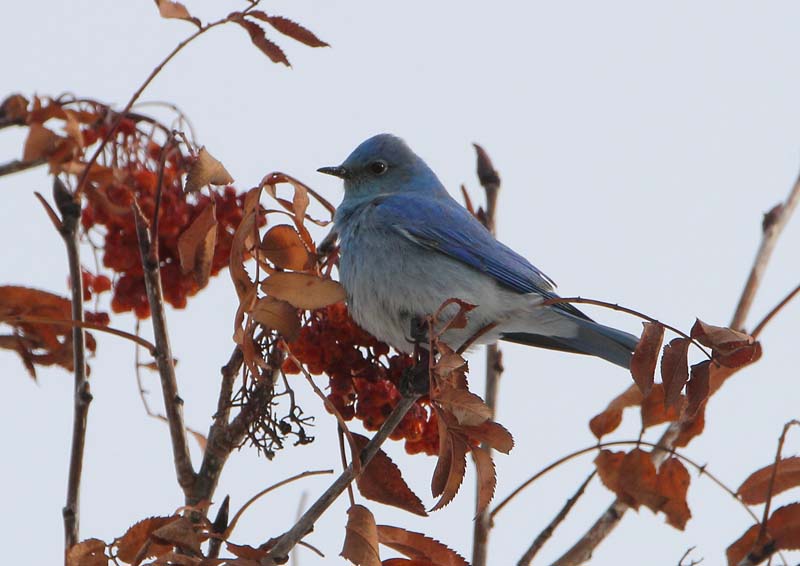
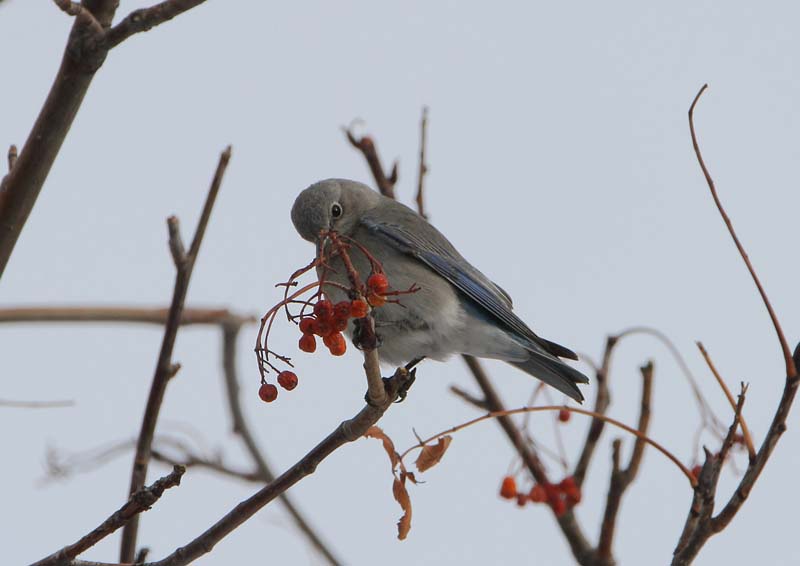
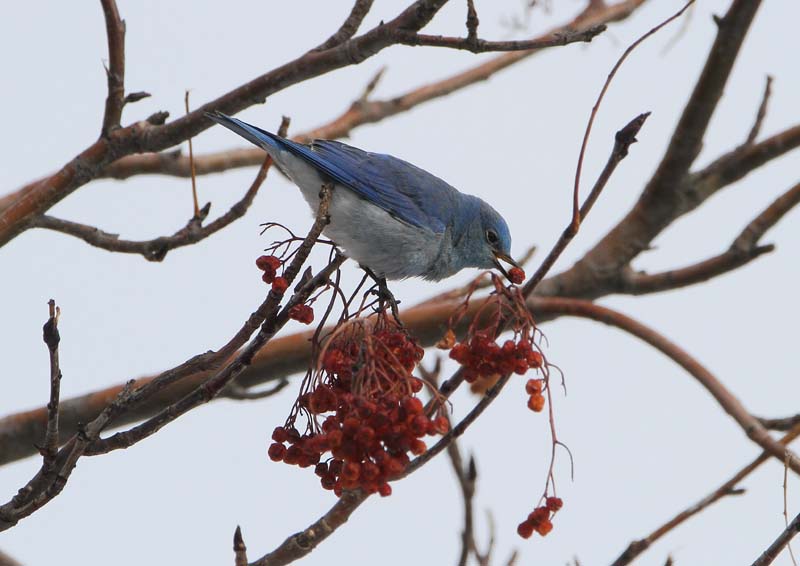
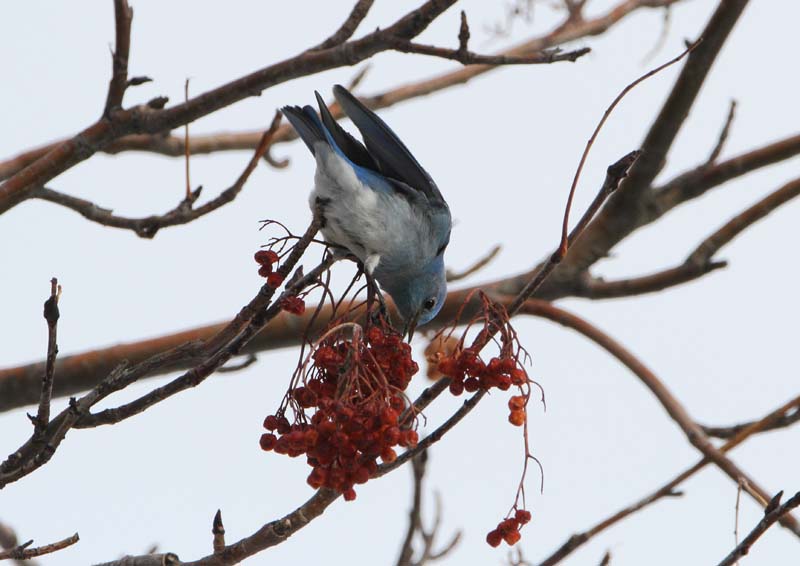
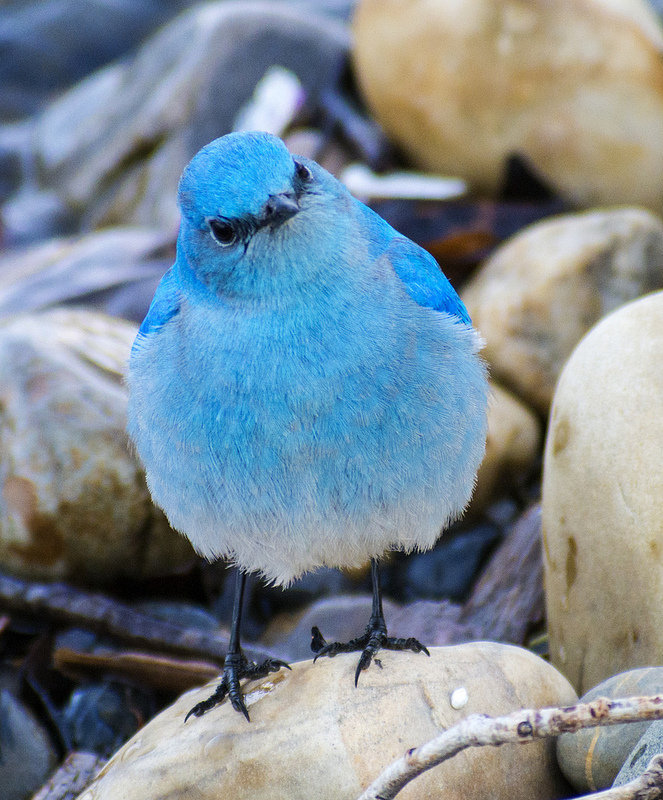
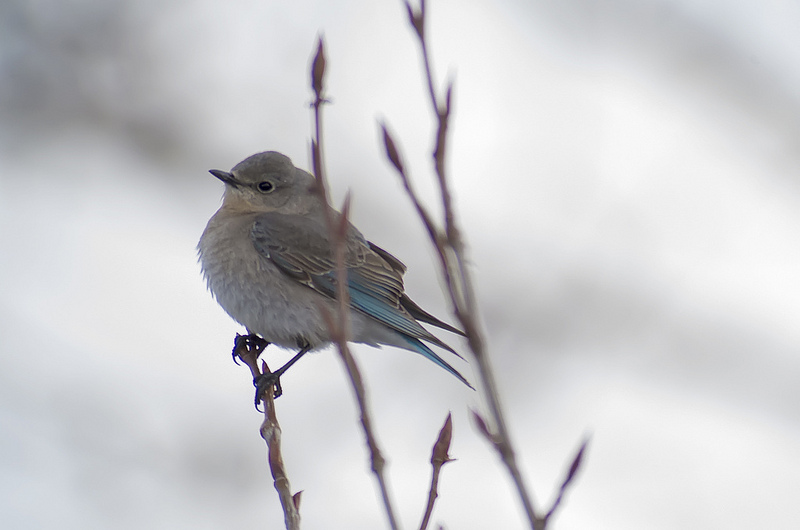
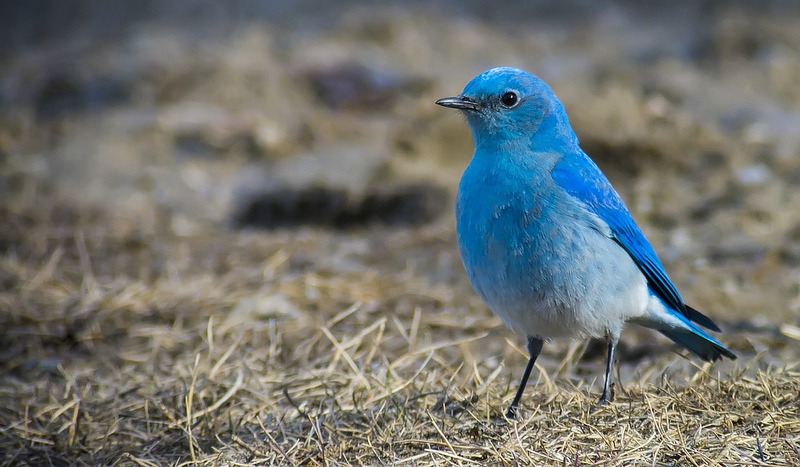
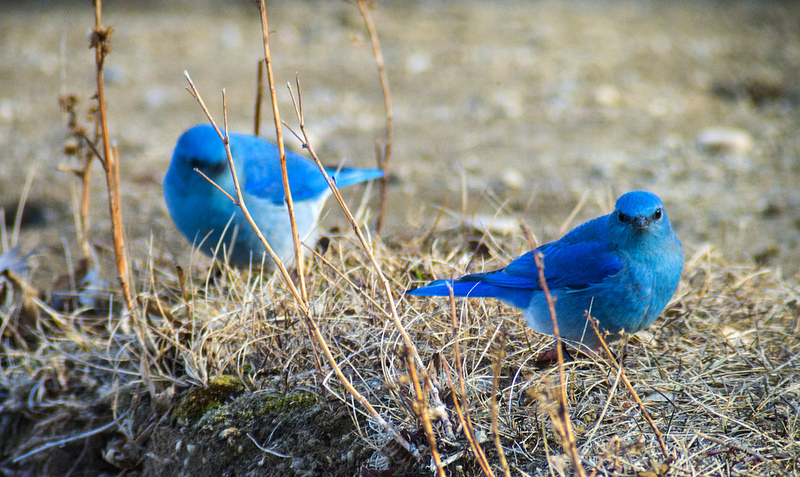
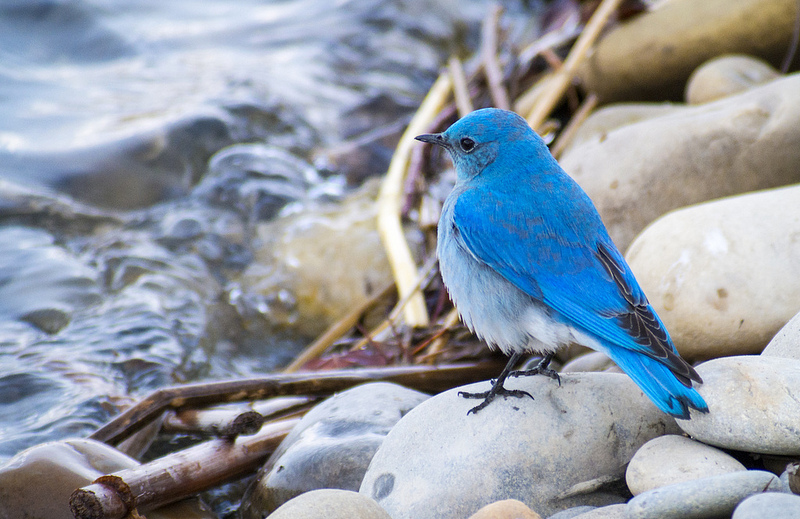
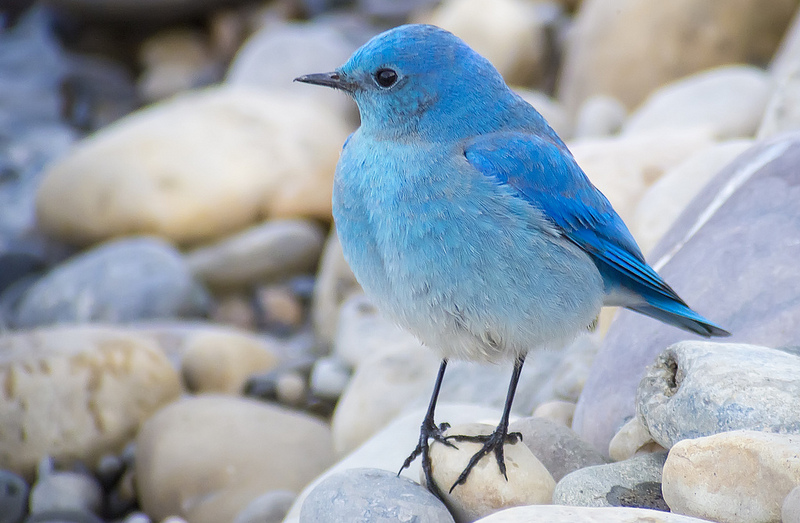
Since the snowstorm on Sunday, April 14, many Mountain Bluebirds have been reported in the city. These migrants were forced down by the weather. Over 100 were reported in Fish Creek Park, about two dozen at the Inglewood Bird Sanctuary, and about 40 in a yard in Maple Ridge. Rob English spotted these bluebirds feeding in the Mountain Ash trees near his home, and sent us these great photos.

male Mountain Bluebird

male Mountain Bluebird

female Mountain Bluebird

female Mountain Bluebird

male Mountain Bluebird

male Mountain Bluebird

Mountain Bluebird

male Mountain Bluebird

After hearing about the large flocks all around the city, and that the numbers were quickly dwindling at Inglewood Bird Sanctuary, I headed out on Tuesday evening with the Swarovski ATX 85, Pentax K-30, and digiscoping adapter, and spent a good hour watching and photographing a flock of six stragglers. While I had hoped that they would stick around so our Sunday group would get a chance to see them, I couldn’t take that chance, and boy am I glad I did!

You lookin' at me?

You lookin’ at me?

female Mountain Bluebird

female Mountain Bluebird

male Mountain Bluebird

male Mountain Bluebird

male Mountain Bluebirds

male Mountain Bluebirds

male Mountain Bluebird

male Mountain Bluebird

male Mountain Bluebird

male Mountain Bluebird

Friends of Fish Creek Autumn Birding – Week 12 – Votier’s Flats

Posted by Dan Arndt

As winter seems to be coming and going in bursts, this week’s visit to Votier’s Flats gave us both a few late fall migrants that appeared to be doing quite well in their attempt to muddle through the fairly mild autumn we’ve had so far, and a winter visitor that is once again making itself right at home in the city. On top of all that, we had a surprise sighting of a non-avian critter diving and splashing around in Fish Creek looking for a fishy breakfast! It was a good day, all in all!

Votier's Flats

Votier’s Flats

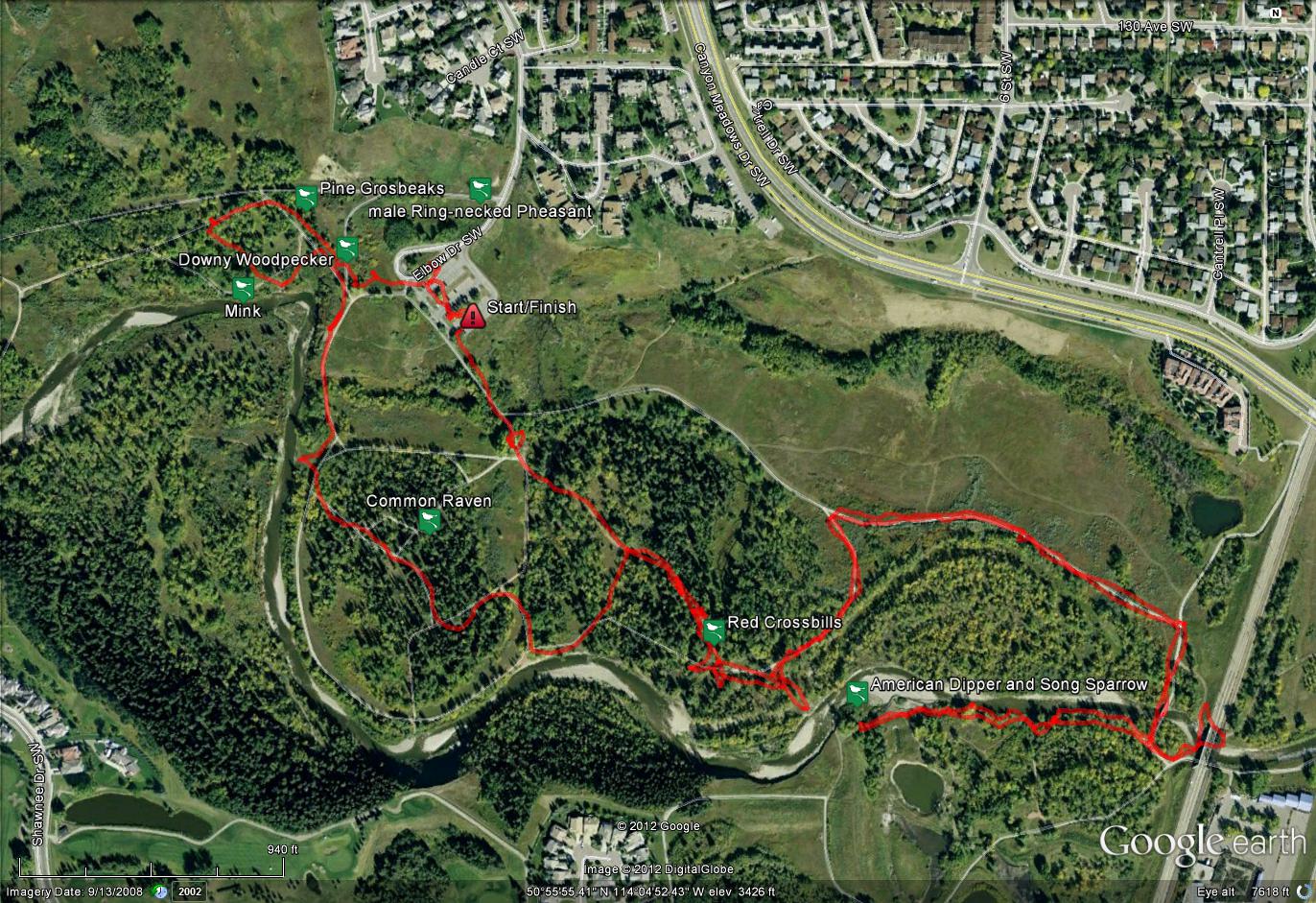
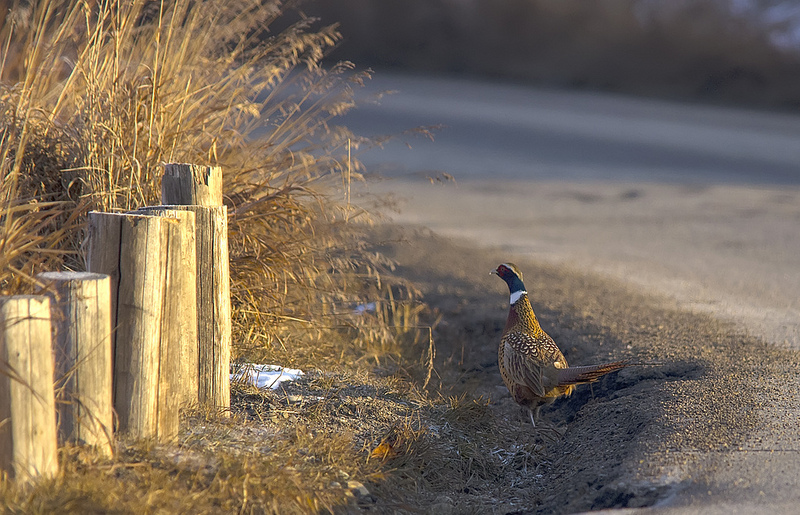
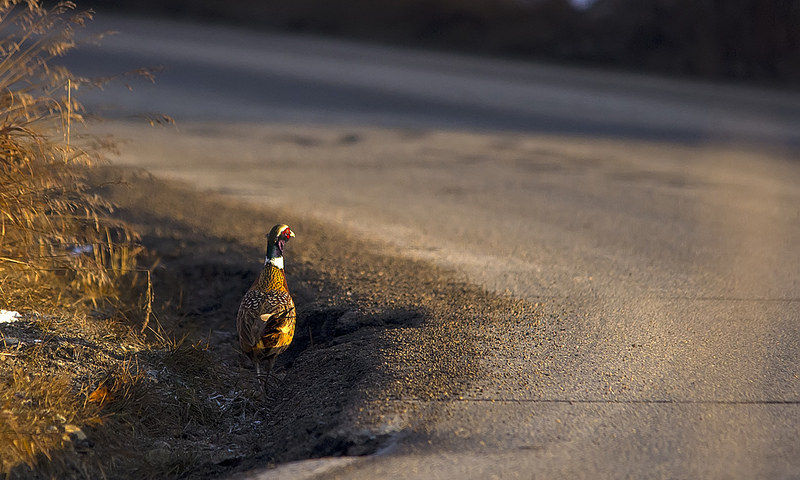
Our first bird of the morning, while we were waiting for some stragglers to show up, was this male Ring-necked Pheasant. He flew in along the hillside to the north-east before coming to a rest at the road, and started up and across the road as I approached. Thankfully, he stopped just long enough for me to snap a few shots.

male Ring-necked Pheasant

male Ring-necked Pheasant

male Ring-necked Pheasant 2

Looking both ways after crossing the street. Who ever said pheasants were smart?

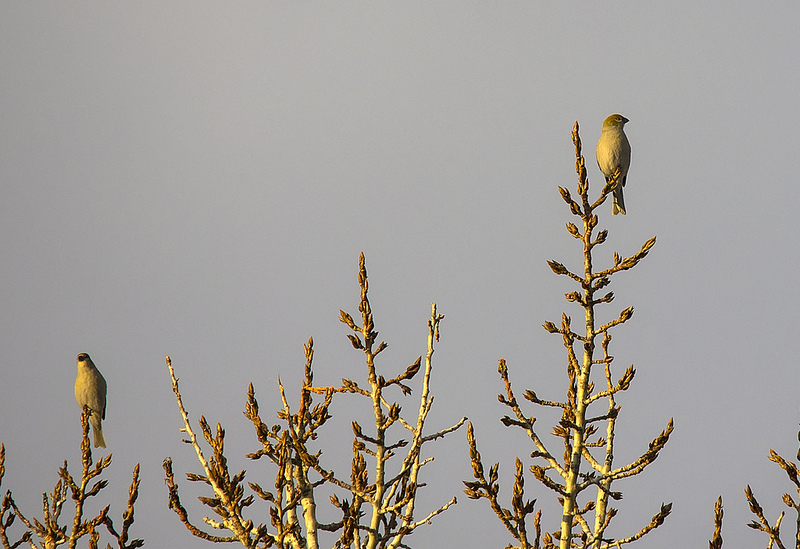
We walked up the hill to the west overlooking the creek, and stopped briefly to look at a few Pine Grosbeaks, one of which had alerted us to its presence by flying directly above us and singing quite loudly. These two others kept their polite distance and allowed us to take good looks at them.

Pine Grosbeaks

female or juvenile Pine Grosbeaks

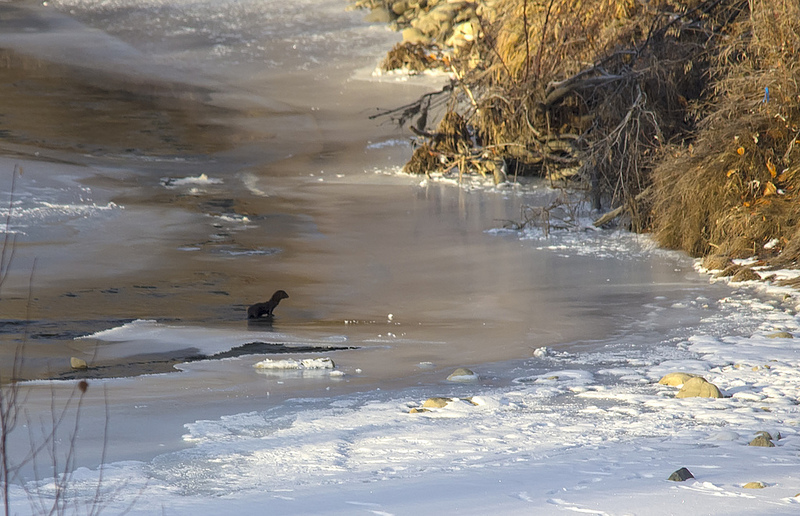
We headed down the hill and walked a brief circle, accosted by Black-capped Chickadees and a couple of Red-breasted Nuthatches, but none that would stop long enough for me to snap their photo. Striking out on any less common birds at the base of the hill, we trekked back up the slope and took a look over the creek bed, and almost all of us were surprised to see this little fellow dipping in and out of the water, searching for something to nibble on.

Mink

Mink on the ice

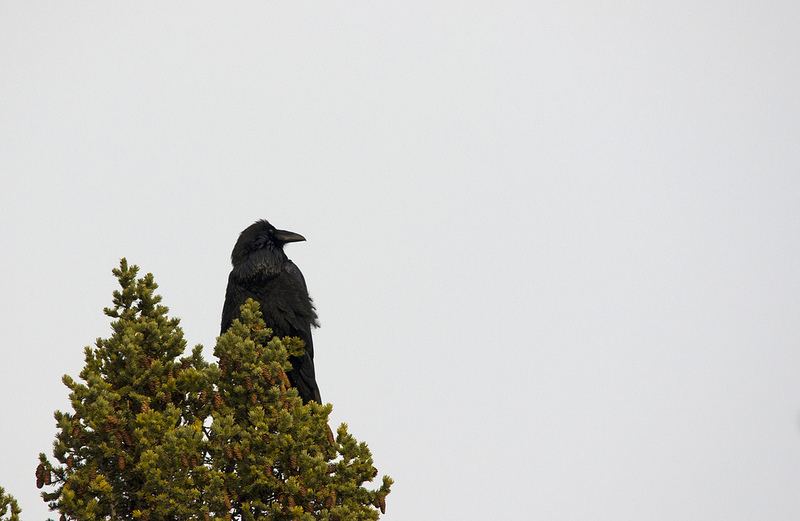
Following the river, and down through the spruce stands at the bottom of the hill, we saw a few Common Ravens giving us flybys, heard a distant Blue Jay, and many more flocks of Black-capped Chickadees. This Common Raven even paused in a treetop to pose for a photo.

Common Raven

Common Raven

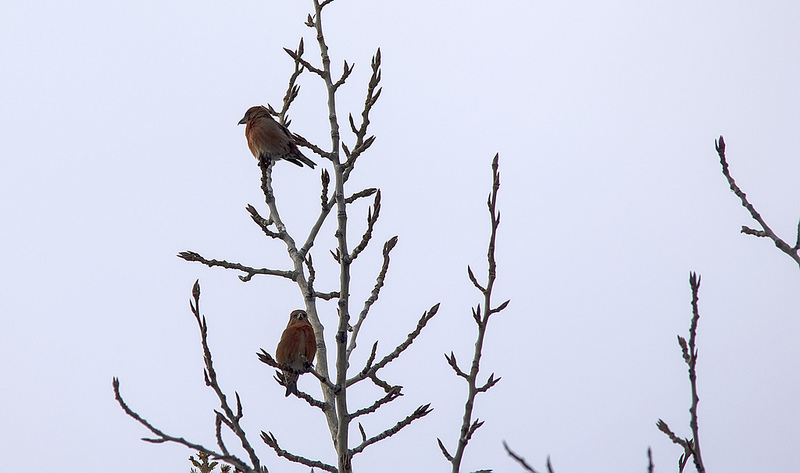
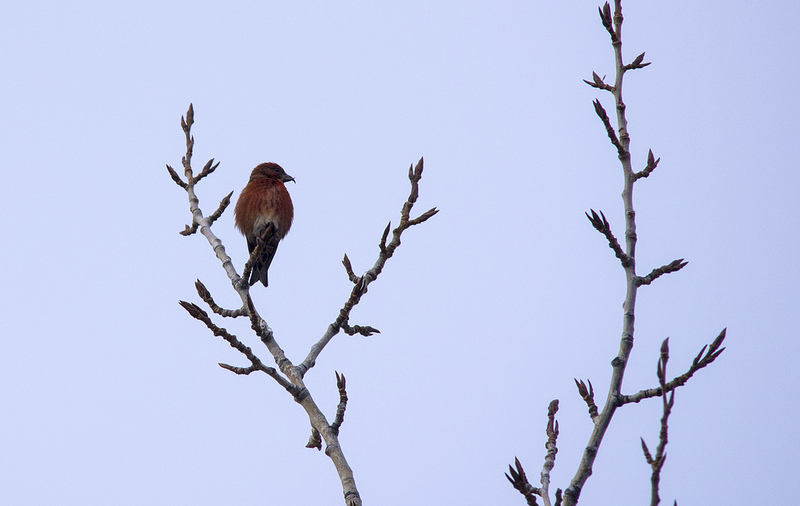
As we passed this guy, it quickly became possible to measure our progress by the number of flocks of Black-capped Chickadees, and three flocks of Chickadees and a single flock of Dark-eyed Juncos later, we heard the very distinct calling of Red Crossbills in the trees above us. Once again these Red Crossbills were very polite, very calm, and content to just sit in the treetops and watch us pass by.

Red Crossbills

Red Crossbills

Red Crossbill

Red Crossbill showing off its namesake

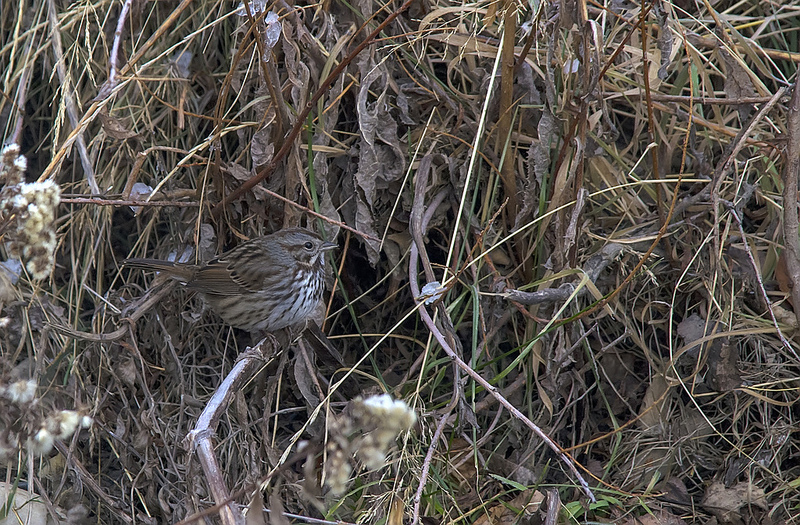
Heading back to the main path, across the river, and over to the storm water drainage channel to where an American Dipper and Wilson’s Snipe had been seen, we came across a few more flocks of Black-capped Chickadees a couple of very large flocks of Pine Grosbeaks and a few flocks of White-winged Crossbills and Canada Geese flew overhead throughout. When we got to the drainage channel, we were surprised by this little beauty where the American Dipper should have been, and it allowed us very clear, diagnostic views allowing us to identify it as a Song Sparrow!

Song Sparrow

Song Sparrow

Song Sparrow 2

Song Sparrow looking for food on a raft of twigs and branches

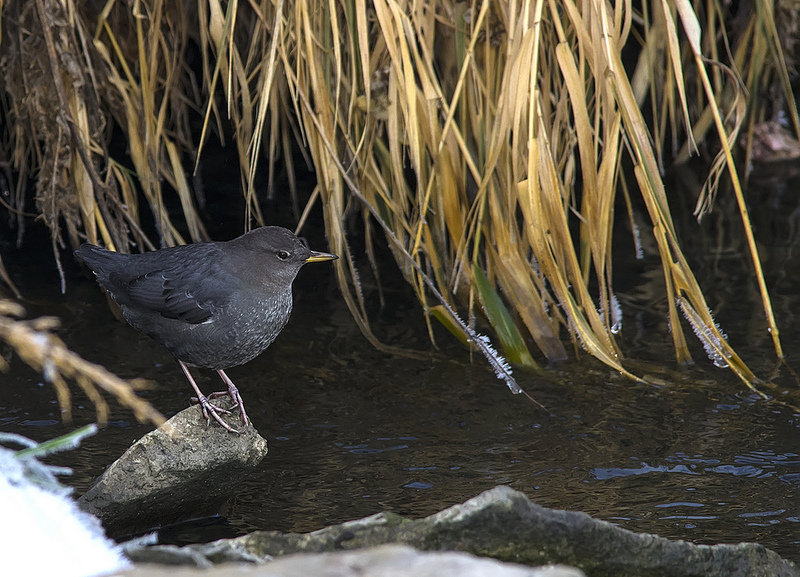
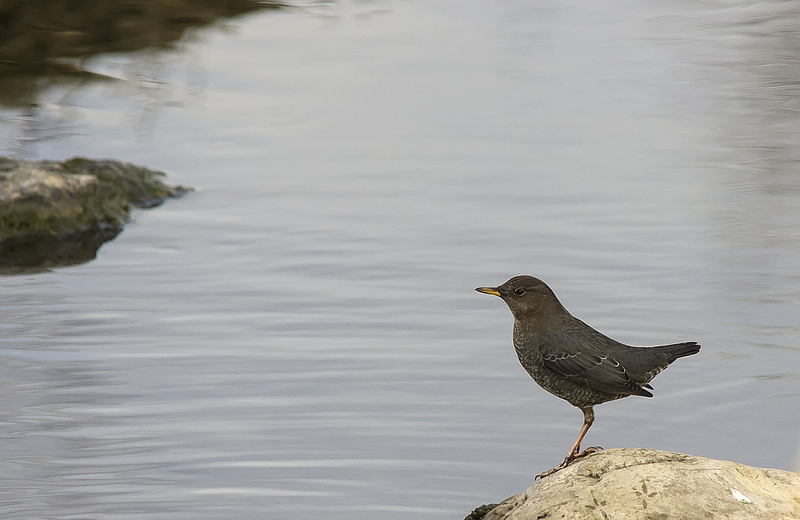
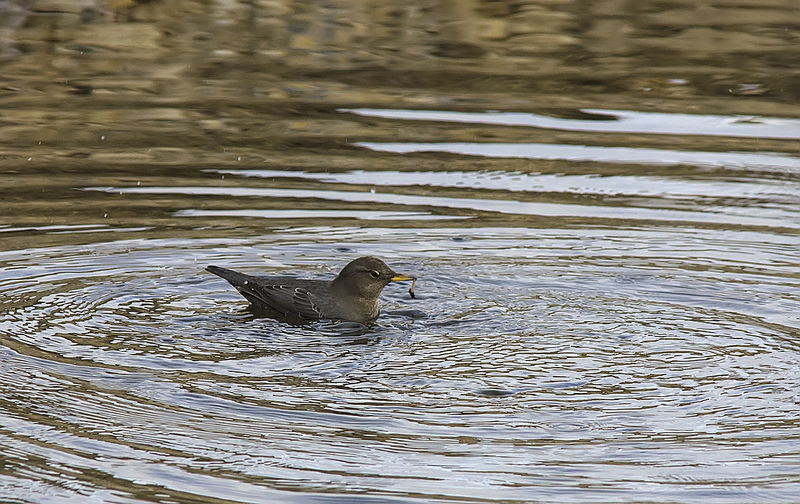
Moments later, the American Dipper popped out and began briefly foraging with the Song Sparrow, before giving us quite the demonstration of how it earned its name.

American Dipper

Our first views of the American Dipper

American Dipper

Our American Dipper briefly pausing on a rock before taking a dive

dipping Dipper

American Dipper taking a dip

Success!

And success! Our American Dipper comes up with… something edible I guess?

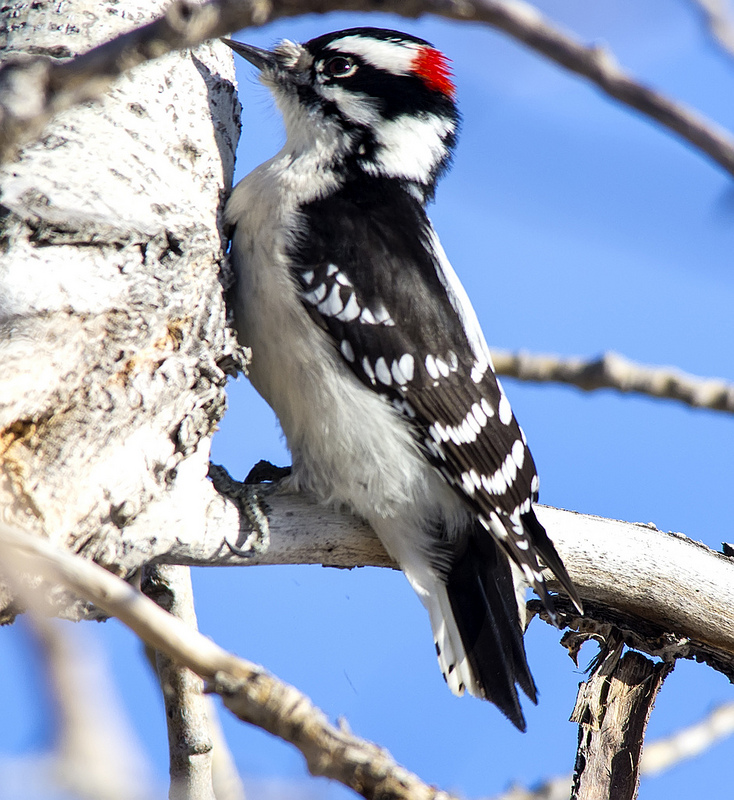
We walked back the way we came in hopes of glimpsing a Boreal Chickadee, Hairy Woodpecker, or maybe even get lucky enough to spot a Pileated Woodpecker, but sadly, no new species came to us on our walk back. As we parted ways and I walked back up the hill to check for the Mink again, I did spot this male Downy Woodpecker that was more than comfortable enough with me to let me get very close. Possibly too close for my camera to focus properly!

Downy Woodpecker

male Downy Woodpecker

Have a great week, and good birding!

Travel Tuesday – Rare and Random Calgary Birds!

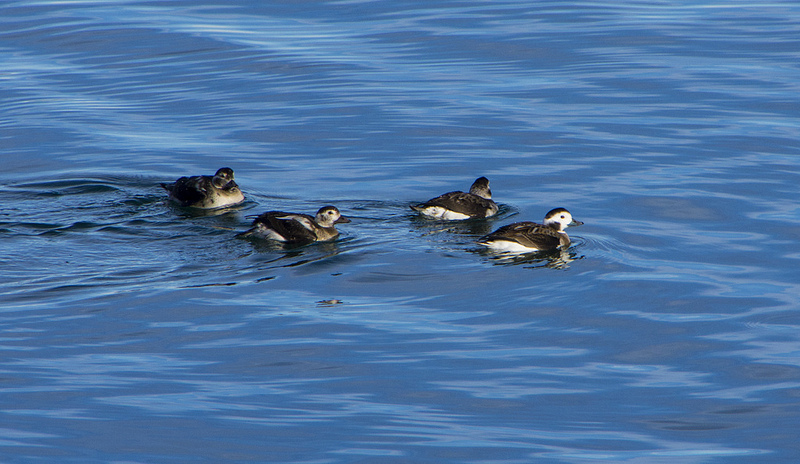
Long-tailed Ducks

Four of the six Long-tailed Ducks seen from the Rowing Club on the Glenmore Reservoir. November 4, 2012

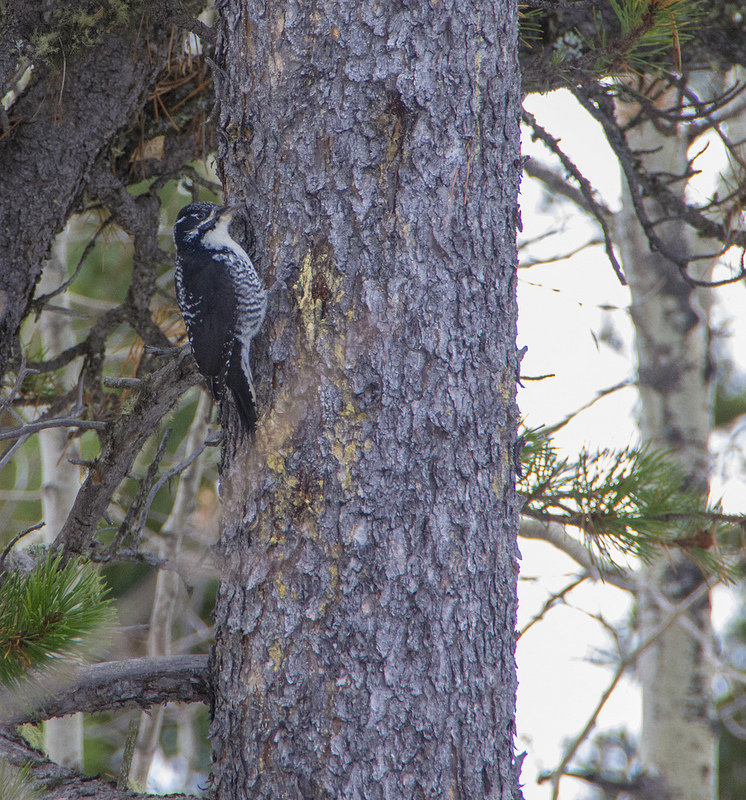
American Three-toed Woodpecker

American Three-toed Woodpecker at the Jumpingpound Demonstration Forest. November 3, 2012.

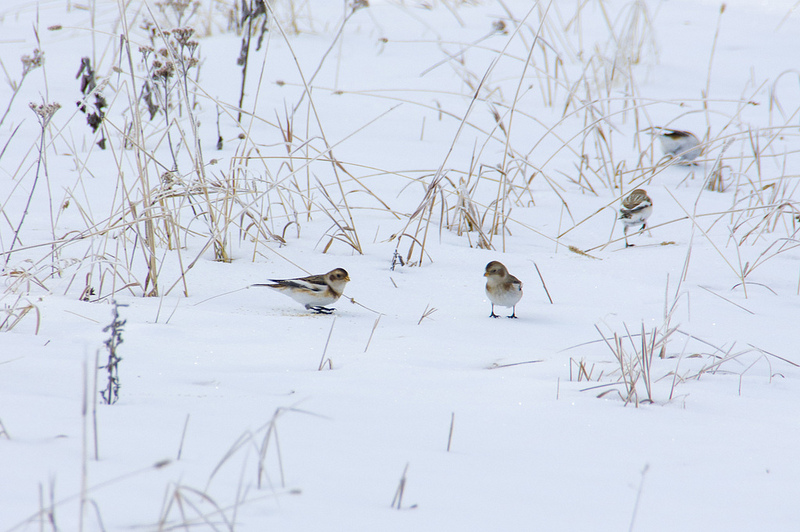
Snow Buntings

Snow Buntings on Grand Valley Road. November 3, 2012.

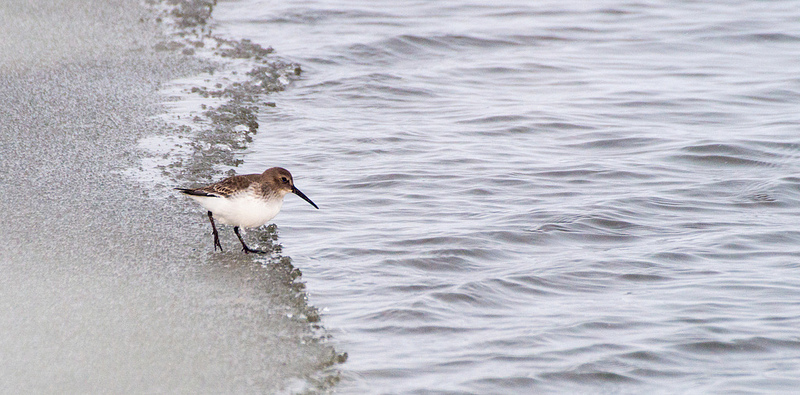
Dunlin

Dunlin at Weed Lake. October 26, 2012.

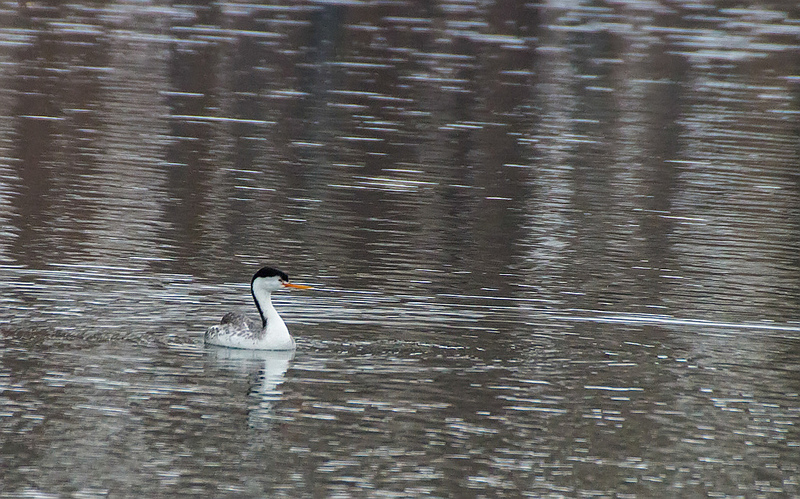
Clark's Grebe

Clark’s Grebe at Carburn Park. October 26, 2012.

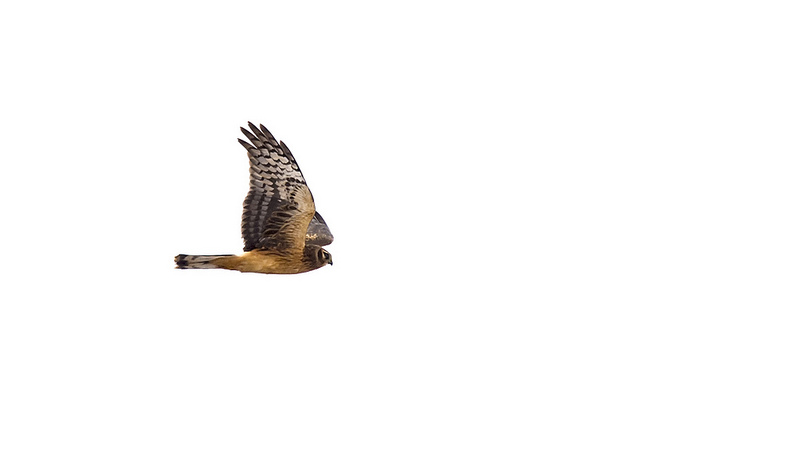
Northern Harrier

Northern Harrier at Chestermere Lake. October 21, 2012.

Varied Thrush

Varied Thrush at Chestermere Lake. October 21, 2012.

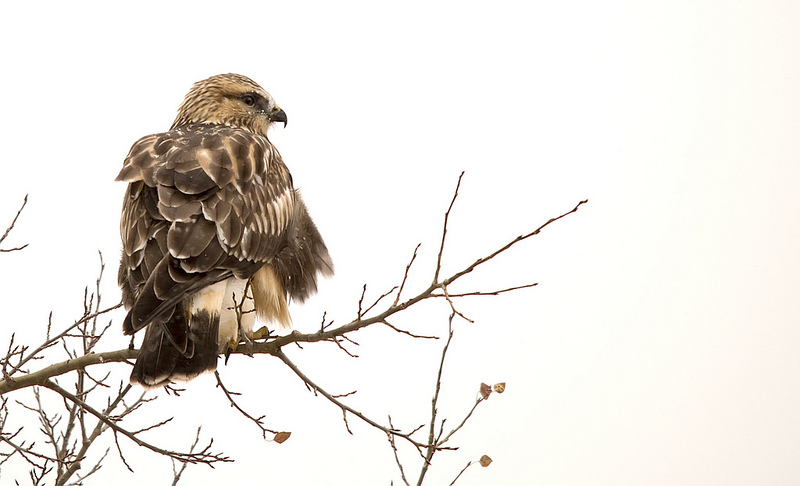
Rough-legged Hawk

Rough-legged Hawk on Sibbald Creek Trail. October 20, 2012.

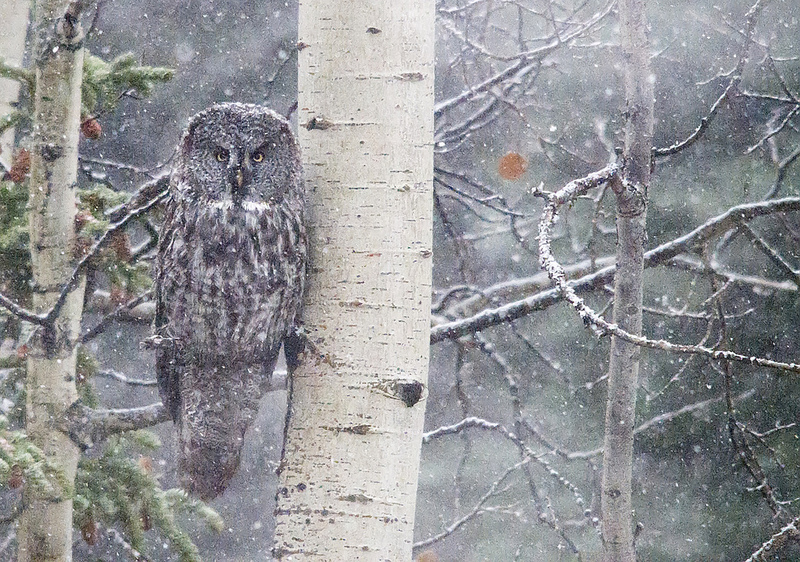
Great Gray Owl

Great Gray Owl on Grand Valley Road. October 20, 2012.

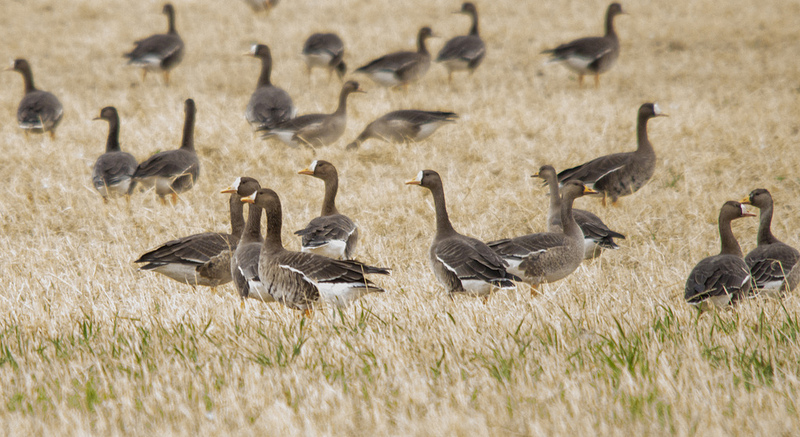
Greater White-fronted Geese

Greater White-fronted Geese at Lake Namaka. October 14, 2012.

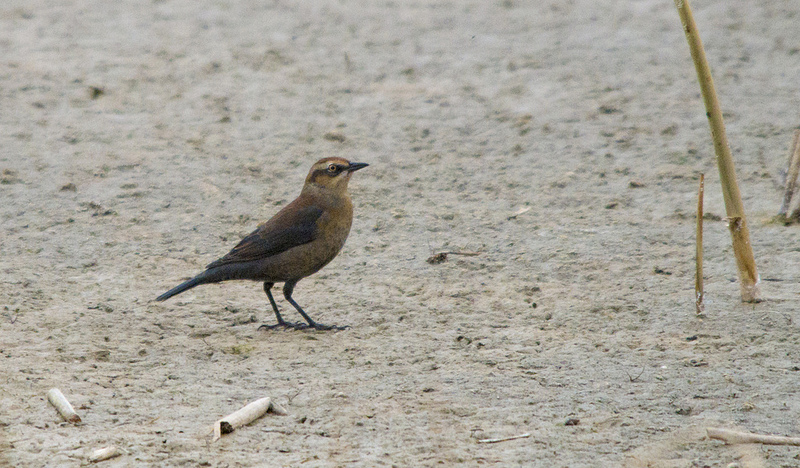
Rusty Blackbird

Rusty Blackbird at Eagle Lake, October 14, 2012.

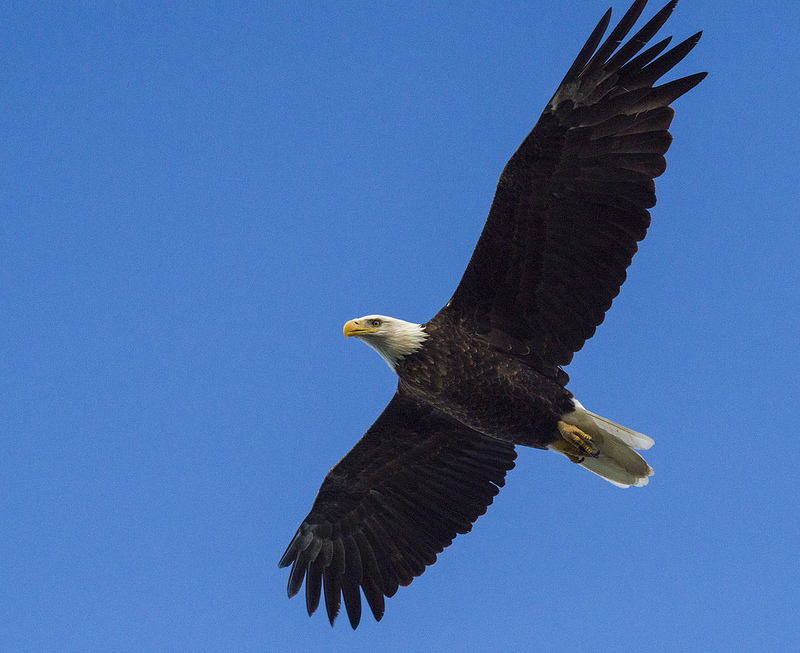
Bald Eagle

Bald Eagle at Glenmore Reservoir, October 13, 2012.

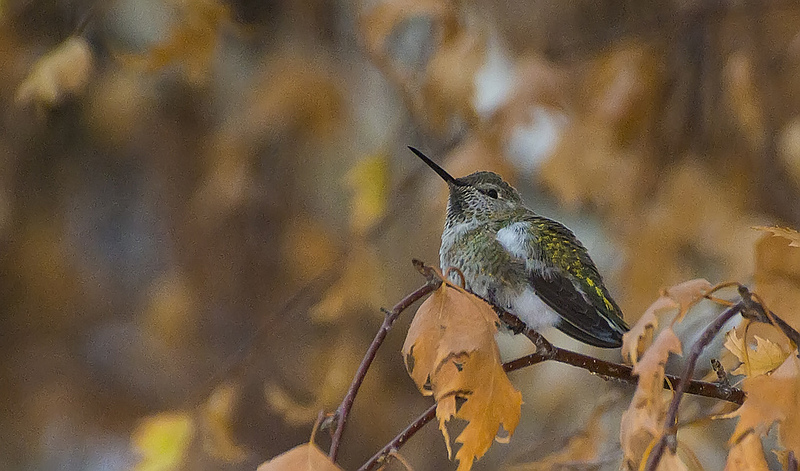
Anna's Hummingbird

Anna’s Hummingbird, South Calgary, November 6, 2012.

Thanks for reading!

Friends of Fish Creek Autumn Birding – Week 9 – Elliston Park

Posted by Dan Arndt

Located on the eastern edge of Calgary, Elliston Park boasts the distinction of being the second largest body of water in the city limits, with a 20 hectare storm-water retention pond, stands of poplar, ash, and spruce located around the lake, and in the course of the week, over fifty species of birds were seen on or around the lake.

When I woke up on Sunday morning to head out to the lake, I was greeted by a bright, sunny sky, with great light, above-zero temperatures, and a very good feeling that it would be an incredible walk, and how right I was!

Elliston Park

Elliston Park route


When we arrived at the park, it was nearly completely full of geese, ducks, and gulls galore. The western half of the lake had frozen over, and the eastern end was still open, making the area where the ice meets the water the congregation point for the various waterfowl, with the gulls resting just behind them.


We headed around the north end of the lake first, into the poplars and aspen that border the fence on 17th Avenue SE, in hope of catching some Common Redpolls, or maybe a finch species or two. We were delighted when we came across this Townsend’s Solitaire that stopped to take a look at us and then flew right by.

Townsend's Solitaire

Townsend’s Solitaire

As we cleared the first stand of trees we got a great view of the rest of the lake, and all the birds out on the water and on the ice.

View of Elliston Lake

View of Elliston Lake

As we neared the east end of the lake, it became clear that we were getting a little too close for comfort for the large numbers of Canada Geese. Either that, or it was just their time to take off and go forage the surrounding fields for breakfast.

Canada Geese taking off

Canada Geese taking off

In the northeast bay of the reservoir we got wonderful looks at a pair of grebes that aren’t often seen together, though both have been seen regularly all summer. These grebes had been seen in this bay all week, and the excellent light and close proximity made even my stand-by 18-250 lens get close enough for some good shots! On top of that, there were quite a few Hooded Mergansers in the lake, and these three also posed nicely to have their photo taken.

Pied-billed and Red-necked Grebes

Pied-billed and Red-necked Grebes

Hooded Mergansers

Hooded Mergansers


As we rounded the lake, we found this small flock of House Finches, which gave us a bit of trouble with identification. They sure looked like House Finches, but their vocaluizations were very unusual and sounded more like Purple Finches. In fact, one of the males was much deeper red, almost purple, unfortunately none of the photos I snapped of that one turned out, so here’s the other, more normal looking male.

House Finches

House Finches


As we continued south and walked along the east shore, we had brief glimpses of a Northern Harrier harassing some gulls on a large pond east of the park, a rather noisy Blue Jay, and many more good looks at a few straggling Ruddy Ducks, Lesser Scaup, Green-winged Teal, and even a close overflight of Common Mergansers. The last of the waterfowl we picked out from the crowd was a lone Barrow’s Goldeneye, picked out by the crescent shaped patch behind the bill, the spotted pattern on the back, and lastly by the green, rather than purple iridescence of the head plumage of the Common Goldeneye. Quite a sight to see!

Barrow's Goldeneye

Barrow’s Goldeneye

Our last, and I would say possibly best bird of the day was this lone Golden-crowned Kinglet. I heard its distinctive “seet” calls in the last stand of spruce trees before the parking lot, and decided to pull out my phone and turn on my Sibley Guide app and see if it would come in for a visit. Here are the results:

Curious Kinglet

This curious Golden-crowned Kinglet was beginning to display the orange streak hidden beneath its bright yellow crest.

Curious Kinglet gets close

And then it came in to investigate even closer. At one point it was less than two feet away from me. What an experience!

Thanks once again for reading! Have a great week of winter birding!