The May Species Count

The Calgary May Species Count will be taking place on May 26 and 27 this year.  If you are a Calgary-area birder and are free for one or both of these days, or even a half-day, you are invited to contact Terry Poulton to sign up.  It’s very important that we get more people out for this event.  It’s a huge area, and we had 72 people take part last year.  It would be nice to get 100 or more birders out.  Please contact Terry if you can take part.

Terry says:

The annual Calgary area May bird species count (MSC) will be held the weekend of May 26-27 this year. Calgary birders are out in force the last weekend of May every year since 1976, when our count began. This is Calgary’s contribution to a broad census of the constantly changing patterns of bird distributions in North America.

It is an opportunity for birders to work together, put their skills to the test, and find out what birds we have passing through in migration and nesting locally. The count circle is a large area, 80 km across, centred on Centre Street Bridge, extending from Olds to Nanton, and from Exshaw to Standard. It includes a variety of prairie, marsh, foothills, and urban park environments. Last year we found 224 species, setting a new record.

Birders of all skill levels are needed and welcome to participate in this major “citizen science” project. Birders with experience (and vehicles) are needed more than ever this year. Beginners will be teamed with more experienced birders, as possible.

To sign up, or ask for more information, please call Terry Poulton at tpoulton@yahoo.com  or call 403 274 7393.

The Count Circle for the May Species Count.

South Glenmore Park – Birding the Glenmore Reservoir

Posted by Dan Arndt


One of the places that I enjoyed watching birds doing what birds do has always been the Glenmore Reservoir. Even before I made the transition from photographer, to nature photographer, to serious birder, it was always somewhere that I could find something interesting and inspiring to shoot. This week was certainly no different.


Starting at the parking lot, we headed east along the bank of the reservior to the point, then headed west along the banks before heading up the hill into the woods and returning via a trail that runs parallel to the bank about half way up the hillside, then up to the multi-use pathway before returning to the parking lot and dispersing for the day.

South Glenmore Park - April 29 Route

South Glenmore Park - April 29 Route

A huge number of species had been reported all week, and I was itching to get out there and get some new birds for the year, and get some new species photographed for the blog. While I didn’t see all the ones I had hoped for, we did get some fairly close looks at quite a few great birds.


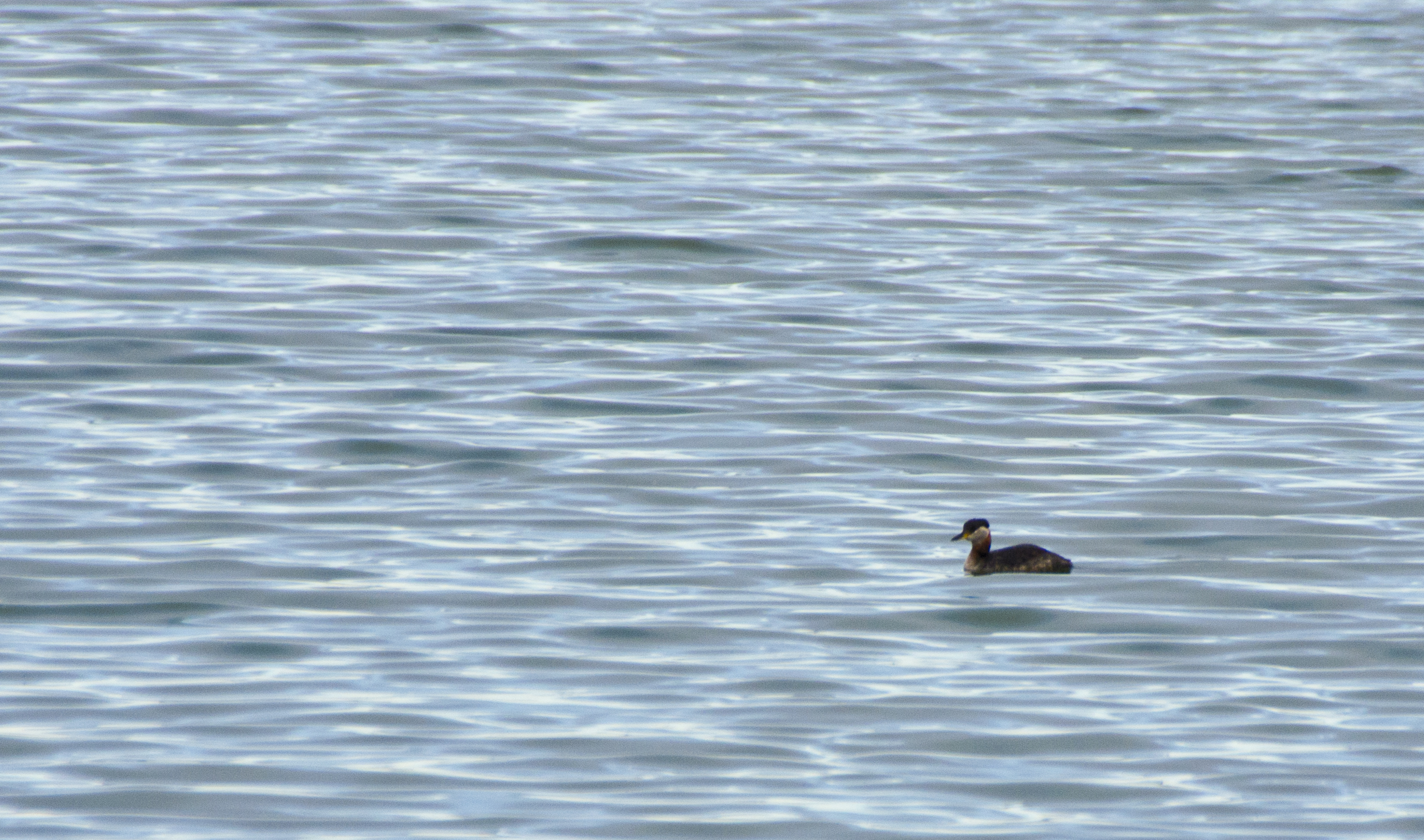
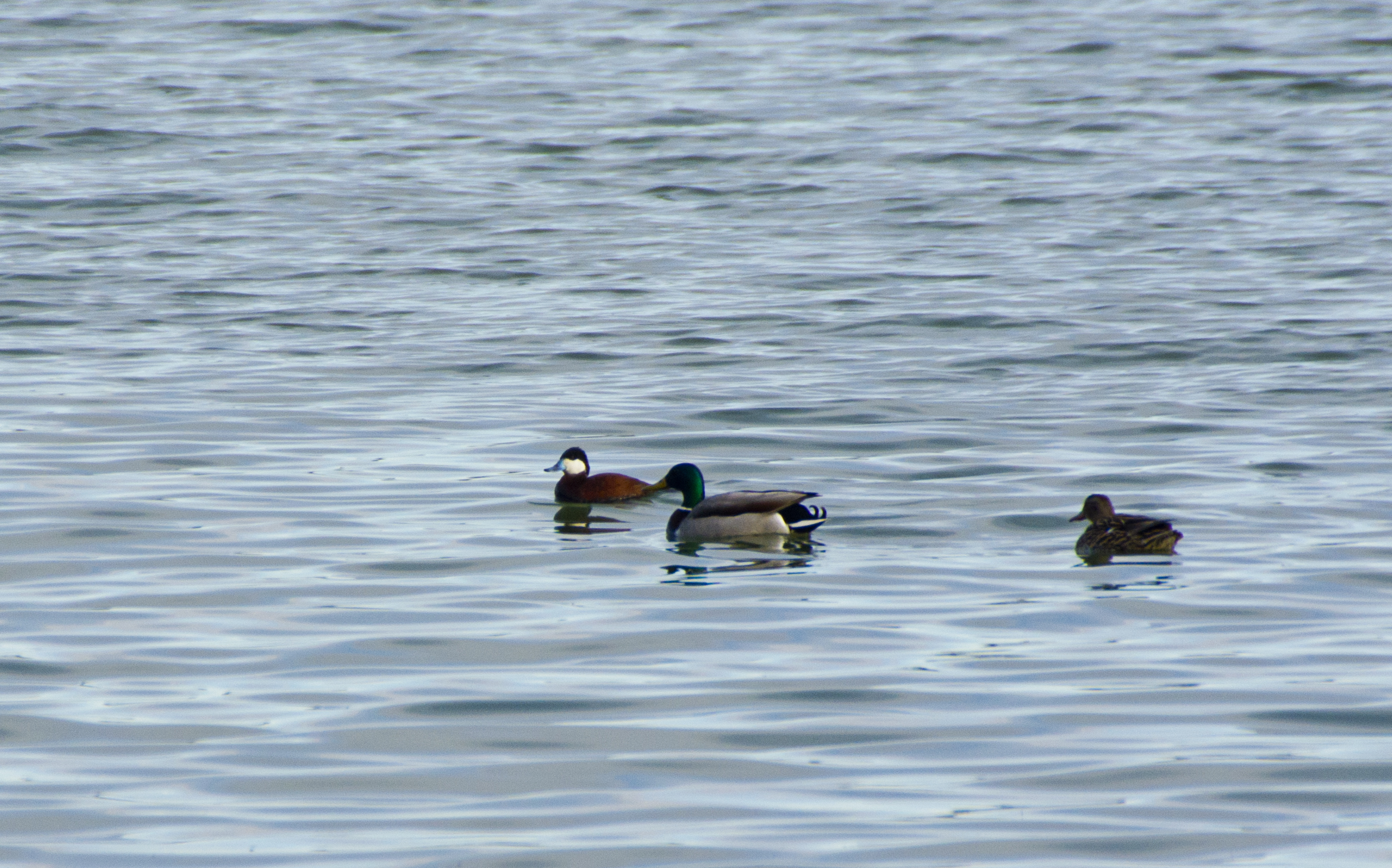
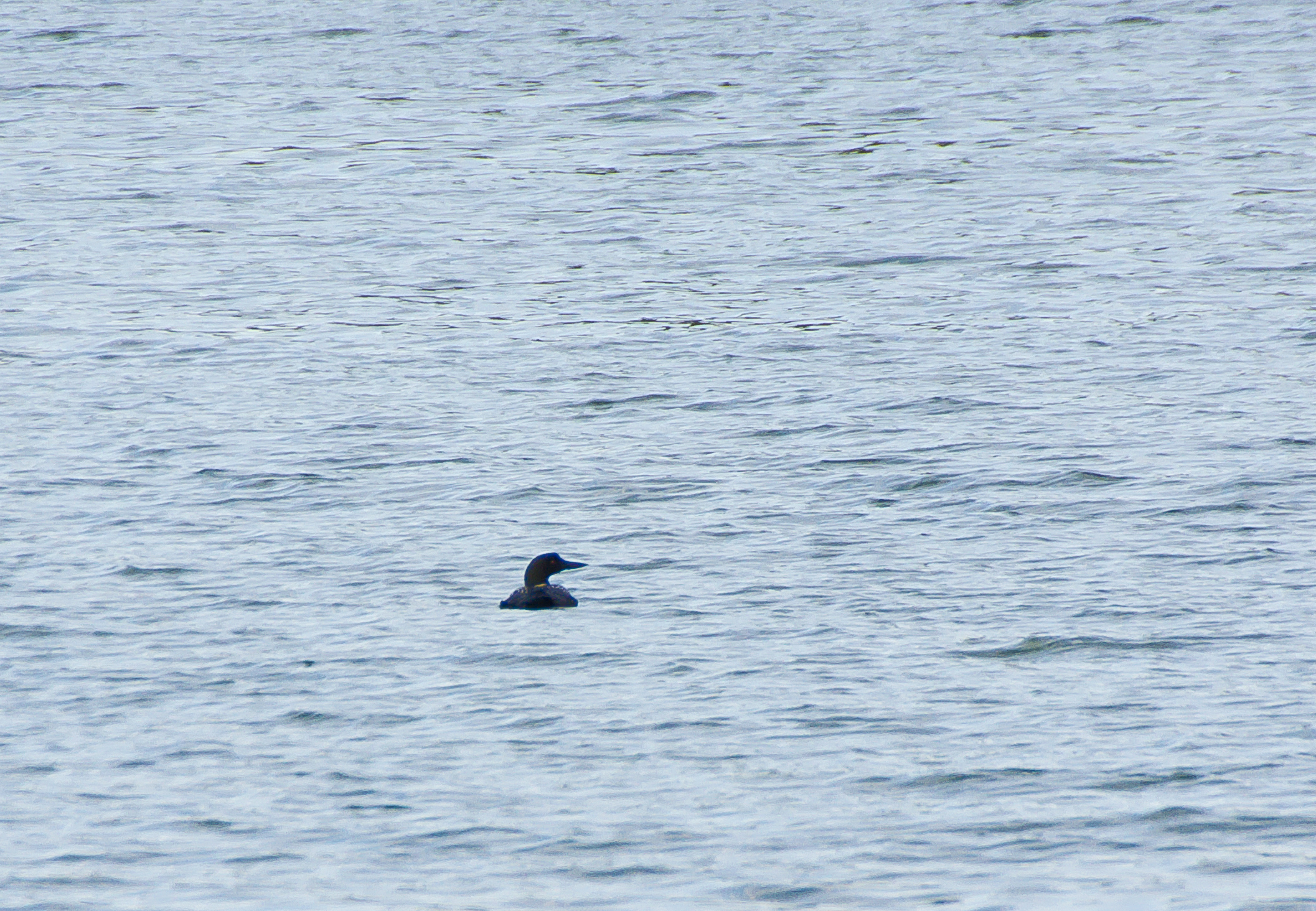
The stretch between the parking lot and the point turned out to be one of the most productive of the morning, giving us looks at at least one Red-necked Grebe, our only Ruddy Duck of the day, and four Common Loons, along with the usual Mallards, American Wigeon, and Lesser Scaup which have been regular sightings for the spring course so far. Out beyond the range of my camera lens were dozens of Franklin’s Gulls, Bufflehead, and even more Lesser Scaup, in impressive numbers, with a few Common Goldeneye mixed in. After reaching the point, we took a look around and spotted a few American Coots near shore, which was another new bird for our group this year.

If you're a black-capped diving duck with a rusty colored neck, you might be a Red-neck...ed Grebe.

Red-necked Grebe

Ruddy Duck (far left) with Mallards

Ruddy Duck (far left) with Mallards

Common Loon

Common Loon

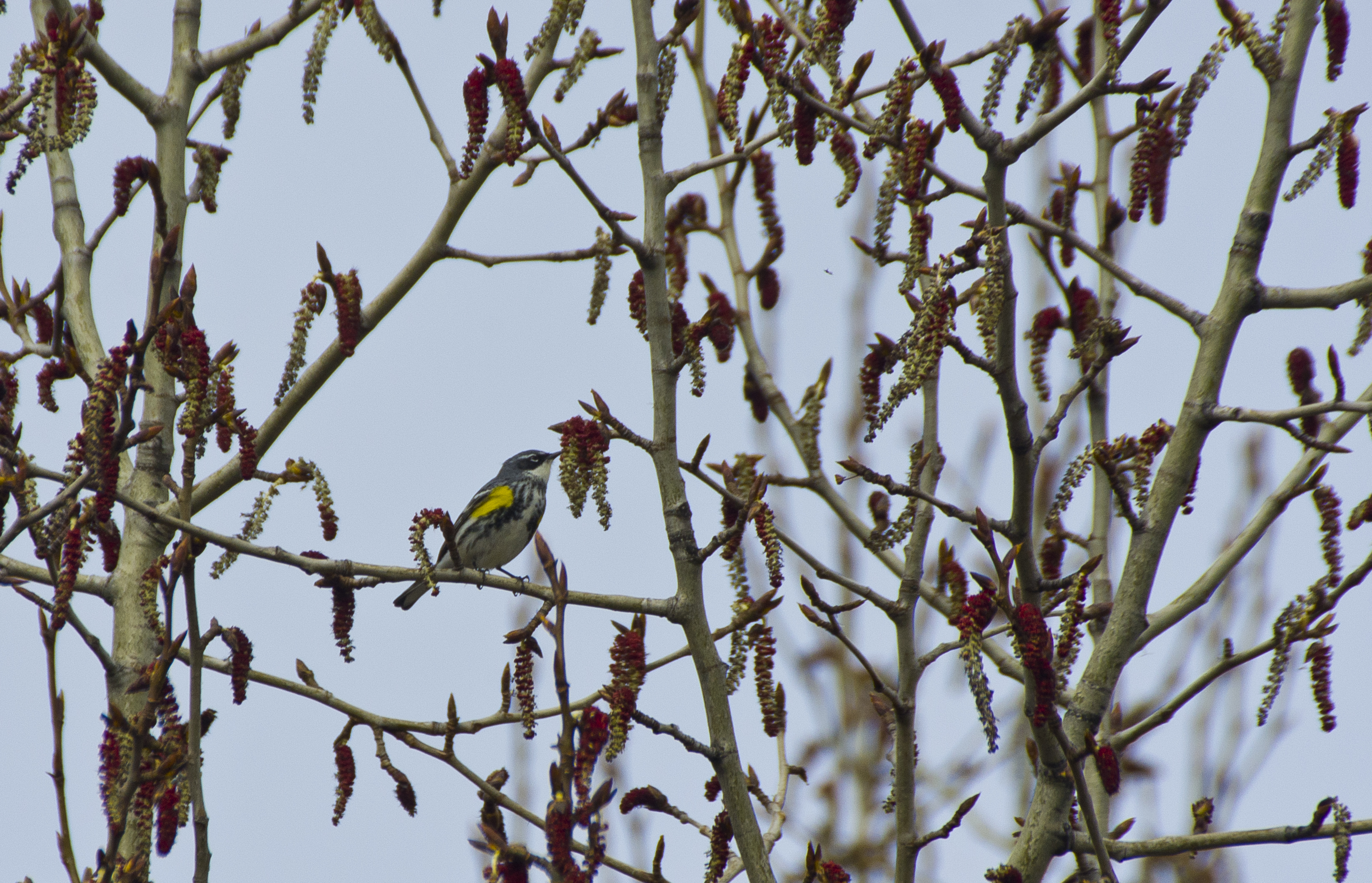
After we passed the the canoe club, we were greeted by a small flock of Yellow-rumped Warblers, another new year-bird for me!

Yellow-rumped Warbler

Yellow-rumped Warbler

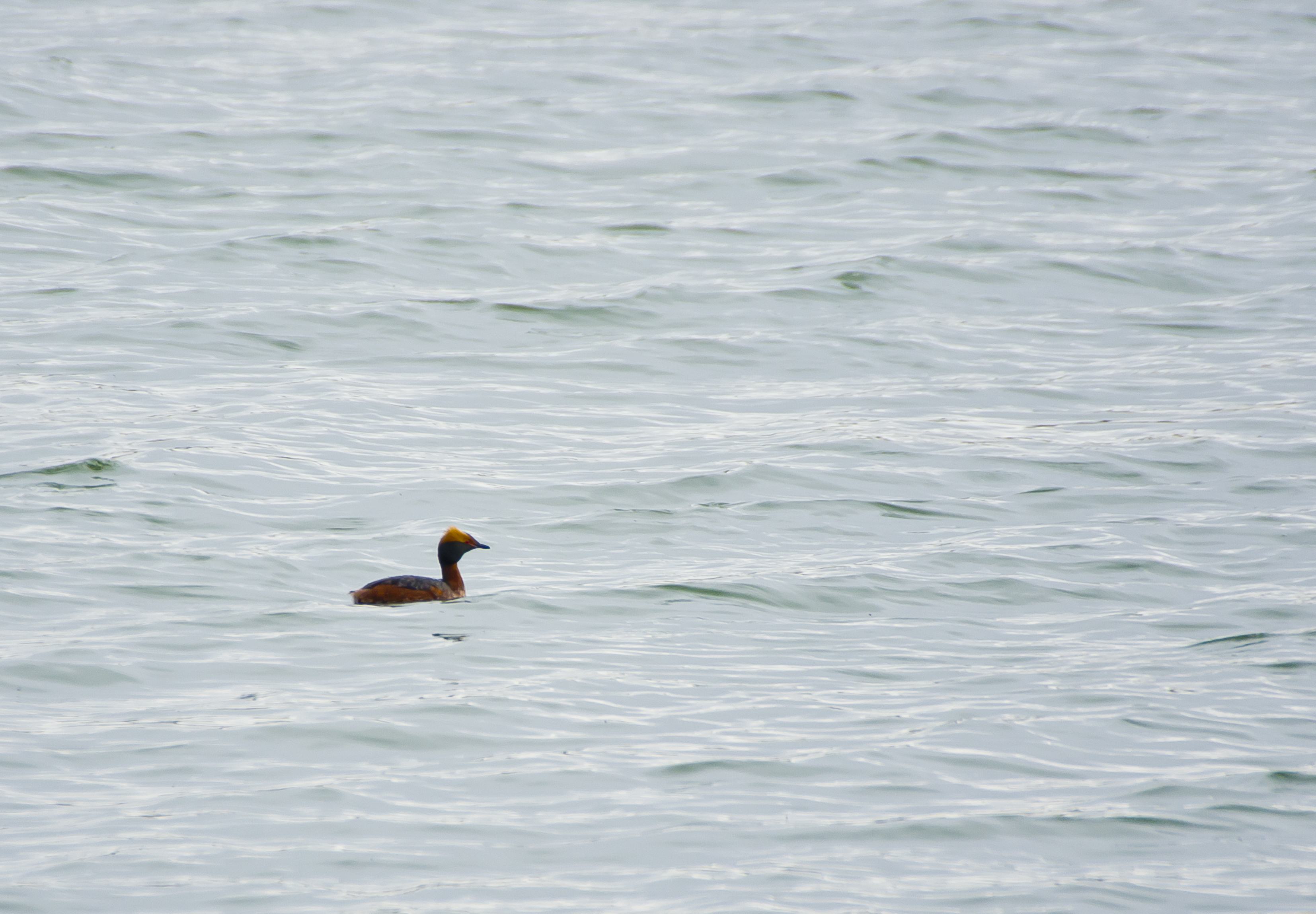
Further along the path we decided to pause and take stock of the birds across the shore from our position before we turned and headed into the forested area. Along with a dozen or so Trumpeter Swans, we spotted a half dozen Northern Shoveler, a pair of Greater Yellowlegs, and a huge number of Franklin’s Gulls, as well as getting is fairly close to a contingent of Horned Grebes which posed very nicely for the paparazzi.

Horned Grebe

Horned Grebe

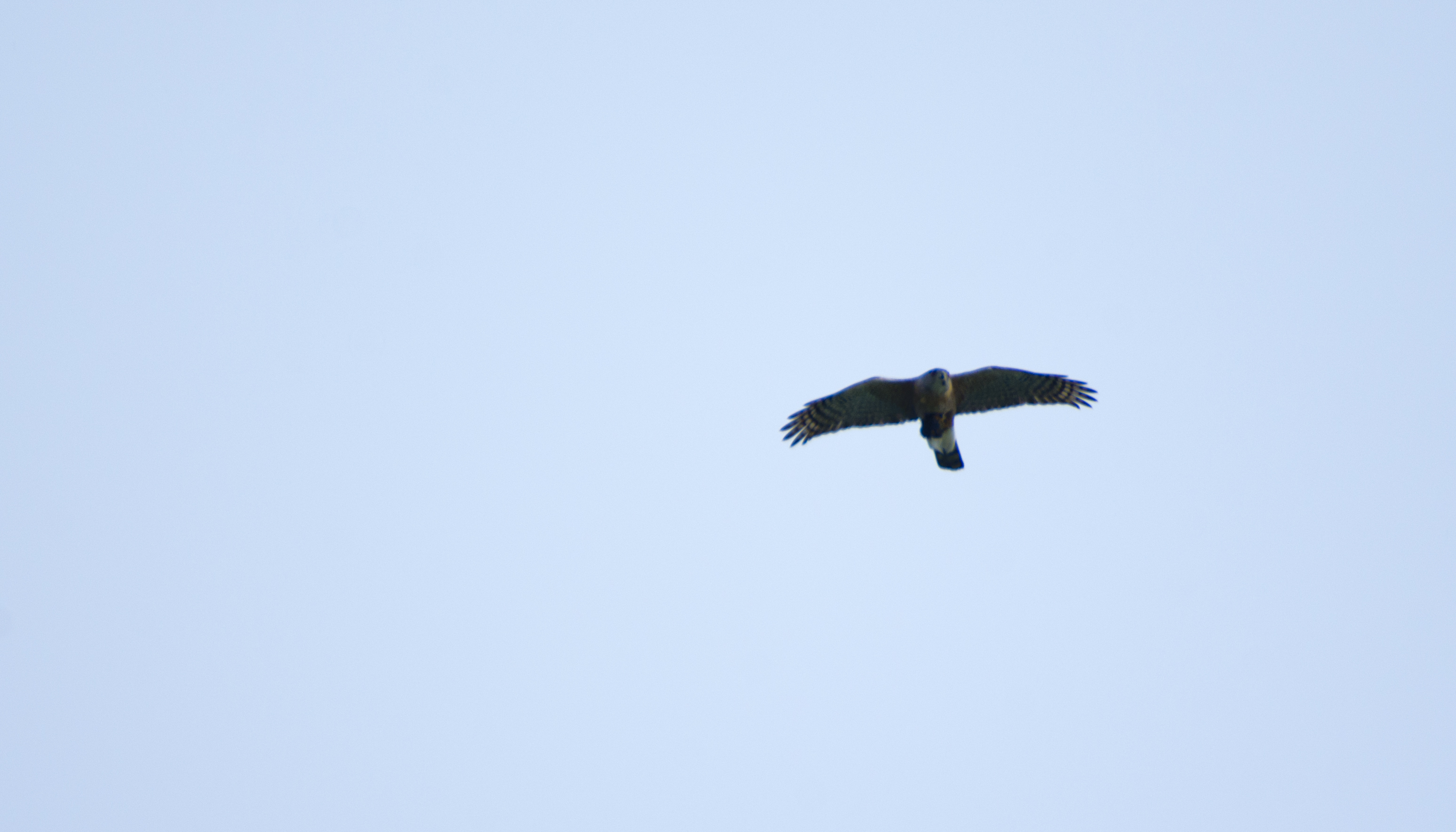
A few moments later, this Cooper’s Hawk flew overhead carrying something in its claws while being pursued by a trio of American Crows.

Cooper's Hawk

Cooper's Hawk

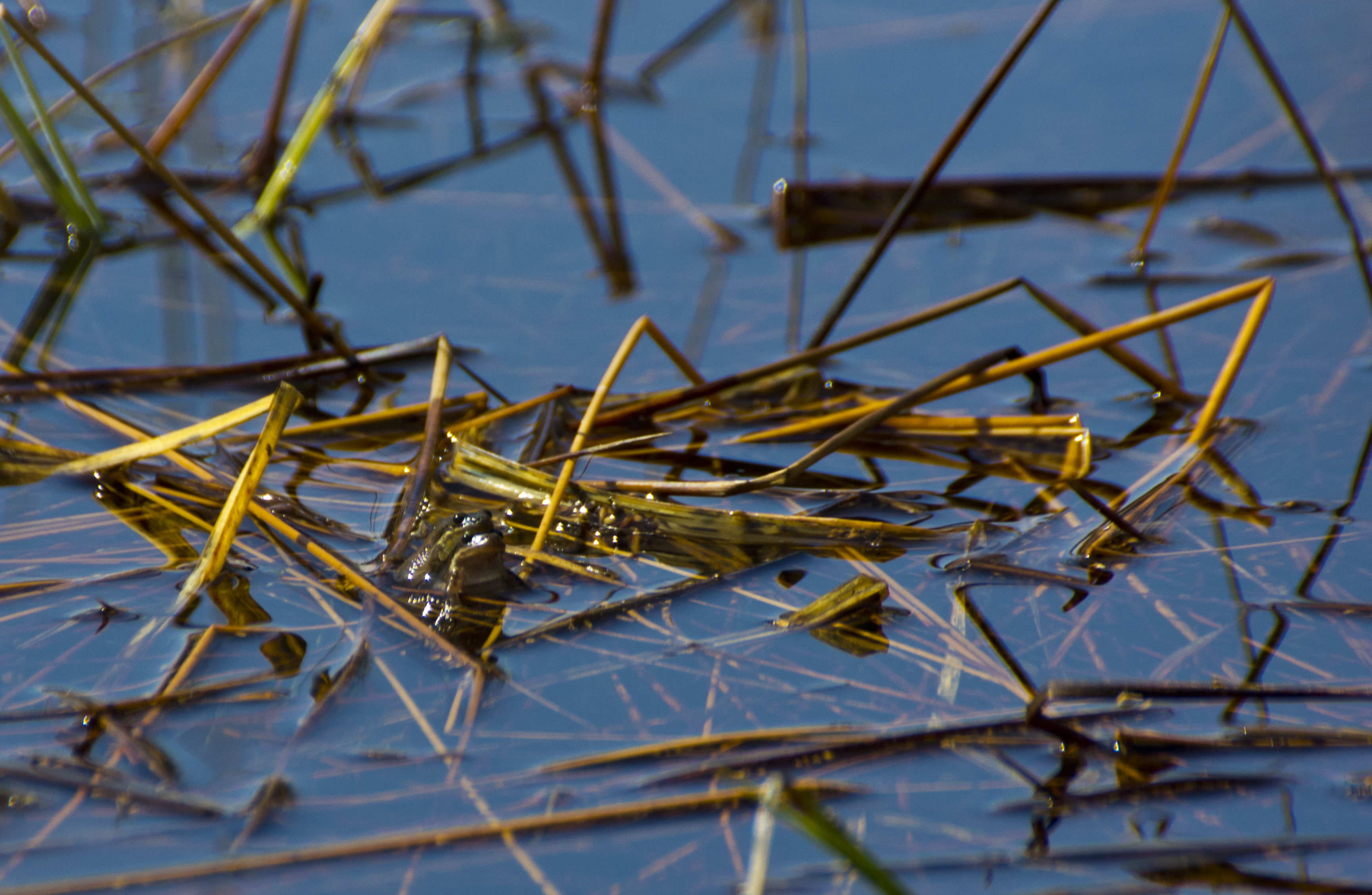
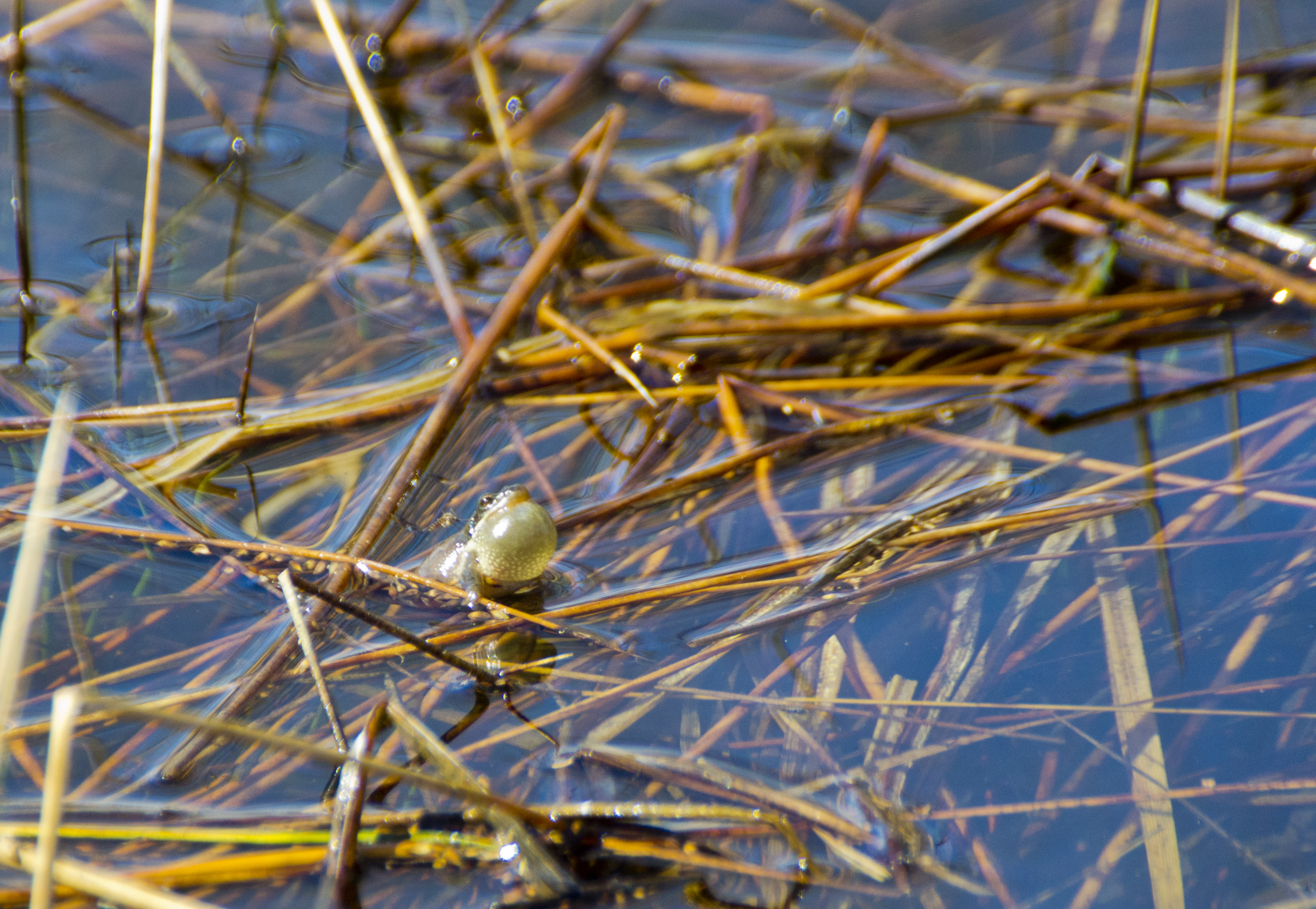
From there, we headed into the woods, where we got a few familiar species onto our list, the Red-breasted Nuthatch and Black-capped Chickadee, but the trail was extremely quiet. We elected to head up to the main multi-use pathway, and we were glad we did! A Savannah Sparrow, Tree Swallows, and Northern Rough-winged Swallow were added to the day list thanks to some of our more keen-eyed and eared attendees! Another heard a lone Boreal Chorus Frog in a nearby water hole, but we couldn’t get very close to it, and it wasn’t until we were once again near the parking lot before we heard them again and decided to investigate. These little frogs are incredibly loud for their size, and here are a few scenes I managed to capture.

Boreal Chorus Frog

Boreal Chorus Frog

And here’s what they sound like:


Sunday Showcase: Great Horned Owl Chicks

Shirley Otway has shared some adorable pictures of the newest generation of Great-horned Owls in Fish Creek Park, and one of their exhausted parents!

Rare Bird Alert Calgary: April 26

Have you seen an unusual bird in Calgary? If it is on this Reportable_Birds (PDF), please report it to the Nature Calgary Rare Bird Alert line at 403 221-4519 and leave a message after the beep at the end of the recording. If you would like some help with species identification, email us at birdscalgary@gmail.com.  To report injured wildlife call the Calgary Wildlife Rehabilitation Society at 403 239-2488, or the Alberta Institute for Wildlife Conservation at 403 946-2361.

April 20
— SPRAGUE’S PIPIT, Fish Creek PP, FCPP group

April 21
— GREATER SCAUP, Fish Creek PP, Heather Cuthill

April 23
— WHITE-FACED IBIS 4, Frank Lake, John Reasbeck(?)

April 24
— EURASIAN WIGEON, Glenmore Reservoir, Richard Clarke
— SPOTTED SANDPIPER, Glenmore Park, RC
— SEMIPALMATED SANDPIPER 6, near Blackie, Terry Korolyk
— NORTHERN PYGMY-OWL, Brown-Lowery PP, Ross Lein
— AMERICAN THREE-TOED WOODPECKER 4, same, RL
— PACIFIC WREN 2, same, RL

April 25
— WESTERN GREBE pair, Frank Lake, Yousif Attia
— PACIFIC WREN, Griffith Woods, John Thompson
— WHITE-CROWNED SPARROW 3, Calgary yard, Amanda Bradley

The next scheduled update of the Bird Alert is on Monday April 30.

BIRD STUDY GROUP – Meets the first Wednesday of the month, September – May
at 7:30 pm, Room 211, BioSciences Building, University of Calgary. The next
meeting will be Wednesday May 2. Presenters are Ian Halliday (Weed Lake
Project), and Andrew Hart (re-introduction of Red Kites into England).

Wednesday Wings: Sharp-shinned Beauty

Beginning birder Marg Matheson is again sharing her stunning photos with us. This has clearly been the year of the Sharp-shinned Hawk, as we’ve received countless reports and photos of their appearance from many different locations.

Q & A: Northern Shrike

By Bob Lefebvre

Here at the Birds Calgary blog, we receive a lot of questions from bird-friendly folks throughout the province. We are going to start sharing some of them with our readers as just another way to spread bird knowledge. 

If you have a question, email us at birdscalgary@gmail.com.  We may post your question and our answer.  We won’t print your name or email address without permission.

Q:  I was walking along the Bow south of 22x today [April 6] and saw these, which I haven’t seen before.  I couldn’t get close for a good picture but I’m hoping you can you tell me what they are.

Thanks, Jim
 
.
.
 
A: These are Northern Shrikes, which are songbirds that behave like raptors.  They hunt insects, snakes, rodents, and small birds.  Shrikes are called “Butcher Birds,” and they have been known to take birds as large as Blue Jays and Mourning Doves.  They will often impale their victims on a thorn or barbed wire, which is thought to be a way of marking their territory and attracting mates, and for short-term storage of food. Shrikes are only about 10 inches long, but they have a sharp hooked beak like a falcon’s.  They sit on high perches and scan for prey, then swoop down on it.  Sometimes they hover over the ground to watch for prey.
These birds will be on migration right now (I have seen a couple in the same area in the last two weeks).  There are always a few around here in the winter, but they breed in the high arctic.  In the summer, we have the closely related Loggerhead Shrike on the prairies east of town, but it is not usually seen in the city.

Spring Birding in Carburn Park – What a difference a month makes!

Posted by Dan Arndt

It seems like it was only yesterday that the Friends of Fish Creek Birding Course visited Carburn Park. While it has been a little over a month, the differences are astounding. The ice on the river has almost completely cleared up, and all three ponds are completely ice-free and full of waterfowl and gulls of all kinds.

After a couple of weekends away, it was nice to get back into the city and back to a place that is always full of surprises, and Carburn Park was just what the doctor ordered.

With a few fresh faces, and plenty of old familiar ones from the Winter Course, we started out bright and early at 7:30AM and got off to a great start.

We decided our best course of action would be to head south to the bridge, then follow a trail as far south as we could before turning back north and following the river with the sun at our backs, both for the best photos, but also for the best light to view the birds at.

Carburn Park - April 22, 2012

One major difference that stands out to my mind between winter and spring birding, at least before the leaves come out and change the game entirely, is that the birds that overwinter here in Calgary are fairly large-bodied overall. Sure, we get Common Redpolls, various finch species, and even a few odd sparrows here and there, but for the most part the overwintering birds are roughly robin-sized or larger. Geese, ducks, a few killdeer here and there, as well as the hawks, owls, and woodpeckers make up the bulk of the birding biomass in the winter. Spring, on the other hand, is when the smaller birds make Calgary home. Song Sparrows, Lincoln’s Sparrows, Chipping Sparrows, along with Warblers, Vireos, and Pipits of all kinds make getting just the right light and just the right angles vitally important for a positive visual identification, since these birds are relatively tiny, generally between 10 and 20cm from tip of the bill to the tip of the tail.

The first couple sightings of the day were well known to us already, with a Red-breasted Nuthatch working away at a nest hole, and a Northern Flicker calling out to proclaim his territory.

Red-breasted Nuthatch

Red-breasted Nuthatch

Northern Flicker

Northern Flicker

After spending some time on the bridge, Bob Lefebvre and I discussed the best route to take, to which I suggested the south leg of the walk, and then returning with the sun at our backs. I even suggested we might get lucky and find a Savannah Sparrow in the grassy area just east of the river, or maybe a Ring-necked Pheasant. It was a mere moments later that this beautiful little Savannah Sparrow popped out into the open to give me the my first sightings of the year for this species.

Savannah Sparrow

Savannah Sparrow

Along the trail to the south we heard a number of Song Sparrows and possible Lincoln’s Sparrows calling from an island in the center of the Bow River, but over the din of the Canada Geese, Franklin’s Gulls, and American Robins, it was hard to make out any that we could completely confirm. We did manage to get some good views of some Bufflehead on the Bow River, and this Red-tailed Hawk that decided to keep itself a healthy distance away from the group.

Red-tailed Hawk

Red-tailed Hawk

Heading back north along the river seemed a lot quieter than the last few times, but as the river opens up and the ice melts off, the concentration of birds on the river is much more dispersed. Add to that the increased number of people fishing both in, and on, the river tends to flush any large groups of birds, even at 7:30 in the morning.

We cut over to the get a couple of looks at the ponds before cutting back to the river when we noticed a few pair of Redheads on the furthest south pond, along with an industrious beaver taking a break on the north shore.

Redheads

Redheads

Heading back over to the river, we heard our first clear Lincoln’s Sparrow song of the day, and shortly after that, our first Tree Swallows flitting about overhead. A few Franklin’s Gulls decided it was a good morning for a bath, and allowed great views of their bright red bills and white eye-ring that are great markers for the species’ breeding plumage.

Franklin's Gulls having a bath

Franklin's Gulls having a bath

A little further north gave us a couple of great views of a Song Sparrow, singing high up in a tree, and hopping from branch to branch before flying off once we’d all gotten near.

Song Sparrow

Song Sparrow

A search of the dense woods by the river for the Northern Saw-whet Owl came up empty, but not before this pair of patient and camera-savvy Common Mergansers hammed it up and posed nicely for us.

Common Merganser

Common Merganser

Another nice surprise was this pair of Canada Geese perched in Calgary’s oldest Water Birch. This legacy tree is massive, and at over 100 years old, is home to a number of nest holes for Mergansers, Flickers, and likely many more in the higher boughs that aren’t easily seen from the ground.

Canada Geese

Canada Geese

We continued heading north to the last pond, but not before stopping to check across the river for a Bald Eagle pair that has regularly nested, and were given a few glimpses of the female sitting on the nest, poking her head up, but at such a distance that my lens didn’t show much more than a spot in the distance. I tried to make up for it with a nice close-up shot of this American Robin with a mouth full of… sludge? I guess what they say about one person’s trash being another’s treasure is true even for birds! I’d imagine he’s taking this back for nesting material.

Sludge! Delicious sludge!

American Robin

At the third pond we had a couple of good views of a Common Loon, had a low flyover of a Northern Goshawk, and saw what must have been a flock of 150 or more Franklin’s and Ring-billed Gulls both on the lake and above it, chasing down a flurry of freshly hatched insects. It was quite the feeding frenzy!

Rare Bird Alert Calgary: April 23

Have you seen an unusual bird in Calgary? If it is on this Reportable_Birds (PDF), please report it to the Nature Calgary Rare Bird Alert line at 403 221-4519 and leave a message after the beep at the end of the recording. If you would like some help with species identification, us email us at birdscalgary@gmail.com.  To report injured wildlife call the Calgary Wildlife Rehabilitation Society at 403 239-2488, or the Alberta Institute for Wildlife Conservation at 403 946-2361.

APR 19

GLAUCOUS GULL – Gus Yaki and FFCPP at Carburn Park; also Marcel Gahbauer reported one occurring for a while on the Bow River near the Crowchild Trail bridge

APR 20

HARLEQUIN DUCK – still at Inglewood Bird Sanctuary, Chris Burnett
NORTHERN HAWK-OWL – southwest of Water Valley on the Larsen Pasture Road near the entrance to Direct Energy’s access road

APR 21

EASTERN PHOEBE – in Weaselhead near the footbridge over the Elbow River, Andrew Slater
WHITE-CROWNED SPARROW – 3 in Margaret Brunner’s yard in Oakridge

APR 22

COMMON TEAL – on the slough in the northwest corner of the Range Road 284-Twp Rd 231 junction just southeast of Shepard, Terry Korolyk
RED-BREASTED MERGANSER – 3 male and 1 female at Sunset Park on Lake Chestermere (on the east side a short distance south of Hwy 1A); TK
EURASIAN WIGEON – a male on Glenmore Reservoir; AS
WOOD DUCK – 8 at Carburn Park , Bob Lefebre, Dan Arndt and FFCPP
GREATER SCAUP – 2 pair at the Bridlewood Marsh at McKevitt?? Rd and Highway 22X, Tanya Barkauskis; also TK reported 8 at the dam at Chestermere Lake
DOUBLE-CRESTED CORMORANT – 30 at Langdon Reservoir, Mary Lou Juliani and Donna Miles
LESSER YELLOWLEGS – 200+ in the NW corner of Rge Rd 284-Twp Rd 231 junction, TK
MARBLED GODWIT – 5 at Weed Lake , TK
BREWER’S BLACKBIRD – male on Rge Rd 284 near Shepard
EURASIAN COLLARED DOVE – reported again in Calgary Deer Run

The next scheduled update of the bird alert is on Thu Apr 26.

BIRD STUDY GROUP:

Bird Study Group meets Wednesday, May 2, 2012 in Room 211, BioSciences Building, U of C. The speakers are Ian Halliday discussing the Weed Lake Project and Andrew Hart discussing the re-
introduction of Red Kites into England.

Weekend Photos

Some great pics sent to us by folks out birding over the weekend!

We had an interesting Saturday afternoon at the Inglewood bird sanctuary with two unusual events.  First we had a Long-eared owl sighting, and then observed a mink “running” away from an upset nesting goose.  Byron and Cheryl

Gianfelice also had a great birding day on Saturday, with sightings of both a winter visitor and a returning spring migrant. The White-winged Crossbill and Eastern Kingbird were photographed at Weaselhead. [UPDATE: After this post went up, it was pointed out to us that the bird below is likely an Eastern Phoebe, not a kingbird. It is lacking the white tail tip, and it is very early for kingbirds to return to Calgary. Pat will no longer be making snap judgements on bird ID’s and thank you Gus for the correction!]

Sunday Showcase: Common Calgary Gulls

 Posted by Matthew Sim

Though we see them a lot during the summer, most of us have some difficulty in identifying these guys;  so here’s a breakdown of the common Calgary gulls.

California Gull; identified by rounded head, red and black spot on bill and greenish-yellow legs. Also note completely dark eye.

Franklin's Gull, the easiest gull in Calgary as it is, for the most part, the only one with a black head. Also note the white eye-crescents and the bright red beak.

Ring-billed Gull with its namesake ringed bill is probably the most common gull in Calgary and is often seen in parking lots.I separated from the Herring Gull by its yellow legs. Similar to California Gull, which has a darker eye.

The Herring Gull is nearly identical to the Ring-billed Gull, the one big difference though is the legs. Herring Gulls have pink legs while Ring-billed Gulls have yellow legs.

Though identifying gulls can be very difficult, hopefully this helps you next time you see a gull in Calgary.