Rare Bird Alert Calgary: Dec 2

Have you seen an unusual bird in Calgary? If it is on this Reportable_Birds (PDF), please report it to the Nature Calgary Rare Bird Alert line at 403 221-4519 and leave a message after the beep at the end of the recording. If you would like some help with species identification, us email us at zoxox@shaw.ca  To report injured wildlife call the Calgary Wildlife Rehabilitation Society at 403 239-2488, or the Alberta Institute for Wildlife Conservation at 403 946-2361.

This Bird Alert was recorded on Friday December 2 at 1:45 pm.

Bird Sightings:

WHITE-WINGED CROSSBILLS have been seen in fairly good numbers, with the best locations being the west end of Fish Creek Provincial Park and Edworthy Park. RED CROSSBILLS have been scarce. COMMON REDPOLLS have been abundant, with the usual sprinkling of HOARY REDPOLLS among them.

Nov 27:
NORTHERN SHRIKE, Griffith’s Woods in Discovery Ridge south of HWY 8, Bill Wilson (NORTHERN SHRIKES arrived in good numbers at first, but few have been reported recently).
PINE GROSBEAK, Griffith’s Woods, BW (PINE GROSBEAKS have been fairly widespread and in good numbers in the Calgary area this winter).

Nov. 29:
ROUGH-LEGGED HAWK, NW of Calgary on RR 24 and TWP RD 262, Ron Kube (ROUGH-LEGGED HAWKS have been widespread and in good numbers throughout southern Alberta during the past couple of weeks).
NORTHERN HAWK-OWL, W of Turner valley along HWY 546 ca. 3 km. W Lineham Crossing, Peter Maksymiw.

The next scheduled update of the Bird Alert is on Monday Dec 5.

BIRD STUDY GROUP:  Bird Study Group meets 1st Wednesday of the month, Room 211, BioSciences Building, U of C. December meeting is Wednesday,December 7. Topic will be “Birding in Brazil”, presented by Rob Worona. Meeting time is 7:30pm.

Wintering blackbirds in Texas

Winter leaps upon us in a flash. One minute, it seems, it is a very distant shape looming faintly on the horizon. Suddenly, before we know it, winter has struck, leaving us wondering where the summer went. In Texas, the same seems to happen with wintering birds. One day, only the year-round residents who call Texas home can be seen. The next day, countless wintering birds of all shapes and sizes are everywhere, confusing even the most attentive eye.

Countless blackbirds flock together during the winter

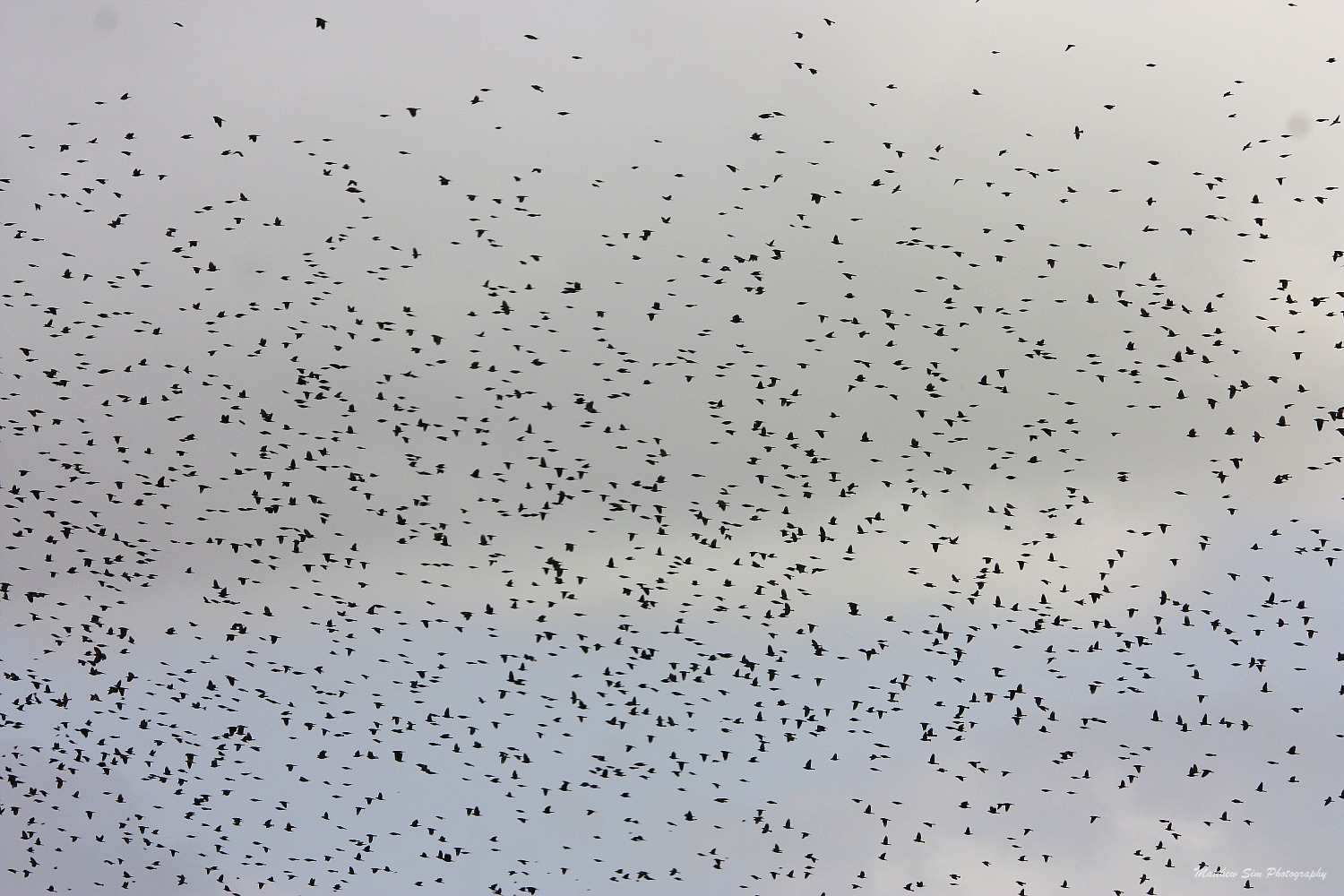
On a recent trip to Brazos Bend State Park here in Texas, about an hour southwest of Houston, we observed some spectacular flocking in action. Literally thousands upon thousands of blackbirds; Red-winged Blackbirds, Brown-headed Cowbirds, Common Grackles and European Starlings congregating on some farmer’s fields. They swarmed and swirled, seemingly in perfect coordination, lifting off and landing as a unit. And yet, this is not a sight you can readily behold on these bird wintering grounds. You don’t see flocks of thousands of these species doing this in the summer, so why do they do it in the winter???

These blackbirds have quite a few reasons for doing this in the winter but these flocking habits also have numerous downsides. First of all, on the positive side, foraging is greatly improved by the large flock as opposed to a single bird or a small group. The more eyes you have working together, the easier it is to find food! More eyes can also mean more safety from would-be predators, and trust me, there are a lot of them!

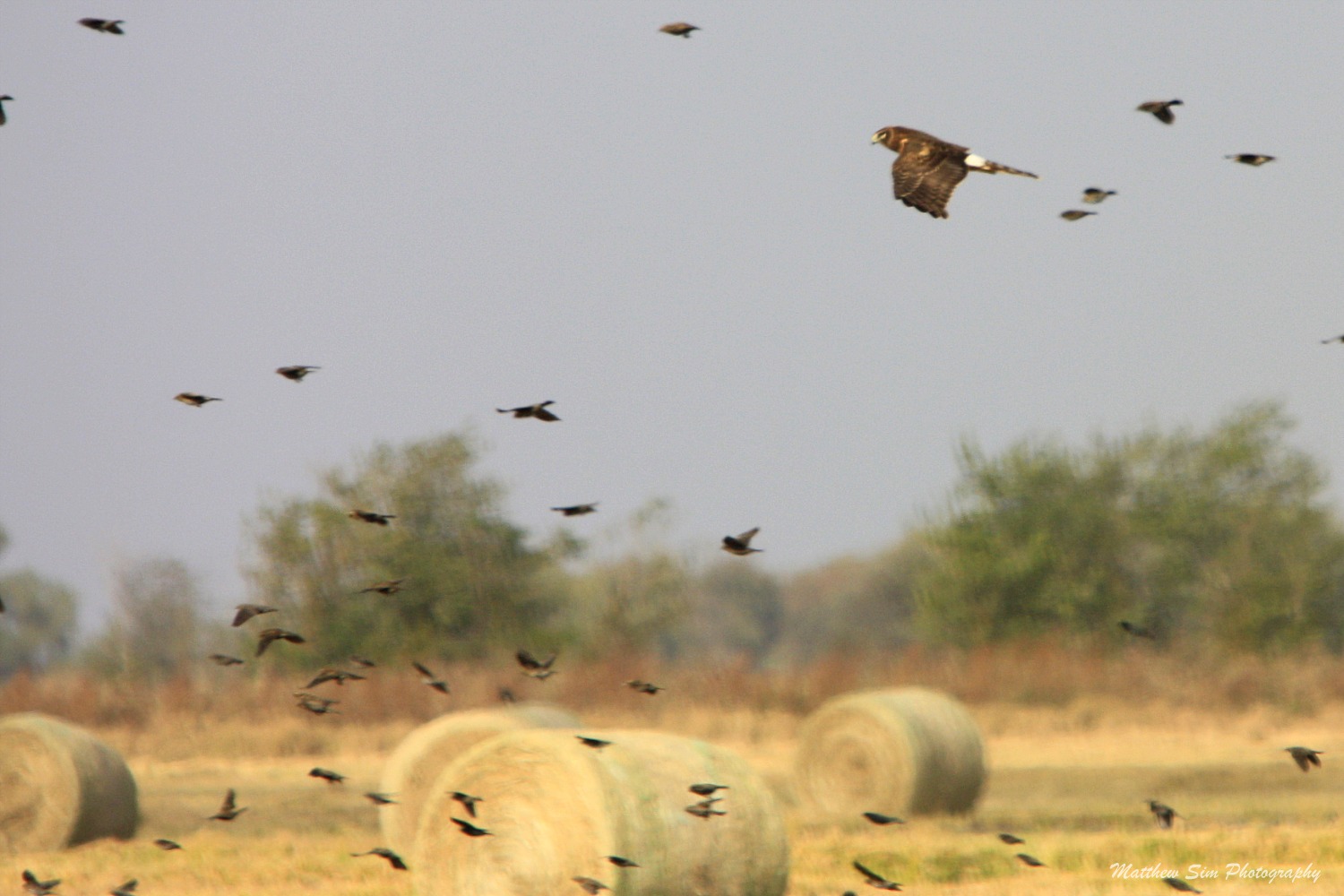
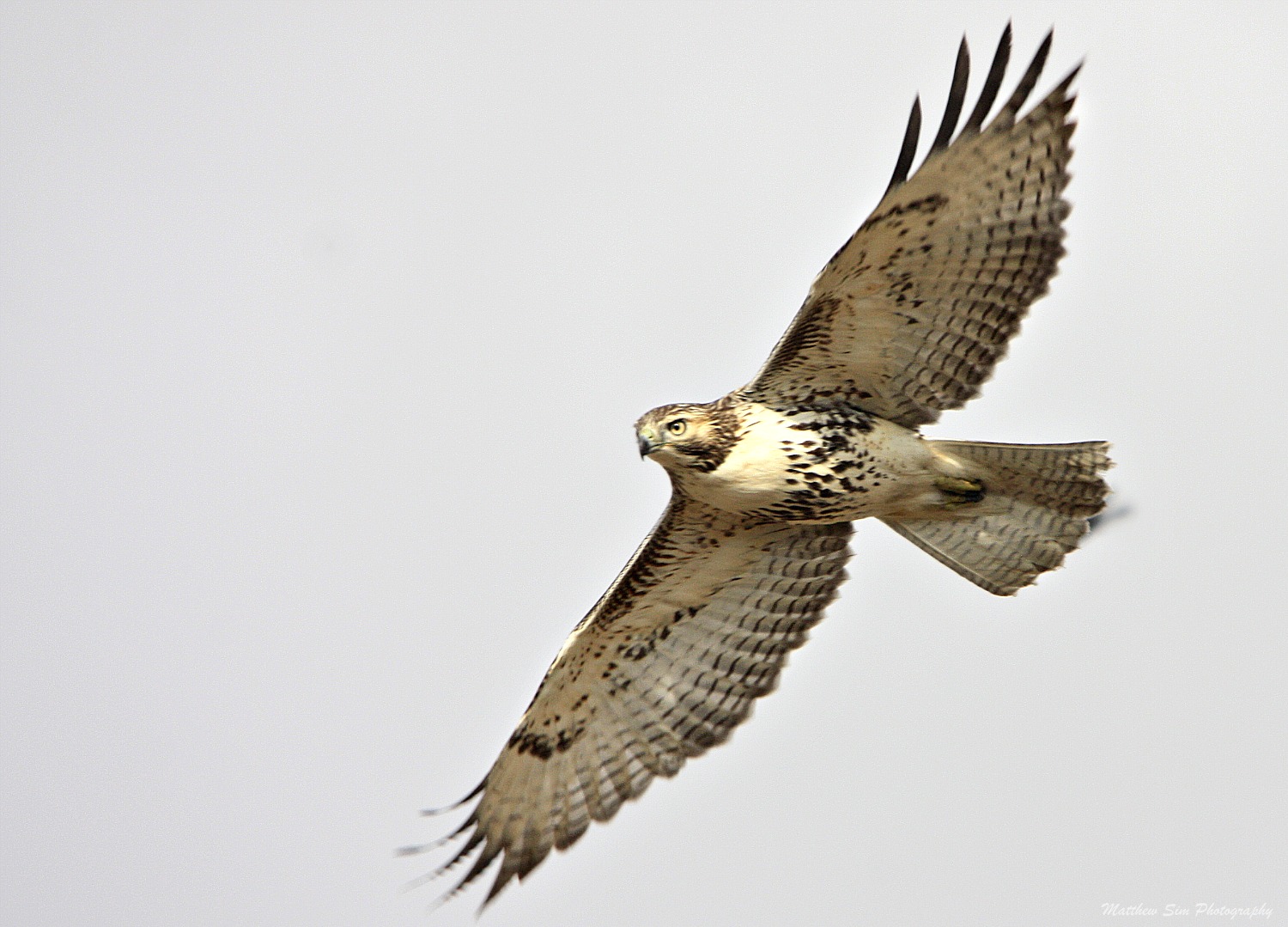
This brings us to one of the downsides of wintering flocks. Predators. Lots of them. Where there is food, there are consumers, waiting to, well, consume the food. Raptors see these blackbirds as one huge buffet just waiting to be sampled. In a small farmer’s field, we counted up to 20 raptors: about 10 Caracaras, many Red-tailed Hawks, several White-tailed Hawks, a Turkey Vulture and a couple of Northern Harriers, all exploring the delightful opportunity of a full stomach all winter long. If these hawks were to stick with the group of blackbirds, they could potentially always find one or two to pick off from the pack. The more birds in a flock, the more noise and commotion they make, rendering them easily visible targets.

Large concentrations of any living thing invariably bring with them two other depreciating factors; disease and competition. Avian diseases can be spread very quickly in such large flocks and may sometimes ravage a great portion of the local species. More birds might find better food sources but if there isn’t enough to go around, there simply isn’t enough. Weaker, slower and sick birds often will be the first to go hungry as they cannot compete with the healthier individuals.

It was definitely a neat sight to behold, especially when a raptor would plunge into the center of the throng, sending up explosions of blackbirds. One of the White-tailed Hawks that we spotted, an immature, had a very full crop (a muscular pouch near the throat used to store food), showing us that it had been eating well recently.

In the end, the advantages of these congregations greatly outweigh the disadvantages and it is a bewildering sight that will continue to captivate many a fortunate observer.

Posted by Matthew Sim

Rare Bird Alert Calgary: Nov 28

Have you seen an unusual bird in Calgary? If it is on this Reportable_Birds (PDF), please report it to the Nature Calgary Rare Bird Alert line at 403 221-4519 and leave a message after the beep at the end of the recording. If you would like some help with species identification, us email us at zoxox@shaw.ca  To report injured wildlife call the Calgary Wildlife Rehabilitation Society at 403 239-2488, or the Alberta Institute for Wildlife Conservation at 403 946-2361.

This Bird Alert was recorded on Monday Nov 28 at 1:45 pm.

Bird Sightings:

Nov 20:
ROUGH-LEGGED HAWKS (40+) near Pine Coulee Res., west of Staveley, Terry Korolyk.

Nov 24:
YELLOW-HEADED BLACKBIRD, RUSTY BLACKBIRD, 30 RED-WINGED BLACKBIRDS, 30 BREWER’S BLACKBIRDS, AMERICAN GOLDFINCH, MOURNING DOVE, RED-TAILED HAWK , at Lloyd Bennett’s farm near Taber.
MARSH WREN at Taber Lake, LB.
COMMON GRACKLES (3) in Lethbridge, LB.

Nov 25:
ROUGH-LEGGED HAWKS (56) birding between Medicine Hat and Brooks, Milt Spitzer and Ben Velner.

Nov 26:
ROUGH-LEGGED HAWKS (8) in a kettle south of Calgary, TK.
KILLDEER (5) along the Bow River north of 22X bridge, TK.
KILLDEER (2) along the Elbow River, Bill Wilson.

The next scheduled update of the Bird Alert is on Thursday Dec 1.
BIRD STUDY GROUP:

Bird Study Group meets 1st Wednesday of the month, Room 211, BioSciences Building, U of C. December meeting is Wednesday,December 7. Topic will be “Birding in
Brazil”, presented by Rob Worona. Meeting time is 7:30pm.
Update from Texas

Not really about Calgary birding, I thought I might try to squeeze in an occasional post about my experiences down south. Let me tell you, if you haven’t yet experienced Texas birding, you are most definitely missing out.

My family and I moved down to Texas back in August and were greeted by sweltering heat; temperatures regularly exceeding 40 degrees Celsius (104 degrees Fahrenheit). Since then, the temperatures have decreased considerably to a much more comfortable (and bearable) temperature of about 15 degrees Celsius, give or take a few degrees. This mild winter draws many species of avian visitors from up north and we have seen quite a few winter residents.

In my neighborhood, we regularly see Great Egrets, Great Blue Herons, Loggerhead Shrikes, White-winged Doves, Red-shouldered Hawks, Northern Cardinals, Field Sparrows and both Turkey and Black Vultures.

The neighborhood heron has allowed me to crawl close to get some photos

Since we have been down here, we have made several trips out to local hotspots. Our first trip, in September, was out to Galveston, where we saw some typical species of the Gulf Coast including Laughing Gull, Brown Pelican, Snowy Egret, Boat-tailed Grackle, Neotropic Cormorant, Royal Tern, Caspian Tern and Tricolored Heron. We also observed Sanderling, Ruddy Turnstone and Magnificent Frigatebird.

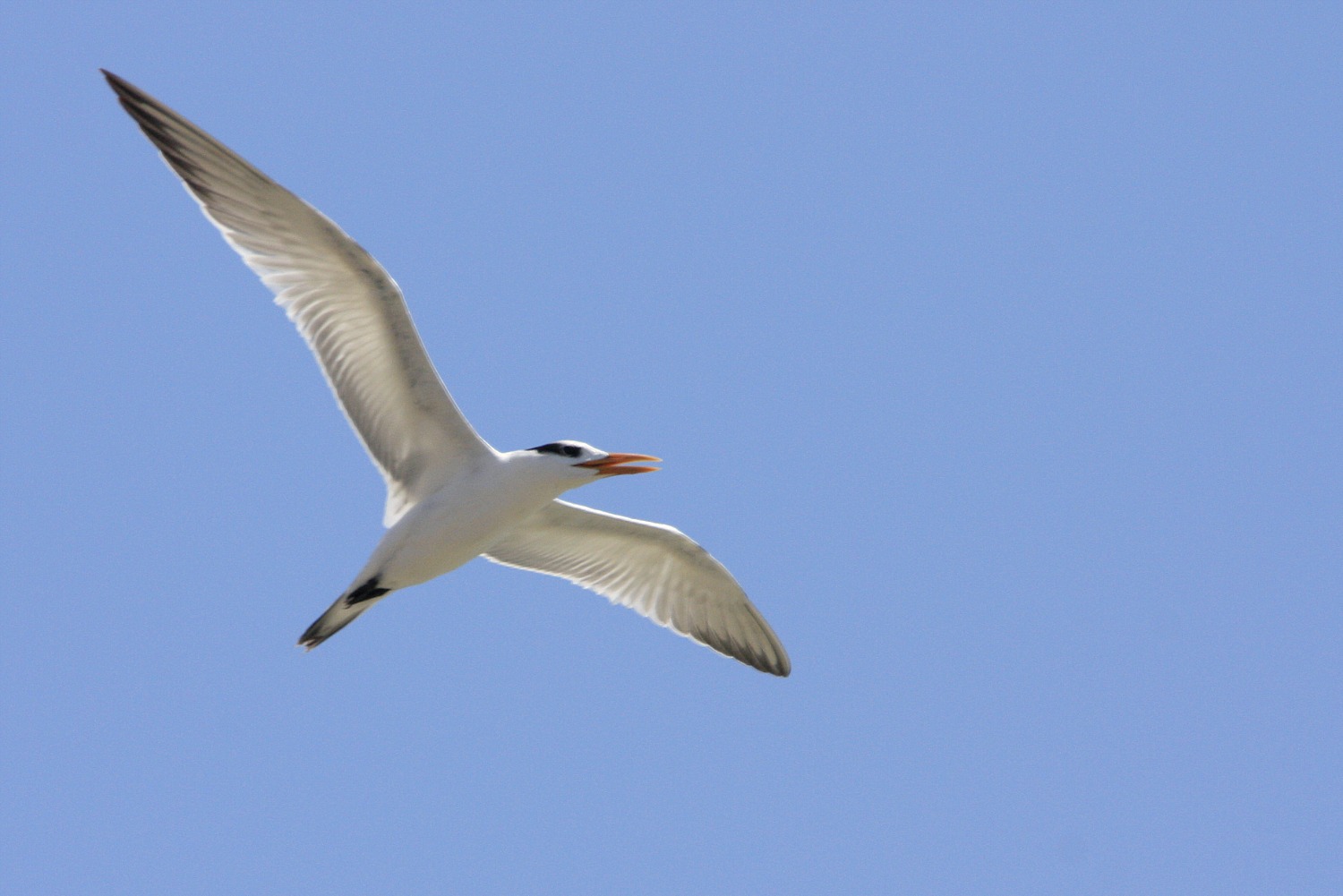
A Royal Tern in winter plumage soaring over the Texas Gulf coast

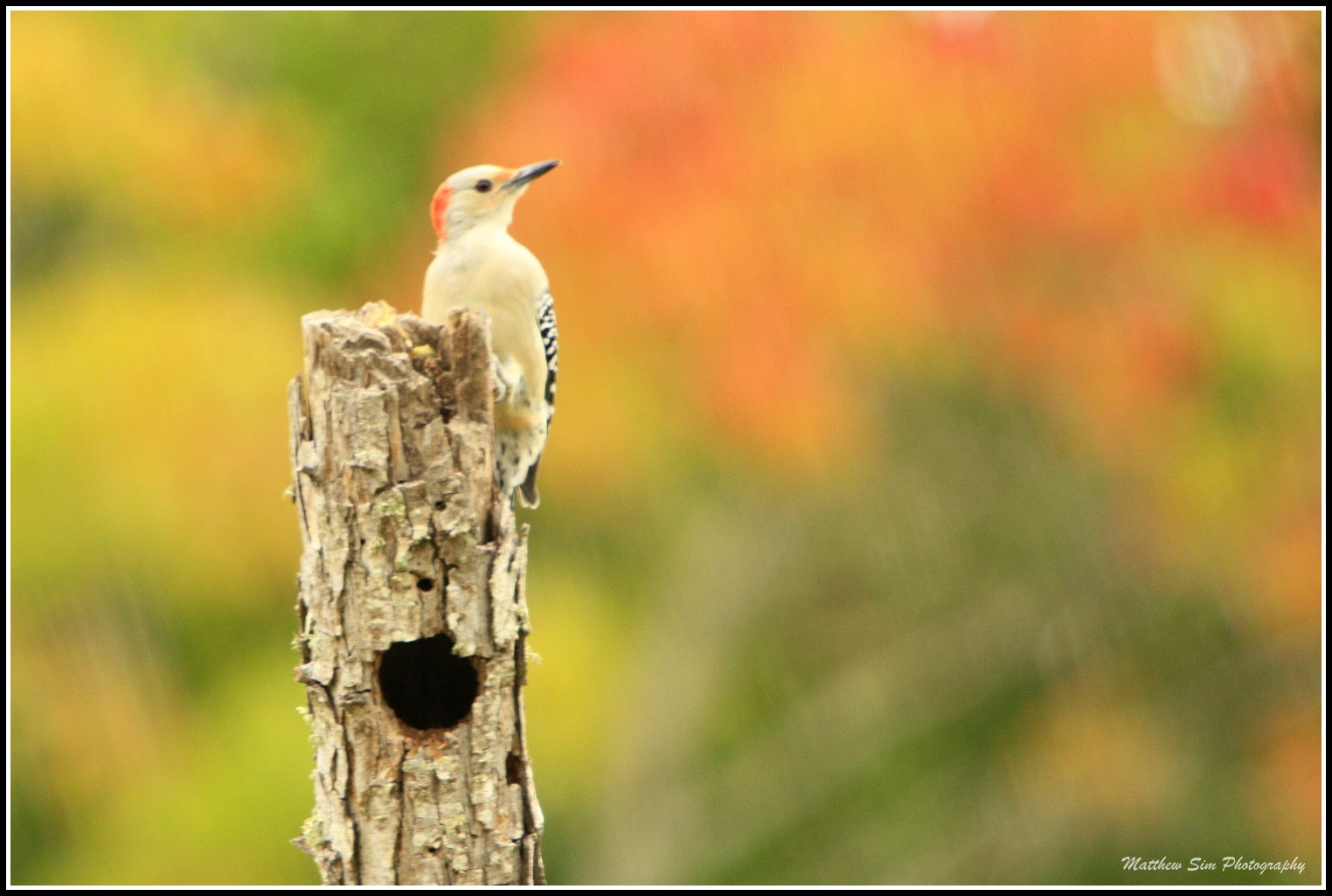
Several other trips out to local parks since then have given us more year-round and winter birds including the likes of Red-bellied Woodpecker, Carolina Chickadee, White Ibis, Cave Swallow, many species of sparrow and both species of Kinglet.

A trip to Brazos Bend State Park gave us the amazing sight of thousands of blackbirds, Crested Caracaras, Vermilion Flycatcher, both species of Whistling Duck and Roseate Spoonbill.

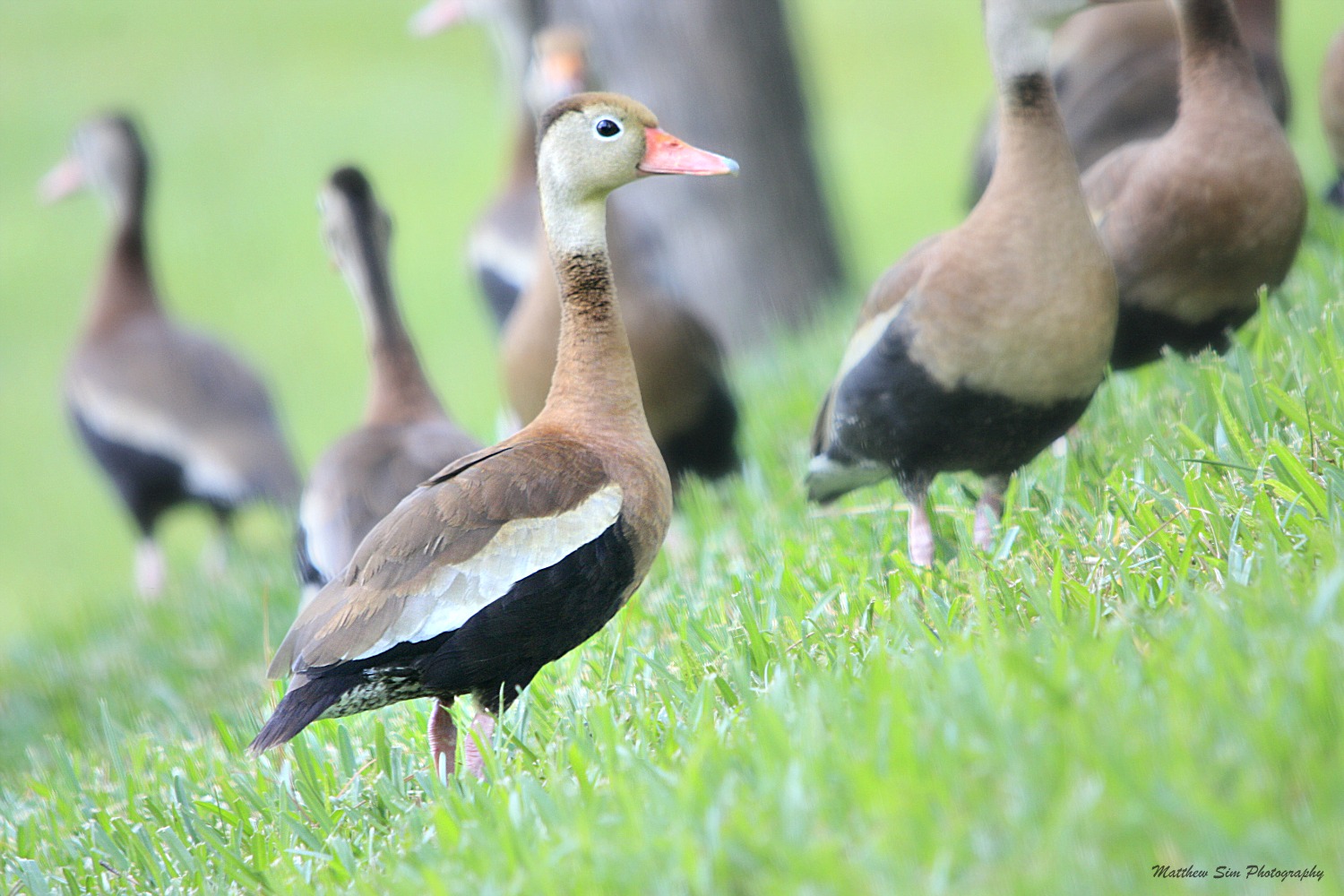
Black-bellied Whistling Ducks

Our latest trip, to Anahuac NWR, yielded incredible flocks of  Snow Goose, Ross’ Goose, Greater White-fronted Goose all passing by low overhead; we counted thousands of geese! The refuge also had  Anhinga and Harris’ Hawk calling it home.

We have greatly enjoyed Texas birding so far and are looking forward to an exciting spring migration!

Posted by Matthew Sim

Autumn Birding in LaFarge Park

I continue to be amazed at the diversity of birds in Calgary that for one reason or another choose to overwinter here. When I signed up for the Autumn birding course with Fish Creek Provincial Park, led by the legendary Gus Yaki, I was expecting to learn a lot about the bird population of Calgary, but also expected that once the temperatures dropped and the usual summer birds migrated southward, that the walks would turn to more of a discussion and less spotting and identification of birds themselves. So far, I have been thankfully disappointed. Thirteen weeks into the course, I am still spotting new birds and exploring new locations for birding within the city limits.

This past weekend I spent Saturday morning in LaFarge Park and Sikome Lake, as well as a brief stop at the visitor’s centre before heading home. The first highlight of the day was one of the Great Horned Owls that have been roosting near the buildings at Sikome Lake for the past few years.

Owl is not amused.
Great Horned Owl
Great Horned Owl
I see you seeing me

Moving on down we stopped to check out a local feeding spot that walkers, joggers and nature lovers keep well stocked year-round for the White-breasted Nuthatches, Black-capped Chickadees, and Downy Woodpeckers nearby.

Downy Woodpecker

Picking back up down the road at the boat-launch parking lot, we walked along the Bow River for the next couple of hours, spotting a number of species. Common Goldeneyes, Buffleheads, Common Mergansers, Mallards, Killdeer, and even a pair of Green-winged Teal were taking advantage of the warm weather to feed.

Buffleheads
Common Goldeneye
Male (front) and female (rear) Common Goldeneye
Green-winged Teal (male)
Male (left) and two female (center, right) Common Mergansers

The highlight for me was the family of Bald Eagles that had taken up residence just south of Highway 22X. They were very tolerant of our intrusion into their park, and even posed quite nicely for us.

Adult Bald Eagles

Juvenile Bald Eagle

Juvenile Bald Eagle

Adult Bald Eagle

A little further south , we were alerted to a flock of Common Redpoll in feeding from a stand of water birch, which allowed us to get very close before being flushed by something nearby, which would soon make its presence known.

Common Redpoll

Common Redpoll

Just before reaching the southernmost point of our journey, we spotted a lone Killdeer walking across a gravel bar in the centre of the river, and it was moments later that the culprit who flushed the Common Redpolls appeared just over the opposite bank of the Bow River; this juvenile Northern Harrier.

Northern Harrier

Wheeling northward once again along the pathway we passed by the two juvenile Bald Eagles, who again seemed undisturbed by our proximity, and then onward to the vehicles. Only one more brave bird would present itself so beautifully at this far southern extent of the walk. A female Hairy Woodpecker industriously worked away at a fallen log, poking not one, but two separate holes through the bark and both times coming up with a tasty morsel.

Hairy Woodpecker

Hairy Woodpecker

In our walk around the visitors centre a little later on, we were once again gifted with a Red-breasted Nuthatch along with a number of Black-capped Chickadees along the pathway, and a Northern Shrike being chased by a Black-billed Magpie as we returned to the parking lot. Sadly I wasn’t quite fast enough with the camera to catch that pair.

Red-breasted Nuthatch

Posted by Daniel Arndt

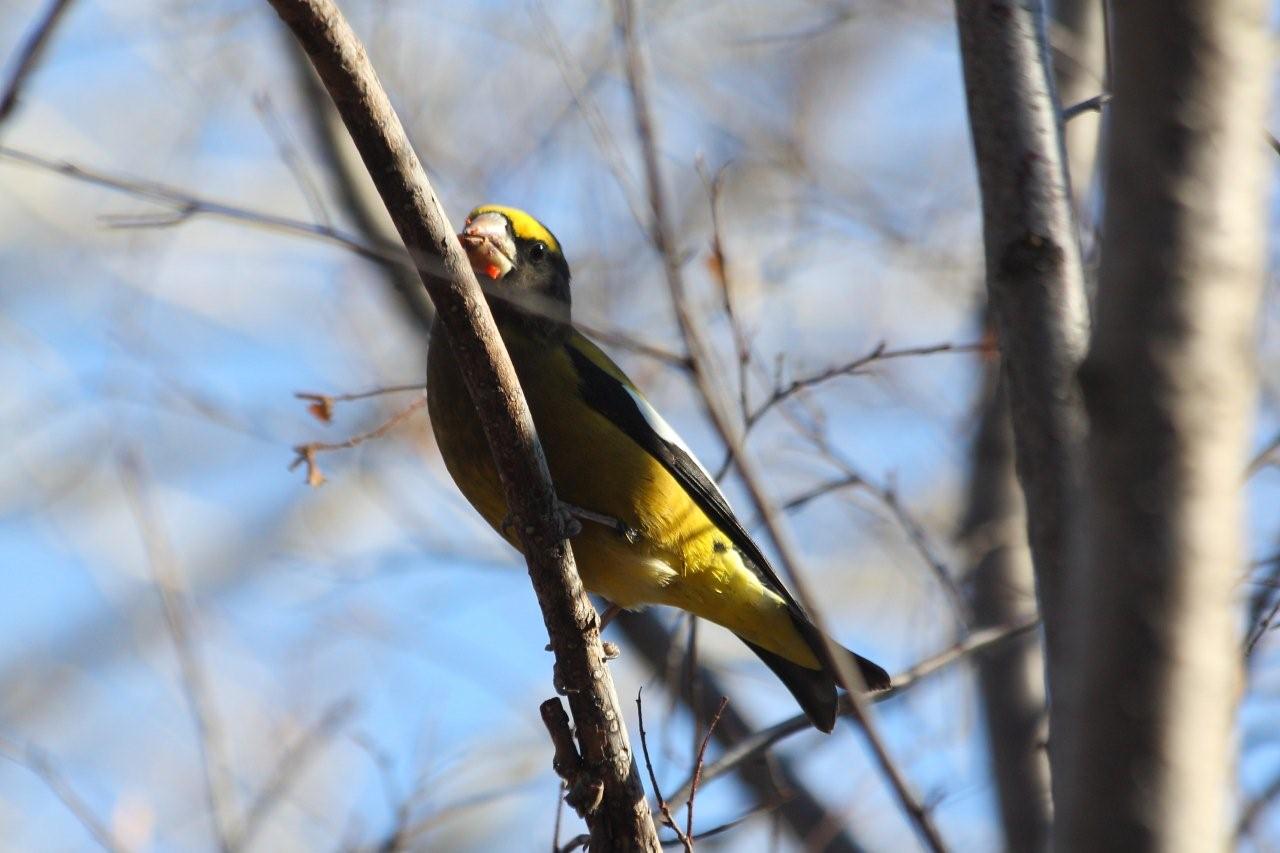
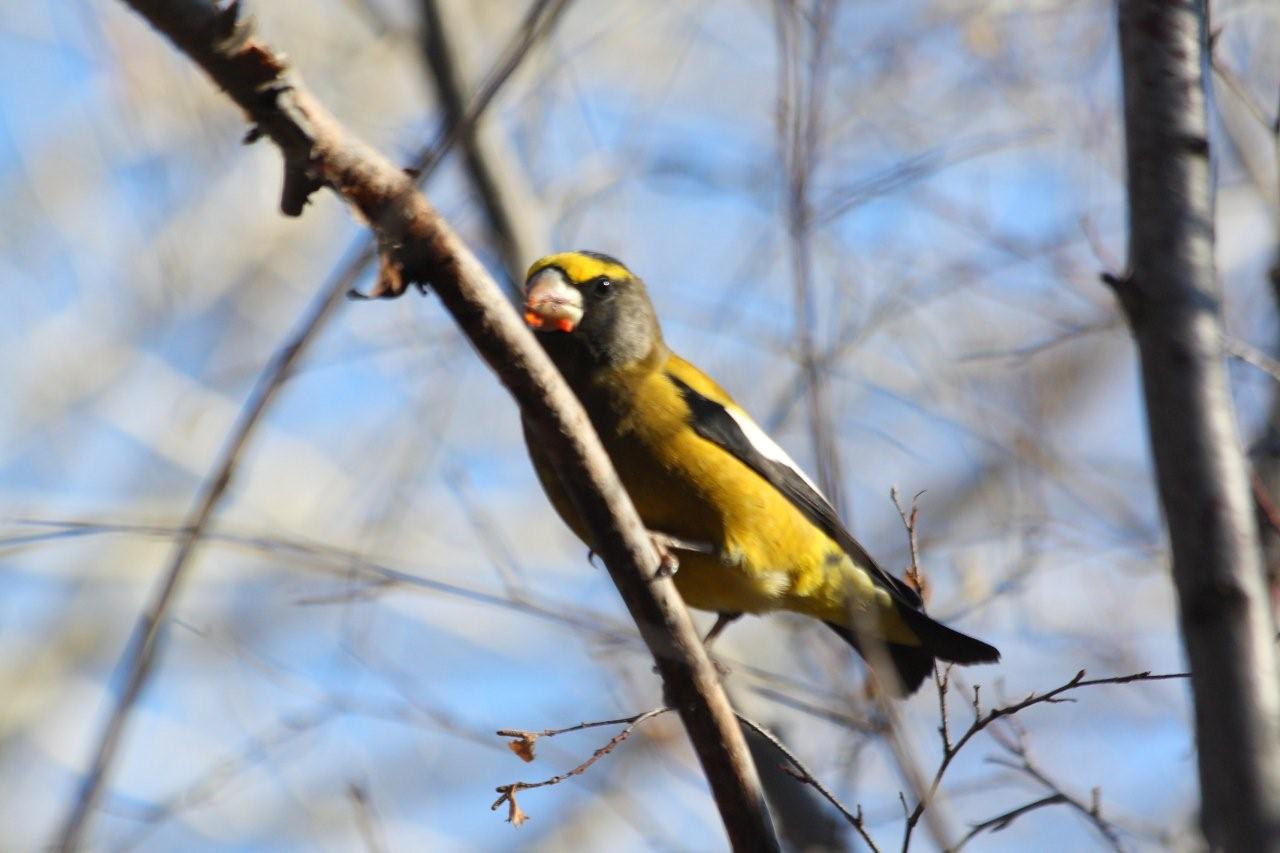
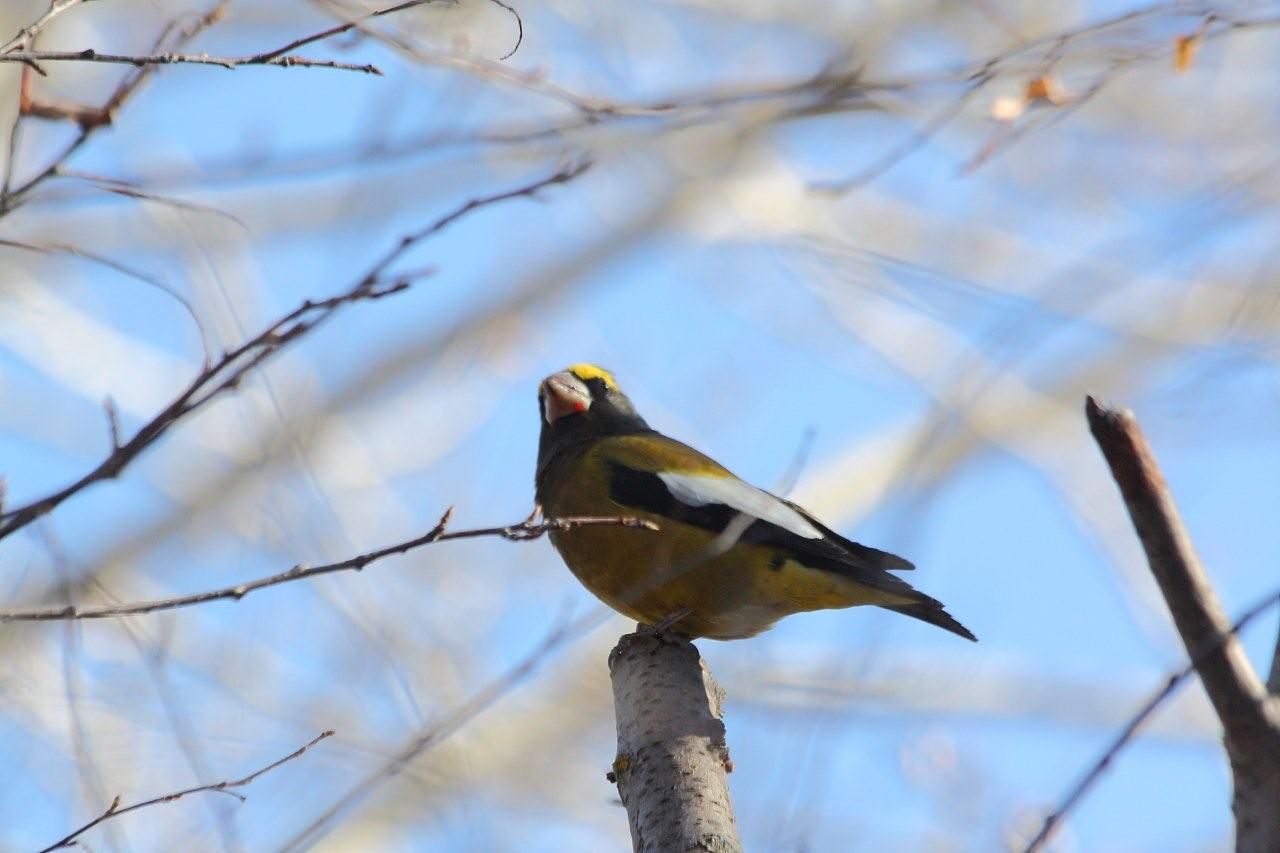
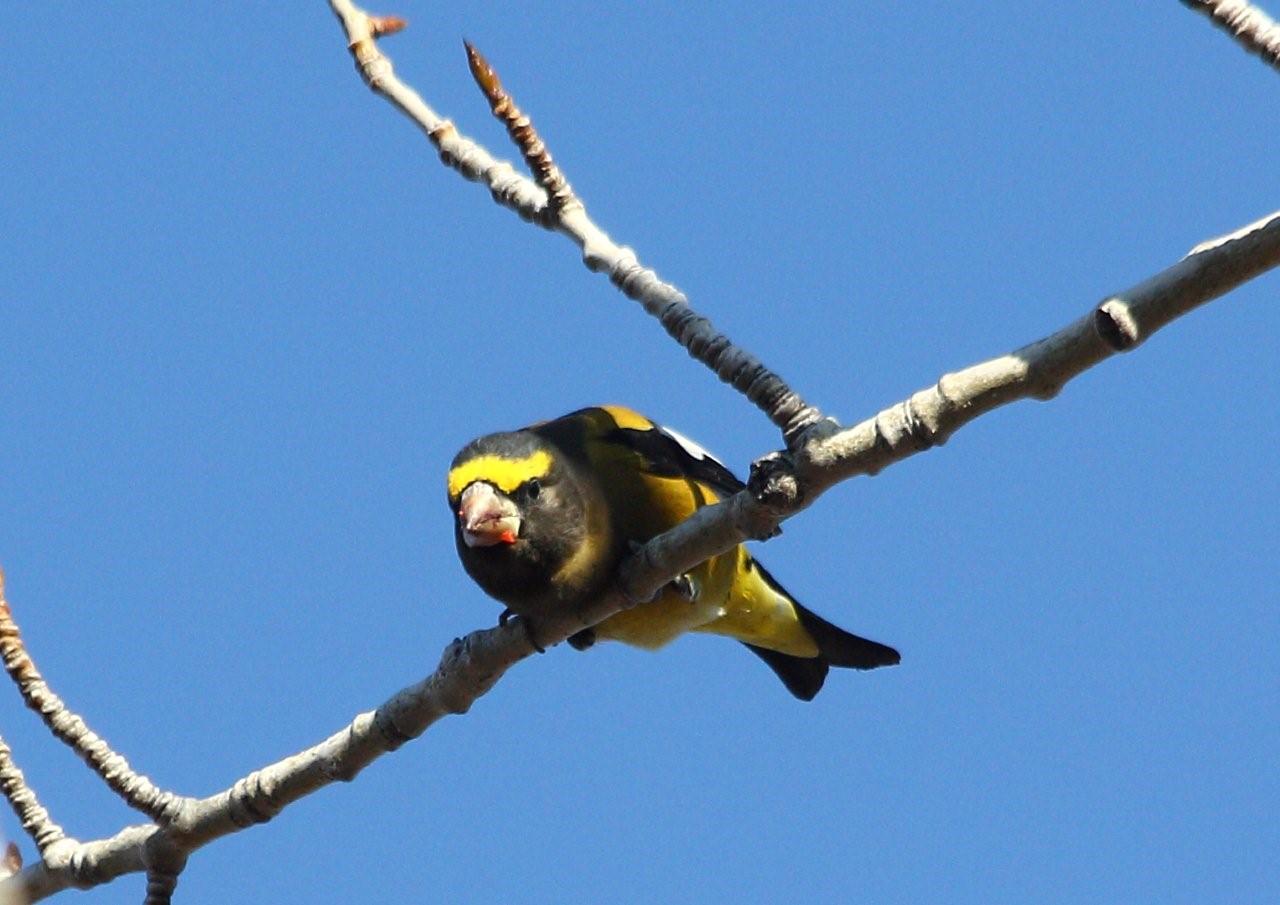
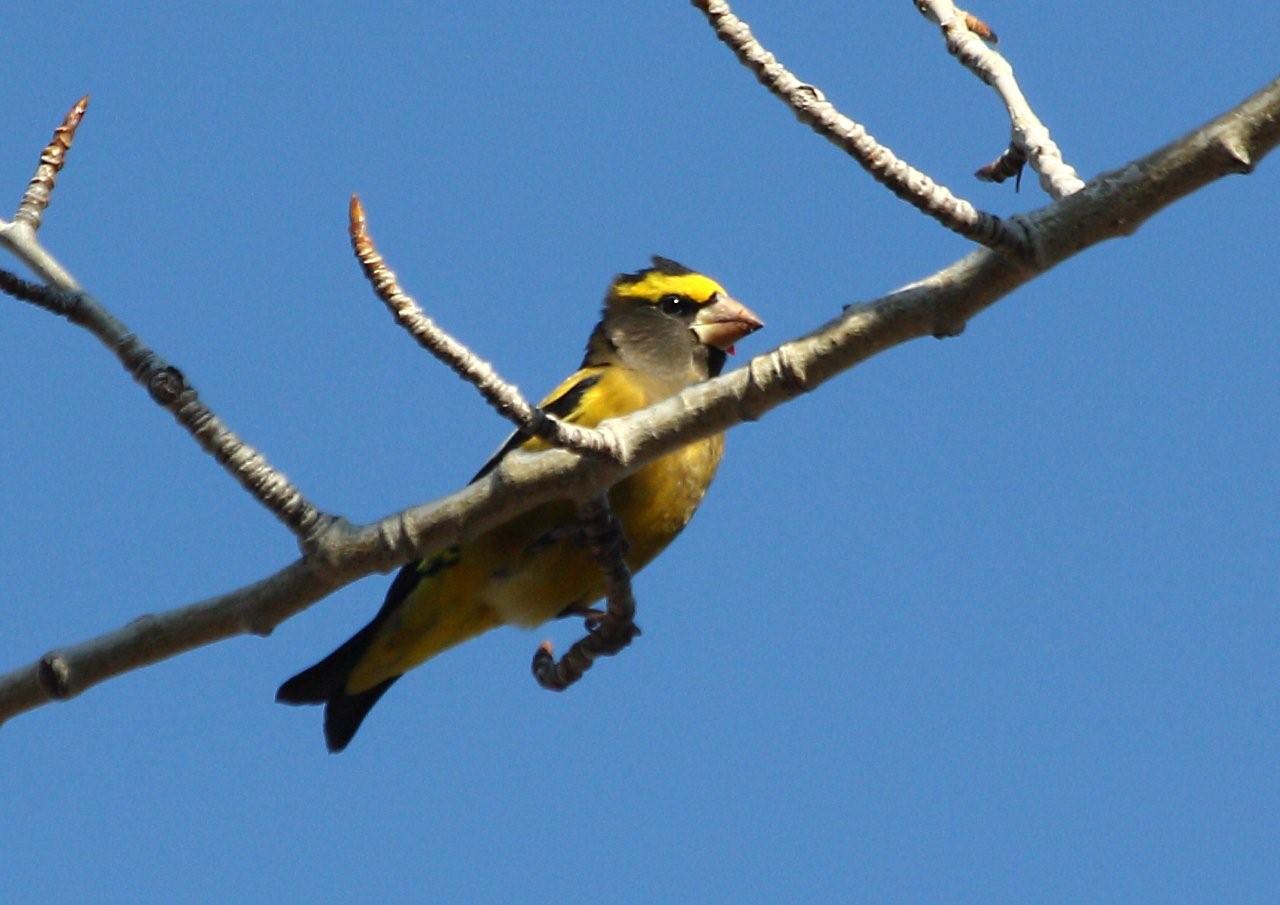
Sunday Showcase: Evening Grosbeaks

Rob English photos again!  Taken in Carburn Park, Calgary in late October.

Rare Bird Alert Calgary: Nov 24

Have you seen an unusual bird in Calgary? If it is on this Reportable_Birds (PDF), please report it to the Nature Calgary Rare Bird Alert line at 403 221-4519 and leave a message after the beep at the end of the recording. If you would like some help with species identification, us email us at zoxox@shaw.ca  To report injured wildlife call the Calgary Wildlife Rehabilitation Society at 403 239-2488, or the Alberta Institute for Wildlife Conservation at 403 946-2361.

This Bird Alert was recorded on Nov 24, 2011.

WEDNESDAY NOV 23
–SNOWY OWL (1f) – RgeRd 263 south of TwpRd 262 (Keoma area) by Ron Kube
–BROWN CREEPER (a few) – reported in Calgary area recently

TUESDAY NOV 22
–KILLDEER (5) – LaFarge Meadows (south of Hull’s Wood in east Fish Creek PP) by Gus Yaki and the Friends of Fish Creek Provincial ParkSociety (FFCPPS)
–REDHEAD (1 juv) – location and observers as above
–GREEN-WINGED TEAL (2) – location and observers as above
–GADWALL (2) – location and observers as above
–FALCON sp (large falcon) – location and observers as above
–DARK-EYED JUNCO (3-4) – Oakridge subdivision in SW Calgary by MargaretBrunner
–EVENING GROSBEAK (3m) – location and observer as above

MONDAY NOV 21
–WILSON’S SNIPE (1+) – LaFarge Meadows by GY and FFCPPS
–NORTHERN HARRIER (1 juv) – location and observers as above
–KILLDEER (1) – location and observers as above

SUNDAY NOV 20
–AMERICAN ROBIN (12) – along the pathway near the Yacht Club in South Glenmore Park by MB

SATURDAY NOV 19
–SNOWY OWL (4) – RgeRd 261 just north of TwpRd 262 by RK; RgeRd 281just north of TwpRd 250 by RK; Hwy 23 a few km east of Blackie by Terry Korolyk; 242 St in SE corner of Frank Lake by TK
–COMMON REDPOLL (750) – road going south from Carseland Weir by TK.
Several observers recently reported HOARY REDPOLLS in REDPOLL flocks

The next scheduled update of the bird alert is on Mon Nov 28.

Christmas Bird Count

As a follow-up to Bob’s post on the Christmas Bird Count this year, I am posting from my experiences last year.

For the 2010 Big Year birding here in Calgary, I decided to participate in my first Christmas Bird Count. I had heard great stories about this annual winter event and I was not disappointed. I was scheduled to a very productive route on the Bow River, with Southland Park and Carburn Park our main birding spots. We had a very good turnout for species, recording about 29, if I remember correctly. Some of the highlights on our route, were Killdeer, a Northern Shrike, a Rough-legged Hawk, a pair of Great Horned Owls and two immature Trumpeter Swans. These swans were seen continually in January of 2011 and were identified as one immature Tundra Swan and one immature Trumpeter Swan.

A fellow bird-counter participating in the 2010 Calgary CBC

Overall, almost 200 people took part in the 2010 count, with 102 feeder-watchers and 92 birders in the field. Temperatures ranged from -15 to -13 degrees Celsius with some light snow falling in the morning. Birders in the field put in a combined
205 party-hours total, 230 km  on foot and 881 km by car. These stats were compiled by Phil Cram, Donna and Arthur Wieckowski, Bob Lefebvre and John McFaul and can be more extensively viewed  by following this link:

http://birdscalgary.wordpress.com/2010/12/27/59th-calgary-christmas-bird-count-results/

Bald Eagles are usually seen on the Bow River

My group divided ourselves up into small parties in the morning, scanning the Bow River on either sides in and around Southland Park. Once we had spent several hours scouring the snow-swept landscape for birds, we headed to the nearest Tim Hortons for some warmth, where we traded stories and identification tips over refreshments. We headed back out, this time to Carburn Park, where we added Bohemian Waxwings, the shrike and some Barrow’s Goldeneyes. We ate lunch in our heated cars at Carburn and spent the afternoon searching our range for any missing species. That evening, all CBC participants from all over the city flocked to the Flynn’s house where we were served delicious chili and shared our tales from the day.

Birds are not the only wildlife seen on the Christmas Bird Count

The 2010 Christmas Bird Count was very enjoyable; if you have never done it before I highly recommend it. Calgary is historically a very high count in North American for number of participants; last year we had a total of 194 participants which was the 7th highest count in the US and Canada (Edmonton was 1st in North America with 439 participants!!!). Calgary also had the most species of birds recorded on the CBC in Alberta with a grand total of 64.

I will be back in Calgary for the holidays and I hope to see you there!

Posted by Matthew Sim

Snowy Owl Sightings

Snowy Owl from Wikipedia

Snowy owls are one of the best things about a southern Alberta winter. These beautiful birds escape the harsh Arctic winter, and travel south to the grasslands of Canada and the northern USA. From the time the first one is reported, the country roads around Calgary are very popular with birders.

The adult male is virtually pure white, but females and young birds have some dark bars and spots, which are darkest on immature birds.

To make it easier for owl spotting, we’ve added a page to the blog titled Snowy Owls 2011. We’ll be updating this on a regular basis, as soon as snowy sightings are reported on Alberta Bird. By keeping a running list of locations, it’s easier to plan your drive, and increase your chances of a sighting.

If you’re not signed up for Alberta Bird and find a snowy owl, please leave the location in the comments below, and we’ll add it to the list.

Posted by Pat Bumstead

Rare Bird Alert Calgary: Nov 21

Have you seen an unusual bird in Calgary? If it is on this Reportable_Birds (PDF), please report it to the Nature Calgary Rare Bird Alert line at 403 221-4519 and leave a message after the beep at the end of the recording. If you would like some help with species identification, us email us at zoxox@shaw.ca  To report injured wildlife call the Calgary Wildlife Rehabilitation Society at 403 239-2488, or the Alberta Institute for Wildlife Conservation at 403 946-2361.

This Bird Albert was recorded on Nov 21, 2011.

NOV 19

SWAN sp. – 2 juveniles below the Carseland Weir, Terry Korolyk
BARROW’S GOLDENEYE – male and female on McElroy Slough, TK
RUDDY DUCK – on McElroy Slough, TK
GADWALL – male on Bow River in east Fish Creek PP, TK
LESSER SCAUP – (possible) female, Beaverdam Flats, Bill Wilson
SNOWY OWL – Grand Valley Road 5 kms south of the Bates Bar J Ranch Gateway southwest of Water Valley, Richard Clarke
COMMON REDPOLL – common throughout area over the weekend
PINE GROSBEAK – as above
WHITE-WINGED CROSSBILL – as above
SNOW BUNTING – a flock of 300 reported just south of Frank Lake, TK

NOV 20

SWAN sp. – an adult at the dam at Pine Coulee Reservoir along Hwy 527 just west of Stavely, TK
WESTERN GREBE – 6, as above
AMERICAN COOT – as above
RUDDY DUCK – as above
GADWALL – a few, as above
ROUGH-LEGGED HAWK – 23 around the Pine Coulee Reservoir boat launch, TK
GYRFALCON – an adult at Twp Rd 162 – Rge Rd 26 east of Nanton

The next scheduled update of the bird alert is on Thu Nov 24.