These stunning shots were sent to us by Rosanna Evans. Thanks for sharing! Click pictures for a larger view.
Taken at Carburn Park, Calgary:


Taken at Inglewood Bird Sanctuary, Calgary:


These stunning shots were sent to us by Rosanna Evans. Thanks for sharing! Click pictures for a larger view.
Taken at Carburn Park, Calgary:
Taken at Inglewood Bird Sanctuary, Calgary:
The May Species Count is an event held on the last weekend of May each year, in which birders try to find every species of bird in the Calgary area. Over the two-day period, teams or individuals scour their assigned areas to identify every bird species they see and hear, and also note the total numbers of each species. This year the count will be on May 28 and 29.
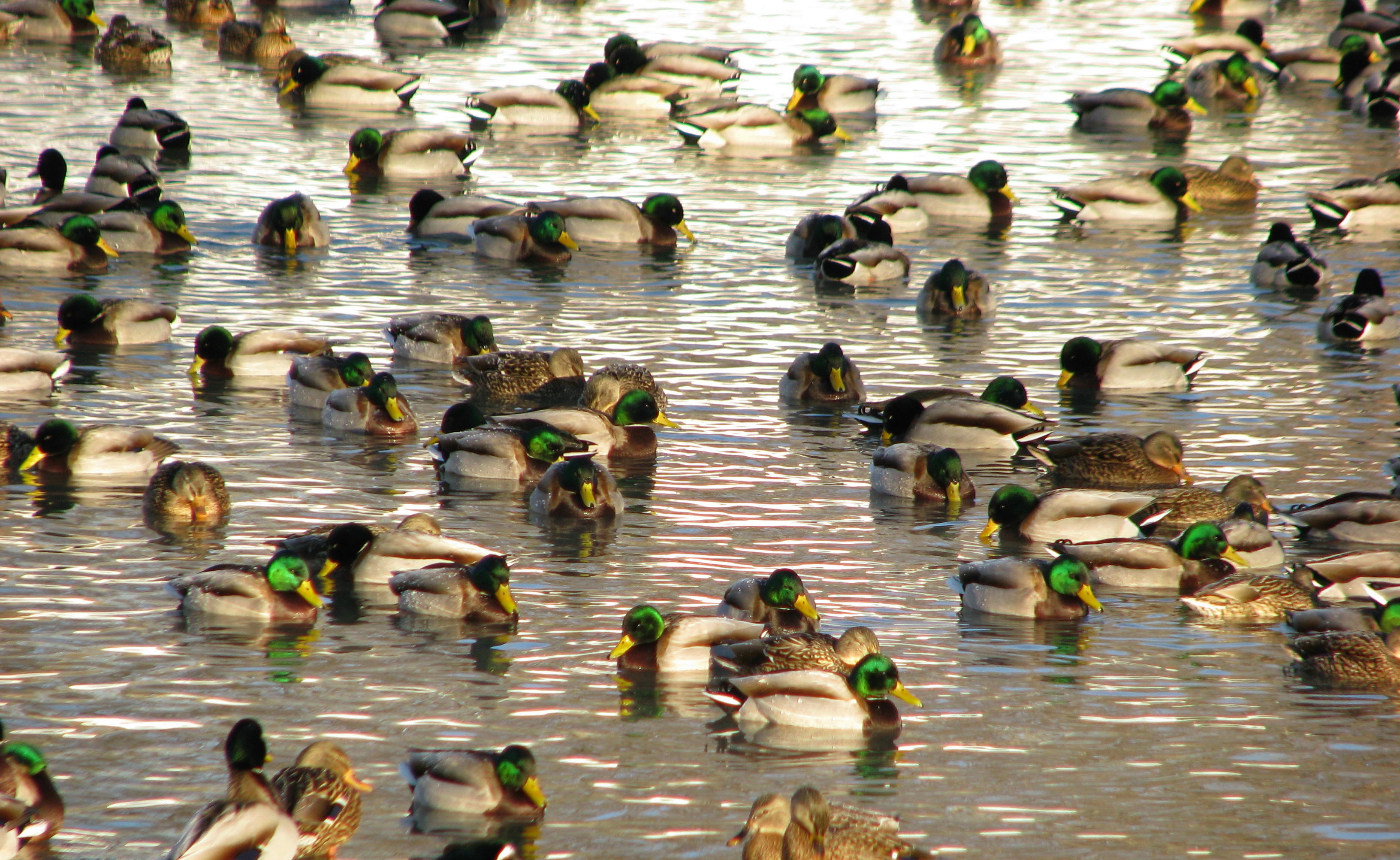
How many Mallards?
The area covered is huge – a circle 160 kilometres in diameter centred on the Centre Street bridge in Calgary. Organizers have broken the count circle into many smaller territories, and assigned volunteers to each area. We need a lot of birders to cover all this territory!
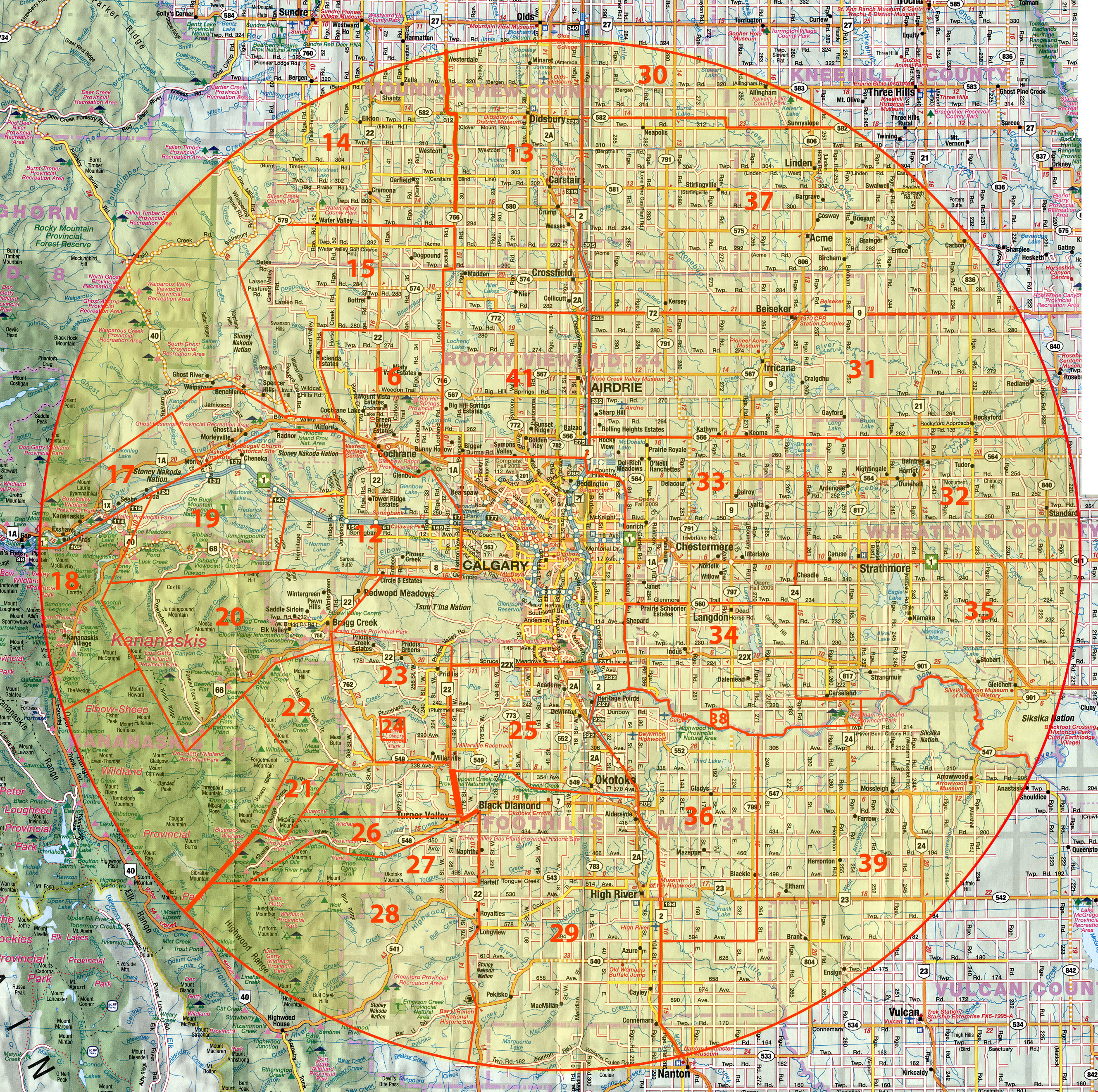
The Count Circle. The numbers indicate the territories to which birders or teams of birders are assigned. Click on the map to enlarge it.
There are still some territories that are not covered, so if you want to contribute to a very worthwhile citizen science project, contact the co-ordinator:
Terry Poulton – May Species Count, May 28-29, 2011
phone 403-274-7393 email tpoulton@yahoo.com
Everyone is invited to participate, whether beginner or seasoned pro. You can do a whole day, a half day, or both days. Terry will try to assign you to an interesting route, and try to match new-comers with experienced birders, and drivers with riders. There are a wide variety of environments, from urban to prairie to foothills habitats. Most years, more than 200 bird species are seen in total within the circle.
This is a great opportunity to get involved in Calgary and area birding, and to see as many as one hundred species of birds in a single day. If you can identify most birds you see, you can survey an area yourself. If you are a new birder, you will be assigned to a team with other experienced birders where you can help to spot and count birds, and learn about the process.
If you are at all interested in this, please contact Terry to get more information. It’s one of the funnest birding experiences of the year, at the birdiest time of the year!
Posted by Bob Lefebvre
The Pine Siskin is a familiar, tame little finch. They are often very approachable, enough to see their beautiful feathers. They are quite noisy, even while they feast on niger, black oil sunflower seeds and the seeds of pinecones, among other foods. Pine Siskins are common in Calgary and can be seen year round.

The Pine Siskin is a very curious bird; the bird in this photo is curious as to who is bothering him.


Posted by Matthew Sim
Have you seen an unusual bird in Calgary? If it is a species on this Reportable_Birds list (PDF), please report it to the Rare Bird Alert line at 403 221-4519 and leave a message after the beep at the end of the recording. If you would like some help with species identification, email us at us at zoxox@shaw.ca . To report injured wildlife call the Calgary Wildlife Rehabilitation Society at 403 239-2488, or the Alberta Institute for Wildlife Conservation at 403 946-2361.
This Bird Albert was recorded on May 5, 2011
APRIL 29
COMMON LOON: 4 on large slough in Lafarge Meadows in east Fish Creek PP
MAY 1
BROAD-WINGED HAWK: Matthew Sim had 1 fly over his home in Willowpark
HUDSONIAN GODWIT – 26 seen by Nimali Seneviratne and Isabel Anderson. The birds were flying over Basin One at Frank Lake
STILT SANDPIPER – several seen by NS and IA at the same location
MAY 2
BROAD-WINGED HAWK: Terry Korolyk saw one moving northward over Hwy 791 east of Chestermere Lake
COMMON LOON – 7 seen by TK at the dam at Chestermere Lake
RED-BREASTED MERGANSER – 2 males seen at the south end of Chestermere Lake by TK
VARIED THRUSH – in Phil Cram’s yard in Mount Royal
HUDSONIAN GODWIT – 11 reported by Lloyd Bennett in the Taber area
PIED-BILLED GREBE – seen by LB in Taber area
SOLITARY SANDPIPER – as above
FORSTER’S TERN – as above
COMMON TERN – as above
WHIMBREL – 11 seen by LB in a field NW of Fincastle Lake near Taber
MAY 3
WHITE-CROWNED SPARROW – reported by Gary Malcolm in his yard in Calgary’s Silversprings subdivision
HARLEQUIN DUCK – 2 males still seen at Inglewood Bird Sanctuary, reported by Gus Yaki and the Friends of Fish Creek Park
AMERICAN WHITE PELICAN – 2, as above
MAY 4
BROAD-WINGED HAWK – Bill Wilson saw one in the trees along the upper part of the creek in Queen’s Park Cemetary in NW Calgary
VARIED THRUSH – reported by PC and Jerry Pilny on Hwy 68 west of Calgary
RED-NAPED SAPSUCKER – 4, as above
BOHEMIAN WAXWINGS – as above
COMMON LOON – Katrina Lybbert saw 27 on Glenmore Reservoir
The next scheduled update of the bird alert is on Mon May 9.
 For over 16 years, a pair of nesting Osprey has built their summer home on a platform constructed by the Calgary Zoo atop a pole erected by ENMAX Power Corporation. The platform is located at the extreme east end of St. George’s Island.
Birdwatchers have access to a bird’s eye view of an Osprey nest via a high-resolution webcam, thanks to an arrangement between the Calgary Zoo and ENMAX Corporation.
The live streaming camera captures in full cycle the birds’ dramatic seasonal milestones, from nest building and mating rituals, to egg laying, incubation, hatching, feeding and fledging, a period of intense activity that is all centred at the nest between April and September.
Watch the Osprey nest camera live, 24 hours a day (If you click the icon in the bottom right hand corner of the video, it will go to full screen size. To leave full screen view, hit the Esc key on your keyboard)
There is also an Osprey Blog following the action in this nest
Posted by Pat Bumstead
Have you seen an unusual bird in Calgary? If it is a species on this Reportable_Birds list (PDF), please report it to the Rare Bird Alert line at 403 221-4519 and leave a message after the beep at the end of the recording. If you would like some help with species identification, email us at us at zoxox@shaw.ca . To report injured wildlife call the Calgary Wildlife Rehabilitation Society at 403 239-2488, or the Alberta Institute for Wildlife Conservation at 403 946-2361.
This Bird Alert was recorded on Monday May 1 10:10 am.
SIGHTINGS FOR
Sunday, May 1
–HERMIT THRUSH (1) – Inglewood Bird Sanctuary (IBS) by Bill Wilson
–LINCOLN’S SPARROW (1) – IBS by BW
–EASTERN PHOEBE (2) – IBS by BW; Cochrane area/Glenbow Ranch PP by Andrew Hart and CFNS field trip
–VESPER SPARROW – location and observers as last above
–ORANGE-CROWNED WARBLER – location and observers last above
–RED-BREASTED MERGANSER (1m, 3f) – Chestermere Lake by Terry Korolyk
–EURASIAN WIGEON (1m) – 0.5 km east of Shepard on TwpRd 232 by Andrew Slater
–BONAPARTE’S GULL (88+) – 28 observed on Glenmore Reservoir by BW; 40 at large slough east of RgeRd 28 on Inverlake Rd and another 20 on McElvroy Slough (RgeRd 28 & Inverlake Rd), both by TK; Andrew Slater observed BONAPARTE’S GULLS in the Shepard/Weed Lake area
Saturday, April 30
–HUDSONIAN GODWIT (26) – Frank Lake by Nemali Seneviratne and two other observers
–MARBLED GODWIT (5) – location and observers as above
–SAVANNAH SPARROW (1) – east Fish Creek PP (FCPP) (boat launch to Bankside) by Gus Yaki and the Friends of Fish Creek Society (FFCS)
–LINCOLN’S SPARROW (1) – location and observers as above
Thursday, April 28
–VIOLET-GREEN SWALLOW (2+) – with TREE SWALLOWS at Lafarge Meadows (west side of the Bow River south of Hwy 22X bridge) by NS; another observed in east FCPP (boat launch to Bankside) by GY and FFCS
–RUSTY BLACKBIRD (1m) – near boat launch and Bow Bottom Tr in east FCPP by GY and FFCS
–AMERICAN PIPIT – Lafarge Meadows by NS
The next scheduled update of the Bird Alert is Thursday, May 5.
Last week I took the short drive out to Frank Lake, east of High River (see the directions under the “Birding Resources” tab above). I was hoping to see some of the many Short-eared Owls that are often seen there at dusk, and I had about two hours before that to scope out the lake for waterfowl and other birds. This is a very productive wetland, and I managed to see 24 species of birds, 13 of which were new ones for the year for me.
The water level is very high this year. As you can see, the path to the observation blind was flooded. There was also still quite a bit of ice on the lake, but much of Basin 1 was open.

By far the most common bird there was the Franklin’s Gull. Frank Lake is home to perhaps the largest breeding colony of these gulls in the world, with up to 55,000 pairs. They build floating nests in the cattails, and if the water levels remain this high they may not be able to breed here successfully.

There were other gulls as well. This one, which I believe is a California Gull, was having eggs for dinner.


The gull took the egg onto the roof of the blind, and although it almost rolled off at one point, he finally did manage to eat it.


I had good views of Eared Grebes and Ring-necked Ducks…


But the highlight was when a flock of four White-faced Ibises flew in. I had never seen this large, beautiful bird before. It has dark, glossy, chestnut and bronze colouration, a long decurved bill, and of course a white face.

(Click on photos to enlarge them.)
The four flew on, but a little later another flock of twelve Ibises arrived…

They landed on the island…

And virtually disappeared in the grass…

(Cinnamon Teal in the foreground.)
At dusk, I started to drive back out on the dirt access road, but I didn’t get far, since I brake for Short-eared Owls…

This owl was right next to the road, so it flew before I could get very close. However, I saw another one hunting a little farther down the road…

All in all, a great evening of birding topped off by a fine southern Alberta sunset.


Posted by Bob Lefebvre
May is a great month for birds here; plenty of migrants, warming weather and leafless trees combine to make this month arguably one of the best months to see birds in the Calgary region. These factors therefore make it extremely hard to make a decision on just 5 birds to make the cut; but it had to be done, so here they are.
1. Horned Grebe
The Horned Grebe is a small, attractive grebe, a family of aquatic birds seldom seen on land or in flight. The Horned Grebe has a chestnut neck and flanks while its black head is topped with contrasting golden horns. A beautiful bird, the Horned Grebe qualifies easily for the month of May. The Horned Grebe does not breed in Calgary but as it passes through, up to mid-May, you can try to see one at Elliston Park or the Glenmore Reservoir.

2. Black-necked Stilt
A large shorebird that is an erratic and local breeder here in southern Alberta, the Black-necked Stilt has very contrasting colors; black upper parts, white underparts and very long, geranium-red legs. Its long, slender bill is always probing for food as its sharp eyes scan for both food and danger. This Stilt can be seen in wet pastures and on the grassy shorelines of shallow water, especially where there are plenty of mudflats. The stilt was virtually unknown in Alberta until 1994, but now, you can try to find it at places like Shepard Slough, Chestermere Lake and Weed Lake, Chestermere and Weed Lake being outside of the city.

Image courtesy Wikipedia
3. Western Tanager
The male Western Tanager is a very striking bird, easily making it on our list, with a bright red head, black wings, back and tail and his canary yellow neck, rump and underparts. The Western Tanager eats insects and fruits and feeds among bushes and trees, also hawking insects from the air occasionally. The tanager’s main habitat are boreal and montane forests; often being found in coniferous and mixed wood areas. The Tanager does come through Calgary on migration; I had one in my mountain ash in May of 2009. The best places to see this amazing bird are the north end of Weaselhead and the west end of Fish Creek Provincial Park.

4. American Avocet
A handsome and showy shorebird that can often be seen foraging in shallow water or on the barren mud flats along the edges of lakes. A light cinnamon color adorns the Avocet’s head and neck in the breeding season with the rest of its plumage being black and white. These birds start converging in large flocks in central Alberta usually in early May and can be seen best at locations like Shepard Slough and Frank Lake.

5. Yellow Warbler
The male Yellow Warbler is a brilliant yellow with olive-green wings and reddish breast streaks. This is a common bird and has a wide distribution throughout the province, thanks to its ability to nest in a large variety of areas. The female is similarly colored, but is more green above and drabber below. The male, despite his bright colors, is surprisingly well camouflaged and is best seen when the trees still lack their leaves. The Yellow Warbler arrives in Mid-May and is found in river valleys and wooded urban areas; Inglewood Bird Sanctuary is a good place to find this warbler.

See if you can find all 5 birds for the month of may; and then let us know about it!!!
The Calgary region is home to many great birds during the spring and summer that entice many a birder to their habitat in the hopes of finding them. This leads us to a difficult decision that will be debated by many; which birds qualify for the 25 must-see?

As noted in the May/June 2011 issue of Wild Bird magazine, most of the birds that would qualify for a top 25 list have at least one of the following criteria: beauty, charisma, being a rarity and the habitat in which they can be found (spectacular, limited, etc.). We will have 5 of the must-see birds a month, appearing on the blog the month that is best to see them.

Try to get out there and see if you can find the 5 birds for each month and then tell us about your trips!!! Find out which birds made the cut for the month of May on Sunday.

Posted by Matthew Sim
Have you seen an unusual bird in Calgary? If it is a species on this Reportable_Birds list (PDF), please report it to the Rare Bird Alert line at 403 221-4519 and leave a message after the beep at the end of the recording. If you would like some help with species identification, email us at us at zoxox@shaw.ca . To report injured wildlife call the Calgary Wildlife Rehabilitation Society at 403 239-2488, or the Alberta Institute for Wildlife Conservation at 403 946-2361.
This Bird Alert was recorded on Thursday, April 28 at 9:00 am.
SIGHTINGS FOR
Wednesday, April 27
–HERMIT THRUSH (1) – Confederation Park by Bill Wilson
Tuesday, April 26
–WHITE-FACED IBIS (16) – flocks of 4 and 12 at Frank Lake by Bob Lefebvre
–SHORT-EARED OWL (2) – Frank Lake at 8:45 pm by BL
–TURKEY VULTURE (1) – over the boat launch in east Fish Creek PP (FCPP) by Dave Vernon
–BROAD-WINGED HAWK (2) – Bankside/Burnsmead/Hull’s Wood area in east FCPP by Gus Yaki and the Friends of Fish Creek
–BLACK TERN (4) – location and observers as above
–NORTHERN SHRIKE (1) – RgeRd 274 north of Hwy 567 (NW of Calgary) by Heather Simonds
Monday, April 25
–WHIMBREL (3) – northeast of Granum by Tim Mcneill
The next scheduled update of the Bird Alert is Monday, May 2.