Robin Family Portrait

We have received some astonishingly lovely American Robin photos. These pictures come from 22 year old Aimee Braun in N.E. Calgary, who tells me she used her little Kodak M883 camera and the ‘Beach’ setting to capture the detail. The adults made the nest under an awning in her yard, so she had a perfect view.

Thank you, Aimee for sending these along. We look forward to receiving any future pictures you would like to send!

Don’t Pick Up Baby Robins

It’s late spring in Calgary, and across the city baby or fledgling robins (and other bird species) are dropping out of their nests. This seems a strange way to propagate the species, but for generations adult robins have been giving fledglings a boot. They can fly a few feet, but spend most of their time on the ground.

People are always concerned that this baby bird has fallen out of its nest and needs help. The truth is he was pushed out of the nest to get on with the business of growing up. DO NOT PICK THEM UP. Don’t take them to a zoo or wildlife rehabilitation centre.

It may seem cruel to us, but this is the way robins conduct their family life, and judging by the number of robins in the country, it works. The best thing for you to do is keep dogs and cats away while the youngster gets his bearings. He’ll move along in a little while.

Baby robins look something like their parents, but have speckled chests, and fluffy down feathers poking out here and there. Yes he looks helpless, but they manage to survive in huge numbers.

Just think of them as the true image of spring, and keep the dogs and cats away. Use their presence in your yard as an opportunity for a nature talk to the kids, which will be a lot more helpful to the birds!

Osprey Nest Webcam Now Live

Osprey by P Bumstead taken Florida 02/10

For the third year in a row, a pair of Osprey on the Bow River have become internet stars.

Birdwatchers in the city (and around the internet world) have access to a bird’s eye view of an Osprey nest via a high-resolution webcam, thanks to an arrangement between the Calgary Zoo and ENMAX Corporation.

For over 15 years, a pair of nesting Osprey has built their summer home on a platform constructed by the Calgary Zoo atop a pole erected by ENMAX Power Corporation. The platform is located at the extreme east end of St. George’s Island.

The live streaming camera captures in full cycle the birds’ dramatic seasonal milestones, from nest building and mating rituals, to egg laying, incubation, hatching, feeding and fledging, a period of intense activity that is all centred at the nest. Last year, more than 50,000 hits were recorded as people watched the exciting events of the Ospreys unfold between April and September.

For more information on the Osprey camera and to watch the nest live, 24 hours a day, visit the ENMAX osprey pages

First-Quarter Winners

Here are the winners of the first quarter of the Birds Calgary 2010 competition. Congratulations to all you keen birdwatchers!

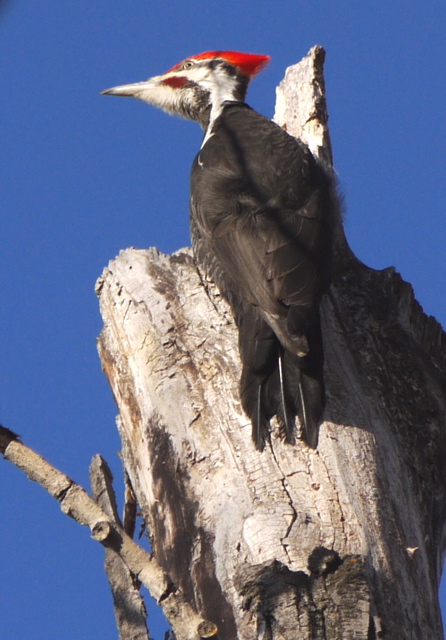
Pileated Woodpecker by Ken Johnson

ADULT CATEGORIES

Advanced
Michael Harrison – 81 species
Colin Young – 78 species
Hank Vanderpol – 76 species

Intermediate
Cindy and Dan Parliament – 56 species
Bernie Diebolt – 55 species
Jim Donohue – 53 species

Novice
Susan Konopnicki – 50 species
Louise Moreau & Michael Geldorp – 38 species
Vic Urban – 35 species

YOUTH CATEGORIES

Sub-adults (born 1991, 1992, 1993)
Katie Donohue – 54 species

Fledglings (1994, 1995, 1996, 1997)
Jacob Farkas – 36 species
Matthew Sim – 35 species
Gilbert Lybbert – 22 species

Nestlings (born 1998 or later)
Lucianna Lybbert – 16 species
Jarom Lybbert – 11 species
Emma Bentley – 8 species

OTHER CATEGORIES

Big Day – Novice
Louise Moreau & Michael Geldorp – 15 species

Non-Motorized Transport – Advanced
Michael Harrison – 81 species
Colin Young – 75 species
Bill Wilson – 58 species

Non-Motorized Transport – Novice
Louise Moreau & Michael Geldorp – 8 species

Yard List
Arthur & Donna Wieckowski – 24 species
Pat Bumstead – 23 species
Val Pritchard tied with Phil Cram – 21 species

Elbow River Bird Survey

(Note:  The Elbow River Bird Survey is a Nature Calgary field trip.  Like all of Nature Calgary’s field trips, it is free, and anyone can participate – you don’t have to be a member.  Meet in the parking lot at Stanley Park on 42 Avenue SW,  just west of Macleod Trail, at 8:30 am.  If you would like to join us, call Gus or Aileen at 403-243-2248.)
 
When I began to bird seriously, I found that the fastest way to learn was to go on field trips offered by Nature Calgary (also known as the Calgary Field Naturalists’ Society).  The best way to see a lot of bird species and learn to identify them is to go out in the company of experienced birders.
One of my favourite field trips is the Elbow River Bird Survey.  This is a walk along the Elbow from Stanley Park to the Glenmore Dam.  It has been led on the first day of each month for over fifteen years by Gus Yaki and his wife, Aileen Pelzer.  The walk starts shortly after dawn and takes about three and a half hours.
IMG_1826 adj
Wood Ducks perched beside the river, March 1, 2008.
IMG_0962
A Common Merganser on the River near Stanley Park, November 1, 2009.

Gus is a lifelong naturalist and is very informative about birds, plants, and other natural history.  He keeps track of all the bird and mammal species seen, and the numbers of each.  He is gathering valuable data on the changes in bird populations along the river.

IMG_0970 trimmed
Gus Yaki (pointing) leading a walk on the Elbow River pathway, November 1, 2009.
The walk is mostly flat and easy, with one small hill between Sandy Beach and the Glenmore dam.  There are a variety of habitats on the walk.  You can see waterfowl on the river and the reservoir, songbirds in the parks and along the tree-lined urban streets and backyards, woodpeckers in the stand of old poplars in Riverdale Park, and the occasional raptor almost anywhere.  In recent years Gus has been posting the list of species seen each month on the Albertabird Listserv.  You always see something interesting.
Goshawk - Elbow River trimmed
This Northern Goshawk had just knocked a Common Goldeneye down onto the ice on the river. It flew off without pursuing the attack. February 1, 2009.
Like all of Nature Calgary’s field trips, this walk is free and open to everyone.  You do not have to be a member of Nature Calgary to participate.  If you plan to attend, since this is a one-way walk, call Gus and Aileen ahead of time, so they can arrange to carpool us back to the starting point.  The starting time changes throughout the year so check the field trip list on the Nature Calgary website or on the Calgary Rare Bird Alert (RBA) on Albertabird.
To participate, meet in the parking lot at Stanley Park on 42 Avenue SW,  just west of Macleod Trail at 8:30 am.  If you would like to join us, call Gus or Aileen at 403-243-2248.
IMG_0977
The Elbow River with the Glenmore Dam in the Backgound.
IMG_0976 adj
The Elbow River between Glenmore Dam and Sandy Beach.
IMG_0972 Adj
Downstream from Sandy Beach.

Some Recent Results of the Elbow River Bird Survey:  

  Wednesday, December 1, 2010. Sunny, calm, -02 to 02C.

  1. Canada Goose-262
  2. Mallard-60
  3. Common Goldeneye-1f
  4. Rock Pigeon-2
  5. Downy Woodpecker-2
  6. Hairy Woodpecker-1
  7. Northern Flicker-1
  8. Black-billed Magpie-31
  9. Common Raven-5
  10. Black-capped Chickadee-22
  11. Red-breasted Nuthatch-1
  12. White-breasted Nuthatch-3
  13. Townsend’s Solitaire-2
  14. American Robin-2
  15. Eur. Starling-4
  16. Bohemian Waxwing-60
  17. Dark-eyed Junco-1
  18. House Finch-1
  19. House Sparrow-12

(Eastern Gray Squirrel – 6 )

November 1, 2010, 9:20-11:50am. Partly cloudy, calm –1 to 6 C.


  1. Canada Goose-5
  2. Wood Duck-2
  3. Mallard-50
  4. Hooded Merganser-3
  5. Bald Eagle-1
  6. Rough-legged Hawk-1
  7. Ring-billed Gull-20
  8. Rock Dove-3
  9. Downy Woodpecker-4
  10. Northern Flicker-3
  11. Blue Jay-2
  12. Black-billed Magpie-52
  13. American Crow-1
  14. Common Raven-3
  15. Black-capped Chickadee-22
  16. Red-breasted Nuthatch-3
  17. White-breasted Nuthatch-1
  18. American Robin-4
  19. European Starling-13
  20. House Finch-7
  21. House Sparrow-15


 October 1, 2010. Mostly sunny, becoming windy, 20kph, 02-10C.
  1. Canada Goose-60
  2. Wood Duck-3
  3. Mallard-2
  4. Osprey-1
  5. Bald Eagle-1 ad/1 imm.
  6. Harlan’s Hawk, light morph-1, chased by 20 starlings, then harassed by 25 B.b. Magpies.
  7. Merlin-1
  8. Ring-billled Gull-4
  9. Rock Pigeon-4
  10. Northern Flicker-10
  11. Blue Jay-1+
  12. Black-billed Magpie-60
  13. American Crow-24
  14. Common Raven-1
  15. Black-capped Chickadee-16
  16. Red-breasted Nuthatch-6
  17. White-breasted Nuthatch-2
  18. American Robin-70
  19. European Starling-30
  20. Yellow-rumped Warbler-1
  21. House Sparrow-7
  • Eastern Gray Squirrel-9
  • Red Squirrel-1


September 1, 2010. Mostly cloudy, NW wind 20kph, 7-12C.  

  1. Canada Goose-2
  2. Wood Duck-4
  3. Mallard-17
  4. Common Merganser-3
  5. Red-necked Grebe-1
  6. Osprey-2
  7. Bald Eagle-1 imm.
  8. Sharp-shinned Hawk-1
  9. Cooper’s Hawk-1
  10. Merlin-1, repeatedly diving at Northern Flickers.
  11. Ring-billed Gull-1+
  12. California Gull-60
  13. Rock Pigeon-1
  14. Northern Flicker-12
  15. Western Wood-Pewee-1
  16. Red-eyed Vireo-1
  17. Blue Jay-3
  18. Black-billed Magpie-25
  19. Am. Crow-44
  20. Common Raven-4
  21. Black-capped Chickadee-1, unusually low number.
  22. Red-breasted Nuthatch-3
  23. American Robin-40
  24. Gray Catbird-1
  25. European Starling-5
  26. Cedar Waxwing-40
  27. Yellow-rumped Warbler-2 imm.
  28. Wilson’s Warbler-11
  29. Clay-colored Sparrow-1+
  30. House Finch-3
  31. Pine Siskin-20
  32. Am. Goldfinch-1 m.
 (Amazingly, first time without a House Sparrow).
Eastern Gray Squirrel-1
Mule Deer-1
  
 August 1, 2010, 0700-1045. Heavy overcast, light drizzle, 14-15C. 7 observers.

1.. Mallard-25
2.. Common Merganser-11
3.. Common Loon-2
4.. Osprey-1
5.. Merlin-1
6.. California Gull-41
7.. Rock Pigeon-25
8.. Downy Woodpecker-3
9.. Northern Flicker-18
10.. Western Wood-Pewee-3
11.. Least Flycatcher-1
12.. Black-billed Magpie-46
13.. American Crow-23
14.. Common Raven-5
15.. Tree Swallow-8
16.. Cliff Swallow-500
17.. Black-capped Chickadee-3
18.. Red-breasted Nuthatch-4
19.. House Wren-6
20.. American Robin-48
21.. Gray Catbird-5
22.. Cedar Waxwing-30
23.. Yellow Warbler-3
24.. Western Tanager-3, all 3 at different sites.
25.. Chipping Sparrow-6
26.. Clay-colored Sparrow-1
27.. Song Sparrow-1
28.. Brown-headed Cowbird-1
29.. Baltimore Oriole-1 juv. m.
30.. House Finch-15
31.. American Goldfinch-1 m.
32.. House Sparrow-60.
Also seen, amidst dense leaves at the Glenmore Dam, was a warbler head with a
gray face, eye-ring, light throat and with a yellow wash, apparently on the
upper chest. The first impression was that of a female American Redstart, but
the yellow was definitely on the chest, not on the flanks. At no time was any of
the rest of the body seen. The only other choice was a Virginia’s Warbler. Both
species of course are unlikely at this time. A birding mystery.

Eastern Gray Squirrel-1
Least Chipmunk.

July 1, 2010, 0630-11am, Stanley Park-Glenmore Dam.

1.. Canada Goose-51
2.. American Wigeon-1 m.
3.. Mallard-7 + young.
4.. Common Goldeneye-2 f.
5.. Common Merganser-3 f.
6.. Osprey-1 on nest
7.. Swainson’s Hawk-1
8.. Red-tailed Hawk-1+
9.. Rock Pigeon-5
10.. Downy Woodpecker-2
11.. Northern Flicker-9
12.. Least Flycatcher-3
13.. Red-eyed Vireo-1
14.. Black-billed Magpier-46
15.. American Crow-11
16.. Tree Swallow-10+
17.. Bank Swallow-3
18.. Cliff Swallow-20+
19.. Black-capped Chickadee-5
20.. Red-breasted Nuthatch-1
21.. House Wren-6
22.. American Robin-32
23.. Gray Catbird-4
24.. European Starling-14
25.. Cedar Waxwing-15
26.. Yellow Warbler-12
27.. Clay-colored Sparrow-4
28.. Song Sparrow-1
29.. Lincoln’s Sparrow-1
30.. White-throated Sparrow-1
31.. Brown-headed Cowbird-3
32.. House Finch-10
33.. House Sparrow-10
Eastern Gray Squirrel-12
 
June 1, 2010, 0640-1100.  Mostly cloudy, S wind 10kph, 5-12C.

a.. Canada Goose-34 + 15 yg/
b.. Mallard-15 m
c.. Common Goldeneye-2 f
d.. Common Merganser-1 f
e.. Osprey-1
f.. Red-tailed Hawk-1+
g.. Spotted Sandpiper-2
h.. Franklin’s Gull-10
i.. Rock Pigeon-14
j.. Downy Woodpecker-2
k.. Northern Flicker-10
l.. ?Western Wood-Pewee-1
m.. Black-billed Magpie-23
n.. Am. Crow-4
o.. Tree Swallow-36+
p.. Bank Swallow-1
q.. Cliff Swallow-20+
r.. Black-capped Chickadee-16
s.. Red-breasted Nuthatch-4
t.. House Wren-5+
u.. Swainson’s Thrush-1
v.. Am. Robin-36
w.. Gray Catbird-4+
x.. European Starling-20
y.. Yellow Warbler-16+
z.. Chipping Sparrow-5
aa.. Clay-colored Sparrow-8+
ab.. Song Sparrow-1 heard
ac.. Common Grackle-2
ad.. Brown-headed Cowbird-6+
ae.. House Finch-3
af.. House Sparrow-14
a.. Eastern Gray Squirrel-7
b.. Red Squirrel-1

Saturday May 1, 2010 0700-1200. Mostly sunny, calm, 0-10C.
  1. Canada Goose-15, with three clutches of 5, 5, and 3 young.
  2. Wood Duck-3 m.
  3. Mallard-20
  4. Bufflehead-10
  5. Common Merganser-6
  6. Ring-necked Pheasant-4 m
  7. Common Loon-1
  8. Horned Grebe-4
  9. Red-necked Grebe-1
  10. Cooper’s Hawk-1
  11. Red-tailed Hawk-1
  12. Merlin-2
  13. Rock Pigeon-8
  14. Franklin’s Gull-60+
  15. white-headed gulls, high in flight-10+
  16. Yellow-bellied? Sapsucker-3
  17. Downy Woodpecker-8
  18. Hairy Woodpecker-1
  19. Northern Flicker-10
  20. Blue Jay-1
  21. Black-billed Magpie-26
  22. American Crow-10+
  23. Tree Swallow-3
  24. Northern Rough-winged Swallow-6, over river, seen by Aileen.
  25. Black-capped Chickadee-35
  26. Red-breasted Nuthatch-10
  27. White-breasted Nuthatch-1 hear
  28. American Robin-60
  29. European Starling-12
  30. YELLOW-RUMPED WARBLER-2
  31. Song Sparrow-1
  32. BROWN-HEADED COWBIRD-1
  33. House Finch-12+
  34. Pine Siskin-3
  35. House Sparrow-10

Eastern Gray Squirrel-6

Wednesday March 31, 2010 (for April), Partly cloudy, calm,
0-8C. Ice at Reservoir Dam still frozen.

1.. Canada Goose-16
2.. Mallard-20
3.. Common Merganser-2
4.. Ring-billed Gull-12
5.. Rock Pigeon-6
6.. Downy Woodpecker-8
7.. Northern Flicker-6
8.. Blue Jay-1
9.. Black-billed Magpie-16
10.. American Crow-4
11.. Common Raven-8
12.. Black-capped Chickadee-12
13.. Red-breasted Nuthatch-5
14.. American Robin-36
15.. European Starling-6
16.. House Finch-10
17.. Pine Siskin-1
18.. House Sparrow-6
Eastern Gray Squirrel-2

Monday March 1, 2010, 8:00-12:30. Sunny, calm, -4 to 9C.

  1. Canada Goose-140
  2. Wood Duck-1 pr.
  3. Mallard-60
  4. Common Goldeneye-1 m.
  5. Common Merganser-4
  6. Merlin-1 carrying prey.
  7. Rock Pigeon-5
  8. Great Horned Owl-2
  9. Downy Woodpecker-8
  10. Hairy Woodpecker-5
  11. Northern Flicker-6+
  12. Blue Jay-1+ heard.
  13. Black-billed Magpier-30
  14. Common Raven-3
  15. Black-capped Chickadee-22
  16. Red-breasted Nuthatch-5
  17. White-breasted Nuthatch-3
  18. Brown Creeper-2
  19. European Starling-5
  20. House Finch-6+
  21. Pine Siskin-2+
  22. House Sparrow-16

Eastern Gray Squirrel-6

Monday, February 1, 2010, 0815-1145. Sunny, Calm, -6 to -2C.
 
1.. Canada Goose-190
2.. Mallard-160
3.. Common Goldeneye-2
4.. Common Merganser-2
5.. Bald Eagle-1 ad.
6.. Rock Pigeon-4
7.. Downy Woodpecker-4
8.. Hairy Woodpecker-1
9.. Northern Flicker-2
10.. Black-billed Magpie-45
11.. Common Raven-9
12.. Black-capped Chickadee-62, counted by Tony T.
13.. Red-breasted Nuthatch-1
14.. White-breasted Nuthatch-1
15.. European Starling-8
16.. Bohemian Waxwing-350
17.. House Finch-6
18.. House Sparrow-24
Eastern Gray Squirrel-4
  

Saturday January 3, 2010: 8:30-12noon, Sunny, calm, -12C. 7 participants

1.. Canada Goose-450
2.. Mallard 500
3.. Common Goldeneye-8
4.. Common Merganser-2
5.. Downy Woodpecker-7
6.. Hairy Woodpecker-2
7.. Black-billed Magpie-60
8.. Common Raven-14
9.. Black-capped Chickadee-32
10.. Red-breasted Nuthatch-7
11.. White-breasted Nuthatch-1
12.. Bohemian Waxwing-200
13.. House Finch-1
14.. Common Redpoll?-5
15.. House Sparrow-35
a.. Eastern Gray Squirrel-7
b.. White-tailed Jackrabbit-tracks.
c.. Coyote tracks

Posted by Bob Lefebvre

.

  1. Canada Goose-262
  2. Mallard-60
  3. Common Goldeneye-1f
  4. Rock Pigeon-2
  5. Downy Woodpecker-2
  6. Hairy Woodpecker-1
  7. Northern Flicker-1
  8. Black-billed Magpie-31
  9. Common Raven-5
  10. Black-capped Chickadee-22
  11. Red-breasted Nuthatch-1
  12. White-breasted Nuthatch-3
  13. Townsend’s Solitaire-2
  14. American Robin-2
  15. Eur. Starling-4
  16. Bohemian Waxwing-60
  17. Dark-eyed Junco-1
  18. House Finch-1
  19. House Sparrow-12

Eastern Gray Squirrel – 5

Sure Signs of Spring

These busy little birds have only one thing on their minds – excavating holes to nest in! This black-capped chickadee and red-breasted nuthatch were photographed by Anne Elliott at Carburn Park in southeast Calgary earlier this month.

Bird Identification: The Six ‘S’ Rule

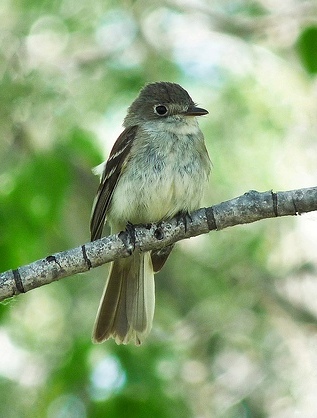
Least Flycatcher by Anne Elliott

Let me tell you about the Six “S” rule.

Once other folks know that you have some knowledge of birds, they will call upon you to tell them the name of a species that they recently observed. They’ll often start out by saying something like, “Last week, while visiting my cousin Philip at Lethbridge, I saw a black and white bird with yellow on it. What was it?”

Well, unless they can give you more information, you can only guess as to its possible identity. If you know them well, you might reply something to the effect, “When I drink too much I see those birds too”.

To readily identify any mystery bird, you need more detail — information encompassed in six wonderful words that begin with the letter “S”.

If you (or they) pay attention to them, it will enable you to quickly identify the quarry of their query. Those six “S” words are:

S for Size How large is it? Is it Sparrow-sized, Robin-sized, Crow-sized, Goose-sized?

S for Shape, silhouette or structure Is it a chunky bird like a European Starling or a partridge … or long and slim like a magpie?

S for Sound What vocalization did it make? It helps to write it out in phonetics, complete with accents, as you soon forget what you heard.

S for Season What time of the year was it seen? Locally, you don’t expect to see a hummingbird in January — or a Snowy Owl in July.

S for Site [S I T E] What habitat was it in? Ducks usually swim; hummingbirds visit flowers, not vice versa.

–And finally

S for Sight [S I G H T] What markings or behaviour did you note? Eye-rings, wingbars, spotted breasts. Was it alone or in a flock? If flying in a flock, was it in tight or loose formation, etc.?

Initially, you may be overwhelmed by the great number of species of birds. However, by starting now, at this time of the year, when there are relatively few species present, you will get to know their names and identification features. Having learned them, when you see a new species, you can quickly eliminate those you already know. Identification is largely a process of elimination.

Gus Yaki

Diversity of Birds

I suspect that most of you have had a pre-existing interest in birds — perhaps one that you developed as a child — or as an adult while your children were growing up — but there were always other priorities — so your time was limited. Over the years, you have probably acquired some knowledge and/or skill in the bird world. However, in your wisdom, you have recognized that you can still use some help.

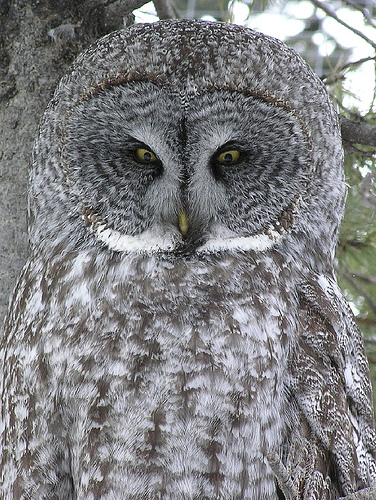
Great Grey Owl by Anne Elliott

Lets start right now by talking about the diversity of birds.

  • Within Fish Creek Provincial Park there have been just over 200 species recorded … 207 is the latest count..
  • Within the Calgary city limits, in the year 2000, 257 species were recorded.
  • Within a 50-mile (80 km) radius of the Louise or 10th St Bridge over the Bow River, in the immediate Calgary area, there are just over 300 species. In a friendly competition completed in 2005, 295 species were seen
  • In Alberta, just over 400 species have been seen.
  • In Canada, about 550 species have been noted.
  • In North America there have been about 900 species observed.
  • On this tiny blue speck in the Universe called planet Earth, there are about 10,000 species of birds.

Every year, there are still about a half dozen new species being discovered, usually in formerly inaccessible areas, but often right under our nose — where two look-alike species are recognized as separate species – such as the Greater and Lesser Scaup in the past, or the Fox Sparrows or Marsh Wrens. Unfortunately, these additions are being offset by species rapidly going extinct — due to humankind’s impact on the planet.

Birds are everywhere: They have been seen at both the north and south poles; all over the ocean; and of course, over every landmass. Because they have wings, unusual birds may turn up anywhere. In the winter of 2007, people in London, England gathered to watch an American Robin that had managed to cross the Atlantic Ocean.

In April 2006, an American Woodcock showed up at Redcliffe, just outside of Medicine Hat. This is a bird of eastern North America. One had previously been reported at Edmonton in 1974. This one was photographed, providing the first documentary evidence that it occurred in Alberta.

In August, 2006, a Least Tern was found at Policeman’s Flats, the first one reported for Alberta. However, that sighting was surpassed in September when a Yellow-throated Warbler showed up at a private residence near Griffith Woods Park, here in Calgary another first for Alberta.

Birdwatching is a hobby where a novice with a camera has just as good a chance at making a rare sighting as the professionals, so get out there and enjoy the birds. You never know what might turn up!

Gus Yaki

Chairman’s Corner #4

Welcome to the Birds Calgary 2010 “big year” competition Blog. If you have not joined the competition please feel welcome to do so. It is for everyone, not just experts.

Well. Well. Well. Here we are at the end of January and still no Snowy Owl! I arbitrarily selected it as the target bird for January. I didn’t think we would go so long without finding one inside the City limits. For February, I thought it would be fun to keep the owl prowl going by expanding the challenge to include any owl – except the Great Horned.

Looking back at what has been reported I feel the Red Crossbills seen and photographed by 12-year-old Matthew Sim deserve special recognition. Mathew sent his photos to Gus, just be sure. I know I have looked at a lot of White-winged Crossbills, hoping to turn one of them into a Red, but no luck. So hats off to Matthew.

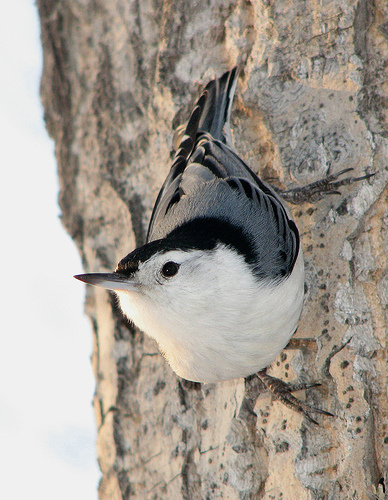
White-breasted nuthatch by Anne Elliott

We have received a donation of $1000 from TERA Environmental Consultants to cover promotion and administrative expenses for the competition. The funds will be given to Nature Calgary to manage. So far we have had almost all services donated. Printing posters would have been our biggest expense; however, most of this has been done for free by Minuteman Press on Macleod Trail. I expect the donation from TERA will cover the entire year and maybe even the wrap-up ceremony next February. We have had lots of prizes donated too, but will still need more. You can see the list of prizes on the page “Donors and Sponsors”.

I have not had any response to my request for people to lead a few field trips. These can be one of Gus’s scheduled outings or a special one to a new area or intended for novices.

We would like some outings that are focused on the competition beyond what is offered by the regular Nature Calgary walks. PLEASE LET US KNOW IF YOU WOULD BE ABLE TO OFFER A SATURDAY OR SUNDAY MORNING.

For those of you who are not prepared to act as trip coordinator, but would like to have an outing for some special aspect of the competition, please let us know about this too. Maybe some beginning birders would like an introductory program. Or you have a favourite area you would like to share with the rest of us. Maybe someone would like to try an NMT (non-motorized transport) outing.

Be safe out there. Especially when driving. And, respect private property.

Howard Heffler

Chair, Birds Calgary 2010

Chairman’s Corner #3

Welcome to the Birds Calgary 2010 “big year” competition Blog. If you have not joined the competition please feel welcome to do so. It is for everyone, not just experts.

We are three weeks into the competition and the total list of species seen to date stands at 66. But still no Snowy Owl! I arbitrarily selected it as the target bird for January. Maybe it is harder to find than I thought. There must be a Snowy Owl out there somewhere. With only a few days left in the month, let’s get on it!

Hairy Woodpecker male by Anne Elliott

I enjoy exploring the outlying areas. Remember that either you or the bird or both have to be within the City limits. It will be interesting to compare the results from this year with 2000. A lot of good habitat has been lost to development, but a lot of new land has been added. Anyone want to make a prediction? My guess is that we will not surpass the 2000 list. That year the combined total was 248 species. Ten competitors saw over 200. The winner had 224.

A couple of weeks ago I went public with my total-to-date on the Listserv and invited others to do the same. I thought it would bolster the competitive spirit, but no one else seems willing to admit to their total. Maybe that is the best strategy; just keep it secret until the end of the quarter. So this time I will try the opposite approach; if several of you advertize your total-to-date, I will let you see mine.

I want to thank the rest of the organizing committee; Gus Yaki, Pat Bumstead, Bob Lefebvre, Bill Wilson, Ryan Baxter, and Andrew Hart. We met again last Monday evening and are still looking for way to reach a wider audience. If you would like to help, don’t be shy.

I love to see bird photographs. You can follow the directions on the website and send them to Andrew. They do not have to be for the photography competition until you decide which ones to enter.

Please be safe out there. Especially when driving. And, respect private property.

Good luck and enjoy!

Howard Heffler

Chair, Birds Calgary 2010