It’s Feed The Birds Day

siskins oct 24The Royal Society for the Protection of Birds (RSPB) in the UK has proclaimed October 24 as Feed The Birds Day. It serves as a reminder of all the things we can do to help the birds through the coming winter.

We’re good at providing fast food for birds in our feeders, and this is certainly a life-saver in the cold snow-covered conditions. But what about ‘slow food?‘ There are many things you can do in your garden and yard to provide food for all wildlife.

  • Plant native plants such as Saskatoons,  juniper and other species that provide berries in the winter for birds such as Bohemian Waxwings. I had a crowd of about 50 waxwings zoom in on my tree last winter, stripping it of berries in a matter of minutes. White Spruce trees also provide cones for Red-breasted Nuthatches and crossbills, and shelter from the wind.
  • Make a brush or log pile. I have a huge Northwest Poplar tree in my yard, and during any windstorm we lose a fair number of branches of all sizes. Instead of throwing them out, or chopping them up for mulch, we stack them in a pile in the back of the yard. The birds use it as a sanctuary and often take shelter there in inclement weather throughout the year. A log pile is an even better idea, as it will provide solid shelter for a variety of small creatures over the winter, and if left alone, will become a host to mosses, fungi and lichens to decorate your yard.
  • Provide an insect home. We do not get rid of our leaves in the fall – we treasure them! Our garden is covered with about 8 inches of leaves, which are then covered with burlap to keep them from blowing away. This not only keeps the moisture in the ground, but also provides homes for thousands of ladybugs and other overwintering insects. In late spring, we cautiously remove them, first making sure the ladybugs have awakened and flown away.

These are just a few ideas for helping the birds along this winter. If you have other suggestions, please leave us a comment below!

Feed The Birds Day in Calgary this year was accompanied by rain, sleet and snow in the morning. I made sure all my ‘fast food’ feeders were full, and was rewarded by a yard full of Pine Siskins. These little seed eaters were everywhere, at every feeder. I don’t believe I’ve ever had that many in the yard at one time! These birds are year round visitors in Calgary, so they served as an additional reminder to remember the birds in the coming frigid months!

Pat Bumstead


Birding Canal

You just never know where you’re going to find birds.

One warm October afternoon, I decided to walk the dog along the irrigation canal. During the summer, this canal is full, as water is channelled from the Bow River to agricultural fields east of the city. It is drained each fall. At this location (Ogden Road & 50 Ave SE), it is bordered by trees on one side, and parallels the Bow River.

Fall irrigation canal

Fall irrigation canal

Once the canal is drained, you can see floating mats of vegetation left behind, that look like they should be full of bird goodies.

Floating mat of vegetation, and a ring-billed gull

Ring-billed Gull checking it out.

Walking down the bike path that borders the canal, I was delighted to see some very late fall migrants poking around in the mud.

Juvenile great blue heron

Juvenile Great Blue Heron

Lesser yellowlegs

Greater Yellowlegs

Also checking out the canal were a Solitary Sandpiper, two Killdeer and numerous Mallards. Overhead, there were Rock Doves, Canada Geese, Common Goldeneyes, European Starlings, and another late migrant, a Red-tailed Hawk. Not a bad count for someone who wasn’t birding!

Trivia Tuesday: Preening

The most important act that a bird performs is the preening of its feathers. They begin by grasping with their bill, one feather at the base and nibbling towards the tip to remove oil, dirt and parasites. Or they may just simply draw the feather through the partially clamped bill in one quick movement to smooth the feather barbs and remove dirt so they will lock together. This process also works fresh oil into the feathers from the preen gland located at the base of the tail.

Eurasian collared dove preening. Cornell.edu

Eurasian Collared-Dove preening. Cornell.edu

Some birds help to preen each other’s heads, usually paired birds at the nest site. Mutual preening is always concentrated on the head and neck, which a bird cannot reach with its own bill.  These mutual caresses are thought to remove foreign objects from feathers, as well as reinforce pair bonds and reduce aggression.

One captive Giant Cowbird at a zoo in Texas frequently offered its head to people and solicited touching. Many responded by scratching the cowbird’s head, and whenever people stopped, the bird displayed again to invite more preening. Caged parrots will often inch along the perch and bow their heads to people, an invitation to scratch their heads.

Taken from the book Canadian Feathers: A Loon-atics Guide to Anting, Mimicry and Dump-nesting, by Pat Bumstead

Little Brown Birds

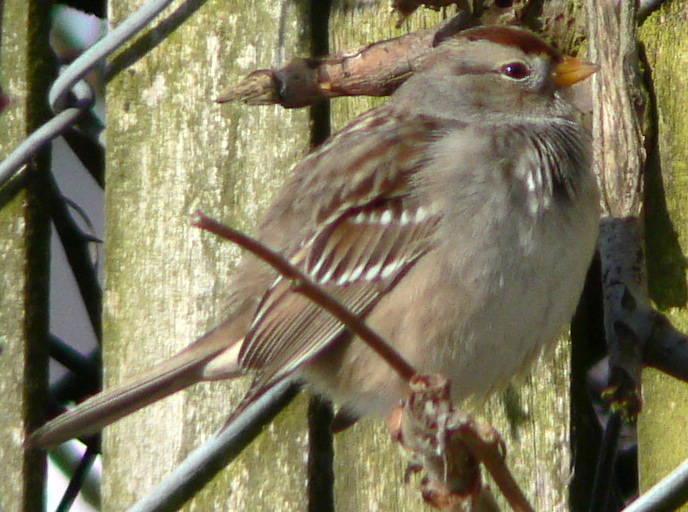
I have a first-year White-crowned Sparrow in my yard today.   This isn’t too unusual – I usually get a few of these going through in both spring and fall.  But a few years ago, before I became serious about birding, I never would have noticed this bird.  It would have been lost among the dozens of House Sparrows in my yard.

Juvenile White-crowned Sparrow

One of the first things a beginning birder should do is familiarize themselves with all the common birds they see every day.  For the backyard birder, this means not only birds like magpies and chickadees, which are distinctive, but also all the little brown birds which crowd the feeders every day.  The vast majority of these in Calgary will be House Sparrows, and in the last few years, House Finches.

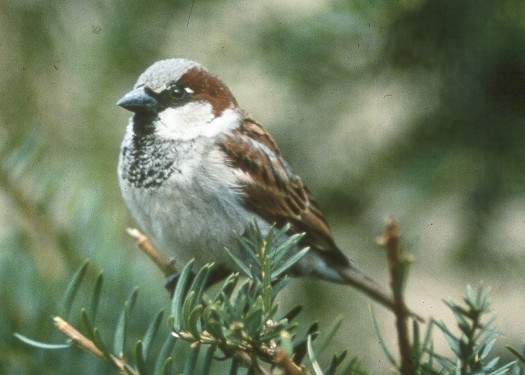
House Sparrows have two distinct costumes – the brown/white/grey/chestnut of the adult male, and the dull brown/grey of the female and juvenile.  The male’s plumage is quite distinctive.  The amount of black in the bib can vary, and the colours are more crisp in the summer, but with a little practice the males can be recognized easily.
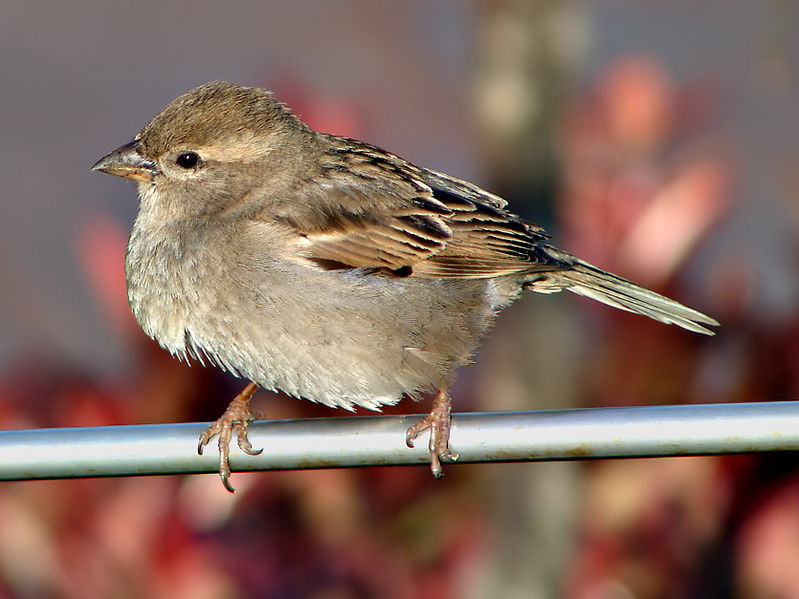
In contrast, the females and the young are quite plain (females and the young of both sexes look alike).  For me, the key identifying feature is the pale line behind the eye.  An important field mark for all House Sparrows is their unstreaked breast.  If it has spots or streaks on the breast, it isn’t a House Sparrow.

Young male House Sparrow


Female House Sparrow


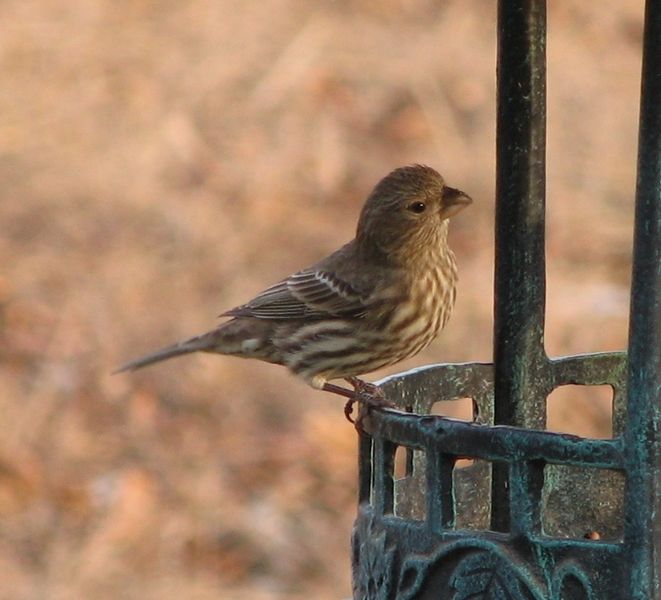
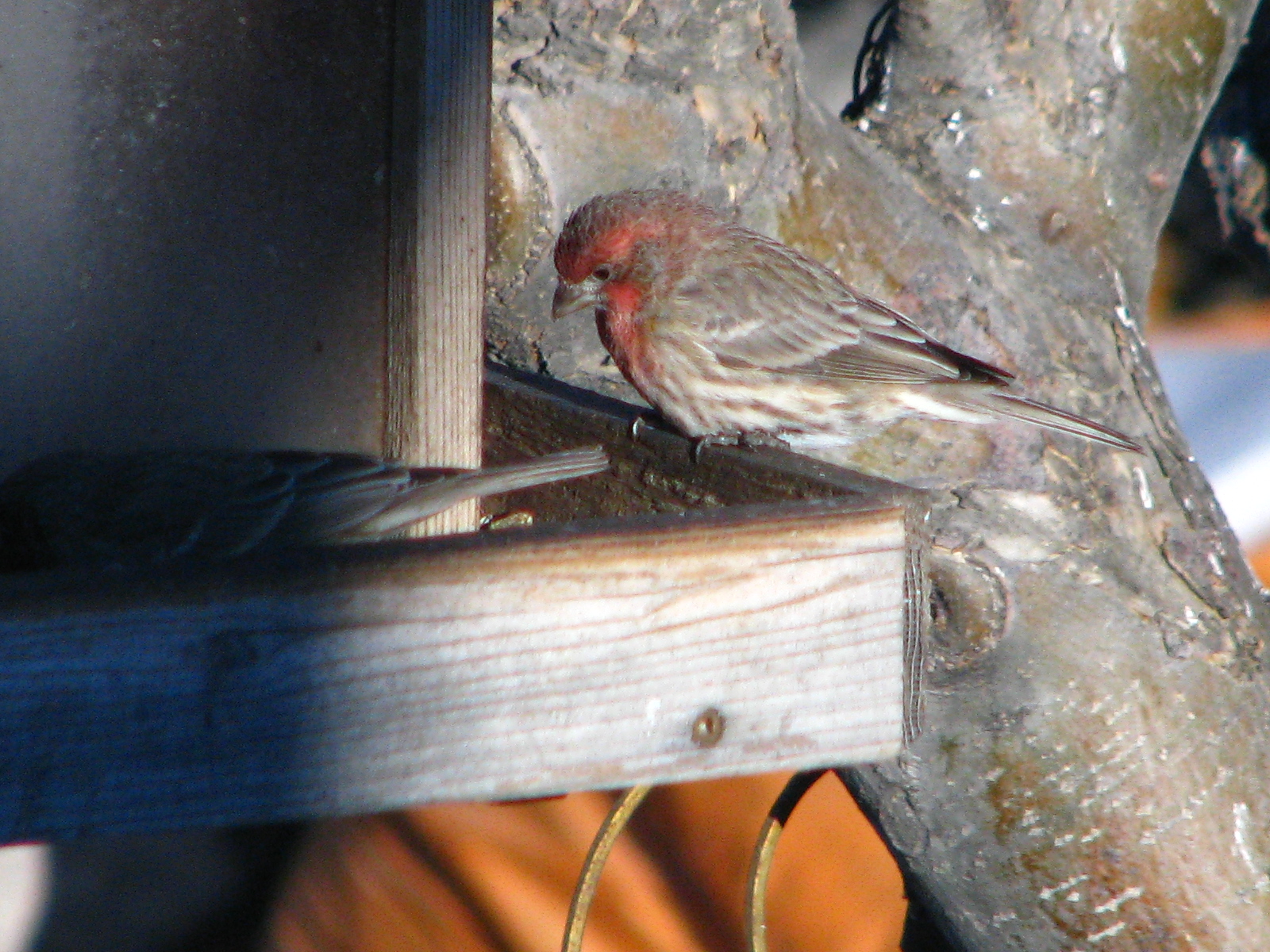
House Finches are the same length as House Sparrows, but a little slimmer, and they weigh less.  They all have streaked breasts.  The adult males have colour on their heads, breast and rump, which is usually orange-red or pinkish, but can occasionally be orange or even yellowish.  Females and young are plain grey, but have heavily streaked breasts.

Female House Finch

Male House Finch

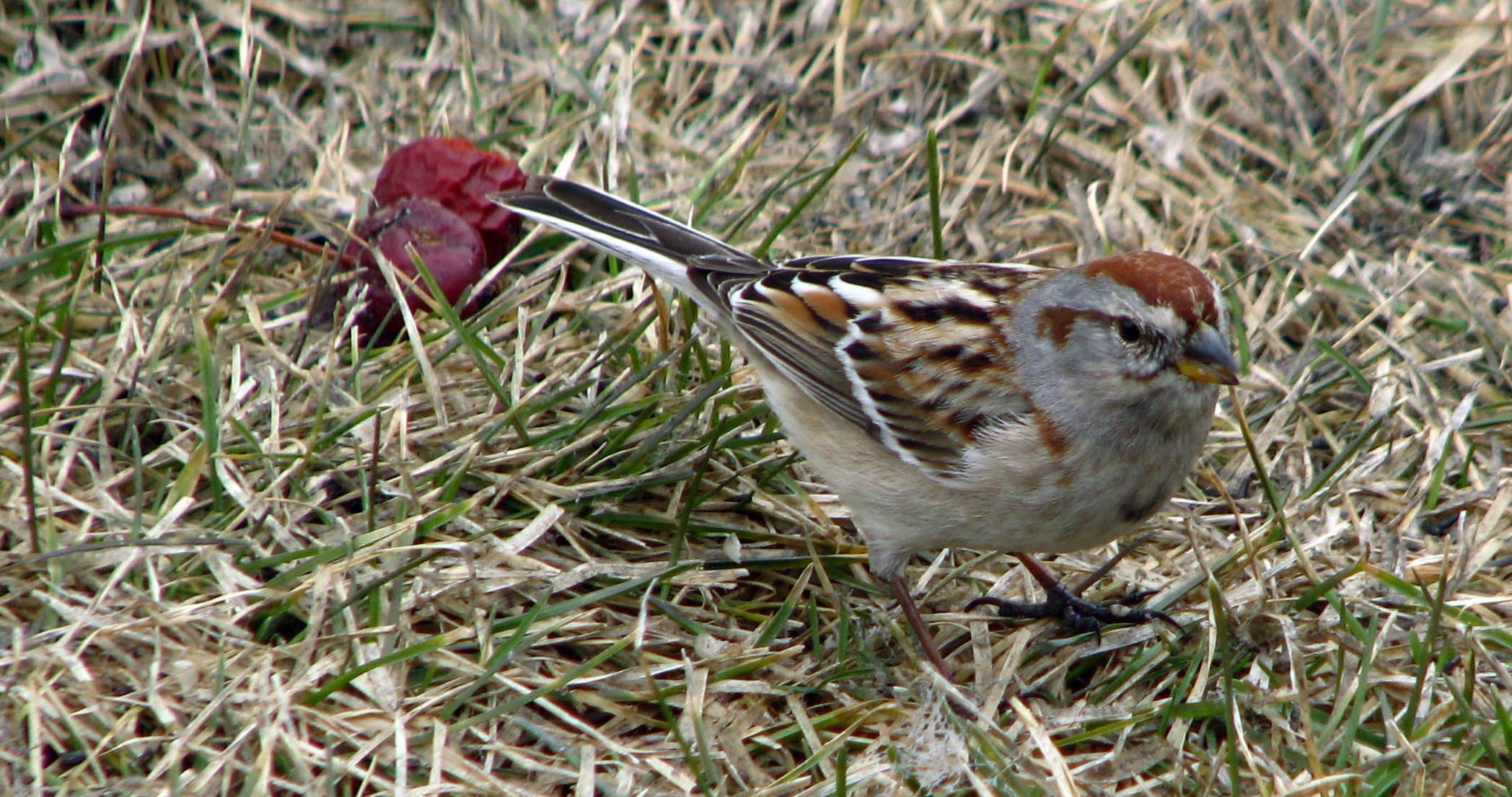
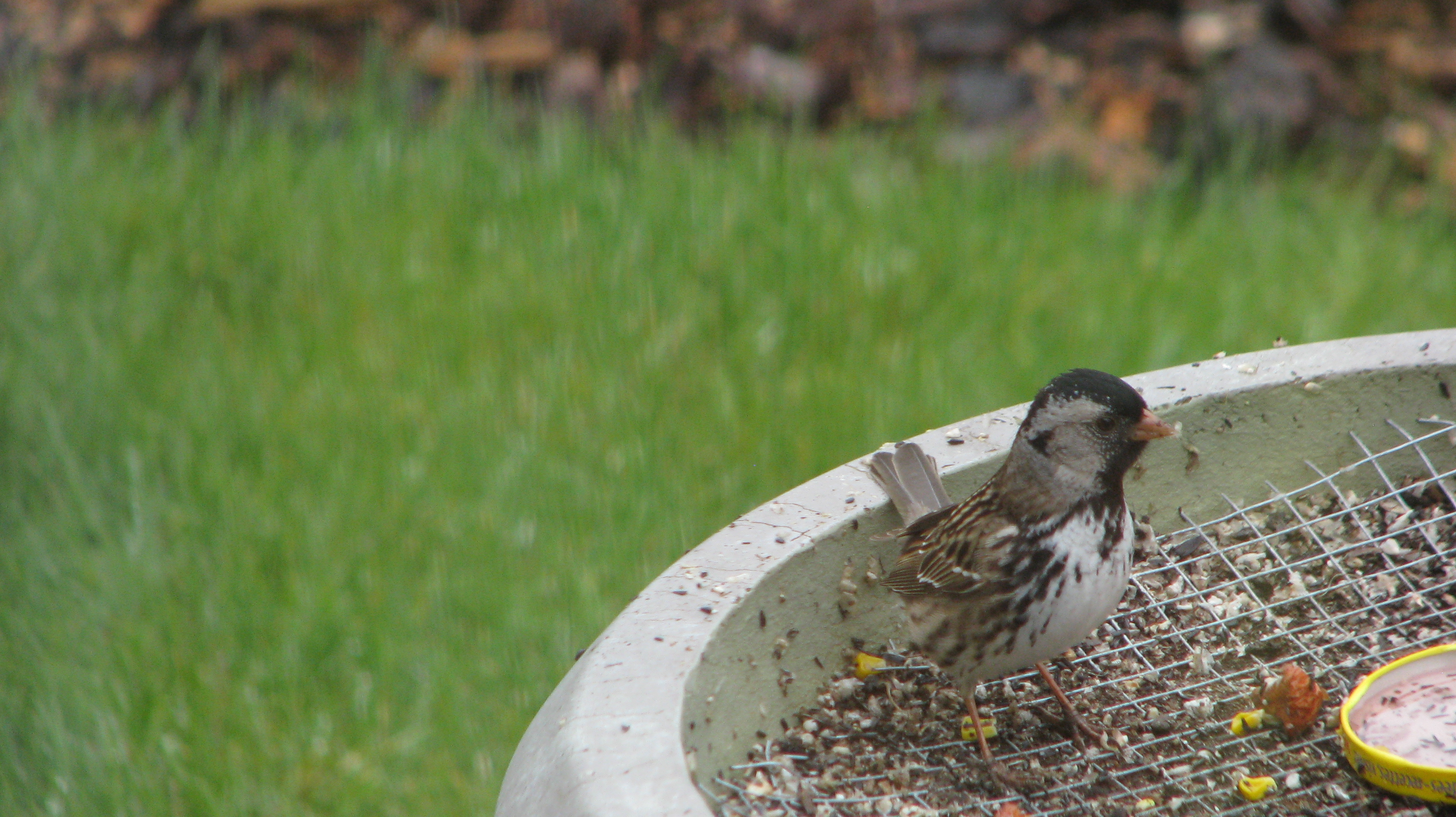
Spend some time learning to recognize House Sparrows and House Finches in your yard, and then any unusual little brown birds will jump right out at you.  In the last five years, I have had nine species of native sparrows in my yard – White-crowned, White-throated, Lincoln’s, Savannah, Harris’s, Chipping, Clay-coloured, American Tree Sparrows, and Dark-eyed Juncos.  I have also had Purple Finches, which are easy to spot once you know the House Finches.  There are several other sparrows, and many other little brown birds, that you could get besides these.
Although it’s fun to watch the House Sparrows and House Finches at your feeders, it’s always exciting whenever you see a little brown bird in the yard and realize “That’s something new!”

American Tree Sparrow

Harris's Sparrow

Bob Lefebvre
 

Grackles Galore!

This message was received on the Albertabird message board, and worthy of a blog mention!  (To visit Albertabird, go here:  http://groups.yahoo.com/group/Albertabird/ )

On September 19 at about 07:30 I saw a flock of slightly over 600 Common Grackles in an urban park – Crescent Heights park. I had never seen such a large flock before. They were feeding on the ground, eating acorns from oak trees, and feeding on the seeds left in pine cones, in other words, they ate almost anything they could find. The colours on them were brilliant – dark blues and purples. Quite a sight. Several early strollers also stopped to watch them.

H Vanderpol

Nature Calgary Fall Field Trips

The following nature walks are free, and open to all. Join us as we get to know Calgary & the birds better!

SEPTEMBER

Sat Sep 26, 9am: Bird Mallard Point, E end of Canyon Meadows Dr SE. Leader, Howard Heffler, 403-284-2961

Sun Sep 27, 8:30am: Bird Wyndham-Carseland Prov. Park. Bring lunch. Meet at Anderson LRT (Macleod Tr) S. of pedestrian walkway. Leader, Howard Heffler, 403-284-2961.

OCTOBER

Thu Oct 1, 8am: Monthly Elbow River Birding Survey. Meet Stanley Park, 42 Av SW, just W of Macleod Tr. Walk to Glenmore Reservoir, ride back (3.5 hours). Call leaders, Aileen Pelzer/Gus Yaki, 403-243-2248, to ensure vehicle space for return.

Sat Oct 3, 9am: Bird Votier’s Flats, FCPP at South end of Elbow Drive SW. Leader, Howard Heffler, 403-284-2961.

Sun Oct 4, 8:30am: Bird Eagle Lake and vicinity. Meet Inglewood Bird Sanctuary, E end of 9 Av SE. Leader, Rob Worona, 403-984-7655.

Sat Oct 10, 9:30am: Peak of Golden Eagle Migration, Mt. Lorette. Bring lunch. Meet Assumption School, 34th Av NW (NW corner of Sarcee Tr at Hwy #1).  Leader, Andrew Hart, 403-279-5209.

Sun Oct 11, 9am: Bird North Glenmore Park. Meet Weaselhead Parking lot, 37 St & 66 Av SW.  Leader, Rob Worona, 403-984-7655.

Sat Oct 17, 8am: Full day Raptor and Eagle Watching, Windy Point, Sheep River. Meet Anderson LRT (Macleod Tr), S of Pedestrian Overpass. Bring lunch, thermos of hot drink, warm, windproof clothing. 350 m climb to lookout site. Leader, Peter Roxburgh, 403-271-7033.

Sat Oct 17, 9:30am: Late fall birding for rare gulls, loons, other waterfowl, late passerines and others (approximately 6 hrs). Meet N. Glenmore Park, in large lot overlooking the reservoir, west of the rowing club. Leader Terry Korolyk, 403-254-1878.

Sun Oct 18, Bird Griffith Woods Park, 2.5km W on Hwy 8 from Sarcee Tr SW, then left at 69 St SW into Discovery Ridge. Continue straight at traffic circle, then left on Discovery Link into parking lot. Leader, Grant Brydle, 403-720-4957

NOVEMBER (Note daylight savings time ends Sun Nov 1/09)

Sun Nov 1, 8:15am: Monthly Elbow River Birding Survey. Meet Stanley Park, 42 Av SW, just W of Macleod Tr. Walk to Glenmore Reservoir, ride back (3.5 hours). Call leaders, Aileen Pelzer/Gus Yaki, 403-243-2248, to ensure vehicle space for return.

Sun Nov 8, 9am: Bird the Bow River. Meet FCPP HQ parking lot, off Bow Bottom Trail SE. Leader, Tony Timmons, 403-256-0754.

Sun Nov 15, 9am: Bird Bebo Grove-Shannon Terrace, FCPP. Meet parking lot S end of 24 St SW. Leader, Gus Yaki, 403-243-2248.

Sun Nov 22, 9am: Bird Votier’s Flats, FCPP, S end of Elbow Dr SW. Leader, Grant Brydle, 403-720-4957.

Sun Nov 29, 8:30am; Bird Sibbald/Exshaw/Harvie Heights. Meet Assumption School, 34th Av NW (NW corner of Sarcee Tr at Hwy #1). Bring lunch. Leader, Andrew Hart, 403-279-5209.

Early Bird Prize

Preparations are well under way for the Birds Calgary 2010 Event!

We would like to announce we will be awarding an “early bird” prize to one lucky participant. The winner will be selected by a random draw
from among everyone who is registered by midnight of October 31, 2009.

Birds Calgary 2010 is a friendly competition, free and open to all.

Participants keep a list of the bird species they see within the city in 2010, and submit their results quarterly. There are many different categories and some special competitions. The complete rules can be seen on the Nature Calgary website.

One objective of this competition is to encourage new birders and young people to participate. We hope to increase the number of people involved in birding and nature study in Calgary, with the long-term goal of strengthening the voice of the conservation movement in Alberta.

We are offering prizes as incentives, and if we can get a large number of registrants, we will be in a stronger position to solicit local companies for prizes and sponsorship. With that in mind we would like everyone to register as soon as possible, and to encourage others to do so.

Obliging Owl

Thank you to Dale Palmer for your email. He and his father were at Nose Hill Park last week, and snapped these photos of a Great Horned Owl. These big birds are not usually so obliging – they’re usually tucked away inside the branches, and require more than one look to see them. Great timing!

Great horned owl, Nose Hill Park

GHO nose hill park

If you have pictures of birds in Calgary you would like to share, please email them to us at birdscount@shaw.ca and we’ll be happy to post them on the blog. Feel free to brag about your photos!

Pat Bumstead

Hawk Identification

This beauty was visiting the Farmer’s Market in SE Calgary today. Anyone want to take a shot at identification? Leave us a comment below with your best guess!

Hawk aug09

Posted by Pat Bumstead

Bird Study Group Meetings

The next meeting of the Nature Calgary Bird Study Group will be held on Wednesday September 2 in Room 211 of the Biosciences Building of the University of Calgary. Doors are open at 7:00 PM and the meeting will begin at 7:30 PM.

The presenters for the evening will be Brooke Clibbon and Eric Tull, who are showing Brooke’s new video “Birding the Galapagos”.

Please bring your coffee mug, as coffee, tea and cookies will be available for a nominal fee.

Everyone Welcome

The Bird Study Group meets indoors on the first Wednesday of each month from September through May. Our goal is to encourage birding in the Calgary area and beyond by helping local birders develop their knowledge and skills. Our members are active local birders of all skill levels who are keen to share their knowledge and experiences. Please see the Bird Study Group website http://birdcomp.fanweb.ca/ for information on the group, its field trips and its other activities.

Would You Like To Give A Presentation?

We are always looking for speakers. It might be a full presentation, or a short presentation given in conjunction with another shorter presentation. If you would like to be a speaker, or if you would like to suggest as a speaker, please email tull@ucalgary.ab or leave a comment below.

Eric Tull