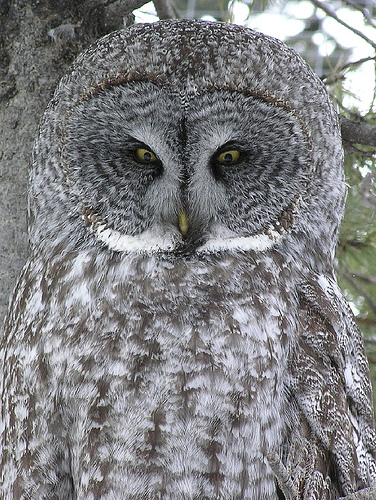
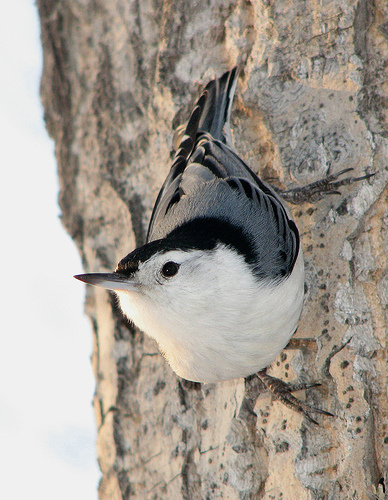
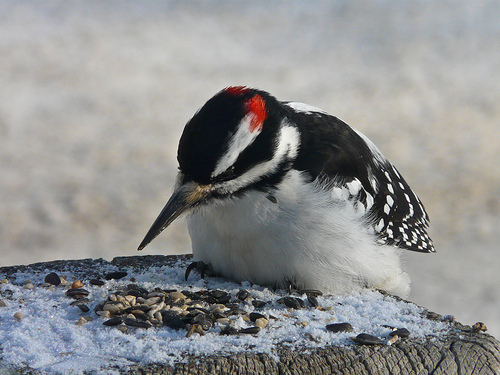
January Target Bird

Male Snowy Owl by Anne Elliott

Our target species for January is the beautiful Snowy Owl. These Arctic owls are currently being seen east of the city, but we’re all anxiously awaiting the first sighting within the city limits.

For more details on Snowy Owls and winter birding, see Birding By Month.

Good birding!

Pat Bumstead

Christmas Birds Counts – We Need Your Help

In 1900, to oppose the so-called “side-hunt” wherein groups of gunners competed to see which could shoot the most wildlife on Boxing Day, American ornithologist Frank Chapman asked North Americans to head out on Christmas Day, to count the birds in their communities and submit the results as the first ever “Christmas Bird Census”. His suggestion has evolved into one of the largest organized birding events in the world, and now is  a holiday tradition during the Christmas season for well over 50,000 participants each year.

The 110th annual Christmas Bird Count, as it is now called, is conducted in well over 2200 localities across Canada, the United States, Latin America, and the Caribbean. The bird observations, collected during one-day counts between December 14th and January 5th, within a 12 km diameter circle, have been amassed into a huge database that reflect the distribution and numbers of winter birds, over time. The northward spread of many wintering species, so depicted, shows clear evidence of climate change.

The next annual Christmas Bird Counts (CBCs) are coming up shortly. About 370 Canadian CBCs are reported to Bird Studies Canada each year. In all, some 12,000 to 20,000 people participate across Canada. You can be one of them. It’s a great way to get to know your area, and to see and to learn more about the birds that you can expect during the winter months.

The Christmas Season is a busy time for many, but it also offers some free time for others. If you have that time, regardless of your knowledge, you are invited to join in this fun-filled activity. Most CBCs are all day outings, but you can participate for half-days, if you so wish.

To help you to plan, below are the dates for some of this season’s upcoming local activities. Participation in the Calgary activities will be particularly valuable for the 2010 Big Year Bird Competition, as you will learn where to find the rarer species beginning Jan. 1st.
———————-
Sun Dec 13, 8:30am to noon: Scout some local Calgary CBC territories. (One is the Elbow River from Stanley Park to Rideau/Roxboro). Meet at 420 Brunswick Av SW [approximately at 46 Av & 4 St SW] in time to leave at 8:30am. Return at noon for a hot complementary lunch. Contact Gus Yaki, 403-243-2248.

Tue Dec 15, High River CBC. We’ll leave Calgary approx. 7am, and return about 7pm, after a potluck evening meal.

Sat Dec 19, Banff/Canmore CBC. We’ll leave Calgary approx. 6:30am, returning about 5pm.

Sun Dec 20, Calgary CBC. Join one of the approximately 30 parties that will be scouring Calgary’s parks and natural areas.For assignment to a group, contact Phil Cram, 403-228-4142 or crampj@telusplanet.net. Alternatively, meet at 420 Brunswick Av SW, in time to leave at 8:15am. Depending upon the number of participants, we usually break into two groups, to cover both sides of the Elbow River. At noon, we return for hot soup and sandwiches. After lunch, if you have the time and energy, we’ll drive in the Mount Royal area for additional species, ending at about 4pm. After 5pm, optional, we’ll gather at the home of Dick and Lenora Flynn’s, 71 Mapleburn Dr SE, to tally the day’s results – and to have supper, $4.00

Sun Dec 27, Nanton CBC. We’ll leave Calgary about 7am, assembling at Laurie Messner’s home, 3.2 kms W of Hwy #2,on N side of Twp Rd #154, staying in the field until dusk, then compiling the results and partaking of a complementary supper, arriving home about 7pm.

Tue Dec 29, Cochrane Wildlife Preserve CBC. (Water Valley area). Depart about 6:30am. Return home about 5:30pm.

Wed Jan 6, 7:30pm: Summary and analysis of some of the local area CBCs results. Meet in Room 211, Biosciences Building, Univ. of Calgary.

See January CBC trips on our Free Nature Walks Page

————————————

NOTE: To cover costs of processing the huge amount of data collected, there is a fee of $5.00 for each CBC, free if you are under 18 or are a member of Bird Studies Canada (BSC). Individual membership in BSC is $35.00 annually ($25.00 for student). You will receive an informative, in-depth publication quarterly and can elect to also get bi-weekly electronic newsletters. For more information, contact http://www.birdscanada.org.

Questions anyone? I will gladly answer any that you may have. Please feel free to contact me at 403-243-2248; or by email: gyaki@calcna.ab.ca. Once you register for any activity I’ll supply further updated information as we approach the actual date.

Gus Yaki

Bird Alert Update Nov 15

If you’re interested in birds in Calgary and the surrounding region, you should know about the Bird Alert phone message.

City of Calgary and Nature Calgary’s Bird Alert Number (403) 221-4519

Compiled twice a week on Mondays and Thursdays, the message gives a rundown of all the unusual bird sightings that have been reported by birders. It lists the bird species and the location where it was seen, so you can take your chance of seeing it as well.

You can listen to the message for bird locations, or if you have a bird to report, you can bypass them, or do so at the end of the recorded message.

A bird that should be reported can be either a rare bird not usually found in the area, or one here in the wrong season.  While beginning birders will not know what to report, checking this message on a regular basis will give you a good idea, and help to increase your birding skills.

The report for the second week of November for unusual birds in Calgary:

  • North bank of the Bow River between the 10th & 14 Street bridges in NW Calgary – Orange-crowned Warbler
  • Carburn Park in SE Calgary – Yellow-rumped Warbler (2), Red-winged Blackbird, Sharp-shinned hawk, Northern Goshawk
  • East of the cement plant on 194 Avenue SE – Glaucous Gull, Thayer’s Gull, Lesser Black-backed Gull

The next scheduled update of the Bird Alert is Thursday, November 19.

Pat Bumstead


BIRD STUDY GROUP – Meet September – May, 7:30 PM on the 1st Wednesday of the month, Room 211, BioSciences Bldg, University of Calgary. The next meeting is Wednesday, December 2, with a talk by Sandy Ayer on Birding Adventures in the Congo. Doors open at 7:00 PM. Talks are free and open to the public.

Northern Pygmy-Owl in Fish Creek Park

Northern Pygmy-Owl by Anne Elliott

On the morning of Wednesday, November 11, 2009, I took a walk in the west end of Fish Creek Provincial Park, in the Shannon Terrace-Bebo Grove area.

The weather was relatively cool, clear, and calm.

Highlights included a Northern Pygmy-Owl at Bridge #2 around 9:30 AM, as well as 2 singing Pine Grosbeaks in the same general area.

Bald Eagle H
Northern Pygmy-Owl
Downy Woodpecker
Hairy Woodpecker
Blue Jay
Black-billed Magpie
Common Raven
Black-capped Chickadee
Boreal Chickadee
Red-breasted Nuthatch
White-breasted Nuthatch
Golden-crowned Kinglet
Bohemian Waxwing
Pine Grosbeak
White-winged Crossbill

Red Squirrel

Good Birding Everyone!

D. Knapik
Calgary, Alberta

Posted by Pat Bumstead

Bird Alert Update

If you’re interested in birds in Calgary and the surrounding region, you should know about the Bird Alert phone message.

City of Calgary and Nature Calgary’s Bird Alert Number (403) 221-4519


Compiled twice a week on Mondays and Thursdays, the message gives a rundown of all the unusual bird sightings that have been reported by birders. It lists the bird species and the location where it was seen, so you can take your chance of seeing it as well.

You can listen to the message for bird locations, or if you have a bird to report, you can bypass them, or do so at the end of the recorded message.

A bird that should be reported can be either a  rare bird not usually found in the area, or one here in the wrong season.  While beginning birders will not know what to report, checking this message on a regular basis will give you a good idea, and help to increase your birding skills.

The report for the first week in November included the following unusual birds in Calgary:

  • In Mt. Royal – Mountain Chickadee, Pine Grosbeaks
  • In Valley Ridge – Common Redpolls
  • On the Elbow River – Wood Duck
  • On the Glenmore Reservoir – Common Loon
  • In Elliston Park – Pied-billed Grebe
  • At Inglewood Bird Sanctuary – Harlequin Ducks

Although it isn’t in Calgary, a birder has reported the first Snowy Owl of the winter season near Irricana. This tundra-breeding species likes open prairie spaces. It will be a challenge to find them in the city during the 2010 competition. If you see one, please let us know!

Pat Bumstead

The Elbow River Bird Survey

 
When I began to bird seriously, I found that the fastest way to learn was to go on field trips offered by Nature Calgary (also known as the Calgary Field Naturalists’ Society).  The best way to see a lot of bird species and learn to identify them is to go out in the company of experienced birders.
 
One of my favourite field trips is the Elbow River Bird Survey.  This is a walk along the Elbow from Stanley Park to the Glenmore Dam.  It has been led on the first day of each month for over fifteen years by Gus Yaki and his wife, Aileen Pelzer.  The walk starts shortly after dawn and takes about three and a half hours.
IMG_1826 adj

Wood Ducks perched beside the river, March 1, 2008.

IMG_0962

A Common Merganser on the River near Stanley Park, November 1, 2009.

Gus is a lifelong naturalist and is very informative about birds, plants, and other natural history.  He keeps track of all the bird and mammal species seen, and the numbers of each.  He is gathering valuable data on the changes in bird populations along the river.

IMG_0970 trimmed

Gus Yaki (pointing) leading a walk on the Elbow River pathway, November 1, 2009.

The walk is mostly flat and easy, with one small hill between Sandy Beach and the Glenmore dam.  There are a variety of habitats on the walk.  You can see waterfowl on the river and the reservoir, songbirds in the parks and along the tree-lined urban streets and backyards, woodpeckers in the stand of old poplars in Riverdale Park, and the occasional raptor almost anywhere.  In recent years Gus has been posting the list of species seen each month on the Albertabird Listserv.  You always see something interesting.
Goshawk - Elbow River trimmed

This Northern Goshawk had just knocked a Common Goldeneye down onto the ice on the river. It flew off without pursuing the attack. February 1, 2009.

Like all of Nature Calgary’s field trips, this walk is free and open to everyone.  You do not have to be a member of Nature Calgary to participate.  If you plan to attend, since this is a one-way walk, call Gus and Aileen ahead of time, so they can arrange to carpool us back to the starting point.  The starting time changes throughout the year so check the field trip list on the Nature Calgary website or on the Calgary Rare Bird Alert (RBA) on Albertabird.
 
The next survey is Saturday, May 1, 2010.  Meet in the parking lot at Stanley Park on 42 Avenue SW,  just west of Macleod Trail at 7:00 am.  If you would like to join us, call Gus or Aileen at 403-243-2248.
IMG_0977

The Elbow River with the Glenmore Dam in the Backgound.

IMG_0976 adj

The Elbow River between Glenmore Dam and Sandy Beach.

IMG_0972 Adj

Downstream from Sandy Beach.

Some Recent Results of the Elbow River Bird Survey:   

Wednesday March 31, 2010 (for April), Partly cloudy, calm,
0-8C. Ice at Reservoir Dam still frozen.

1.. Canada Goose-16
2.. Mallard-20
3.. Common Merganser-2
4.. Ring-billed Gull-12
5.. Rock Pigeon-6
6.. Downy Woodpecker-8
7.. Northern Flicker-6
8.. Blue Jay-1
9.. Black-billed Magpie-16
10.. American Crow-4
11.. Common Raven-8
12.. Black-capped Chickadee-12
13.. Red-breasted Nuthatch-5
14.. American Robin-36
15.. European Starling-6
16.. House Finch-10
17.. Pine Siskin-1
18.. House Sparrow-6
Eastern Gray Squirrel-2

Monday March 1, 2010, 8:00-12:30. Sunny, calm, -4 to 9C.

  1. Canada Goose-140
  2. Wood Duck-1 pr.
  3. Mallard-60
  4. Common Goldeneye-1 m.
  5. Common Merganser-4
  6. Merlin-1 carrying prey.
  7. Rock Pigeon-5
  8. Great Horned Owl-2
  9. Downy Woodpecker-8
  10. Hairy Woodpecker-5
  11. Northern Flicker-6+
  12. Blue Jay-1+ heard.
  13. Black-billed Magpier-30
  14. Common Raven-3
  15. Black-capped Chickadee-22
  16. Red-breasted Nuthatch-5
  17. White-breasted Nuthatch-3
  18. Brown Creeper-2
  19. European Starling-5
  20. House Finch-6+
  21. Pine Siskin-2+
  22. House Sparrow-16

Eastern Gray Squirrel-6


Monday, February 1, 2010, 0815-1145. Sunny, Calm, -6 to -2C. 
 
1.. Canada Goose-190
2.. Mallard-160
3.. Common Goldeneye-2
4.. Common Merganser-2
5.. Bald Eagle-1 ad.
6.. Rock Pigeon-4
7.. Downy Woodpecker-4
8.. Hairy Woodpecker-1
9.. Northern Flicker-2
10.. Black-billed Magpie-45
11.. Common Raven-9
12.. Black-capped Chickadee-62, counted by Tony T.
13.. Red-breasted Nuthatch-1
14.. White-breasted Nuthatch-1
15.. European Starling-8
16.. Bohemian Waxwing-350
17.. House Finch-6
18.. House Sparrow-24
Eastern Gray Squirrel-4
  

Saturday January 3, 2010: 8:30-12noon, Sunny, calm, -12C. 7 participants

1.. Canada Goose-450
2.. Mallard 500
3.. Common Goldeneye-8
4.. Common Merganser-2
5.. Downy Woodpecker-7
6.. Hairy Woodpecker-2
7.. Black-billed Magpie-60
8.. Common Raven-14
9.. Black-capped Chickadee-32
10.. Red-breasted Nuthatch-7
11.. White-breasted Nuthatch-1
12.. Bohemian Waxwing-200
13.. House Finch-1
14.. Common Redpoll?-5
15.. House Sparrow-35
a.. Eastern Gray Squirrel-7
b.. White-tailed Jackrabbit-tracks.
c.. Coyote tracks

Posted by Bob Lefebvre

Wednesday Birding in North Glenmore Park

On the morning of Wednesday, October 28, 2009, I took a walk around North Glenmore Park, as well as the dam at the north end of Glenmore Reservoir, in SW Calgary. The weather was chilly, relatively calm, and overcast.

Highlights included a winter-plumaged Pacific Loon still on the reservoir, lots of Buffleheads swimming and flying around, and a Common Raven carrying around a neon yellow golf ball near the golf course at the NE end of the reservoir.   H = heard

  • Pacific Loon
    Horned Grebe
    Eared Grebe
    Western Grebe
    Canada Goose
    Lesser Scaup
    Common Goldeneye
    Bufflehead
    Bald Eagle
    American Coot
    Gull sp.?
    Rock Pigeon
    Hairy Woodpecker
    Blue Jay H
    Black-billed Magpie
    Common Raven
    Black-capped Chickadee
    Red-breasted Nuthatch
    American Robin
    Bohemian Waxwing H
    American Tree Sparrow
    House Sparrow
  • Red Squirrel
    Least Chipmunk

Good Birding Everyone!

D. P. Knapik

Birding the Irrigation Canal

Inspired by Pat’s recent post about birding the irrigation canal in Calgary, I headed down last week to check it out.  I started at the bridge on Gosling Way by the Inglewood Golf Course in southeast Calgary and headed south.  I often bird this area in the summer, but I’ve never been there in the fall after the water flow is stopped in September.  Trout Unlimited did their annual Fish rescue near the Max Bell arena on September 30.  They remove a lot of the larger fish, which would die in the winter, but there are many small fish left  in the canal.  There is still quite a bit of standing water, and some mudflats and exposed mats of vegetation.

IMG_0805 auto adjusted

The Canal near the Inglewood Golf Course

On the canal I saw several Mallards and Ring-billed Gulls, one Blue-winged Teal, one Common Goldeneye, and six Greater Yellowlegs.  The yellowlegs would occasionally catch small fish.  Also hunting in the water was a  juvenile Great Blue Heron.  A man who walks there every day told me that the heron had been there daily for about three weeks.  He also saw a lone swan there about two weeks previously – the only one he has ever seen in the canal.  I’m not sure if there was enough water now for a swan to be able to take off.
IMG_0810 corrected

Juvenile Great Blue Heron

There was one Merlin in the trees on the west side of the canal, which took a run at a squirrel and then chased off a harassing magpie.  Bald Eagles nest on the golf course and have overwintered here for the past few years, but I didn’t see them that day.  As I walked south (still only about 100 metres from the bridge), I came across a group of eight Common Mergansers and two groups of Hooded Mergansers, twelve in all, including five adult males.

IMG_0816 trimmed

Hooded Mergansers, conveniently demonstrating 3 different positions of their crests.

On the way back, some new birds had arrived.  There were three Long-billed Dowitchers feeding in the canal (very late migrants), and then a group of six Rusty Blackbirds on the mudflats.  These birds are not very common, and these were the first ones I’ve ever seen.

I returned to the canal on the weekend to get some photos and see what was new.  Most of the same bird species were there, plus one male Redhead.

IMG_0841 trimmed

Redhead (right) with female Hooded Merganser.

I also walked north from the bridge to the source of the canal north of the Max Bell arena.  There were Mallards, Ring-billed Gulls, Canada Geese, and a muskrat building a lodge in the middle of the canal.  I’m not sure how he’ll make out when it gets colder – he’ll probably have to move to the open water on the river.

Muskrat Still 1 auto adj

Muskrat at lodge.

The canal is a great place for fall birds, and seems to get some late migrants.  Lately it has been freezing over at night, and there are birds there only on warm afternoons.

The canal stretches east for many miles, so there is a lot to explore.  It is also a good location to do Non-Motorized Transport birding, since there is a paved pathway running alongside it.  In the summer I have ridden my bike all the way to Lake Chestermere (25 kms) and back, birding all the way.

It’s Feed The Birds Day

siskins oct 24The Royal Society for the Protection of Birds (RSPB) in the UK has proclaimed October 24 as Feed The Birds Day. It serves as a reminder of all the things we can do to help the birds through the coming winter.

We’re good at providing fast food for birds in our feeders, and this is certainly a life-saver in the cold snow-covered conditions. But what about ‘slow food?‘ There are many things you can do in your garden and yard to provide food for all wildlife.

  • Plant native plants such as Saskatoons,  juniper and other species that provide berries in the winter for birds such as Bohemian Waxwings. I had a crowd of about 50 waxwings zoom in on my tree last winter, stripping it of berries in a matter of minutes. White Spruce trees also provide cones for Red-breasted Nuthatches and crossbills, and shelter from the wind.
  • Make a brush or log pile. I have a huge Northwest Poplar tree in my yard, and during any windstorm we lose a fair number of branches of all sizes. Instead of throwing them out, or chopping them up for mulch, we stack them in a pile in the back of the yard. The birds use it as a sanctuary and often take shelter there in inclement weather throughout the year. A log pile is an even better idea, as it will provide solid shelter for a variety of small creatures over the winter, and if left alone, will become a host to mosses, fungi and lichens to decorate your yard.
  • Provide an insect home. We do not get rid of our leaves in the fall – we treasure them! Our garden is covered with about 8 inches of leaves, which are then covered with burlap to keep them from blowing away. This not only keeps the moisture in the ground, but also provides homes for thousands of ladybugs and other overwintering insects. In late spring, we cautiously remove them, first making sure the ladybugs have awakened and flown away.

These are just a few ideas for helping the birds along this winter. If you have other suggestions, please leave us a comment below!

Feed The Birds Day in Calgary this year was accompanied by rain, sleet and snow in the morning. I made sure all my ‘fast food’ feeders were full, and was rewarded by a yard full of Pine Siskins. These little seed eaters were everywhere, at every feeder. I don’t believe I’ve ever had that many in the yard at one time! These birds are year round visitors in Calgary, so they served as an additional reminder to remember the birds in the coming frigid months!

Pat Bumstead


Birding Canal

You just never know where you’re going to find birds.

One warm October afternoon, I decided to walk the dog along the irrigation canal. During the summer, this canal is full, as water is channelled from the Bow River to agricultural fields east of the city. It is drained each fall. At this location (Ogden Road & 50 Ave SE), it is bordered by trees on one side, and parallels the Bow River.

Fall irrigation canal

Fall irrigation canal

Once the canal is drained, you can see floating mats of vegetation left behind, that look like they should be full of bird goodies.

Floating mat of vegetation, and a ring-billed gull

Ring-billed Gull checking it out.

Walking down the bike path that borders the canal, I was delighted to see some very late fall migrants poking around in the mud.

Juvenile great blue heron

Juvenile Great Blue Heron

Lesser yellowlegs

Greater Yellowlegs

Also checking out the canal were a Solitary Sandpiper, two Killdeer and numerous Mallards. Overhead, there were Rock Doves, Canada Geese, Common Goldeneyes, European Starlings, and another late migrant, a Red-tailed Hawk. Not a bad count for someone who wasn’t birding!