These fantastic photos of a male Rufous Hummingbird were taken by Marilyn Sanders just west of Calgary in the community of Stonepine, off of Highway 8.
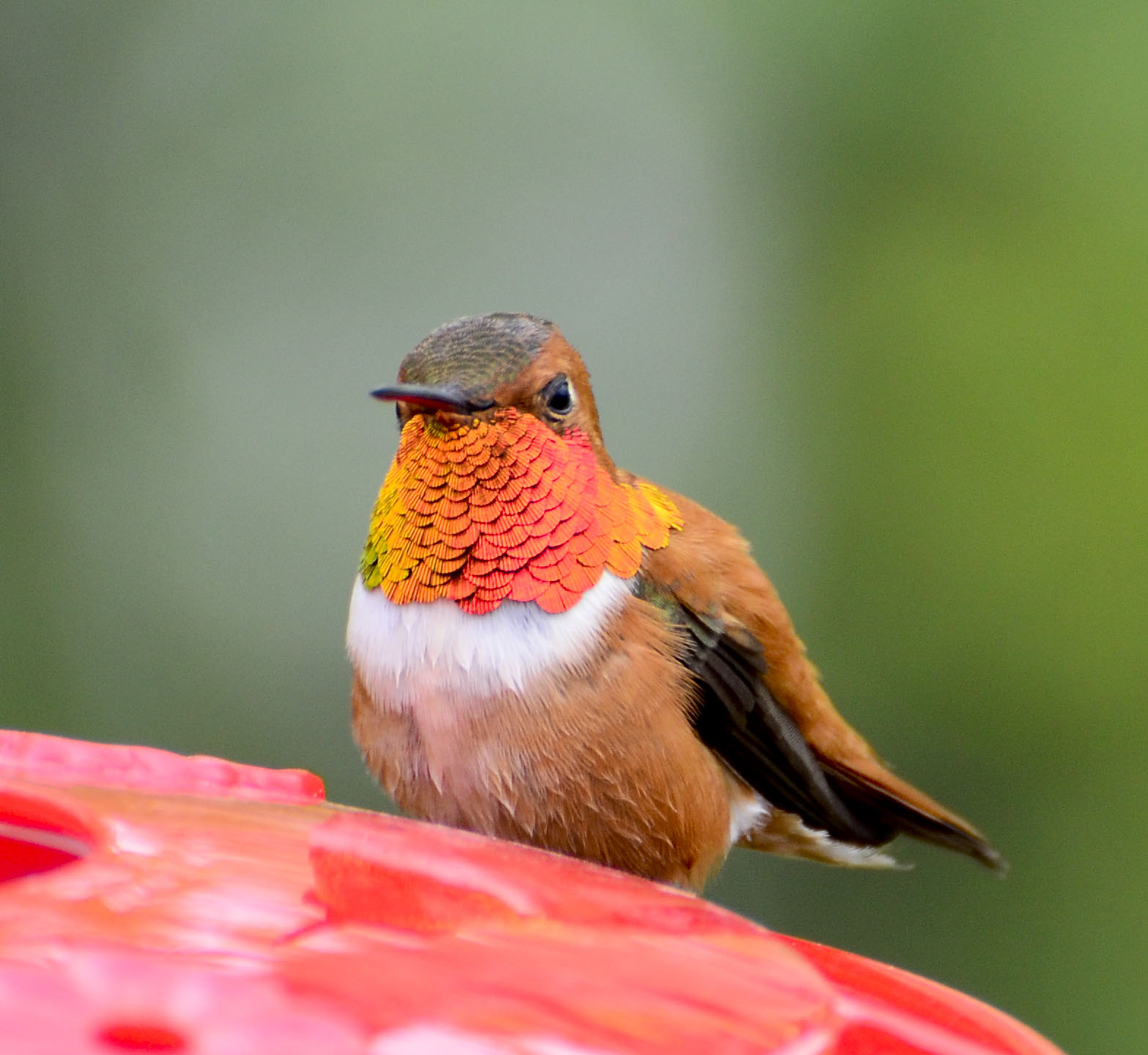
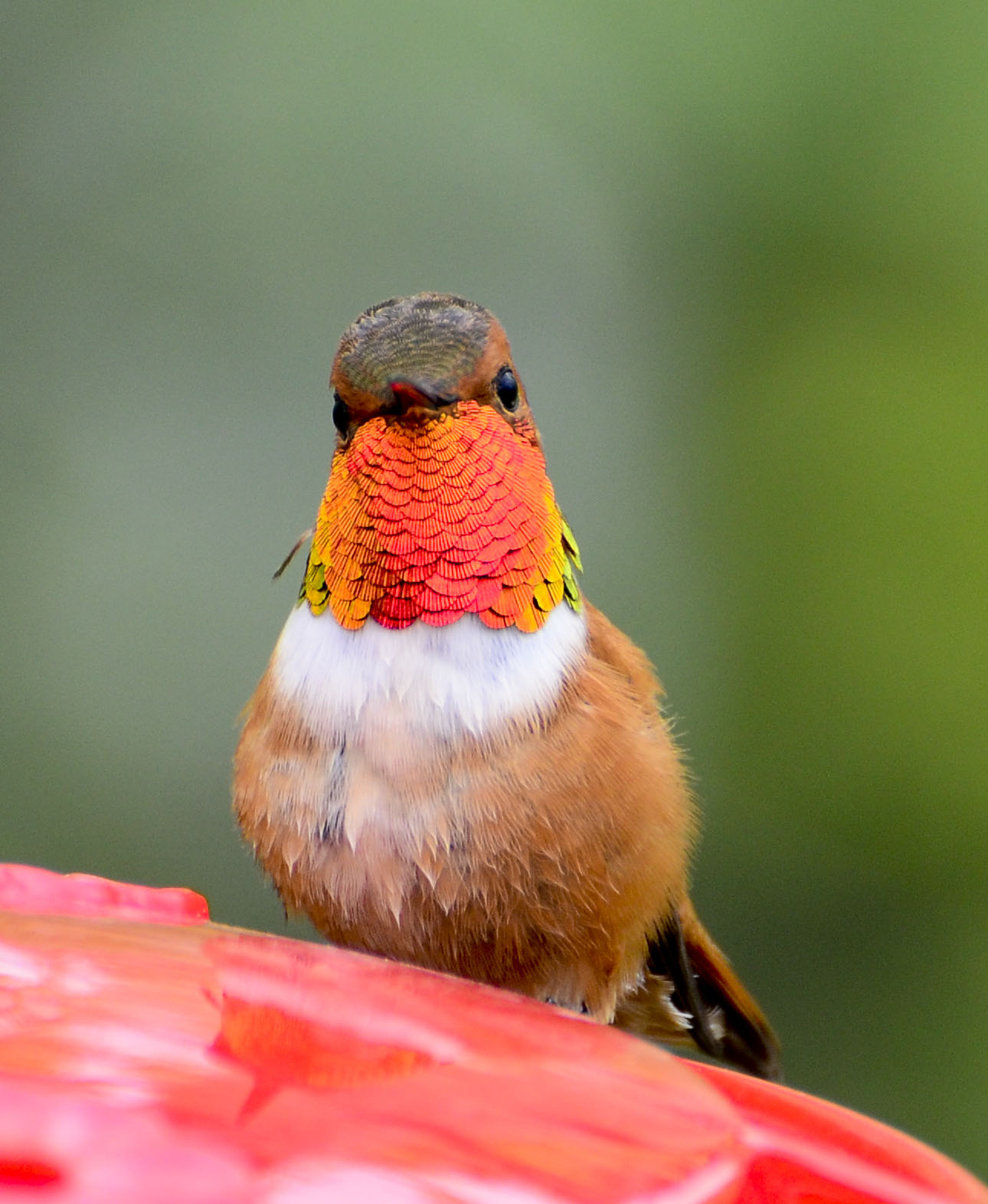
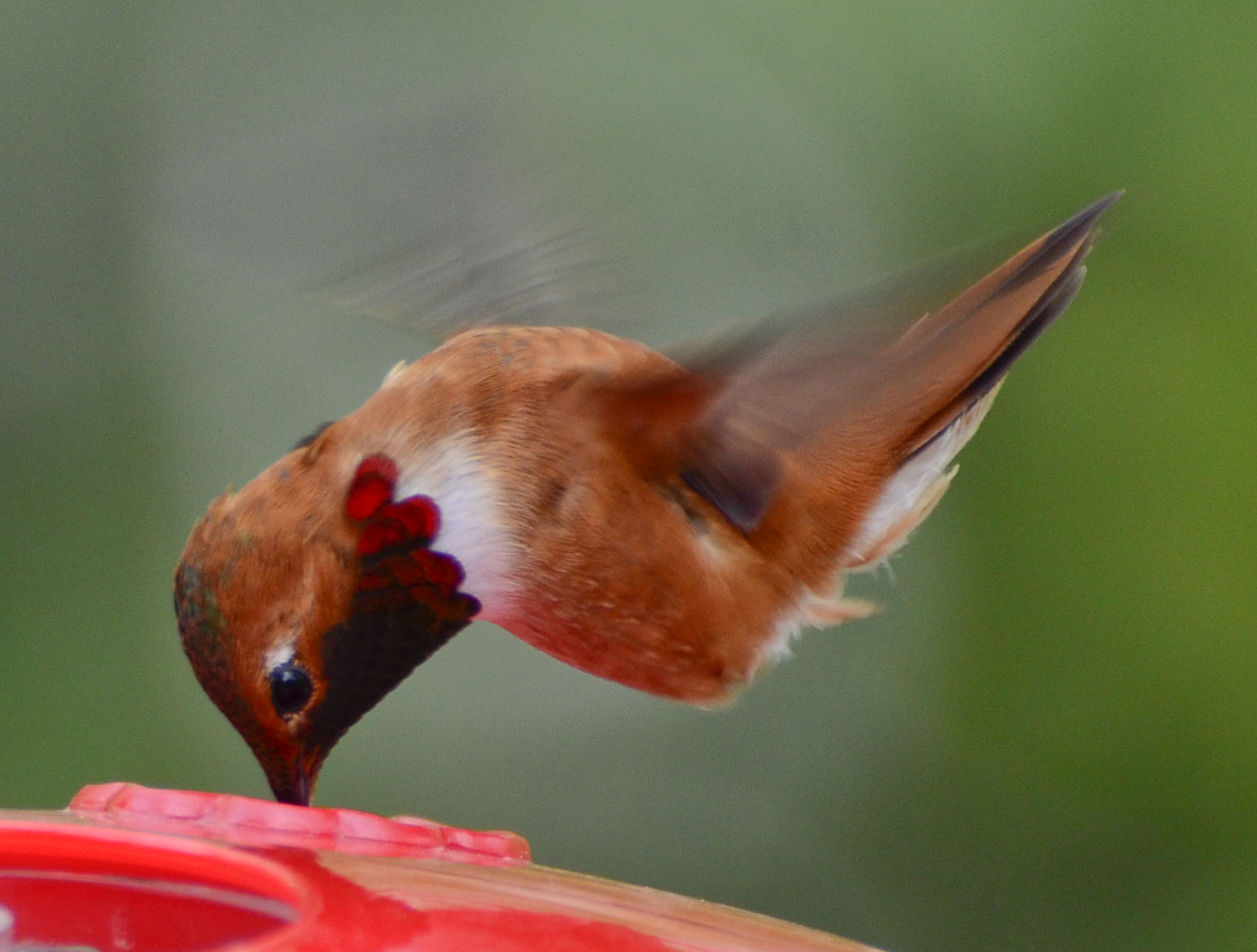
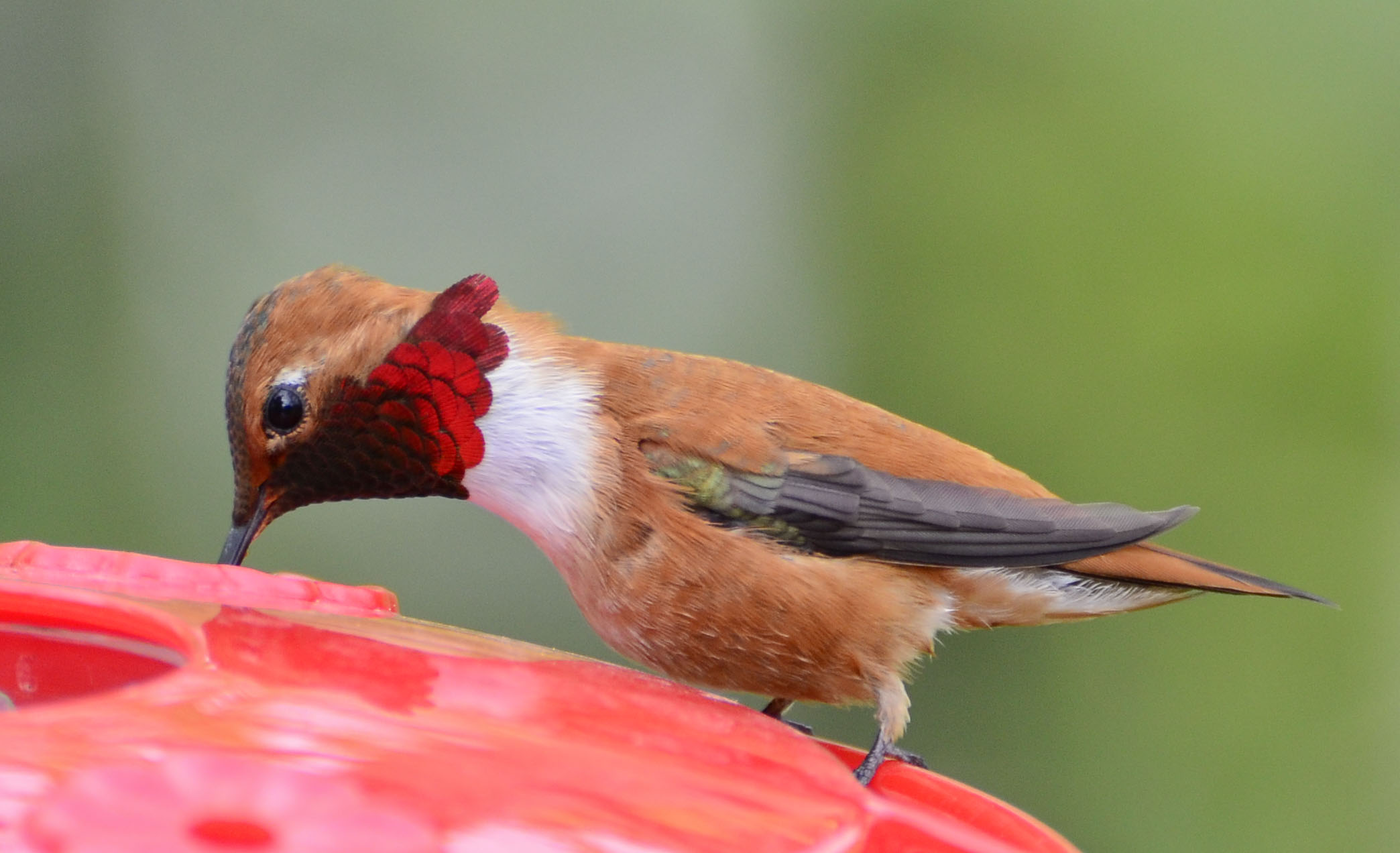
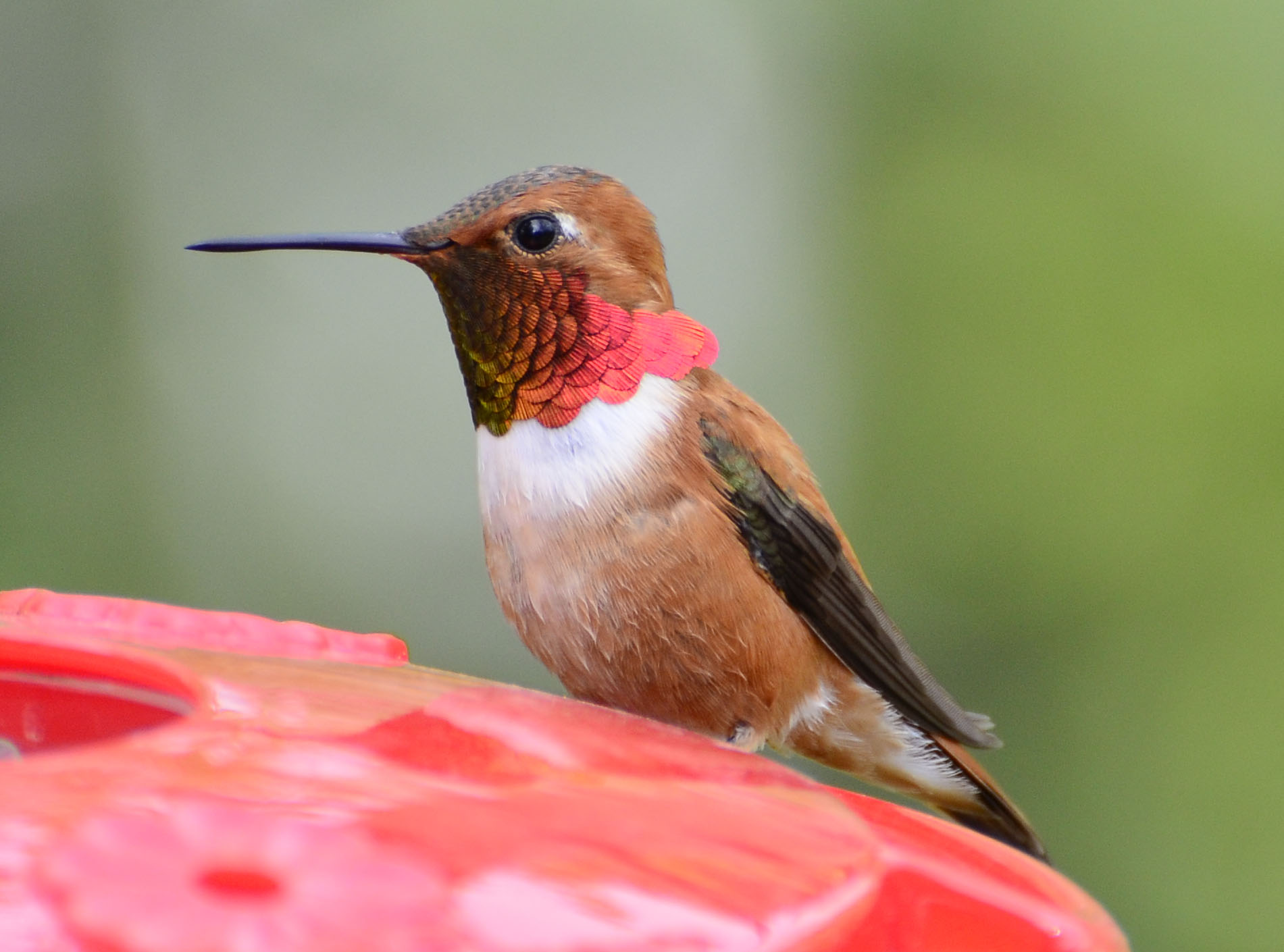
These fantastic photos of a male Rufous Hummingbird were taken by Marilyn Sanders just west of Calgary in the community of Stonepine, off of Highway 8.
Posted by Matthew Sim
Each year, spring migration brings something different. The year I first bought my camera, migration brought to me several brilliant male Western Tangers. This was the first time that I was really enthusiastic about birding and, with birds like this in my backyard, it is not difficult to see why.

The Western Tanager has to be, in my honest opinion, one of the top 5 most beautiful species that we can see in Calgary. Its red, yellow and black plumage make it stand out during migration, when the trees are still bare of leaves, but be warned, once the leaves come out, this brilliant songster all but disappears into the forests, becoming rather inconspicuous despite its bright colors.
A bright-red head combined with black wings, back and tail and canary-yellow underparts and neck are what make the male so beautiful. The female, considerably duller, is green olive above and yellow below. Arriving in southern Alberta in early to mid-May (they arrive later in the month in the mountains), the Western Tanager heads to boreal and montane forests to breed. Though the species prefers coniferous and mixed forests for nesting, during migration, it frequents a wider range of forests.
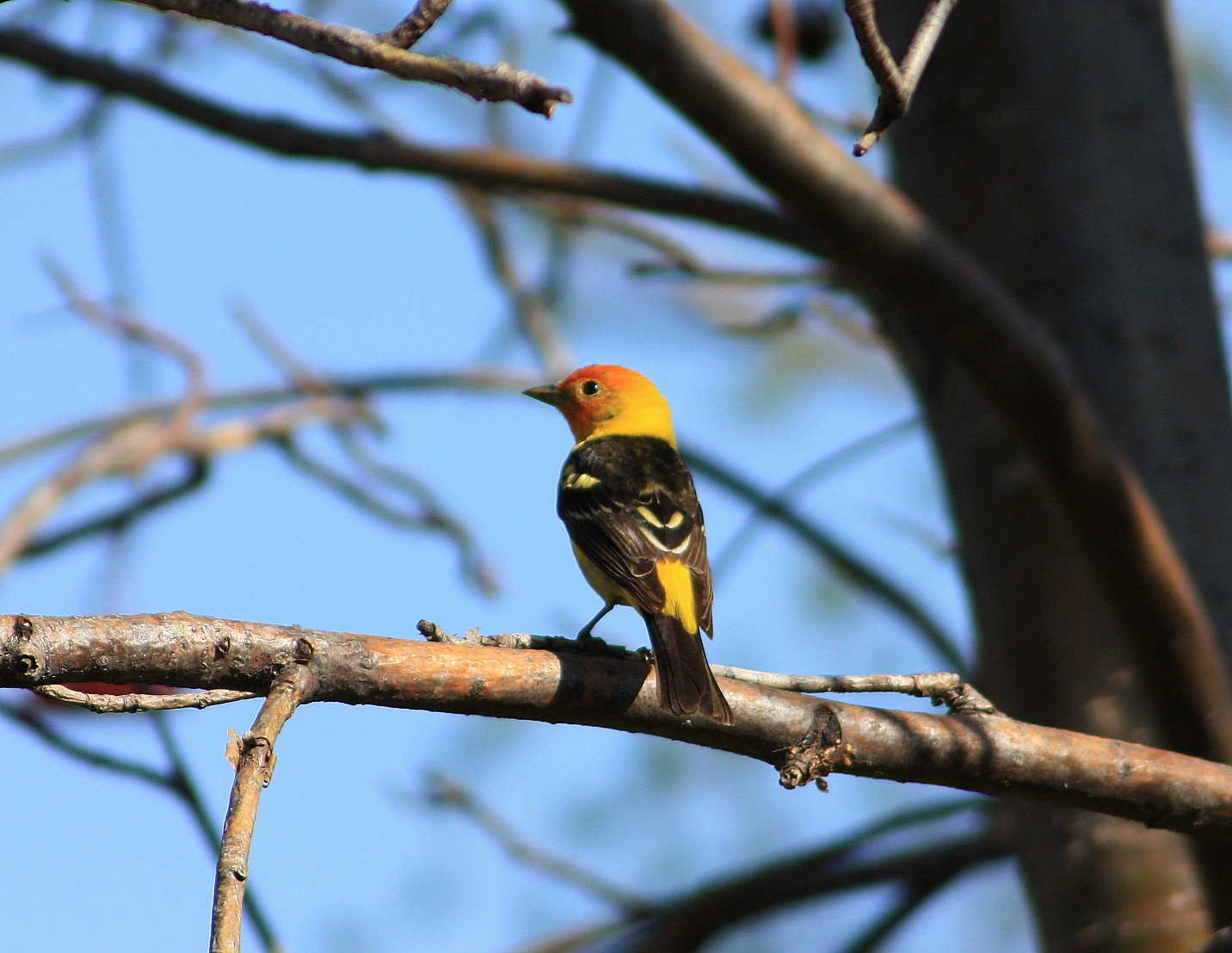
The Western Tanager can be seen in the city in areas such as Bebo Grove in Fish Creek or Edworthy Park during the summer. Outside of the city, they can be seen in the mountains and in the Water Valley area, among other locations. During the month of May,you might even spot one in your own yard- they are most often seen among the higher branches of trees so remember to look up!
Did you know…
The red on the Western Tanager’s face is formed by the pigment rhodoxanthin, a pigment not usually found in birds. The other tanagers (such as the Scarlet Tanager) make the pigments that give them their bright colors however, rhodoxanthin is not manufactured by the Western Tanager meaning that they must obtain it from the food that they eat (probably insects who in turn gain this pigment from the plants they eat).
Posted by Matthew Sim
Last time I wrote a ‘Postcards from Texas’, I bemoaned the weather and fate for whisking away any migratory birds from my binoculars and my camera. This time, however, weather and fate were both on my side for a full 3 days, bringing warblers, thrushes, flycatchers, orioles, buntings, catbirds and cuckoos to my very neighborhood.
Saturday morning, something told me to go out birding. Trusting instinct, I went out to the neighborhood patches that occasionally turn up good birds. When I got to the pond, I heard a distinctive ‘chirp’ coming from the trees and shrubs lining the pond. Then came another ‘chirp’. And another. I soon was in a very excited mode, dashing this way in that, my camera turned up at the trees. A storm the night before had slowed migration, forcing migratory birds to land at the first green patch they saw, and for this reason, there were now dozens of migrants here at my local pond.

Male Chestnut-sided Warbler

Female Magnolia Warbler

Male Magnolia Warbler

Female American Redstart
As I gazed upwards into the bushes and trees, I managed to see Wilson’s, Canada, Kentucky, Black-throated Green, Magnolia, Yellow, Tennessee and Chestnut-sided Warblers, American Redstart and Common Yellowthroat. Soon, I was seeing Gray Catbirds and even a male Baltimore Oriole.

Baltimore Oriole
As I admired the oriole, an even bigger surprise came up in the form of my first ever Indigo Bunting, They are quite stunning birds!

Male Indigo Bunting
After that, I found a Olive-sided Flycatcher, identified by the two white spots on its back.

Olive-sided Flycatcher
And then some of the regulars too…

At one point, upon seeing a large bird in one tree, I investigated, expecting to find some rather unusual bird. Instead, I found a rather common Green Heron- but in a tree?!

Green Heron-in a tree!
So maybe migration wasn’t so bad after all!
Posted by Bob Lefebvre.
I have three Downy Woodpeckers that come to my feeders regularly. They are not shy, and I managed to get some close-up photos that show the prominent nasal tufts of this species. These help to keep wood chips (and nut chips) out of the bird’s nostrils. It is sometimes said that Downy Woodpeckers are named for these downy feathers at the base of their bill.


Have you seen an unusual bird in Calgary? If it is on this Reportable_Birds (PDF), please report it to the Nature Calgary Rare Bird Alert line at 403 221-4519 and leave a message after the beep at the end of the recording. If you would like some help with species identification, email us at birdscalgary@gmail.com. To report injured wildlife call the Calgary Wildlife Rehabilitation Society at 403 239-2488, or the Alberta Institute for Wildlife Conservation at 403 946-2361.
May 11
— RED-EYED VIREO, Fish Creek PP, Terry Korolyk
May 12
— SANDHILL CRANE, north of Cochrane, Rosemary Healey(?)
— NASHVILLE WARBLER, Inglewood Bird Sanctuary, Colin Young
May 13
— WHITE-FACED IBIS 200, Frank Lake, Paul Lehman
— NORTHERN GOSHAWK, (former) Cochrane Ranche PP, Joan&Malcolm McDonald
— RUFOUS HUMMINGBIRD, same, J&MM
— ROCK WREN, same, J&MM
— AMERICAN GOLDEN-PLOVER, Frank Lake, Andrew Hart
— BLACK-BELLIED PLOVER, Third Lake, PL
— STILT SANDPIPER 4, same, PL
— CALLIOPE HUMMINGBIRD, Weaselhead, Bill Wilson
— CASSIN’S VIREO, Lowery Gardens, Marcel Gahbauer
— PACIFIC WREN, same, MG
— BLACKPOLL WARBLER, same, MG
— PURPLE MARTIN 15, Chestermere martin houses, PL
— MAGNOLIA WARBLER, Weaselhead, reporter unknown
The next scheduled update of the Bird Alert is on Thursday May 17.
Since 2008, the Calgary Zoo and ENMAX have teamed up to bring live osprey activity to the public via a high-resolution webcam. From spring arrival and nest building to the laying and hatching of eggs, the public can watch these birds of prey daily. So far this season, the female in the pair has laid three eggs.

Osprey drying his wings after a dip. Photo P Bumstead
For over 17 years, a pair of ospreys has built their summer home on a platform constructed by the Calgary Zoo atop a pole erected by ENMAX Power. The platform is located at the extreme east end of St. George’s Island in a non-public area.
“There is a large following of the osprey webcam at the Calgary Zoo,” said Doris Kaufmann Woodcock, ENMAX Corporation. “Last year alone we had over 75,000 unique visits to our website. It’s fantastic that so many people love to tune in and watch their progress.”
As part of its Osprey & Avian Nest Management program, ENMAX erected three more nesting platforms this spring in south Calgary. Ospreys often build their nests on top of power poles, potentially posing a danger to themselves while compromising the integrity of the electrical system. ENMAX has erected many platforms throughout the city in areas where these nests have caused concern.
The live streaming camera is available to the public through to the seasonal departure of the birds which typically occurs in September. For more information on the camera and to watch live, visit the ENMAX osprey cam web page.
Posted by Dan Arndt
I attempted a trip earlier this year to the Pine Creek Water Treatment Plant on the south end of Calgary, and very nearly reached the facility just as my time was running short and I was forced to head back. At the time, a pair of Northern Saw-whet Owls was reported down on the river on the island adjacent to the plant, but I dipped on finding them. This time, the trip to the facility was successful, but sadly, no Northern Saw-Whet Owls were found. Even so, the number of species we saw and heard was astounding, and we even managed to observe not one, but two mating rituals in the few hours it took us to walk from the south end of our route, back to our vehicles at the entrance to the Inland Concrete Site at the east end of 194th Avenue SE, on what would turn out to be one of the warmest and nicest days of the year so far.
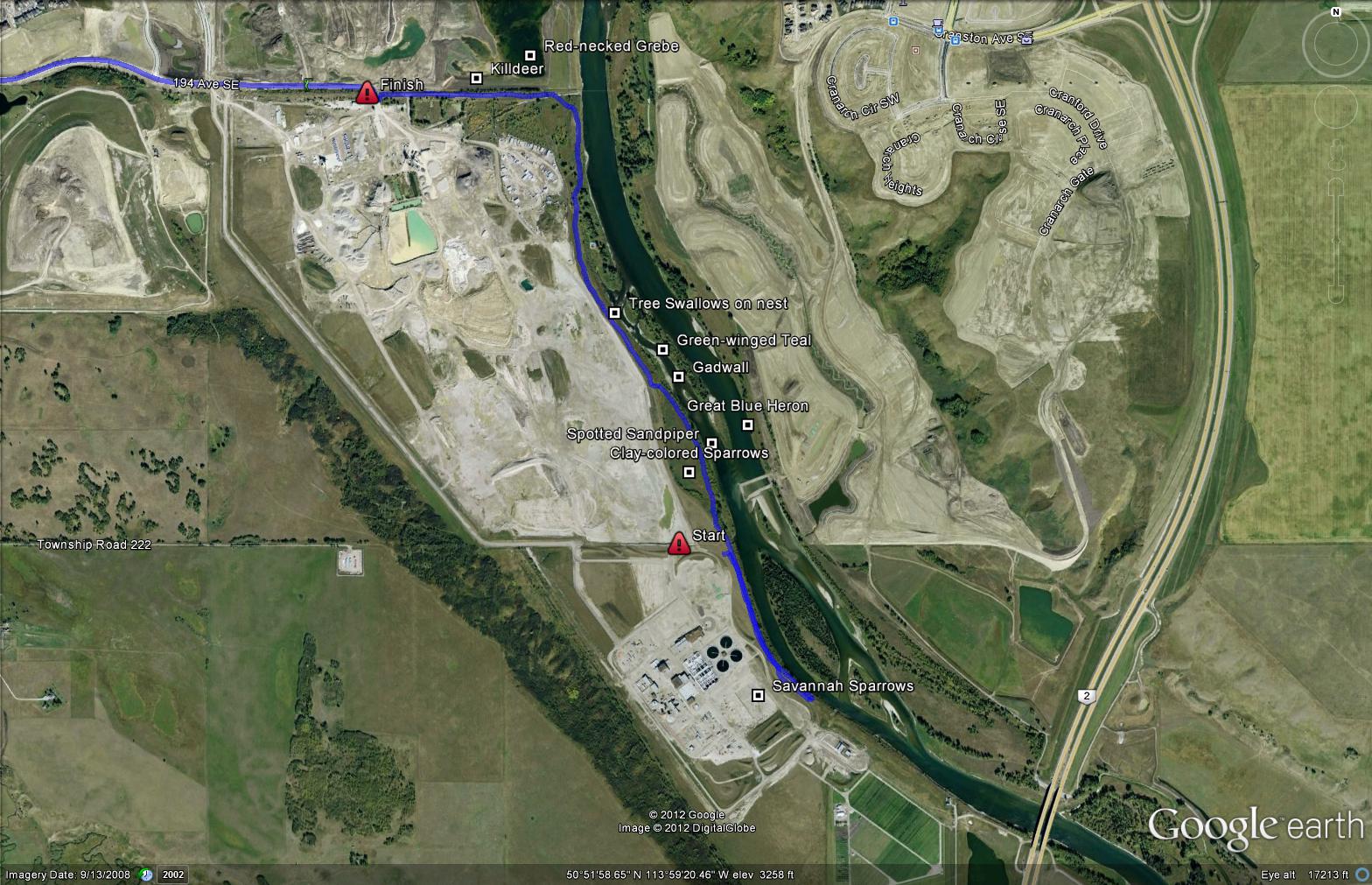
Pine Creek Water Treatment Plant to 194th Avenue SE
The rogues gallery of usual suspects was generally present on the route, with the usual Mallards, Canada Geese, Black-capped Chickadees, Northern Flickers and even Red-breasted Nuthatches. What I was not prepared for was the sheer number of new species on and around the river! The highlight of the day I think would have been the three Spotted Sandpipers that we saw throughout the day. I’m sure I have better shots than this from previous outings, but this was the closest I was able to get to any of these three.
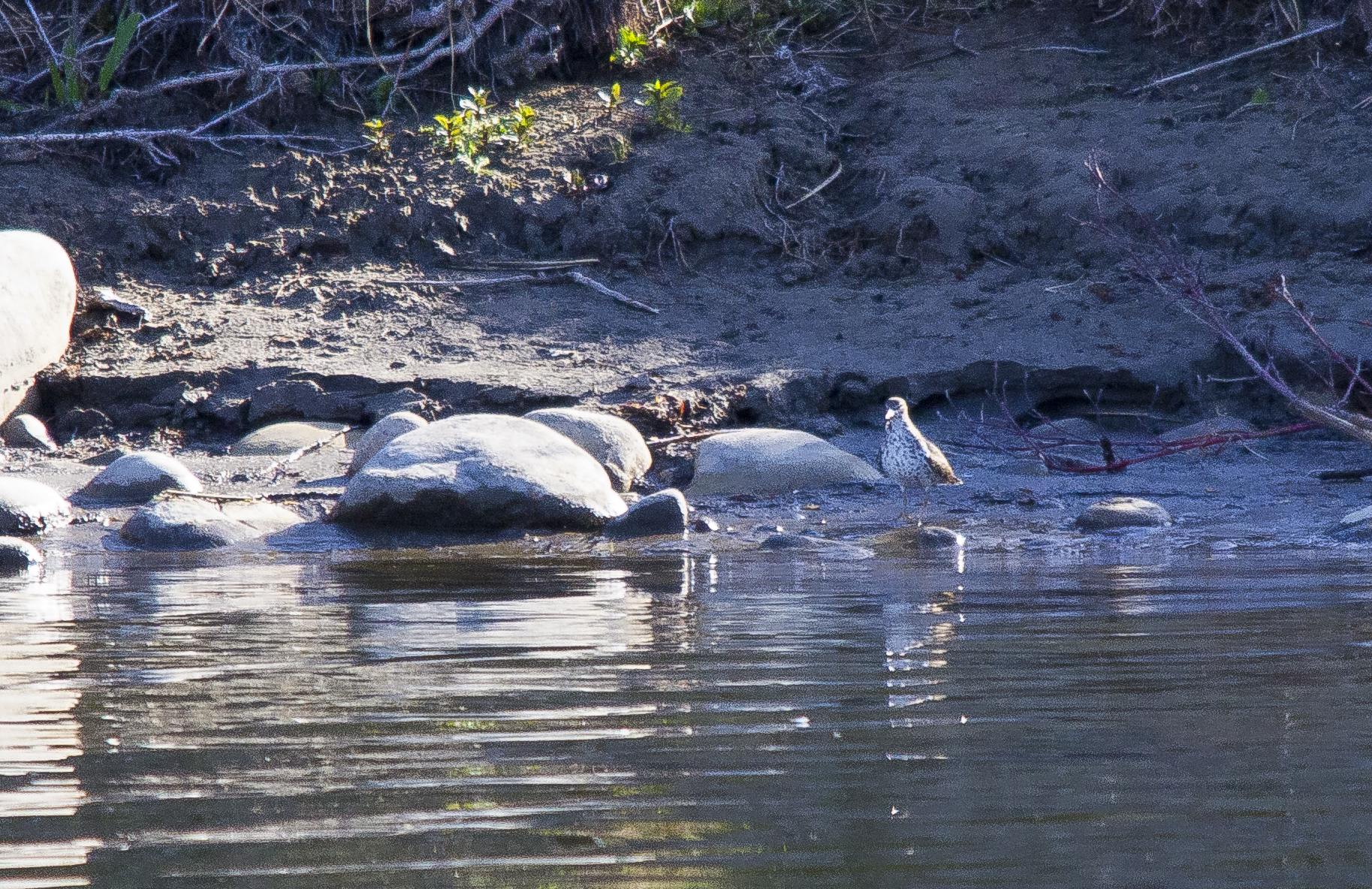
Spotted Sandpiper
Two other old faithful birds that I have somehow missed so far this year are the Green-winged Teal and Gadwall, both of which were viewed down along one of the back-channels of the Bow River, in the shallow, slow waters in the gravel laden meanders behind the main series of islands. The Gadwall were one of the species we were able to observe “The Beast With Two Backs”… or in other words, the mating of the ducks. It really is quite an unceremonious event for birds in general. I think the whole encounter lasted less than a minute.
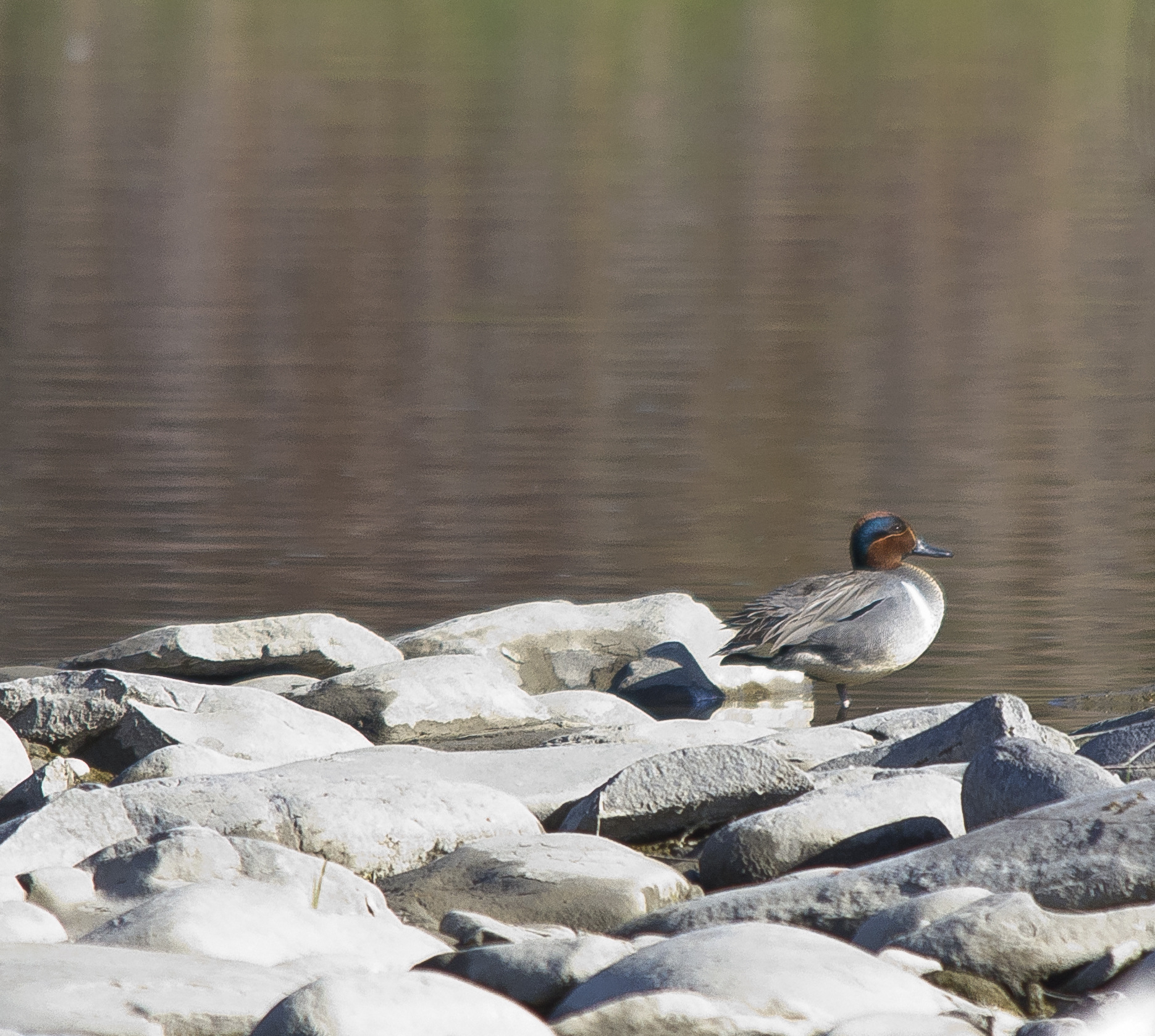
Green-winged Teal (m)
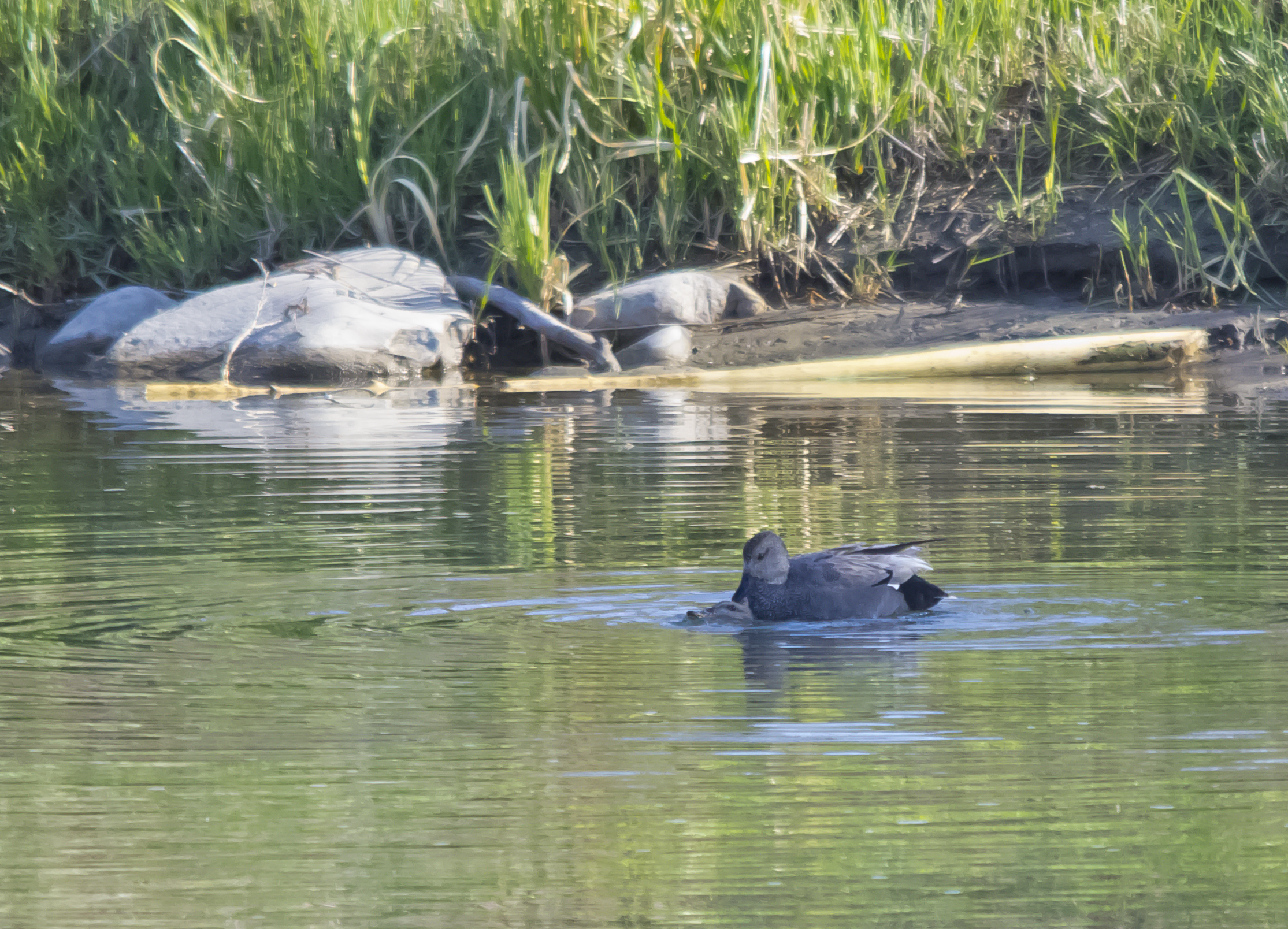
Male (top) and female (bottom) Gadwall
I’m always happy when an outing includes good views of Killdeer. One of our first sightings was across the back-channel, in the shade, with the Killdeer disappearing among the rocks, but near the end of our walk, we also caught this species in the act of attempting to procreate. I wish these future parents good luck! At least the male didn’t attempt to drown the female during the copulation!
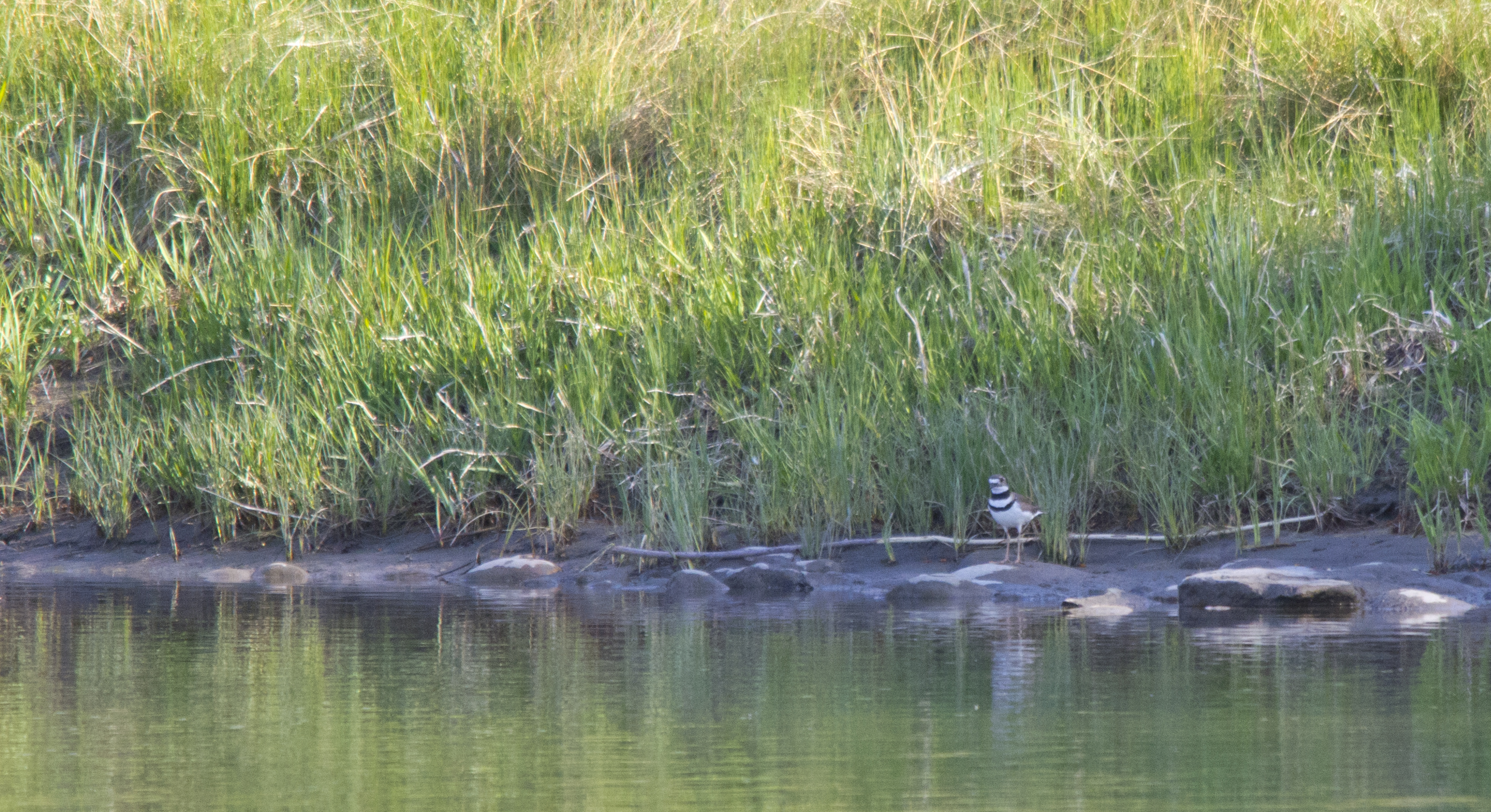
Killdeer
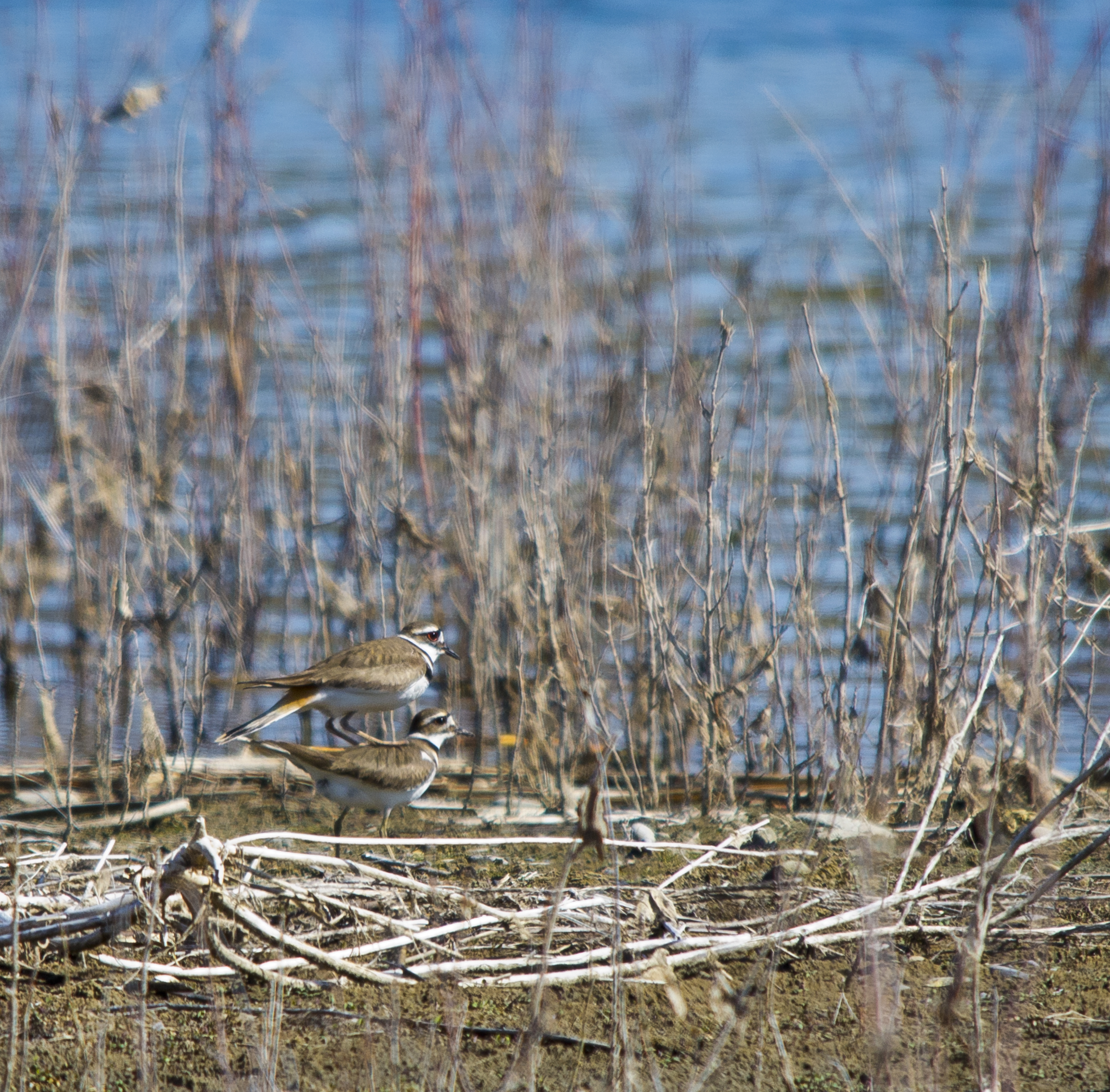
Male (top) and female (bottom) Killdeer mating
One of the biggest surprises that I should have been prepared for, but always takes me aback every year, is the sheer number of Savannah and Clay-colored Sparrows that invade the grasslands and brush-lands on the outskirts of Calgary. By far these two were the most numerous species of the day, and their calls provided the constant background theme music for our outing along the river, interrupted by the odd Song Sparrow, Lincoln Sparrow, and even a distant Vesper Sparrow that we heard, but did not get close enough to see.
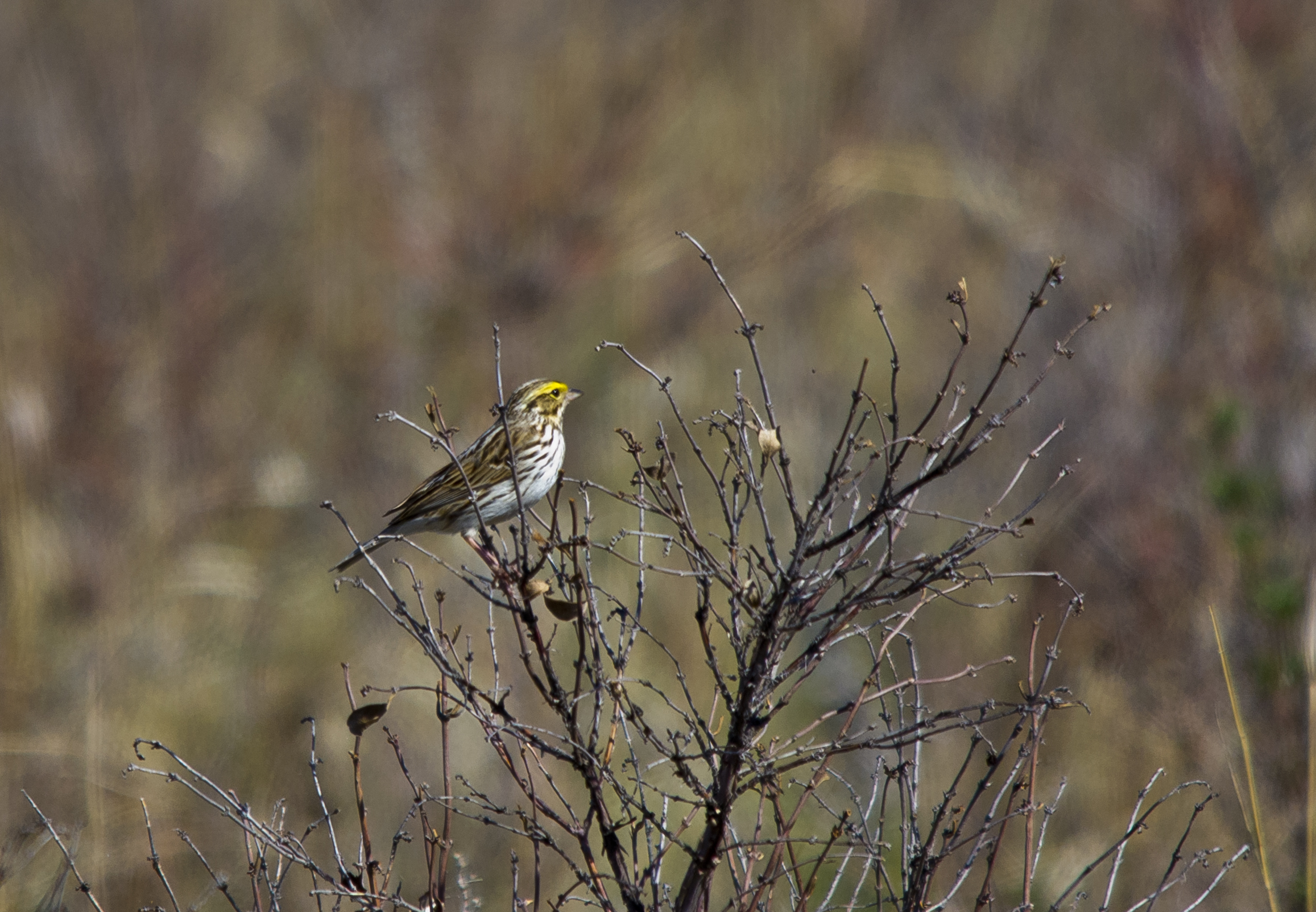
Savannah Sparrow
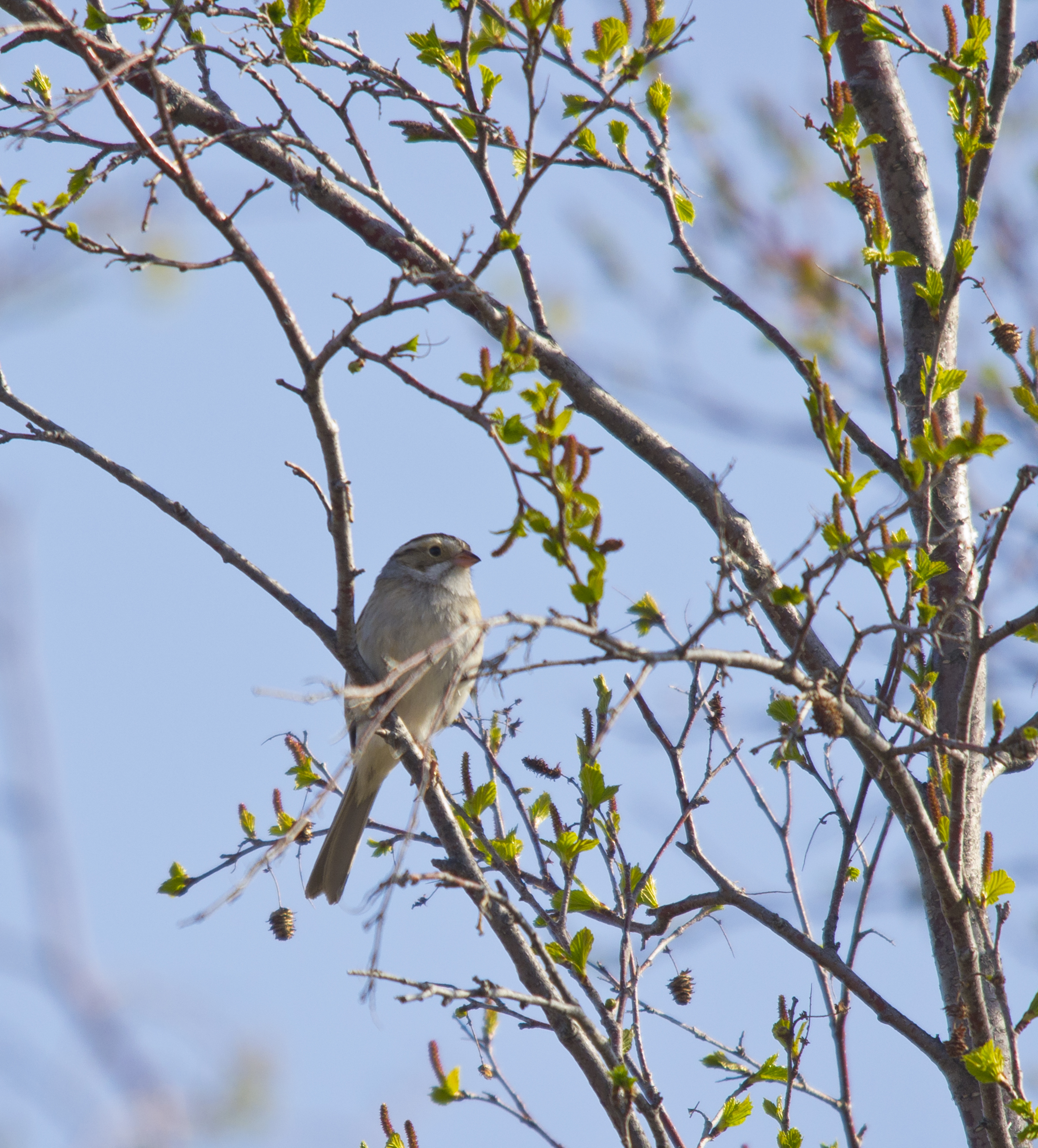
Clay-colored Sparrow
And while I’m on the topic of surprises, these two were great additions to the outing; a small raft of Red-necked Grebes at the pond at the far south end of Lafarge Meadows, and a Great Blue Heron that flew by on at least three separate locations.
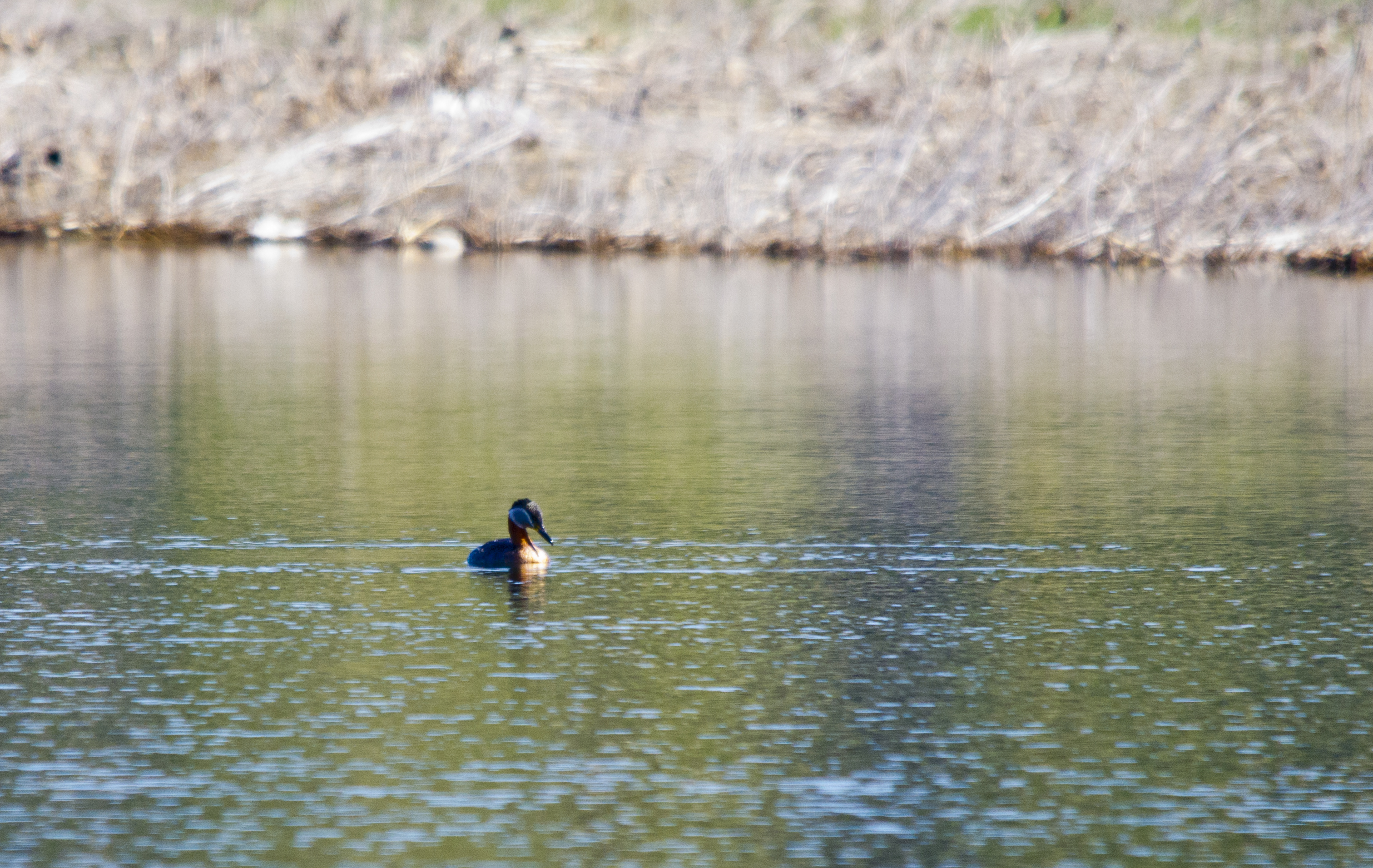
Red-necked Grebe
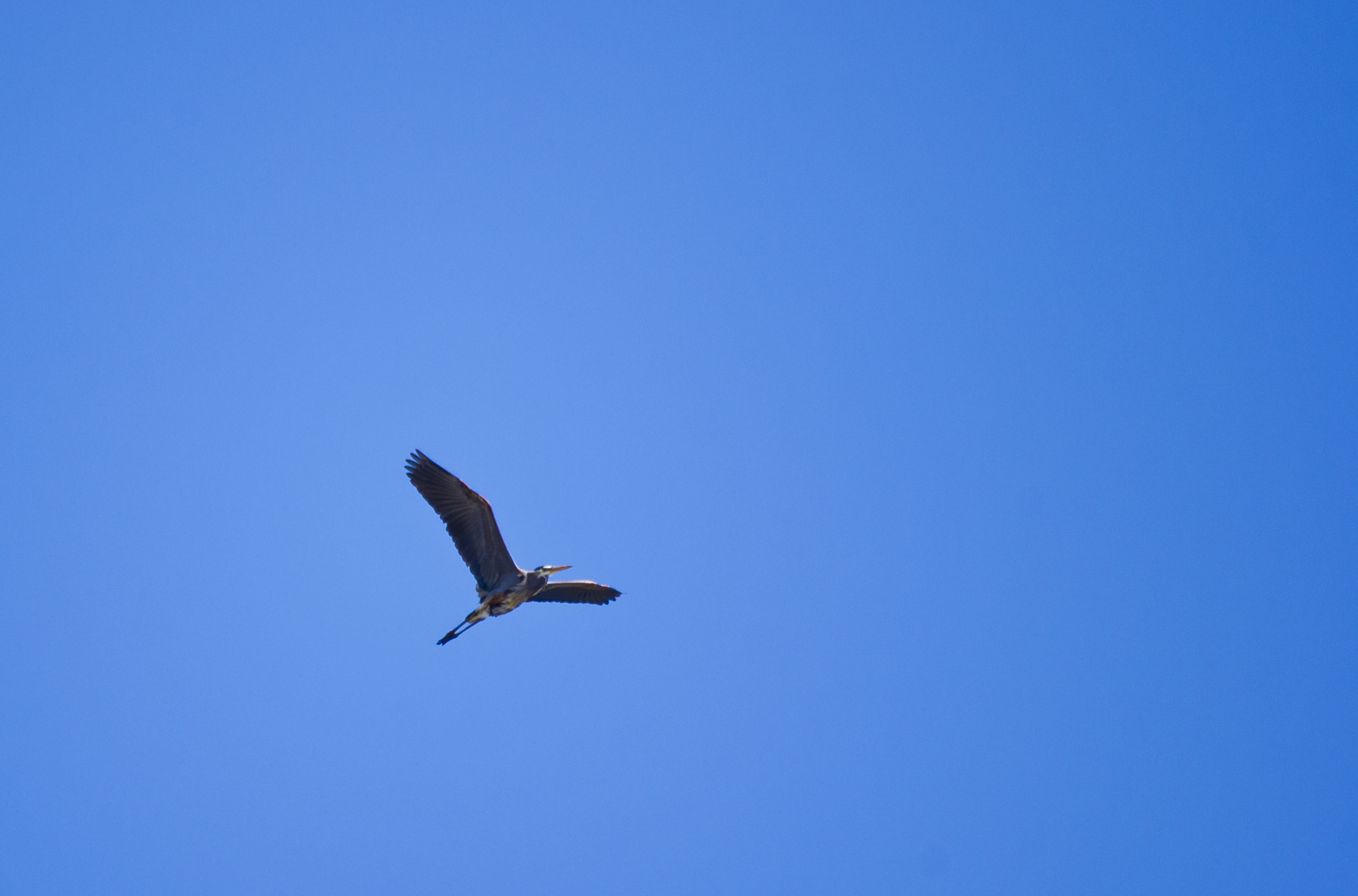
Great Blue Heron
When we had first arrived, we noted a swallow up on one of the nearby powerlines, and while we thought it may be a Northern Rough-winged Swallow, we couldn’t be sure due to the bad light. We got lucky though, as the little swallow decided to stick around and wait for us to come back, confirming our original ID. The browns and greys of the Rough-winged Swallow provides stunning contrast to the iridescent blue and bright white Tree Swallows we saw further down the path guarding a nest hole.
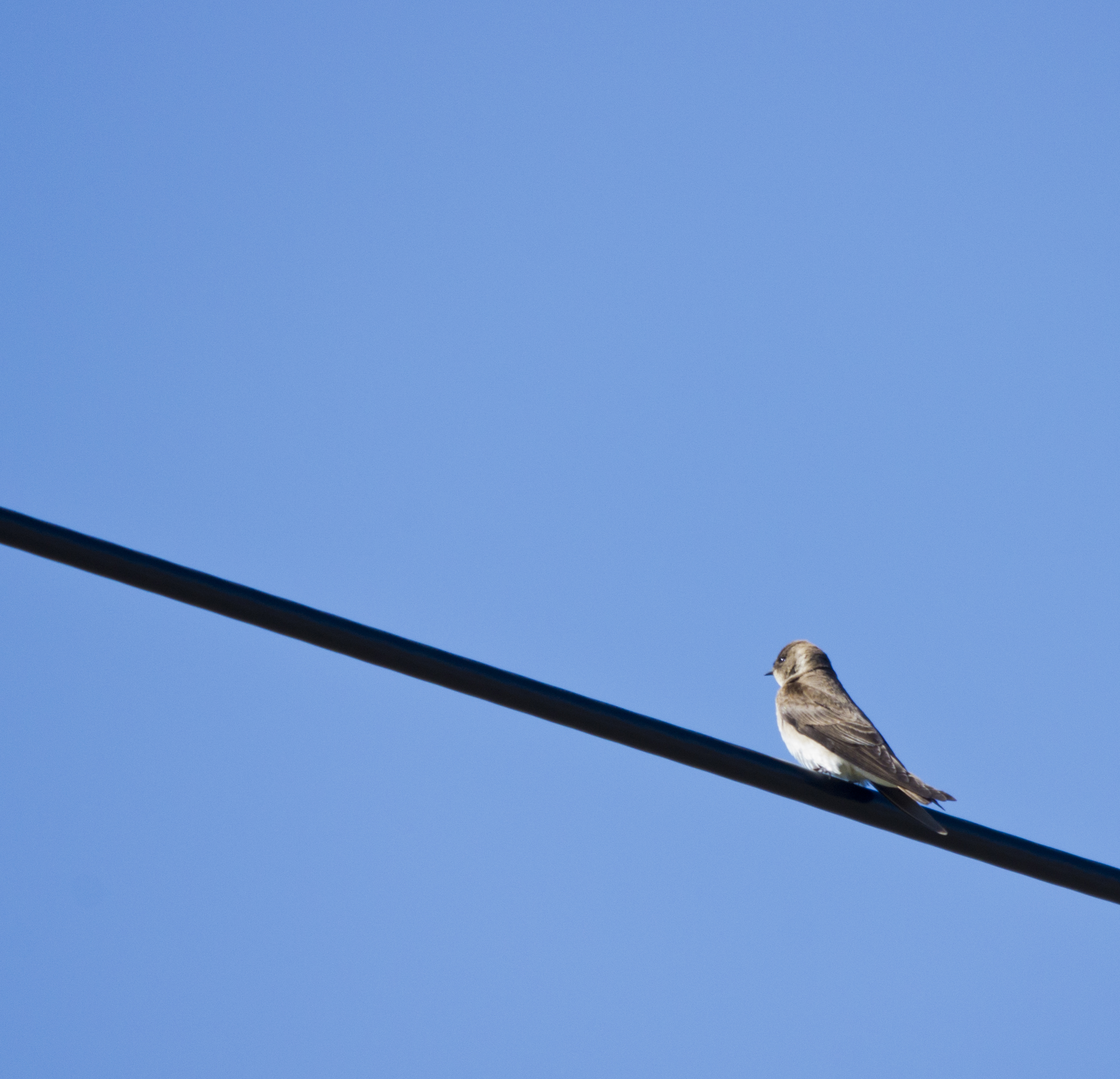
Rough-winged Swallow

Another great week of birding down, and at least 6 more to go before the Spring Birding course wraps up for the year.
See you next week!
 This week saw the inaugural Birds & Beers event in our city, and although the first gathering was small, the seven participants all judged it a success.
Topics ranged from good birding locations, local field trips, world birding and bird photography, to bird conservation issues and ebird reporting. Attendees were a mix of experienced and new birders, which is the purpose of Birds & Beers.
An extremely enjoyable evening was had by all, and everyone thought it was a great idea and should be done again. The only other time birders get to talk to each other is just before and after meetings, or while birding, and those are limited and not as relaxed. Getting together at night and indoors also means no one is missing any birding time in the field!
Everyone is welcome at this event, no matter what your level of birding skills. Plans are now in the works to have a Birds & Beers get together near the end of every month, so watch this blog for the date and location of the June gathering.
This concept was first presented to local birders by Birds Calgary writer Dan Arndt, who ironically didn’t make it to the event. Thanks to a faulty transmission he was stuck on the highway, and to add insult to injury, it was too windy to see any birds while he was waiting for the tow truck. He’ll be the first to show up at the June group!
Posted by Dan Arndt
Last weekend the Friends of Fish Creek Spring Birding course visited the always familiar and great stand-by that is the Inglewood Bird Sanctuary. The air was filled with new songs, and the sky was filled with plenty of new birds for the year, along with a great many old faithful birds that have stuck around all winter.

Inglewood Bird Sanctuary
The first new bird we saw was almost immediately spotted when we entered the sanctuary. This American Kestrel was hovering about ten meters up before diving down into the grass and flying away with a freshly caught field mouse or meadow vole.

American Kestrel
As we turned down the pathway into the wooded area at the west end of the ponds, we were alerted to the presence of Yellow-rumped Warblers, as they flitted around through the trees. Not a new bird, but certainly the number of these birds was something to write home about. We estimated about 25 individuals, but there were likely many more that we didn’t see in the low brush throughout the sanctuary.

As we came out onto the bridge, we were greeted by a small flock of Tree Swallows with their aerobatic flights and high pitched trills, and later on throughout the day they were present almost everywhere we turned.

As we came to the pond, the high pitched call of a single Lincoln’s Sparrow was heard over the din, and once we narrowed down its location, playing a few calls on my iBird app brought it out in search of the intruding male, but also into better view for everyone in the group.

Lincoln’s Sparrow
As we walked along the river bank, we spotted an early male Brown-headed Cowbird that seemed to follow our group around the pond before posing on a nearby branch for some very good views, and then disappeared into the brush.

Brown-headed Cowbird
A very irate Redhead pair also being harassed by a male American Wigeon, who was displaying and approaching the female time and time again. Or so it seemed. Interesting that a brood parasite like the Redhead would be so possessive of its nesting site!

Redhead
Further down the path we came across a female Canada Goose nesting in a small cavity in a dead tree. I was more surprised that the male didn’t attempt to dive-bomb us since we were so close to his mate, as that has happened to me a few times before at this particular nest site!

Canada Goose on nest
As we crossed the pair of bridges at the south, we saw a small number of Wood Ducks, Mallards, and Canada Geese, along with a display of a Red-tailed Hawk chasing down a Bald Eagle, while an Osprey flew over on our left. Moving north past the Walker House, we were notified by Gus Yaki’s group that there was a Palm Warbler in the bushes just ahead of us, along with a large number of Orange-crowned and Yellow-rumped Warblers.

Orange-crowned Warbler
While it’s nowhere near my best shot of the day, it was the highlight when I spotted the Palm Warbler before it headed further back into the trees. Remember, some photos are worth a million bucks, but others are only for recording the sighting… I think this one is most definitely the latter, but shows enough detail to decidedly be identifiable.

Palm Warbler
Have you seen an unusual bird in Calgary? If it is on this Reportable_Birds (PDF), please report it to the Nature Calgary Rare Bird Alert line at 403 221-4519 and leave a message after the beep at the end of the recording. If you would like some help with species identification, email us at birdscalgary@gmail.com. To report injured wildlife call the Calgary Wildlife Rehabilitation Society at 403 239-2488, or the Alberta Institute for Wildlife Conservation at 403 946-2361.
May 6
–WHITE-FACED IBIS (80), Basin 2 Frank Lake, 6 km. E of High River, Dan Arndt and co.
–PEREGRINE FALCON, Basin 3, same, same.
–HUDSONIAN GODWIT (4), Basin 1, same, same.
–BONAPARTE’S GULL (45), Basin 1, same, same.
–COMMON TERN (4), same, same.
May 7
–WHITE-FACED IBIS, between Decker and Rosemary, near Brooks, Dottie Torkelson.
May 8
–SANDHILL CRANE, NW of Cochrane, meadow W of RR60, just NE of Twp Rd 282, Ron Kube,
–GREAT GRAY OWL, NW of Cochrane, Twp Rd 290, RK.
–CLIFF SWALLOW (50), near Linden, Twp Rd314 W of RR 261, Corinne Griffin.
May 9
–CLAY-COLORED SPARROW (6), S Calgary, Pine Creek Sewage Treatment Plant, Warren Costello and Friends of Fish Creek Provincial Park.
May 10
–VIOLET-GREEN SWALLOW (2) Inglewood Bird Sanctuary, Bob Lefebre.
–ORANGE-CROWNED WARBLER, NW Calgary, Confederation Park, Ian Halliday.
–FOX SPARROW, same, same.
The next scheduled update of the Bird Alert is on Monday May 14.