Tag Archive | birds calgary blog

Shepard Slough Survey

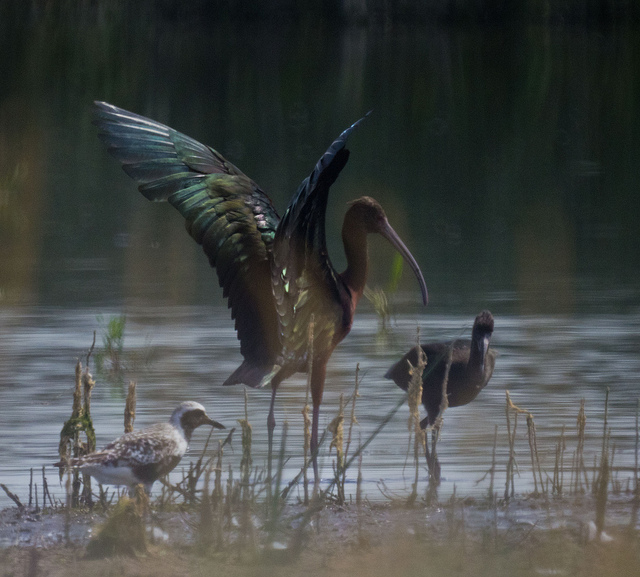
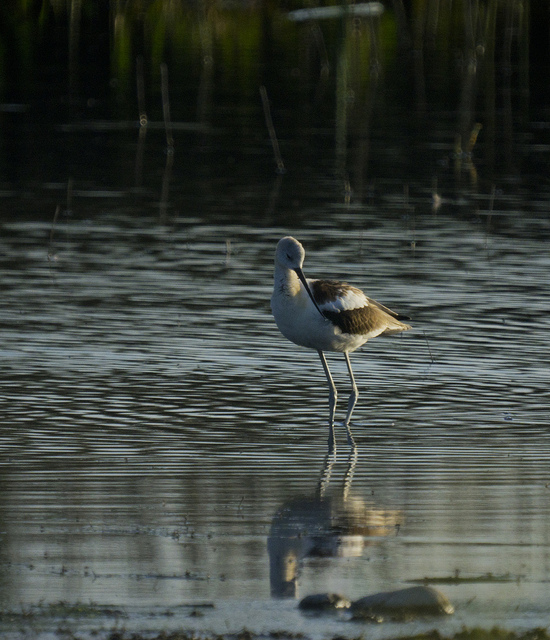
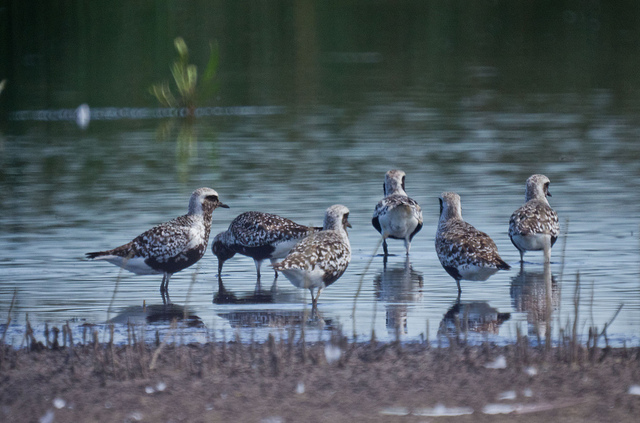
Alberta Environment is conducting an online survey to help determine the future development or preservation of the Shepard Slough and surrounding wetlands, including the new Ralph Klein Park, in SE Calgary. These wetlands are important stopover points for migrating shorebirds and waterfowl. Shepard Slough is the best shorebird habitat within the city of Calgary, and it is vitally important that we birders make our voices heard if we want to preserve it. Please fill out the survey form and have your say in conserving these valuable resources.

Below is the introductory article from the Alberta Environment site.

Why Study Ecosystem Services

As part of its Ecosystem Services (ES) Program, Alberta Environment has undertaken an ecosystem services approach pilot project on wetlands in the greater Shepard Slough area of east Calgary/Rocky View County. This region provides many recreation and education opportunities to people such as birding, nature walking, and field trips to the region. The Ecosystem Services Pilot project in will provide tool(s) to enhance decision making in order to:

  • Test and determine how the approach can be used to help inform tradeoffs between development and the benefits provided by wetlands;
  • Explore ways to provide a broader suite of social, economic and environmental perspectives to information land-use decision making; and
  • Examine the largely unrecognized but important benefits that society receives from nature.

The study is part of a larger transition to a cumulative effects management system and will help ensure informed and robust decision-making.

Once the pilot is complete, we will have a better understanding of how to use the ecosystem services approach and where the approach could be applied to support Alberta Environment priorities.

To better understand the recreation and education benefits enjoyed in the Shepard Slough area, a survey of recreation participation is being conducted. Through this survey, valuable information will be collected including travel distances, costs of travel, and types of activities preferred by users. Anyone that enjoys visiting wetlands in the Shepard Slough, including Ralph Klein Park, for recreation and education purposes is encouraged to complete the survey.

Information brochures about the study are available at Ralph Klein Park, or via the attached PDF below. The survey can be completed by selecting the survey link below.

Thank you to all participants. Your contribution is greatly appreciated

To go to the site, click here.

To go to the survey, click here.

Posted by Bob Lefebvre

Movie Monday: Bathing Crows

Here is a video of three young crows at our birdbath, taken in July.  This was shortly after they fledged, and it looks like it might have been the first time they ventured into the water.  It’s interesting to compare their behavior to that of the juvenile Black-billed Magpie in the video in this post.

Posted by Bob Lefebvre

Loon Survey, Part Two

Last month I reported on my trip to Leisure Lake, southwest of Calgary, to monitor the breeding Common Loons there (see the blog post, Loon Survey, Part One).  On June 14 there was a breeding pair of loons, with two eggs in the nest.  I returned to the lake on July 10 to see if the young loons had fledged.

Leisure Lake, in the Bragg Creek/Priddis area, southwest of Calgary.

I soon saw the loons, the two young birds following their parents around the lake.  The newly fledged loons were already quite large, and seemed to be doing well.

Two young loons following their parents.

One of the young loons in its brownish plumage.

The next step in the loon survey was to return to check on the loons in August, to see if the young have survived their first few weeks of life.  I’ll report on that in Part 3.

 Posted by Bob Lefebvre

Sunday Showcase: Long-eared Owls

These superb owl photos were sent to us by Russell Bachmann, who has been lucky enough to locate a few of these beautiful birds. I love the way these pictures typify any Long-eared sighting – you rarely see these birds when they’re not tucked away behind the branches! Click to enlarge.

Posted by Pat Bumstead

Must-see Birds: August

August means migration for many birds here in Calgary while others are having a second brood of young ones or are concentrating on raising their first brood. This month’s birds are:

1. Common Loon

Best known for its lonely echoing calls that are considered by most people to be heard in unspoiled wilderness. The Common Loon has a seemingly star-studded back, a white necklace and a bright red eye that stands out in the right light. The Common Loon can stay underwater for long periods, up to a minute while feeding and longer if the bird is escaping from danger. Common Loons inhabit clear, open lakes where there are few people and plenty of fish. They can be seen in the mountains, foothills, parkland and boreal forest but are few in the grasslands.

2. Western Meadowlark

A stocky bird with a grayish brown back and a yellow breast with a black V on the bib, the male Western Meadowlark delivers a rich melodious song from posts in the grasslands. The Meadowlark breeds where there is a thick growth of weeds and grasses, laying 3-7 white eggs. The male bird is beautiful and defends his territory with various displays. Look for the Meadowlark in grasslands around Calgary.

File:Western Meadowlark.jpg

Image courtesy Wikipedia

 3. Yellow-headed Blackbird

Our third bird is the loud and noisy Yellow-headed Blackbird. The male is easily recognized by his bright yellow head and neck, black eye patch and white wing patch. the female is brown and mottled with a faint yellow head. The Yellow-headed Blackbird nests in the same marshes as Red-winged Blackbird and will displace the smaller Red-winged Blackbird from the prime nesting spots. The yellow-headed Blackbird is easy to see at Frank lake.


4. Black-crowned Night-Heron

A small stocky heron that at times appears to have no neck, the Black-crowned Night-Heron has a greenish black crown and long slender white head plumes. Most active at night, the Black-crowned Night-Heron was not observed in Alberta until 1958; it is now a local breeder. these herons colonize large bodies of water with dense emergent vegetation; I have seen them at Frank lake every time I have gone there during the spring and summer.

5.  Peregrine Falcon

Our final bird this month is the speedy Peregrine falcon.One of the swiftest birds in the world when diving at prey, it can attain speeds of over 300km/h when diving. The adults are blue-grey above with barred underparts and a dark head with thick sideburns. One of the most widespread birds in the world, the name peregrine means ‘wanderer’ and the Peregrine falcon has one of the longest migrations of any North American bird. Look for this fast falcon nesting on the U of C campus and at shorebird concentration spots like Weed lake, where a Peregrine will hunt the migrating shorebirds.

File:Falco peregrinus nest USFWS.jpg

Image courtesy Wikipedia

These are our 5 birds for August, see which ones you can find! We will have our final must-see birds post on September 1.

Posted by Matthew Sim

The Woodpecker Tree

While on my latest bike ride into Fish Creek Provincial Park, I came across one very special tree. I have started calling it: The Woodpecker Tree. Standing proud and tall on the banks of the creek, this poplar tree seemed to be a gathering place for woodpecker food. I abruptly stopped on the dirt path I was riding on because I had heard a Hairy Woodpecker calling. I approached the tree for closer inspection and I was surprised to see 2 Downy Woodpeckers and a large female Hairy Woodpecker. Much to my surprise I heard another Downy Woodpecker calling high up in the tree and I looked up to see a male Downy Woodpecker and a White-breasted Nuthatch. I then heard a tapping coming from the opposite side of the tree and found it to be a male Hairy Woodpecker tapping away. Eventually, my final count of woodpeckers came up to 3 Hairy Woodpeckers, 4 Downy Woodpeckers and the lone White-breasted Nuthatch.

This tree obviously fulfilled the nourishment needs for 7 woodpeckers and a nuthatch. As I continued to watch all these birds, I saw them eating insects, tapping at fungal growths on the tree and investigating sap.

After a dozen of  minutes or so, the woodpeckers started to spread out into the surrounding area to hunt down more food. Yet some of the birds, stayed on the woodpecker tree, clearly enjoying the abundance of good food.

Now, I can’t help but wonder if this is a regular occurrence at this tree, or was it a one-time event?

Posted by Matthew Sim

Bird Profile: Red-tailed Hawk

Chances are you have seen this species before; this large hawk is one of the most widely distributed, numerous and commonly observed raptors in Canada. With a wingspan of up to 1.4m (58”) the Red-tailed Hawk is a highly variable buteo; soaring hawks that have wide tails and long, broad wings. Circling high up in the air, the Red-tailed Hawk can see mice scurrying about on the ground from 30 m (100ft) up .

This particular hawk in the photo appears to have done just that; he saw a mouse and then caught it, bringing the unfortunate rodent away to eat it, flying right over my head in the process of carrying off the mouse.

As mentioned before, the Red-tailed Hawk is a highly variable hawk with at least 14 recognized subspecies; ranging from the dark ‘Harlan’s Hawk’ to the ‘Krider’s Hawk’, a very pale subspecies of the Red-tailed Hawk.

Red-tailed Hawks love woodlands near open country; therefore, their habitat is diverse and they can be seen almost anywhere in Calgary. In summer, we tend to see light-colored morphs of the Western calurus the most and in migration and winter, we usually see dark morph ‘Harlan’s Hawks’. Also, in the southern part of Alberta, we have some krider’s Red-tailed Hawks. However, no matter what subspecies you see, they are still very impressive, especially when you get a good look at those talons!

Posted by Matthew Sim

Banff: A National Treasure Part 3

Continued from Part 2.

For our final day in Banff, we went to Johnston Canyon, just minutes away from the Johnston Canyon campground. We packed up our trailer under sunny skies and prepared for the hike. As we went along our hike more and more clouds started to roll in…

    Johnston Canyon is one of two places in Alberta where Black Swifts nest and is also home to American Dippers, North America’s only truly aquatic songbirds. We started our hike, looking for Dippers and admiring the rushing water as it raced by us.

We continued on our way until we reached the Lower Falls, where a small tunnel gave us a closer look at the waterfall; spray from the water jumping about.

From the Lower Falls, we hiked up to the Upper Falls, looking for our target birds but failing to see them. We heard some Townsend’s Warblers, a difficult bird to see and we did manage to see a Pacific Wren, a race of the Winter Wren that was recently split and became its own species.

Common Ravens, which are readily seen in the mountains, were seen in several different places along the hike.

By this time, we were almost to the Upper Falls and now a steady drizzle was falling; it became heavier and heavier until it was raining quite hard. We made it to the Upper Falls, enjoyed the view and then beat a hasty retreat to our car, trying not to become wetter than we already were. We made it to our car, wetter than we would have liked before driving down the road several kilometers to the Castle Mountain chalets and stopping in a parking lot for a quick lunch. By this time, the rain had stopped (how convenient) and we stopped to admire a pair of Osprey’s and their nest as well as a Flicker nest right beside the road.

Our trip to Banff was great and I would readily do it again!

Posted by Matthew Sim

Photo Feathers: House Finch

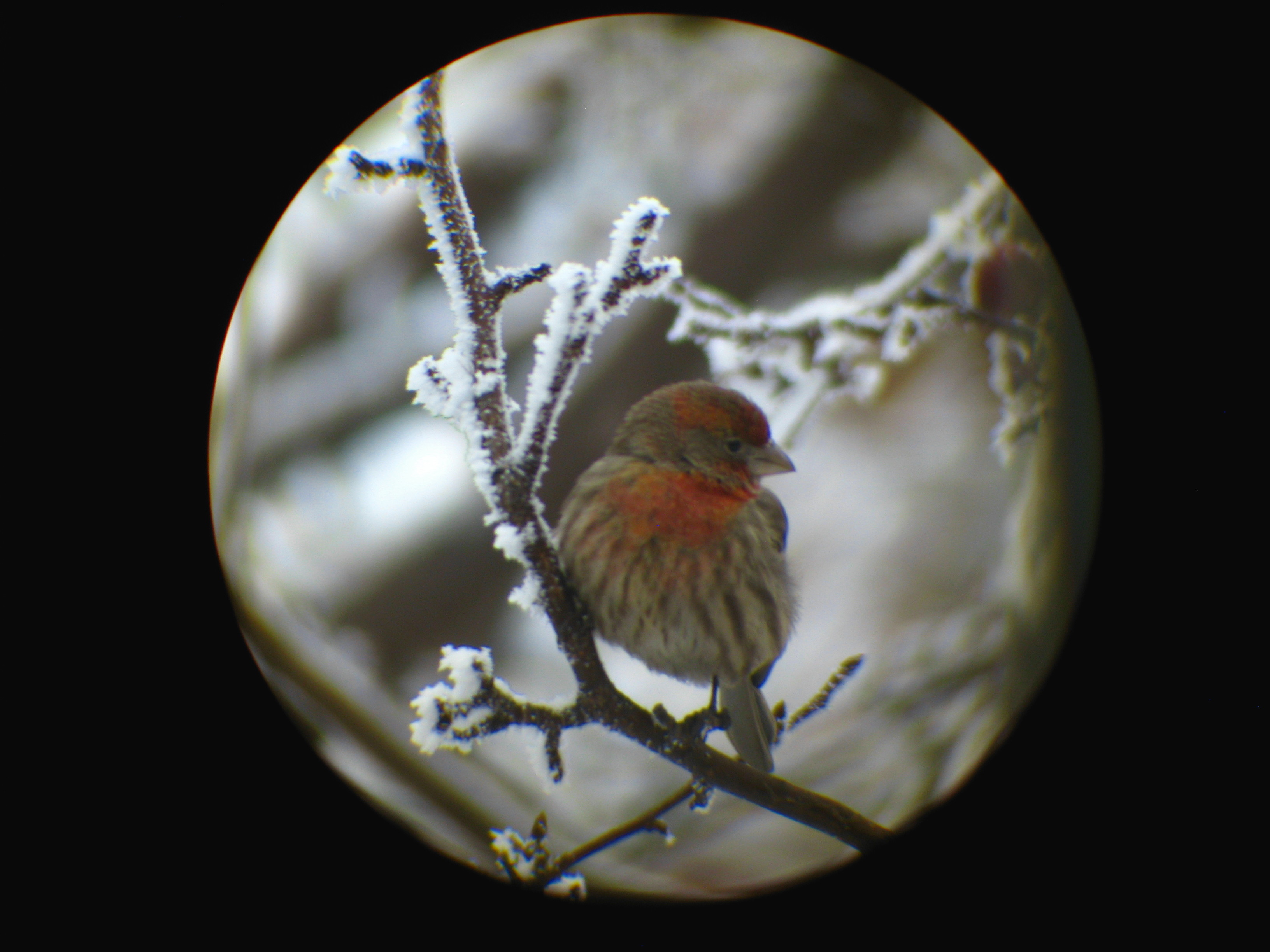
When I first saw this bird I thought it was a Purple Finch.  It has raspberry-red plumage that extends over the top of the head and onto its back like a Purple Finch.  In all other respects it looks like a House Finch, so it is probably just another male House Finch with unusual colouration.


Posted by Bob Lefebvre

Banff: A National Treasure Part 1
Banff National Park is a hotspot for just about anything; birds, mammals, flowers, scenery, recreation, vacations; the list could go on for a long time. Canada Day long weekend, I visited Banff with my family, eager to explore this local gem a little bit more. Saturday, July 2nd, we made our way up to Johnston Canyon campground, in hopes of finding a spot despite the busy weekend. We got lucky and got a spot, set up our trailer in a lot dotted with dandelions and heart-leaved arnicas and then left for a short hike at nearby Silverton Falls.

The Heart-leaved arnica is a pretty yellow flower that can be found in Banff.

Silverton Falls, not as well-known as Johnston Canyon, is a scenic, short hike with a waterfall as a climax. As we did this short hike, we were serenaded by both Swainson’s and Hermit Thrushes and we caught glimpses of several Yellow-rumped Warblers.

 The scenery was great at Silverton Falls and we ascended a trail littered with Indian’s Paintbrush and offering a scenic view of the mountains in the distance.

 Indian’s Paintbrush

Then came the falls themselves…

We finished our hike and then headed to Castle Mountain chalets where we stopped to grab some supplies before eating our lunch there. We met a fellow photographer who was looking for some Rufous Hummingbirds; we all saw one brilliant-colored male. After lunch, we headed up to the popular Peyto Lake. On the short walk up to Peyto Lake, we saw  some local flora and fauna; Grey Jays and Western Anemones.

Peyto Lake was brilliant and I highly recommend anyone who has not been there to visit this stunning lake (visit in the morning and in the evening, when it is less crowded).

While at Peyto Lake, we observed a young family of Boreal Chickadees foraging in the spruce trees. Our first afternoon was great and we had high hopes for the remainder of our trip.

I will post the rest of our journey highlights after this one.

Posted by Matthew Sim