All of the photos below were taken by Tony LePrieur in Fish Creek Park on November 3, 9, and 11.


All of the photos below were taken by Tony LePrieur in Fish Creek Park on November 3, 9, and 11.
These great photos were taken by Larry Doucet in Fish Creek Park in September. They were taken along the creek in the Glennfield area, just east of Macleod Trail.

Common Merganser, Sep 21, 2013. Canon Rebel T4i. Lens: Canon EF75-300mm at 300mm. Exposure: 1/400 sec, f5.6, ISO 100, aperture priority, spot metering, spot auto focus

Common Merganser, Sep 21, 2013. Canon Rebel T4i. Lens: Canon EF75-300mm at 300mm. Exposure: 1/640 sec, f5.6, ISO 100, aperture priority, spot metering, spot auto focus

Common Merganser, Sep 21, 2013. Canon Rebel T4i. Lens: Canon EF75-300mm at 300mm. Exposure: 1/250 sec, f5.6, ISO 100, aperture priority, spot metering, spot auto focus

Common Merganser, Sep 21, 2013. Canon Rebel T4i. Lens: Canon EF75-300mm at 300mm. Exposure: 1/800 sec, f5.6, ISO 100, aperture priority, spot metering, spot auto focus. This one was taken through some trees to see if I could get a blurred frame around the bird. She came right into a spot of sunlight just as I was ready for her.


Black-capped Chickadee, Sep 29, 2013. Canon Rebel T4i. Lens: Canon EF75-300mm at 180mm. Exposure: 1/500 sec, f5.0, ISO 200, aperture priority, spot metering, spot auto focus

White-breasted Nuthatch, Sep 29, 2013. Canon Rebel T4i. Lens: Canon EF75-300mm at 300mm. Exposure: 1/800 sec, f5.6, ISO 800, aperture priority, spot metering, spot auto focus
Rob English saw this immature Bald Eagle in Hull’s Wood, Fish Creek Park, in early February. It got a little tangled up in the branches as it lifted off.


The highlight of the 2013 New Year’s Day Bird Count in Fish Creek Park was the rediscovery of a Black-backed Woodpecker, first reported in the area on December 19, 2012. These birds are seldom seen in the Calgary region – I believe it is at least five years since the last one was seen inside the city. On the afternoon of January 1st, I went to the Marshall Springs area to look for it. Luckily for me, Ursula Krol, who had found it in the morning , had returned and found it again.
Photos by Bob Lefebvre


Posted by Bob Lefebvre
Once again I participated in the Fish Creek Park half-day bird count on New Year’s Day. Though not an official Christmas Bird Count, it is now in its 20th year. Six teams spent the morning counting birds in different parts of this huge park, and then we met at noon to compile the results.
This year I joined Phil Cram’s team in the east end of the park. We covered the Bow Valley Ranch, Sikome, LaFarge Meadows, and Hull’s Wood areas.
It was a beautiful mild sunny day, but we found it pretty quiet when we started at Bow Valley Ranch. We did have six White-tailed Deer pass through before sunrise.
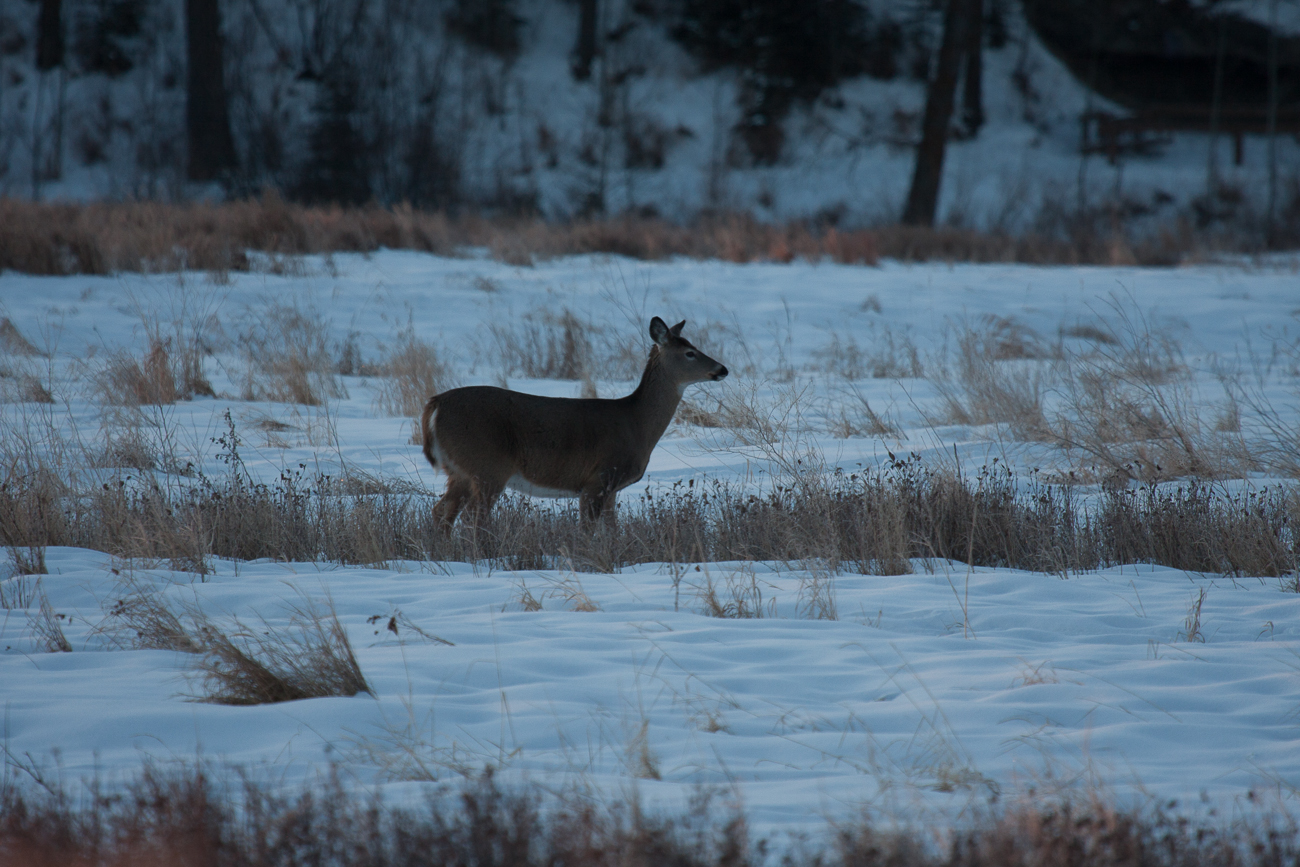
The first mammal of the day – and year.
We failed to find any roosting Great Horned Owls in the row of spruces, and it took a while before we heard even a chickadee. Eventually we heard some White-winged Crossbills in the tall spruces.
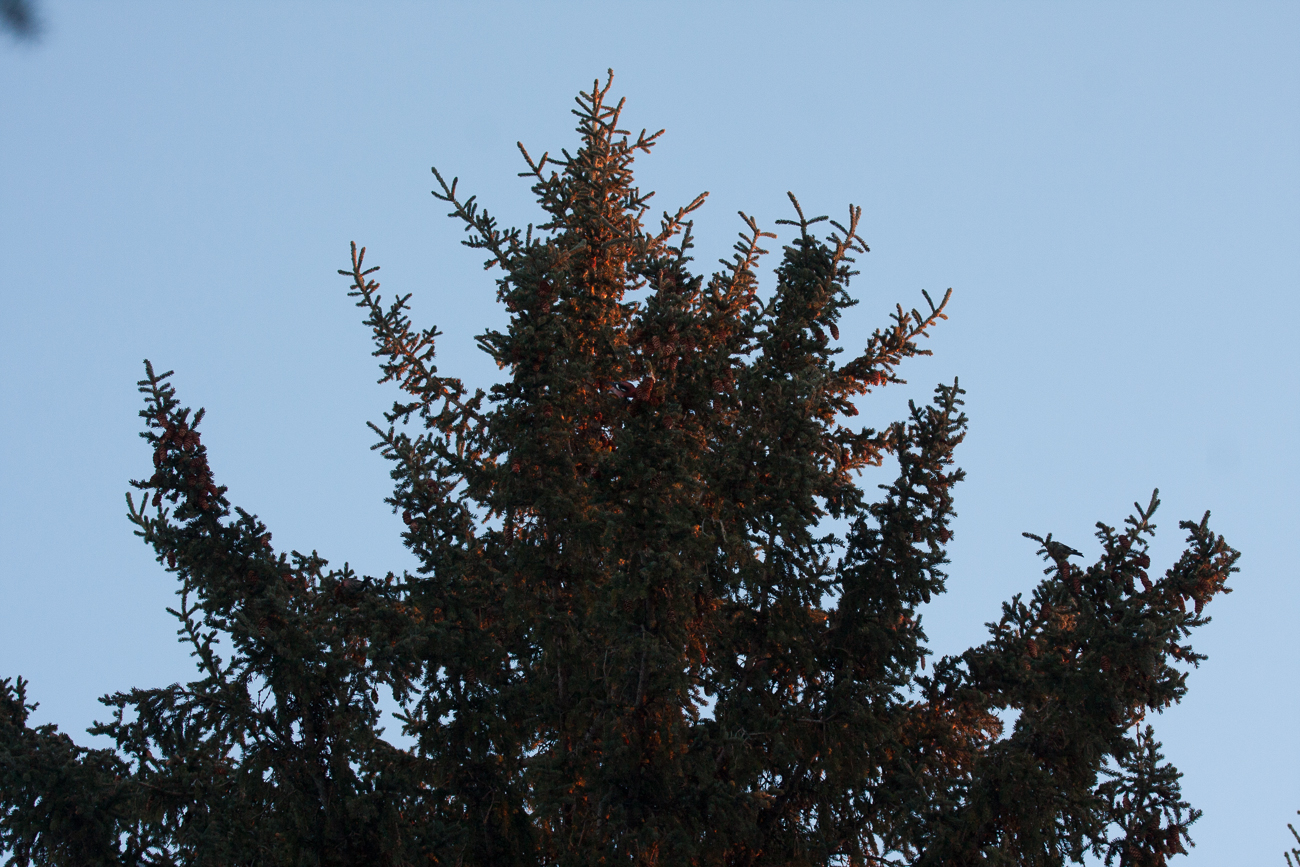
Yes, there are crossbills in this photo.
Next we heard the high-pitched call of the Brown Creeper, and found four of them in the area.
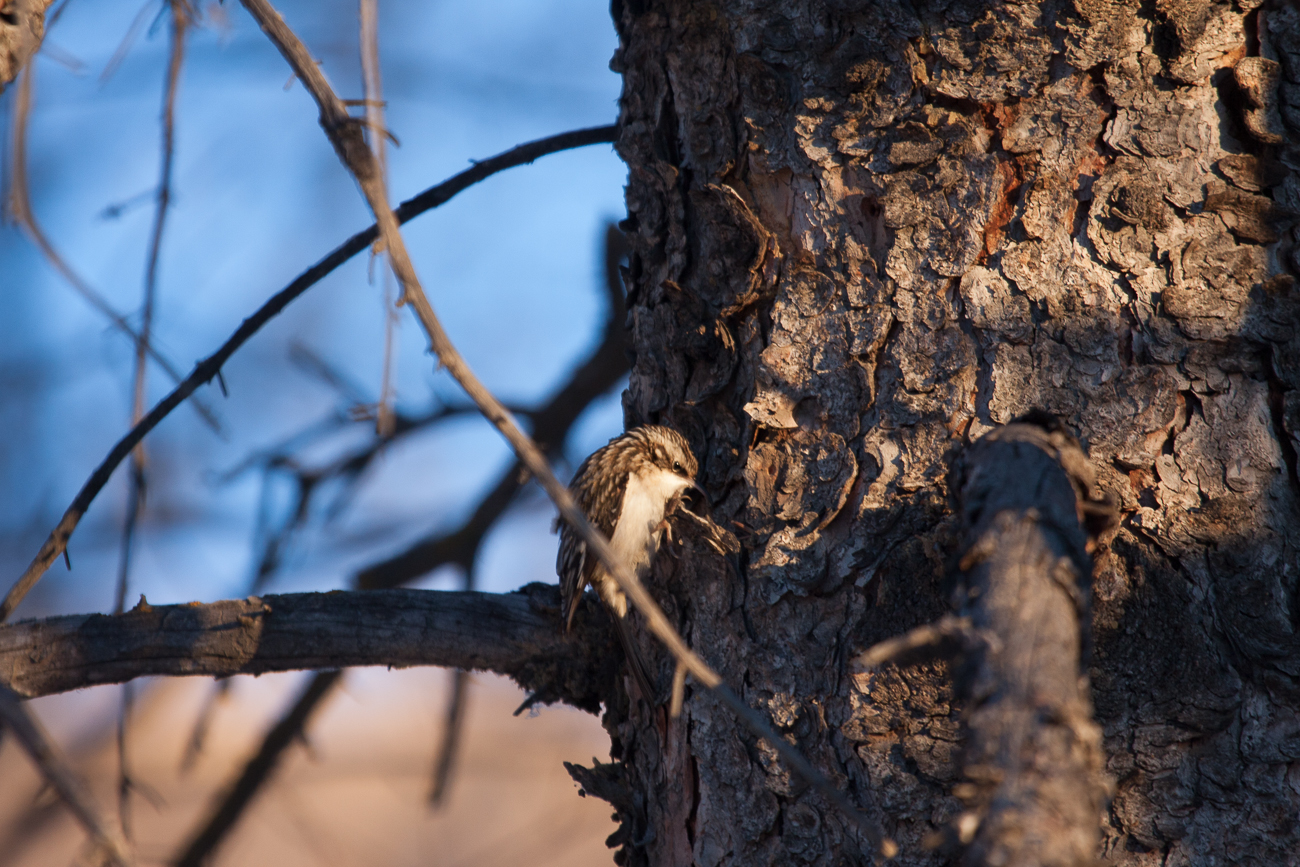
Brown Creeper.
Heading over to Sikome, we quickly found the two Great Horned Owls that roost there every winter in the trees behind the buildings.
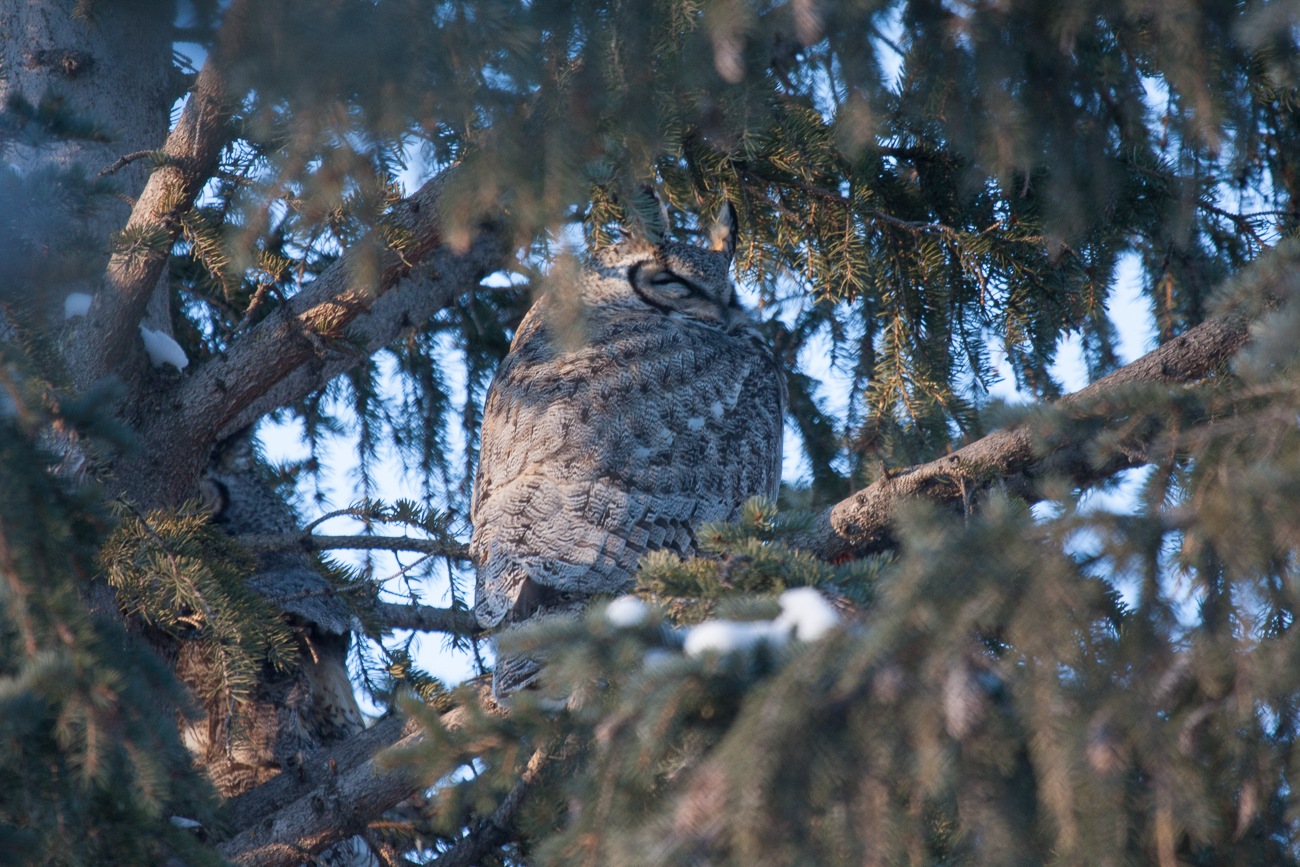
There are two owls here – one of them is doing its spruce-bark impersonation.
Again, the area was pretty quiet. We did get a flicker and this Downy Woodpecker (but failed to find a Hairy Woodpecker or White-breasted Nuthatch, which are often seen there).
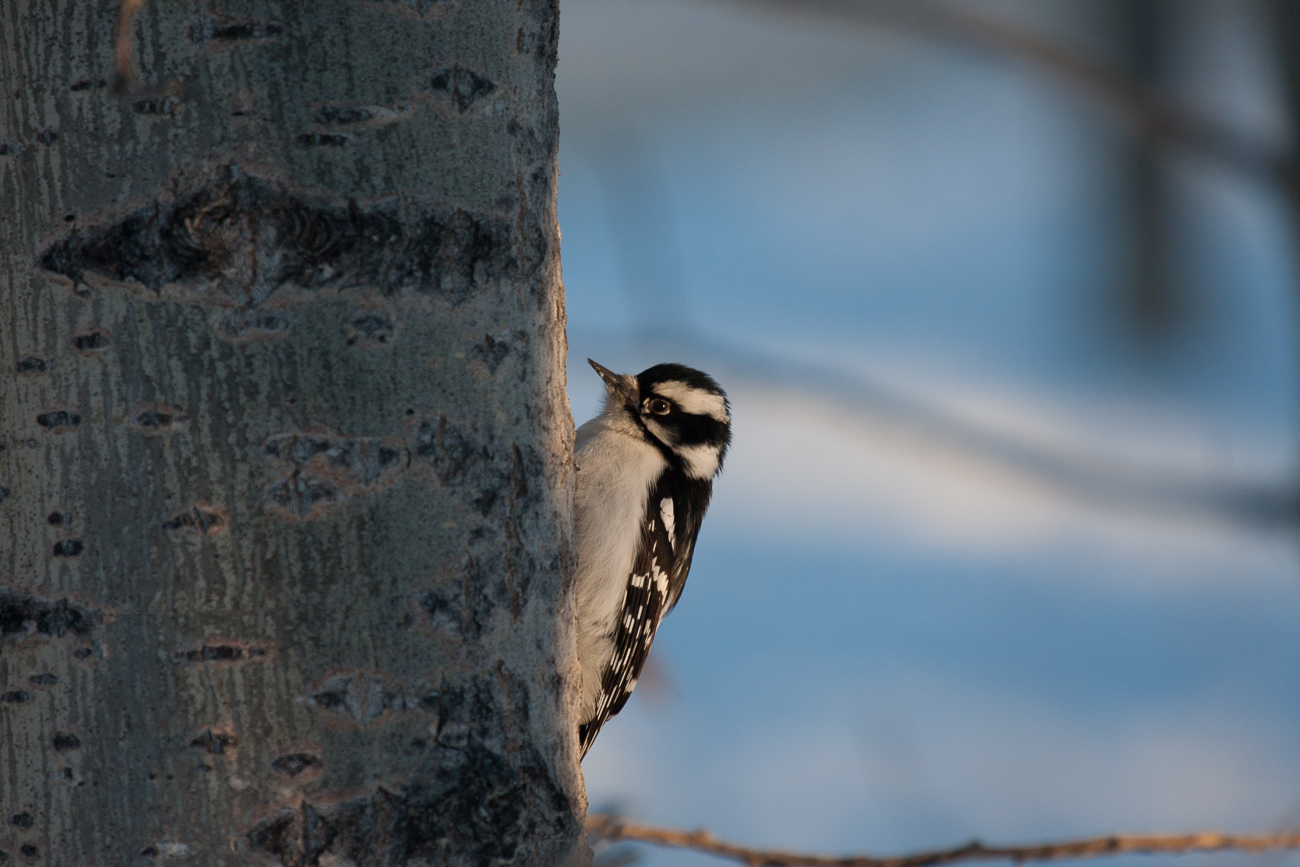
Downy Woodpecker.
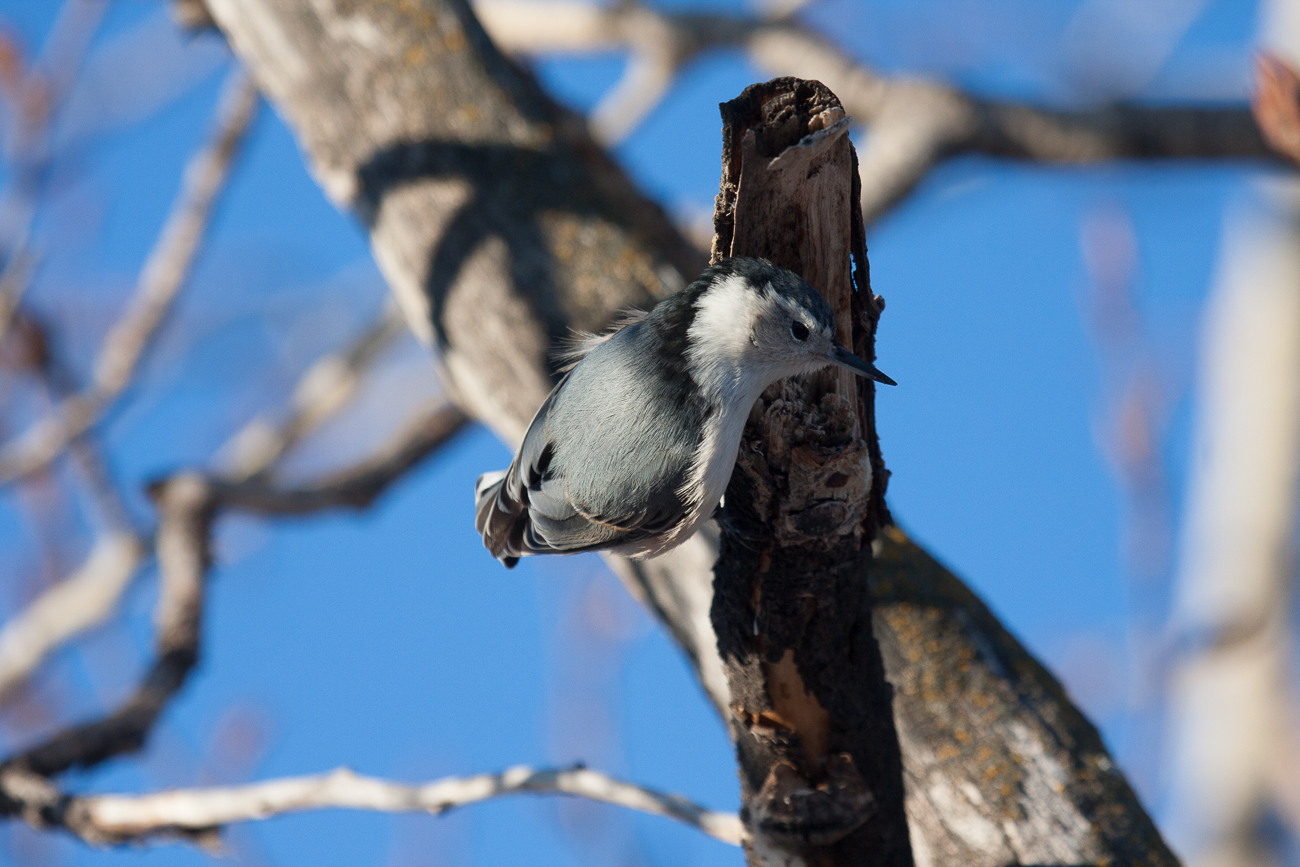
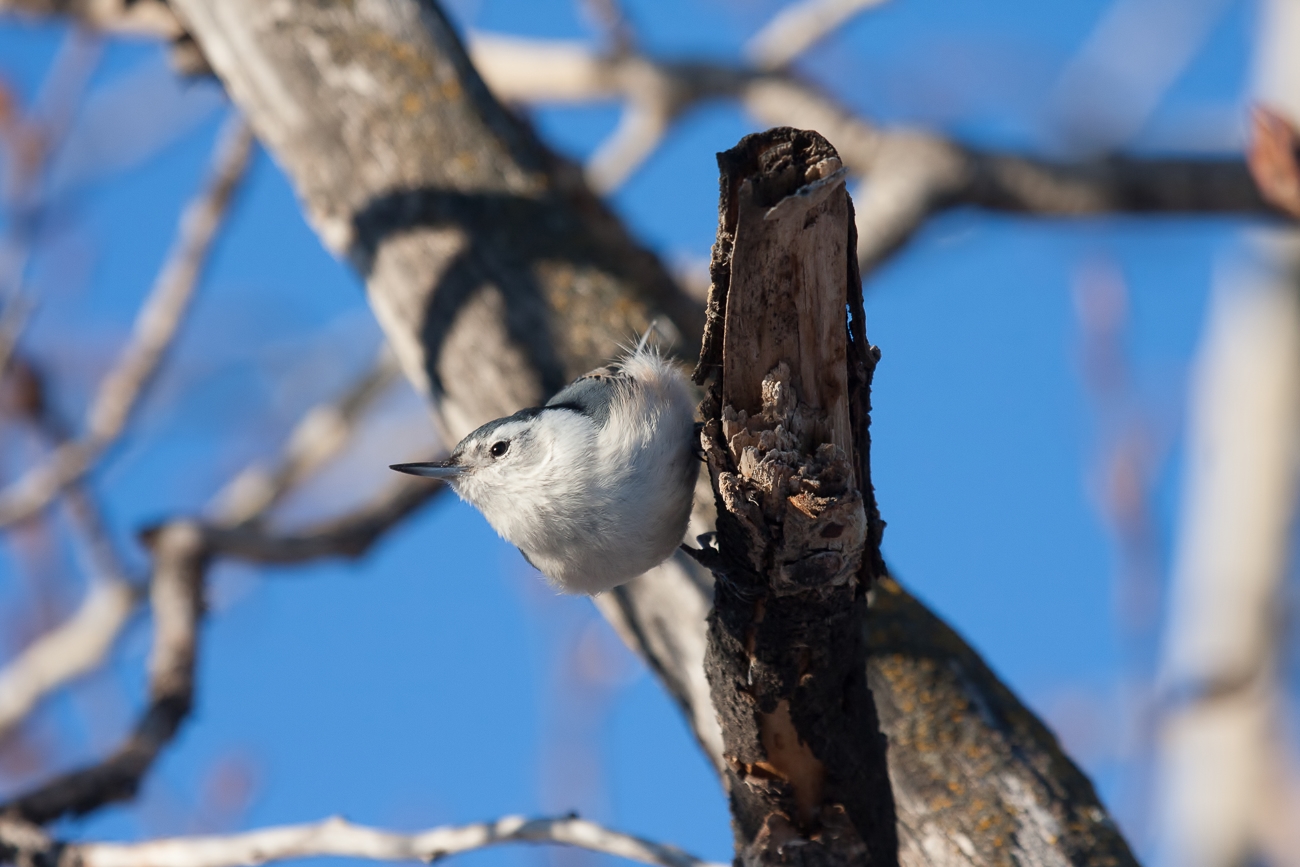
Over at the Boat Launch we had four White-breasted Nuthatches, and a flyover of a young Bald Eagle.
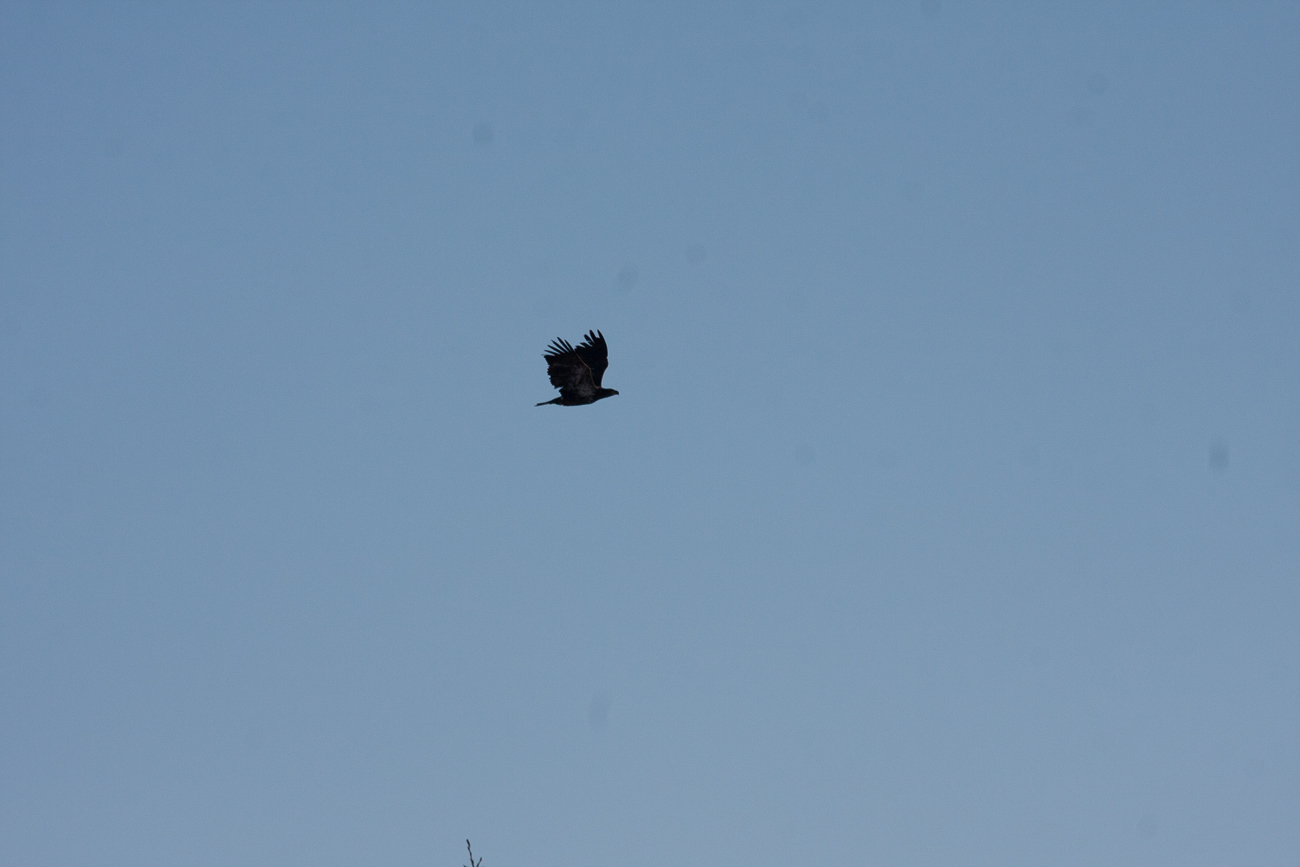
Immature Bald Eagle.
On the river we failed to find anything besides Canada Geese, Mallards, Common Goldeneyes, Buffleheads, and Common Mergansers. We had hoped for Killdeer, Barrow’s Goldeneyes, and perhaps some other species of ducks.
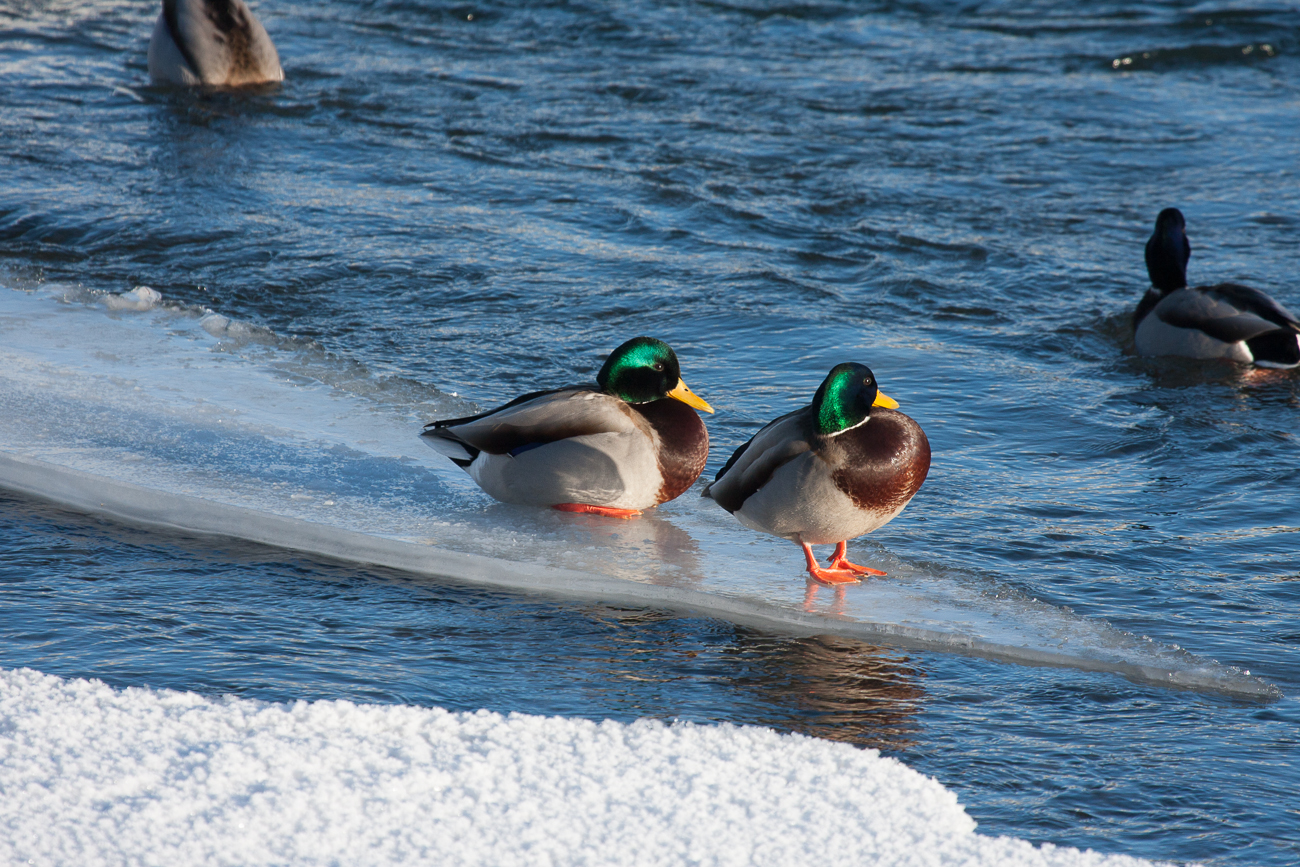
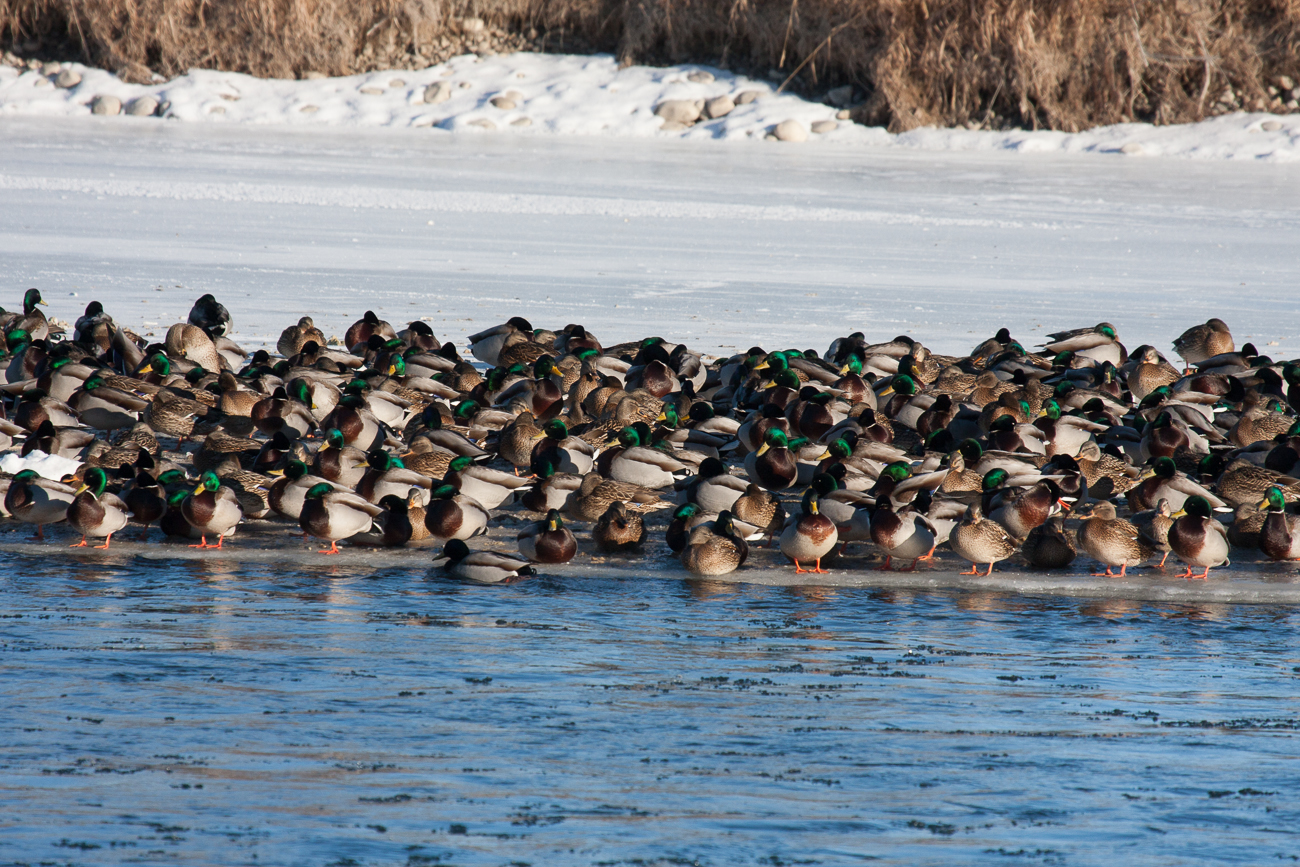
Mallards on the ice.
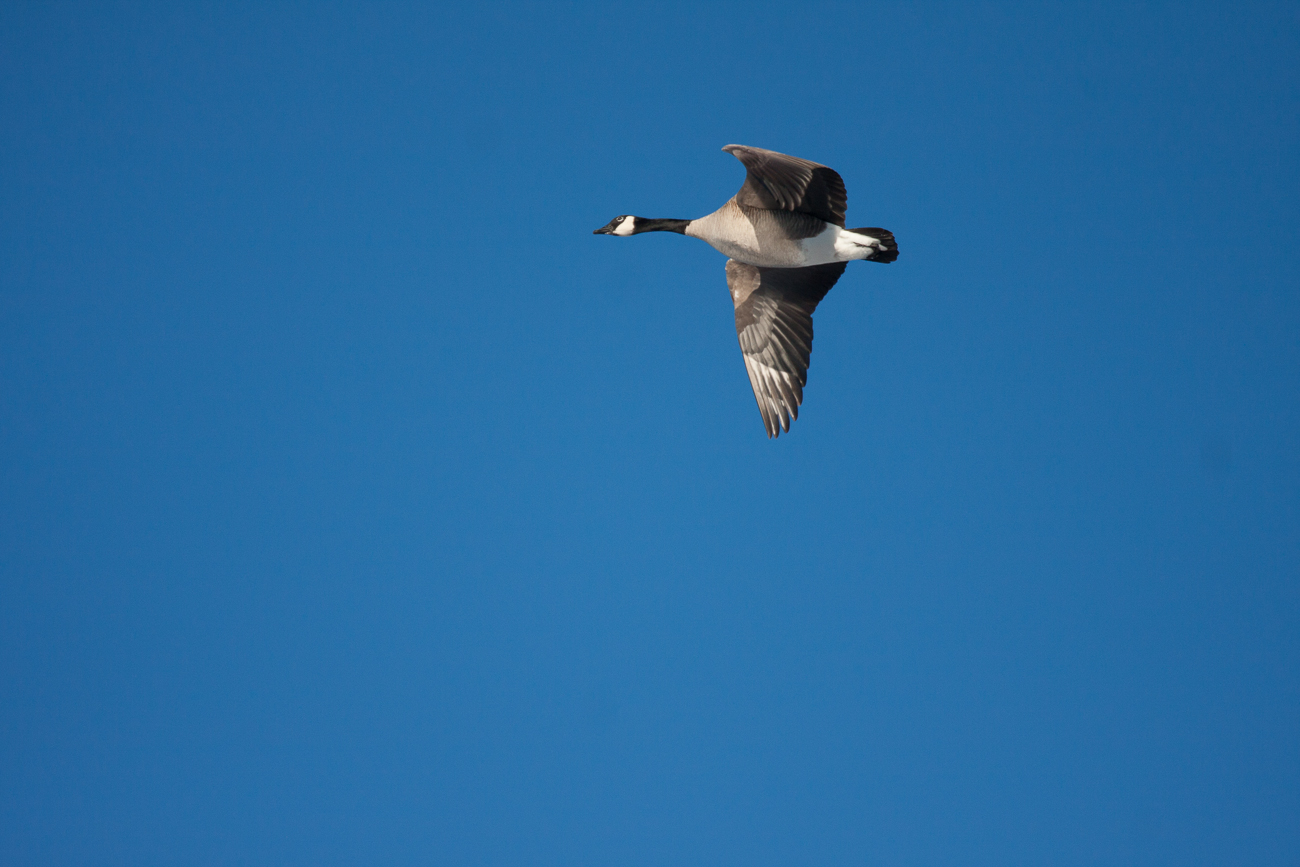
Canada Goose flying over.
At the highway 22X bridge we checked for Rock Pigeons – in these bird counts every new species is important. You never know if any of the other groups will see one or not.
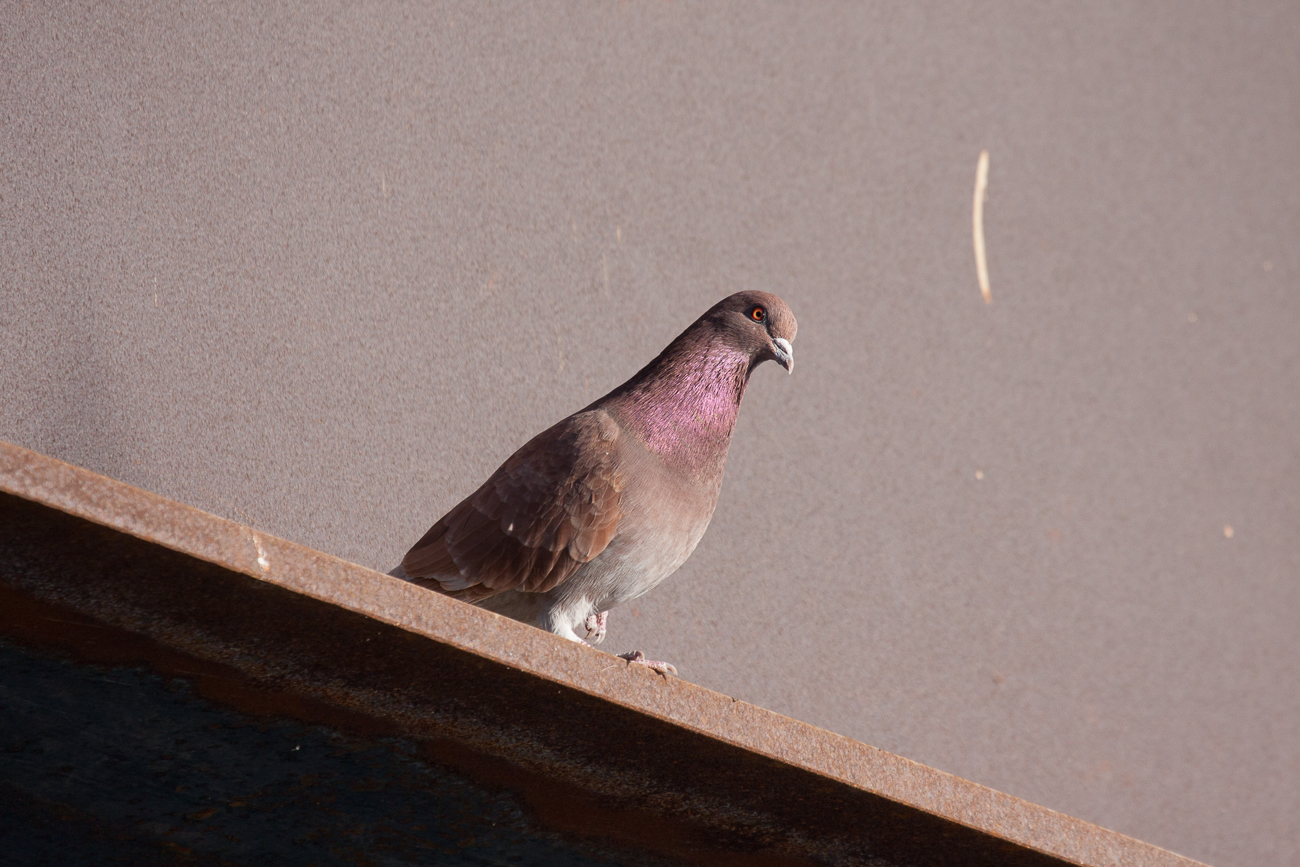
Rock Pigeon, with colours that match the rust on the bridge.
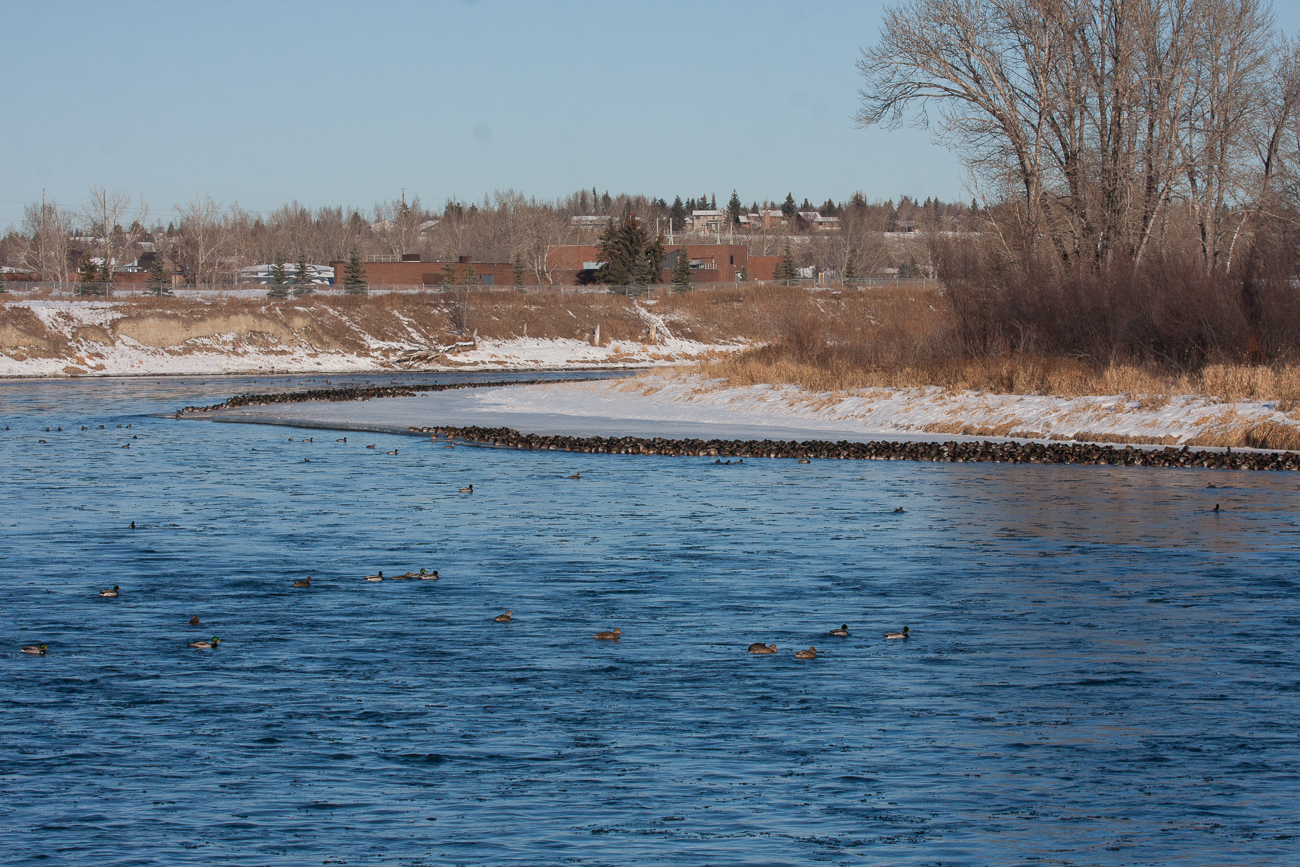
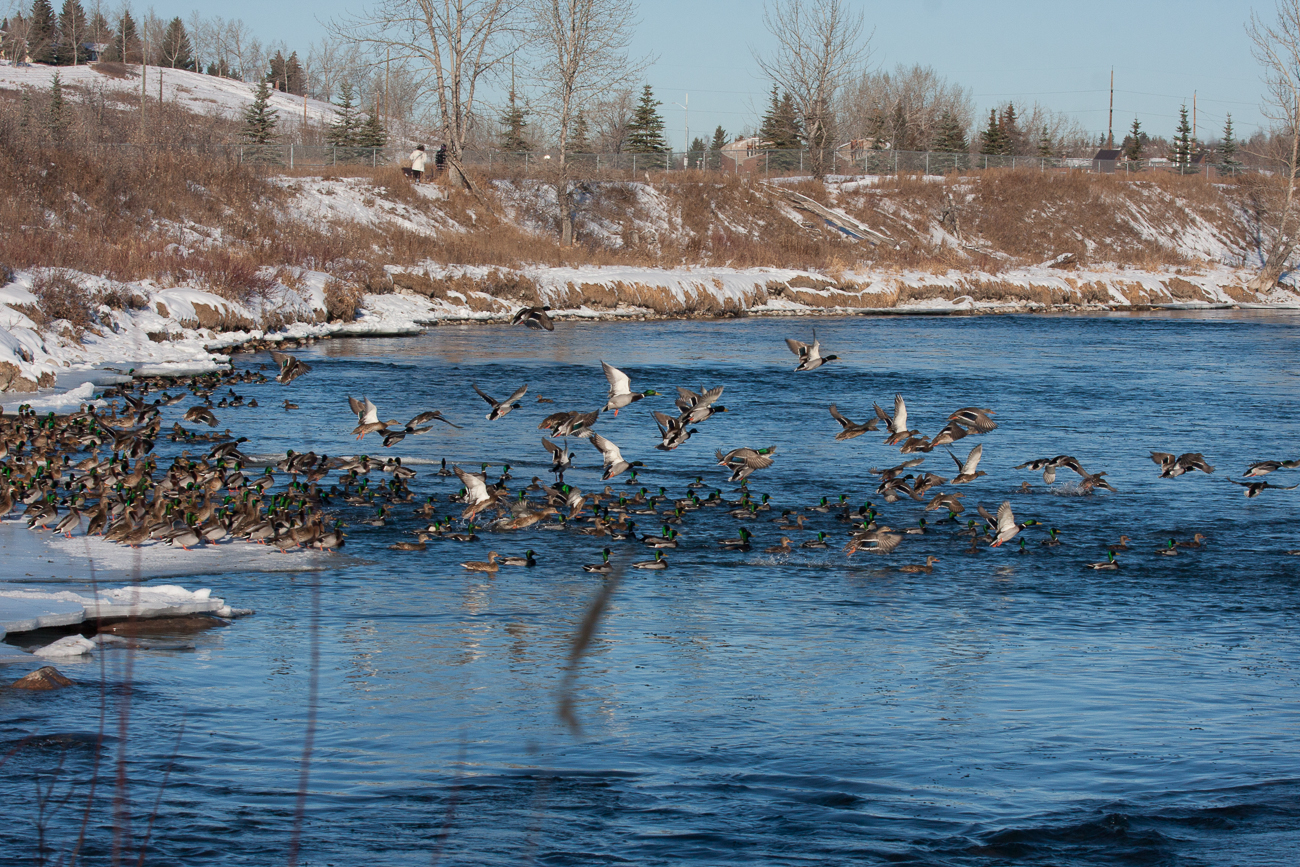
Our final stop of the morning was at Hull’s Wood, where we saw a staggering number of Mallards – about 8000 (some of them were outside our territory and were counted by another group of birders). Again, there were few other species except the usual.
Our best bird of the day was the last, a Northern Goshawk that was being harassed by magpies on the hillside. We didn’t get great looks (and no photos) before it departed.
In the end we had 19 species of birds (and four mammals – Coyote, Eastern Gray Squirrel, and White-tailed Jackrabbit in addition to the deer). A good start to the new year.
Posted by Bob Lefebvre
Since the Barred Owl was first reported in the Bebo Grove/Shannon Terrace area of Fish Creek Provincial Park, Tony LePrieur has made many trips there to search for it. After almost two months without success, he finally was able to see and photograph it on December 7. He watched it for almost an hour as it hunted. All photos by Tony LePrieur.


Barred Owl with Meadow Vole.

Barred Owls are uncommon in the area and rarely seen in the city. This one (or another Barred Owl) has been in the Bebo Grove area for the last two winters (they are non-migratory, but I don’t think it has been reported in the summer – likely it nested in another nearby area).
If you go looking for it, please stay on the trails and watch from a respectful distance. Do not try to flush it – Barred Owls are vulnerable to predation, especially from Great Horned Owls, which are also in this area.

On the same trip, Tony was entertained by this Merlin which took a bath in Fish Creek.


Posted by Dan Arndt
This week, the Friends of Fish Creek course set out for Mallard Point. Located at the far east end of Fish Creek Provincial Park, it abuts the largest island on the Bow River in Calgary, Poplar Island, which is off-limits to the public, but is viewable from the pathways on both sides of the Bow River. We started at the Mallard Point parking lot, walked north along the river, crossed over the bridge, and to the south-east, parallel to Poplar Island. In total, we discovered 36 species in our three hours along the river, all of which gave us incredible looks at them and were amazing to see, as always, and remember, if you want to see a bigger version of the photos in the blog, just click for a full-sized version!
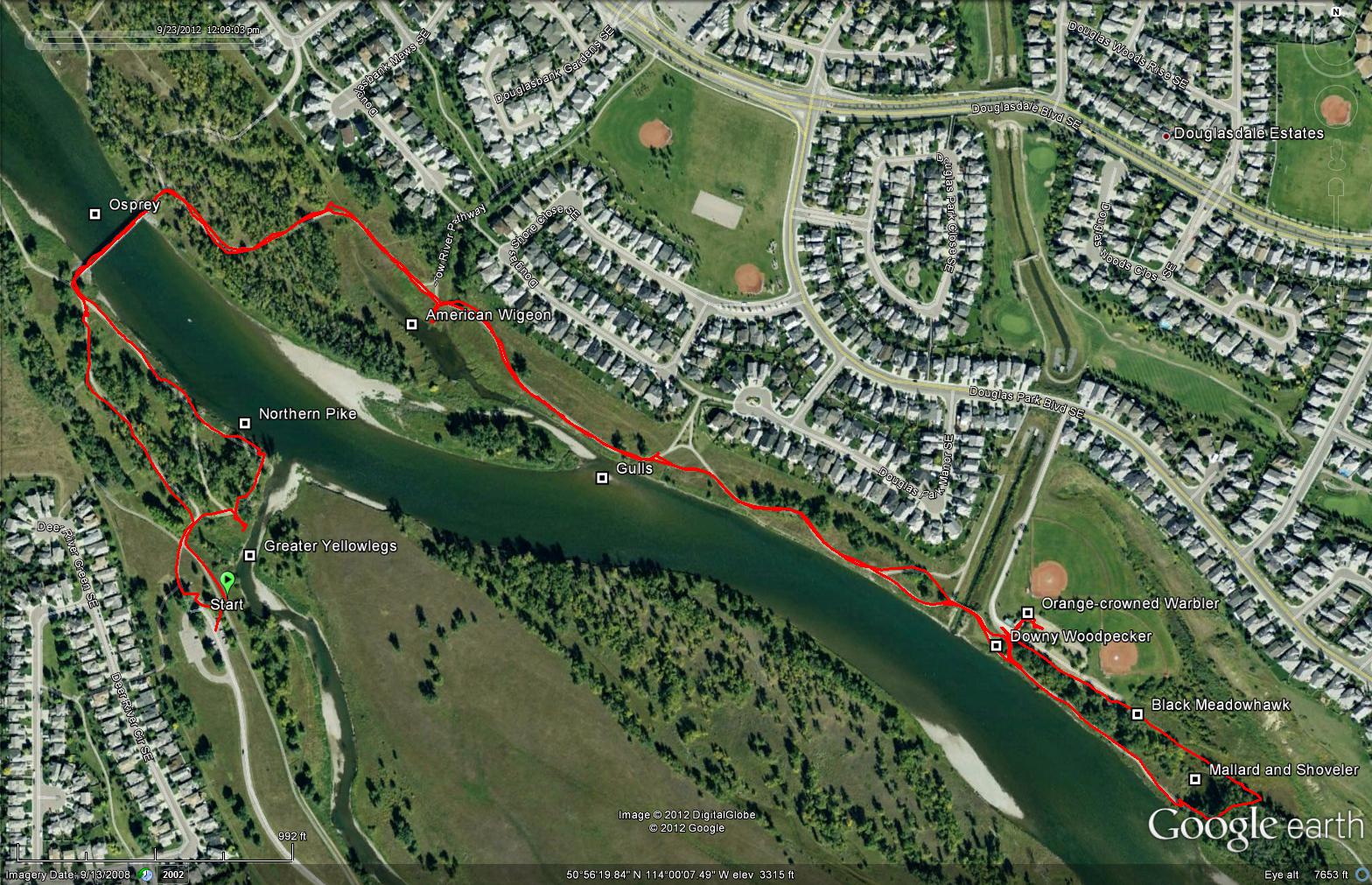
Mallard Point
As we all collected at the parking lot, the consistent racket of a group of 12 Greater Yellowlegs just over the ridge in the flood channel of the Bow River that separates Poplar Island from the rest of Fish Creek Park, and these four decided to ham it up for the photographers of the group, posing close in and making sure everyone got a satisfying look at them.
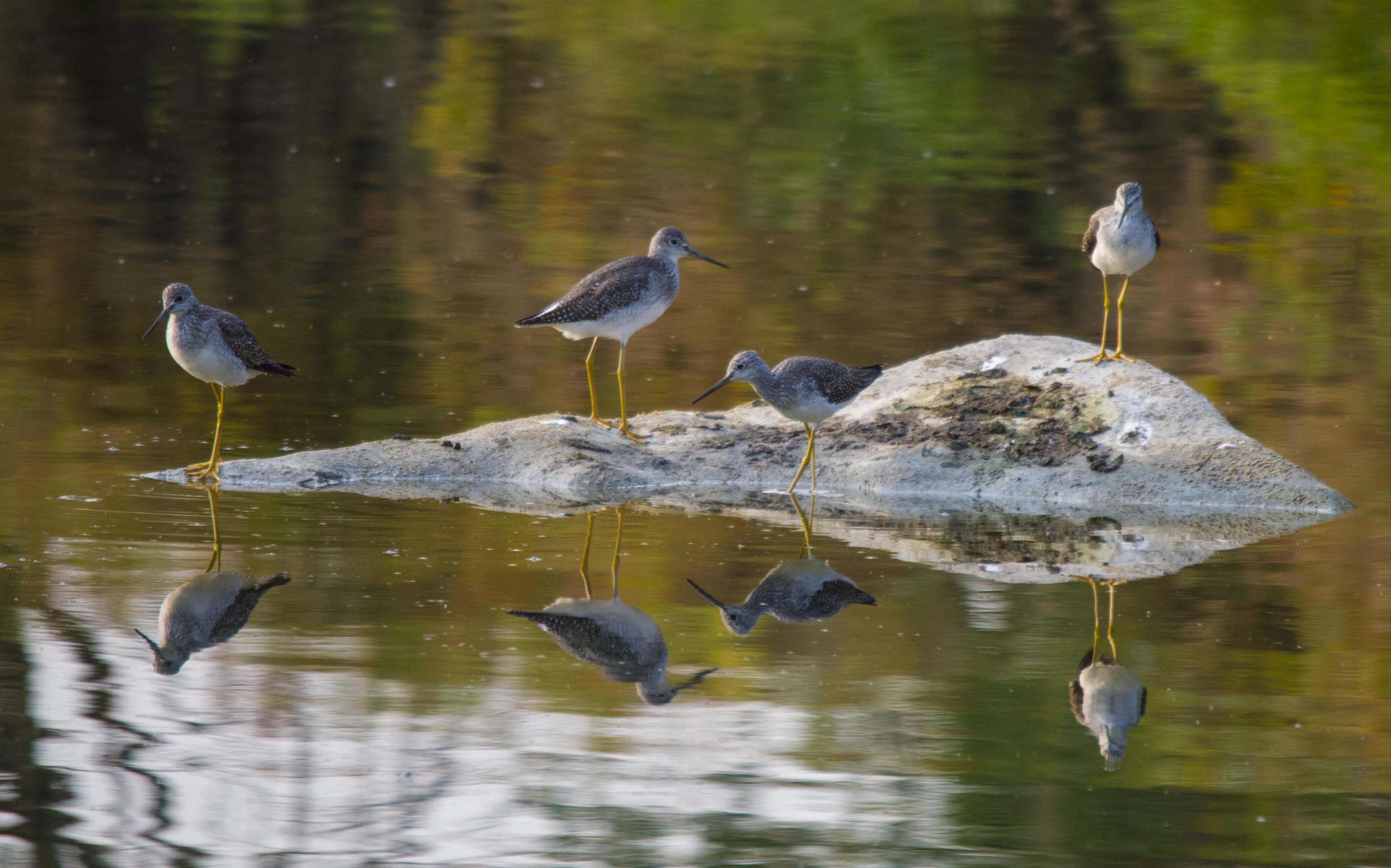
Greater Yellowlegs
We headed up to the river to see what birds we could see on the Bow, or flying over it, but the star of the show was this small Northern Pike, who seemed just as interested in staring at us as we were in staring at it.
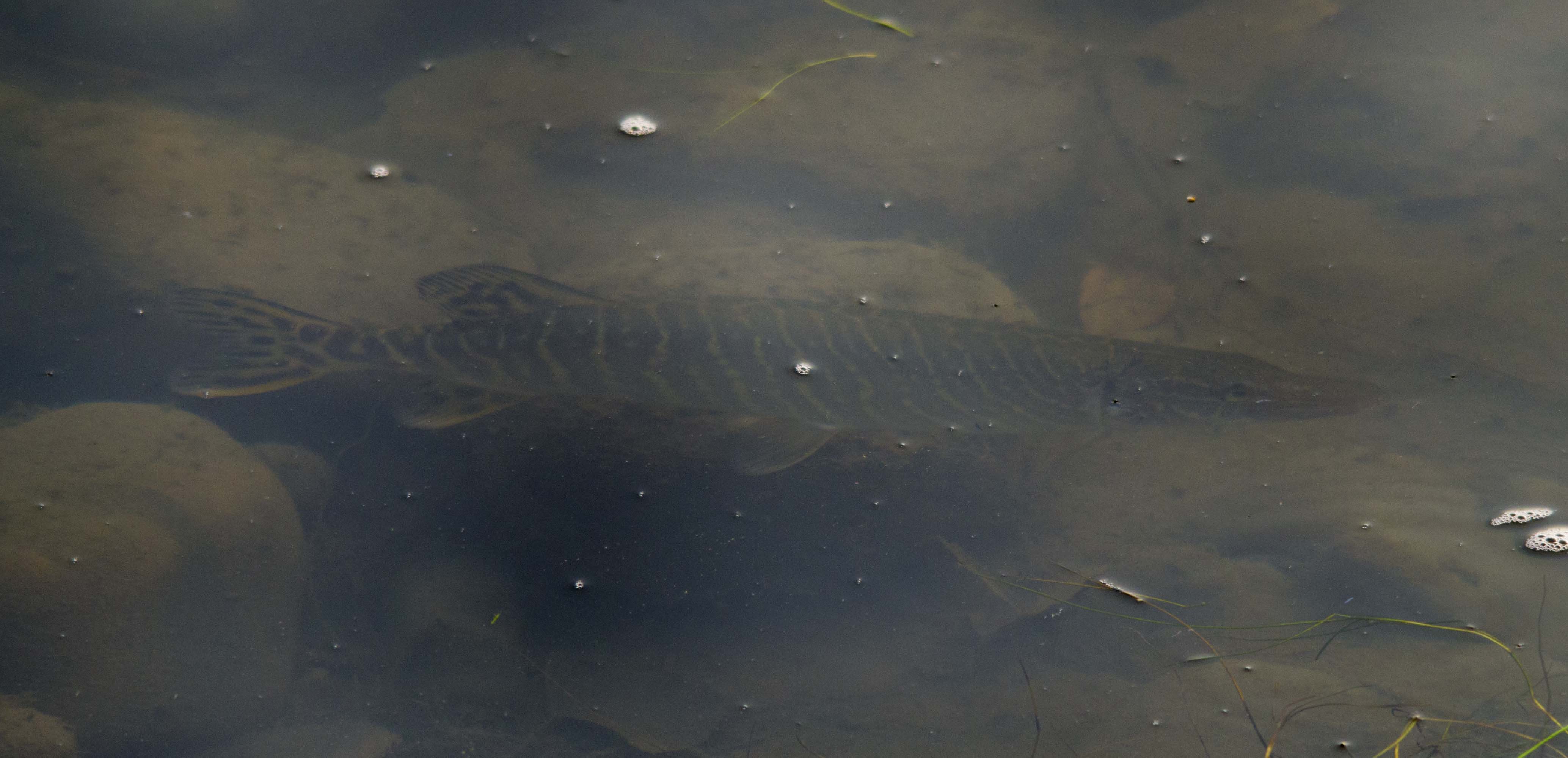
Northern Pike
After crossing the bridge and exploring a bit of the east side of the river, we set our eyes on the small pond that originates from a storm water outflow from the Douglasdale community, and found a fairly large group of American Wigeon joined by a solo female Northern Shoveler.
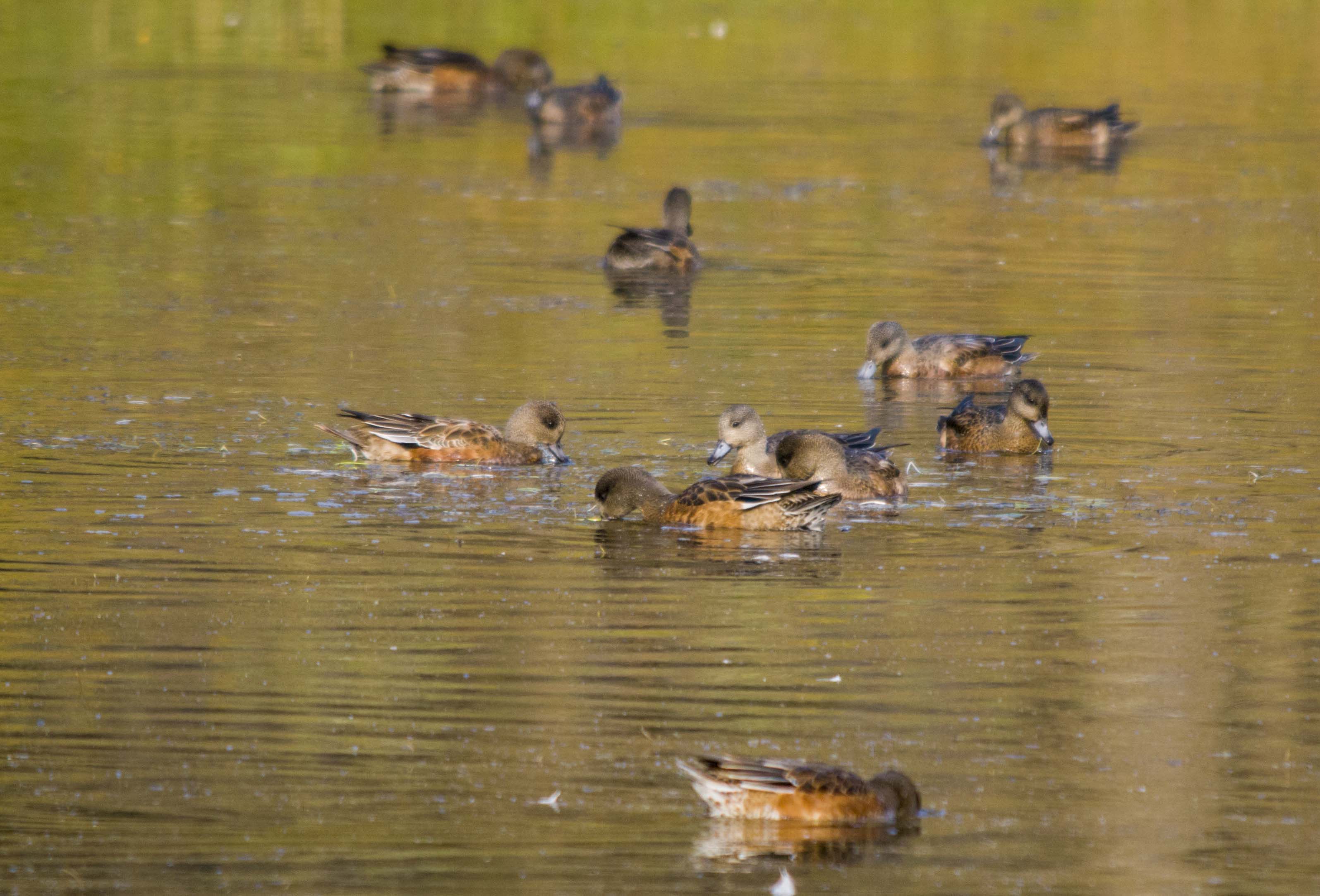
American Wigeon
While I’m not an expert on gulls, I enjoyed the plethora of plumages visible on the gravel bar just south of the second storm-water outflow into the Bow. We saw adult versions of the three most common species of white-headed gulls out there, those being Ring-billed Gulls, California Gulls, and Herring Gulls. I believe we saw juvenile versions of all three of those gulls as well, though I could always be mistaken!
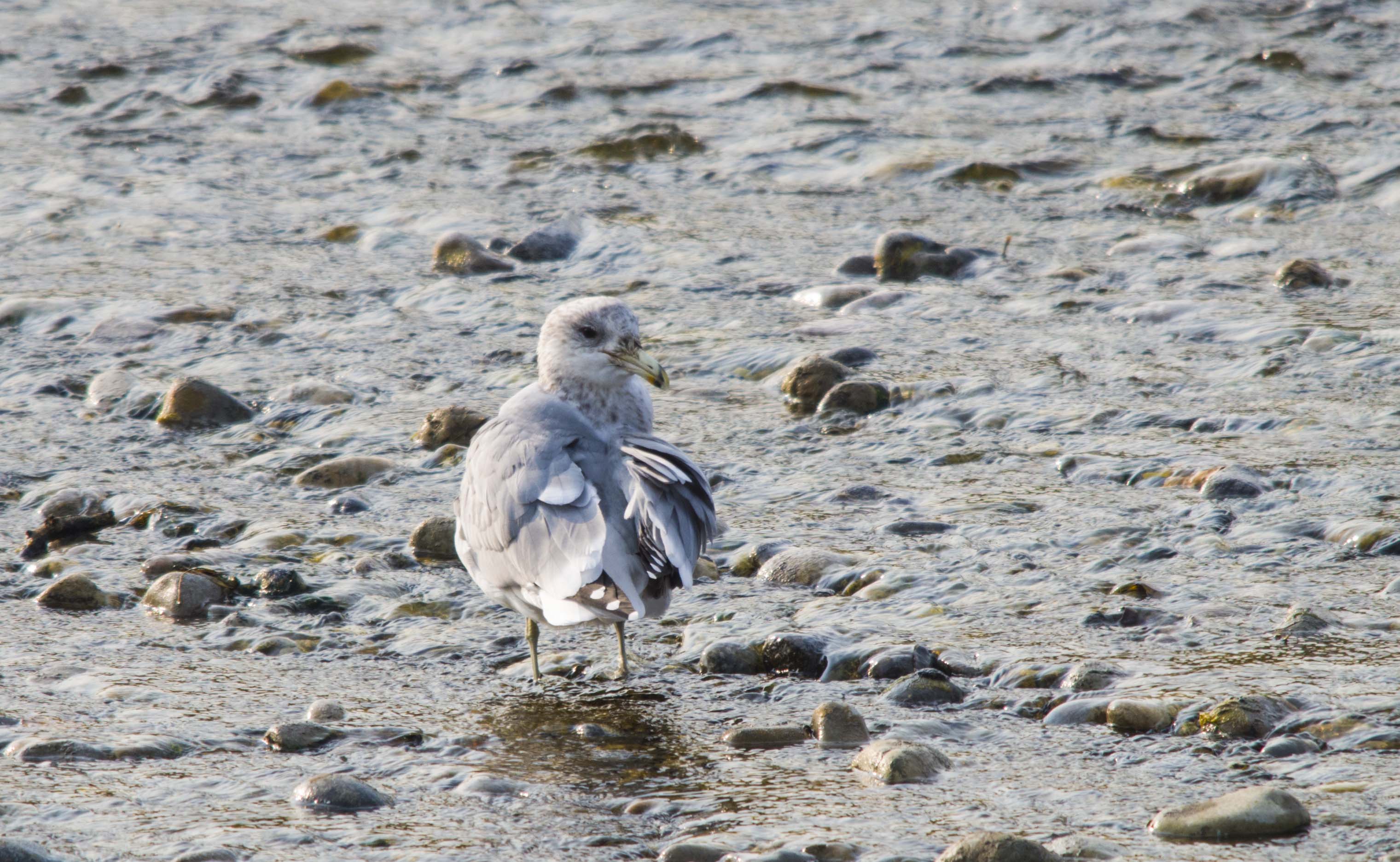
juvenile Ring-billed Gull
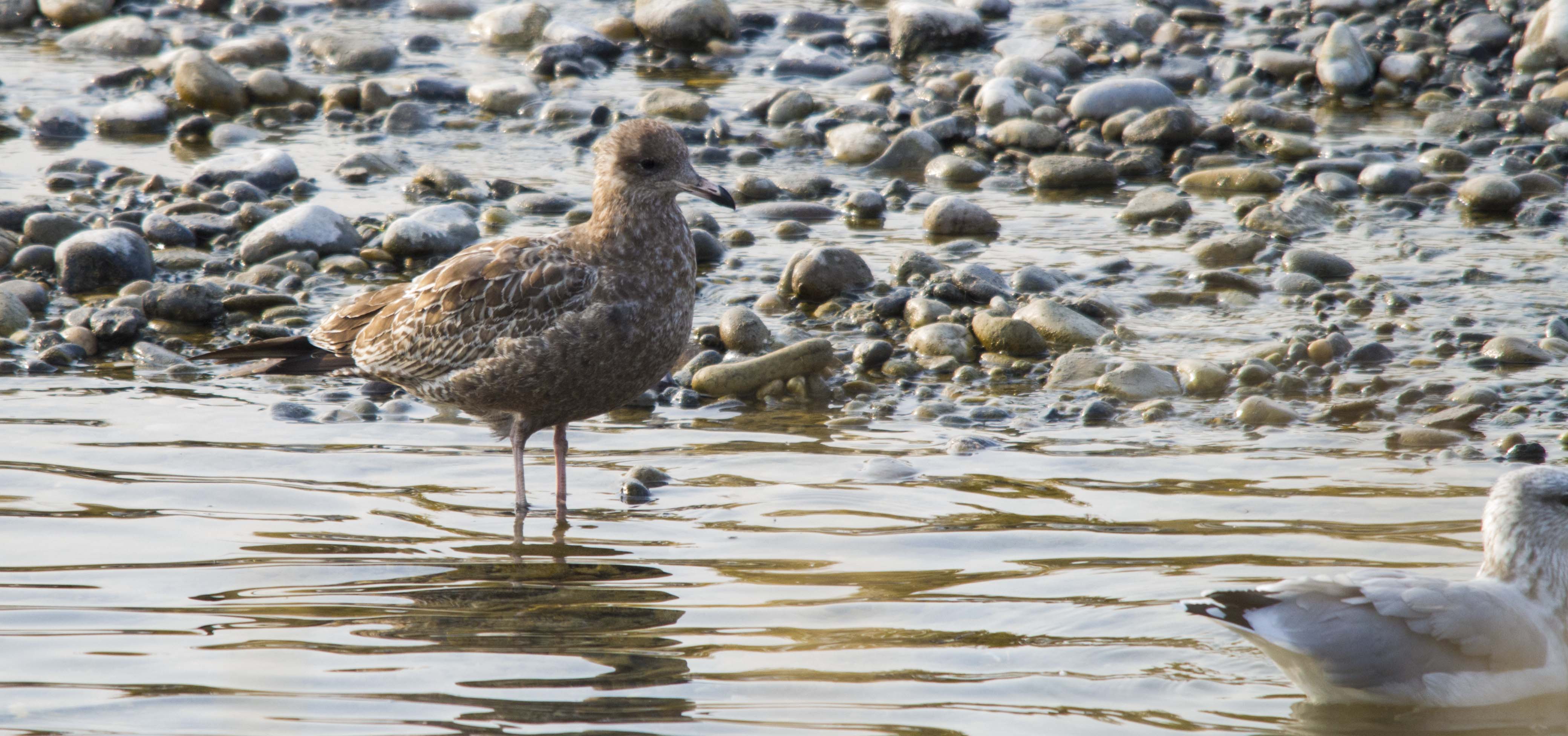
juvenile Herring Gull
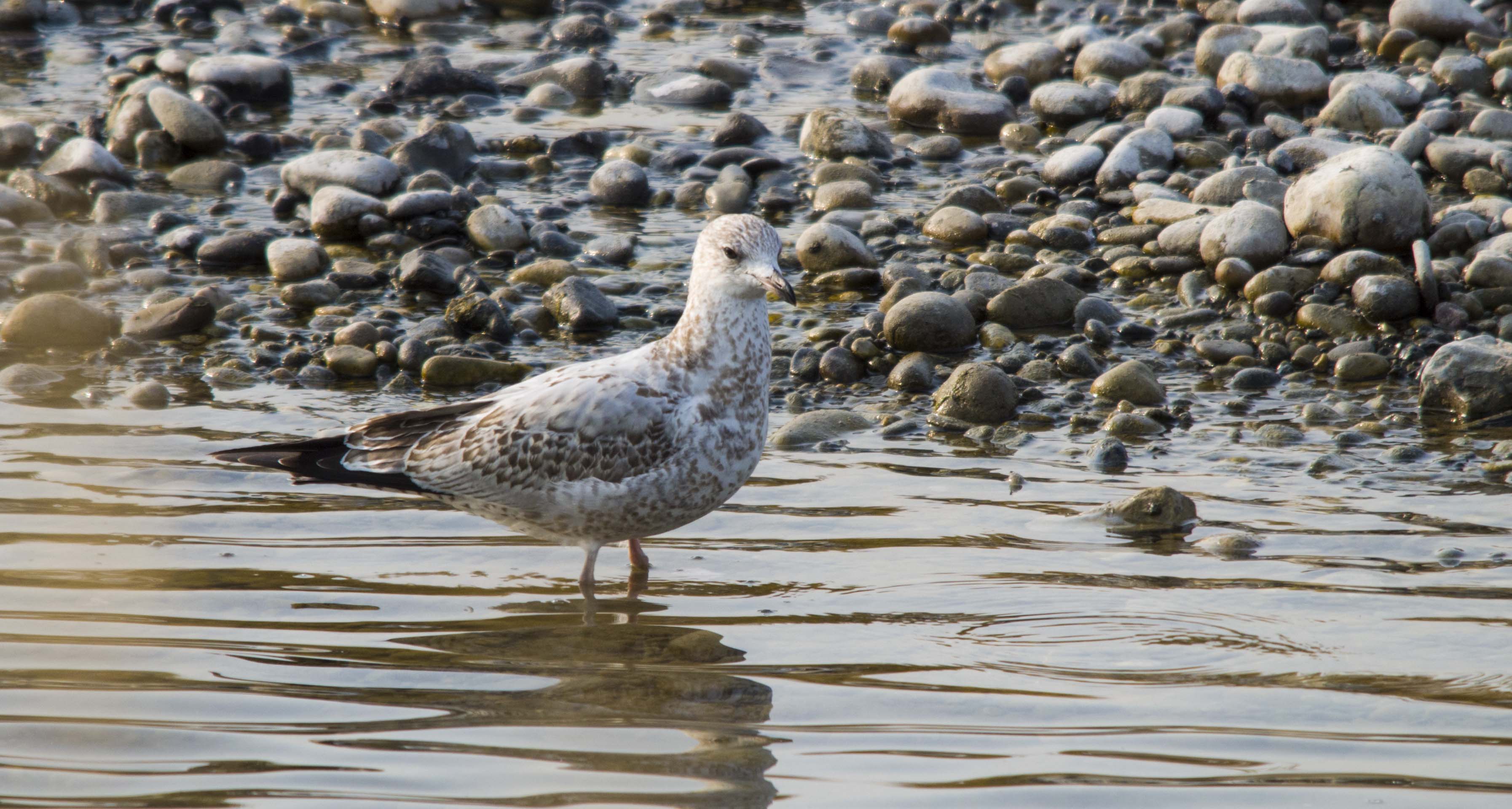
juvenile California Gull
We continued on south-east, and saw one of the harbingers of the change of seasons; a breeding plumaged male Downy Woodpecker. It seems all spring and summer that these guys simply went into hiding, but the last few weeks they’ve reappeared like magic!
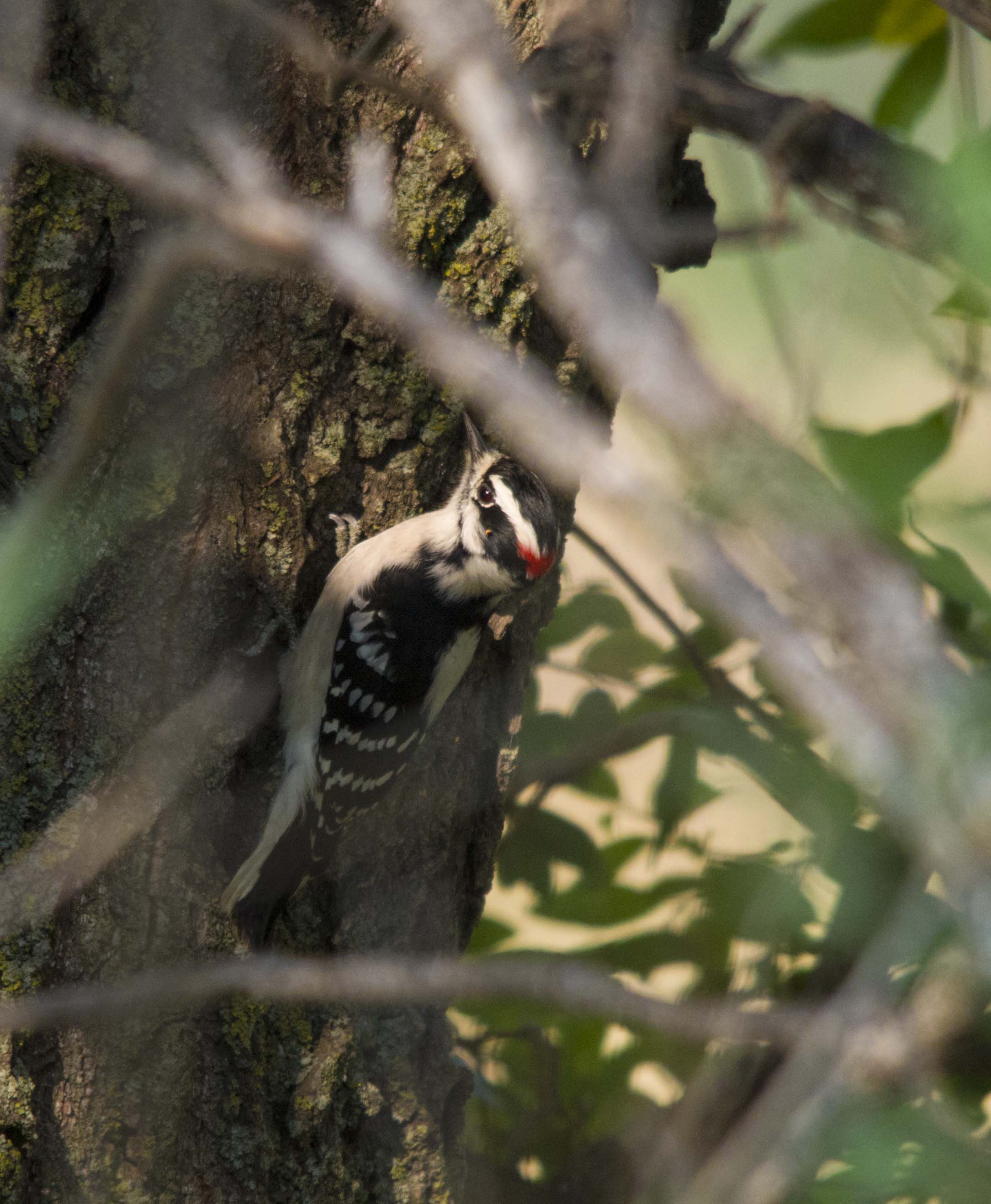
male Downy Woodpecker
One of the highlights of my day at least was seeing this beautiful Orange-crowned Warbler, who, along with a Ruby-crowned Kinglet, Gray Catbird, and about ten Yellow-rumped Warblers were found near the southern-most extent of our walk in the brush, chipping and whistling away while we strained our eyes to find just who was calling in the bushes.
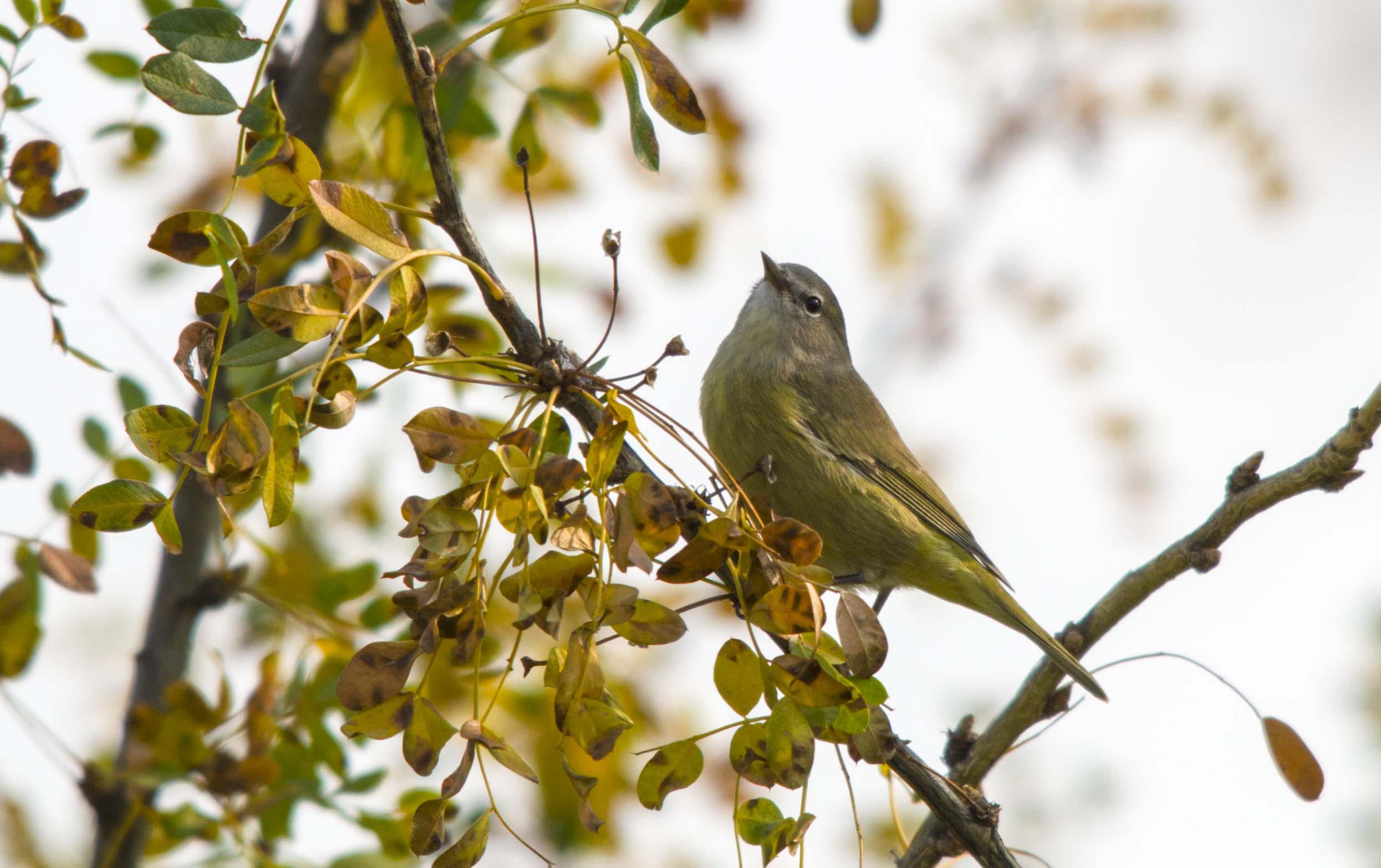
Orange-crowned Warbler
Onward we trekked, and as we neared the furthest point of our walk, we were greeted by another gorgeous sight of a group of Mallard ducks, one of which being a male just coming back into his breeding plumage and showing off the broad violet speculum on his wing while stretching his legs, and in amongst the Mallards was another female Northern Shoveler.
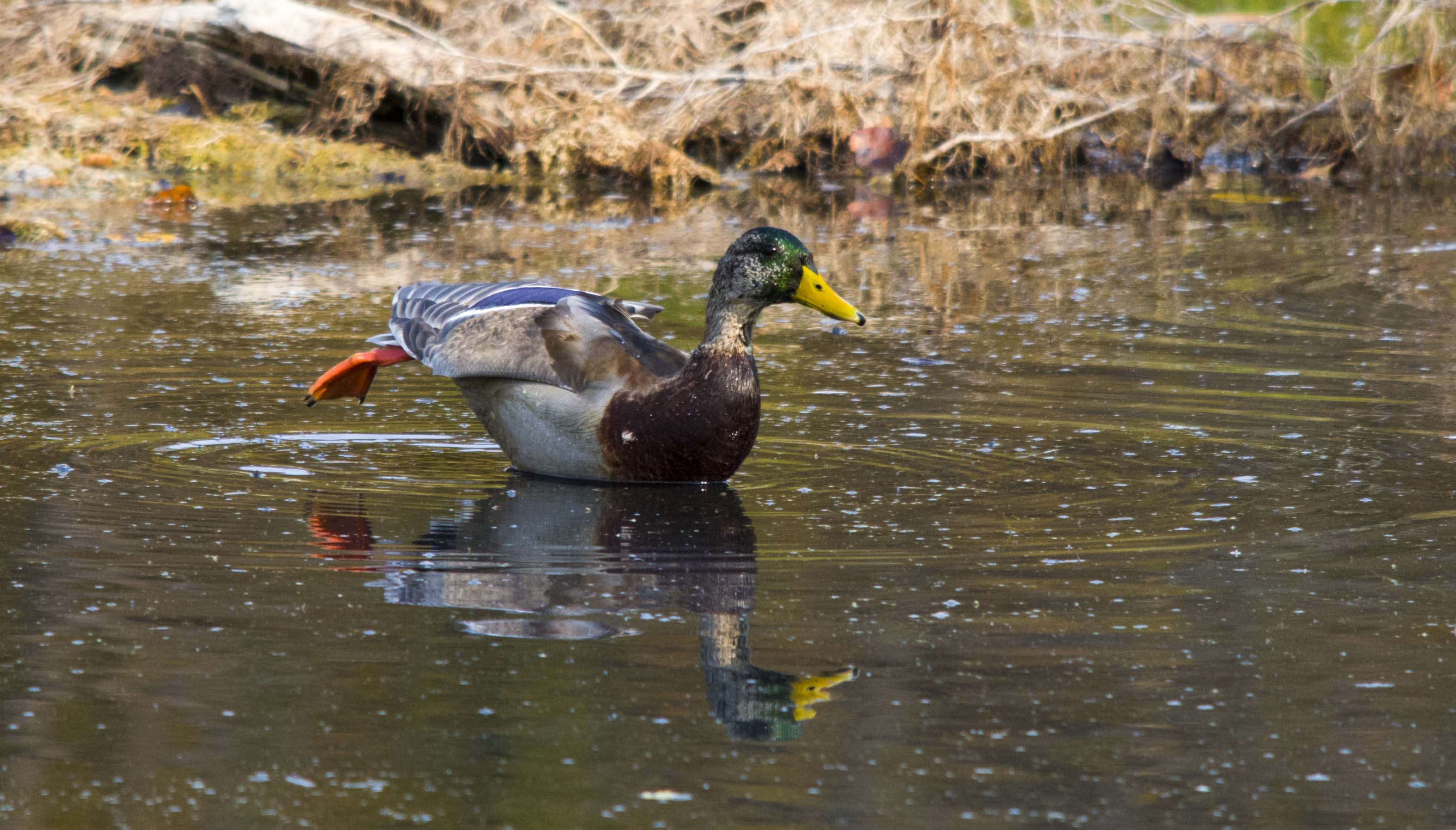
male Mallard duck
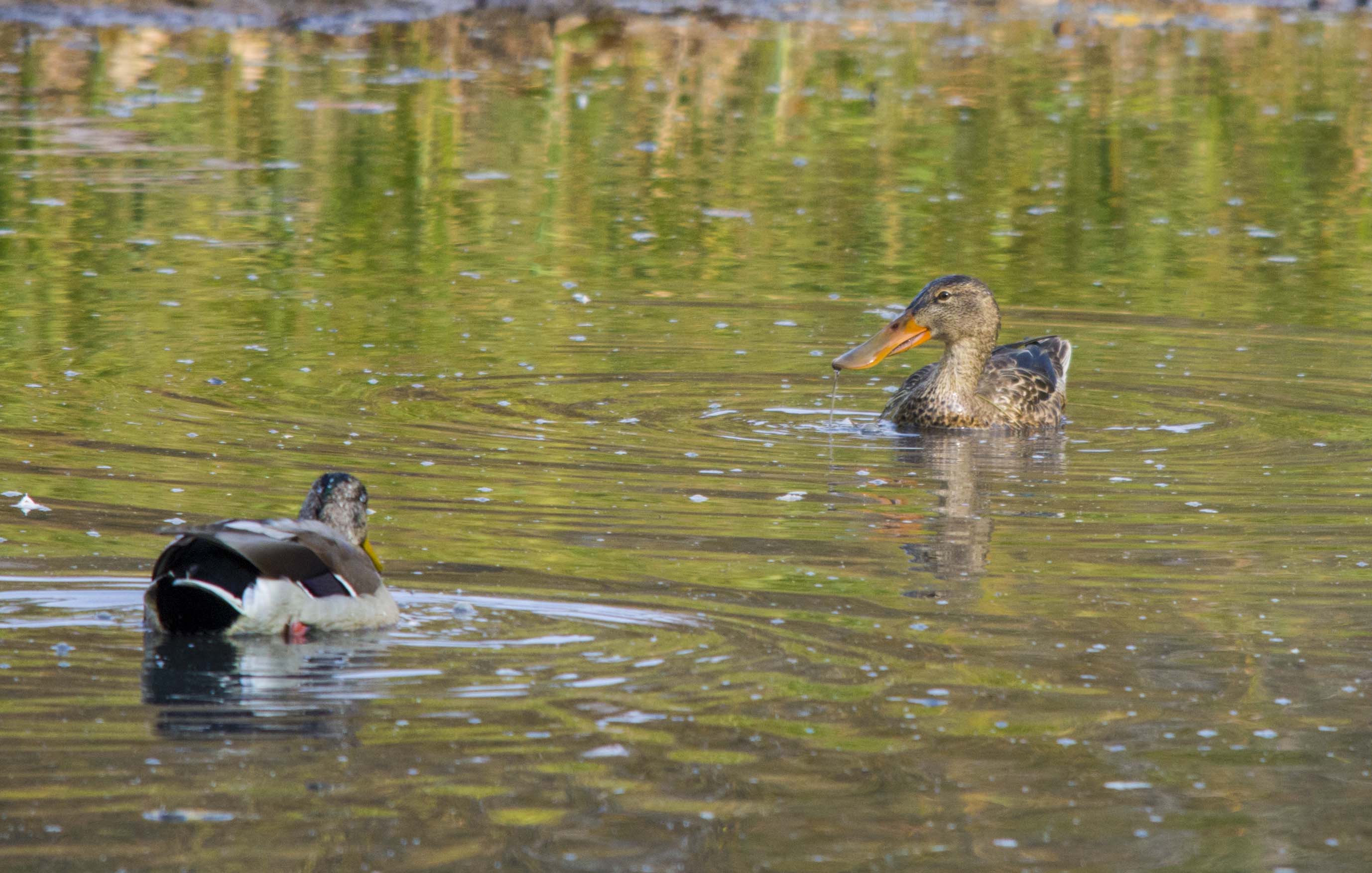
male Mallard (bottom left) and female Northern Shoveler (top right)
It seemed a fitting end to the walk as we began to head back that many of our other friends from the summer would see us off. There were no small number of Meadowhawk dragonfly species flitting about as the sun warmed them up, and a handful of damselflies as well, but most noticeable was that their numbers were significantly less than last week, and far less than earlier in the summer. I do hope they hold on a while longer, as I always enjoy seeing and hearing them flit about, but it’s just a matter of time before the temperatures drop and the last of them dies out for another year.
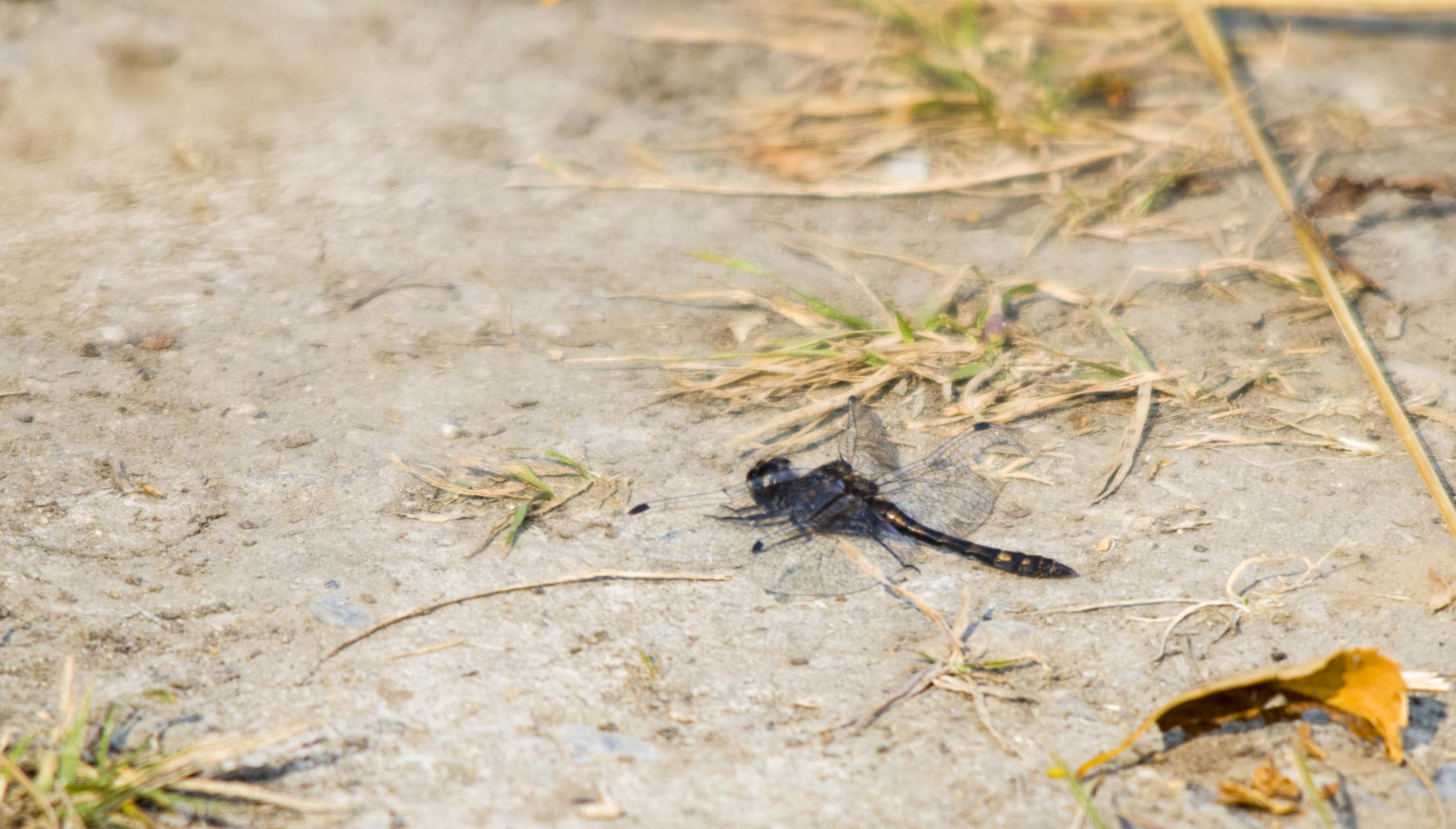
Black Meadowhawk dragonfly
As we neared the bridge, and our walk was nearly at an end, we were gifted with just one more species as this Osprey flew overhead. I sure hope he didn’t see our Northern Pike from earlier in the day!
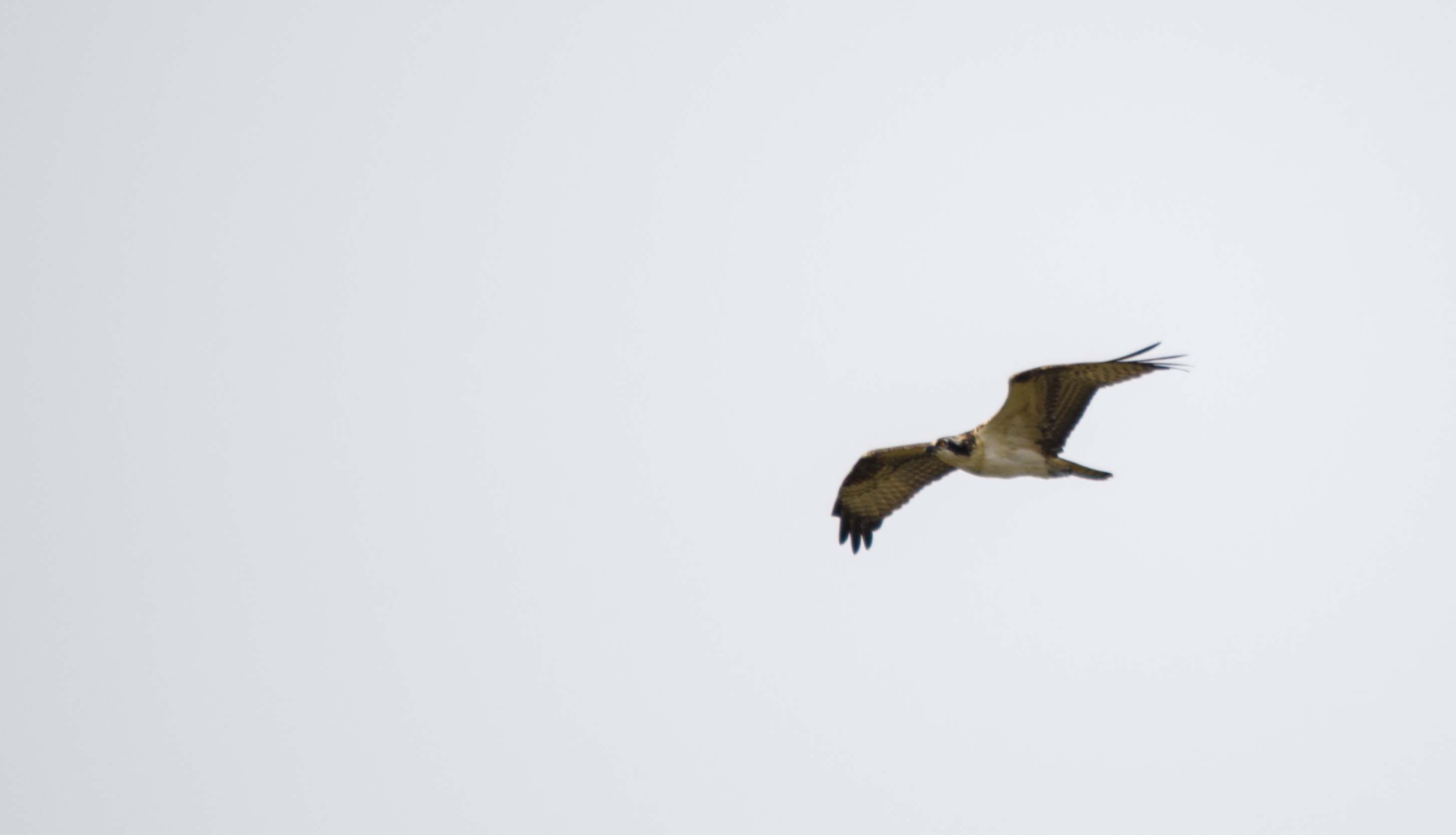
Osprey
That’s all for now. Next week, Carburn Park!
Posted by Matthew Sim
In the last few weeks, I have made several trips on my own down to the sloughs at Lafarge Meadows. There is always action there; be it coots feeding young ones, Pied-billed Grebes fishing, Ruddy Ducks courting, Red-necked Grebe diving or Yellow-headed Blackbirds chasing every other bird.
One of my favorite parts about the Lafarge Meadows sloughs are the Red-necked Grebes. I have counted as many as 4 pairs at a time on the ponds and have also enjoyed watching them court side by side.

Red-necked Grebe

The Red-necked Grebe is not the only grebe that can be seen at the ponds. The smaller Pied-billed Grebe also calls the sloughs home.

Pied-billed Grebe
So far, I haven’t seen any young Red-necked Grebes but I have seen several families of Pied-billed Grebes.

There are also several other families on the ponds, including Mallards and Common Goldeneyes.

Common Goldeneye family
And while I was enjoying these great sights; I couldn’t forget the birds that truly make a southern Albertan slough like the Ruddy Duck, the American Coot, the Yellow-headed Blackbird- and of course, on the mammal side of things, the Muskrat.

A Ruddy Duck- attempting to fly like an eagle?

Baby American Coot, looking nothing like an adult.

Yellow-headed Blackbird

Muskrat
Posted by Matthew Sim
This past Friday, I did a Big Day in Fish Creek. For those of you who do not know what this is, a Big Day is when you try to see and hear as many species as possible within a 24 hour day. For my Big Day, I spent more than 10 hours in Fish Creek, doing the entire day by bike, riding about 74 kilometers (46 miles) throughout the park and recording 93 species of birds, falling short of my goal of 100. Temperatures ranged from 6-15 degrees Celsius and there were a few showers. I started at about 5am and took a 2 hour weather break at lunch time, hoping for some of the rain to blow over, before returning at 2 and counting for another 3 hours. A full list and a more detailed report of the day can be seen here: http://groups.yahoo.com/group/Albertabird/message/20841
Here are some photos from the day:

Ruby-throated Hummingbird

Red-necked Grebes

Blue-winged Teal

Tennessee Warbler

Ruddy Ducks

Male Common Yellowthroat
Posted by Matthew Sim
After arriving back in Calgary from Houston for the summer last Friday, I couldn’t wait to get back out to Fish Creek. Sunday morning found me up bright and early (6:00) and out on my bike, riding down to Fish Creek Provincial Park, one of my favorite birding (and for that matter, one of my favorite natural) locations.
Almost immediately, I was seeing good birds. At the stormwater ponds between the Glennfield area and the Bow Valley Ranch I saw lots of waterfowl, including a pair of Cinnamon Teal and many Common Goldeneye ducklings.

Cinnamon Teal; male on the right, female partially hidden on the left

Goldeneye ducklings
At one pond, a coyote was hunting something in the long grass and remained oblivious to my presence.

After observing the coyote for some time, I continued riding my back towards the Ranch. I crossed bridge #11 and started towards Sikome and the river, but stopped abruptly when I saw the Great Horned Owl family; 5 in all, 3 owlets and their parents.

We as Calgarians are truly lucky to be able to observe owlets up close each year as they are never far off the path in Fish Creek. I marveled at the owls seemingly majestic haughtiness, as they all stared me down. Before long, I was off again, stopping again when I saw a strange sight at the top of a conifer. At the very top was a Brown-headed Cowbird, surrounded by what must have been millions of little bugs.

As I passed through the Sikome area, I observed many Richardson’s Ground Squirrels.

As I finally reached the river and the Hull’s Wood area of the park, I spotted what was probably the most colorful bird of the day; a male Baltimore Oriole.
There was a female with him and they seemed to be paired up, however she was more secretive as she gathered nest material and disappeared high into the poplars to build her hanging nest.
This trip to Fish Creek was excellent, and for me, having moved away, I now fully appreciate what a great park Fish Creek is.