Archives

Return to the Inglewood Bird Sanctuary

Posted by Bob Lefebvre

In week two of the Friends of Fish Creek Provincial Park Society Autumn birding course we returned to the Inglewood Bird Sanctuary (IBS) for the first time since the flood of 2013. The sanctuary had been closed for over two years, but reopened in August. The trails along the river are still closed, but the area around the lagoons are accessible and remain a prime birding area in the city. Once again I filled in as leader for Dan Arndt, with the help of Rose Painter and George Best. George again provided the photos below, with one exception.

IBS map Sept 13

The Inglewood Bird Sanctuary, showing our route on September 13, 2015.

It is perhaps surprising that some of the best spots at IBS for migrating warblers and sparrows are the trees and bushes by the interpretive centre, right next to the parking lot. This area should not be overlooked during migration. When our Sunday morning group visited on September 13 we had one White-throated Sparrow, one Dark-eyed Junco, and a Tennessee, a Yellow-rumped, and an Orange-crowned Warbler before we entered the gate of the sanctuary.

IBS Start finish

The parking lot and interpretive centre at IBS.  We spent about 45 minutes in this area.

Immediately after we passed through the gate, a yellowish bird flew out of a low bush by the path, made a big circle, and collided with the glass door of the interpretive centre. I rushed over and picked it up, cupping it in both hands in an effort to keep it warm enough that it might revive (it was only 10 degrees Celsius out, and a stunned songbird could quickly die of hypothermia if not kept warm.) We tried to identify it while doing this. The bird had a large white patch on its head and a smaller one on its nape which confused us at first. But rather than an exotic warbler that we weren’t familiar with, it was a Common Yellowthroat with a touch of leucism (missing pigments in some feathers).

IMG_0411

Common Yellowthroat with leucism, unable to fly after colliding with a window. Photo by Rose Painter.

[exif id=”14855″]

It took about fifteen minutes before the bird revived, and it finally flew weakly back to the same bush it originally flew out of. Three hours later, at the end of the walk, it was still there, moving about in the bushes, and easily identifiable by the white patches on its head.

When we finally entered the sanctuary proper, we circled the lagoon, where the majority of the other birds were sighted. Wood Ducks are one of the highlights here, as they are quite scarce anywhere else in the city. There are usually between 20 and 45 Wood Ducks on the lagoon from spring to late fall. All photos below by George Best.

Wood Ducks on bank

Male Wood Ducks, already back in breeding plumage after their late-summer molt.[exif id=”14854″]

A species we see rarely in the summer but quite often in the fall on quiet bodies of water is the Pied-billed Grebe. There were two on the lagoon throughout the week.

Pied-billed Grebes

Pied-billed Grebes. [exif id=”14852″]

Pied-billed Grebe

Pied-billed Grebe. [exif id=”14851″]

Great Blue Herons are another star attraction at IBS. They are often perched high up in the poplars, where they can be surprisingly difficult to find for such a large bird. We saw three Herons: Two perched, and one in flight.

Great Blue Heron

Great Blue Heron. [exif id=”14848″]

Belted Kingfishers are often rattling around the lagoon. We finally saw this female perched over the water after hearing it move around for quite a while. One or two of these birds usually stay here until very late in the fall, and they sometimes overwinter in the city.

Belted Kingfisher

female Belted Kingfisher. [exif id=”14847″]

Down near the south end of the lagoon near the porcupine den we spotted this Great Horned Owl. They are generally always around the sanctuary somewhere, but can be really hard to find. The two adults that breed here were not yet at their winter daytime roost in the spruce trees by the Walker House. Perhaps this is one of them.

Great Horned Owl

Great Horned Owl. [exif id=”14849″]

We tallied 36 species for the day, including a Cooper’s Hawk, a Bald Eagle, A Red-tailed-Hawk, two Swainson’s Hawks, a Merlin, and a Golden-crowned Kinglet. Many other species were seen by FFCPP groups earlier in the week. George attends on Mondays as well, and he took some more photos that day (September 7), as shown below.

Flycatching from a tall bare branch, which they typically do, was this Olive-sided Flycatcher. There were two by the lagoon. This species is only seen in the city on  migration, though it breeds nearby in the foothills.

Olive-sided Flycatcher

Olive-sided Flycatcher. [exif id=”14850″]

Swainson’s Thrushes were moving through on migration, and the group saw an incredible fifty-one that day! Below is a pair of these shy birds.

Swainson's Thrushes

A pair of Swainson’s Thrushes. [exif id=”14853″]

Finally, a couple of shots of a beautiful migrating male American Redstart.

American Redstart

male American Redstart. [exif id=”14846″]

American Redstart 2

Another shot of the male American Redstart. [exif id=”14845″]

Next Post: We head down to the Fish Creek Park headquarters and the boat launch.

Fall Birding Course Begins – Carburn Park

Posted by Bob Lefebvre

The Friends of Fish Creek Provincial Park Society Fall birding course began again on August 31, 2015. Many of our readers look forward to Dan Arndt’s posts every Monday with a narrative of the previous week’s outing accompanied by his outstanding photos of some of the birds seen. As usual Dan is scheduled to lead the Sunday morning group, one of the fifteen weekly outings that are needed to accommodate the 196 registered participants. However, work commitments will keep Dan away for many of the fall outings. With the help of Rose Painter and George Best, I will fill in for him when he is away.

I don’t usually carry a camera when helping to lead a group, but George does, and he is an excellent photographer as many of you know. I will try to summarize our walks and illustrate them with George’s photos.

For the first week of the course we went to Carburn Park, which had been a great spot for fall warblers in the weeks leading up to the start of the course. Many of the earlier-migrating species had more or less finished passing through Calgary by the beginning of September, but we hoped to see quite a few Wilson’s, Yellow-rumped, and Orange-crowned Warblers on our outing on September 6.

Carburn September 6

Carburn Park walk, 6 September 2015.

We did see about 30 Yellow-rumped and possibly one Yellow Warbler, but none of the other warbler species. However, we did see huge numbers of birds of the river, including the largest concentrations of Common Mergansers and Double-crested Cormorants that many of had ever seen. (All photos by George Best.)

Mergansers

A few Common Mergansers (55 by my count) and two Canada Geese.

Cormorant in tree

A Treeful of Cormorants.

We counted about 100 mergansers and 150 cormorants on the day. Most of them were concentrated at the north end of the park, just south of the Glenmore Trail Bridge over the Bow. This is the area that used to be the northernmost pond in Carburn park, before the flood of 2013 turned it into a major river channel, gravel bars, and an island. It is usually a very birdy part of the river.

Cormorant on Branch

Double-crested Cormorants resting on a partially-submerged tree in what used to be the north pond at Carburn Park. The birds with light breasts are juveniles, hatched this year.

Cormorant

Double-crested Cormorant in flight.

We also saw about 65 American White Pelicans in this area. They no longer go to the old weir in Pearce Estate to feed, and Carburn Park is about as far upriver as the big groups usually go. (The Sunday afternoon FFCPP group counted 106 pelicans that day, and an incredible 225 Common Mergansers!)

Pelican in flight

American White Pelican coming in for a landing.

Pelican

A Pelican on the Bow River at Carburn Park.

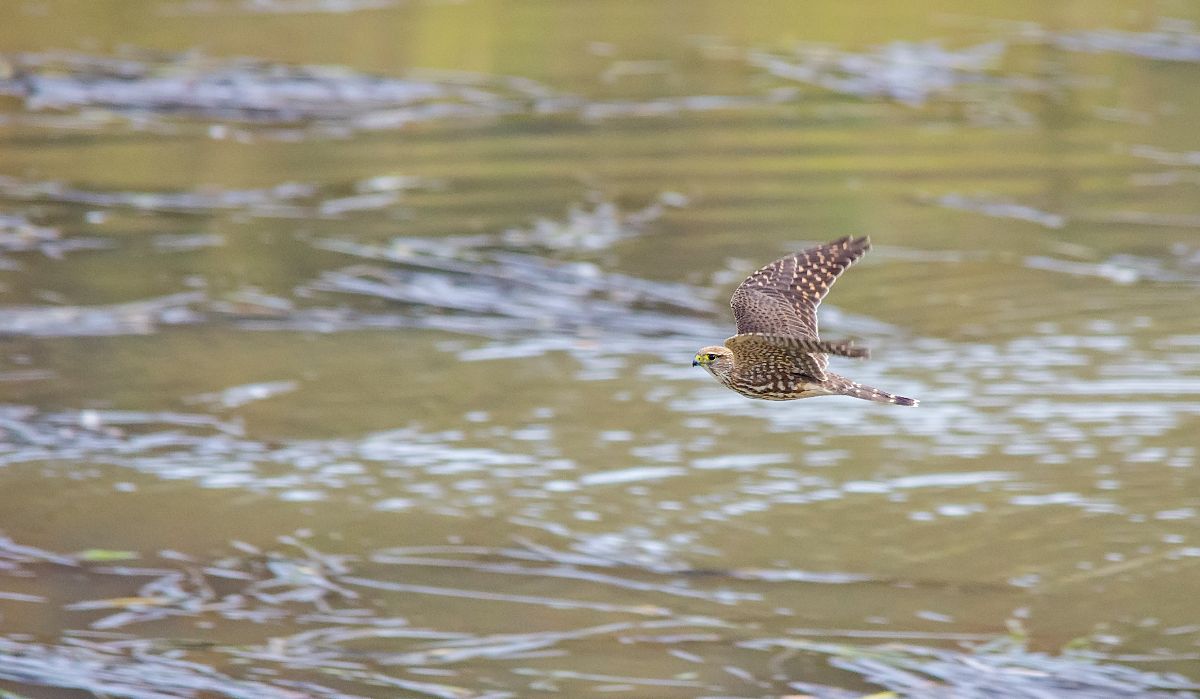
Other highlights in Carburn Park in September are the usually-reliable Wood Ducks, often seen in the quiet channel between the big island and the river shore in the central part of the park, and raptors like Bald Eagles, Osprey, and Swainson’s Hawks. We saw three of each that day, as well as this Merlin:

Merlin

A Merlin scanning for prey. Merlins and Bald Eagles can be seen in this area year-round; Swainson’s Hawks and Osprey have already departed.

We counted 38 species of birds for the day, and three mammal species: the usual White-tailed Deer and Eastern Gray Squirrels, and a less-commonly-seen American Mink.

Next post: In week two of the course we returned to the Inglewood Bird Sanctuary for the first time in over two years.

Sunday Showcase – September Birds of Calgary

Tony LePrieur photographed these birds on September 27, 2015. The robins and the White-throated Sparrow were seen in Queen’s Park Cemetery in NW Calgary, and the rest in the Inglewood Bird Sanctuary.

0S4A0398 -1

American Robin

[exif id=”14755″]


0S4A0576 -1c

American Robin

[exif id=”14756″]


0S4A0659 -1c

American Robin

[exif id=”14757″]

0S4A0758 -1

White-throated Sparrow

[exif id=”14758″]

0S4A0890 -1

Great Blue Heron

[exif id=”14759″]

0S4A1028 -1

Male Wood Duck

[exif id=”14760″]

0S4A1192 -1

Great Horned owl

[exif id=”14761″]

Leucistic Loon

Posted by Bob Lefebvre

Paul Koegler was lucky enough to see this Common Loon with very little dark pigmentation on August 15, 2015 at Whitetail Lake, BC. Leucistic birds are not too common, especially ones like this that lack the darkest pigments in all their feathers. Birds with irregular white splotches or patches seem to be more common. The bird is not albino; if it was it would have pink eyes, a light bill, and whiter feathers.

IMG_7720 (1)

[exif id=”14714″]

This looks like an adult bird. It has the black bill of an adult and you can faintly see the ring around the neck. It is with at least two other adult loons, so they were either done breeding at this time or were unsuccessful breeders. Breeding loons are very territorial and a breeding male will not tolerate any other loon besides its mate being nearby.

IMG_7708

[exif id=”14713″]

In about a week we should be seeing the first of the migrating loons coming through Calgary. They can be seen on Glenmore Reservoir, the Bow River, and other large bodies of water. If we’re lucky we may get other species here on migration such as the Pacific Loon or even Arctic or Red-throated Loons.

Sunday Showcase: Songbirds of Carburn Park

Carburn Park is a great place to find warblers and other songbirds during fall migration. Many species that pass through in the fall are not seen in Calgary in spring and summer, or seen in very small numbers. For many species of warbler the peak of migration is in mid-August. Some of the later-migrating warblers will continue to move through until late September (or much later in the case of Yellow-rumped Warblers).

Currently our native sparrows are beginning to migrate through the area.

Tony LePrieur photographed these birds on a visit to Carburn Park on August 23, 2015. Some of the ID’s are tricky so please correct me if I’m mistaken! -Bob Lefebvre

0S4A5237 -1Northern Waterthrush ([exif id=”14667″])

0S4A4608 -1Warbling Vireo ([exif id=”14662″])

0S4A4706 -1American Redstart ([exif id=”14663″])

0S4A5248 -1Yellow Warbler ([exif id=”14668″])

0S4A5211 -1Philadelphia Vireo ([exif id=”14666″])

0S4A4862 -1Empidonax Flycatcher species, probably Least Flycatcher ([exif id=”14664″])

0S4A5189 -1House Wren ([exif id=”14665″])

Sunday Showcase: Summer Birds

Some summer birds and mammals from Calgary, taken in late June 2015. All photos by Tony LePrieur.

image1Redhead chicks.

image2American Coot chicks and adult.

image3Male Yellow Warbler.

image4Savannah Sparrow.

image5Yellow-rumped Warbler.

image1Great Blue Heron.

image2Black-crowned Night-Heron.

image3Green-winged Teal.

image4Barn Swallow.

image5Beaver.

North Glenmore Park and the Glenmore Reservoir

Posted by Dan Arndt

On our visits to the Weaselhead on both May 31 and June 14, we visited parts of North Glenmore Park in search of shorebirds, Brown Thrashers, and whatever else might turn up.

North Glenmore Park - May 31 and June 14

North Glenmore Park – May 31 and June 14

We found a couple of great birds on both days, with a Nelson’s Sparrow and a Brown Thrasher as their usual spots on May 31, and on June 14 we found a Caspian Tern and a beautifully lit Cedar Waxwing during a brief moment of pale sunshine.

This Brown Thrasher has been a regular visitor to the park during the May Species Count, usually found just below Parking Lot “C”, but we also heard two others singing in the Weaselhead that morning, which is a good sign that they’re actually increasing in numbers around here. Their random, rambling, repeating song is distinctive, and usually how we find them first, long before we ever see them. This guy decided to pop up into the aspens and sing for us as we watched.

Brown Thrasher Pentax K-5 + Sigma 150-500@500mm 1/1250sec., Æ’/8.0, ISO 500

Brown Thrasher
Pentax K-5 + Sigma 150-500@500mm
1/1250sec., Æ’/8.0, ISO 500

On the north end of the park are a series of small ponds for stormwater runoff. Thankfully, on May 31, it was fairly calm and clear, so we did get a chance to walk out onto one of the small spits of land where I was hearing a Nelson’s Sparrow singing, and again, he decided to pop out into the open for us to get a few looks at him.

Nelson's Sparrow Pentax K-5 + Sigma 150-500@500mm 1/1000sec., Æ’/8.0, ISO 2000

Nelson’s Sparrow
Pentax K-5 + Sigma 150-500@500mm
1/1000sec., Æ’/8.0, ISO 2000

On June 14, I was notified of a Caspian Tern on the Glenmore Reservoir, so after our morning walk a few of us headed over to take a look for it. Thankfully we found it right where it had been seen all morning, at first resting, and then a few times lifting its head to display that bright red bill and gape at some of the low flying swallows. Perhaps it was simply tired of being buzzed by their nearby flights!

Caspian Tern and Franklin's Gulls Pentax K-5 + Sigma 150-500@500mm 1/1000sec., Æ’/8.0, ISO 640

Caspian Tern and Franklin’s Gulls
Pentax K-5 + Sigma 150-500@500mm
1/1000sec., Æ’/8.0, ISO 640

We went over to look for the Brown Thrasher again, but sadly we only caught a brief glimpse of it. We did find this Cedar Waxwing sitting nice and pretty in the same tree that the Brown Thrasher was singing from two weeks prior.

Cedar Waxwing Pentax K-5 + Sigma 150-500@500mm 1/1000sec., Æ’/8.0, ISO 1600

Cedar Waxwing
Pentax K-5 + Sigma 150-500@500mm
1/1000sec., Æ’/8.0, ISO 1600

Have a great week, and good birding!

Birds of the Weaselhead – May 31 and June 14

Posted by Dan Arndt

Wow, hard to believe it’s July already! The rush of spring birding is over, but there are still some birding outings to recap from the Friends of Fish Creek Spring course. We headed to the Weaselhead for the May Species Count on May 31, and headed back there again on June 14, and most of the same species were found each time, but we did have a couple unique finds on each trip. Because this is my first time trying to overlay two different walks into one post, I’ve color coded our outings in the attached map.

Weaselhead - May 31 and June 14 2015

Weaselhead – May 31 and June 14 2015

Our outing on May 31 is in red in the above image, while our trip on June 14 is in blue. We also had significantly different weather each morning, with the weather on May 31 being absolutely incredible, clear, and bright, while June 14 was a bit gloomy, dark, and overcast with occasional rain here and there.

We had a couple great birds on our first outing at the top of the hill, with both a Spotted Towhee and a Ruby-throated Hummingbird right at the top.

Spotted Towhee Pentax K-5 + Sigma 150-500@500mm 1/500sec., Æ’/8.0, ISO 320

Spotted Towhee
Pentax K-5 + Sigma 150-500@500mm
1/500sec., Æ’/8.0, ISO 320

Ruby-throated Hummingbird Pentax K-5 + Sigma 150-500@500mm 1/800sec., Æ’/8.0, ISO 320

Ruby-throated Hummingbird
Pentax K-5 + Sigma 150-500@500mm
1/800sec., Æ’/8.0, ISO 320

At the feeders a bit further down the hill, we found a couple of Tree Swallows guarding their nests early in the day, catching some sun and warming up for the busy day ahead.

Tree Swallow Pentax K-5 + Sigma 150-500@500mm 1/640sec., Æ’/8.0, ISO 320

Tree Swallow
Pentax K-5 + Sigma 150-500@500mm
1/640sec., Æ’/8.0, ISO 320

We almost missed out on the Ruby-throated Hummingbird on June 14th, except for a brief glance up the hill caught this little guy hanging out in the gloom.

Ruby-throated Hummingbird Pentax K-5 + Sigma 150-500@500mm 1/200sec., Æ’/6.3, ISO 80

Ruby-throated Hummingbird
Pentax K-5 + Sigma 150-500@500mm
1/200sec., Æ’/6.3, ISO 80

The Rufous Hummingbirds are absolutely amazing and can always be found in the same place every year. I’ve yet to see a female on this slope, but I suspect that if it wasn’t a good area for the males to find a mate, they wouldn’t be here year after year! Forgive me for sharing as many photos as possible of these beautiful little fireballs.

Rufous Hummingbird Pentax K-5 + Sigma 150-500@500mm 1/1250sec., Æ’/8.0, ISO 800

Rufous Hummingbird
Pentax K-5 + Sigma 150-500@500mm
1/1250sec., Æ’/8.0, ISO 800

Rufous Hummingbird Pentax K-5 + Sigma 150-500@500mm 1/1250sec., Æ’/8.0, ISO 1000

Rufous Hummingbird
Pentax K-5 + Sigma 150-500@500mm
1/1250sec., Æ’/8.0, ISO 1000

Rufous Hummingbird Pentax K-5 + Sigma 150-500@500mm 1/1250sec., Æ’/8.0, ISO 800

Rufous Hummingbird
Pentax K-5 + Sigma 150-500@500mm
1/1250sec., Æ’/8.0, ISO 800

Rufous Hummingbird Pentax K-5 + Sigma 150-500@500mm 1/320sec., Æ’/6.3, ISO 100

Rufous Hummingbird
Pentax K-5 + Sigma 150-500@500mm
1/320sec., Æ’/6.3, ISO 100

We headed back to the area south of the Elbow River and found the usual Eastern Phoebes at their regular spot as well, this one having caught some fresh breakfast!

Eastern Phoebe with diving beetle Pentax K-5 + Sigma 150-500@500mm 1/500sec., Æ’/6.3, ISO 1600

Eastern Phoebe with diving beetle
Pentax K-5 + Sigma 150-500@500mm
1/500sec., Æ’/6.3, ISO 1600

As we headed towards the silverberry meadow, we heard the typical buzzing of the Calliope Hummingbirds in this area, but none of them really cooperated with the us and the sunlight, but I’m still pretty happy with the results!

Calliope Hummingbird Pentax K-5 + Sigma 150-500@500mm 1/1250sec., Æ’/9.0, ISO 640

Calliope Hummingbird
Pentax K-5 + Sigma 150-500@500mm
1/1250sec., Æ’/9.0, ISO 640

Calliope Hummingbird Pentax K-5 + Sigma 150-500@500mm 1/4000sec., Æ’/8.0, ISO 2000

Calliope Hummingbird
Pentax K-5 + Sigma 150-500@500mm
1/4000sec., Æ’/8.0, ISO 2000

Calliope Hummingbird Pentax K-5 + Sigma 150-500@500mm 1/500sec., Æ’/8.0, ISO 640

Calliope Hummingbird
Pentax K-5 + Sigma 150-500@500mm
1/500sec., Æ’/8.0, ISO 640

We did hear a relatively uncommon bird back beyond the dense spruce where we have Boreal Chickadees each winter, and it turned out to be an Ovenbird singing on territory. Sadly, he had moved on by mid-June, but it was really quite a treat to hear and see one of these guys right our back yard!

Ovenbird Pentax K-5 + Sigma 150-500@500mm 1/1000sec., Æ’/8.0, ISO 3200

Ovenbird
Pentax K-5 + Sigma 150-500@500mm
1/1000sec., Æ’/8.0, ISO 3200

Down at the far end of the Weaselhead, we had another Calliope Hummingbird in a spot I’d never seen one before, but at the far south end were a number of Grey Catbirds flitting around in the aspens, mewing away and singing their odd, disjointed songs.

Grey Catbird Pentax K-5 + Sigma 150-500@500mm 1/500sec., Æ’/8.0, ISO 3200

Grey Catbird
Pentax K-5 + Sigma 150-500@500mm
1/500sec., Æ’/8.0, ISO 3200

Another nice treat were a few Ring-necked Ducks which have been at these south ponds for a few weeks. It seems like there’s a lot more of these around this year, as they just keep turning up all over the city, but maybe it’s just a matter of getting out into the places they like to hang around a little bit more.

Ring-necked Duck Pentax K-5 + Sigma 150-500@500mm 1/640sec., Æ’/8.0, ISO 1250

Ring-necked Duck
Pentax K-5 + Sigma 150-500@500mm
1/640sec., Æ’/8.0, ISO 1250

On our walk back to the start we had our share of great birds as well, like this American Goldfinch singing from high in the trees, or the usual Cliff Swallows under the bridge over the Elbow River.

American Goldfinch Pentax K-5 + Sigma 150-500@500mm 1/500sec., Æ’/8.0, ISO 1000

American Goldfinch
Pentax K-5 + Sigma 150-500@500mm
1/500sec., Æ’/8.0, ISO 1000

Cliff Swallow Pentax K-5 + Sigma 150-500@500mm 1/2000sec., Æ’/8.0, ISO 1000

Cliff Swallow
Pentax K-5 + Sigma 150-500@500mm
1/2000sec., Æ’/8.0, ISO 1000

Have a great week, and good birding! Watch for the Monday supplemental post covering what we found at our visits to North Glenmore Park on these two outings!

May Species Count 2015 – Hull’s Wood to Lafarge Meadows

Posted by Dan Arndt

Our outing on May 31 was to the Weaselhead Natural Area as part of the May Species Count, and we went back there on June 14 as well, so I’m going to roll those out in a single post next week. Instead, I’ll be posting some photos of our outing on May 30 to the east end of Fish Creek Provincial Park between Hull’s Wood and Lafarge Meadows, an area I’ve covered for the past few years.

Hull's Wood to Lafarge Meadows - May Species Count, May 30, 2015

Hull’s Wood to Lafarge Meadows – May Species Count, May 30, 2015

I was accompanied by Rose Painter, my co-leader for our regular Sunday morning outings for this spring, and we both found a lot of good birds that morning. While the weather was gloomy and grey, it was still quite warm, and we thankfully didn’t get rained out.

I think the rainy/gloomy weather had put down a few birds overnight, because we had an abnormally high number of Baltimore Orioles singing throughout the day: eighteen males singing and a lone female that we spotted as well, compared to the usual number in this area being about half a dozen or so. It was really nice to have these guys so actively singing, despite the gloom.

Baltimore Oriole Pentax K-5 + Sigma 150-500@500mm 1/500sec., Æ’/8.0, ISO 1600

Baltimore Oriole
Pentax K-5 + Sigma 150-500@500mm
1/500sec., Æ’/8.0, ISO 1600

We also had our usual numbers of Spotted Sandpipers, along the river, retaining ponds, and right on Fish Creek itself. While they weren’t actively displaying, there were a few that we were pretty sure were sitting on nests.

Spotted Sandpiper Pentax K-5 + Sigma 150-500@500mm 1/400sec., Æ’/8.0, ISO 1600

Spotted Sandpiper
Pentax K-5 + Sigma 150-500@500mm
1/400sec., Æ’/8.0, ISO 1600

It was also really great to see a good number of Killdeer along this stretch. In 2013, I had ten nesting pairs, while in 2014 I was entirely shut out of this species, as many of the gravel bars had shifted and some had even totally lost their gravel patches and were mainly boulder strewn. This female was trying to lure us away from her nest right on one of the newer, much more extensive gravel bars along the Bow River.

Killdeer Pentax K-5 + Sigma 150-500@500mm 1/500sec., Æ’/6.3, ISO 640

Killdeer
Pentax K-5 + Sigma 150-500@500mm
1/500sec., Æ’/6.3, ISO 640

We also had our first really good looks at Cedar Waxwings for the year, which had also returned overnight in some pretty good numbers. They were actively feeding low in the bushes along the river, where the insects were most active.

Cedar Waxwing Pentax K-5 + Sigma 150-500@500mm 1/400sec., Æ’/6.3, ISO 1600

Cedar Waxwing
Pentax K-5 + Sigma 150-500@500mm
1/400sec., Æ’/6.3, ISO 1600

Along this stretch of the Bow River, I’ve had a pair of Willow Flycatchers breeding and nesting for the past three years. Each year they move the exact site of the nest, but they’re always within about two hundred meters of the spot where I first found them. They’re a little unusual to find within the city, but their calls and songs are distinctive. This photo also shows that even using the eye-ring as a field mark can be somewhat tricky, because this little gal has quite a prominent one.

Willow Flycatcher Pentax K-5 + Sigma 150-500@500mm 1/250sec., Æ’/6.3, ISO 3200

Willow Flycatcher
Pentax K-5 + Sigma 150-500@500mm
1/250sec., Æ’/6.3, ISO 3200

This gravel bar is also where I get my usual Brewer’s Blackbirds, and rarely get them anywhere else on this route. One of the perks of doing a route like this year after year is finding all the usual spots to find great birds. I do think it would be fun to switch it up every once in a while, but I do like seeing these guys in the same spots every year.

Brewer's Blackbird Pentax K-5 + Sigma 150-500@500mm 1/500sec., Æ’/8.0, ISO 640

Brewer’s Blackbird
Pentax K-5 + Sigma 150-500@500mm
1/500sec., Æ’/8.0, ISO 640

We followed the edge of the river all the way down to the boat launch, finding some Franklin’s Gulls, but not much else along the far side of the river. We also found a nice male Brown-headed Cowbird displaying close to us. They really are quite interesting birds to look at, no matter how you feel about their particular breeding habits.

Brown-headed Cowbird Pentax K-5 + Sigma 150-500@500mm 1/800sec., Æ’/8.0, ISO 3200

Brown-headed Cowbird
Pentax K-5 + Sigma 150-500@500mm
1/800sec., Æ’/8.0, ISO 3200

Brown-headed Cowbird Pentax K-5 + Sigma 150-500@500mm 1/640sec., Æ’/8.0, ISO 800

Brown-headed Cowbird
Pentax K-5 + Sigma 150-500@500mm
1/640sec., Æ’/8.0, ISO 800

One of the other nice things with days like this, similar to last year, is that this is still during the main thrust of northward warbler migration. Last year, I had my first Blackpoll Warbler of the year, and this year I turned up this young male American Redstart, singing away along the creek just off of Sikome Lake.

American Redstart Pentax K-5 + Sigma 150-500@500mm 1/640sec., Æ’/8.0, ISO 2500

American Redstart
Pentax K-5 + Sigma 150-500@500mm
1/640sec., Æ’/8.0, ISO 2500

Once we crossed under the Highway 22x bridge, things slowed down a little, but we did get some good looks at some waterfowl along the stormwater ponds, including this Cinnamon Teal that we surprised with a brief look at, and a few families of Canada Geese with their babies.

Cinnamon Teal Pentax K-5 + Sigma 150-500@500mm 1/640sec., Æ’/8.0, ISO 800

Cinnamon Teal
Pentax K-5 + Sigma 150-500@500mm
1/640sec., Æ’/8.0, ISO 800

Canada Goose and goslings Pentax K-5 + Sigma 150-500@500mm 1/500sec., Æ’/8.0, ISO 800

Canada Goose and goslings
Pentax K-5 + Sigma 150-500@500mm
1/500sec., Æ’/8.0, ISO 800

Further south along the river bank, we had some good looks at Eastern Kingbirds, but unfortunately in the years that I’ve done this route, we’ve never found Western Kingbirds in the poplar stand south of the bridge, where I’ve been told was one of the few places in the city they were known to breed, until recently. I suspect the heavy development on both the east and west side of the park there has made it a little less accessible and appropriate for them to nest.

Eastern Kingbird Pentax K-5 + Sigma 150-500@500mm 1/500sec., Æ’/8.0, ISO 500

Eastern Kingbird
Pentax K-5 + Sigma 150-500@500mm
1/500sec., Æ’/8.0, ISO 500

One of the perks of the flood in 2013 was the generation of habitat for a number of species. The large piles of debris in the parks make good homes for House Wrens, Lincoln’s Sparrows and Song Sparrows, while the cut banks of the Bow River and Elbow River created large expanses of open banks, perfect for both Northern Rough-winged and Bank Swallows to nest in, which they have done along the south edge of my route. It’s always nice to see these guys, and even better to get them up close and personal like this.

White-breasted Nuthatch Pentax K-5 + Sigma 150-500@500mm 1/500sec., Æ’/8.0, ISO 800

Bank Swallow
Pentax K-5 + Sigma 150-500@500mm
1/500sec., Æ’/8.0, ISO 800

The last really notable sighting of the day was this White-breasted Nuthatch, who was hammering away at this bit of excrement near Sikome Lake. Here he his proudly displaying his prize, which I assume he’s taking home to feed to his young. Nature isn’t always pretty!

White-breasted Nuthatch Pentax K-5 + Sigma 150-500@500mm 1/800sec., Æ’/8.0, ISO 3200

White-breasted Nuthatch
Pentax K-5 + Sigma 150-500@500mm
1/800sec., Æ’/8.0, ISO 3200

In all, we covered just over 16 kilometers (10 miles!) in eight hours, and broke my previous record number of species by 1, finding 76 species in this area. It was a great morning (and early afternoon), and I think maybe one of the more under-appreciated areas of Fish Creek Provincial Park.


Good birding, and have a great week!

June Birds of Calgary

Some shots from in and around Calgary. Taken June 14 and June 20 in Fish Creek Park and Bridlewood wetlands by Tony LePrieur.

image1Great Blue Heron with lunch (sucker?)

image3Cedar Waxwing

image1Ring-necked Pheasant

image2Tennessee Warbler

image6American Wigeon pair

image5Eastern Kingbird

image3Black-crowned Night-Heron

image2Great Blue Heron

image6Great Blue Heron

image7Franklin’s Gull

image4Spotted Sandpiper

image5Red-necked Grebe with young, on nest.