Tag Archive | hummingbirds

Fall Hummingbird ID in Alberta

Special post by Asher Warkentin.

Hummingbird

[Alberta birder Asher Warkentin recently wrote this article and posted it to the Alberta Birds Facebook group. Chris Fisher suggested to him that it would be useful to also post it here since Calgary birders might also find it informative and interesting. I apologize for not getting it posted sooner, but there are still two or three weeks of very active hummingbird migration this year, and it is great information to keep in mind for future years. – Bob Lefebvre]

Alberta is right in the sweet spot for hummingbird diversity in Canada. It is home to three species of regularly breeding hummingbirds (Ruby-throated, Rufous, and Calliope), and numerous other species also have the potential to turn up in the province! Black-chinned and Anna’s Hummingbirds are found annually, especially in the southwest corner of the province, and vagrants including Costa’s Hummingbird, Mexican Violetear, and Broad-billed Hummingbird have also shown up in the past. 

In Alberta, the peak hummingbird numbers and diversity occur during fall migration, which occurs primarily between the last week of July and the first week of September. During this time, the vast majority of hummingbirds are either female or immature, as the males migrate south earlier. Because this paper focuses on the identification of hummingbirds in fall, it does not touch on the identification characteristics of adult males – which are typically quite unmistakable – and rather focuses on the females and immature birds. 

The guide follows the process I go through in my mind when encountering a hummingbird in fall, first figuring out whether it is an Archilochus or Selasphorus species, and then focussing on the specific field marks to come to an identification. I am sure that there are field marks that I do not mention or am not aware of that can be useful for these identifications, so I would love to hear if you know of something that I missed!

A huge thanks to Jeanne Burnham, Chris Fisher, and David Scott for the use of their wonderful hummingbird photos as well as their assistance in reviewing this paper!

Archilochus vs Selasphorus Hummingbirds

The first step I take when I see a hummingbird in Alberta in the fall is to try and figure out if it is an Archilochus species (Ruby-throated or Black-chinned Hummingbird) or a Selasphorus species (Rufous or Calliope Hummingbird). This distinction determines which key features I need to focus on to identify the bird to species. After mid-September however, this distinction becomes less important as many (or most?) hummingbirds in Alberta after mid-September are Anna’s Hummingbirds which have their own set of field marks (Figure 8)!

Archilochus hummingbirds (Ruby-throated and Black-chinned Hummingbirds) often stand out from the other fall hummingbirds in Alberta by having throats that are brighter white and relatively unmarked, although some birds will have slight speckling in the central throat region. Regardless, the white throat typically contrasts with the sides of the face, which are a duskier grey (Figure 1A). Conversely, Selasphorus species in fall tend to have heavier marked throats (Figure 1B).

The flanks of Archilochus hummingbirds are predominantly grey/green (Figure 1A) which separates them from the Selasphorus species (Rufous and Calliope Hummingbirds) which have rufous/buffy flanks (Figure 1B). Note that young Archilochus hummingbirds can have limited buff/peachy colouration in their flanks (Figure 2A and 2B) although still never approaching the amount or intensity of buff that will be shown by a Selasphorus

Archilochus hummingbirds lack rufous coloration in their tails, with the base of the tail feathers being greyish rather than rufous. This is in contrast to our Selasphorus species, which tend to show at least some rufous coloring in the base of the tail (Figure 1C). Additionally, the tails of Archilochus hummingbirds when spread have two distinct lobes, giving them a rather forked appearance. Selasphorus species have less distinctly lobed tails, which are more rounded in appearance when spread. However, obtaining good photos – or even views – of a hummingbird’s spread tail is a rather tough challenge!

Ruby-throated Hummingbird
Rufous Hummingbird
Ruby-throated and Rufous Hummingbird

Figure 1. Key differences between Archilochus and Selasphorus hummingbirds in fall. Archilochus hummingbirds tend to have little to no rufous on the flanks and clean white throats that contrasts with the dusky grey sides of the face (A – Ruby-throated Hummingbird). This differs from Selasphorus hummingbirds, which have extensive rufous in the flanks and more heavily speckled throats (B – Rufous Hummingbird). Selasphorus hummingbirds also tend to show rufous in their tails, while Archilochus hummingbirds do not (C – Ruby-throated and Rufous Hummingbird).

Ruby-throated vs Black-chinned Hummingbird

Archilochus colubris vs Archilochus alexandri

As the default hummingbird across much of eastern North America, Ruby-throated Hummingbirds are the expected hummingbird species to be found at feeders in Alberta away from the mountains.

In the extreme southwestern portion of the province, however, Ruby-throated Hummingbird becomes less common – though still semi-regular – and Black-chinned Hummingbird has recently been recognized as a regular rarity, found in small numbers annually. Separating these two species is a challenge but there are a number of characteristics that aid in the identification of Archilochus hummingbirds. A great article that dives deeper into the separation of these species can be found here:

https://hawkowlpublishing.ca/wp-content/uploads/2025/07/hummingbird-id.pdf 

The most reliable difference is the shape of the primaries (the longest feathers in the wings). Ruby-throated Hummingbirds have narrow inner primaries that are curved, or “sickle-shaped” (Figure 2A). Likewise, the outer primaries on a Ruby-throated Hummingbird taper to a relatively narrow tip. Black-chinned Hummingbirds have straight inner primaries that are not “sickle-shaped,” and their outer primaries are broad, blunt, and rounded (Figure 2B).  The primaries of a perched Black-chinned Hummingbird also tend to extend nearly to the tip of the tail, while the primaries of a perched Ruby-throated Hummingbird are considerably shorter (Figure 2).

There are a number of secondary characteristics that can also be used to identify Archilochus hummingbirds, although these are less consistent and tougher to judge, and so should be used cautiously and in combination with other characteristics rather than as the sole ID feature (Figure 4). This includes the bill length, which is typically longer on a Black-chinned Hummingbird than a Ruby-throated Hummingbird, and the crown colour, which is generally greener on a Ruby-throated Hummingbird and greyer on a Black-chinned Hummingbird. Feeding behaviour may also be helpful, as Black-chinned Hummingbirds tend to actively pump their tails while feeding, while Ruby-throated Hummingbirds do not. 

Lastly, slight differences in tail shape appear to be diagnostic, although very difficult to observe or photograph. R4 is the longest rectrix (i.e., tail feather) in Ruby-throated Hummingbirds, while R3 is the longest in Black-chinned Hummingbirds (Figure 3).

Ruby-throated Hummingbird
Black-chinned Hummingbird

Figure 2. Wing differences between Ruby-throated and Black-chinned Hummingbirds. The most reliable trait for differentiating Ruby-throated and Black-chinned Hummingbirds in fall is the shape of the primary feathers. On Ruby-throated Hummingbirds, their inner primaries are narrow and curved, appearing almost “sickle-shaped” (A). The outer primaries are less curved, yet still narrow and tapering to a point (A). On Black-chinned Hummingbirds, all the primaries are broader and rounded (B). Additionally, the wing projection on a Ruby-throated Hummingbird tends to fall short of the tip of the tail, while on Black-chinned Hummingbirds, the wings extend nearly to the tip of the tail.  

Ruby-throated Hummingbird
Black-chinned Hummingbird

Figure 3. View of Archilochus hummingbirds with spread tails. Very difficult to see in the field, but subtle differences in tail shape exist between Ruby-throated and Black-chinned Hummingbirds. In Ruby-throated Hummingbirds (A), R4 is the longest, while in Black-chinned Hummingbirds, R3 is the longest (B). This trait, sometimes even visible in perched birds, can give Ruby-throated Hummingbirds a more “fork-tailed” appearance than Black-chinned.

Ruby-throated Hummingbird
Black-chinned Hummingbird
Ruby-throated Hummingbird
Black-chinned Hummingbird

Figure 4. Secondary characteristics can help support the identification of Archilochus hummingbirds, but should not be viewed as diagnostic. These include crown colour, bill length, and the overall contrast in the colour of the bird. Ruby-throated Hummingbirds (A and C) tend to have shorter bills, greener crowns, and more starkly contrasting colours overall than Black-chinned Hummingbirds (B and D), which have longer bills, greyer crowns, and are less contrasty. The tail pumping behaviour of Black-chinned Hummingbirds while feeding is also a secondary identification characteristic that can be helpful, but should not be used by itself in the identification of an Archilochus hummingbird. Note: Young Ruby-throated and Black-chinned Hummingbirds can have slight beachy colouring in their flanks (A and B) – adult females do not have this.

Rufous vs Calliope Hummingbird

Selasphorus rufus vs Selasphorus calliope

Rufous Hummingbird is the other (along with Ruby-throated) hummingbird species that can reasonably be expected in the fall throughout a large area of Alberta, but especially so in the western and southern portions of the province. The slightly smaller Calliope is less common, occurring primarily in and near the mountains.

As the name suggests, Rufous Hummingbirds tend to have more rufous colouration than other hummingbirds. In the fall, their flanks are quite obviously rufous, and rufous also shows through the green of their upperparts (back and crown) (Figure 5A and 5C). Calliope Hummingbirds have buffy/peachy flanks, though not as bright or extensive as Rufous Hummingbirds (Figure 5B and 5D).

Tail length is a very useful and reliable way to distinguish between Rufous and Calliope Hummingbirds. Calliope Hummingbirds have a very short tail, such that that when perched, their wingtips extend beyond the tip of the tail (Figure 5B). Rufous Hummingbirds have a longer tail, and their wings always fall short of the tail tip when perched (Figure 5A).

A good view of the spread tail (tough to achieve) will reveal extensive rufous bases to all the tail feathers in Rufous Hummingbirds (Figure 6A), while Calliope Hummingbirds have minimal rufous colouration in their tails (Figure 6B), limited to the bases of the outer tail feathers, if present at all. (Archilochus hummingbirds have no rufous in their tails.)

While both Rufous and Calliope Hummingbirds have markedly more heavily speckled throats than Archilochus species, the throat pattern differs among these species as well. Calliope Hummingbirds tend to have very fine markings on their throats that are evenly distributed (Figure 7D). The throat speckling on Rufous Hummingbirds varies with age and sex, such that the throats of birds in fall vary from being largely white and unmarked to being very densely marked (Figure 7A-7C). Despite this variability, the sides of the throat tend be more heavily marked than the rest of the throat, while Calliope Hummingbirds have an even distribution to their throat speckling.

Lastly, Calliope Hummingbirds have an obvious white spot behind their eye and an even smaller white spot in front of their eye (Figure 5B and 5D). While present in other species, these spots are more obvious in Calliope. Additionally, Calliope often has a small white “comma” wrapping around the base of the bill. 

Rufous Hummingbird
Calliope Hummingbird
Rufous Hummingbird
Calliope Hummingbird

Figure 5. Identification of Selasphorus hummingbirds. Rufous Hummingbirds tend to have much more extensive and vibrant rufous coloration to their flanks (A and C), while Calliope Hummingbirds have flanks that are more peachy or buffy coloured (B and D). The throat patterns also differ, with Rufous Hummingbirds tending to have more heavily marked throats, especially on the edges, while Calliope Hummingbirds have fine speckling that is evenly distributed across the throat (see Figure 7 for variability in throat pattern). Calliope Hummingbirds have shorter tails than Rufous Hummingbirds, resulting in their wings extending past the tip of the tail (B), whereas the wing tips of a Rufous Hummingbird fall short of the tail (A). Lastly, Calliope Hummingbirds have a noticeable white spot behind the eye, as well as a smaller white spot in front of the eye, and a white “comma” wrapping around the base of the bill (5B).

Rufous Hummingbird
Calliope Hummingbird

Figure 6. View of Selasphorus hummingbirds with spread tails. Rufous Hummingbirds (A) have extensive rufous in all of their tail feathers, while in Calliope Hummingbirds (B), any buffy colouring will be limited to the bases of the outer tail feathers. 

Rufous and Calliope Hummingbirds

Figure 7. Variability in throat pattern of Selasphorus hummingbirds. The degree of specking on the throats of Rufous Hummingbirds varies dramatically with age and sex. A-C show this variation, from a largely white throat with minimal speckling, to a central throat patch, to the entire throat being heavily marked. Note that in each of these birds, the edge of the throat below the eye is much more heavily marked than the rest of the throat (apart from the central throat patch in B). Calliope Hummingbirds have very fine speckling that is evenly distributed across the throat (D).

Anna’s Hummingbird

Calypte anna

Anna’s Hummingbird has greatly increased on the radar of Alberta birders in the past decade, and a handful of them now show up annually at feeders in the province each fall, especially in the southwest. They are a hardier hummingbird than our more expected species, often remaining at feeders into mid-October. Any late-season (after mid-September) hummingbird in Alberta, is more than likely to be an Anna’s Hummingbird. They have even been known to attempt to overwinter.

See Figure 8 for identification tips for Anna’s Hummingbirds.

Anna's Hummingbird
Anna's Hummingbird
Anna's Hummingbird
Anna's Hummingbird

Figure 8. Anna’s Hummingbirds are slightly larger and chunkier than our other hummingbird species and can appear to be dull and greyish in colour (A). They can readily be separated from Selasphorus hummingbirds by their lack of any rufous or buffy colouration in their flanks and tail (B). Likewise, the face on an Anna’s Hummingbird is greyish and lacks the contrasting white throat and dusky side of face of Archilochus hummingbirds (D). Anna’s Hummingbirds have greenish-grey flanks (C), a relatively short bill (B), and often a central throat patch that appears greyish (A) or bright pink (C) depending on the light. 

Review of hummingbird ID

While identifying hummingbirds in fall can seem challenging and confusing at first, keeping in mind the key characteristics to look for greatly simplifies the process. With any fall hummingbird in Alberta, noting the colour of the flanks, degree of speckling on the throat, and the relative length of the wings and tail is a great starting point to come to an ID!

The following is step-by-step process for identifying the five hummingbird species described in this paper in fall. While greatly simplified and omitting many of the more subtle details described earlier in the paper, hopefully this process is useful as a starting point from which you can continue to further develop your hummingbird ID skills!

Step 1:

White throat, bright green back/wings, grayish or green flanks (go to Step 2)

OR

Speckled throat, rufous or buffy flanks (go to Step 4)

Step 2:

Slender, high contrast face and body, throat white with dusky sides (go to Step 3)

OR

Chunky, dull colour, central throat patch, typically September or later* 

(Anna’s Hummingbird)

Step 3:

Primaries narrow and pointed, widespread in Alberta 

(Ruby-throated Hummingbird)

OR

Primaries broad and rounded, limited to SW Alberta, pumps tail frequently 

(Black-chinned Hummingbird)

Step 4:

Rufous flanks, throat speckling concentrated under eye, wings shorter than tail 

(Rufous Hummingbird)

OR

Peachy/buff flanks, even throat speckling, wings longer than tail 

(Calliope Hummingbird)

* While Anna’s Hummingbirds can begin showing up in August, they become the most expected hummingbird in Alberta from September onwards.

Hummingbirds are Back! Put out Your Feeders!

Posted by Bob Lefebvre

Yesterday Marion Smolinski decided to put up her Hummingbird feeders in her yard in SW Calgary. This morning, a Rufous Hummingbird was at the feeder. It is really early but Marion thought she would put out her feeders early due to the mild spring we’ve had.

18331175841_a291df25bf_k

Rufous Hummingbird from a previous year. Photo by Dan Arndt

In Calgary the hummingbirds (Rufous, Caliope, and Ruby-throated) usually arrive back on about May 10. The way to remember when to put your feeders up is to do it on Mother’s Day.  Maybe if you have a feeder you should put it up now.

Of course we can still have hard frosts for quite a while yet so you may have to bring your feeder inside overnight if frost is forecast.

Due to their fast metabolism (the fastest of any animal that maintains a constant temperature), Hummingbirds are always just a few hours from death if they don’t have a food source. To conserve energy they enter a state of torpor when food is scarce and at night when not actively feeding, slowing their metabolism to 1/15 of its normal rate and dropping their body temperature to 18 degrees C from 40 degrees.

Rufous Hummingbirds breed much farther north than the other species and are able to tolerate overnight freezing temperatures. If the birds are here, they have likely followed the blooming of flowering plants and the availability of insects, and unless we get a prolonged cold spell with daytime temperatures below freezing, they will be able to survive. Putting a feeder out is mostly for the enjoyment of humans and is not necessary for the bird’s survival.

If you do have a feeder out, it is important to remove any perches so that the birds have to feed while hovering. I know it is nice to see them perched but it poses a danger this early in the year. When a bird comes out of its nighttime torpor and goes to a feeder, if it rests on a perch its metabolism may drop again, and since it can be much colder at an exposed feeder than at their nighttime roost, they can die of hypothermia.

10160018995_c0298f2186_k

Anna’s Hummingbird at a feeder. Photo by Dan Arndt.

The bird in the above photo is perched on a ring on the feeder. I have one of these and have cut off the perching ring. Hummingbirds don’t need perches to feed.

The solution you put in your feeder should be made by boiling water and mixing one part white sugar (never brown sugar or honey) to four parts water, and then cooling it. It is not necessary to colour the liquid and that may actually be harmful. You don’t have to buy commercially available Hummingbird food, which is usually coloured red and can have nutrients added. Hummingbirds get all their nutrients from eating insects.

Good luck!

Birds of the Weaselhead – May 31 and June 14

Posted by Dan Arndt

Wow, hard to believe it’s July already! The rush of spring birding is over, but there are still some birding outings to recap from the Friends of Fish Creek Spring course. We headed to the Weaselhead for the May Species Count on May 31, and headed back there again on June 14, and most of the same species were found each time, but we did have a couple unique finds on each trip. Because this is my first time trying to overlay two different walks into one post, I’ve color coded our outings in the attached map.

Weaselhead - May 31 and June 14 2015

Weaselhead – May 31 and June 14 2015

Our outing on May 31 is in red in the above image, while our trip on June 14 is in blue. We also had significantly different weather each morning, with the weather on May 31 being absolutely incredible, clear, and bright, while June 14 was a bit gloomy, dark, and overcast with occasional rain here and there.

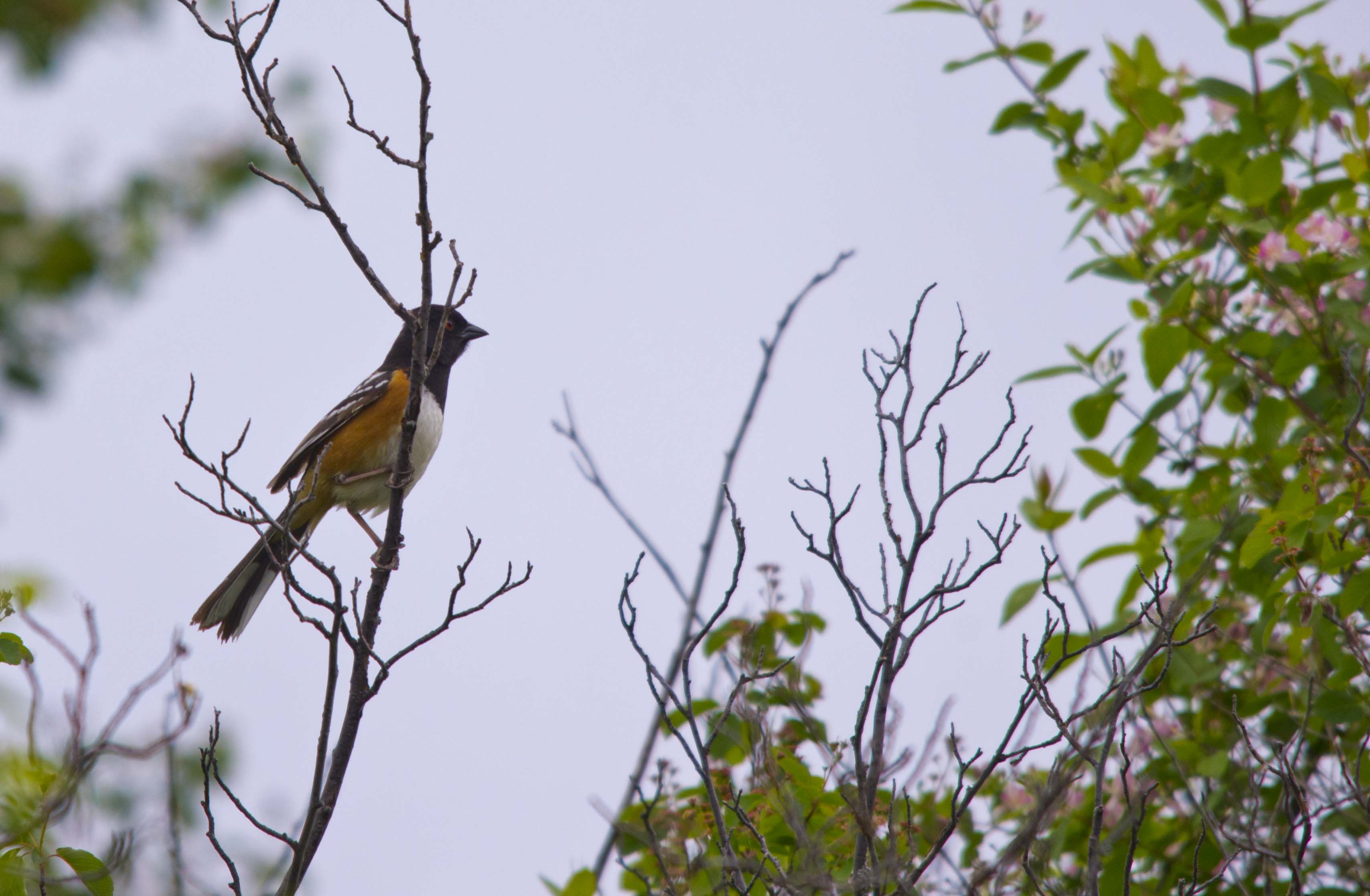
We had a couple great birds on our first outing at the top of the hill, with both a Spotted Towhee and a Ruby-throated Hummingbird right at the top.

Spotted Towhee Pentax K-5 + Sigma 150-500@500mm 1/500sec., ƒ/8.0, ISO 320

Spotted Towhee
Pentax K-5 + Sigma 150-500@500mm
1/500sec., ƒ/8.0, ISO 320

Ruby-throated Hummingbird Pentax K-5 + Sigma 150-500@500mm 1/800sec., ƒ/8.0, ISO 320

Ruby-throated Hummingbird
Pentax K-5 + Sigma 150-500@500mm
1/800sec., ƒ/8.0, ISO 320

At the feeders a bit further down the hill, we found a couple of Tree Swallows guarding their nests early in the day, catching some sun and warming up for the busy day ahead.

Tree Swallow Pentax K-5 + Sigma 150-500@500mm 1/640sec., ƒ/8.0, ISO 320

Tree Swallow
Pentax K-5 + Sigma 150-500@500mm
1/640sec., ƒ/8.0, ISO 320

We almost missed out on the Ruby-throated Hummingbird on June 14th, except for a brief glance up the hill caught this little guy hanging out in the gloom.

Ruby-throated Hummingbird Pentax K-5 + Sigma 150-500@500mm 1/200sec., ƒ/6.3, ISO 80

Ruby-throated Hummingbird
Pentax K-5 + Sigma 150-500@500mm
1/200sec., ƒ/6.3, ISO 80

The Rufous Hummingbirds are absolutely amazing and can always be found in the same place every year. I’ve yet to see a female on this slope, but I suspect that if it wasn’t a good area for the males to find a mate, they wouldn’t be here year after year! Forgive me for sharing as many photos as possible of these beautiful little fireballs.

Rufous Hummingbird Pentax K-5 + Sigma 150-500@500mm 1/1250sec., ƒ/8.0, ISO 800

Rufous Hummingbird
Pentax K-5 + Sigma 150-500@500mm
1/1250sec., ƒ/8.0, ISO 800

Rufous Hummingbird Pentax K-5 + Sigma 150-500@500mm 1/1250sec., ƒ/8.0, ISO 1000

Rufous Hummingbird
Pentax K-5 + Sigma 150-500@500mm
1/1250sec., ƒ/8.0, ISO 1000

Rufous Hummingbird Pentax K-5 + Sigma 150-500@500mm 1/1250sec., ƒ/8.0, ISO 800

Rufous Hummingbird
Pentax K-5 + Sigma 150-500@500mm
1/1250sec., ƒ/8.0, ISO 800

Rufous Hummingbird Pentax K-5 + Sigma 150-500@500mm 1/320sec., ƒ/6.3, ISO 100

Rufous Hummingbird
Pentax K-5 + Sigma 150-500@500mm
1/320sec., ƒ/6.3, ISO 100

We headed back to the area south of the Elbow River and found the usual Eastern Phoebes at their regular spot as well, this one having caught some fresh breakfast!

Eastern Phoebe with diving beetle Pentax K-5 + Sigma 150-500@500mm 1/500sec., ƒ/6.3, ISO 1600

Eastern Phoebe with diving beetle
Pentax K-5 + Sigma 150-500@500mm
1/500sec., ƒ/6.3, ISO 1600

As we headed towards the silverberry meadow, we heard the typical buzzing of the Calliope Hummingbirds in this area, but none of them really cooperated with the us and the sunlight, but I’m still pretty happy with the results!

Calliope Hummingbird Pentax K-5 + Sigma 150-500@500mm 1/1250sec., ƒ/9.0, ISO 640

Calliope Hummingbird
Pentax K-5 + Sigma 150-500@500mm
1/1250sec., ƒ/9.0, ISO 640

Calliope Hummingbird Pentax K-5 + Sigma 150-500@500mm 1/4000sec., ƒ/8.0, ISO 2000

Calliope Hummingbird
Pentax K-5 + Sigma 150-500@500mm
1/4000sec., ƒ/8.0, ISO 2000

Calliope Hummingbird Pentax K-5 + Sigma 150-500@500mm 1/500sec., ƒ/8.0, ISO 640

Calliope Hummingbird
Pentax K-5 + Sigma 150-500@500mm
1/500sec., ƒ/8.0, ISO 640

We did hear a relatively uncommon bird back beyond the dense spruce where we have Boreal Chickadees each winter, and it turned out to be an Ovenbird singing on territory. Sadly, he had moved on by mid-June, but it was really quite a treat to hear and see one of these guys right our back yard!

Ovenbird Pentax K-5 + Sigma 150-500@500mm 1/1000sec., ƒ/8.0, ISO 3200

Ovenbird
Pentax K-5 + Sigma 150-500@500mm
1/1000sec., ƒ/8.0, ISO 3200

Down at the far end of the Weaselhead, we had another Calliope Hummingbird in a spot I’d never seen one before, but at the far south end were a number of Grey Catbirds flitting around in the aspens, mewing away and singing their odd, disjointed songs.

Grey Catbird Pentax K-5 + Sigma 150-500@500mm 1/500sec., ƒ/8.0, ISO 3200

Grey Catbird
Pentax K-5 + Sigma 150-500@500mm
1/500sec., ƒ/8.0, ISO 3200

Another nice treat were a few Ring-necked Ducks which have been at these south ponds for a few weeks. It seems like there’s a lot more of these around this year, as they just keep turning up all over the city, but maybe it’s just a matter of getting out into the places they like to hang around a little bit more.

Ring-necked Duck Pentax K-5 + Sigma 150-500@500mm 1/640sec., ƒ/8.0, ISO 1250

Ring-necked Duck
Pentax K-5 + Sigma 150-500@500mm
1/640sec., ƒ/8.0, ISO 1250

On our walk back to the start we had our share of great birds as well, like this American Goldfinch singing from high in the trees, or the usual Cliff Swallows under the bridge over the Elbow River.

American Goldfinch Pentax K-5 + Sigma 150-500@500mm 1/500sec., ƒ/8.0, ISO 1000

American Goldfinch
Pentax K-5 + Sigma 150-500@500mm
1/500sec., ƒ/8.0, ISO 1000

Cliff Swallow Pentax K-5 + Sigma 150-500@500mm 1/2000sec., ƒ/8.0, ISO 1000

Cliff Swallow
Pentax K-5 + Sigma 150-500@500mm
1/2000sec., ƒ/8.0, ISO 1000

Have a great week, and good birding! Watch for the Monday supplemental post covering what we found at our visits to North Glenmore Park on these two outings!

Hummingbird in Snowstorm

Posted by Bob Lefebvre

Last week’s late summer snowstorm in southern Alberta flattened crops and gardens, caused power outages, and damaged or destroyed trees numbering in the hundreds of thousands. It must also have been devastating for many migrating birds. A storm like this, lasting for several days, blanketing the ground with snow throughout the southern half of the province, and accompanied by temperatures as low as -7 degrees Celsius, must surely have caused high mortality among warblers and other neotropical migrants.

Here are some photos taken on September 10 of a hummingbird caught in the snow. I believe this is a Rufous Hummingbird, the last of which usually move through Calgary in early September. Fortunately there are still plenty of flowers around so perhaps it was able to find enough food to continue on its southern migration.

All photos by Debbie Reynolds.

IMG_5017

IMG_5049

IMG_5105

IMG_4991

IMG_5077


More surprises and new discoveries in the Weaselhead

While it has only been two weeks since our last visit to the Weaselhead, and only a week since my last post on it, that amount of time can lead to a huge difference in the birds one will see and hear in such a dynamic habitat. In addition to some of the birds we only heard on our last visit, a bunch of new arrivals made for an eventful day. I was thankful for that, because by the time I started with our group at 7:30, I’d already been out in the Weaselhead for almost 4 hours with the Dawn Chorus, listening for birds in the pre-dawn light, and had already accumulated a list of close to 60 species for the day!

Return to the Weaselhead

Return to the Weaselhead

A small contingent of six of us decided to visit the Weaselhead again, and while we didn’t expect too much in the way of new birds, we were very pleased with what we did find! One of our first new finds though was a pair of Least Chipmunks rummaging around in the freshly stocked feeders. This one actually sat inside while we watched him snacking on the sunflower seeds.

Least Chipmunk

Least Chipmunk

Looking out over the Elbow River towards the area where the Rufous Hummingbirds are, we spotted this little fellow much closer still, and snapped a few shots. When we confirmed the ID as a Ruby-throated Hummingbird, we edged closer and were able to get some very nice views and photos.

Ruby-throated Hummingbird

Ruby-throated Hummingbird

Ruby-throated Hummingbird

Ruby-throated Hummingbird

Showing off his gorget

Showing off his gorget

Down the hill we went, checking on the Rufous Hummingbirds, but not before finding a couple of the birds we’d heard well the past few weeks but hadn’t seen. Both the Cedar Waxwings and Gray Catbirds seemed much more comfortable sitting out in the open this week, and both allowed nice photo opportunities.

Cedar Waxwing

Cedar Waxwing


Gray Catbird

Gray Catbird

The old faithful pair of Eastern Phoebes under the wooden bridges in the Weaselhead were both present, but we got our first good looks at the male under the north bridge. After looking the wrong way for him for a few minutes, thought I’d look down over the edge, and sure enough, less than five feet away from me, there he was! Once he knew that I’d seen him though, he flew under the bridge and away from us to continue his hunting for the morning.

Eastern Phoebe

Eastern Phoebe

As we walked through the meadow where the Calliope Hummingbirds nest, we heard two separate Ruffed Grouses drumming, and as we neared our usual Boreal Chickadee grove, this male was drumming so close to us that I could actually hear the wind whistling through his flight feathers.


Ruffed Grouse

Ruffed Grouse

Onward and westward we went, staying away from the main pathway as much as possible, as apparently there was a race going on along the main central path… though we didn’t see or hear much in the way of runners. As we neared the pathway though, we did hear this Yellow-bellied Sapsucker calling and tapping on this dead snag… at least when he wasn’t preening himself.


Yellow-bellied Sapsucker

Yellow-bellied Sapsucker

A visit to the south ponds netted the calls of a Sora, a few American Wigeon on the ponds, more Least Flycatchers than one could count, and at least two Rose-breasted Grosbeaks calling from the treetops. This male allowed us a few minutes of viewing before flying off once again.


Rose-breasted Grosbeak

Rose-breasted Grosbeak

One notably absent species were the Cliff Swallows. Their nests were empty, and we weren’t the only ones who noticed. This Merlin was sitting near the bridge staring intently down at the nest colony, in hopes of snagging some lunch. He sat there until long after we left, waiting for his lunch “on the wing” to be delivered.


Merlin

Merlin

Our last new species of the day was actually one that is generally more evasive than the most secretive birds, but for some reason, this young Thirteen-lined Ground Squirrel was sitting on the ground nibbling away on grass and seeds when we nearly stumbled over it. We could have sat there all morning taking hundreds of photos of it, but this little ground squirrel was completely fearless!

Thirteen-lined Ground Squirrel

Thirteen-lined Ground Squirrel


Next week I’ll be away, but I will share some highlights from the May Species Count with you, along with some really great sightings we had at the annual Livingstone Ranch Golf Course bird count! Have a good week, and good birding!

May Species Count in the Weaselhead

I don’t think I need to mention again how much I love the Weaselhead Natural Area in SW Calgary. This year provided great weather for our Sunday walk, and gave us a bevy of amazing and beautiful birds, with plenty of opportunities to get the very best shots.

Weaselhead Natural Area

Weaselhead Natural Area

As it was part of the May Species Count, our group usually visits the Weaselhead a few weeks ahead of the rest of the Friends of Fish Creek outings, and Bob and I headed out even earlier in hopes of a few of the thrushes singing, and maybe some other early morning birds. We got our wish early on, with this Veery sitting out in the open just south of the first bridge, but sadly were shut out from hearing either the Swainson’s Thrush or Hermit Thrush which can often be found here.

Veery

Veery

After listening for the other thrushes, and taking our time getting back to the starting point to meet the others, we began our trip again, stopping at the top to listen for various other birds calling, and were lucky enough to see this lone Spotted Towhee singing from the top of a spruce tree just down the hill.

Spotted Towhee

Spotted Towhee

As we descended the hill for the second time, we spotted a few good birds on the way down, plus a bonus mammal, the Least Chipmunk, feeding at the bird feeders mid-way down the hill. At the bottom, we had some not so good views of White-throated Sparrows, but could hear their songs all throughout the morning.


As we reached the bridge, we had nearly three hundred Cliff Swallows flying overhead, and a few even came down to their nests, whether to rest or share food with their mates, I’ll never know. What I do know is that photographing swallows in general is one of the truest tests of a bird photographer. Thankfully, out of nearly fifty shots of the colony, I found one that turned out relatively ok!

Cliff Swallow returning to the colony

Cliff Swallow returning to the colony

We followed the pathway all the way to its end at the southern edge of the Weaselhead, and turned up good numbers of Yellow Warblers, and some of the first Least Flycatchers of the year, which could be heard all through the park with their distinctive “chi-bec” calls. Thankfully they’re also one of the easiest to identify by sight as well as sound, with their distinct thick eye-ring and buffy sides.

Least Flycatcher

Least Flycatcher

Down at the very south end, we heard the calls of a Northern Waterthrush, more Yellow Warblers than we could ever want for, and even a pair of elusive Sora. Hopefully the next time we see them they’ll be more cooperative for the camera!

We began the long trip back through the central portion of the Weaselhead, hearing our first Rose-breasted Grosbeak of the year, along with Red-breasted Nuthatches, Boreal Chickadees, and White-winged Crossbills, but the main reason for revisiting the central meadow was for the Calliope Hummingbirds who are annual residents here, and this year this male put on quite a show for us.

Calliope Hummingbird

Calliope Hummingbird

Calliope Hummingbird display

Calliope Hummingbird display

Calliope Hummingbird flaring his gorget

Calliope Hummingbird flaring his gorget

Once we’d had our fill of watching this hummingbirds antics, we headed to the north side of the Elbow River in search of the other regular hummingbird species here, the Rufous Hummingbird. Once again, we were not disappointed as we found a single male high up in a spruce tree, and even were lucky enough to watch as he faced off with another male in a territorial dispute. Here is the champion flaring his gorget in victory.

Rufous Hummingbird

Rufous Hummingbird

As we were preparing to leave for the next few stops along our May Species Count route, we were given a low and slow flyby by a male dark morph Swainson’s Hawk that’s been resident here in the Weaselhead for a few years.

Swainson's Hawk (dark morph)

Swainson’s Hawk (dark morph)

And that’s it for another week of birding for us. With last weekend’s May Species Count, and the weeks crazy schedule, I missed my regular post last week, so this week you get two (at least!) new posts from me. Watch for the next one on Thursday! Until then, good birding!

Weaselhead Redux – Hummingbirds, Warblers and Thrushes, oh my!

Posted by Dan Arndt


I’ve mentioned time and time again how much I love visiting the Weaselhead Natural Area in Calgary, even though until last year, I had never truly appreciated just how extensive the area is, and the history behind it. After counting birds there with Gus in the Fall Birding Course, with Rob Worona on the Christmas Bird Count, and then numerous times during the Winter and Spring birding course, followed up by not only a whirlwind tour during the Victoria Day Big Day, and then the May Species Count, one would think that I’d be a bit tired of it. Wrong. 


We spent the morning of Sunday, June 10th in the Weaselhead once again, this time with a few target species in mind, but also visiting some areas that we didn’t spend a lot of time on during the May Species Count, and also letting the folks who weren’t able to commit to the many hours that morning for whatever reason get a good opportunity to see one of the few places in Calgary that one can see both the Rufous and Calliope Hummingbirds. On top of that, we got some bonus extra good looks of a few harder species to get close to, like the ever elusive Sora, and the Eastern Phoebe who are generally quite reluctant to allow close, clear views. Add to that this very brave Tennessee Warbler singing away on the main pathway through the park, and the spiralling, haunting song of the Swainson’s Thrushes calling from the south slope of the Elbow Valley, it made for a great day overall. We even got a few bonus birds throughout the day as well!


As we descended the slope into river valley, we had our goals well in mind. Hummingbirds, hummingbirds, hummingbirds. Whatever else we would see that day was superfluous, but since the males would be leaving the area soon, they were indeed our main objective. Down the hill and across the bridge, we were stopped for a few moments in awe of the Cliff Swallows under the pedestrian bridge, many still collecting mud for their nests, many others flying about catching insects for themselves or their young. Around the corner we paused to check for the Eastern Phoebes, and we saw not one, but both the male and female about, both gathering food. This one stopped to inspect us from only a few feet away for a good minute before finally retreating under the bridge.

Eastern Phoebe

Eastern Phoebe

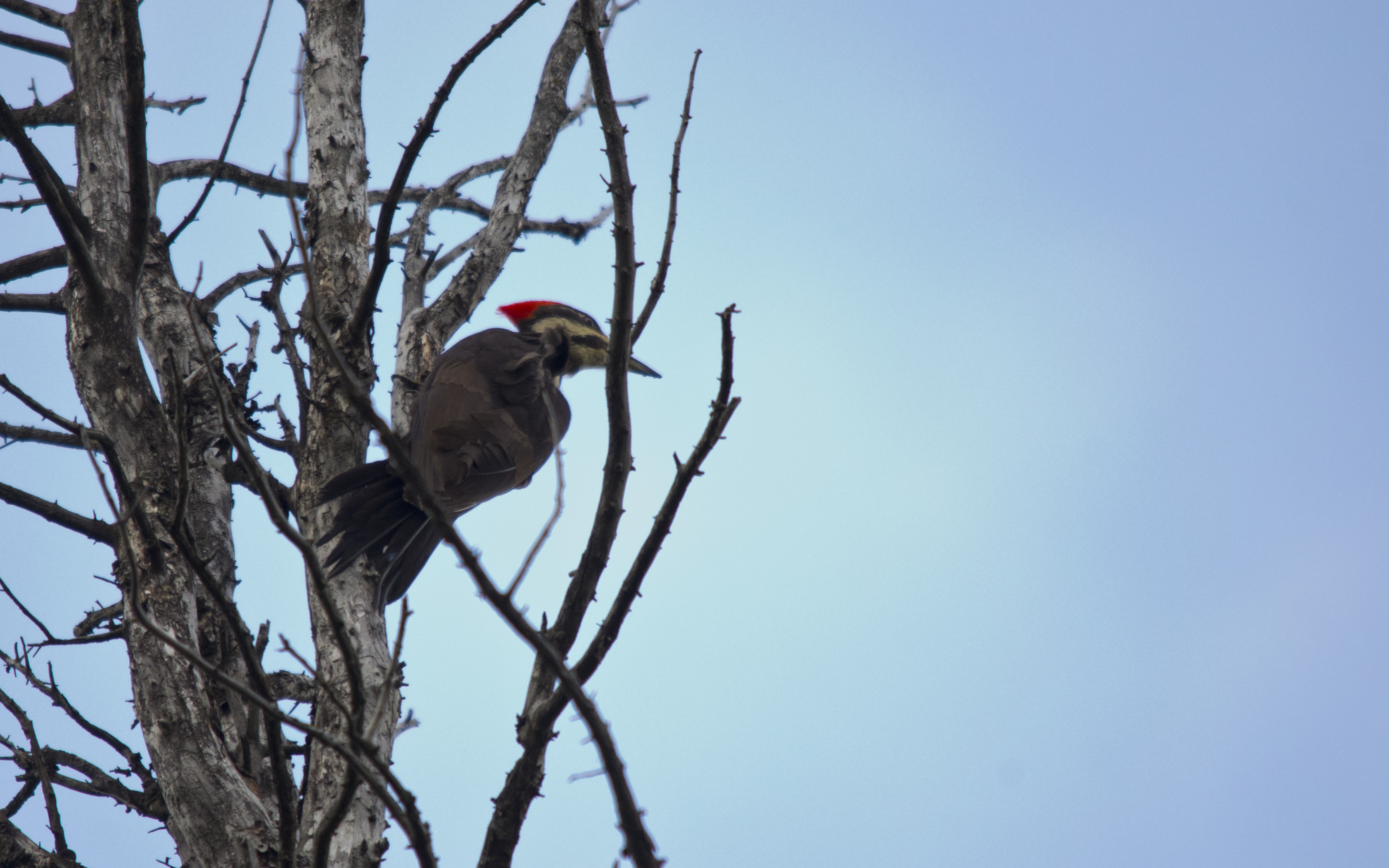
Our first bonus bird of the day, and one of the most stunning ones to see any time of year, was this Pileated Woodpecker, who had left quite a bit of evidence of its presence for the other groups that week, but was drumming away on this trunk in its search for its next meal.

Pileated Woodpecker

Pileated Woodpecker

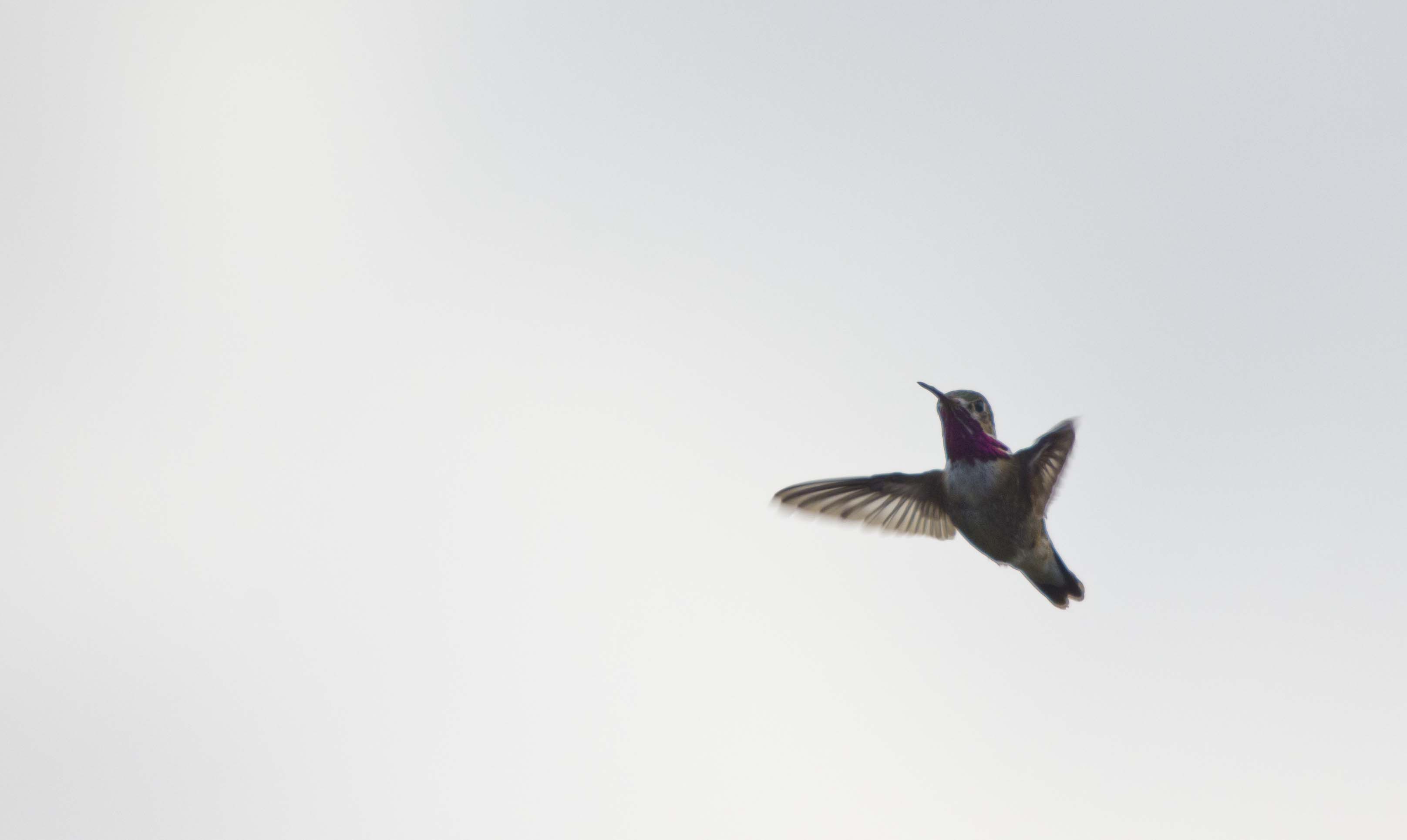
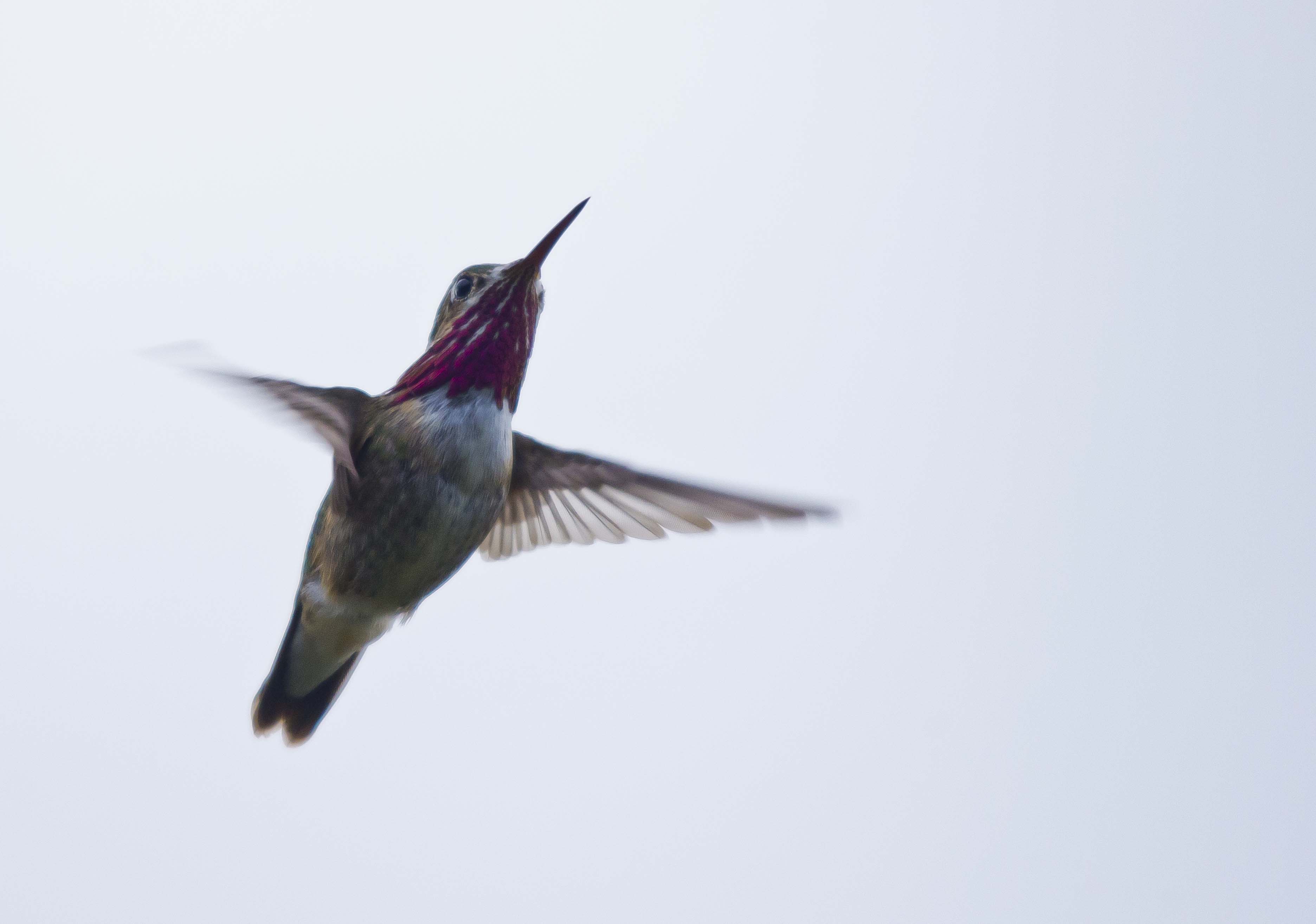
A few hundred meters more brought us to our first hummingbird location. After scouting around for about five minutes or so, our search paid off as this male Calliope Hummingbird flew in to check us out. First keeping his distance, then coming in closer, and closer, and at one point buzzed within a foot of my head.

Calliope Hummingbird

Calliope Hummingbird

A Closer Inspection...

A Closer Inspection…

The whole experience was absolutely incredible, and I hope to see these hummingbirds again very soon!


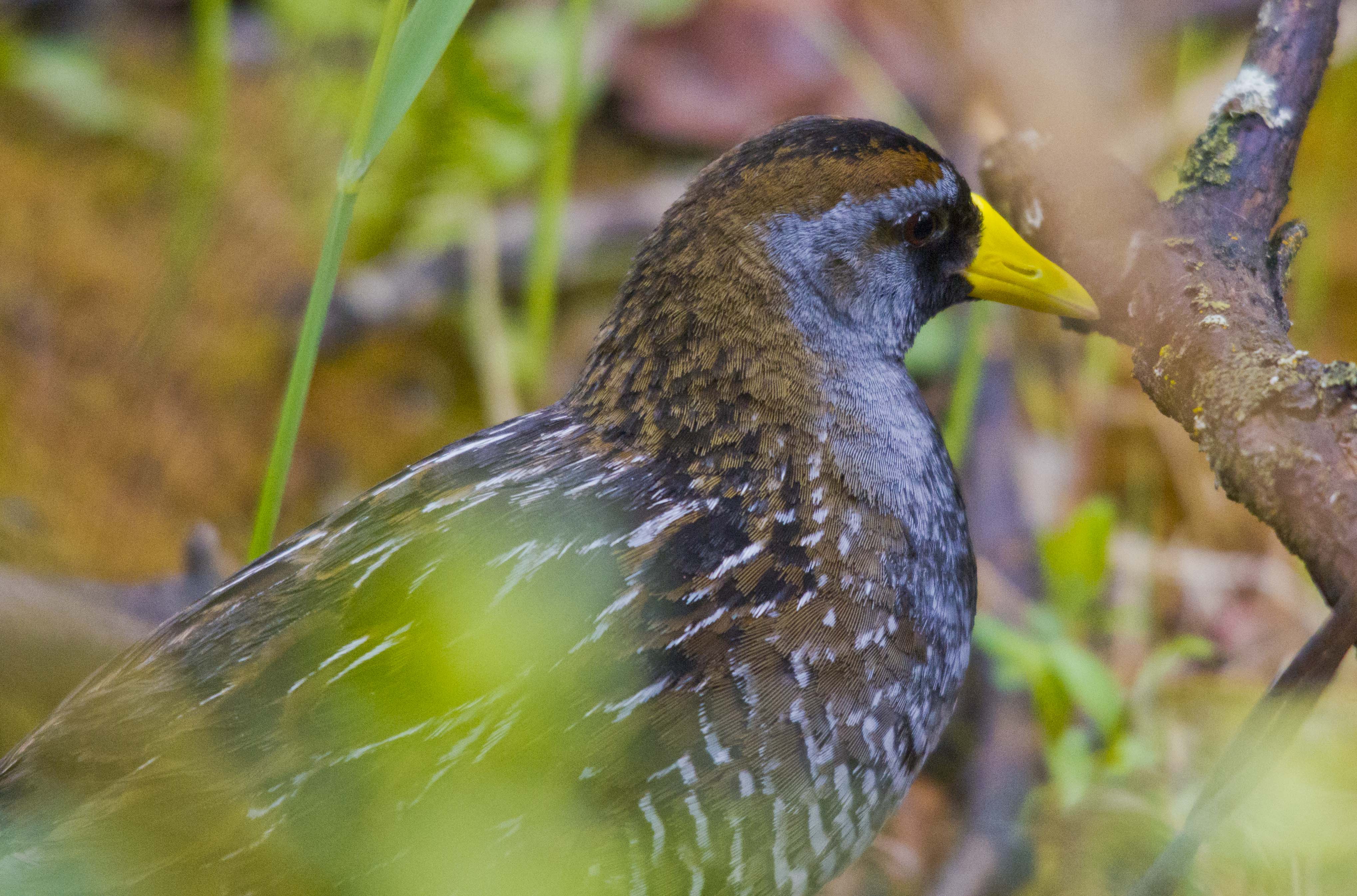
From here, we headed west and south to the two beaver ponds at the south edge of the Weaselhead,  and upon reaching the ponds, heard the call of the Sora in the western pond. A few of us took up positions in the underbrush on the edge of the pond, and I pulled out my phone to play a Sora call. The calls were answered, first about 50 feet away, then 40, then 30, and then almost immediately the birds popped into view, not one, but two of them coming right toward us! The Sora in the photo below was just beyond the 8′ minimum autofocus distance, but at one point it was right at my feet.

Sora Portrait

Sora Portrait

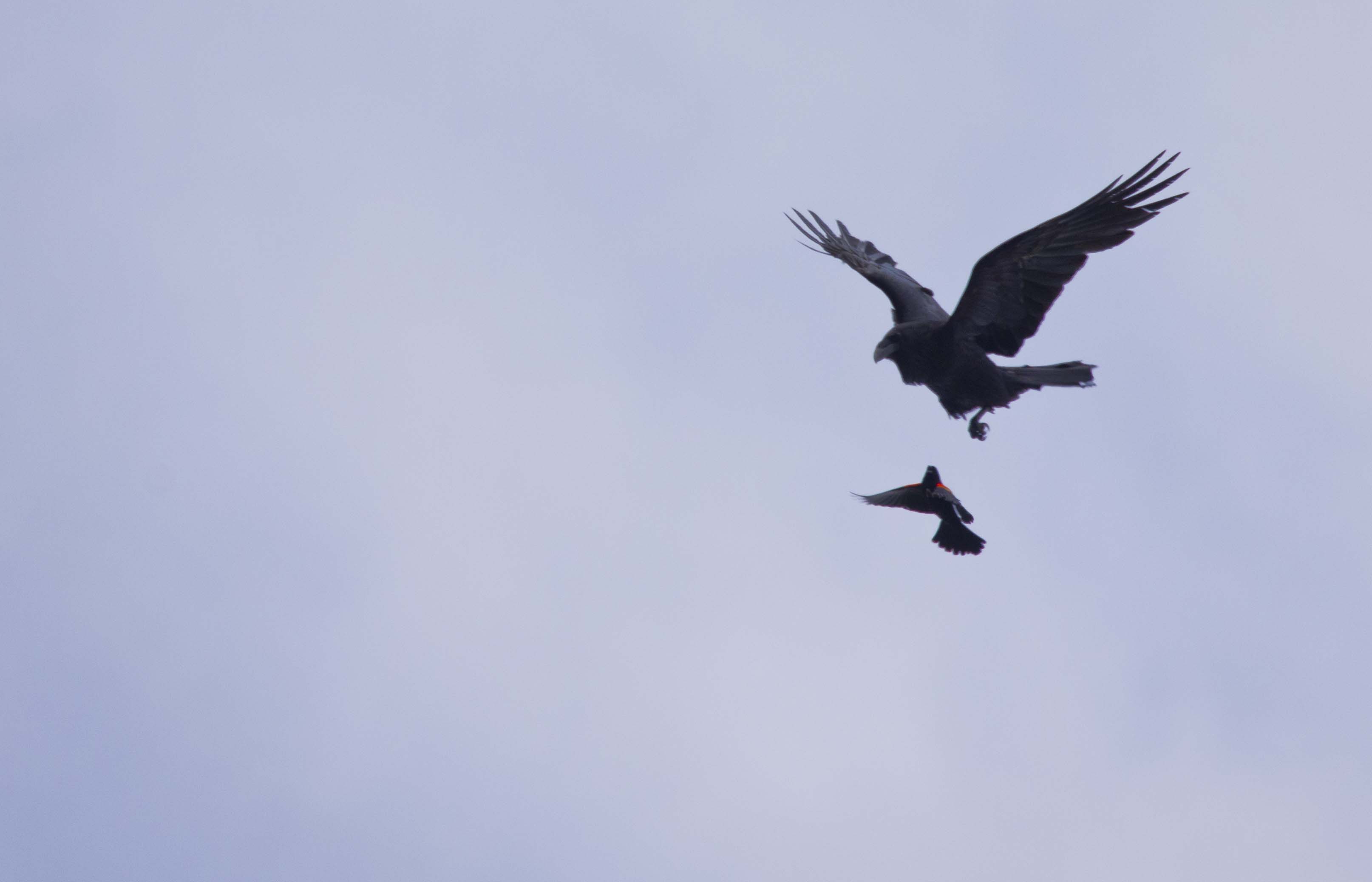
As we walked up the path behind the pond in search for grosbeaks, thrushes, and any other bird we could find, we were treated to this Common Raven being harassed by a Red-winged Blackbird for what seemed like forever.

Red-winged Blackbird and Raven

Red-winged Blackbird and Raven

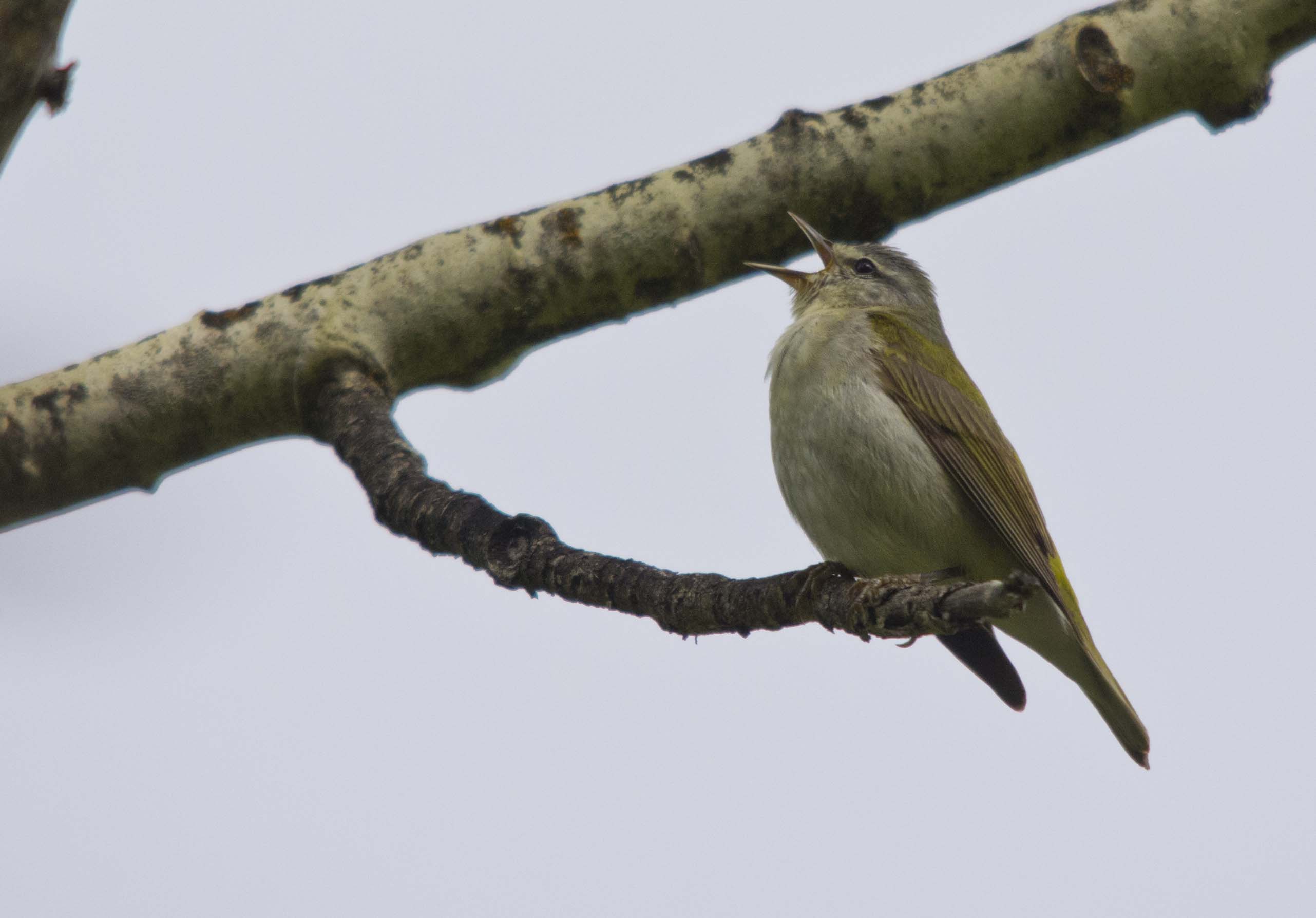
Next on our list: the Rufous Hummingbirds nesting in the spruce trees on the north slope of the Elbow Valley. It’s a long trek through the Weaselhead from south to north, and we had a few bonuses along the way. Most impressive was this Tennessee Warbler, very likely on his nesting territory, who came out to challenge us.

Tennessee Warbler

Tennessee Warbler

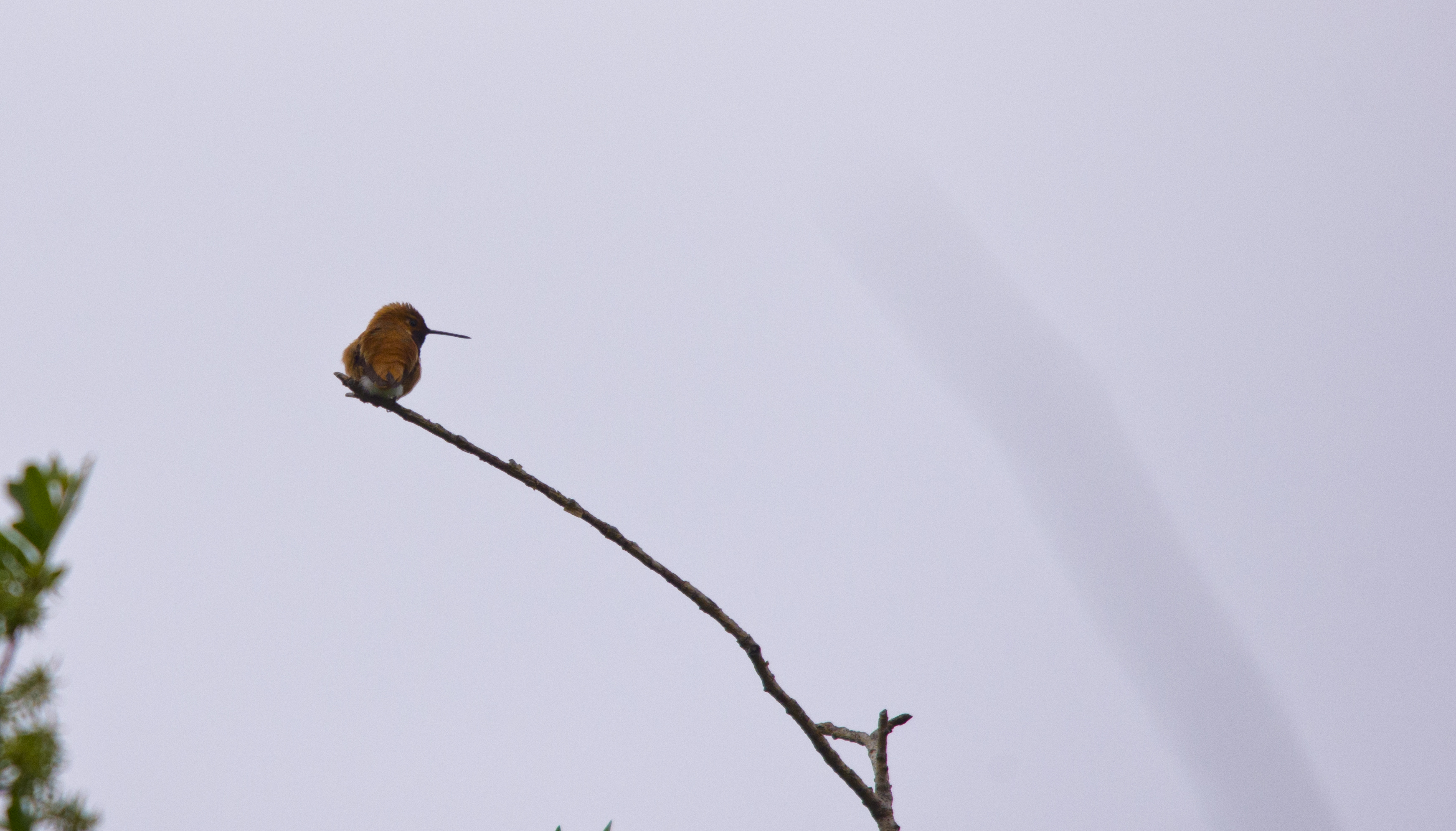
Back across the bridge, through the brush, and over the storm-water outflow drain and all of a sudden the buzzing and trilling of this Rufous Hummingbird was all around us. It displayed more than a few times by flying up high, then diving down to within a foot of the ground or bushes it was flying over, then back up to a perch before repeating the process. Unfortunately, with all the brush in the way and the bad light, few of my photos turned out at all, with this being the best of a bad few.

Rufous Hummingbird

Rufous Hummingbird

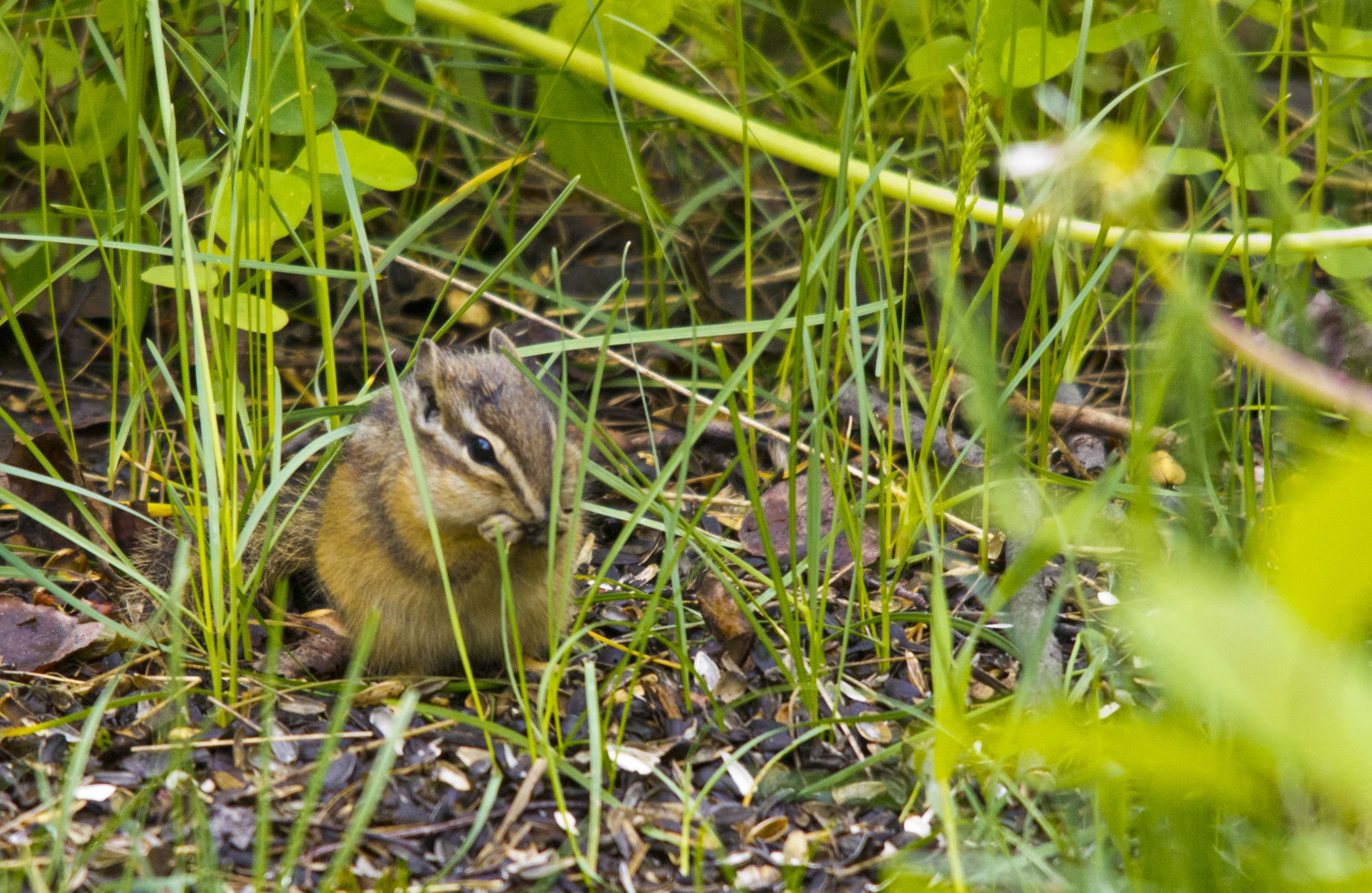
On the way back out of the Weaselhead, we decided to take a shot at finding the Brown Thrasher that Bob and I had seen a few weeks prior. On the hillside from the north parking lot, about mid-way down, there’s a grove that is known for being one of the few places that Spotted Towhees have been seen breeding in Calgary. Across from that is a small clearing that, for the last dozen or more years, some locals have kept well stocked with food for the birds of the Weaselhead, and all year long is a great place to see some of the rarer ones feeding. No birds were at the spot that day, but this little Least Chipmunk was nibbling on some sunflower seeds.

Least Chipmunk

Least Chipmunk

Along the northern bank of the Glenmore Reservoir, below North Glenmore Park, a Brown Thrasher (or a few Brown Thrashers) have been seen regularly, and Bob and I had found it two weeks before. Unfortunately, the only close relative of the Brown Thrasher that we found were a couple of Gray Catbirds… but what we didn’t expect to see were not one, but three Spotted Towhees flying back and forth along the lower path. Calling out with their harsh squeaky and annoyed call while foraging for food and staying out of sight. Despite their best efforts though, I did manage a few quick shots!

Spotted Towhee

Spotted Towhee

Once again, a great day out with great people and amazing birds to see!

Have a wonderful week!


Where to Find the Hummingbirds

Posted by Bob Lefebvre

Many readers of Matthew’s recent post about the Hummingbirds of the Weaselhead would like to know where to find these birds.  There are two species that breed there, and they are reliably in the same two areas every year, from mid-May to early September.

To get to this area, park in the lot in North Glenmore at 37 Street and 66 Avenue SW, in the community of Lakeview. This is marked with a red “P” in the satellite map below.  The white x’s show where the Calliope Hummingbirds are typically found, and the yellow x’s show the location of the Rufous Hummingbirds.

Calliope Hummingbirds:  From the parking lot, go down the hill on the paved trail, and cross the big bridge over the Elbow River.  Then turn right immediately and follow the trail over a wooden bridge that spans a side channel (Eastern Phoebes nest here).  After the wooden bridge, turn left onto a new boardwalk trail that runs along the west side of that channel.  After the boardwalk ends, the trail turns away from the channel, and you soon come to a more open area with a few small trees.  Look for these tiny birds at the top of dead branches or spruce trees.  Another trail branches off and goes north along the west side of this open area, and we have seen the Calliopes here too.  The red x’s on the map below show where to look.  Please stay on the trails – there is no need to go off them to find the birds.

Rufous Hummingbirds:  From the main parking lot, take the paved trail down the hill.  There are several trails you can take to the area where the birds are on the south-facing slope along the river.  It can be quite muddy in wet conditions, and you should stay well away from the river when the water is high.  One dirt trail begins right where the paved path makes a big turn, before going down the steep hill (the uppermost red T below).  This one is difficult when it is wet since there are steep sections.  Another runs right along the river bank (the lowermost T).  This trail is unusable and dangerous when the water level is high, as it is now.  The middle T indicates a trail that begins at a wooden railing just north of the big bridge.  This is the best way in wet conditions (the trails all converge when you are about halfway there).   Follow the dirt trails through the woods, staying down low near the river, until you get to a stormwater drain into the river.  The hillsides here are covered in Caragana bushes (Siberian Peashrub).  You usually don’t have to go farther than this to find the birds (though the trails continue on for quite a distance).  The location is marked with red x’s below.  Again, look at the tops of small dead branches, or the tips of spruce trees.

To return, you can backtrack, or climb the steep hill to the boundary fence above, and follow it back.  (In dry weather you can go in this way, along the top, but it is a steep hill down to where the birds are, and very slippery.)

Good luck, and be careful!