Big Sit results

A very windy morning was spent down at Inglewood Bird Sanctuary by us three bloggers; several people came by to join us. The large gusts of wind kept the birds down and hard to hear but we still had some great birds. From 8 -10 a.m., we counted birds down at the river recording 24 species of birds.

  1. Canada Goose
  2. American Wigeon
  3. Mallard
  4. Common Goldeneye
  5. Common Merganser
  6. Double-crested Cormorant
  7. Osprey
  8. Swainson’s Hawk
  9. Merlin
  10. Spotted Sandpiper
  11. Franklin’s Gull
  12. Rock Pigeon
  13. Belted Kingfisher
  14. Northern Flicker
  15. American Crow
  16. Common Raven
  17. Tree Swallow
  18. Northern Rough-winged Swallow
  19. European Starling
  20. Yellow-rumped Warbler
  21. Song Sparrow (heard 5 minutes before 8a.m.)
  22. Red-winged Blackbird
  23. Common Grackle
  24. Brown-headed Cowbird

At 10a.m., due to the frigid wind, we moved base to the Walker house ( we were there 10:30-12:15) where we added:

  1. Cooper’s Hawk
  2. Red-tailed Hawk
  3. Black-capped Chickadee
  4. Chipping Sparrow
  5. House Finch

All and all, not a bad morning to celebrate World Migratory Bird Day; a grand total of 29 species of birds from within the count circles. There were also some good birds from outside the circles; right after we called it a morning and took down the circle, an American Kestrel showed up. We also saw White-crowned Sparrow, White-throated Sparrow, House Wren, Warbling Vireo, Northern Pintail and a Barn Swallow. One of the highlights was a Swainson’s Hawk less than twenty feet off the path, with a kill. A story will follow shortly!

Posted by Matthew Sim

Bird Songs 101

Ever heard that beautiful song coming from deep inside a dense bush, but don’t know what exactly is the source of that amazing sound?  You can check out this great site to help you match the song with the bird.

http://www.natureinstruct.org/dendroica/

The Blackpoll Warbler gives a very high-pitched song that can be inaudible at times.

Dendroica.com is a great site; whether you are a novice and just learning the songs, or you are a seasoned pro and brushing up for the spring migration. Photographs of the bird are provided on this site, as well as a description of the song or call and then the song itself. Once you have gotten familiar with the sounds, you can go out into the field with this newly-found or rediscovered knowledge, and be able to identify that beautiful song coming from deep inside the bush.


Posted by Matthew Sim

Rare Bird Alert: May 12

Have you seen an unusual bird in Calgary? If it is a species on this Reportable_Birds list (PDF), please report it to the Rare Bird Alert line at 403 221-4519 and leave a message after the beep at the end of the recording. If you would like some help with species identification, email us at us at zoxox@shaw.ca . To report injured wildlife call the Calgary Wildlife Rehabilitation Society at 403 239-2488, or the Alberta Institute for Wildlife Conservation at 403 946-2361.

This Bird Alert was recorded on Thursday May 12 at 10 am.

Bird Sightings

Early May (1?):
WESTERN PALM WARBLER at Inglewood Bird Sanctuary, Spring Migration Monitoring/banding.

May 6:
GRAY CATBIRD, IBS as above.
BLACK-BELLIED PLOVER (3), Kitsum Reservoir, near Brooks, Dwight Knapik.

May 9:
WHITE-THROATED SPARROW, FCPP, Votier’s Flat, Terry Korolyk.
SAY’S PHOEBE, CINNAMON TEAL, 2 WESTERN GREBES at South Glenmore Park, Gus Yaki

May 10:
SPOTTED SANDPIPER, Hull’s Wood, WESTERN WOOD PEEWEE, Mallard Pt. FCPP, TK.
LEAST FLYCATCHER, Bowmont Pk, Dwight Knapik.
EURASIAN WIGEON, west end Glenmore Reservoir, GY

May 11:
GLAUCOUS GULL(adult), THAYER’S GULL (1st yr)west end Glenmore Res., TK.
HOUSE WREN, IBS, as above.
BROAD-WINGED HAWK, flying over Talisman centre, Ian Halliday.
SAGE THRASHER, near Taber, Lloyd Bennett.

May 12:
CLAY-COLORED SPARROW, ORANGE-CROWNED WARBLERS (11), YELLOW-RUMPED WARBLERS(45), LINCOLN’S SPARROWS (12), IBS as above.

The next scheduled update of the bird alert is on Mon May 16.

Down at the pond

Ponds can be a great place to see birds. They provide a home to not only birds, but many plants, mammals, insects, fish; the list could go on forever! The key factor is the water. Water attracts birds almost without fail; they need it to bathe, to drink and to keep cool. You can see birds at big lakes, such as Frank Lake, or you can see birds at small ponds, like the one close to my house.

 A male Red-winged Blackbird calling. These birds are common at ponds that have rushes and reeds along the banks.

At my local pond, which sits on the Willow Park golf course, you can just about always see Mallards, Common Goldeneye, American Wigeon, Redheads and Red-winged Blackbirds. Lately, there has been a pair of Canvasbacks on the pond as well. Ponds where you are likely to find birds need to be the right types of ponds. Several characteristics define a good pond, including: moderately deep water, plenty of vegetation, both on and under the water, reeds around the banks and good, fairly undisturbed nesting spots. These factors can make ponds irresistible to many birds.

The male Redhead is a striking duck with its rust red head and dusky grey back.

Do you have a pond near you? If you do, go check it out, you never know what you might see!

Posted by Matthew Sim

Backyard Birds: White-crowned Sparrows

It’s a sure sign of spring in my yard when I see the White-crowned Sparrows are back.

A fairly large sparrow at 5 1/2-7″ (14-17 cm), White-crowns don’t fit the miscellaneous sparrow category of LBJ’s – little brown jobs – that are hard to distinguish from one another. These dapper little sparrows are always in bright white and black, and easy to identify.

The white crown has two black stripes, they have a black eye line (a line going to the back of the head from the eye), and a yellow-orange bill. They have white streaking on a brown back and wings, and their underparts are pale grey. Males and females look alike.

Small flocks of White-crowned sparrows pass through Calgary in late April to May, and then again in Sept-Oct. Their spring visits to our city are just a stopover for their trip to their breeding habitat in the northern boreal forest. They prefer open environments with shrubby meadows, alpine and willow shrubs, and build cup nests in shrubs or small conifers.

These sparrows are tireless singers, and are known to even sing under the light of a full moon.

Sparrows forage on the ground, usually in fairly open areas, and fly up into a small tree or hedge when flushed. We have a dedicated bird area at the back of our yard, and spillage from the hanging bird feeders provides an excellent sparrow feeding ground. Like other sparrows, the hyperactive White-crowns make quick jumping back and forth movements, scratching the ground to expose insects and seeds.

If you have White-crowned Sparrows in your yard right now, enjoy them while you can. They won’t be here for long, and then we’ll have to wait for their re-appearance in the fall.

By the way, the bird singing in the video background is a Ruby-crowned Kinglet, which I’m still attempting to capture with my camera.

Posted by Pat Bumstead

Free Summer Bird Walks

Last week, the first of Nature Calgary’s Tuesday evening bird walks was held.  For those of you who can’t make it out on weekend mornings, these evening walks may be a good opportunity.  Throughout the spring and summer, a free birding field trip to one of Calgary’s many parks will be offered every Tuesday beginning at 6:30 p.m.

Inglewood Bird Sanctuary

For information on upcoming walks, check the “Free Nature Walks” page on our banner above.  The page is updated regularly.  This evening, May 10, the field trip will be at Edworthy Park in the northwest.  Spring migration is getting into full swing, so get out and see the latest arrivals.

Carburn Park

All Nature Calgary field trips are free and open to all members of the public.  You don’t have to be a member of Nature Calgary to attend.  If you need any more information about a particular walk, you can phone the walk leader at the number listed.  But in general, you just have to show up!  Dress for the weather, have your binoculars and/or camera ready, and have fun while learning about the birds of Calgary and our natural areas.

Posted by Bob Lefebvre

Migratory Bird Day: The Big Sit

Saturday May 14 is World Migratory Bird Day.  To celebrate this, and to see the birds of Calgary at the peak of our spring migration, Birds Calgary will be doing a Big Sit at the Inglewood Bird Sanctuary.

Sit birding is an activity that requires the birder to count all the birds that are seen and heard while remaining within a circle seventeen feet in diameter.  Essentially, you stay put and let the birds come to you.  On May 14, the Birds Calgary writers will see how many species they can find from a spot in the Inglewood Bird Sanctuary near the Bow River.

Inglewood Bird Sanctuary, 2425 9 Avenue SE, Calgary

We will begin the count at 8 a.m. and go until 11 a.m (noon if the birds keep coming).  Anyone who wants to join us for the count and help out is welcome.  You can also just drop by at any time during the count to see how we are doing.  If you plan to stay, bring a lawn chair, binoculars, water, and either sunscreen or rain gear (or both) as the weather requires.

Harlequin Ducks, male and female, seen last year from our Big Sit spot.

Here is a link to the World Migratory Bird Day website:  http://www.worldmigratorybirdday.org/2011/

I hope you can join us next Saturday for a great morning of birding!

Posted by Bob Lefebvre

Sunday Showcase: Skating Geese and more

These stunning shots were sent to us by Rosanna Evans. Thanks for sharing! Click pictures for a larger view.

Taken at Carburn Park, Calgary:

Taken at Inglewood Bird Sanctuary, Calgary:

Help Us With the May Species Count!

The May Species Count is an event held on the last weekend of May each year, in which birders try to find every species of bird in the Calgary area.  Over the two-day period, teams or individuals scour their assigned areas to identify every bird species they see and hear, and also note the total numbers of each species.  This year the count will be on May 28 and 29.

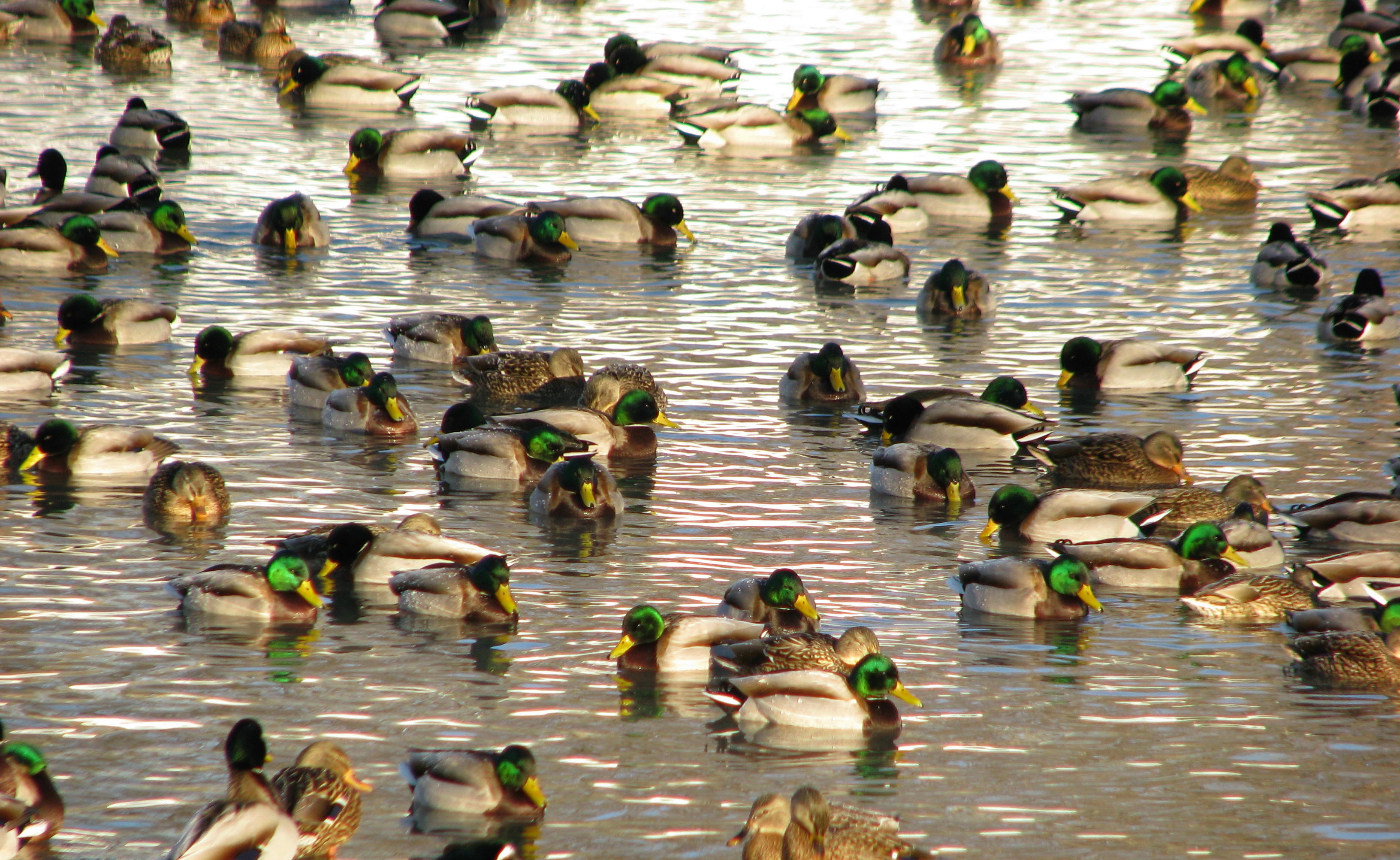
How many Mallards?

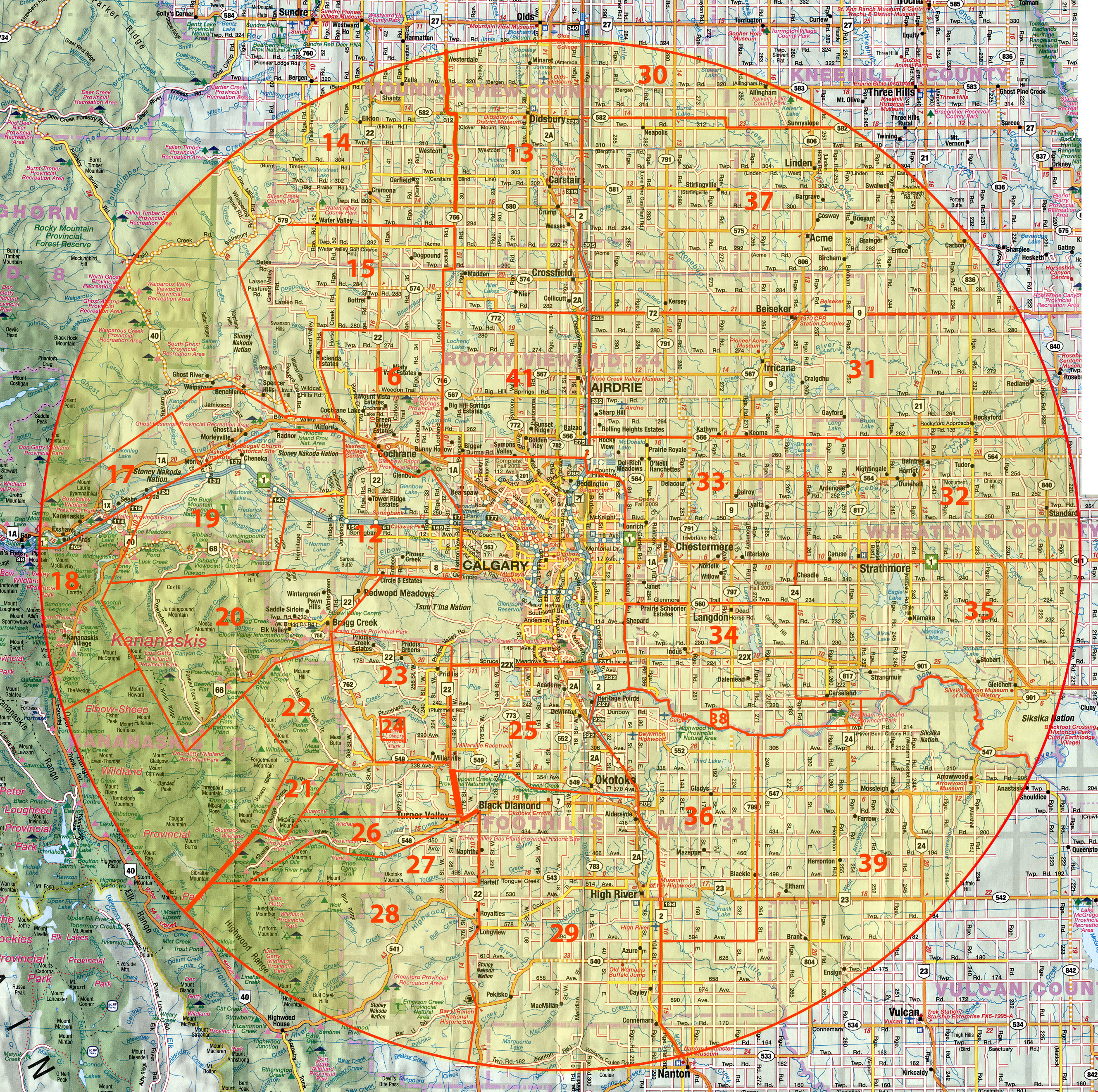
The area covered is huge – a circle 160 kilometres in diameter centred on the Centre Street bridge in Calgary.  Organizers have broken the count circle into many smaller territories, and assigned volunteers to each area.  We need a lot of birders to cover all this territory!

          The Count Circle.  The numbers indicate the territories to which birders or teams of birders are assigned.  Click on the map to enlarge it.

There are still some territories that are not covered, so if you want to contribute to a very worthwhile citizen science project, contact the co-ordinator:

Terry Poulton  –  May Species Count, May 28-29, 2011

phone    403-274-7393        email    tpoulton@yahoo.com

Everyone is invited to participate, whether beginner or seasoned pro.  You can do a whole day, a half day, or both days.  Terry will try to assign you to an interesting route, and try to match new-comers with experienced birders, and drivers with riders.  There are a wide variety of environments, from urban to prairie to foothills habitats. Most years, more than 200 bird species are seen in total within the circle.

This is a great opportunity to get involved in Calgary and area birding, and to see as many as one hundred species of birds in a single day.  If you can identify most birds you see, you can survey an area yourself.  If you are a new birder, you will be assigned to a team with other experienced birders where you can help to spot and count birds, and learn about the process.

If you are at all interested in this, please contact Terry to get more information.  It’s one of the funnest birding experiences of the year, at the birdiest time of the year!

Posted by Bob Lefebvre

Photo Feathers: Pine Siskin

The Pine Siskin is a familiar, tame little finch. They are often very approachable, enough to see their beautiful feathers. They are quite noisy, even while they feast on niger, black oil sunflower seeds and the seeds of pinecones, among other foods. Pine Siskins are common in Calgary and can be seen year round.

The Pine Siskin is a very curious bird; the bird in this photo is curious as to who is bothering him.


Posted by Matthew Sim