Wednesday Wings: Chukar

Seen by McKenzie Amerongen and her family in the SW West Springs district on Friday, June 27/12.

Rare Bird Alert Calgary: July 2

Have you seen an unusual bird in Calgary?

If it is on this Reportable_Birds (PDF), please report it to the Nature Calgary Rare Bird Alert line at 403 221-4519 and leave a message after the beep at the end of the recording. If you would like some help with species identification, email us at birdscalgary@gmail.com.  To report injured wildlife call the Calgary Wildlife Rehabilitation Society at 403 239-2488, or the Alberta Institute for Wildlife Conservation at 403 946-2361.

Compiler Terry Korolyk

June 27

CHUKAR, one bird seen by McKenzie Amerongen in the West Springs area of Calgary, and one on the 28th by Carly Marshall in the Glamorgan area.

June 28 PEREGRINE FALCON, downtown Calgary, a fledgling, north side of the Hyatt Hotel

June 29 RUBY-THROATED HUMMINGBIRD, Griffith Wood Park, by Bill Wilson

June 30 LONG-BILLED DOWITCHER, west of Hwy.24,on Hwy. 560, by BW.

July 1 TENNESSEE WARBLER(6), in spruce trees along Spruce Drive, by Penny Smith.

GREATER YELLOWLEGS(10) and LESSER YELLOWLEGS(200) are being seen in good numbers in sloughs E. and SE of Calgary. Reported by Terry Korolyk.

The next scheduled update of the bird alert is on Thurs., Jul 5.

Rare Bird Alert Calgary: June 28

Have you seen an unusual bird in Calgary?

If it is on this Reportable_Birds (PDF), please report it to the Nature Calgary Rare Bird Alert line at 403 221-4519 and leave a message after the beep at the end of the recording. If you would like some help with species identification, email us at birdscalgary@gmail.com.  To report injured wildlife call the Calgary Wildlife Rehabilitation Society at 403 239-2488, or the Alberta Institute for Wildlife Conservation at 403 946-2361.

Compiled by Terry Koryluk

JUN 19

GREATER YELLOWLEGS – Lafarge Meadows in east Fish Creek PP, seen by Gus Yaki and the FFCPP

JUN 23

LESSER YELLOWLEGS – 20 at Pakowki Lake in southeastern Alberta reported by Earle Covert and Ken Orich

JUN 25

GREATER YELLOWLEGS – 2 at a wetland on Rge Rd 284 southeast of Carstairs, Terry Korolyk
BLUE-HEADED VIREO – in aspens on Rge Rd 284 about 5 km south of Hwy 581 southwest of Carstairs. TK
SAY’S PHOEBE – at a farm on the south side of Yankee Valley Boulevard about 5 km east of the Airdrie airport, TK

The next scheduled update of the bird alert is on Mon, Jul 2.

State of Canada’s Birds

Canada’s bird populations have been heavily influenced by human activity, in ways that have helped some species, and hindered others, according to a first-of-its-kind national report on the state of Canada’s birds.

The State of Canada’s Birds report draws on 40 years of data – from professionals and citizen scientists – to present an overview of how Canada’s birds are faring. It summarizes the status of Canada’s bird populations for eight biomes, including the boreal forest, prairies, Arctic and oceans. The report provides a scientific tool to help public agencies and conservation groups identify the most significant conservation opportunities to ensure healthy ecosystems.

The report finds that there are fewer birds now than in the seventies – overall populations have declined by 12%, but changes vary among species. Some species groups are doing well, while others are declining. Overall, more species are decreasing (44%) than increasing (33%). Declines have been particularly severe for grassland birds, migratory shorebirds and aerial insectivores (birds that catch insects in flight) all of which have declined, on average, more than 40%.

However, other species populations have expanded, illustrating that direct conservation efforts can have a positive impact. The ban on pesticides in the 1970s has helped raptors like the Peregrine Falcon, Osprey and Bald Eagle recover. Effective management of wetlands and hunting has aided waterfowl like ducks and geese.

Birds are a crucial indicator of ecosystem health. Healthy bird habitat provides vital environmental services, including food and fuel, clean air and water, fertile soil, pest and disease control, pollination of plants, and a stable, moderate climate.

The State of Canada’s Birds
 report is a collaborative effort of the North American Bird Conservation Initiative in Canada (NABCI-Canada), whose members include federal, territorial and provincial governments, conservation NGOs, and private sector organizations.

The State of Canada’s Birds is available online at www.stateofcanadasbirds.org .

Report Findings

The report highlights several changes in Canadian bird populations since 1970. These include:

• On average, Canadian breeding bird populations have decreased 12% since 1970, the year effective monitoring began for most species.
• Of all bird species, 44% have declined, 33% have increased and 23% have remained stable.
• Grassland birds, including longspurs, meadowlarks, Sprague’s pipit, Greater Sage-Grouse and others, are in decline due largely to a loss of habitat.
• Aerial insectivores – birds that catch insects in flight – are declining more steeply than any other group of birds, but the causes of the decline are unknown.
• Overall, shorebirds have declined by almost half, while Arctic shorebirds in particular, including the endangered Red Knot, have declined by 60%.
• Increasing raptor populations, such as the peregrine falcon, point to the success of direct intervention.
• Waterfowl populations have increased in part due to successful management of hunting and wetlands.
• Conserving Canada’s birds requires concerted efforts by all sectors of society, including individuals, corporations, non-government organizations and governments, both in Canada and internationally.
• Ongoing efforts and resources are needed to maintain the successes in groups such as waterfowl, and to ensure effective conservation of all the other bird species in Canada.

Nature Canada Press Release

Rare Bird Alert Calgary: June 25

Have you seen an unusual bird in Calgary?

If it is on this Reportable_Birds (PDF), please report it to the Nature Calgary Rare Bird Alert line at 403 221-4519 and leave a message after the beep at the end of the recording. If you would like some help with species identification, email us at birdscalgary@gmail.com.  To report injured wildlife call the Calgary Wildlife Rehabilitation Society at 403 239-2488, or the Alberta Institute for Wildlife Conservation at 403 946-2361.

Compiled by Terry Koryluk

Jun 16

LEAST TERN – flying over Bow River at Inglewood Bird Sanctuary,reported by Penny Smith and 11 members of a Nature Calgary field trip.

Jun 21

AMERICAN PIPIT – Ptarmigan Cirque in Highwood Pass in Kananaskis Country – Marcel Gahbauer
PACIFIC WREN – as above
TOWNSEND’S SOLITAIRE – as above
TIMBERLINE SPARROW – 2, as above
FOX SPARROW – as above
GRAY-CROWNED ROSY-FINCH – as above

Jun 23-24

BLACK-BILLED CUCKOO – calling near Stevesville Bridge in eastern Alberta, reported by Gerald Romanchuk
LECONTE’S SPARROW – near Bow Valley Ranch in Fish Creek Prov Park; one adjacent to the bikepath just south of the ranch and another along the chainlink fence across from the access road to the ranch and visitor’s centre

The next scheduled update of the bird alert is on Thu Jun 28.

Birds and Beers Reminder and Update

Just a reminder to RSVP if you’re planning to attend Birds and Beers this coming Thursday night!

A few clarifications for those of you who will be attending:

1) This event is strictly BYOB. From what I understand, some snacks will be provided by our gracious host, but drinks and any other food you might require will be on you!

2) This is also an all-ages event. Since we’re at a private location, anyone is welcome to come, bring their children, and just have a nice relaxing evening with like minded birders.


See you on Thursday!

Weaselhead Redux – Hummingbirds, Warblers and Thrushes, oh my!

Posted by Dan Arndt


I’ve mentioned time and time again how much I love visiting the Weaselhead Natural Area in Calgary, even though until last year, I had never truly appreciated just how extensive the area is, and the history behind it. After counting birds there with Gus in the Fall Birding Course, with Rob Worona on the Christmas Bird Count, and then numerous times during the Winter and Spring birding course, followed up by not only a whirlwind tour during the Victoria Day Big Day, and then the May Species Count, one would think that I’d be a bit tired of it. Wrong. 


We spent the morning of Sunday, June 10th in the Weaselhead once again, this time with a few target species in mind, but also visiting some areas that we didn’t spend a lot of time on during the May Species Count, and also letting the folks who weren’t able to commit to the many hours that morning for whatever reason get a good opportunity to see one of the few places in Calgary that one can see both the Rufous and Calliope Hummingbirds. On top of that, we got some bonus extra good looks of a few harder species to get close to, like the ever elusive Sora, and the Eastern Phoebe who are generally quite reluctant to allow close, clear views. Add to that this very brave Tennessee Warbler singing away on the main pathway through the park, and the spiralling, haunting song of the Swainson’s Thrushes calling from the south slope of the Elbow Valley, it made for a great day overall. We even got a few bonus birds throughout the day as well!


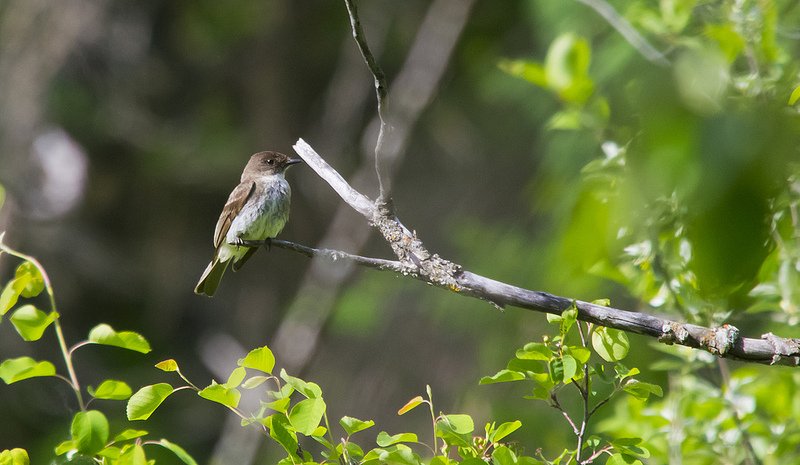
As we descended the slope into river valley, we had our goals well in mind. Hummingbirds, hummingbirds, hummingbirds. Whatever else we would see that day was superfluous, but since the males would be leaving the area soon, they were indeed our main objective. Down the hill and across the bridge, we were stopped for a few moments in awe of the Cliff Swallows under the pedestrian bridge, many still collecting mud for their nests, many others flying about catching insects for themselves or their young. Around the corner we paused to check for the Eastern Phoebes, and we saw not one, but both the male and female about, both gathering food. This one stopped to inspect us from only a few feet away for a good minute before finally retreating under the bridge.

Eastern Phoebe

Eastern Phoebe

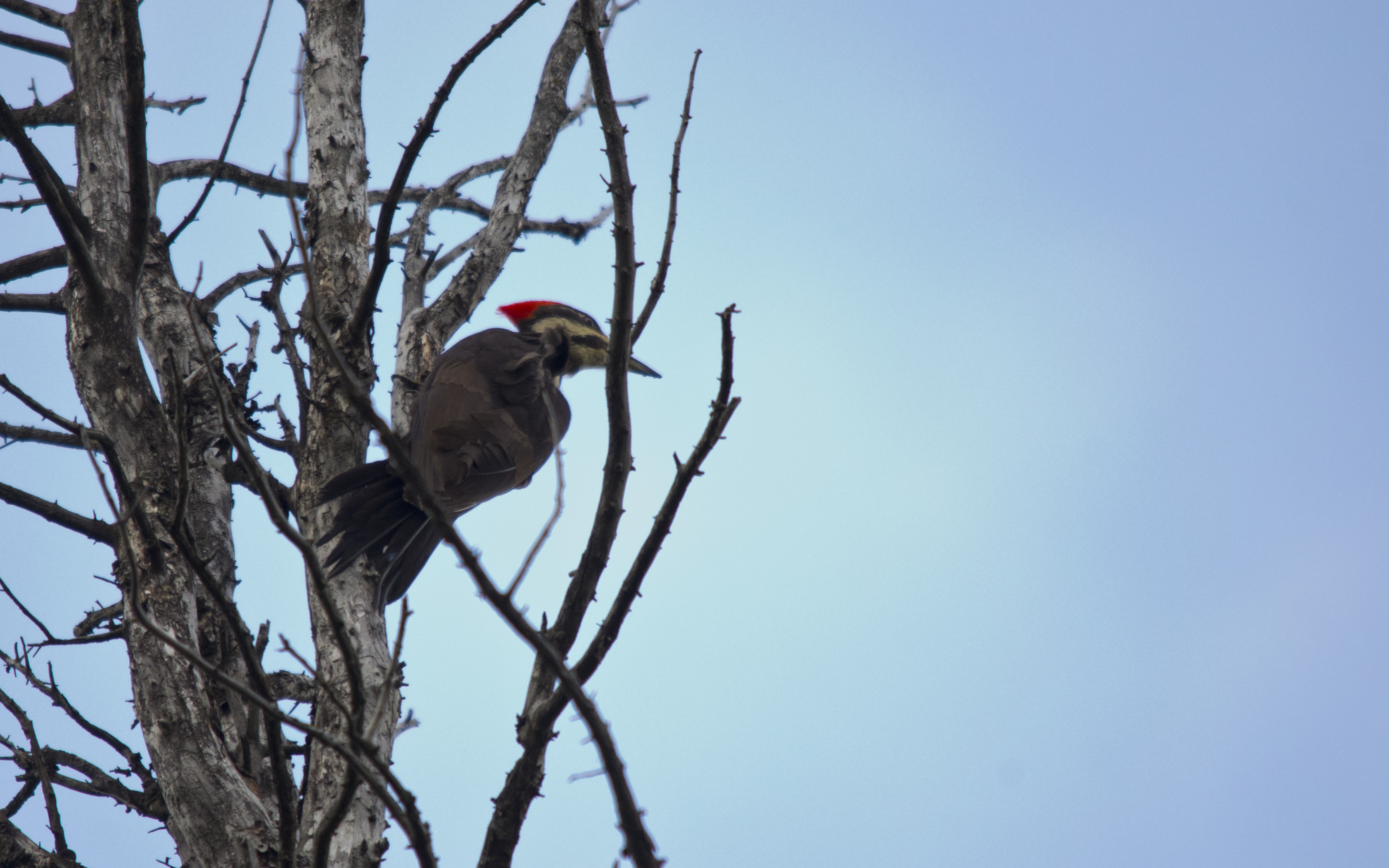
Our first bonus bird of the day, and one of the most stunning ones to see any time of year, was this Pileated Woodpecker, who had left quite a bit of evidence of its presence for the other groups that week, but was drumming away on this trunk in its search for its next meal.

Pileated Woodpecker

Pileated Woodpecker

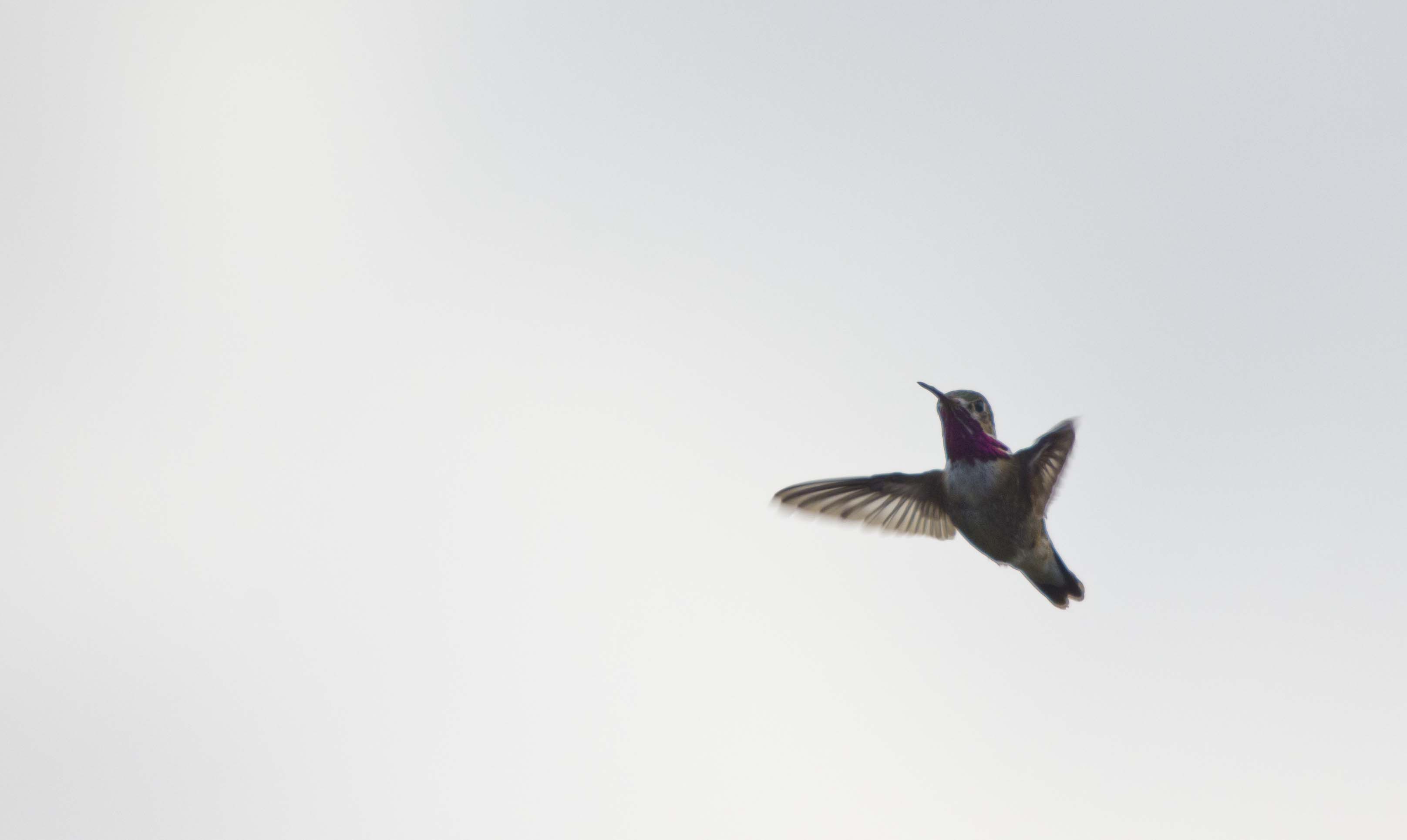
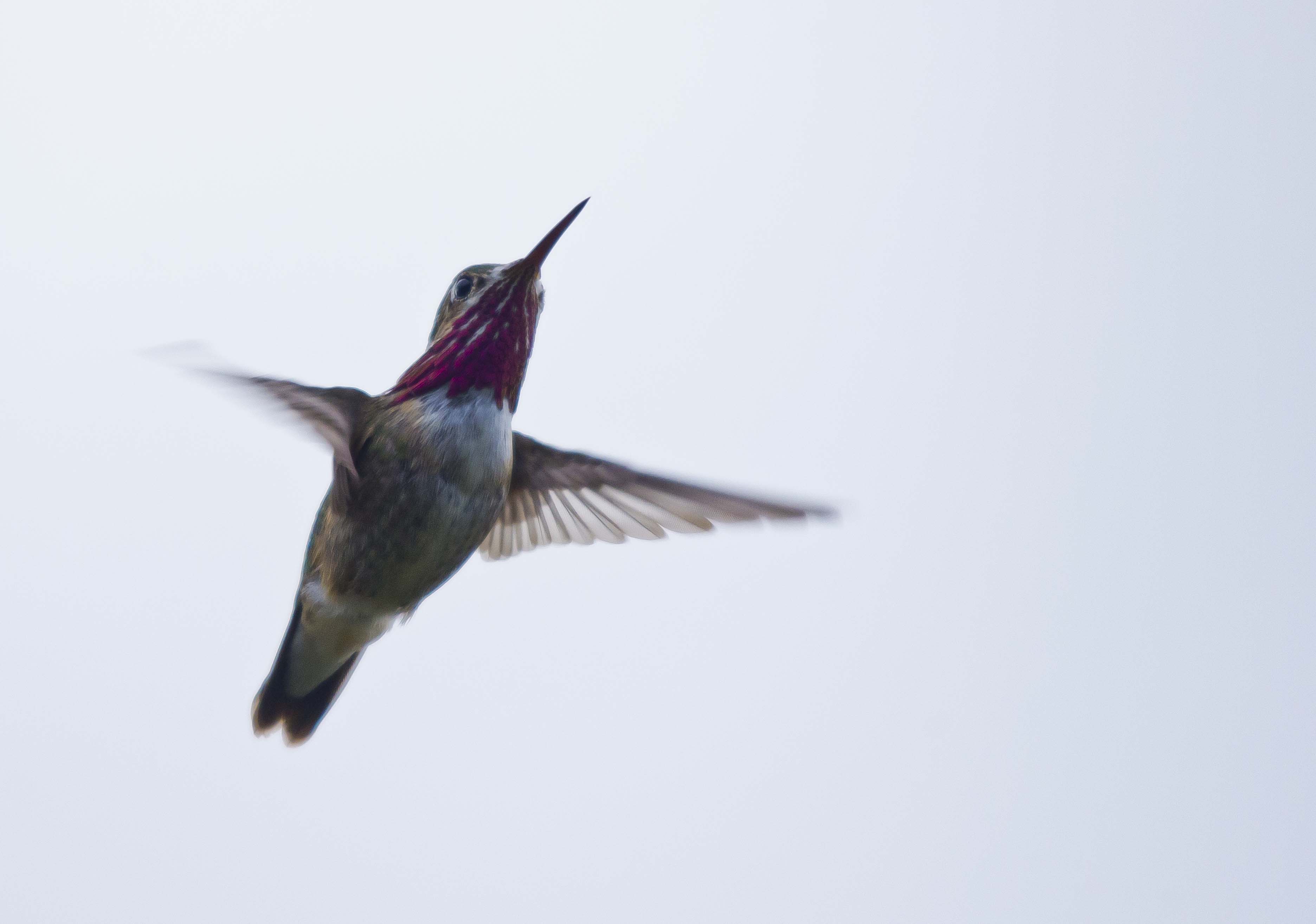
A few hundred meters more brought us to our first hummingbird location. After scouting around for about five minutes or so, our search paid off as this male Calliope Hummingbird flew in to check us out. First keeping his distance, then coming in closer, and closer, and at one point buzzed within a foot of my head.

Calliope Hummingbird

Calliope Hummingbird

A Closer Inspection...

A Closer Inspection…

The whole experience was absolutely incredible, and I hope to see these hummingbirds again very soon!


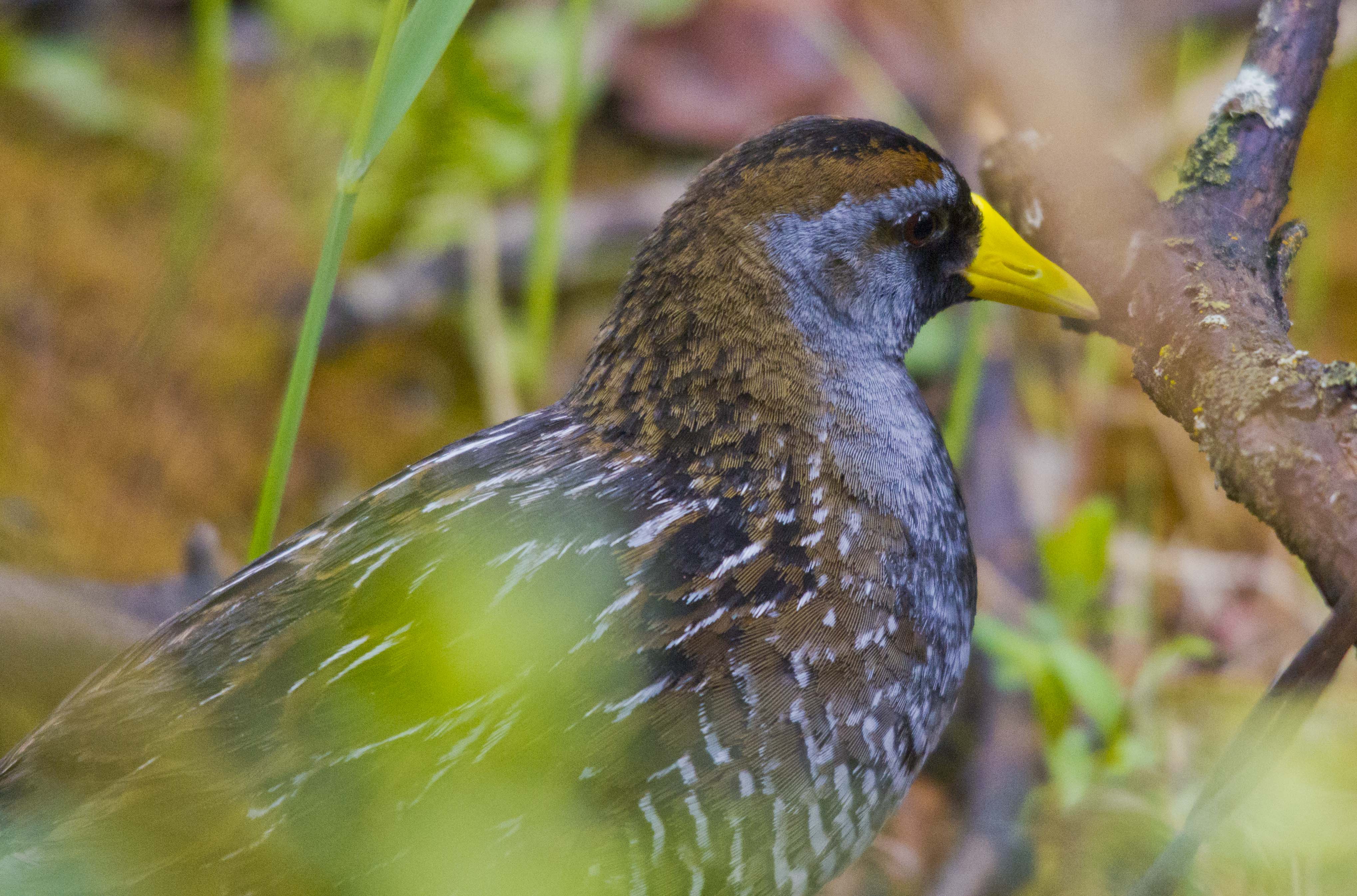
From here, we headed west and south to the two beaver ponds at the south edge of the Weaselhead,  and upon reaching the ponds, heard the call of the Sora in the western pond. A few of us took up positions in the underbrush on the edge of the pond, and I pulled out my phone to play a Sora call. The calls were answered, first about 50 feet away, then 40, then 30, and then almost immediately the birds popped into view, not one, but two of them coming right toward us! The Sora in the photo below was just beyond the 8′ minimum autofocus distance, but at one point it was right at my feet.

Sora Portrait

Sora Portrait

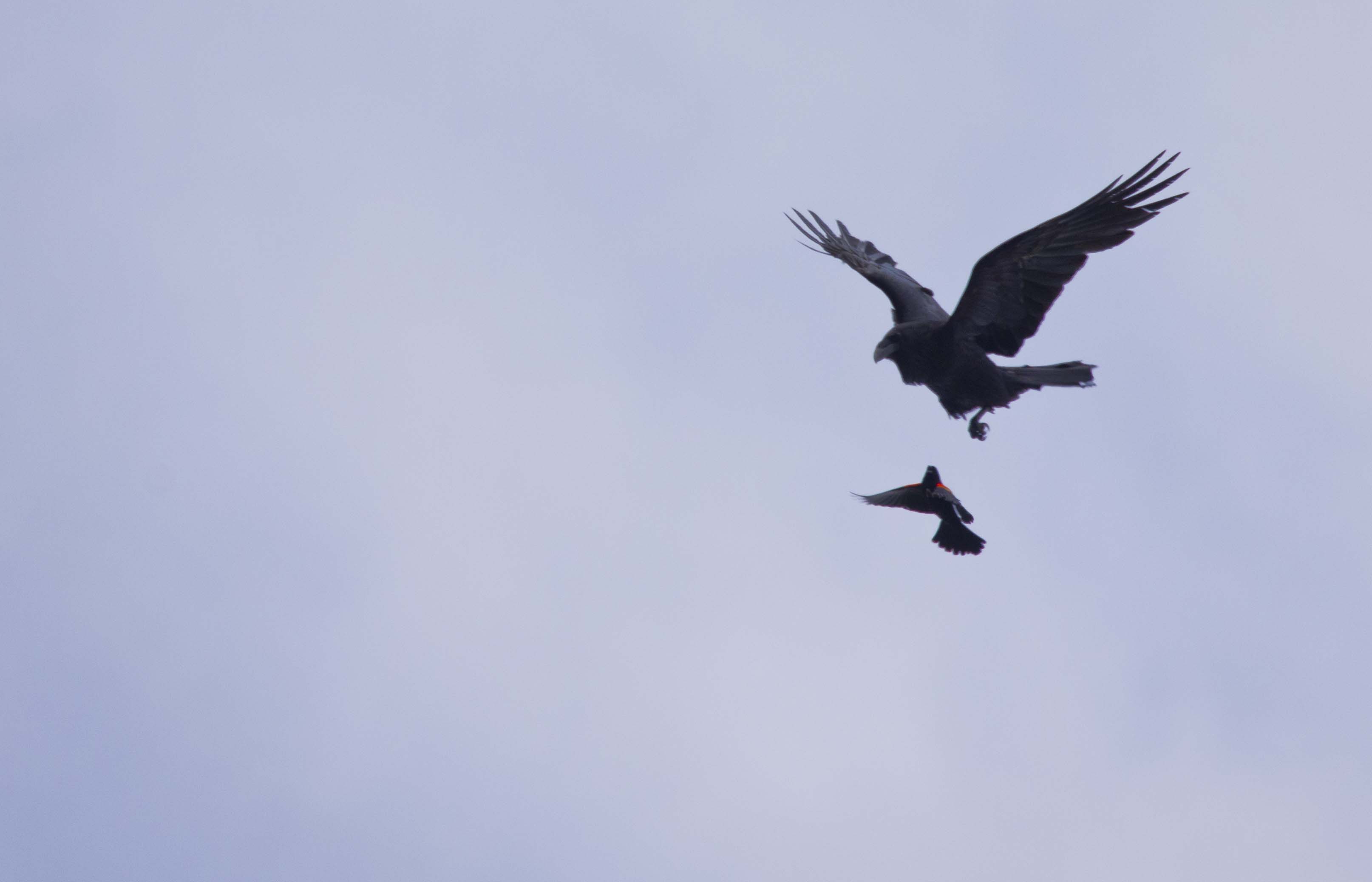
As we walked up the path behind the pond in search for grosbeaks, thrushes, and any other bird we could find, we were treated to this Common Raven being harassed by a Red-winged Blackbird for what seemed like forever.

Red-winged Blackbird and Raven

Red-winged Blackbird and Raven

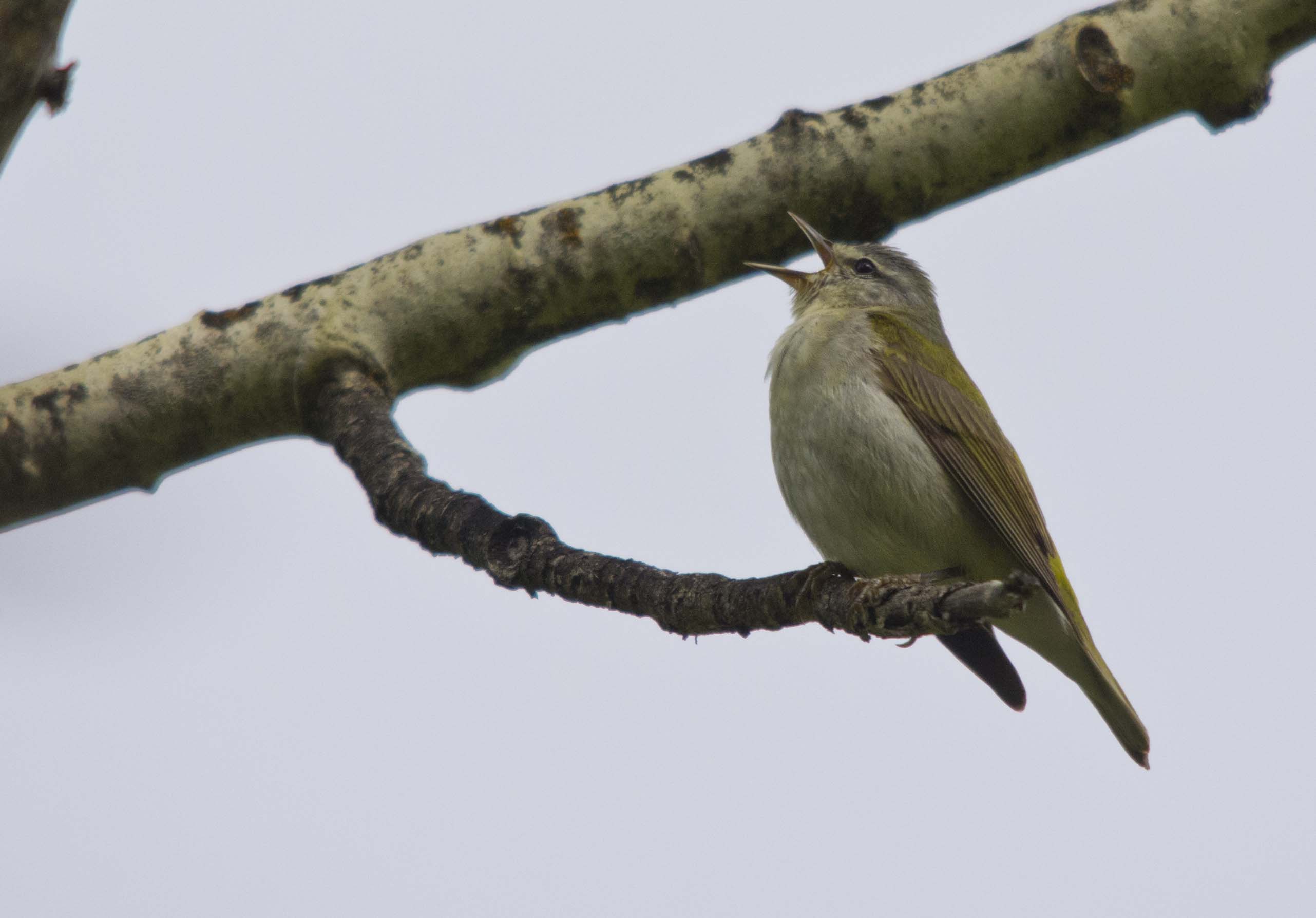
Next on our list: the Rufous Hummingbirds nesting in the spruce trees on the north slope of the Elbow Valley. It’s a long trek through the Weaselhead from south to north, and we had a few bonuses along the way. Most impressive was this Tennessee Warbler, very likely on his nesting territory, who came out to challenge us.

Tennessee Warbler

Tennessee Warbler

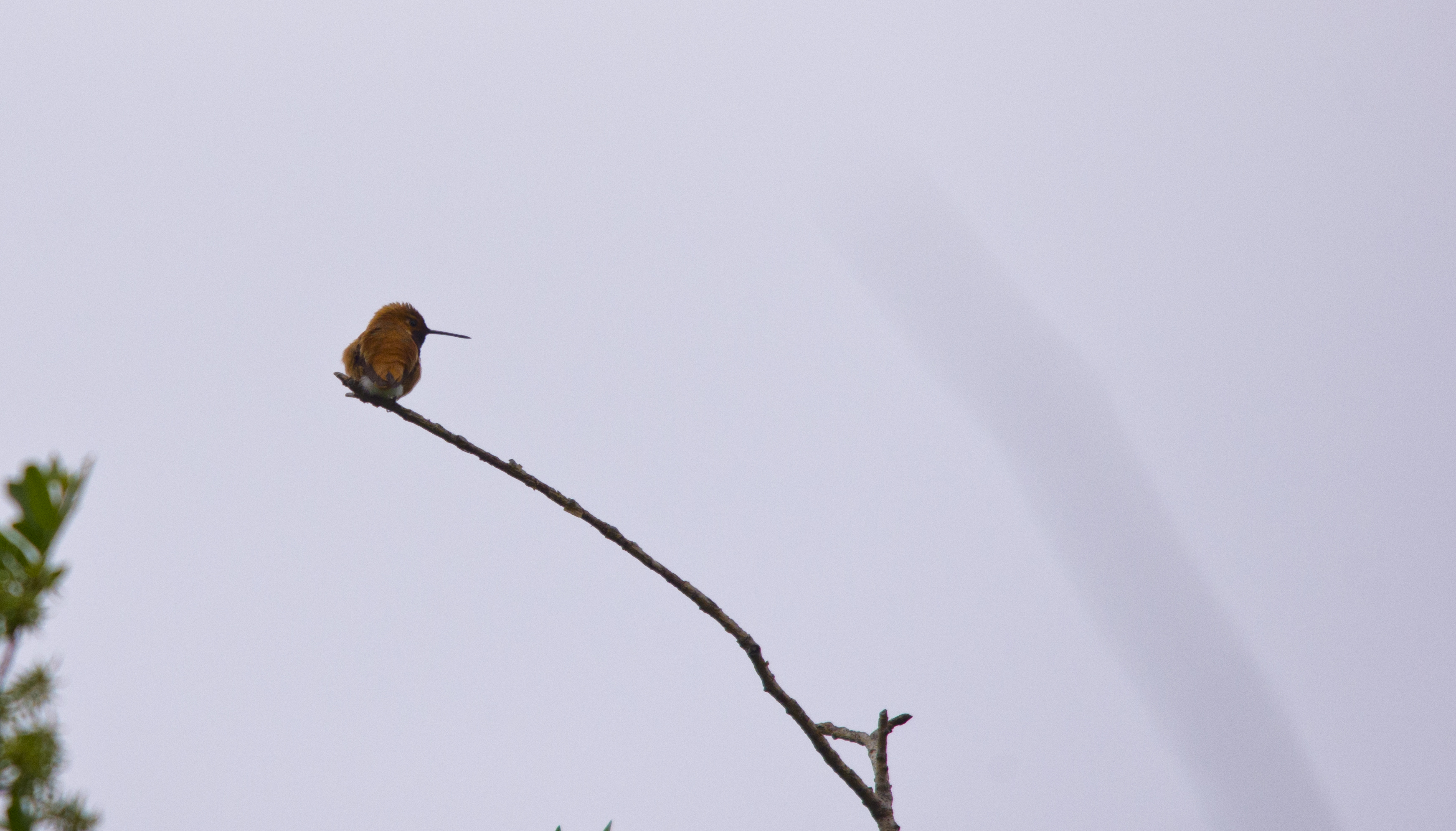
Back across the bridge, through the brush, and over the storm-water outflow drain and all of a sudden the buzzing and trilling of this Rufous Hummingbird was all around us. It displayed more than a few times by flying up high, then diving down to within a foot of the ground or bushes it was flying over, then back up to a perch before repeating the process. Unfortunately, with all the brush in the way and the bad light, few of my photos turned out at all, with this being the best of a bad few.

Rufous Hummingbird

Rufous Hummingbird

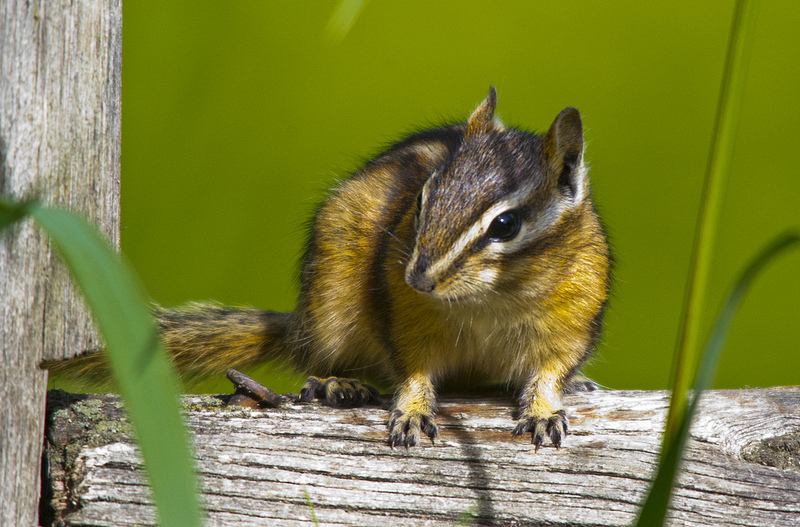
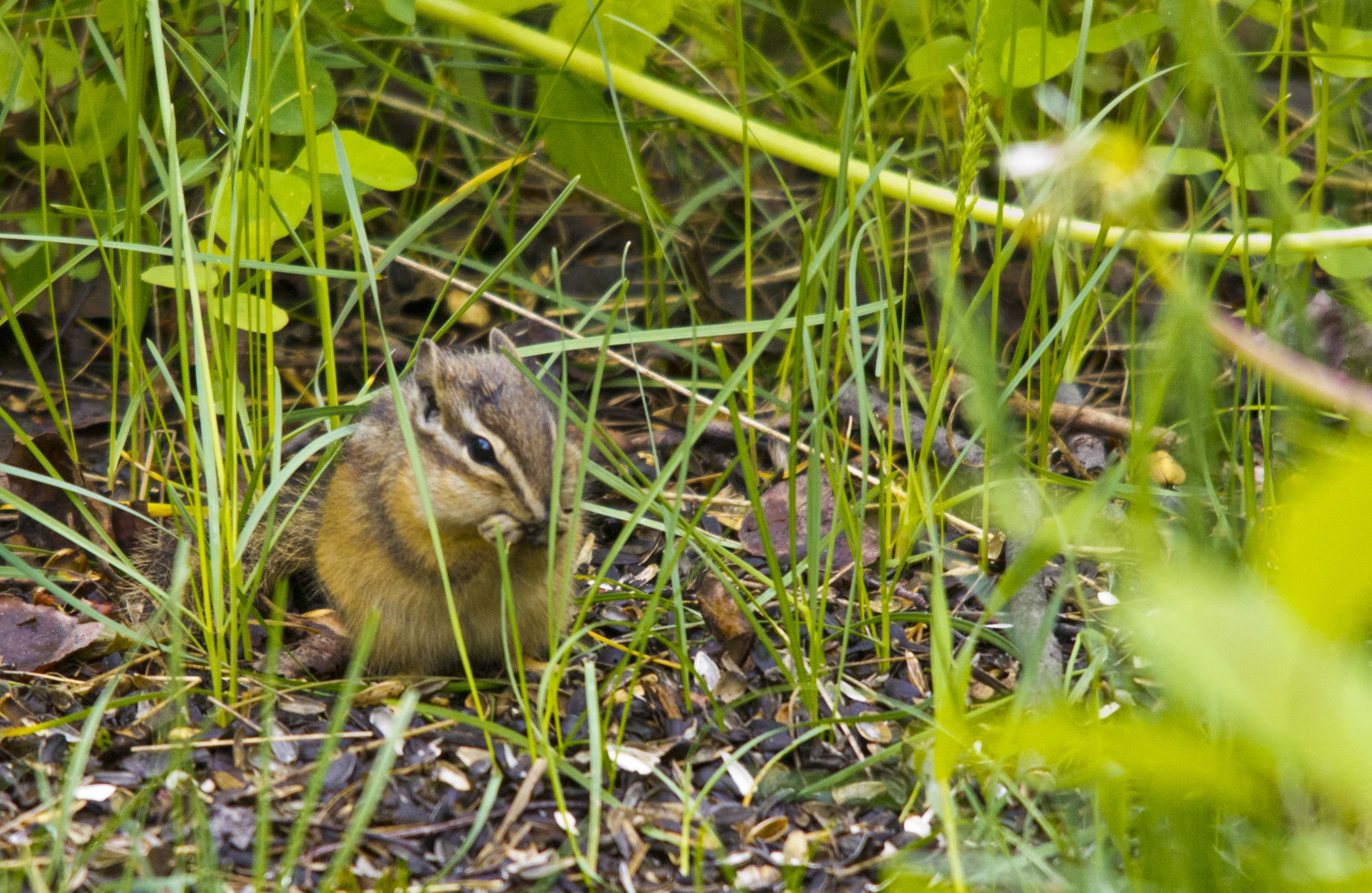
On the way back out of the Weaselhead, we decided to take a shot at finding the Brown Thrasher that Bob and I had seen a few weeks prior. On the hillside from the north parking lot, about mid-way down, there’s a grove that is known for being one of the few places that Spotted Towhees have been seen breeding in Calgary. Across from that is a small clearing that, for the last dozen or more years, some locals have kept well stocked with food for the birds of the Weaselhead, and all year long is a great place to see some of the rarer ones feeding. No birds were at the spot that day, but this little Least Chipmunk was nibbling on some sunflower seeds.

Least Chipmunk

Least Chipmunk

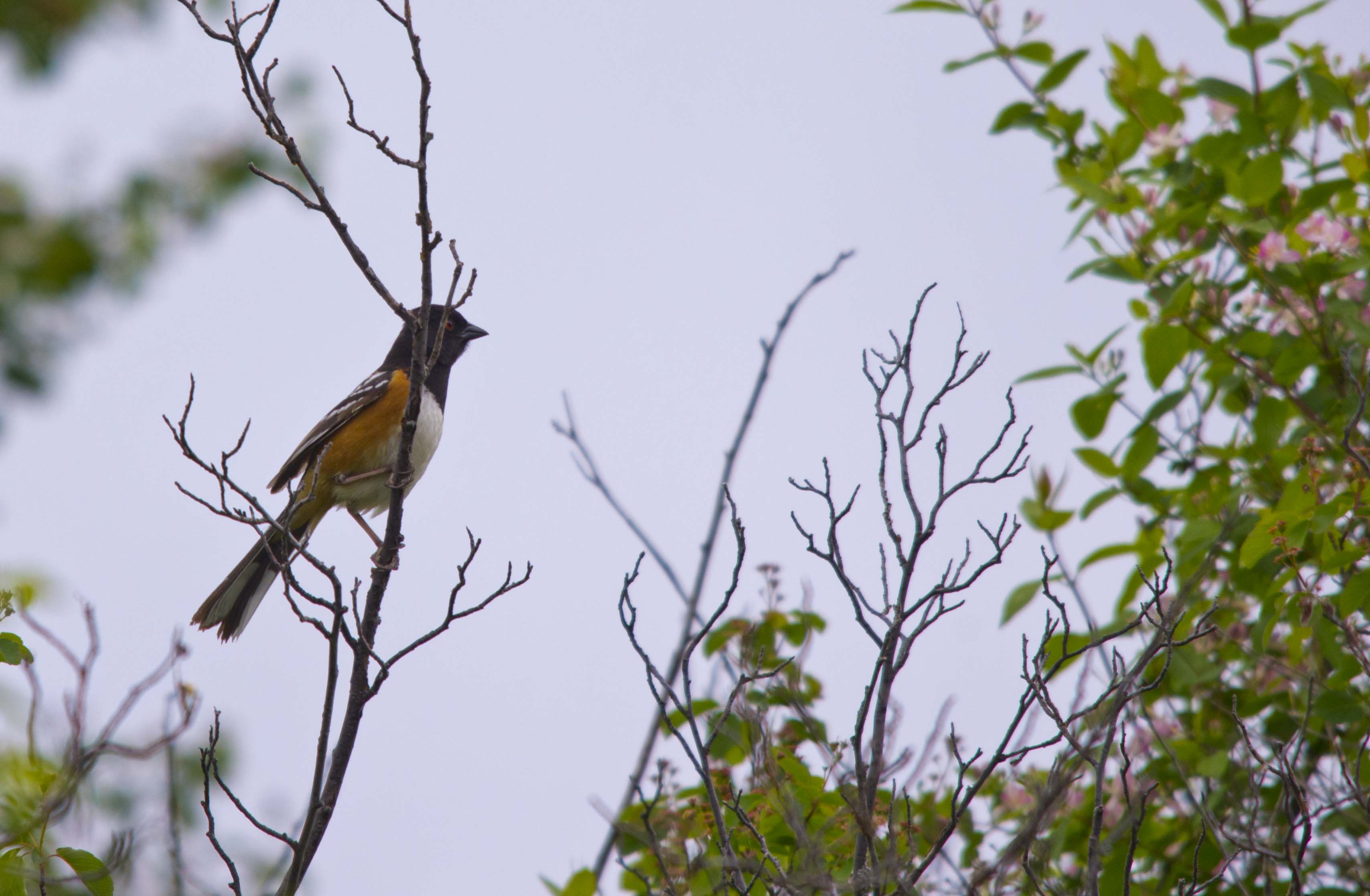
Along the northern bank of the Glenmore Reservoir, below North Glenmore Park, a Brown Thrasher (or a few Brown Thrashers) have been seen regularly, and Bob and I had found it two weeks before. Unfortunately, the only close relative of the Brown Thrasher that we found were a couple of Gray Catbirds… but what we didn’t expect to see were not one, but three Spotted Towhees flying back and forth along the lower path. Calling out with their harsh squeaky and annoyed call while foraging for food and staying out of sight. Despite their best efforts though, I did manage a few quick shots!

Spotted Towhee

Spotted Towhee

Once again, a great day out with great people and amazing birds to see!

Have a wonderful week!


Rare Bird Alert Calgary: June 21

Have you seen an unusual bird in Calgary?

If it is on this Reportable_Birds (PDF), please report it to the Nature Calgary Rare Bird Alert line at 403 221-4519 and leave a message after the beep at the end of the recording. If you would like some help with species identification, email us at birdscalgary@gmail.com.  To report injured wildlife call the Calgary Wildlife Rehabilitation Society at 403 239-2488, or the Alberta Institute for Wildlife Conservation at 403 946-2361.

Compiler: Terry Korolyk

June 2:
LAZULI BUNTING: backyard of Marcel Gahbauer, Spruce Cliff area of SW Calgary.

June14:
CHUKAR PARTRIDGE: Glamorgan area, by Eugene West.

June 16:
NELSON’S SPARROW(2), one seen by Bill Wilson east of Calgary, one by Andrew Slater near Namaka Lake on the 17th.

June 17:
UPLAND SANDPIPER: a few km. E. of Carstairs turnoff and Hwy.2, by Terry Korolyk.

LE CONTE’S SPARROW(4): Namaka Lake area, by AS.

June 18:
GRAY JAY: North Glenmore Park, west end, by Lorne Bogdan.
LAZULI BUNTING(1)male,Fish Creek Prov. Park between bridge 4+5, by Helga and Al Borgardt.Also seen on the 19th.

June 19:
RED-TAILED HAWK(HARLAN’S): LaFarge Meadows, FCPP, by Gus Yaki et al.
GREATER YELLOWLEGS(1): LaFarge Meadows, FCPP, by GY et al.

The next scheduled update of the Bird Alert is on Monday 25.

Help for Wildlife Rehabilitation

Posted by Bob Lefebvre

For twenty years, the Alberta Institute for Wildlife Conservation (AIWC) has been rehabilitating injured and orphaned wildlife and releasing them back into the wild.  Eighty percent of the animals they deal with are birds.  Soon the lease on their land near Madden, north of Calgary, is ending, and they have to move to a new location.  In addition to the ongoing costs of operation, relocating is a huge undertaking which may include moving the existing buildings to the new location and reclaiming the current site.  Consequently, they are trying to raise $250,000 this year.  AIWC has always relied on donations but they need your help now more than ever.

Impaled American Robin.

Please visit the AIWC website and donate if you can.  They are also hoping to increase their membership and they have many volunteer opportunities available.  They currently need volunteers for information tables at local events.  See the “Volunteering” and “Support AIWC” pages on their website.

Please help to support this worthy cause, so that AIWC can continue its valuable rehabilitative work and educational programs.

Gus Yaki with sick or injured Ring-billed Gull.

Father’s Day at Frank Lake

Posted by Matthew Sim

Last Sunday, my family decided to spend some time at Frank Lake for Father’s Day.  This birding hotspot has featured in many of our posts before but even so, one can never tire of visiting the lake. During every season, something of interest can be seen there and Father’s Day was no exception. As we parked the car and headed down to the blind, we were astonished by the multitude of winged creatures around us; Common Terns, American Coots, Red-winged and Yellow-headed Blackbirds, Ruddy Ducks and Wilson’s Phalaropes were among the birds we saw.

Forster’s Terns appeared to be nesting in the reeds near the blind and many were fishing in the waters all around us.

Forster’s Tern

While walking along the boardwalk, we stopped to admire this Muskrat munching on a reed just feet away from us.

We thought we were seeing some great things, which we were, but when we got to the blind, we saw something that was truly amazing.

Nature’s taxi

There were several families of Eared Grebes hanging out around the blind; the mothers playing taxi to their young chicks while the fathers dove and swam about, gathering food for the young.

Occasionally, the mothers would shake the chicks off their backs; either tired of carrying their young charges or attempting to get them practicing swimming.

While we were watching the grebes, activity went on as always with the other birds and there were many White-faced Ibises flying by us.

Eventually, we had to leave, though it was quite hard to tear ourselves away from the blind. Good birds were still to be seen on the way out though as we spotted a singing LeConte’s Sparrow by the parking area near the blind, the Trumpeter Swan near the sewage outfall who has been there for some time, at least 3 pairs of American Avocets by the sewage outfall and a singing Western Meadowlark perched on a fencepost.

Western Meadowlark

If you can, I would really recommend getting out to Frank Lake soon as the birds are simply amazing right now.