Posted by Matthew Sim
It has been a while since I last did a famous birders post but today, we have a very special expert birder and naturalist who some, if not most of us know personally; Gus Yaki.

Photo by Bob Lefebvre. Gus with an injured Ring-billed Gull.
Gus is a lifelong naturalist who has had a profound effect on numerous Calgarians, Albertans and people from across Canada and many other countries, including me. In November 2009, I was just starting to get seriously into birding and enjoying nature when I went on a Nature Calgary field trip to Fish Creek PP led by Gus; he did such a great job leading the trip that he helped to propel me into the world of birding. Gus leads many trips throughout the year whether they be birding, botany or anything else dealing with nature, you can see some excursions that he will be leading for Nature Calgary in the near future here.
Originally from North Battleford Saskatchewan, Gus used to walk 3 miles to school each day and got to learn and enjoy local fauna and flora this way. He started a nature tour service and, in 1983, led a trip around North America, following in the footsteps of Roger Peterson and James Fisher who had gone 30,000 miles around North America 30 years earlier. As Peterson’s and Fisher’s journey was immortalized in the book Wild America, so Gus’ trip was immortalized in the book, Looking for the Wild, written by Lyn Hancock, who was on the trip with Gus. Gus is very active in all conservation, birding and overall nature aspects of Calgary and, for me, is undoubtedly qualified as a famous birder.
Below are some questions I asked Gus about various aspects of his birding and natural life and his responses.
Note: Photos below courtesy of http://www.stmu.ab.ca/

Image courtesy http://www.stmu.ab.ca
When did you become interested in birds and nature?
I had nothing to do for nine months before I was born, so I listed all the bird sounds that I heard: as a result, I had a life-list (heard only) of 14 species when I took my first breath.
Seriously though, I don’t ever remember not being interested in birds and nature. One of my first teachers had a little 3 x 6 inch bird booklet. Walking almost three miles to school, I would see a bird on its nest. At school, during recess, I would thumb through this little publication to find a matching description. On the way home, I would confirm that I had correctly identified it.
Later, the CCF government provided a lending library service to those living in Saskatchewan, so I was able to borrow such books as Birds of Canada by P. A. Taverner, with illiustrations by Allan Brooks. Needless to say, I soaked up those illustrations and texts, so that when I saw the real thing, I was able to instantly identify it.
By then, I had realized that birds were only part of nature: they needed the other plant and animal species to provide food, shelter, and reproductive services – as did all other species, so naturally, I expanded my horizon accordingly.
You led birding tours; how many different countries have you visited while birding and what are some of your favorite countries to visit for experiencing nature?
Yes, I started my own nature tour company, “NATURE TRAVEL SERVICE” in 1972, and personally traveled to some 76 political entities. Places such as Antarctica and the Svalbard Islands (Spitzbergen) are not countries – thus entities. I did operate tours to additional destinations, which others led for me.
What were some of my favourites? I have been frequently asked that. I usually reply that it is the place that I am at that time. In terms of the most bang for the buck, I would have to reply that it would be East Africa – particularly Kenya and Tanzania. The masses of mammalian life was outstanding. On one trip, we saw at least 75 species of mammals. One day we recorded 34 species – some of them in the hundreds of thousands, and the total for the day was in excess of a million individuals. To put that into perspective, when I moved to Calgary in 1993, after going afield almost every day, it took me six months to see 34 mammal species – and usually only one of a kind at that.
On one four week trip to Kenya, we saw 618 species of birds – more than all the species ever reported as being seen in Canada.
Other notable destinations would include Australia, which has some 750 species – many belonging to totally different families than we have.
In late March, Israel was also spectacular, observing a million birds of prey and storks, etc., using the Great Rift Valley to migrate out of Africa, and then spreading throughout Asia and Eastern Europe.
South America is known as the Bird Continent, because it hosts over 3,000 species. This diversity is great – but the richest areas are in forests, and that makes it more difficult to see many of those species.
What has been one of your most memorable birding experience?
Apart from seeing the sights in Kenya and Israel, mentioned above, my most memorable sighting was of 17 Whooping Cranes that were migrating south on 20 Aug, 1946. At that time, supposedly there were only about 21 individuals of this species alive in the world. This small population’s nesting ground in Wood Buffalo National Park was then still unknown, not discovered until 1954. Most wintered at Aransas Nat. Wildlife Refuge in Texas.
The day before, 19Aug1946, I had witnessed 100,000+ Sandhill Cranes flying southward over me all day. The next day, the Sandhills again poured over me in similar numbers. Just before noon, a flock of about 20 low-flying Sandhills suddenly appeared immediately above the trees just at the north edge of the field where I was stooking sheaves of grain. Upon reaching the open sun-lit field, the Sandhills encountered a thermal and began to circle and rise up. As I watched them, I noted a flock of white birds, which I first assumed to be gulls, also circling to the NW of me. However, they soon ceased their circling, probably not having an effective thermal, and headed my way, ultimately joining the Sandhill Crane flock above me. The two species joined and circled together, ever gaining altitude – and eventually drifted off in a SSE direction. Both species were similar in same size and shape. The white birds had black primaries – and thus could only have been Whooping Cranes. When you plot a straight line from Wood Buffalo to Aransas, it takes you right over where I was watching these birds, about 35 miles, NNE of North Battleford, Saskatchewan.
People questioning me about this sighting have suggested that the white birds might have been American White Pelicans or Snow Geese. The fact that the two species where so similar, with neck outstretched and long trailing legs, totally rules out any species other than Whooping Cranes.
How many birds have you seen in your lifetime?
I have never counted the species, but I would estimate that I may have seen at least half of the currently recognized total of 10,000 species – thus about 5,000 species.
I never set out to observe as many species as I could – instead, I made sure that my participants could see all that was available at each destination. I repeately visited the same countries, etc., but had I made a point of visiting new ones each year, the total obviously would have been much greater.
How have bird populations changed from what you have seen throughout the years, especially those in Calgary?
Sadly, many species have had dramatic declines. I remember Point Pelee National Park in Ontario well. I first visited it one weekend in May1952, when we saw 1000 Wood Thrushes ahead of us on the road as we drove along. By the late 1990s, when I was spending up to three weeks there, we wouldn’t see a single thrush of any species. A similar story involves the wood warblers. I recall seeing 34 species of warblers (and other small birds in a single tree) at one time one day. Today, it might take you a full two weeks, scouring the entire park, to see all of them.
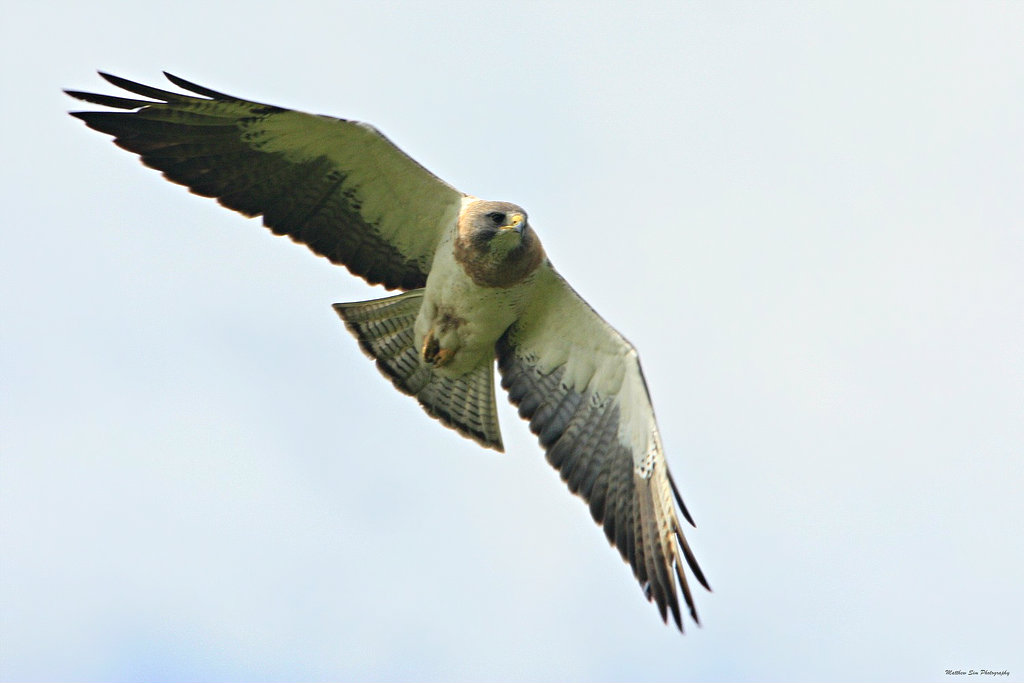
Re: Calgary, some of the raptors, especially Ospreys and Bald Eagles have increased in numbers, with the cessation of the use of DDT in Canada and USA. However, I noticed a big decline in Swainson’s Hawk numbers; initially we regularly saw 50 or more individuals when driving from Calgary to Canmore. About 15 years ago, their numbers dwindled down to five sightings. This was probably attributable to the insecticide used to kill grasshoppers in Argentina, the winter home of Swainson’s. In my early years here, some seven pairs of American Kestrels regularly nested at Inglewood Bird Sanctuary. Their numbers have now dropped to zero in most years.
Shortly after arriving in Calgary in 1993, I started a monthly walk along the Elbow River, from Stanley Park to the Glenmore Reservoir. Since then, at least 14 species of birds that were relatively regular breeders, such as Belted Kingfisher, Eastern Kingbird, Western Wood-Pewee, Ruby-crowned Kinglet, Baltimore Orioles, etc., have totally disappeared. Other abundant species, such as House Wrens and Yellow Warblers, have also greatly declined.
Where is your favorite location to bird in Calgary?
This varies with the season. In spring and autumn, the Glenmore Reservoir is host to many species of waterfowl. The White Spruce forests in the western end of Fish Creek Prov. Park, Weaselhead and Griffith Woods Park host a number of rarer passerines. The Bow River is a mecca to winter waterfowl, and attract many migrants and breeding species at other times of the year..