Rob English photographed this beautiful bird that his wife spotted on Grand Valley Road in mid-July.


Rob English photographed this beautiful bird that his wife spotted on Grand Valley Road in mid-July.
Mitchell Kranz found this group of Great Gray Owls, including four adults and three owlets, west of Turner Valley in late July.


Photo by Logan Gibson.
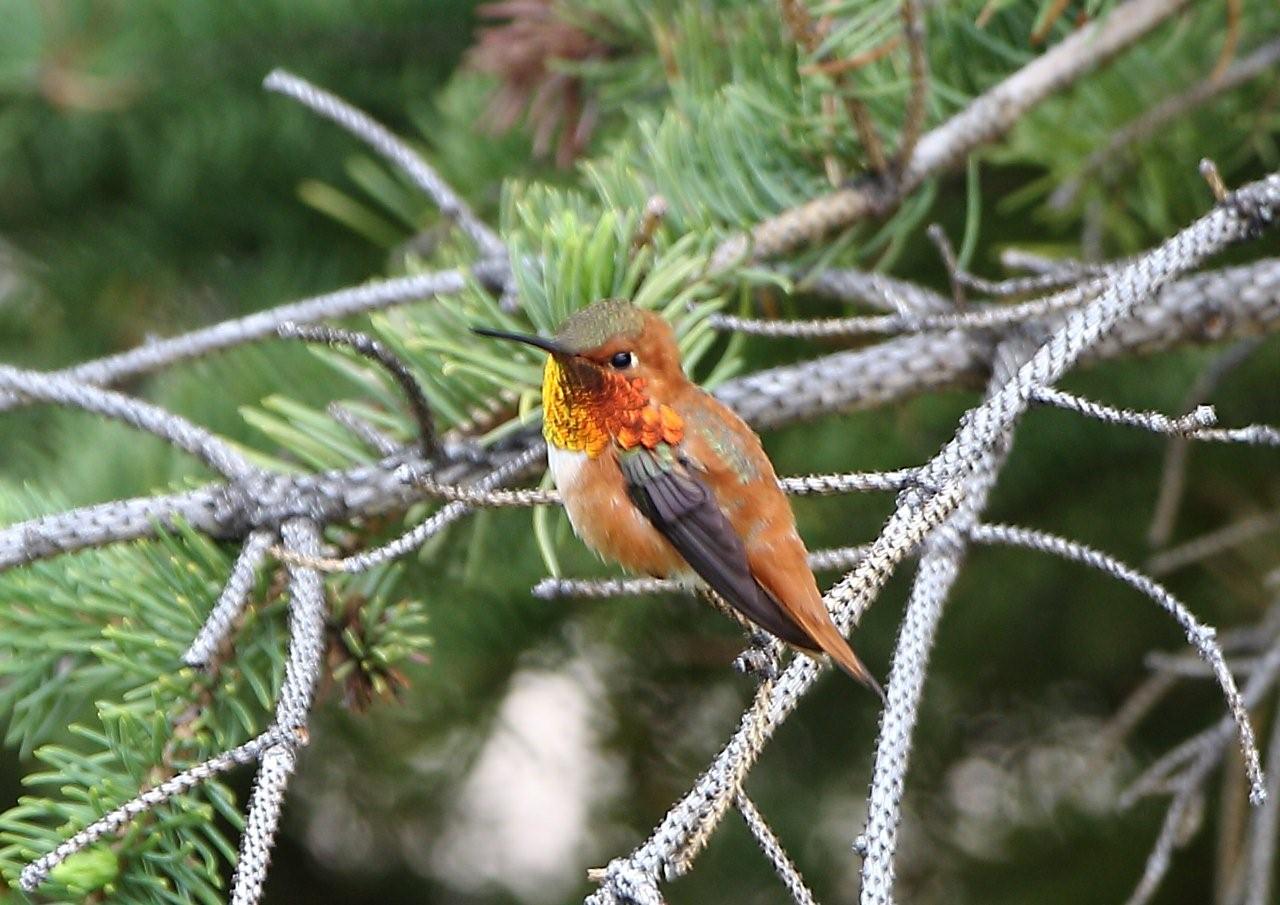
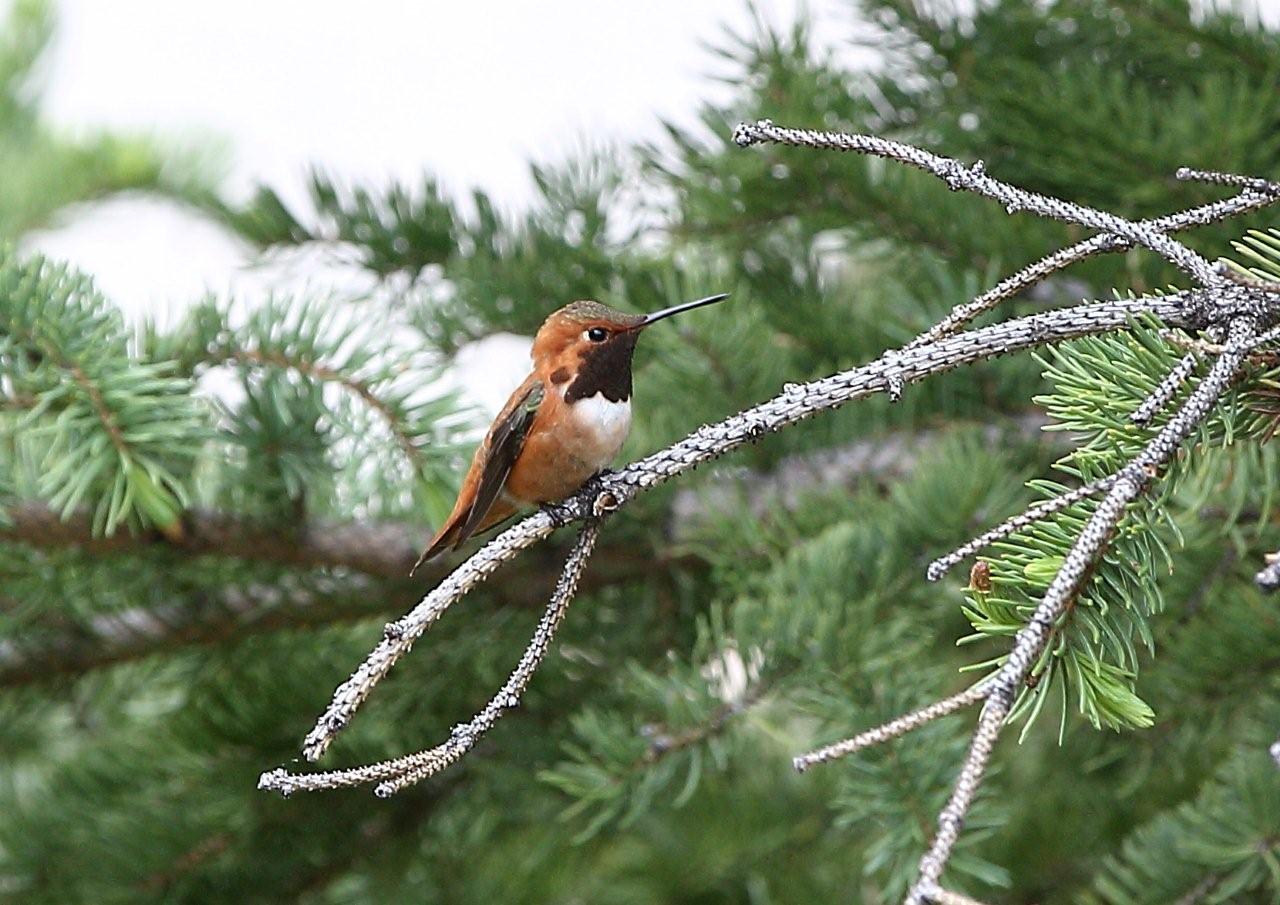
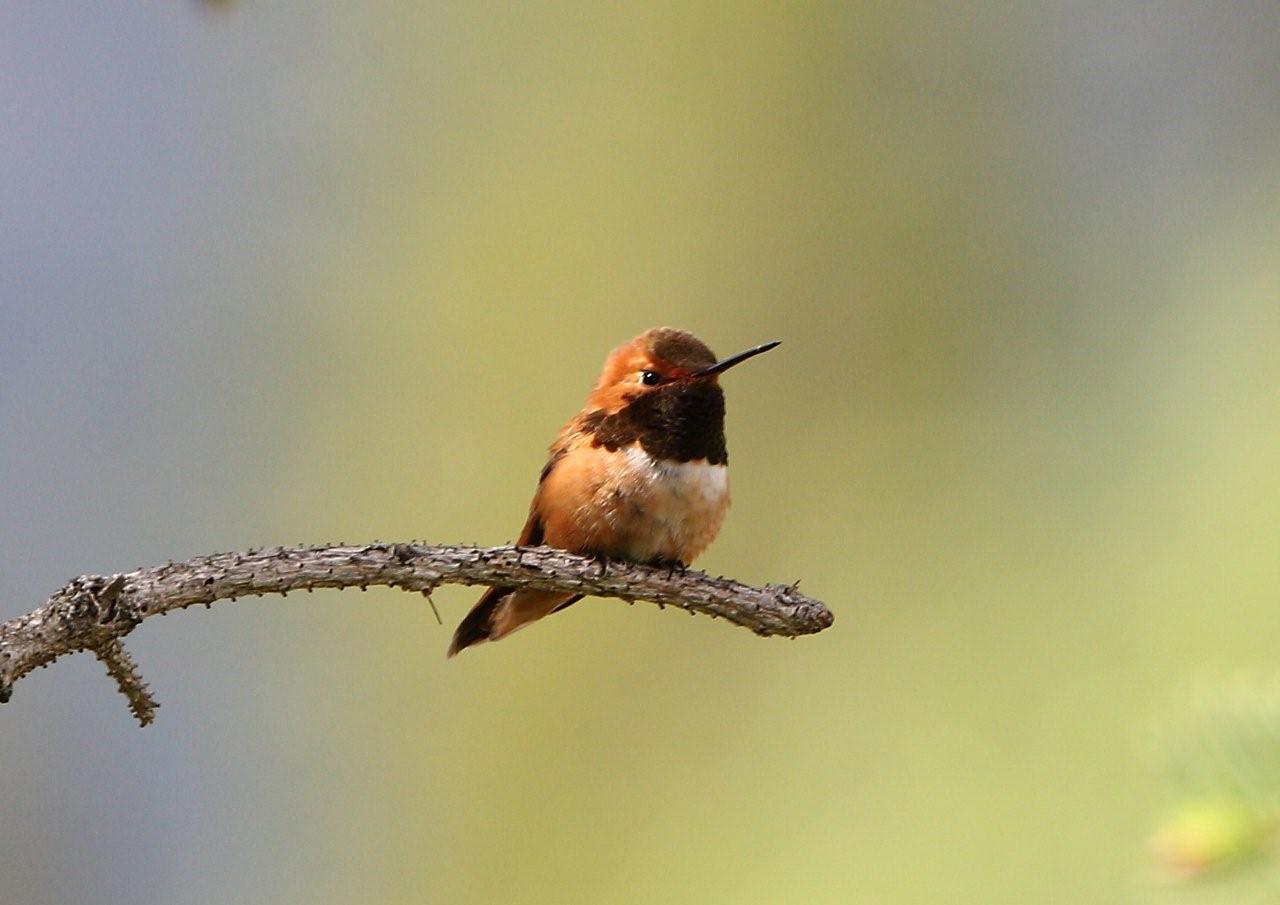
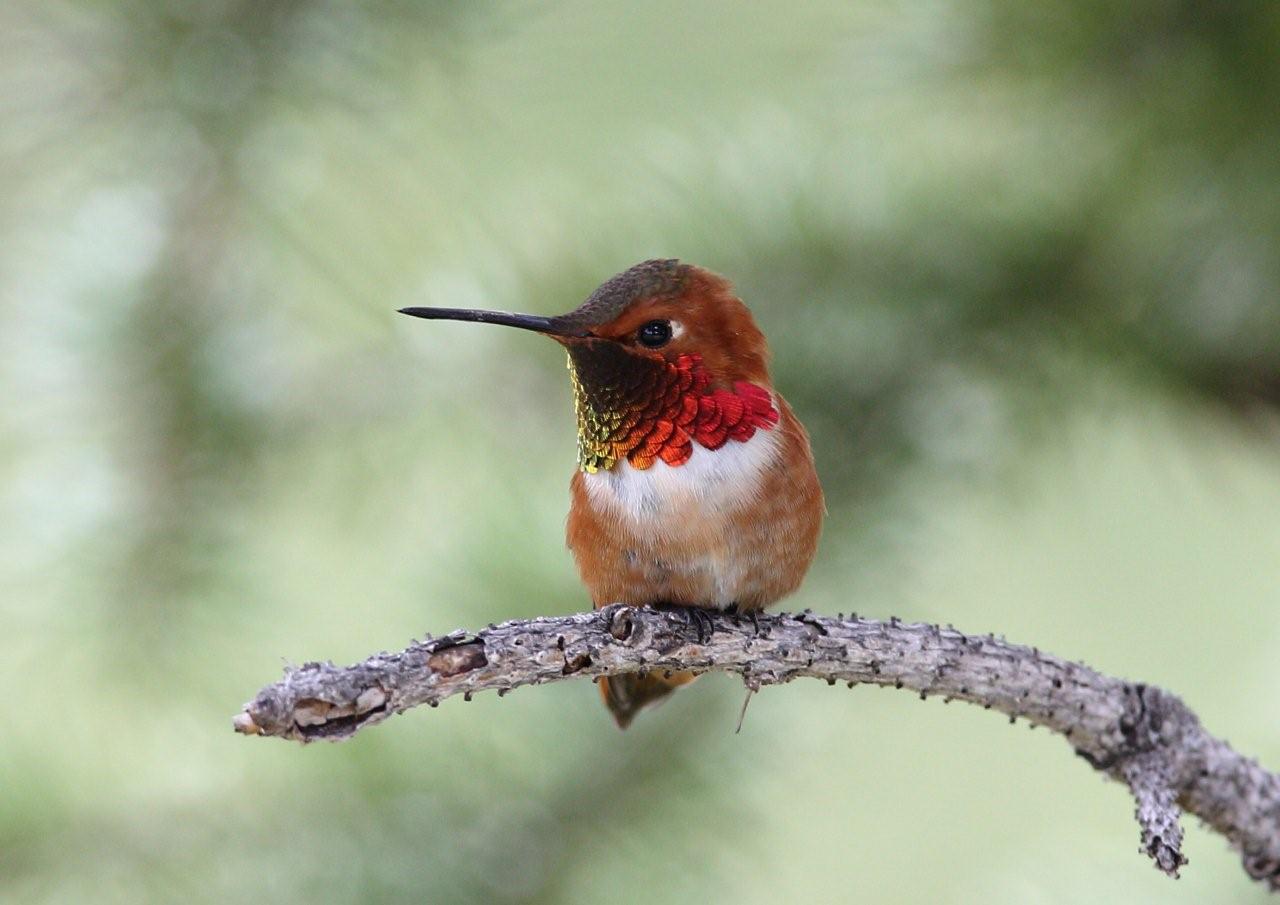
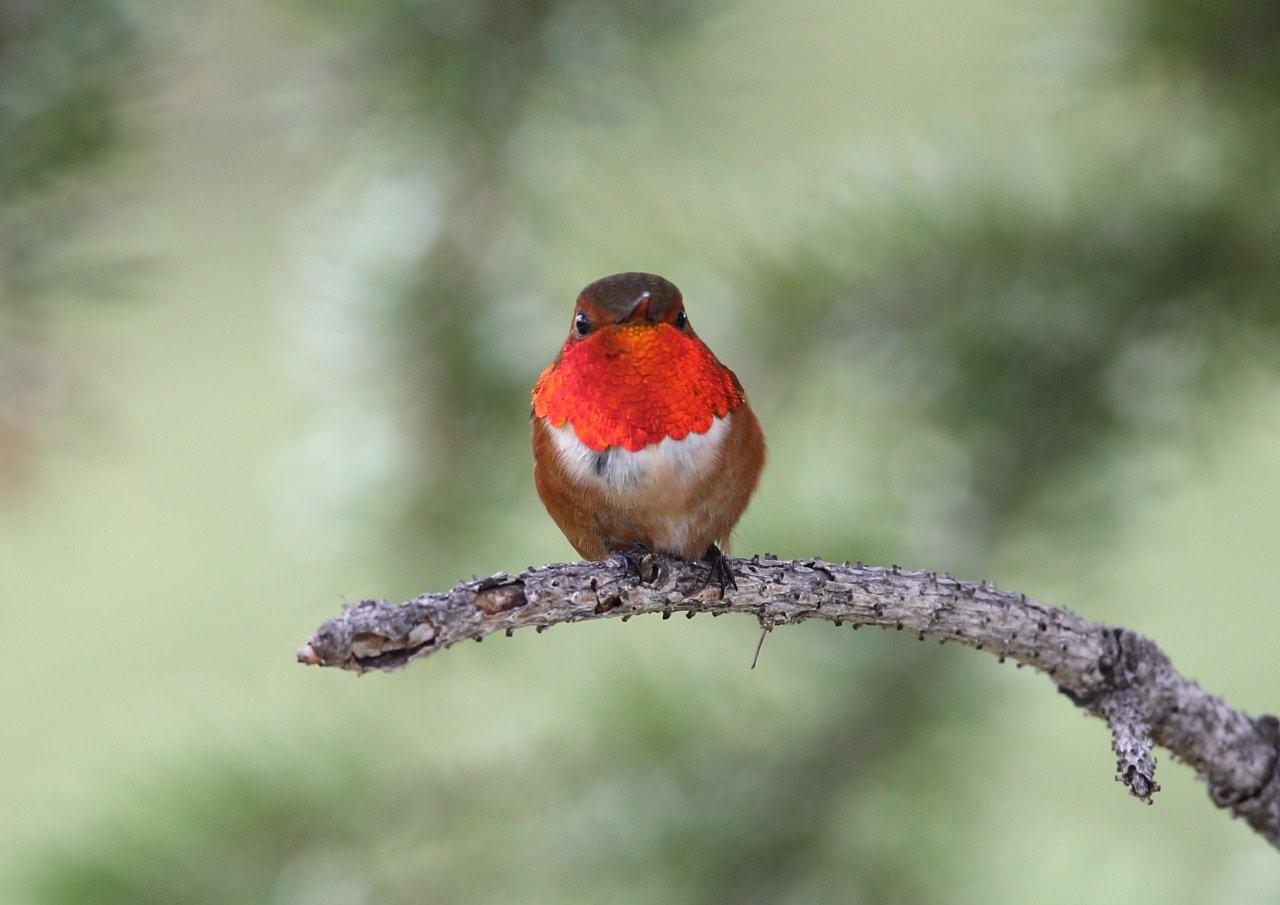
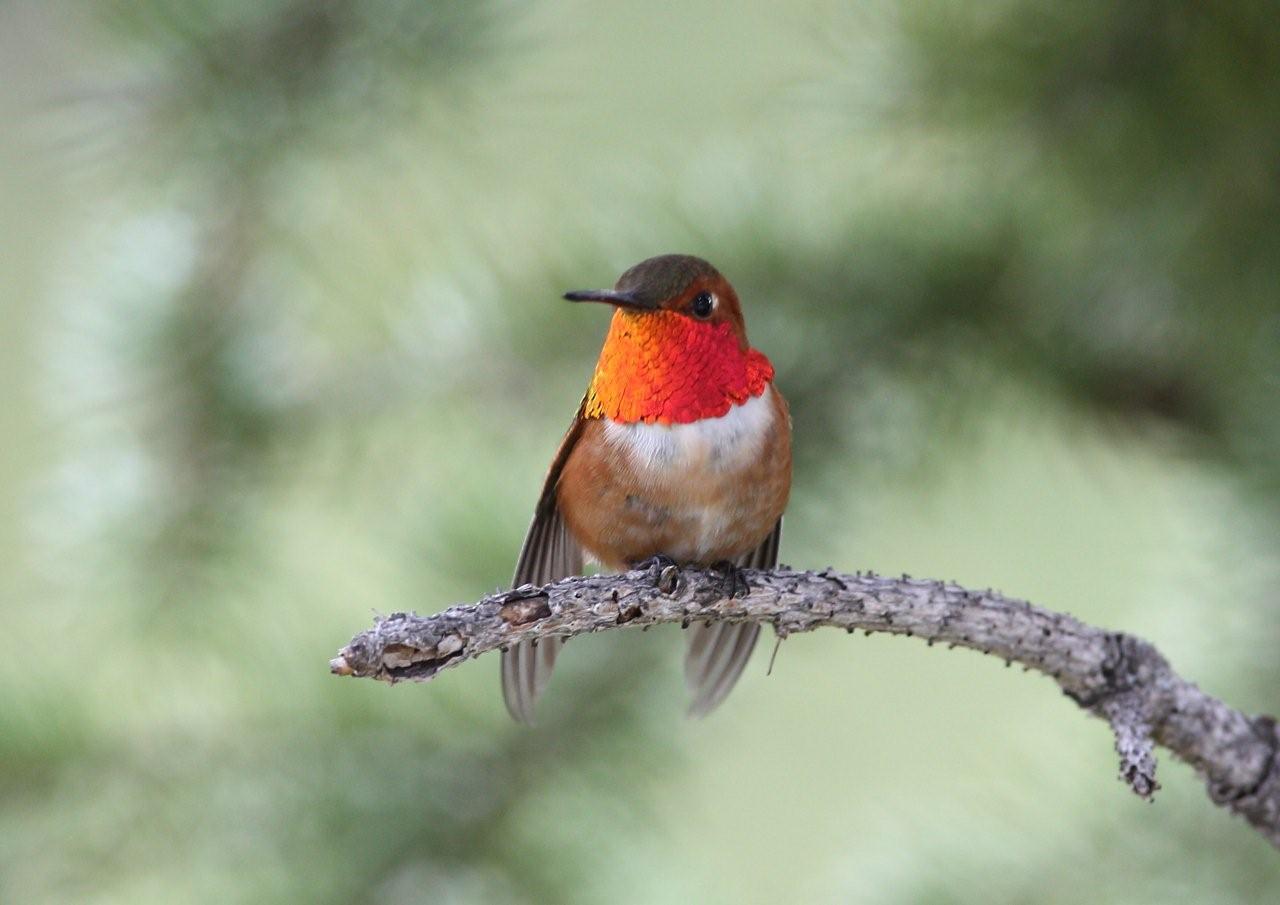
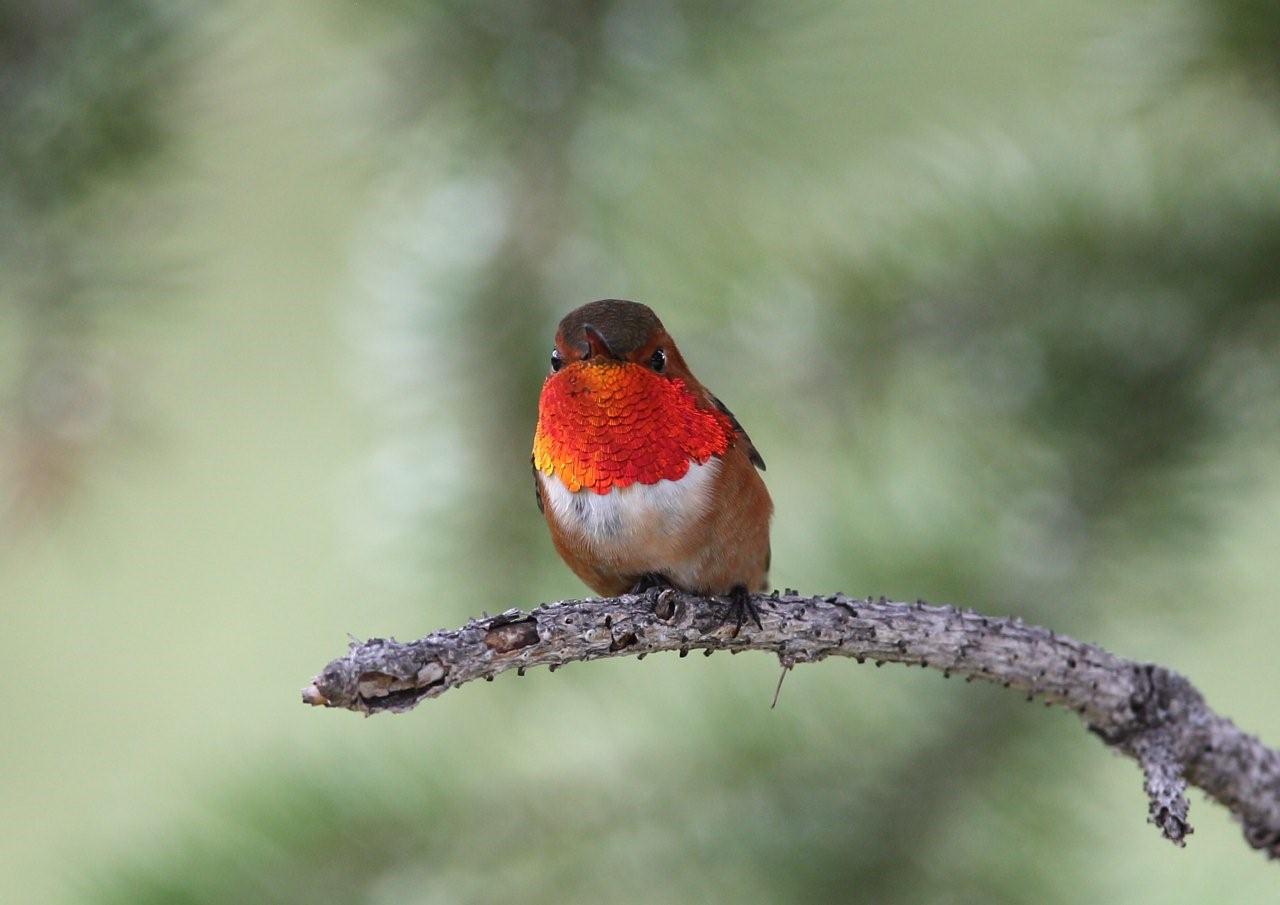
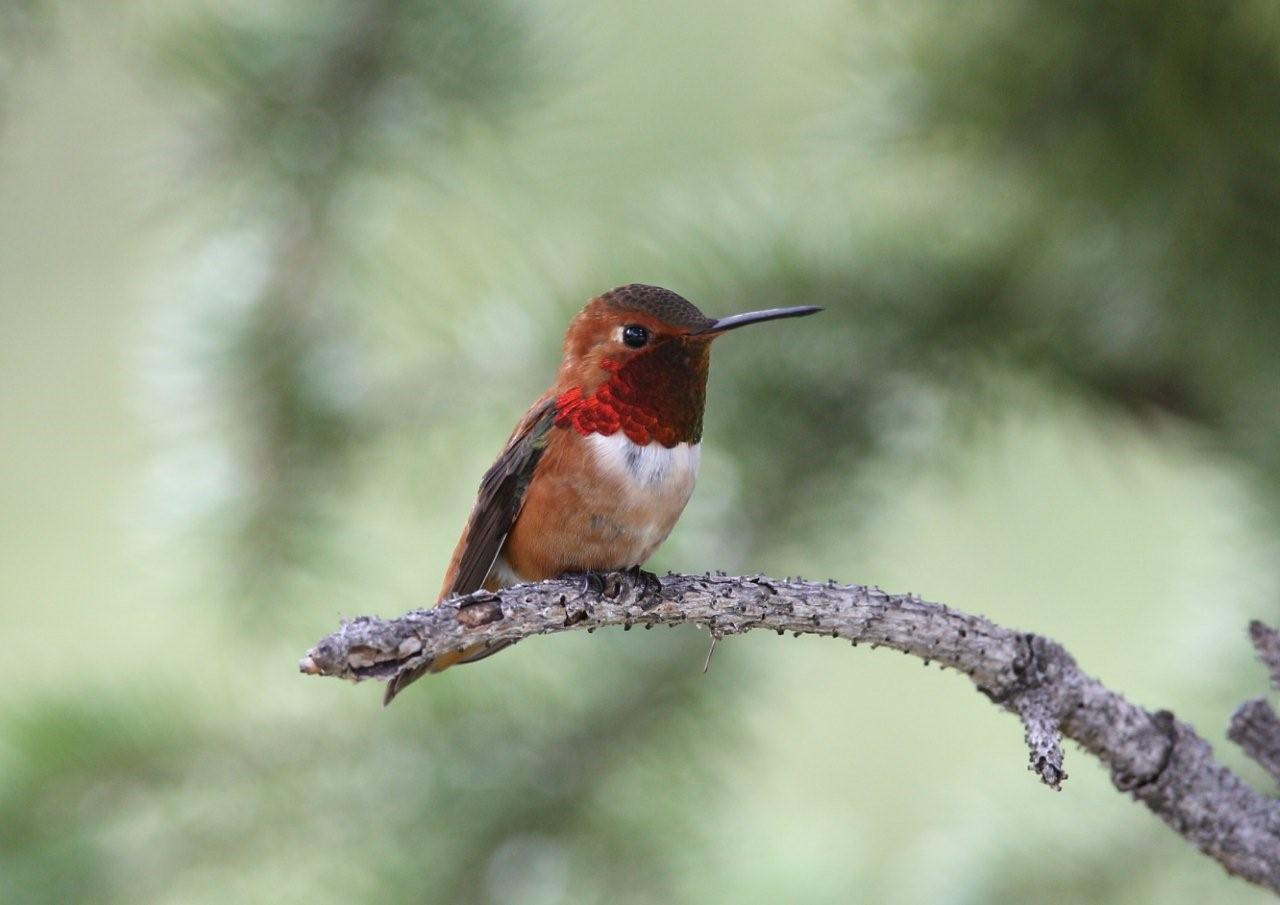
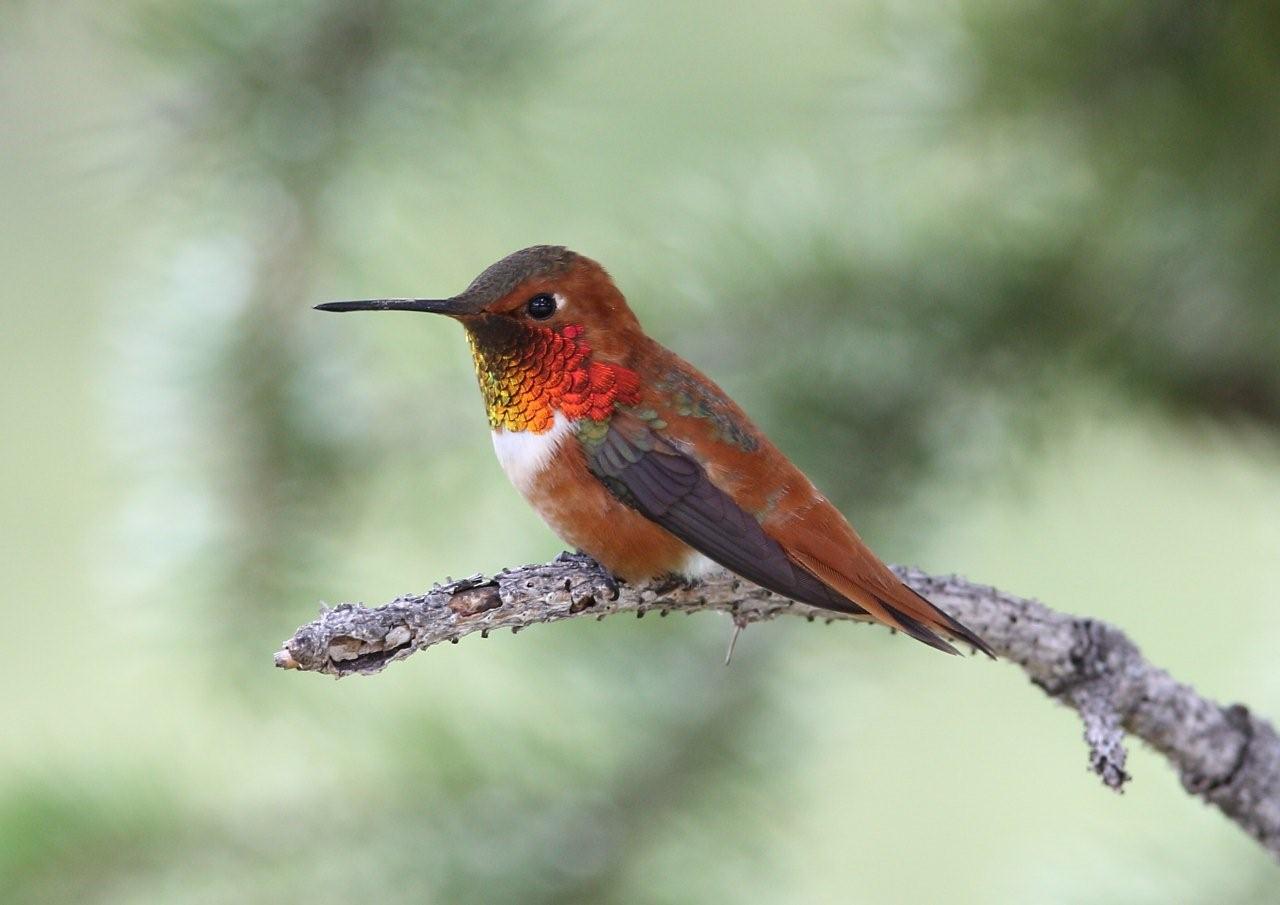
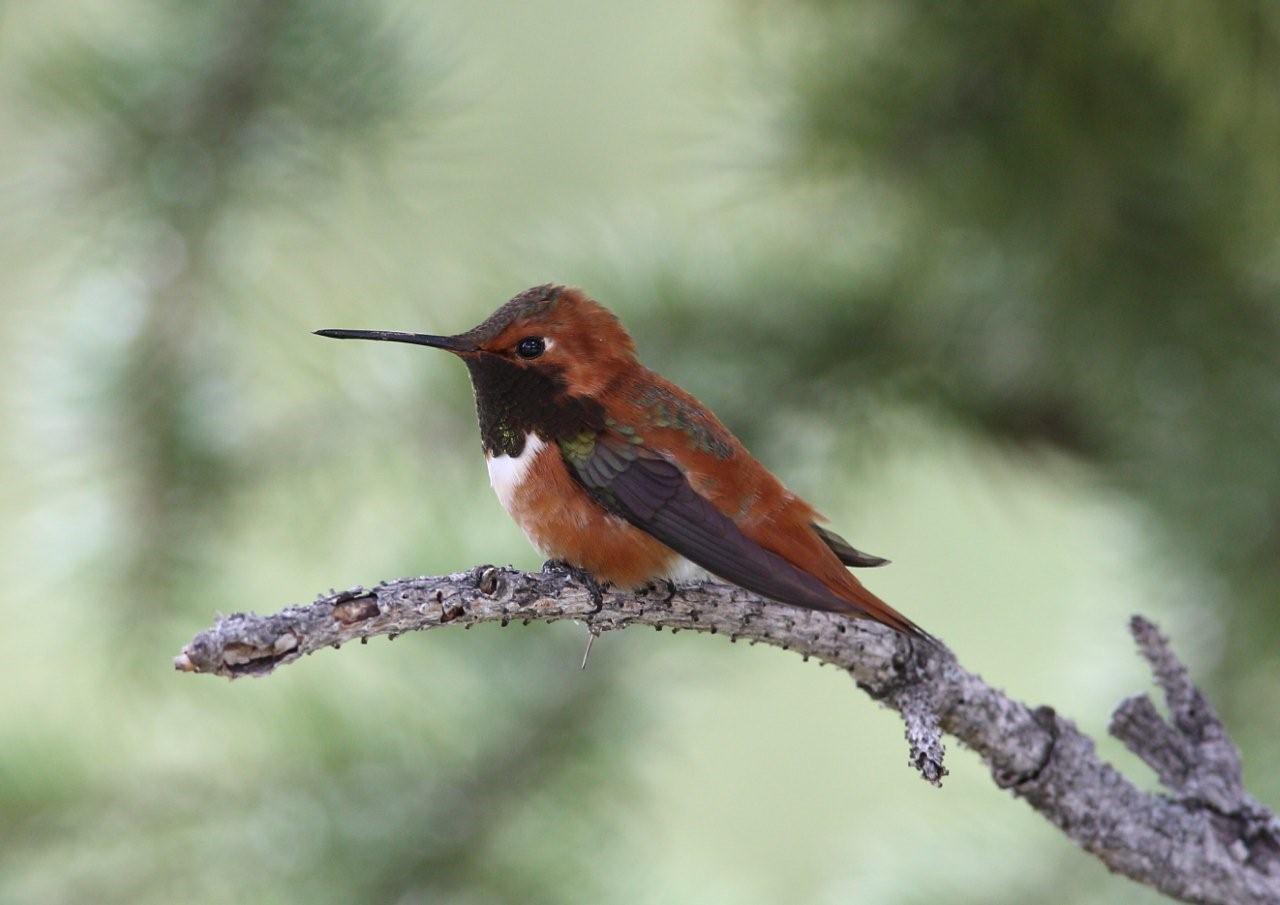
Rob English took these amazing pictures of a male Rufous Hummingbird southwest of town in late June.
Recently, some birding friends and I were in the mountains listening to the strange song of the Varied Thrush. While its song may not always be described as beautiful, its plumage is definitely gorgeous and we thought its name did not do justice to its beauty. One topic brought us onto the next and soon we were discussing Latin names. While many birders tend to overlook the scientific names of birds, these titles can be quite interesting though I know I certainly had trouble digesting all the taxonomy and etymology! If you enjoy wrapping your heads around this, read on! If you’re like me though, it may seem simply too much!
I was looking in the Federation of Alberta Naturalists ‘Field Guide to Alberta Birds’ (1998) when I noticed that the authors had the etymology (study of the origin of names) of the birds scientific names translated. However, before we get to etymology, let’s look at taxonomy (the classification of species).
All birds are in the Animal Kingdom (Animalia), the Chordata Phylum (with a backbone), and the Class Aves (birds). This is where the similarities stop though and the birds separate into their respective Orders such as Falconiformes (hawks and eagles) and Passeriformes (Passerines). Then, species are divided down into Families for example Parulidae (Wood-Warblers.) After the Families come the subdivisions of Genus and Species. These last two are used in the bird’s scientific name as binomial nomenclature, which describes the species of living organism. For example, a Red-breasted Nuthatch is Sitta canadensis. The word ‘Sitta‘ is the nuthatches genus and ‘canadensis’ is the name that specifically describes the Red-breasted Nuthatch. With the name Sitta canadensis, scientists everywhere know that you are talking about the Red-breasted Nuthatch. This is where the classification of species ends and we can look at the origin of the species’ binomial nomenclature and the etymology of the name.
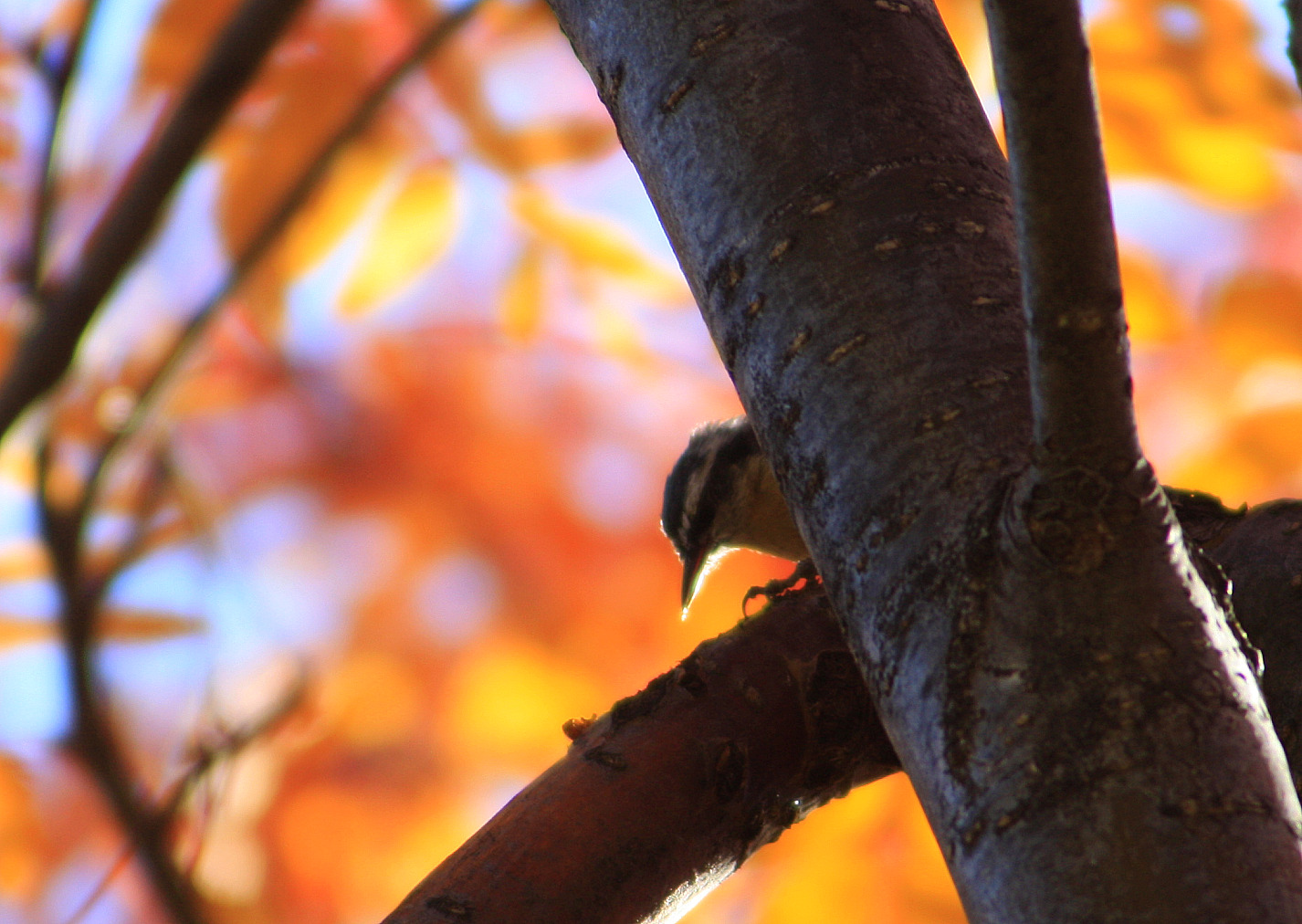
The Red-breasted Nuthatch’s scientific name is Sitta candensis
Etymology, the origin of words can be fascinating. I found that some of the scientific names of birds were quite interesting, for example the Red-necked Grebe. This grebe’s genus name is Podiceps which is Latin and means “rump foot”, referring to the posterior position of the grebe’s feet. Its species name, grisegena, is also Latin and can be translated to “gray cheek”. Thus when we look at the whole scientific name and try to make sense of it, we might come out with something like “gray-cheeked rump foot”, which in itself, can be quite descriptive of the Red-necked Grebe.
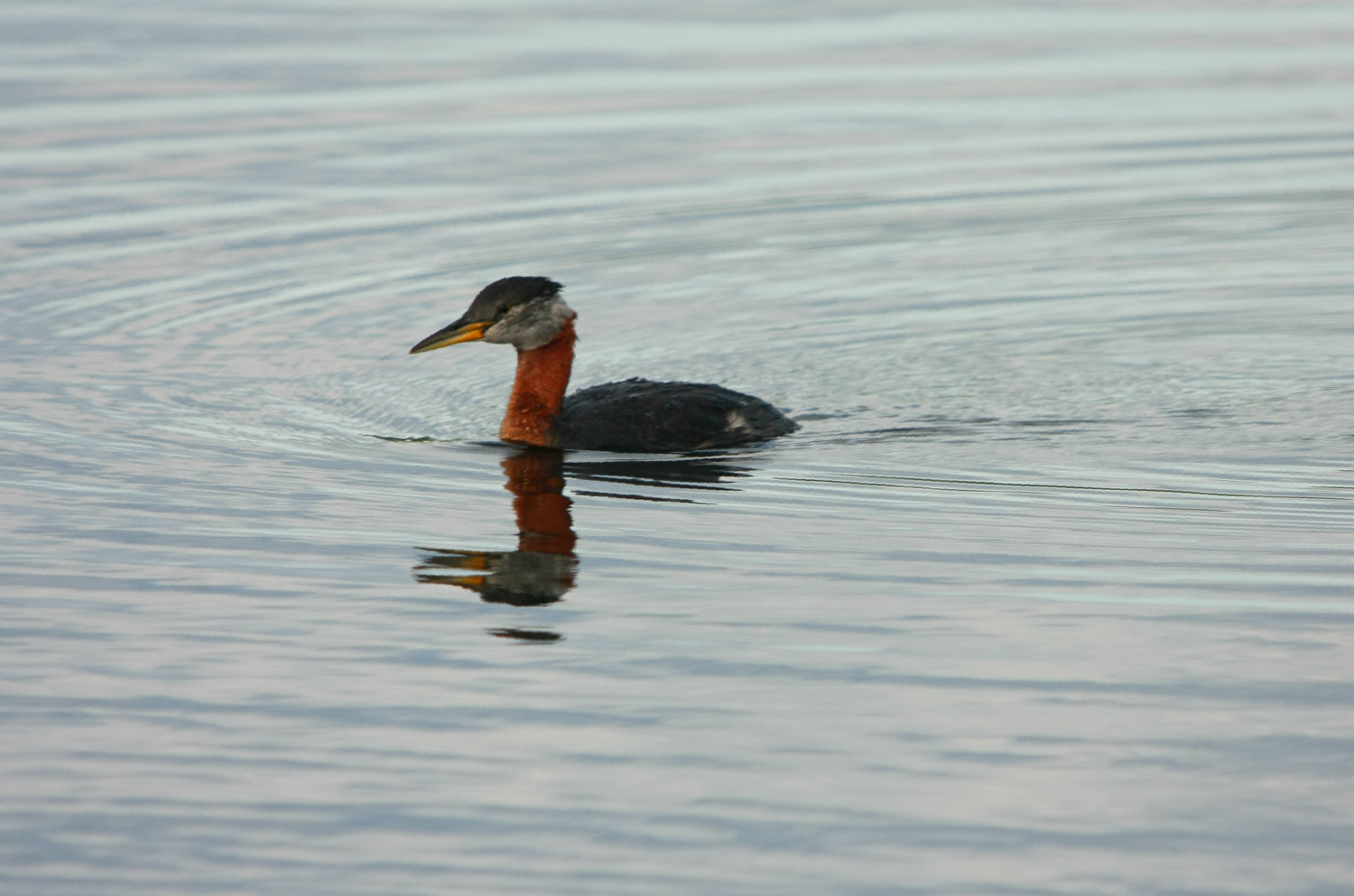
Yep, the Red-necked Grebe definitely has a gray cheek!
Here are a few more bird names and their meanings.
Black-crowned Night Heron- Nycticorax nycticorax– nyctos: “night” and corax: “a crow”. Basically, a night crow!
Gadwall- Anas strepera– Anas: “a duck” and strepera: “noisy”. A noisy duck? Names like this really make me look at the species again as I never really thought of the Gadwall as a noisy duck.
Barrow’s Goldeneye- Bucephala islandica– Bous: “bull”, kephale: “head” and islandica: “of Iceland”. Giving us… “Bull-head of Iceland”. Interesting.
Bald Eagle- Haliaeetus leucocephalus– halos: “the sea”, aetos: “eagle”, leucocephalus- leukos: “white” and cephalus: “head”. White-headed Sea Eagle sounds descriptive!
Least Sandpiper- Calidris minutilla– Calidris: ” a gray speckled sandpiper”, minutilla: “very small”. Very small gray speckled sandpiper is right- these guys only weigh 24 grams.
Yellow-bellied Flycatcher- Empidonax flaviventris– Empidonax: “King of the gnats”, flaviventris: “yellow-bellied”. What a name! Yellow-bellied King of the gnats!
Tennessee Warbler- Vermivora peregrina– Vermivora- vermis: “worm”, voro: “eater”, peregrina: “to wander”. Wandering worm-eater perhaps?
Lark Sparrow- Chondestes grammacus– Chondestes: “grain eater”, grammacus: “striped”. Striped grain eater.
Lots of cool names in this book to look at though I must admit that some don’t seem to make much sense. I also find that I learn a lot about species when I know their Latin names as then it might tell me more, for example how Gadwall’s Latin name means noisy duck. Then you’ve got the neat names such as Empidonax meaning ‘King of the gnats’! Very interesting and worthwhile to know the scientific names!
Posted by Matthew Sim
Okay, try saying that 10 times fast. Spotted Sandpipers, while spotted in their breeding plumage, do not have spots in winter or when they are juveniles. Juveniles can be separated from winter plumaged birds by the scaling and barring on their upperparts, which nonbreeding adults do not have. Right around now, we start to see juveniles so look out for them; I recently found this juvenile in Votier’s Flats in Fish Creek Provincial Park.


Posted by Matthew Sim
Recently, the Fur & Feathers 500 team ( a group of 4 birders/ naturalists from Calgary attempting to see 500 species of birds and mammals in Canada in 2012) visited Waterton Lakes N.P. in the hopes of adding several species of birds and mammals to their year totals and they kindly invited me along. We left the afternoon of Wednesday July 18th and came back the next evening after a great trip. You can see the full story on the Fur & Feathers 500 blog here.

Cameron Lake, Waterton Lakes National Park

Barn Swallow; en route at Frank Lake near High River
There is a spot in Fish Creek Provincial Park where I have been seeing two male Common Yellowthroats for the past month. Here are some photos.


Posted by Matthew Sim
In the last few weeks, I have made several trips on my own down to the sloughs at Lafarge Meadows. There is always action there; be it coots feeding young ones, Pied-billed Grebes fishing, Ruddy Ducks courting, Red-necked Grebe diving or Yellow-headed Blackbirds chasing every other bird.
One of my favorite parts about the Lafarge Meadows sloughs are the Red-necked Grebes. I have counted as many as 4 pairs at a time on the ponds and have also enjoyed watching them court side by side.

Red-necked Grebe

The Red-necked Grebe is not the only grebe that can be seen at the ponds. The smaller Pied-billed Grebe also calls the sloughs home.

Pied-billed Grebe
So far, I haven’t seen any young Red-necked Grebes but I have seen several families of Pied-billed Grebes.

There are also several other families on the ponds, including Mallards and Common Goldeneyes.

Common Goldeneye family
And while I was enjoying these great sights; I couldn’t forget the birds that truly make a southern Albertan slough like the Ruddy Duck, the American Coot, the Yellow-headed Blackbird- and of course, on the mammal side of things, the Muskrat.

A Ruddy Duck- attempting to fly like an eagle?

Baby American Coot, looking nothing like an adult.

Yellow-headed Blackbird

Muskrat
Posted by Bob Lefebvre
For twenty years, the Alberta Institute for Wildlife Conservation (AIWC) has been rehabilitating injured and orphaned wildlife and releasing them back into the wild. Eighty percent of the animals they deal with are birds. Soon the lease on their land near Madden, north of Calgary, is ending, and they have to move to a new location. In addition to the ongoing costs of operation, relocating is a huge undertaking which may include moving the existing buildings to the new location and reclaiming the current site. Consequently, they are trying to raise $250,000 this year. AIWC has always relied on donations but they need your help now more than ever.

Impaled American Robin.
Please visit the AIWC website and donate if you can. They are also hoping to increase their membership and they have many volunteer opportunities available. They currently need volunteers for information tables at local events. See the “Volunteering” and “Support AIWC” pages on their website.
Please help to support this worthy cause, so that AIWC can continue its valuable rehabilitative work and educational programs.

Gus Yaki with sick or injured Ring-billed Gull.
Posted by Matthew Sim
Last Sunday, my family decided to spend some time at Frank Lake for Father’s Day. This birding hotspot has featured in many of our posts before but even so, one can never tire of visiting the lake. During every season, something of interest can be seen there and Father’s Day was no exception. As we parked the car and headed down to the blind, we were astonished by the multitude of winged creatures around us; Common Terns, American Coots, Red-winged and Yellow-headed Blackbirds, Ruddy Ducks and Wilson’s Phalaropes were among the birds we saw.
Forster’s Terns appeared to be nesting in the reeds near the blind and many were fishing in the waters all around us.

Forster’s Tern
While walking along the boardwalk, we stopped to admire this Muskrat munching on a reed just feet away from us.
We thought we were seeing some great things, which we were, but when we got to the blind, we saw something that was truly amazing.

Nature’s taxi
There were several families of Eared Grebes hanging out around the blind; the mothers playing taxi to their young chicks while the fathers dove and swam about, gathering food for the young.

Occasionally, the mothers would shake the chicks off their backs; either tired of carrying their young charges or attempting to get them practicing swimming.

While we were watching the grebes, activity went on as always with the other birds and there were many White-faced Ibises flying by us.

Eventually, we had to leave, though it was quite hard to tear ourselves away from the blind. Good birds were still to be seen on the way out though as we spotted a singing LeConte’s Sparrow by the parking area near the blind, the Trumpeter Swan near the sewage outfall who has been there for some time, at least 3 pairs of American Avocets by the sewage outfall and a singing Western Meadowlark perched on a fencepost.

Western Meadowlark
If you can, I would really recommend getting out to Frank Lake soon as the birds are simply amazing right now.