Tag Archive | birds calgary blog

Carburn and Southland Park Christmas Bird Count

This year, I also did the Christmas Bird Count; I was assigned the S1 route, encompassing both Carburn and Southland Park. We started the morning birding from the Eric Harvie bridge in Southland, right beside the dog park, before splitting up, 2 groups going south along the river (one on each side) and 2 groups going north along the river. The day was off to a good start as we observed 2 adult eagles and 2 immature eagles flying low overhead; the rising sun was beautiful, adding to the good beginning and silhouetting the many ducks and geese on the Bow River.

We observed thousands of Mallards, Common Goldeneyes and Canada Geese throughout the day with several hundred Buffleheads as well. There were also several Barrow’s Goldeneyes in these waterfowl flocks.

The Common Goldeneyes weren’t quite as numerous as the Mallards however they were still present in large numbers.

We continued to walk further down the river, spotting Redpolls, plenty of waterfowl, Killdeer, magpies and… RUSTY BLACKBIRD!!! As we were hiking along the river, we flushed up a brownish-black bird about the size of a Robin from the bank. It landed nearby at the top of a poplar where we all got good looks at it. Unfortunately, the same cannot be said for my photographs of this species! This blackbird, is an unusual bird in Calgary, explaining, perhaps, my excitement at the sighting (also, this was only my second time seeing this species).

We headed back to the meeting spot, the Eric Harvie Bridge, where we saw a Sharp-shinned Hawk and discovered that another group had found an American Wigeon. We then headed to our next stop, Tim Hortons! After warming up and getting refreshments at Tim Hortons, we headed out near the Glenmore bridge, where at a pullout, we walked out and did some more birding, turning up a Killdeer and a Hairy Woodpecker.

The next and final stop for our group was Carburn Park. Our goal at Carburn, was to find an American Pipit  that had been reported here a little while earlier. Though we couldn’t agree to the location where this bird had been seen, we did manage to find it. This happens to be the first pipit recorded on the Calgary CBC since its beginning, 59 years ago.

Also in Carburn, we found a pair of Great Horned Owls, that were extremely well camouflaged against the tree branches they were perched on, several more Barrow’s Goldeneyes and another juvenile eagle. I decided to head home early and only found out later that the rest of the group had also found a Northern Pintail and a Wood Duck in Carburn. I birded around my neighborhood, which was inside our count circle, and managed to add both species of crossbills, a robin and a Merlin to our list, among other species.

The pipit and the Rusty Blackbird were definitely the highlights of the day for me, however they were only two of the 33 species and 7924 individuals recorded by 10 counters in this particular area. Here are the complete results:

Canada Goose, 1500; Wood Duck, 1; American Wigeon, 1; Mallard, 3000; Northern Pintail, 1; Bufflehead, 150; Common Goldeneye, 2800; Barrow’s Goldeneye, 20; Common Merganser, 20; Bald Eagle, 5; Sharp-shinned Hawk, 1; Merlin, 1; Killdeer, 5; Rock Pigeon, 25; Great Horned Owl, 2; Downy Woodpecker, 5; Hairy Woodpecker, 2; Northern Flicker, 3; Black-billed Magpie, 125; American Crow, 3; Common Raven, 12; Red-breasted Nuthatch, 3; White-breasted Nuthatch, 3; American Robin, 1; Dark-eyed Junco, 1; Rusty Blackbird, 1; House Finch, 4; Red Crossbill, 12; White-winged Crossbill, 26; Common Redpoll, 25; House Sparrow, 110; American Pipit, 1.

Posted by Matthew Sim

It’s good to be back…

I flew in to Calgary from Houston last Friday night and was greeted by snow on the ground! Something that I haven’t seen since April. Never thought that I would be so excited to see snow. My first day back, Saturday, I took a walk around my neighborhood and was fortunate enough to see most of the locals; no not the neighbors, the birds.

First thing in the morning, I woke to see several Black-billed Magpies jumping and hollering about in the willow. Several Common Ravens flew overhead and 2 pairs of Chickadees visited the feeders. I was very happy to see the Black-capped Chickadees, nothing can compare with this species’ friendliness!

I have been following the reports from Albertabird still and I have seen all the reports of winter finches; I knew what a good year it was for these birds. I just didn’t know how good! In my hour or so walk, I saw more Crossbills then I did all last winter. I must have seen more than 100 crossbills!

Most of the crossbills were White-winged however there were a few Red Crossbills in the mix ( see photo above). I also observed many Pine Siskins that were flocking with the crossbills and feeding on the abundant cones.

My neighborhood, for some reason, never seems to be popular with Common Redpolls, however this year, within my first 24 hours of being back in Calgary, I had already seen 2 in my community. Also, we hosted a Pine Grosbeak, which is unusual for us. At one point, I was privileged to see several crossbills, a redpoll and many siskins on the ground just feet in front of me, licking up some sort of salt or rock from the ground.

Then, later on in the day, I discovered why my feeders were so empty. Three Sharp-shinned Hawks were all together in a tree. When 3 raptors start calling your neighborhood home, there are definitely going to be some songbird declines.

All in all, it’s good to be back!

Posted by Matthew Sim

Tips on Bird Photography

I think it is safe to say that most of us here have an interest in birdwatching. Some of us are also interested in photographing birds, documenting what we see and also enabling others to enjoy these sightings . Bird photography can be very tricky though and doesn’t always come out the way we want it to. Through trial and error as well as tips from other nature photographers, I have slowly learned different tricks of the trade and am still learning. Here is one trick that I have found helps me a lot.

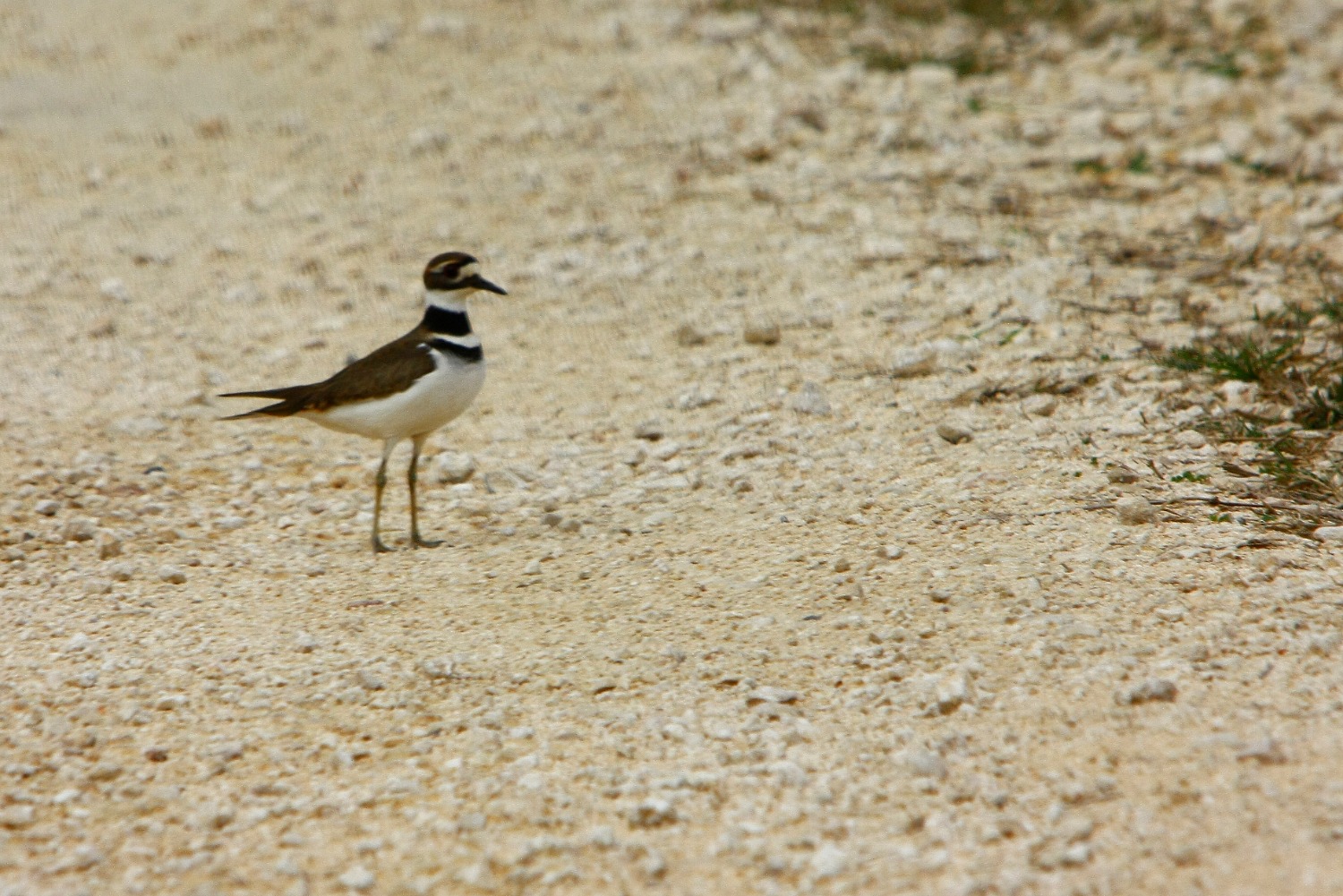
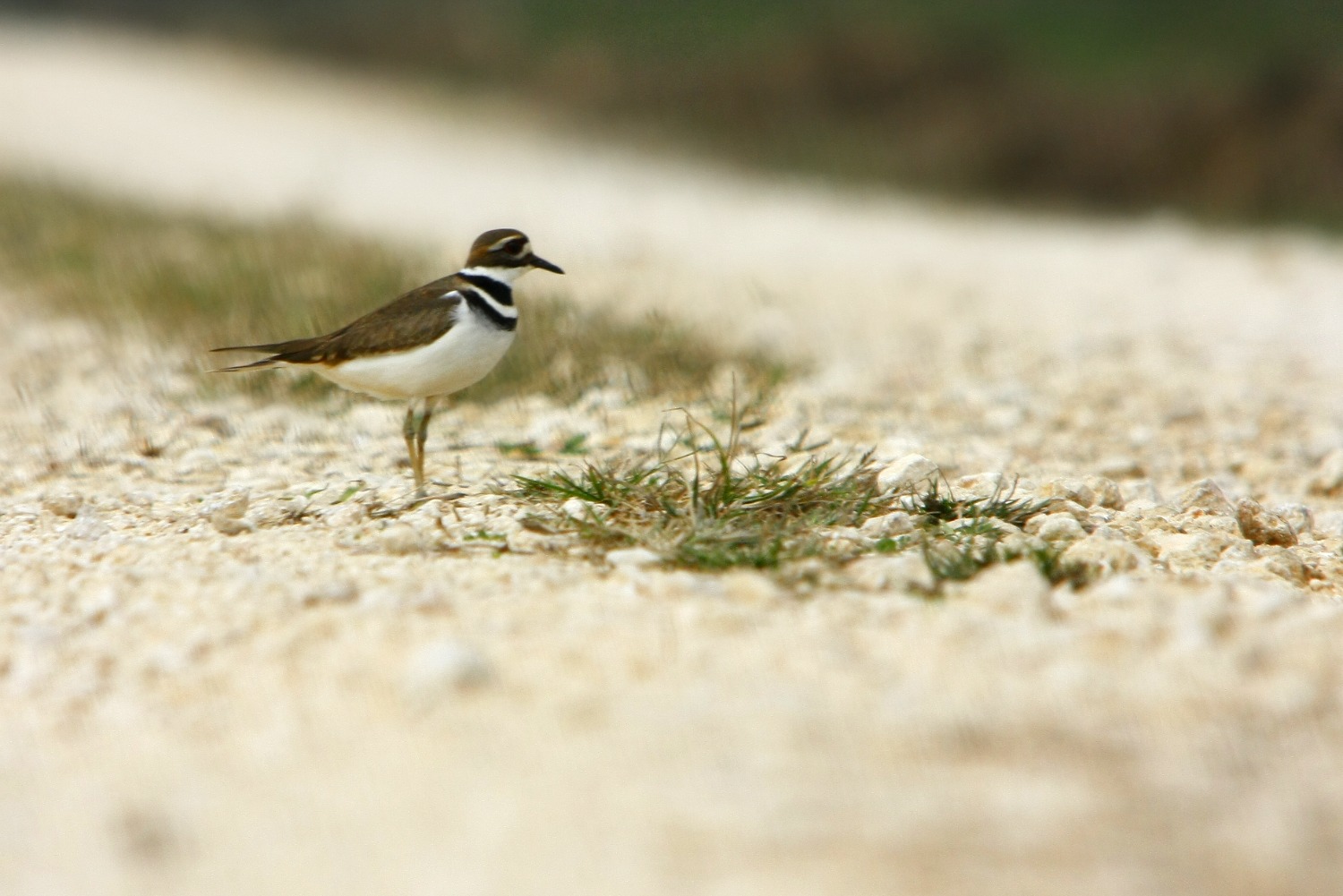
Take a look at the picture above. Probably doesn’t do much for you, right? Just a killdeer photograph, nothing exciting about the shot itself. What could have been done to make this a better photograph? I have found that getting low can often drastically improve the photo. Get down at eye level with the bird, you can often create better eye contact with the bird, bringing the viewer into a connection with the photo. The Killdeer will then seem more interesting, not only because of the lower angle, but because of the  change in the depth of field of the shot.

Depth of field (also known as DOF), is the term for the amount of distance between the closest and farthest objects that appear sharp in the photograph. In the second picture above, a shallower depth of field (meaning a blurry background) makes the photo less distracting and more pleasing to the eye. In the photo pictured below, I took it one step further, instead of simply kneeling, I lay on my stomach, creating a very shallow depth of field and therefore, a picture that is more likely to catch your eye than the first photo.

Changing the depth of field is a remarkably simple technique but incredibly powerful in the way a photo comes out. By getting low, chances are you can improve your bird photography.

Posted by Matthew Sim

Sunday Showcase: Calgary Corvids

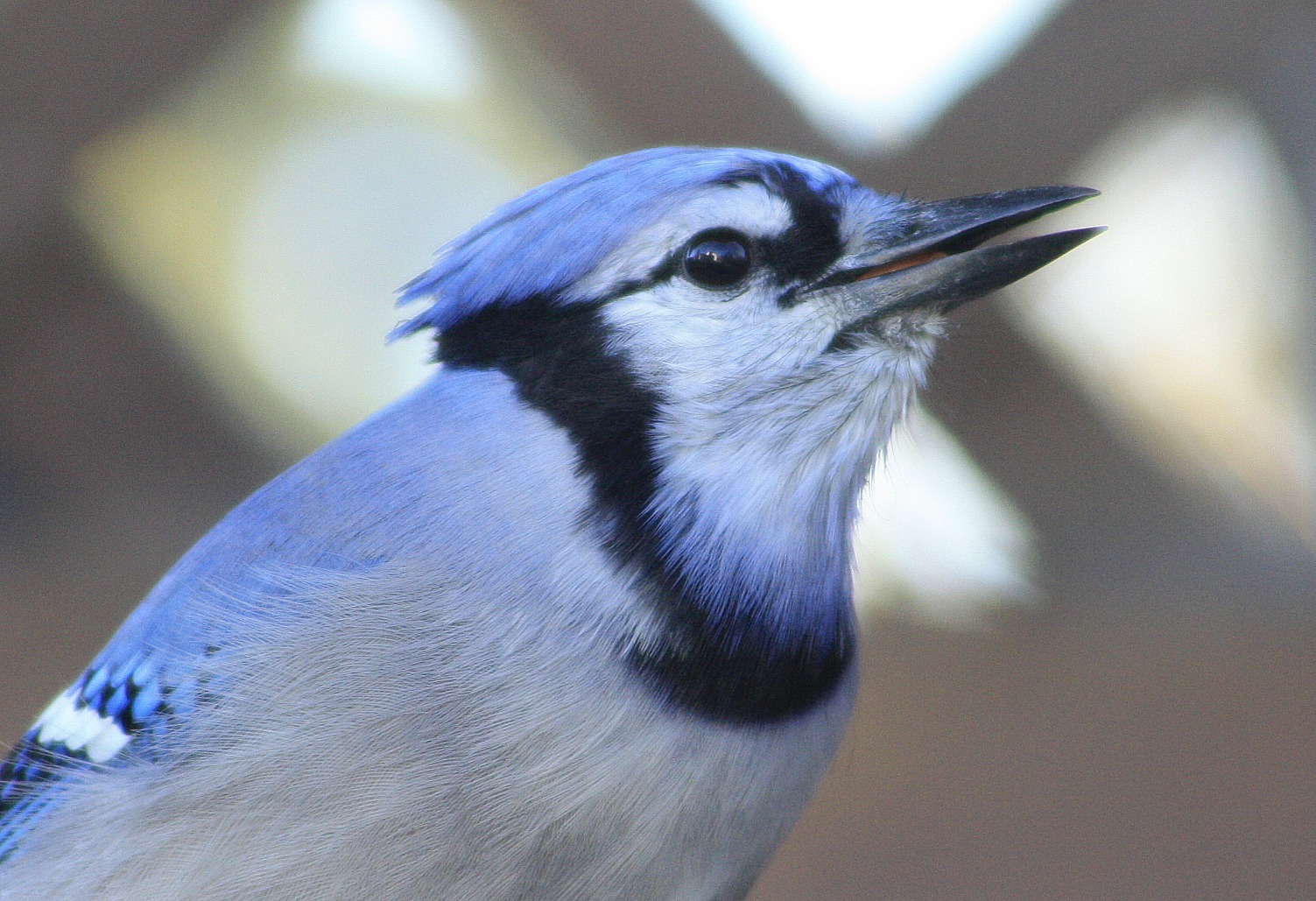
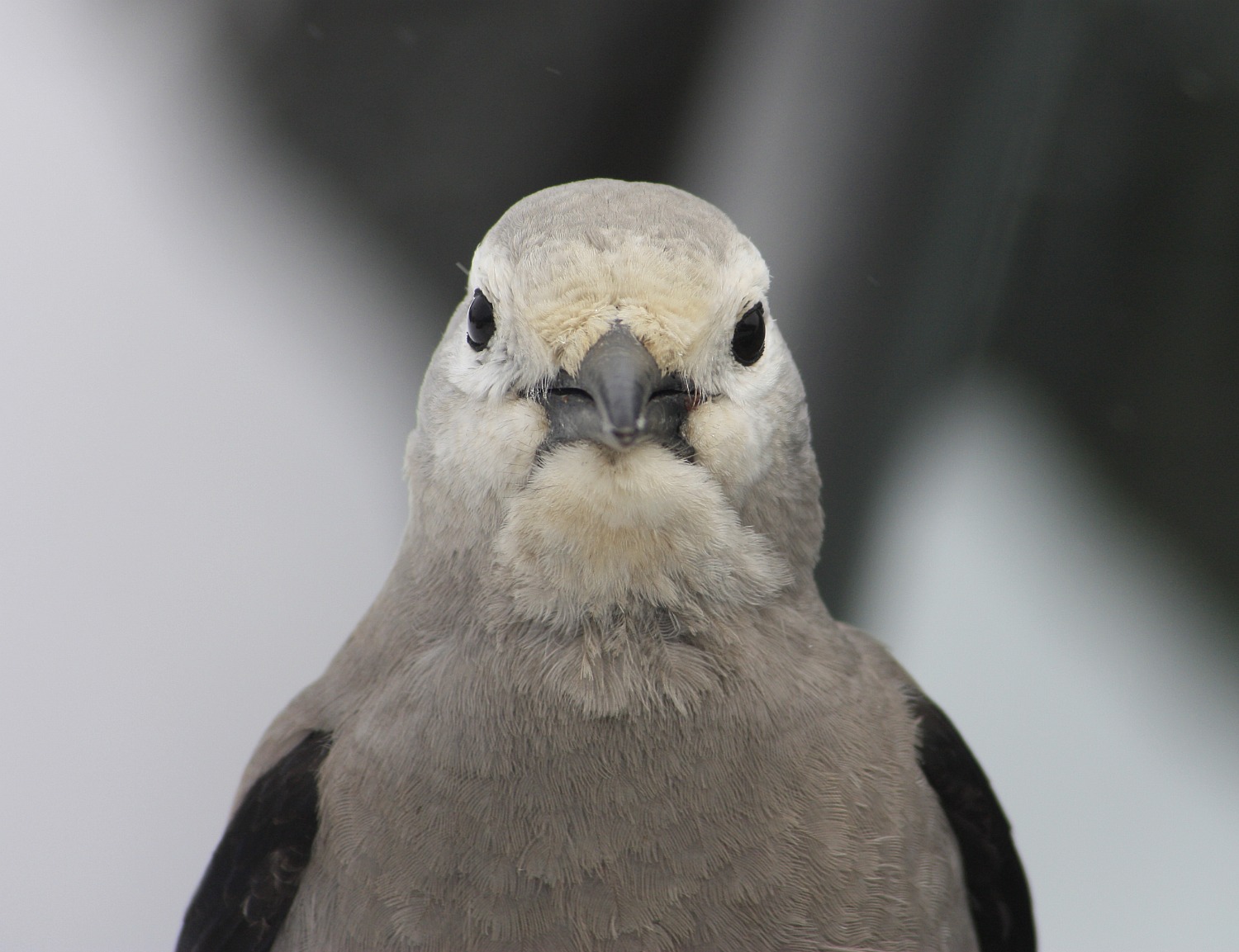
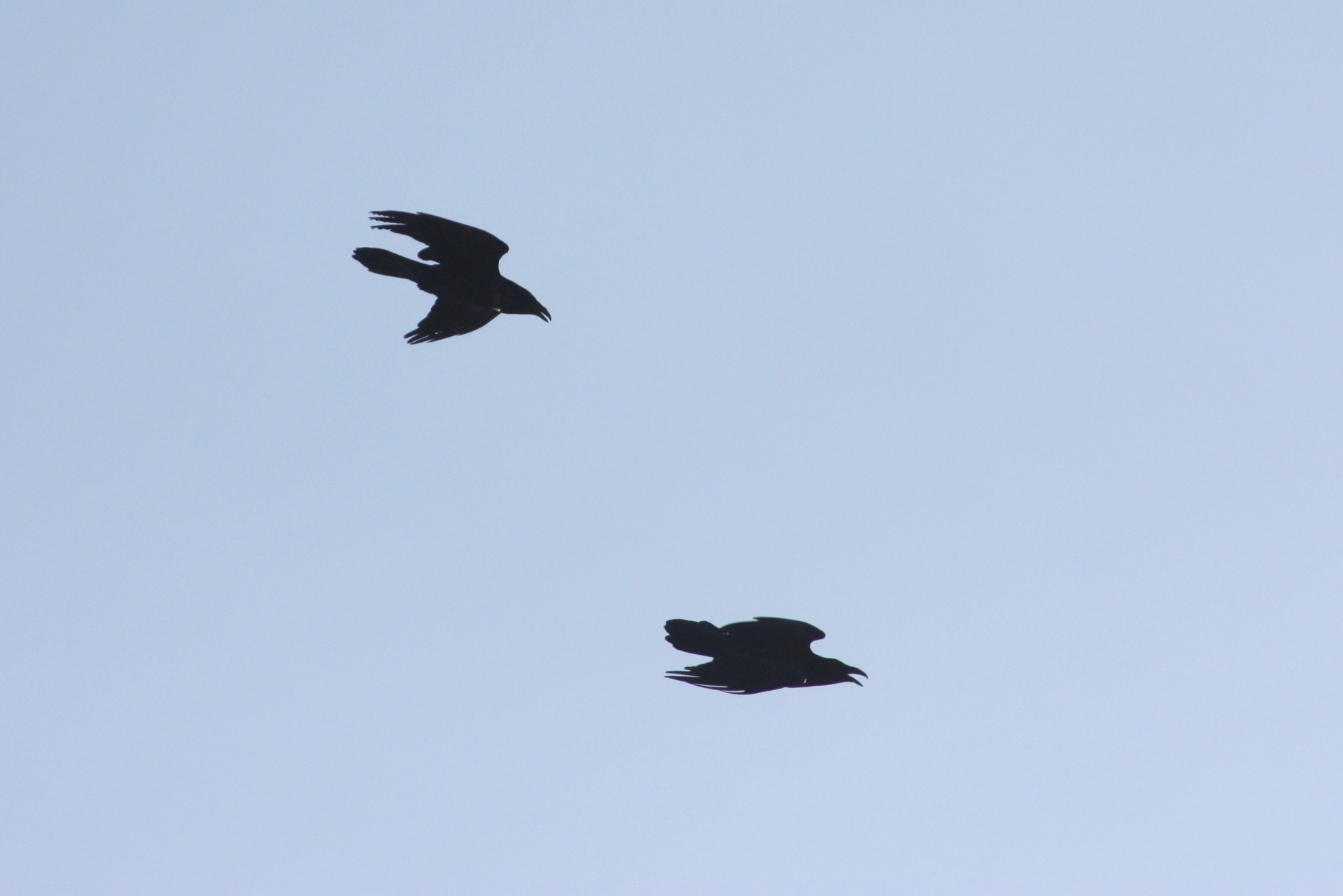
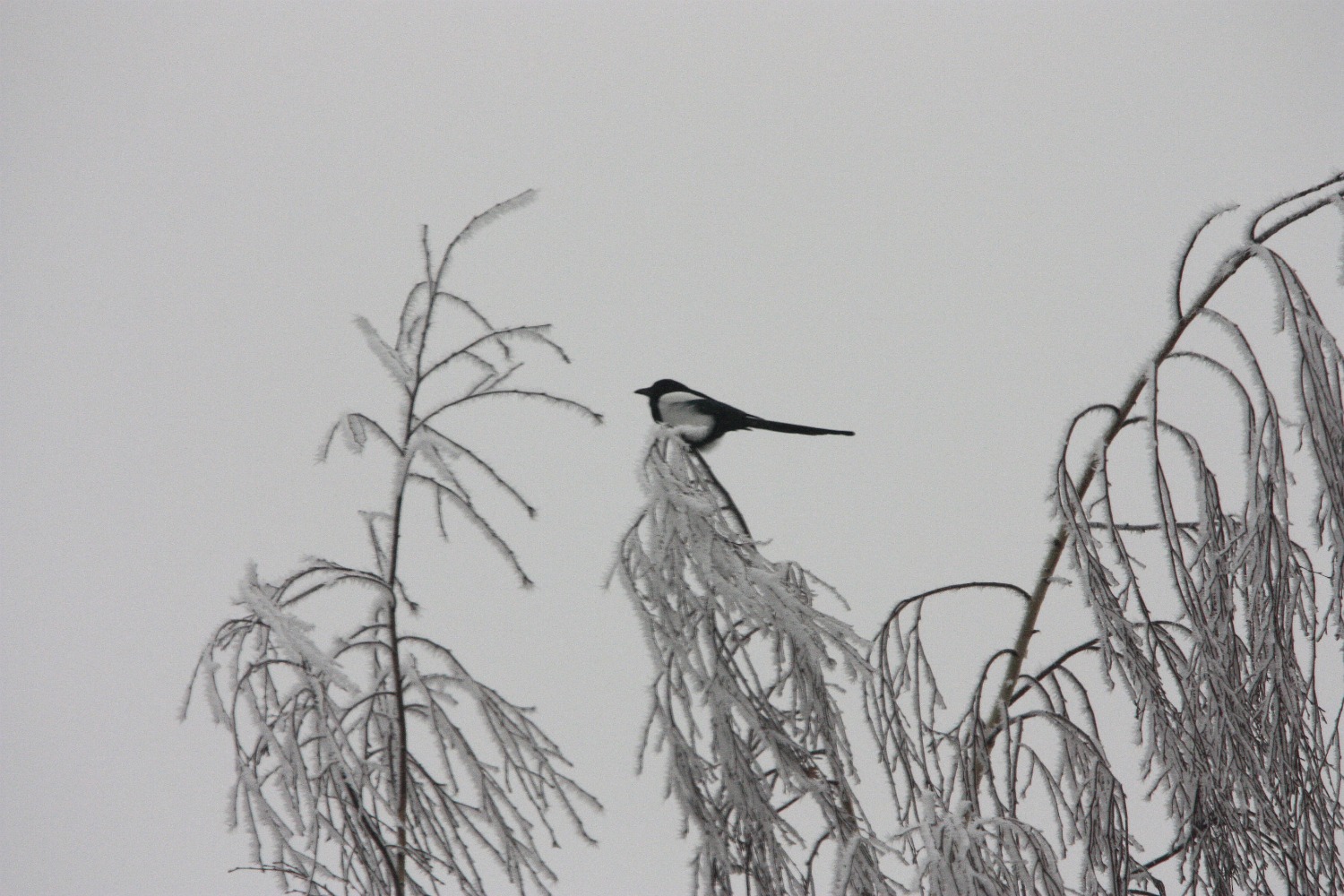
Corvids, which are crows and jays, are classified by their harsh voices and their aggressive manner, both of which draw attention to themselves; large and often very gregarious birds. Most corvids have bristles on their nostrils, located on very powerful, all-purpose beaks built specially for handling their varied diet ( berries, fruits, seeds, invertebrates, small mammals and carrion). Here are most of the species that you may see in the Calgary region, the only one missing, is the colorful Steller’s Jay.

American Crow

Blue Jay

Grey Jay

Clark's Nutcracker

Common Ravens

Black-billed Magpie

Posted by Matthew Sim

Wintering blackbirds in Texas

Winter leaps upon us in a flash. One minute, it seems, it is a very distant shape looming faintly on the horizon. Suddenly, before we know it, winter has struck, leaving us wondering where the summer went. In Texas, the same seems to happen with wintering birds. One day, only the year-round residents who call Texas home can be seen. The next day, countless wintering birds of all shapes and sizes are everywhere, confusing even the most attentive eye.

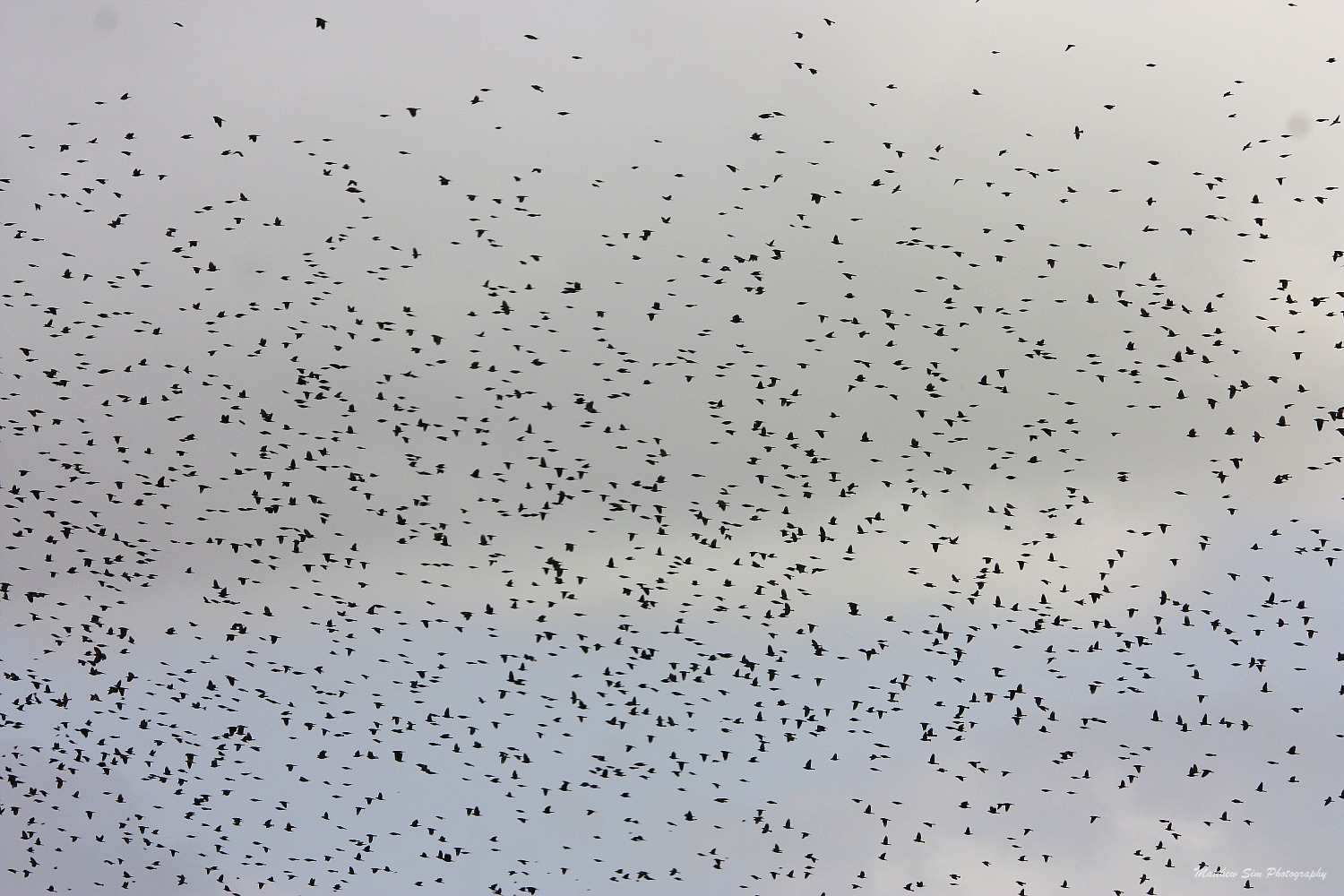
Countless blackbirds flock together during the winter

On a recent trip to Brazos Bend State Park here in Texas, about an hour southwest of Houston, we observed some spectacular flocking in action. Literally thousands upon thousands of blackbirds; Red-winged Blackbirds, Brown-headed Cowbirds, Common Grackles and European Starlings congregating on some farmer’s fields. They swarmed and swirled, seemingly in perfect coordination, lifting off and landing as a unit. And yet, this is not a sight you can readily behold on these bird wintering grounds. You don’t see flocks of thousands of these species doing this in the summer, so why do they do it in the winter???

These blackbirds have quite a few reasons for doing this in the winter but these flocking habits also have numerous downsides. First of all, on the positive side, foraging is greatly improved by the large flock as opposed to a single bird or a small group. The more eyes you have working together, the easier it is to find food! More eyes can also mean more safety from would-be predators, and trust me, there are a lot of them!

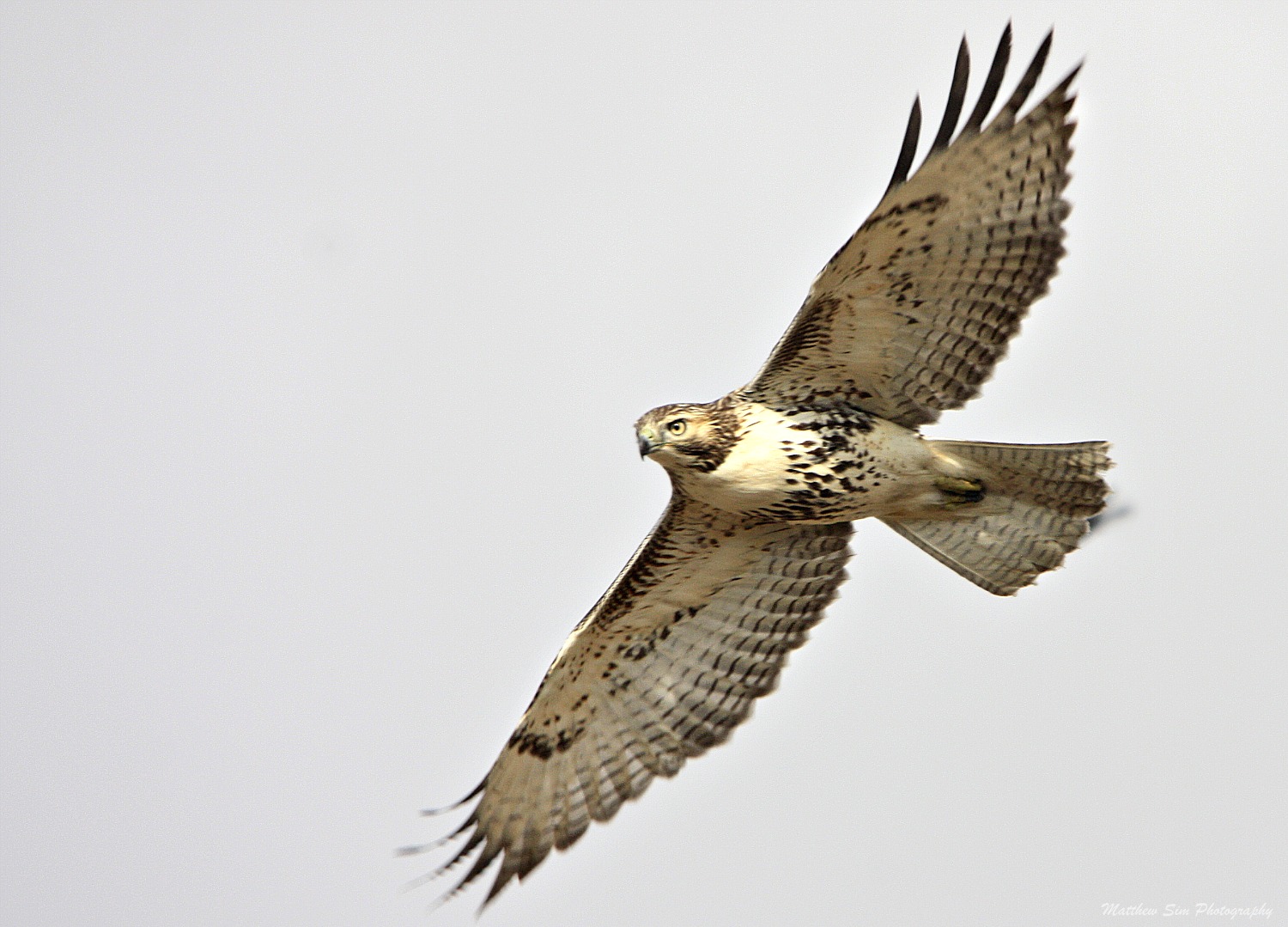
This brings us to one of the downsides of wintering flocks. Predators. Lots of them. Where there is food, there are consumers, waiting to, well, consume the food. Raptors see these blackbirds as one huge buffet just waiting to be sampled. In a small farmer’s field, we counted up to 20 raptors: about 10 Caracaras, many Red-tailed Hawks, several White-tailed Hawks, a Turkey Vulture and a couple of Northern Harriers, all exploring the delightful opportunity of a full stomach all winter long. If these hawks were to stick with the group of blackbirds, they could potentially always find one or two to pick off from the pack. The more birds in a flock, the more noise and commotion they make, rendering them easily visible targets.

Large concentrations of any living thing invariably bring with them two other depreciating factors; disease and competition. Avian diseases can be spread very quickly in such large flocks and may sometimes ravage a great portion of the local species. More birds might find better food sources but if there isn’t enough to go around, there simply isn’t enough. Weaker, slower and sick birds often will be the first to go hungry as they cannot compete with the healthier individuals.

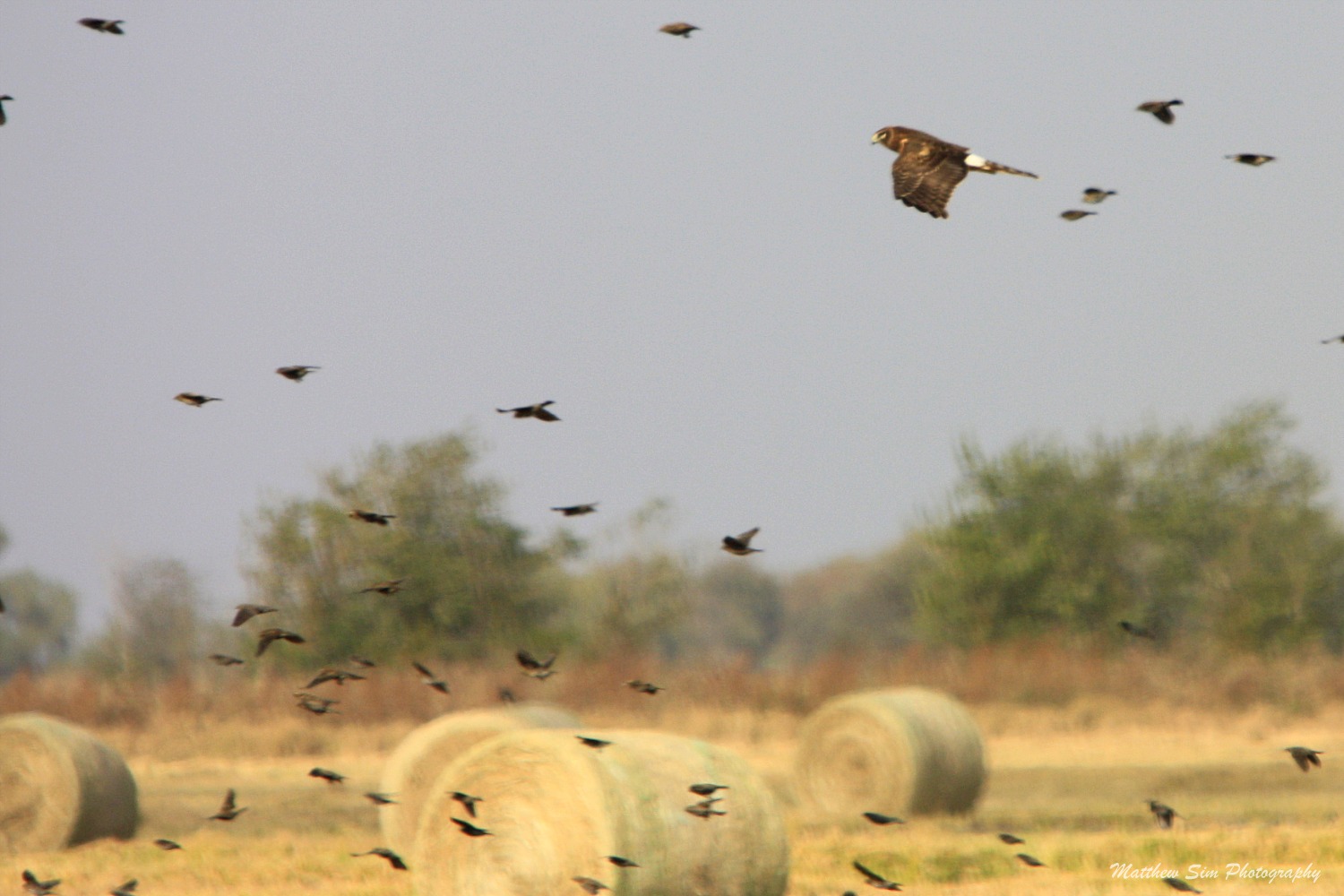
It was definitely a neat sight to behold, especially when a raptor would plunge into the center of the throng, sending up explosions of blackbirds. One of the White-tailed Hawks that we spotted, an immature, had a very full crop (a muscular pouch near the throat used to store food), showing us that it had been eating well recently.

In the end, the advantages of these congregations greatly outweigh the disadvantages and it is a bewildering sight that will continue to captivate many a fortunate observer.

Posted by Matthew Sim
Update from Texas

Not really about Calgary birding, I thought I might try to squeeze in an occasional post about my experiences down south. Let me tell you, if you haven’t yet experienced Texas birding, you are most definitely missing out.

My family and I moved down to Texas back in August and were greeted by sweltering heat; temperatures regularly exceeding 40 degrees Celsius (104 degrees Fahrenheit). Since then, the temperatures have decreased considerably to a much more comfortable (and bearable) temperature of about 15 degrees Celsius, give or take a few degrees. This mild winter draws many species of avian visitors from up north and we have seen quite a few winter residents.

In my neighborhood, we regularly see Great Egrets, Great Blue Herons, Loggerhead Shrikes, White-winged Doves, Red-shouldered Hawks, Northern Cardinals, Field Sparrows and both Turkey and Black Vultures.

The neighborhood heron has allowed me to crawl close to get some photos

Since we have been down here, we have made several trips out to local hotspots. Our first trip, in September, was out to Galveston, where we saw some typical species of the Gulf Coast including Laughing Gull, Brown Pelican, Snowy Egret, Boat-tailed Grackle, Neotropic Cormorant, Royal Tern, Caspian Tern and Tricolored Heron. We also observed Sanderling, Ruddy Turnstone and Magnificent Frigatebird.

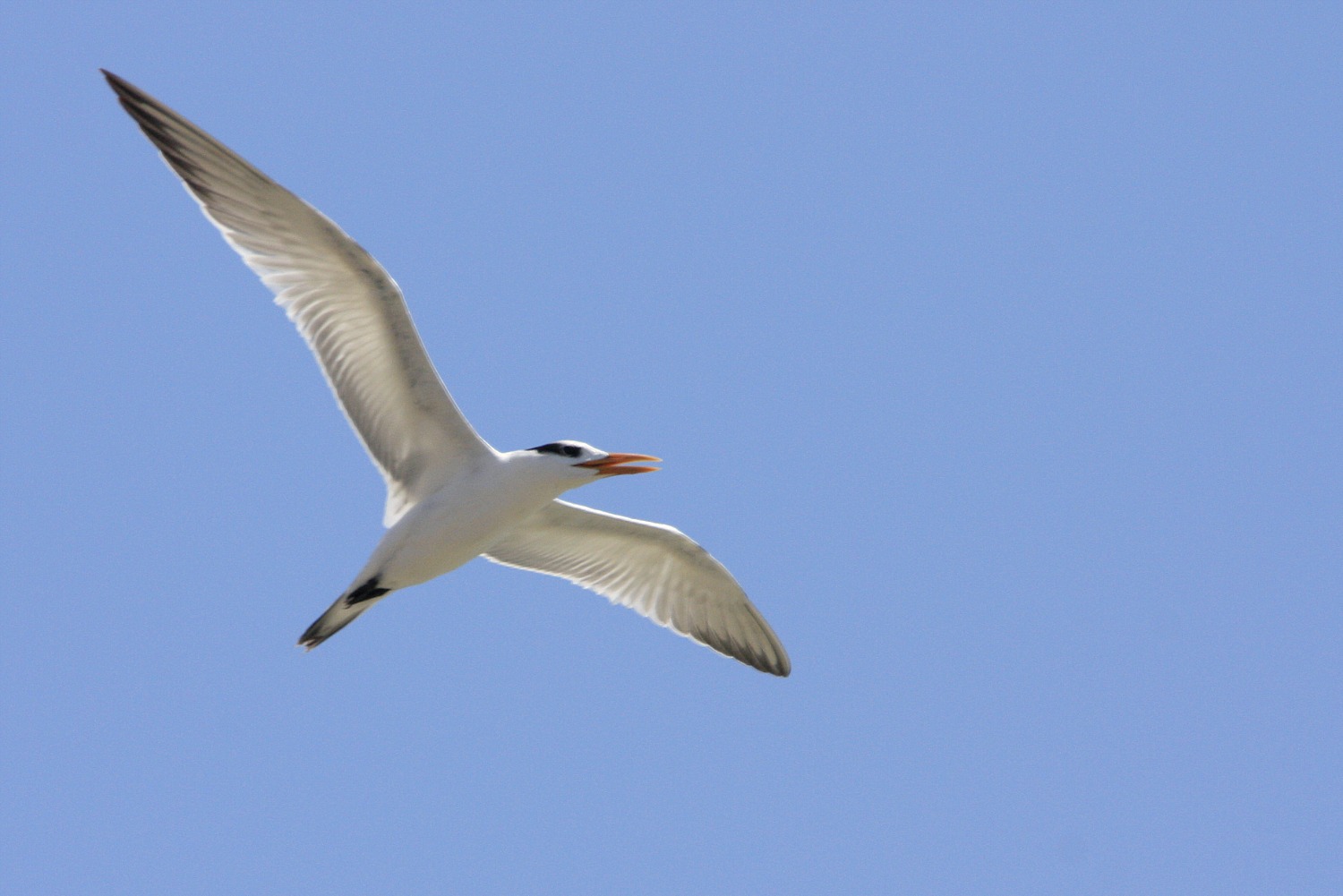
A Royal Tern in winter plumage soaring over the Texas Gulf coast

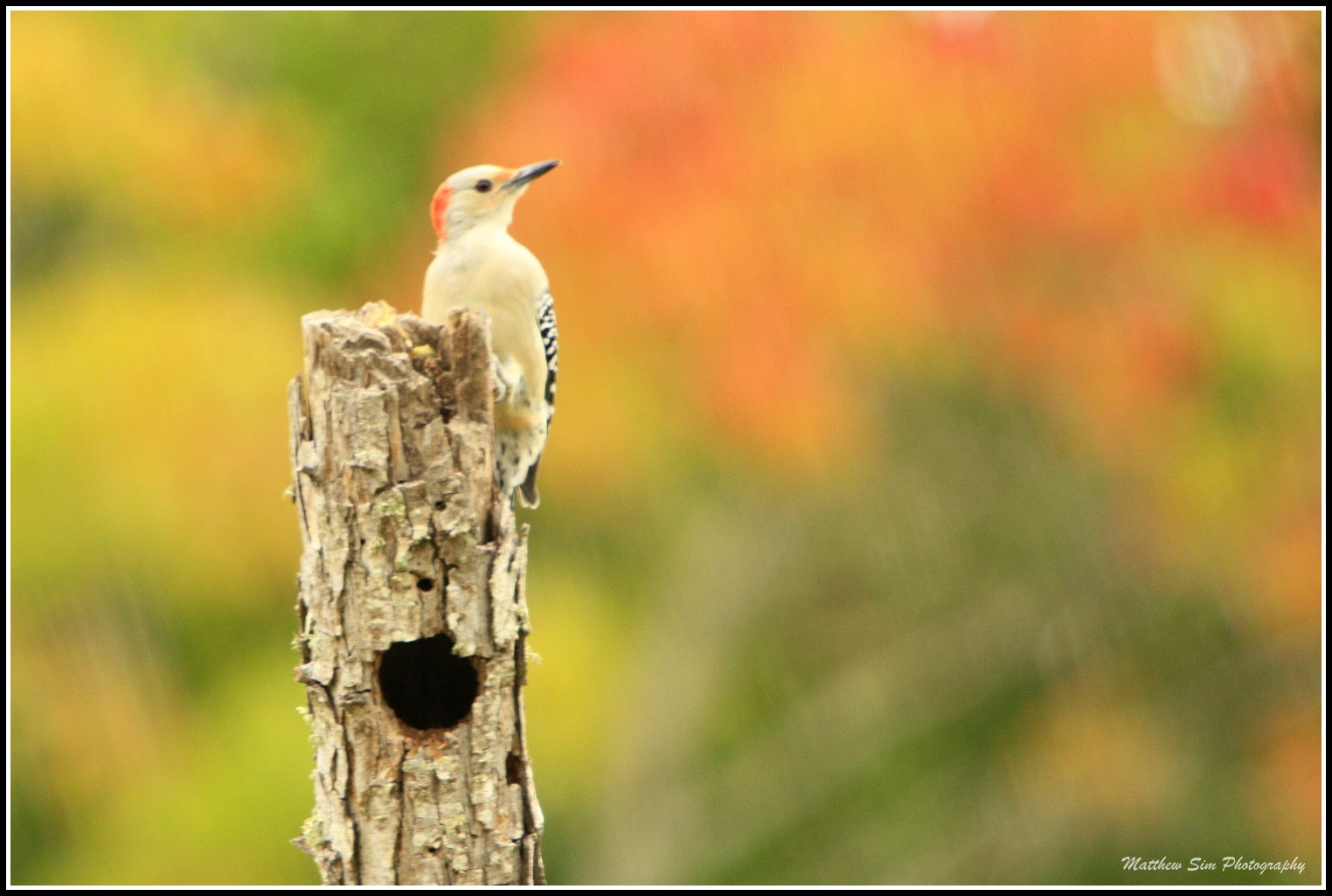
Several other trips out to local parks since then have given us more year-round and winter birds including the likes of Red-bellied Woodpecker, Carolina Chickadee, White Ibis, Cave Swallow, many species of sparrow and both species of Kinglet.

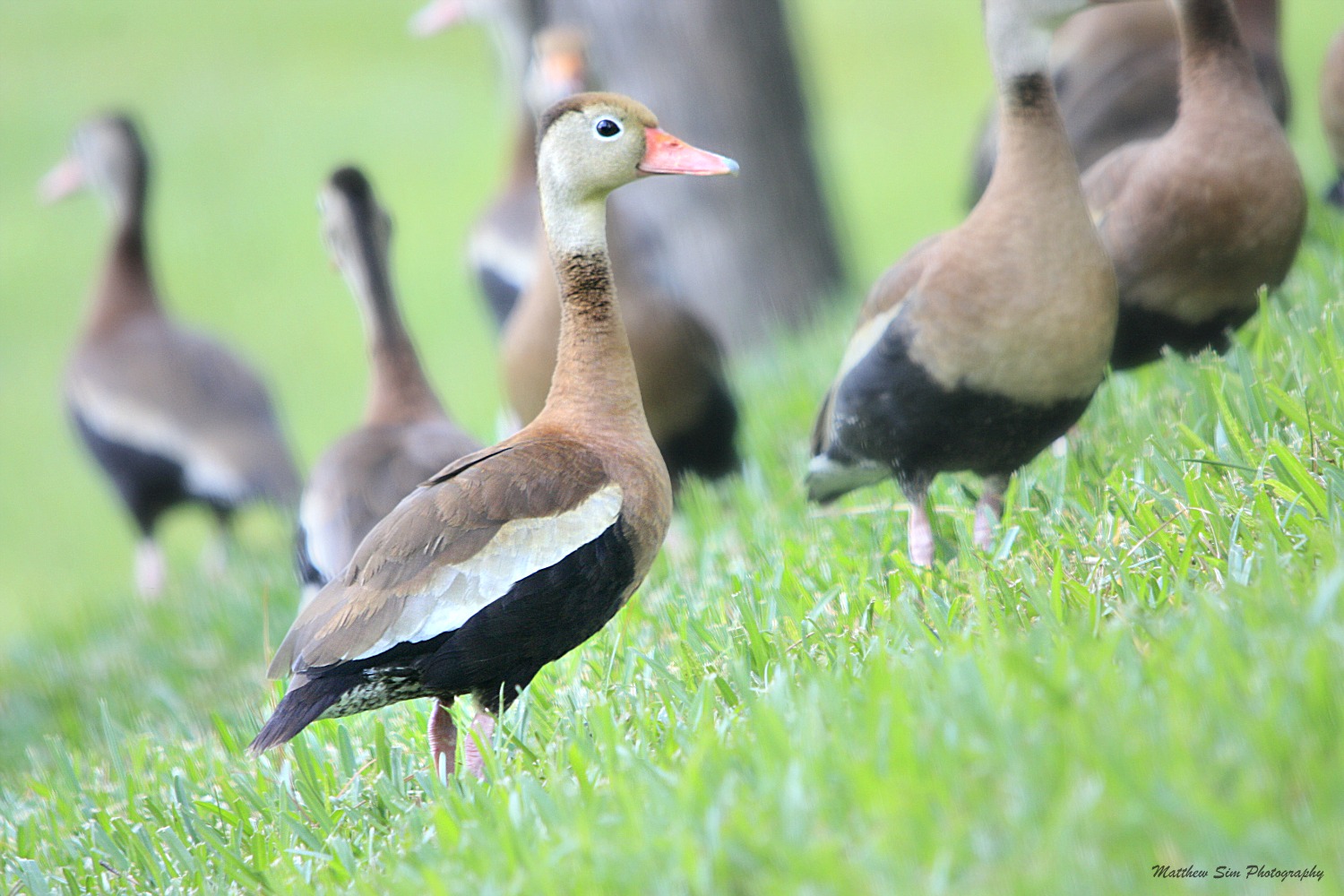
A trip to Brazos Bend State Park gave us the amazing sight of thousands of blackbirds, Crested Caracaras, Vermilion Flycatcher, both species of Whistling Duck and Roseate Spoonbill.

Black-bellied Whistling Ducks

Our latest trip, to Anahuac NWR, yielded incredible flocks of  Snow Goose, Ross’ Goose, Greater White-fronted Goose all passing by low overhead; we counted thousands of geese! The refuge also had  Anhinga and Harris’ Hawk calling it home.

We have greatly enjoyed Texas birding so far and are looking forward to an exciting spring migration!

Posted by Matthew Sim
Winter Birding Course

The best way to learn the birds of Calgary is to get out with other birders and explore the natural areas of the city.  Once again, The Friends of Fish Creek Park Society is offering birding courses starting in January 2012 and running through the end of April.  For more information or to register, email chris@friendsoffishcreek.org or phone 403-238-3841.

More On Weasels

On Saturday the Friends of Fish Creek birders were walking on the path just outside the Inglewood Bird Sanctuary when we noticed another weasel – this time a Long-tailed Weasel – already in its white winter coat with a black tip on the tail.  These weasels are about eighteen inches long (45 cm), and about half of that length is the tail.  They are considerably bigger than their relatives, the Least Weasels, which are only about six inches (15 cm) long (see my recent post about Least Weasels here).

Long-tailed Weasel checking us out. Photo by Dan Arndt.

The weasel was aware of us, and it would duck behind bushes or into long grass to try to keep out of sight, while keeping an eye on us.

Photo by Wayne Walker

Photo by Wayne Walker

Occasionally he would run, then stop…

Photo by Wayne Walker

Photo by Wayne Walker

…and have another look at us…

Photo by Wayne Walker

There were many Richardson’s Ground Squirrel holes there, and it looked like he was checking the holes for a meal…

Photo by Wayne Walker

One last run and stop…

Photo by Wayne Walker

Photo by Wayne Walker

…then he disappeared through the fence and we didn’t see him again.

See more of Dan Arndt’s photos at http://www.flickr.com/photos/ubermoogle/ 

Posted by Bob Lefebvre

Flying Squirrels of Calgary

I seem to be doing a lot of mammal posts lately, but as birders, we are interested in the entire web of nature.  I find that the more birding I do, the more interested I become in all other animals, and in plants as well.

Last Saturday, Dan Arndt and I, plus assorted wives and girlfriends, took a hike at dusk in the Weaselhead with the intention of finding and photographing Northern Flying Squirrels.  These rodents are strictly nocturnal, so many people aren’t even aware that they exist here.  But in fact they range across the entire northern boreal forest of Canada and Alaska, and down into the continental United States as well.

Photo by A. Freeman, from Wikimedia Commons

I first saw these animals in March of 2008 when I attended a Nature Calgary “Owl Prowl”, led by Gus Yaki, to listen for Northern Saw-whet Owls.  We didn’t hear any owls that night (according to Gus, it was Christmas – “the First No-owl”), but as we walked back through the woods in the dark I saw a shape streak through the trees against the dim sky.  I assumed it was a bird going to one of the nearby feeders, but what bird goes to a feeder in the dark?  Then someone shone a flashlight on the trees, and we saw that it was a small squirrel with very large reflective eyes!

Photo by US Fish and Wildlife Service, from Wikimedia Commons

Since then Nature Calgary has had annual outings to this spot to see these amazing animals, and we did see them again in 2009 and 2010.  This spring they didn’t show, so I wondered if they were still around.

On Saturday we arrived a little early, so we walked around the forest on the south side of the Elbow River bridge for a while, hoping to see an owl.  Again there was no luck spotting any owls, but we did see one Pine Grosbeak and one Common Redpoll, plus dozens of Canada Geese overhead.  At dusk we headed back across the bridge to the feeders to set up our cameras.

Sunset was at 5:05 pm and two Northern Flying Squirrels glided in at 6:05 pm, right on schedule, as it seems that they make this feeder their first stop of the night, a half-hour or so after it gets dark.  The squirrels seemed reluctant to go right to the feeder – they hid in the trees somewhere for ten minutes or so before we saw them again.  We saw a few more gliding shapes and some squirrel silhouettes on tree trunks, and heard them scrabbling up and down the bark, but never got a good look at them.  Finally, my wife snapped a few shots with a flash when she heard one on the tree in front of her, resulting in a couple of fuzzy images as the squirrel tentatively climbed down toward the feeder. (Click on pictures to enlarge them.)

We will certainly be heading out again in search of the Northern Flying Squirrel.  Maybe someday we’ll get a photo as clear as the one below.

Photo by Bob Cherry from Wikimedia Commons

Posted by Bob Lefebvre

Christmas Bird Count 2011 – Here’s Your Chance to Volunteer!

House Finch

The 60th annual Calgary Christmas Bird Count will take place this year on Sunday, December 18th.  There are two ways to get involved – as a birder in the field, or as a feeder-watcher in your yard.

There are over thirty territories in the count circle, so we need to get a lot of birders out in the field to identify and count all the birds.  In recent years the number of field volunteers has dropped below 100, and we’d like to get it back up over that number for this 60th count.

The Count Circle (click to enlarge).

If you’d like to help with this, please consider volunteering.  You don’t have to be an expert birder – there will be at least one experienced birder in each territory, so you will be assigned to help them out.  Most groups will be going out for the full day, but you can participate for a half-day if you wish.

Contact Phil Cram at crampj@telusplanet.net to volunteer, or for more information.  

American Wigeons

Feeder-watchers:

If you are unable to get out birding with us on December 18, you can still participate by spending some time counting the birds in your yard.  You needn’t spend all day at this, but should try to record the maximum numbers of each species in your yard, and the time spent watching.

To participate as a feeder-watcher, you must register to take part, and live within the above 24-km-diametre count circle.  If you are outside the circle, perhaps you have friends who feed birds and live within it – you could persuade them to take part, and assist them with their counting.

Contact Jean Moore at jmmoore@ucalgary.ca or phone 403-282-4162 for more information on the feeder-watch program, or to volunteer.

Downy Woodpecker

Northern Flicker

There are several other Christmas Counts in the Calgary region every year.  Keep an eye on our “Free Nature Walks” tab at the top of this page for updates on these, or see the Bird Studies Canada page to find a list of all counts in Canada.

(Previous blog posts on this topic: 2009 Christmas Count.  2010 Christmas Count.)

Posted by Bob Lefebvre.  All photos by myself unless otherwise indicated.  Click on pictures to see a larger version.