Tag Archive | birds calgary blog

Postcards from Texas: Galveston and Bolivar Flats

Posted by Matthew Sim

This past weekend, I took a trip out to Galveston, Texas, about an hour south of Houston on the gulf of Mexico. Galveston has many world-reknowned birding spots in and around it and is a great spot to observe birds year-round. This weekend was rainy and cool, but that didn’t stop the birds! On a short ferry ride to Bolivar peninsula, home of the famous Bolivar Flats shorebird sanctuary, we saw many birds, including both species of pelicans and Common Loons and Red-breasted Mergansers, the latter two which winter down here.

Brown Pelican

Upon arriving on Bolivar, we stopped at a small pond and got great looks at many birds, including an American Avocet in winter plumage (a little different than what I am used to seeing up at Frank Lake in Alberta in the summer!) and a Texas specialty; the very bright Roseate Spoonbill.

Roseate Spoonbill

From a distance, the spoonbill is gorgeous, and even from close up its amazing plumage is simply stunning, yet I found that its head was somewhat unnerving. Its face looks almost extraterrestrial, I find!

From the pond, we went to the Bolivar Flats shorebird Sanctuary where we saw some Black-bellied Plovers, Ruddy Turnstones and… All I could say to myself was, “What the heck are those little shorebirds?” Why did I ask myself this? Because these little guys ran and ran and ran. They did not quit running! I soon got closer and identified them as Sanderlings, which I had seen before, yet never acting quite as comical. Never had I seen a bird run so much!

Running Sanderling

Ruddy Turnstone

We birded Bolivar for a while longer before returning to the ferry and heading back to Galveston. On the ferry back, we were treated to views of 4 species of Gulls (Herring, Laughing, Ring-billed and Bonaparte’s) and 3 species of tern (Forster’s, Common and Royal).

Bonaparte's Gull

Royal Tern

Birds weren’t the only wildlife seen from the ferry however, as a pod of Bottlenose Dolphins made an appearance towards the end.

It was an exciting trip with close to 70 species seen; this excursion really got me excited for spring migration here, which is absolutely fantastic, from what I’ve heard!

Saw-whet Owl and Pellet

Posted by Bob Lefebvre

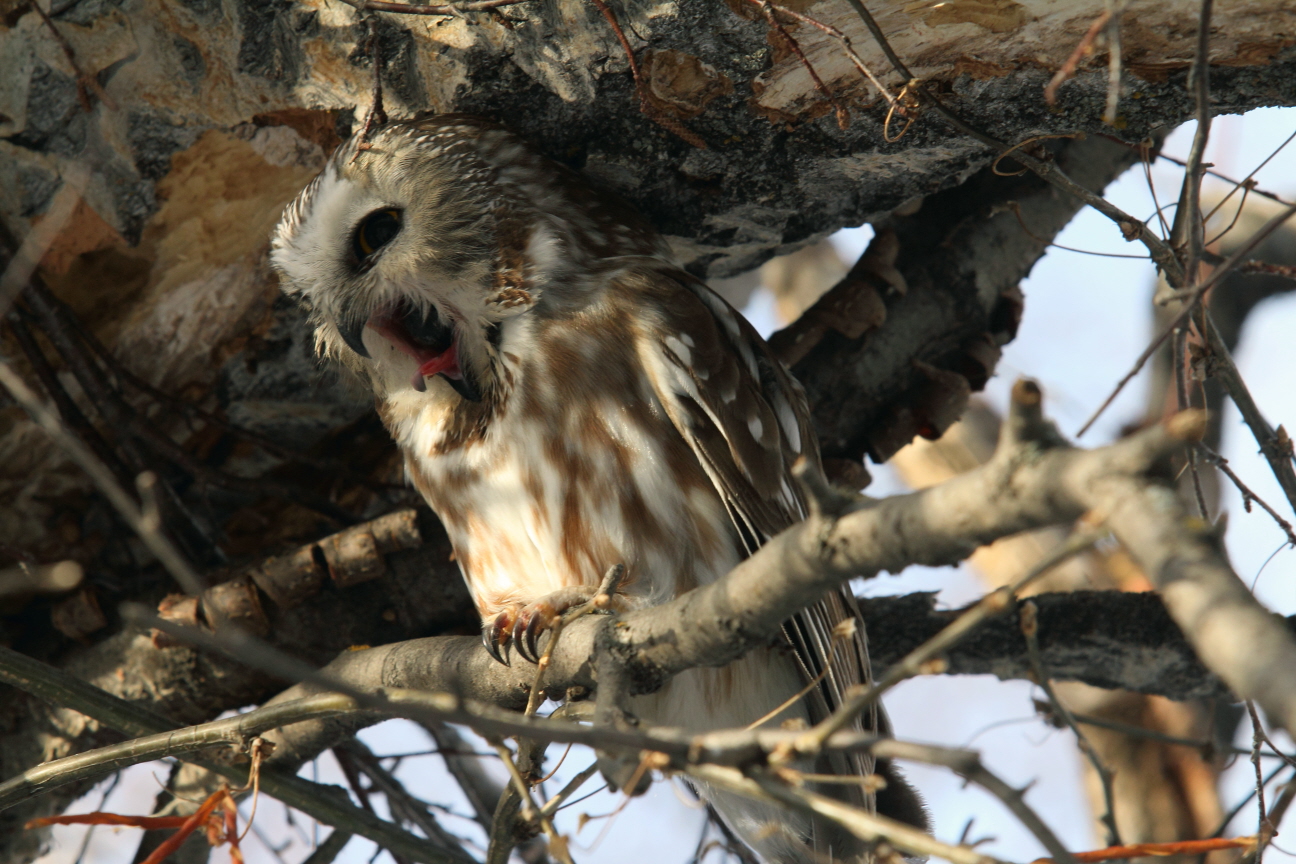
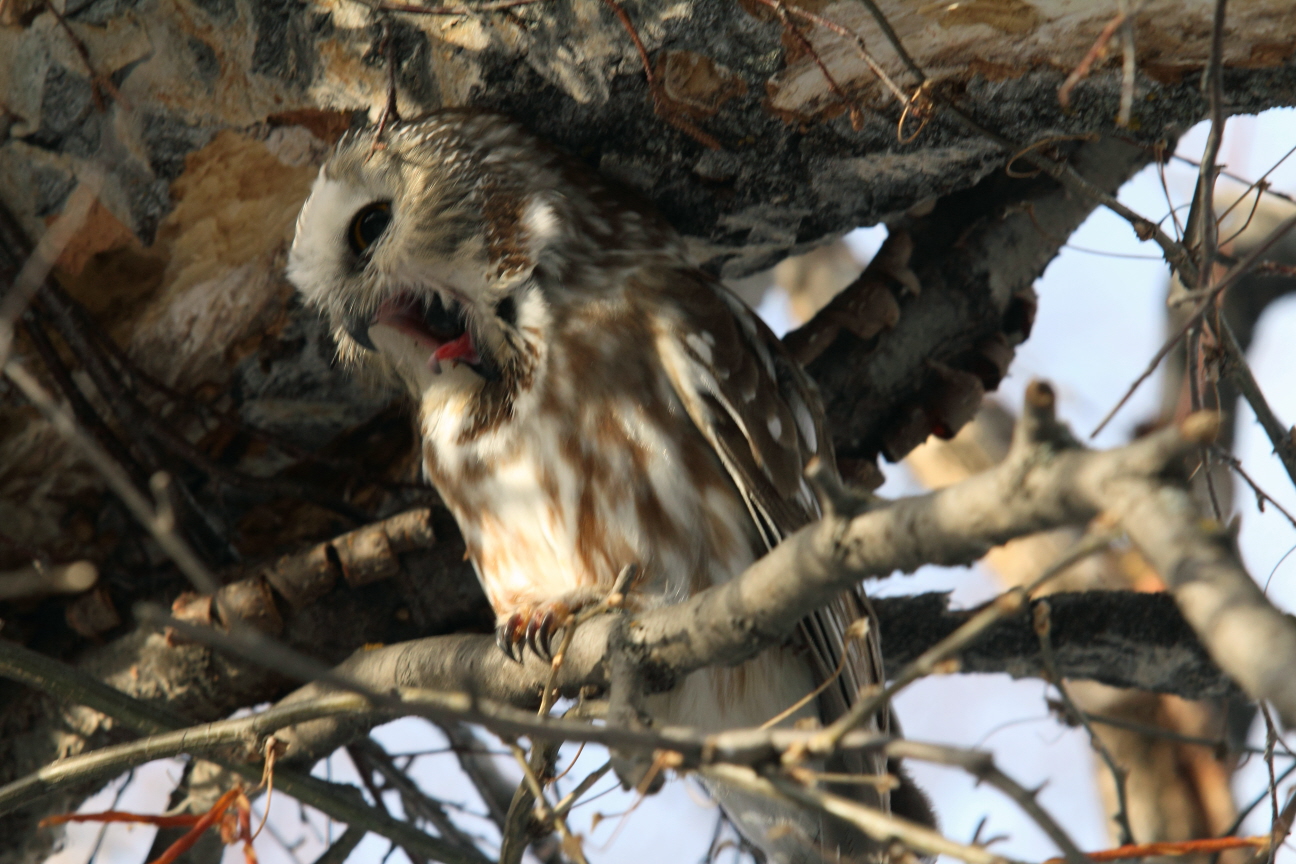
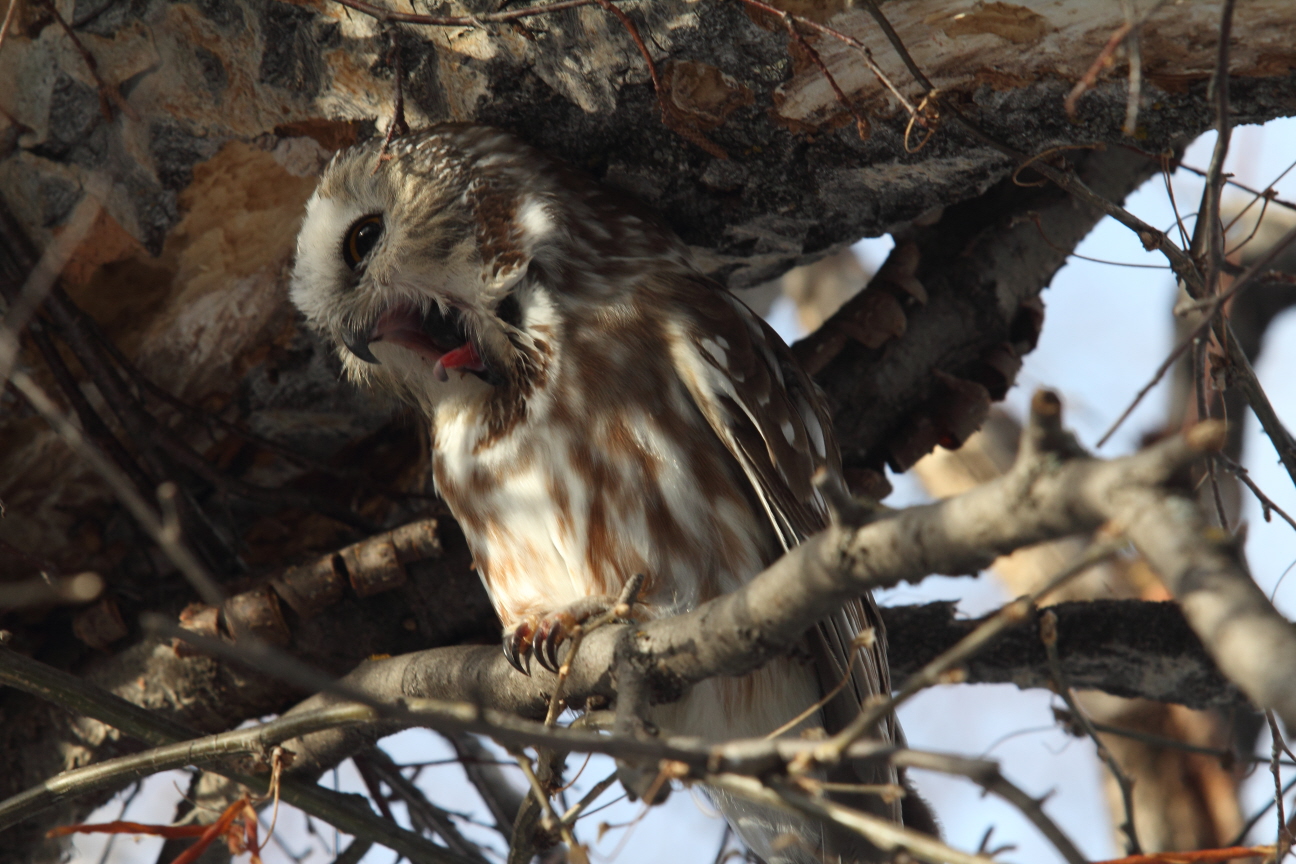
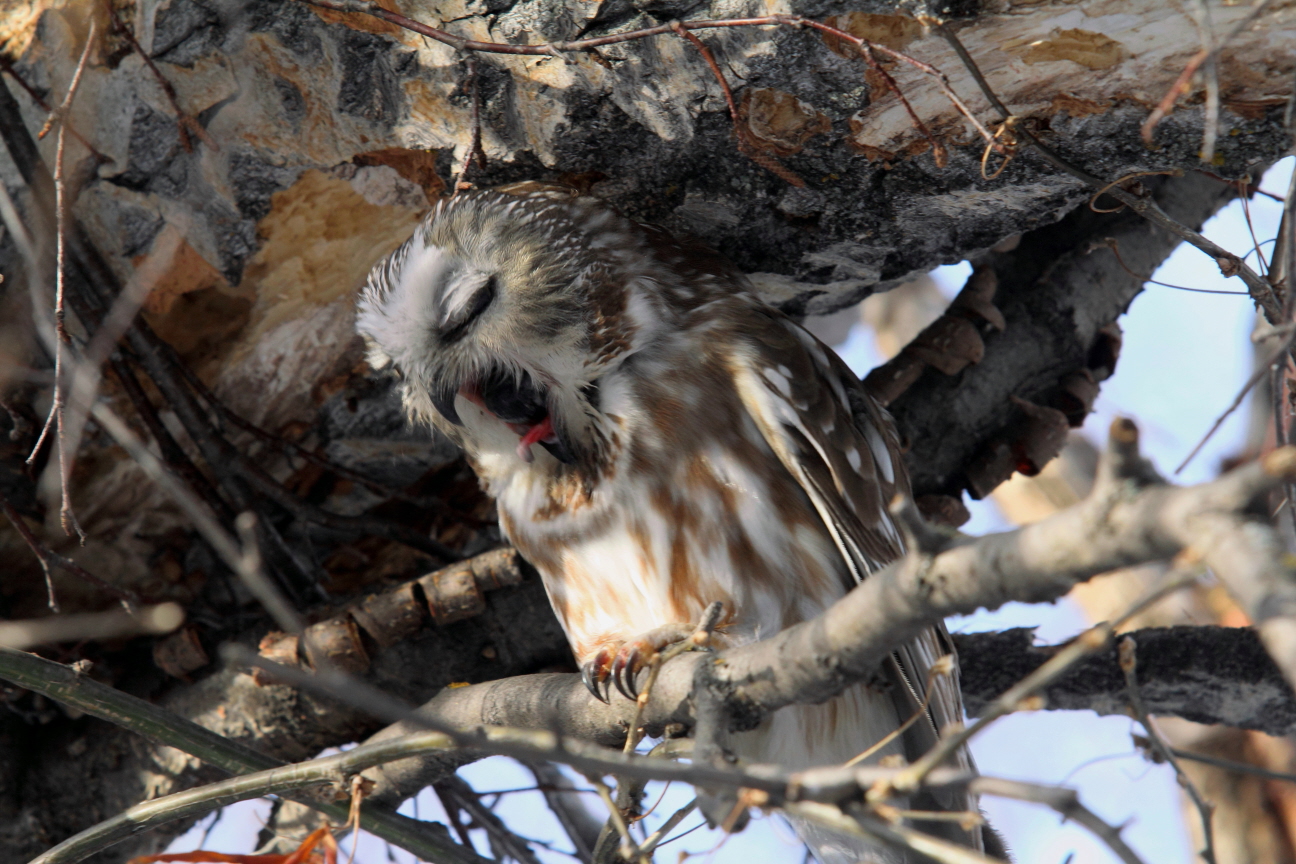
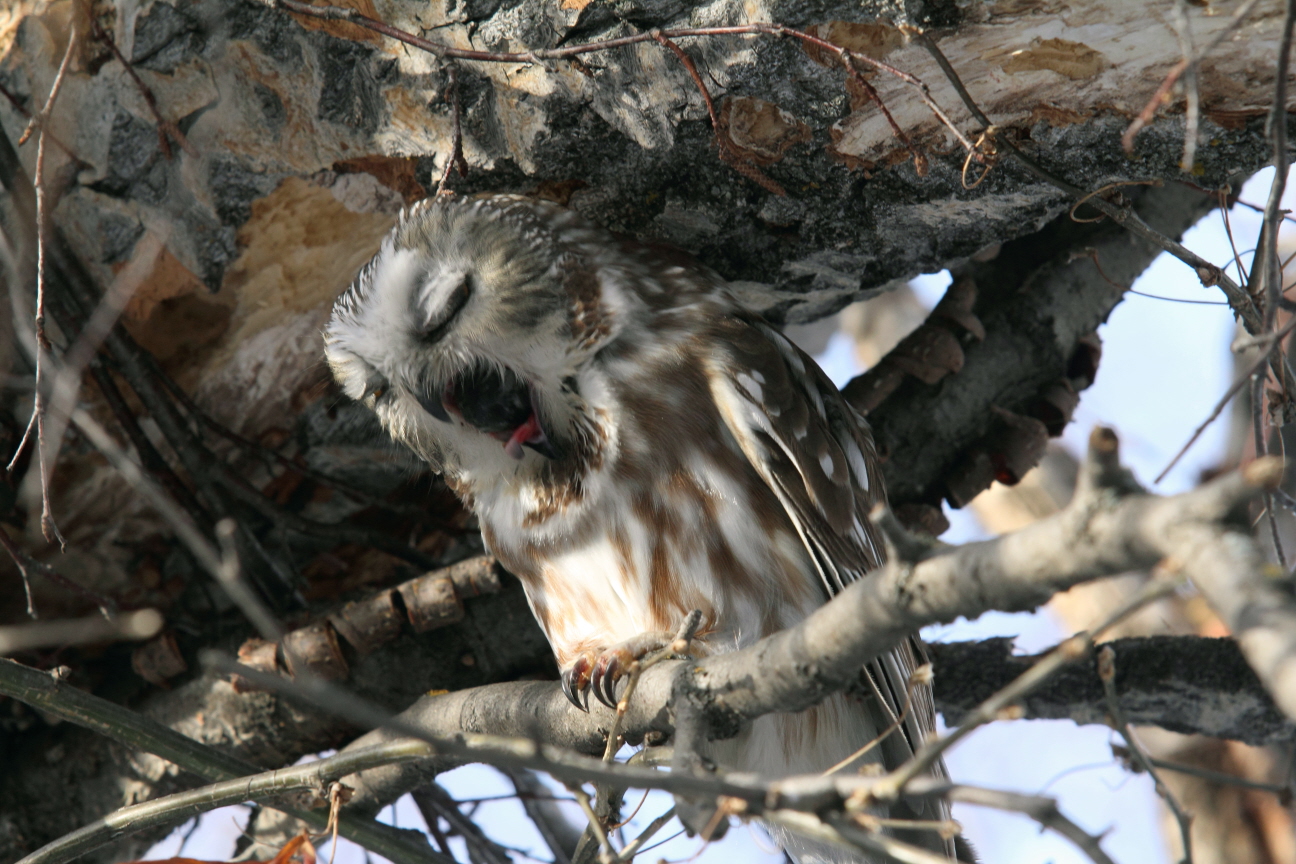
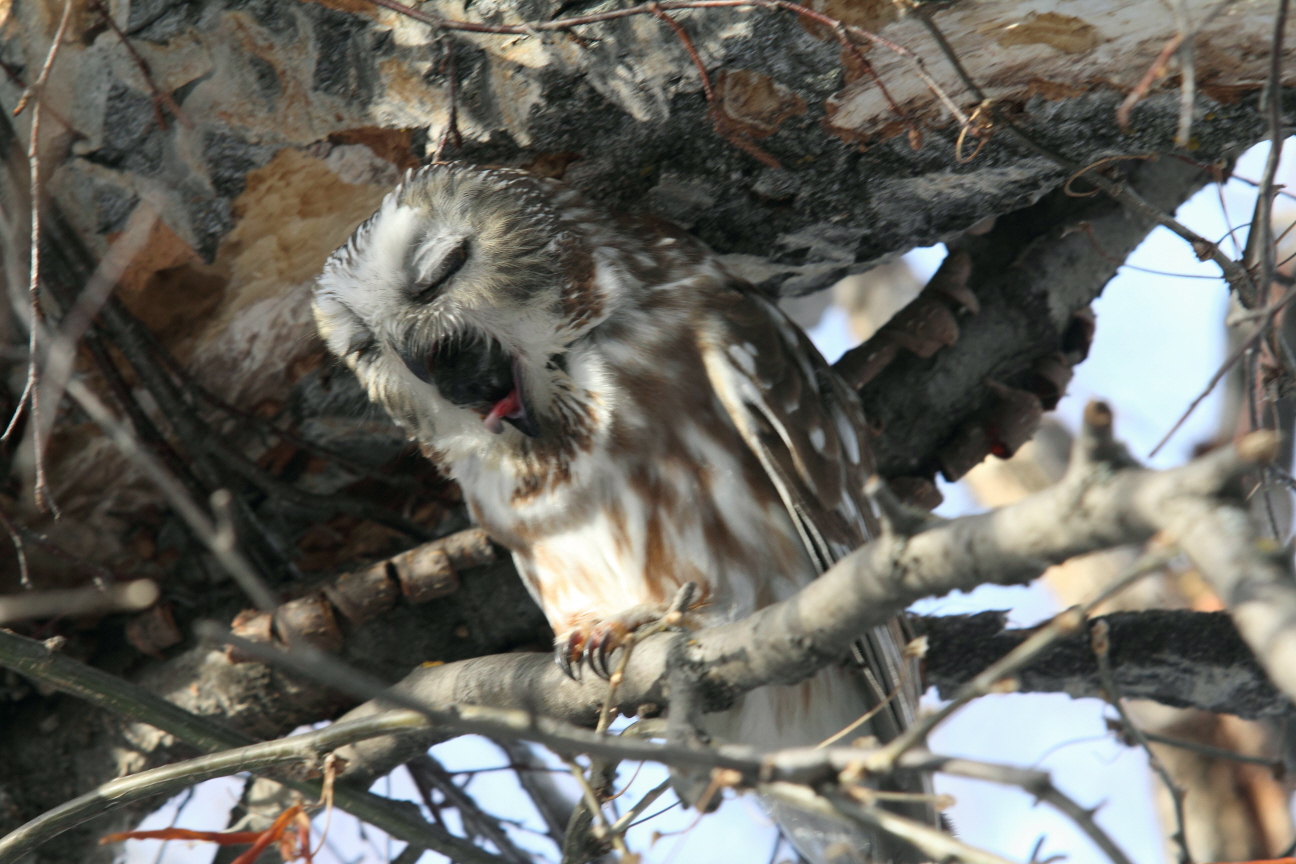
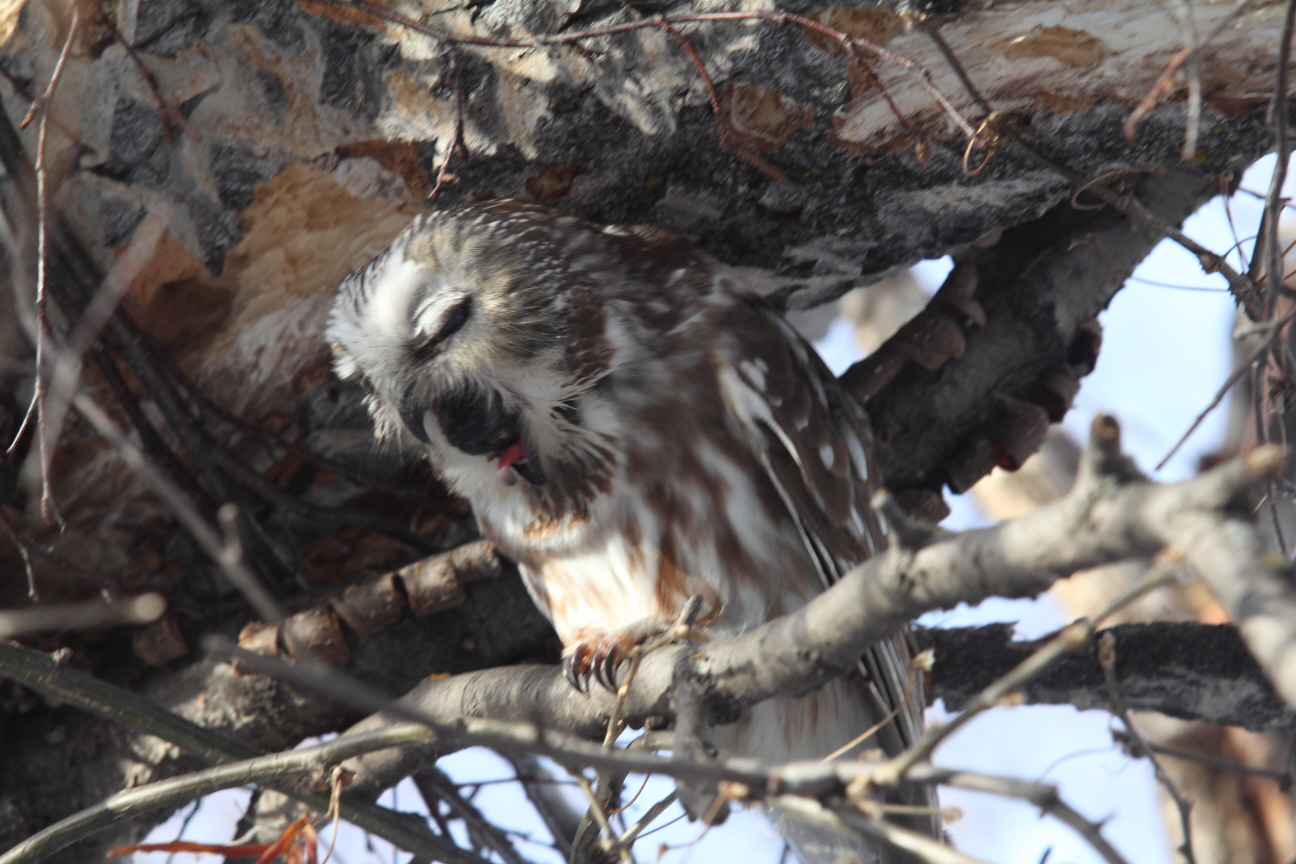
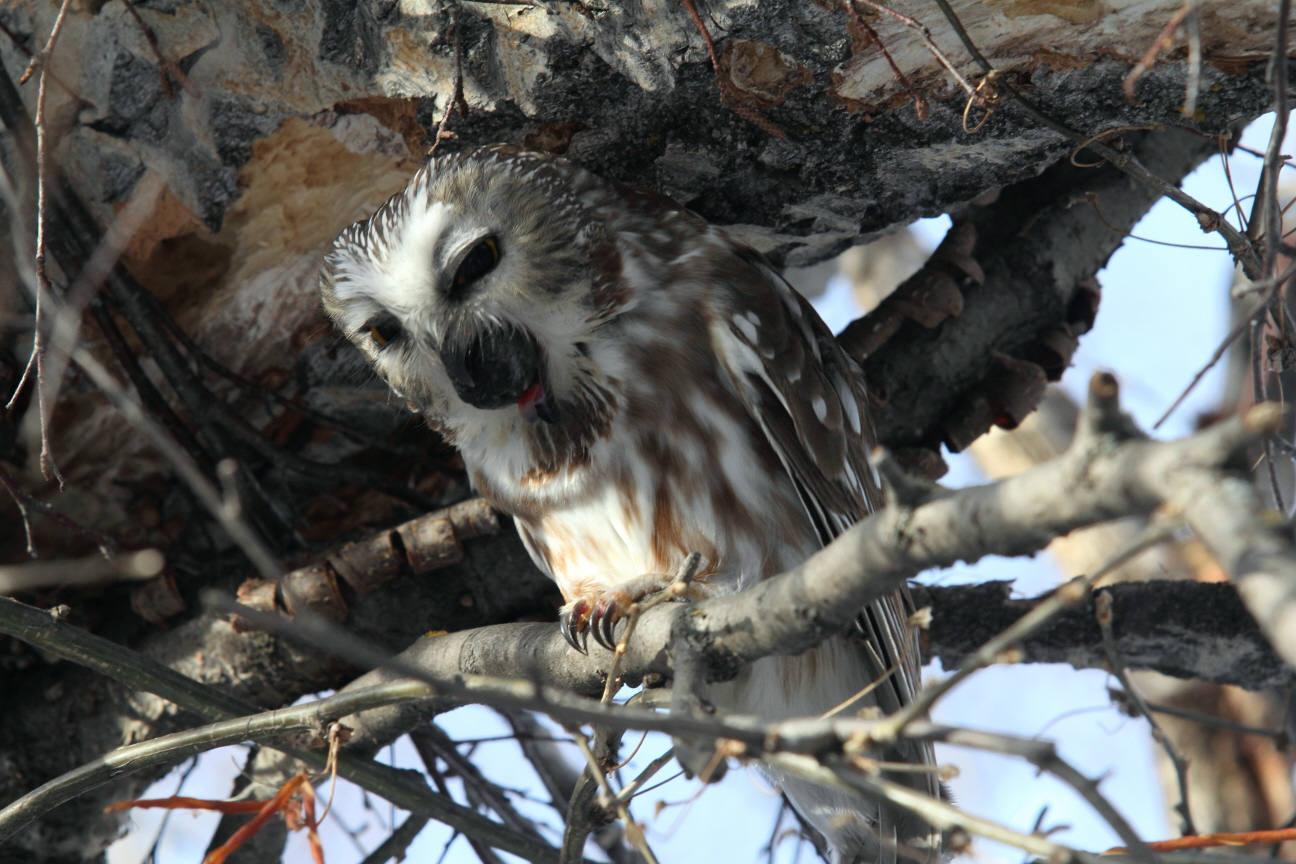
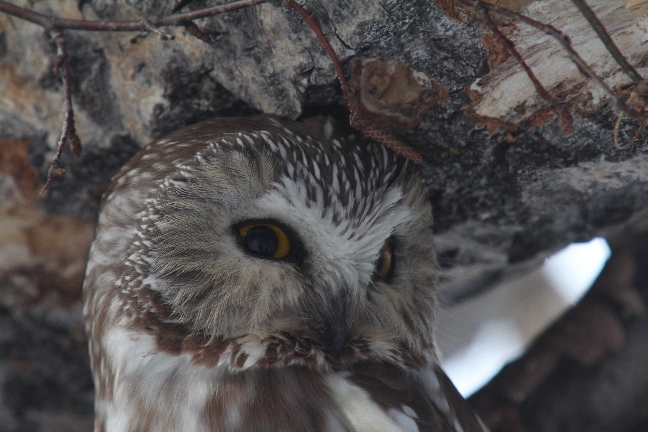
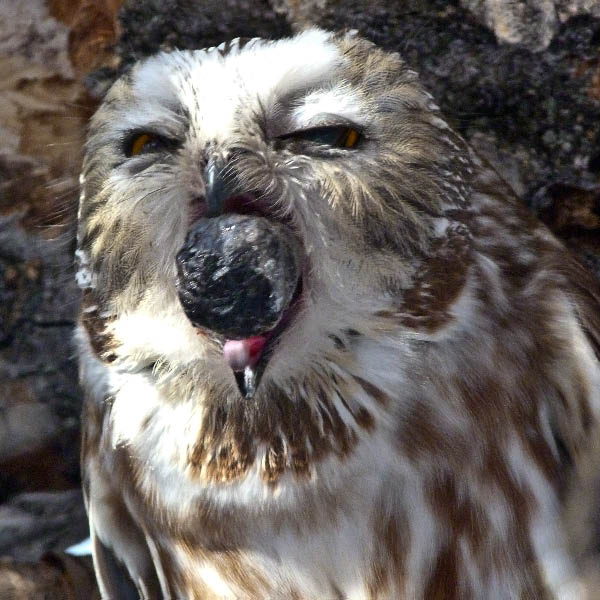
By now most birders in Calgary have heard about the Northern Saw-whet Owl that was found in Carburn Park last Thursday.  Phil Smith was there when it was found, and he captured an amazing sequence of pictures that show the owl coughing up a pellet.

Owls and many other birds regularly regurgitate pellets, which consist of the indigestible parts of the food they eat.  Saw-whet owls eat a lot of Deer Mice, and their pellets contain mostly bones and fur.

Although these owls are thought to produce one pellet per day, it is a rare sight to see, and even rarer to photograph.   The pictures have been assembled into a short video.

.

Below is the complete sequence of photos showing the owl coughing up the pellet.  (Photos by Phil Smith, used by permission.)

To see more of Phil Smith’s photos, see his Flickr Page.

Anne Elliott also captured a photo of the pellet being produced:

To see more of Anne Elliott’s photos, see her Flickr Page.

Birds Calgary 2010 Competition Pages In New Location

This blog was started in 2009 as a forum for keeping competitors informed about the Birds Calgary 2010 competition.  After the competition ended we kept the blog going, and it has evolved into a general birding resource for Calgary and area birders.  The information from the competition was still here,  under the “2010 Bird Comp” page at the top of the blog.  Now, as we approach the allowable size limits for this blog, and with lots of ideas for important new pages, we have decided to create a new blog to house all the information from the competition.

The new blog can be found at “2010 Birding Competition” and there is also a link to it under the “Blogroll” heading on our home page.  It won’t be an active blog with new posts but all the competition pages are there.  The 2010 pages on this blog will be removed in a few days.

Not only does this free up a lot of space here, but the competition pages display better and are easier to navigate in their new home.  Check out all the stats and the great photos, and if you were a participant, relive the competition!  Only eight more years and we can do it again.

Active feeding!

While I was in Calgary over the holidays I took some photographs of feeding nuthatches and I thought I would share them with you so as to illustrate some of the effort that these little guys put into this common daily activity!

Cornell Lab of Ornithology describes the way nuthatches feed perfectly, ” an intense ball of energy “, is exactly what they are!

When they start hacking away, usually their legs are the only part of their bodies not moving!


Posted by Matthew Sim


Another Sharp-shinned Hawk

Recently both Pat and Dan have posted about Sharp-shinned Hawks in their yard.  Now it’s my turn.  Last week we had our first ever accipiter in our SE Calgary yard, a juvenile Sharp-shinned Hawk that stopped here briefly.

It took me a while to figure out whether it was a Sharp-shinned or Cooper’s Hawk, but it actually is almost identical to the one Pat posted about here and here, and which was identified as a juvenile Sharp-shinned.  The bird that Dan saw was an adult, and you can read about it here.

The hawk was followed by about forty Black-billed Magpies, but they didn’t mob it.  While it sat on our fence, they just kept their distance in a nearby poplar.  But when the hawk left, they followed.

About twenty of the magpies that were following the hawk.

Unlike Dan’s hawk, my bird didn’t take any of the hundred or so small birds that were around my feeders at the time.  It just rested on the fence for three or four minutes, then flew off, and I haven’t seen it again.

Gus Yaki saw these pictures and said that he believes he has seen this same individual several times this autumn and winter in Fish Creek Park and along the Bow River.  It is distinctive because of the prominent white tips to the back feathers, which is unusual in this species.

A view of the bird’s back, showing large white areas on the feather tips.

It was certainly exciting to see this bird, even if it was only for a few minutes, and it’s one more species for the yard list.

Posted by Bob Lefebvre

Postcards from Texas: Vultures

When large metropolis’ coincide with wildlife and nature, there is invariably accidents. These accidents usually end up with nature coming out on the losing end. Nature sometimes benefits as well though. Sometimes, nature can adapt to the hustle and bustle of human living and actually benefit and thrive from this. Such is the way with vultures.

The other day, I was walking along a bayou here in Houston when I spotted a black clump in the grass not too far ahead.

This clump was a group of black vultures, 6 in total, with 9 more hanging around in the surrounding area. This meant that they must have found a dead animal and that they were feasting on it. This animal was roadkill, an unfortunate victim of our hustling and bustling. As mentioned before though, some creatures, such as vultures, benefit from this. The black vultures didn’t stick around very long and as soon as they saw me they flew away.

The black vulture does not have as good scent as the Turkey Vulture and tends, therefore, to follow Turkey vultures to carcasses where they proceed to drive the Turkey Vultures away from the meal. As soon as the Black Vultures saw me and flew away, the Turkey Vultures came in for their share.

When they came in, I started to creep closer and closer, not only for a better look, but also out of curiosity of what roadkill they were eating. While I moved somewhat stealthily closer, one vulture unfurled it’s wings and gave me good looks at it’s impressive 1.8 meter wingspan.

That wingspan is roughly 5 feet, 11 inches, which is well over half a foot taller than I am! I continued to crawl in closer until I was incredibly close.

I then found out what it was the vultures were eating…

And it was…

An opossum, as you might be able to tell by the foot in this photo. I feel bad for the poor guy… Some interesting bird behavior to see though, especially the hierarchy of vultures, where Black Vultures are not as skilled but are instead big bullies, chasing away Turkey Vultures from the food that the latter found.  I also took a photo in which I really saw why Turkey Vultures are called what they are

Doesn’t he just look like a turkey!?!


Posted by Matthew Sim

My not-so-Common Redpolls

This topic has come up a lot this winter; all the wintering finches here this year. I am going to add on to this topic once again.

My yard in southeast Calgary has gathered a fairly respectable list; about 90 species of birds have visited it in the last 10 years. The Common Redpoll is on this list, having been seen in my yard once in 2009 for all of about 10 seconds. For whatever reason, my community is not favored by redpolls. This year, though, they were everywhere, including my yard.

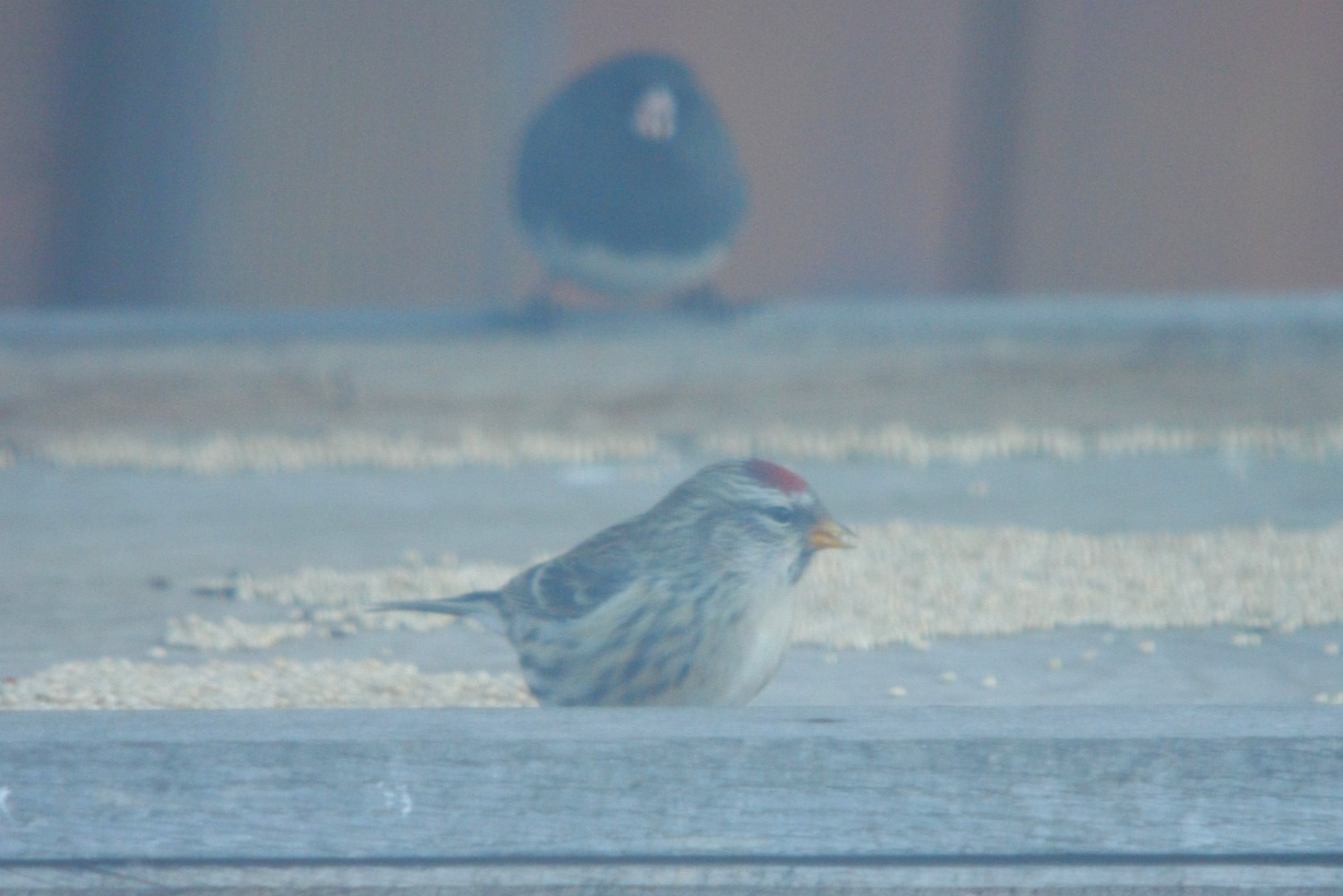
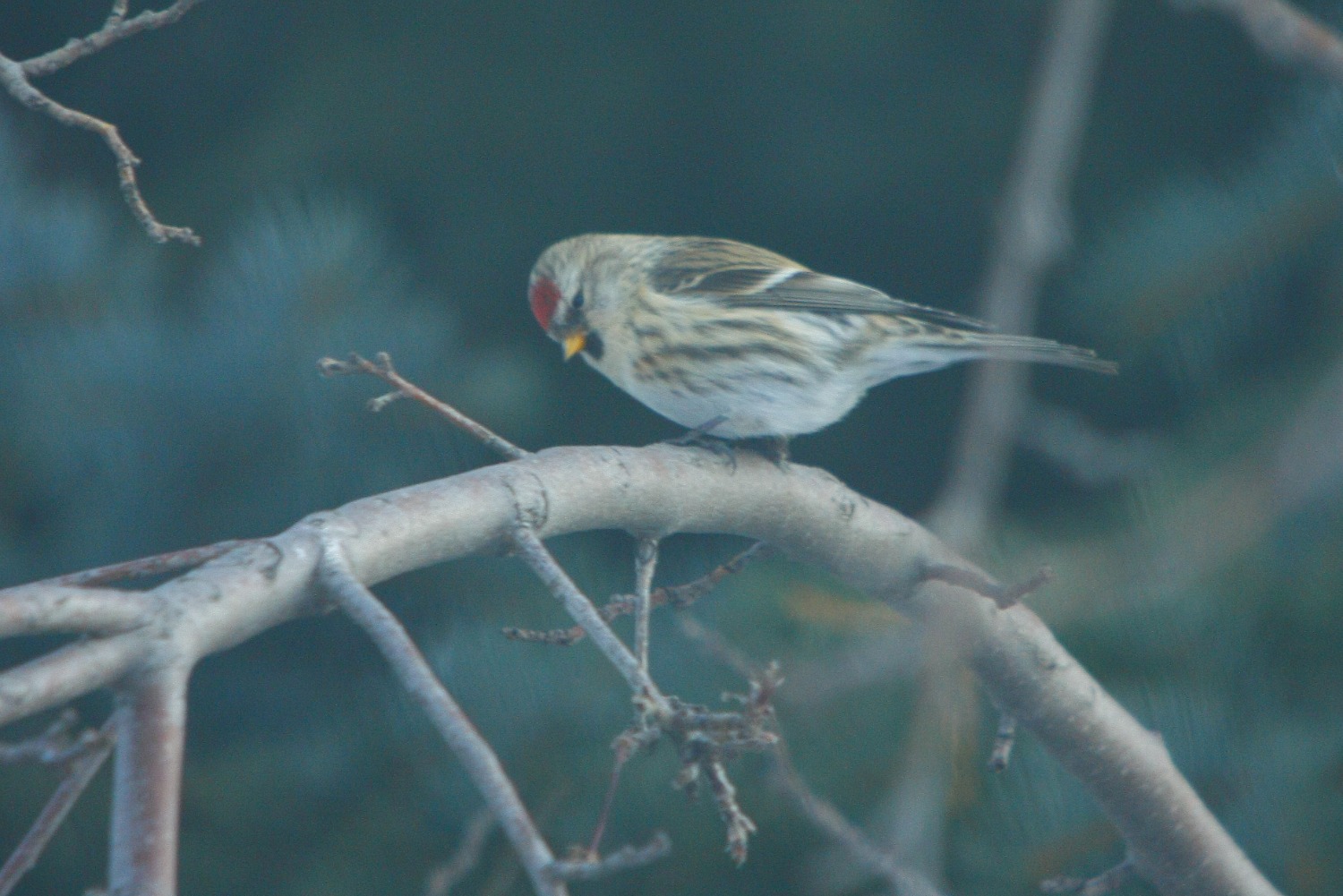
On December 23, I had a redpoll in my yard for almost half an hour. And not only was it in my yard, but it visited my feeders as well.

We have been seeing so many finches this winter likely because it is an irruption year; a year when food sources (such as catkins and cone crops for finches and lemmings for Snowy Owls) are hard come by on these birds’ normal wintering grounds.

It’s neat for me to be able to see birds I don’t usually see in my backyard, such as the not-so-Common ( in my neighborhood) Redpoll.

Posted by Matthew Sim

A Canada Big Year

Four Calgary birders – Ray Woods, Brian Elder, Mike Mulligan and Phil Cram – are planning to do a Canada-wide Big Year in 2012.  A Big Year is an attempt to see or hear as many species of birds (and mammals in this case) as possible in a calendar year, in a specific geographic area.  Our four local birders are going to confine their activities to Canada, but they intend to see as much of Canada as possible, travelling to all the provinces and territories.

Their goal is to get 500 birds and mammals combined, and of course each of them has individual goals as well about extending their life lists or Canada lists, or seeing particular species.

They have started a blog to track their progress, and it’s going to be fascinating to watch their quest unfold.  They will begin here in Calgary on New Year’s Day with the Fish Creek Park bird count.

Northern Pygmy-Owl, one of the birds they hope see in the                             Calgary area in early January.             

There are already some posts on their blog giving details of their plans and itinerary.  Check it out at Fur & Feathers 500 – it will definitely be a blog worth following in the coming year.

Posted by Bob Lefebvre

Wednesday Wings: Varied Thrush

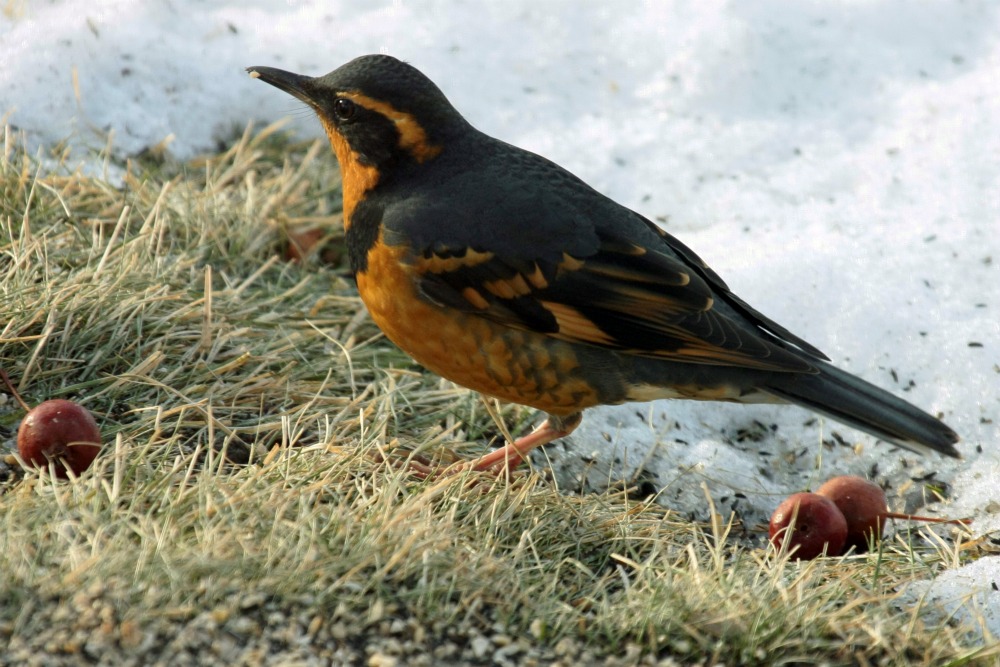
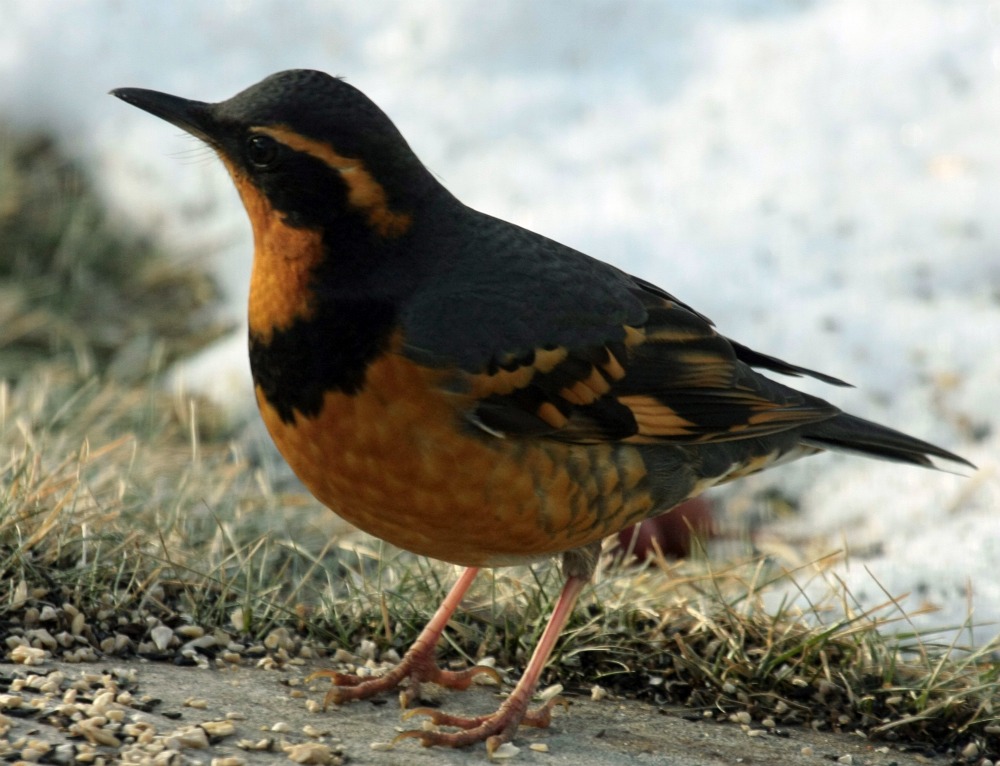
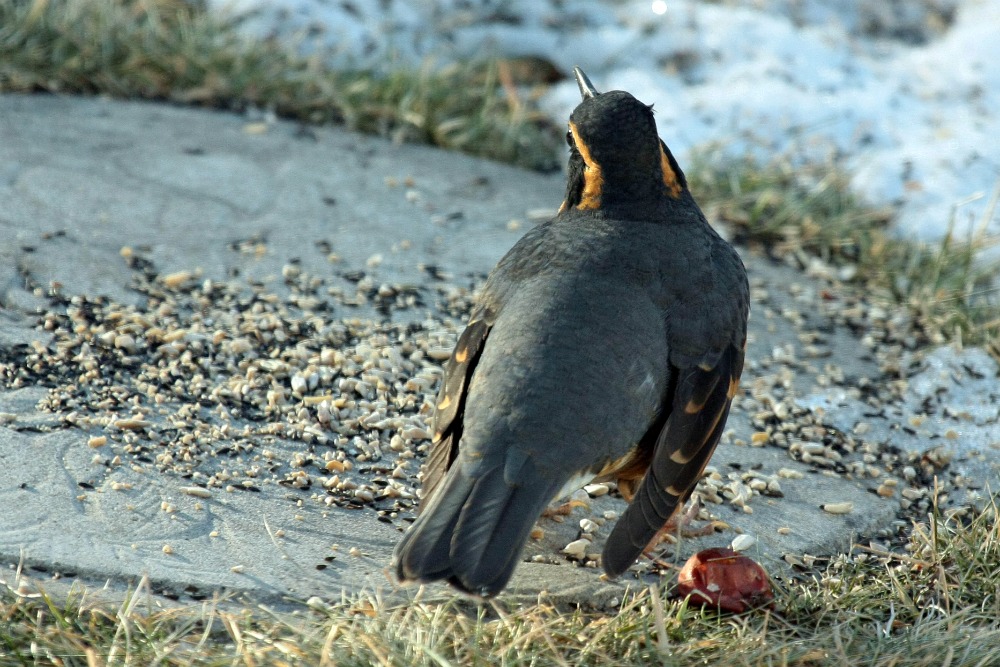
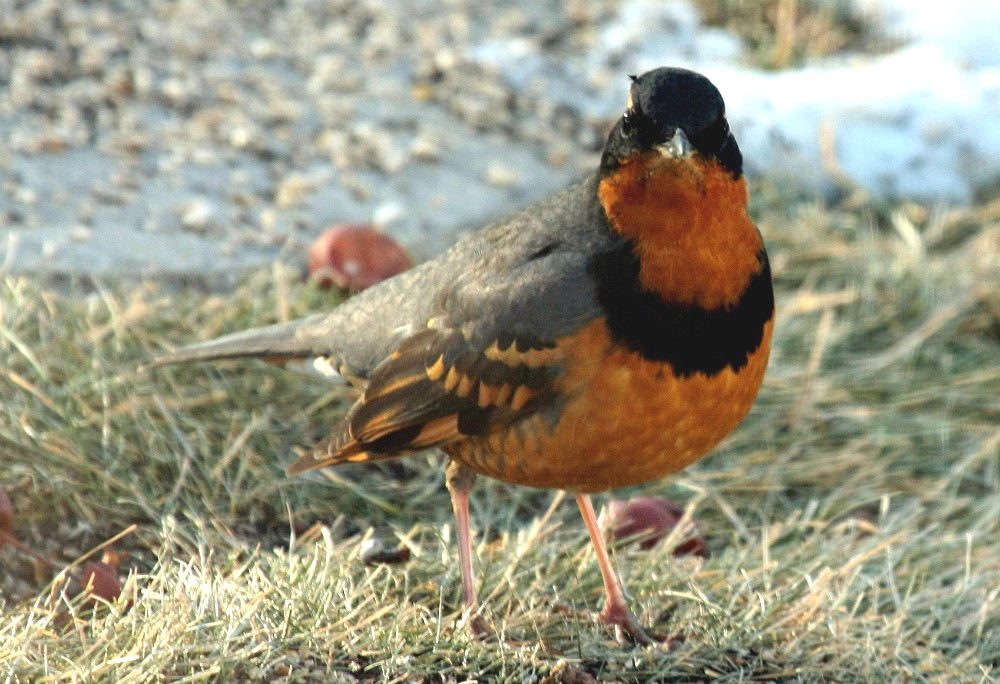
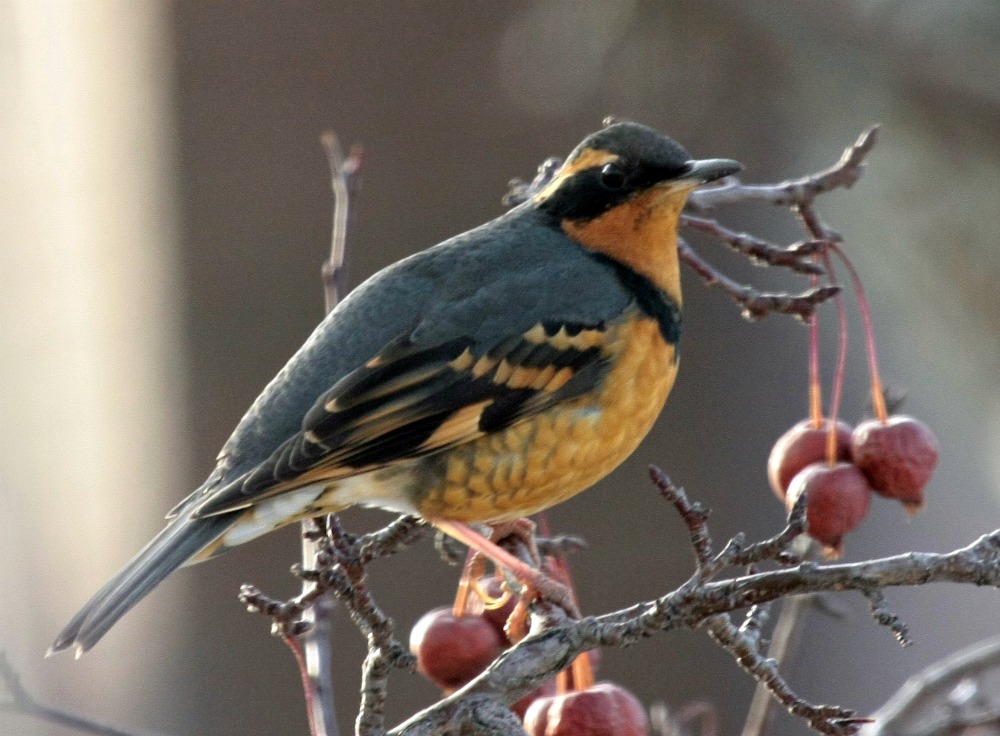
On of my favourite Christmas presents this year was an adult male Varied Thrush that arrived in our front yard on Christmas Day, just as we were opening our gifts.

When it first flew across our front yard, I thought it was a robin, a bird it is closely related to.  I saw a robin in the neighbourhood as recently as December 17.  But the male Varied Thrush has unmistakable orange and black markings.

These beautiful birds are not too common in Calgary, with just a few reports every year on migration, and the occasional one overwintering here.  This one appears to be trying to overwinter in our neighbourhood, as it has now been seen feeding in our yard for three straight days.  This is the first time we’ve had one in our yard, and only the second one I’ve seen in Calgary.  We didn’t have one reported on the recent Christmas Bird Count, so I wonder where this bird was then?

Here is a video of the Varied Thrush feeding on niger and sunflower seed.

Posted by Bob Lefebvre

Christmas Bird Count in East Calgary

It’s been a busy week, but now I finally have time to post about my Christmas Bird Count experience.  This year I was assigned to cover route E8 with Andrew Hart.  This area is a narrow strip along the eastern edge of the count circle, bordering 84 Street at the extreme east edge of the circle, and reaching to McKnight Boulevard in the NE and Shepard Road in the SE.  It is an area that requires a lot of driving, scanning the open areas for raptors.  We had high hopes of finding a Prairie Falcon, or perhaps even a Snowy Owl.

The only open water is in the northeast corner of Elliston Lake, but this can harbour a lot of waterfowl at times.  We went there twice, and unfortunately there were very few birds on the water.  We did find four Hooded Mergansers, which were only reported on one other route, and also the only Lesser Scaup of the day.  Other than that, there were only Mallards, Canada Geese, and Common Goldeneyes.

Although we failed to find a Snowy Owl or a Prairie Falcon, we did find three Rough-legged Hawks on the day, two of which I managed to photograph.  Here is one with typical markings.


The other one, pictured perched below, had much darker underwings when it flew (which I failed to photograph).

The highlight as far as raptors went was a Northern Harrier, which was the only one reported on the count.  We didn’t get a picture, but after it flew, we saw something else in the shrubs along 50 Avenue and 68 Street SE, so we got out to investigate.  We flushed ten Ring-necked Pheasants out of the ditch, 7 males and 3 females or immatures.  Then we noticed that there were flocks of small birds all along the shrubs there, which proved to be upwards of 200 Common Redpolls (we tried to find a Hoary Redpoll among them, but no luck).

Common Redpoll (photo by Andrew Hart).

When we were checking out the redpolls, one bird stood out as much larger than the rest.  It was clearly a sparrow of some kind, but with the sun behind it we couldn’t initially see the colours or markings very well, and we weren’t sure what it was.  We lost track of it for a while, and I went around to the other side of the bushes.  We found three American Tree Sparrows among the redpolls, and although that wasn’t what our mystery sparrow was, they were good birds for the count, since only six were reported altogether, an unusually low number.

American Tree Sparrow (photo by Andrew Hart).

Finally the large sparrow reappeared, and with sun behind me I could see it well enough to see that it was a first-year Harris’s Sparrow.  These aren’t common here at any time, and only two were seen on count day.

Harris’s Sparrow (photo by Andrew Hart).

Harris’s Sparrow (photo by Andrew Hart).

Also nearby, on 51 Avenue near 68 Street, we saw a dozen Gray Partridges.  I got a poor photo of one.

We spent some time checking out the residential areas in the northeast, where we turned up a few new species.  The highlight was a pair of American Crows.  Terry Koryluk, who usually covers this route but was unable to this year, told us that there were two hanging out near Lester B. Pearson High School on 52 Street.  As soon as we pulled up there, the crows appeared and perched in a tree right in front of us.

We saw a lot of magpies, and the biggest concentration was at this deer carcass.

As for mammals, we saw a dozen (living) Mule Deer in all, and a few Eastern Gray Squirrels, but surprisingly, we saw no Coyotes.

Altogether we recorded 20 species of birds for the day, and although we missed a couple that we hoped to see, we saw a couple of others that were pleasant surprises.  The mild weather and the excellent wind-up at the Flynns’ made it another very enjoyable Christmas Bird Count.

Posted by Bob Lefebvre