Travel Tuesday – Alberta Birds of Prey Foundation, Coaldale, AB

Posted by Dan Arndt


One of my favourite trips in the wonderful book “Day Trips from Calgary” by Bill Corbett, is the magical and amazing Alberta Birds of Prey Foundation, located in Coaldale, Alberta. The drive itself is wonderful and offers plenty of opportunities for birding the dozens of lakes, sloughs, and fields in the two and a half hour trip into southern Alberta, but the grounds of the visitor centre would turn any non-birder into a confirmed bird lover.


You don’t even have to go in to the centre to get your bird fix. Surrounding the visitor centre are a series of ponds and marshes that are home not only to shorebirds, but also to passerines, flycatchers, and even large numbers of waterfowl.

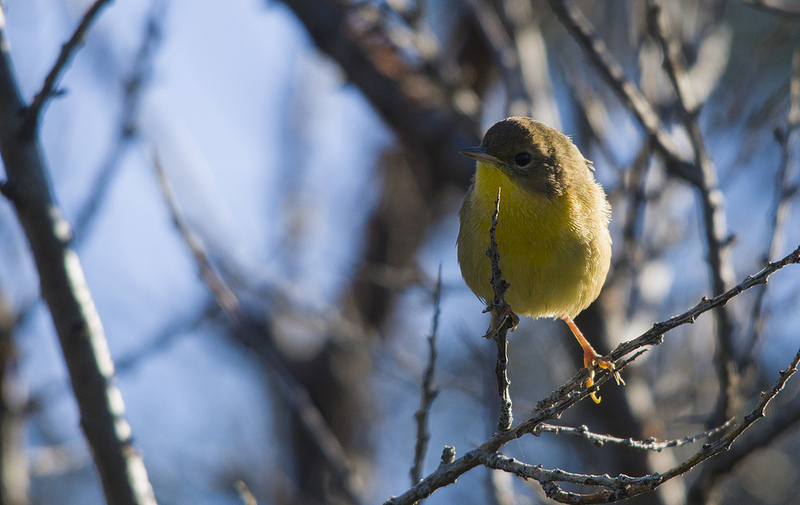
A few of these Common Yellowthroat were seen just outside the visitor centre just before it opened.

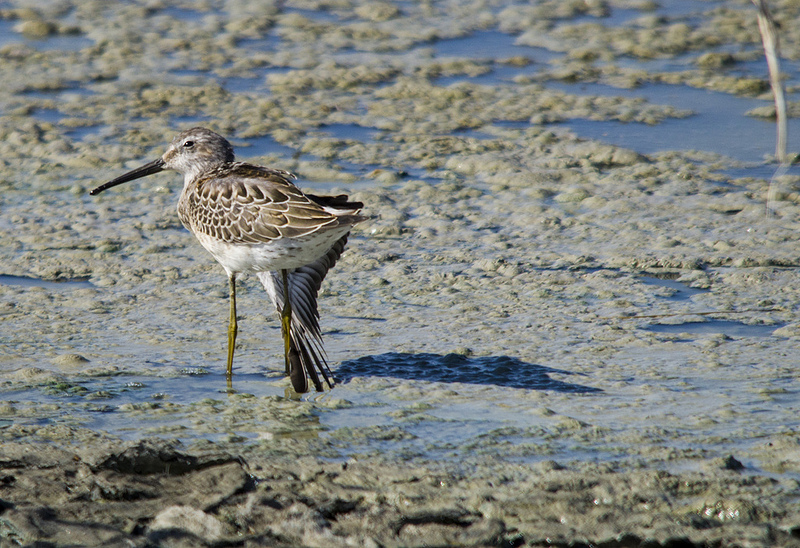
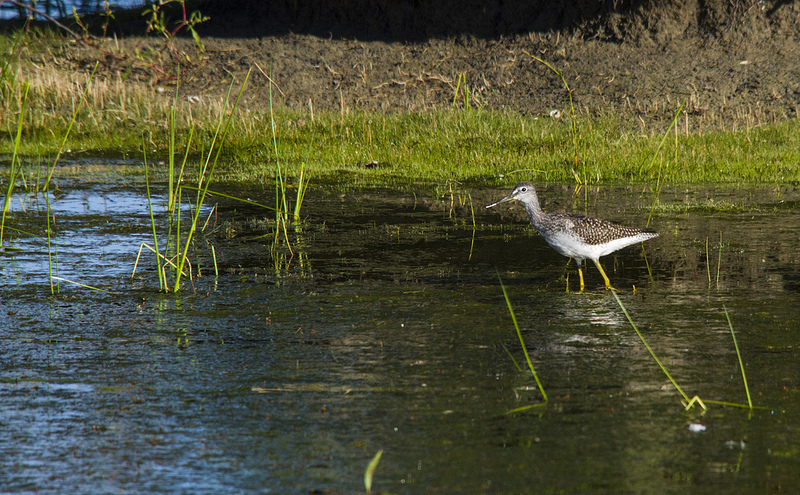
Three or four Greater Yellowlegs were picking food out of the water just west of the visitor centre.

“But neither of these are birds of prey!” I hear you shouting. You’re right, they’re not. So, without further ado, on with the show!

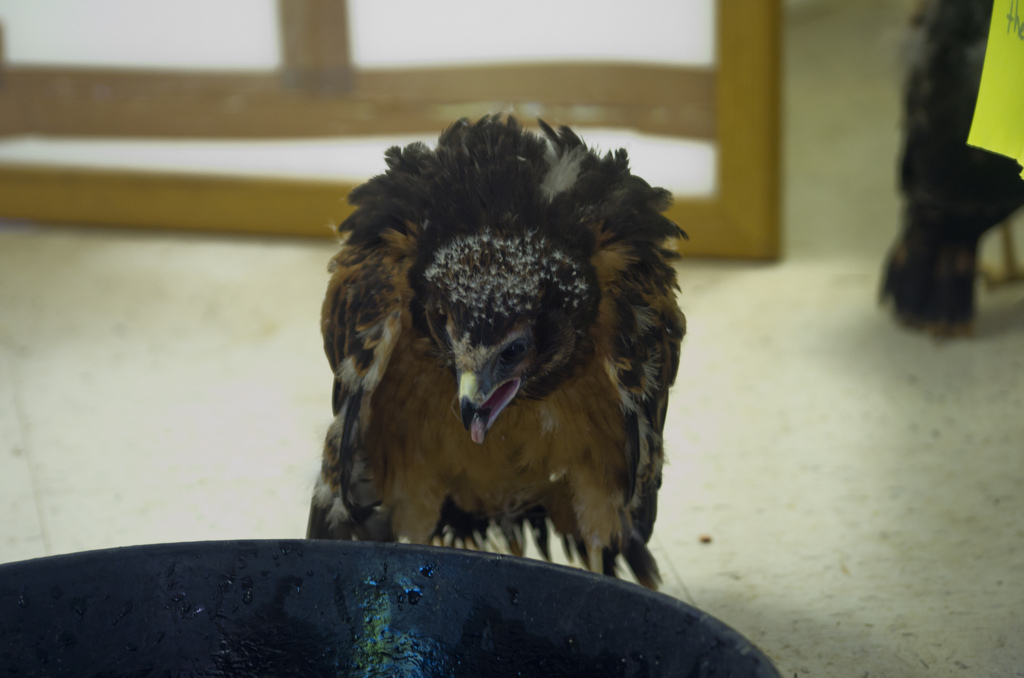
Last year, the visitor centre housed a juvenile Swainson’s Hawk, which was penned near the front desk.

Juvenile Swainson’s Hawk

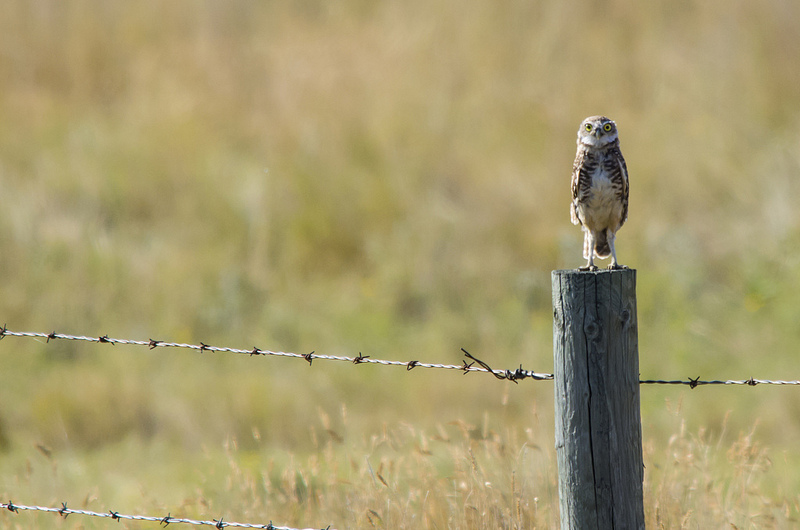
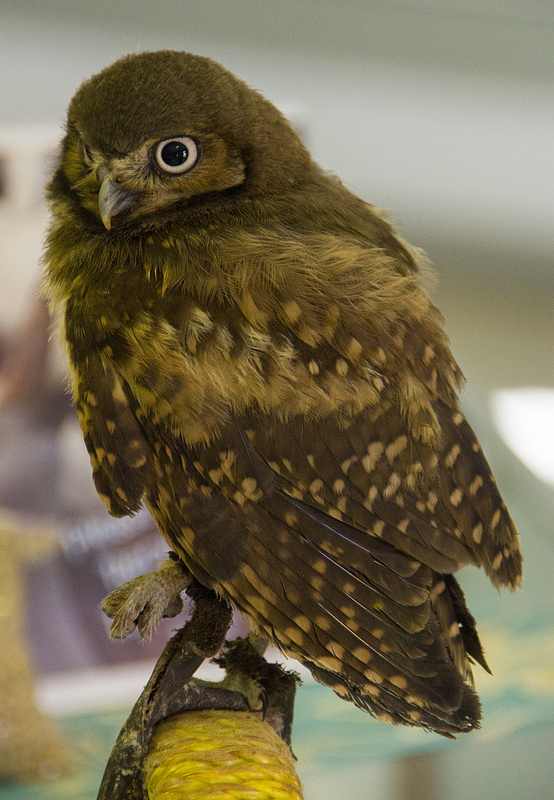
This year though, we were greeted by Basil, the Burrowing Owl, who cooed and huffed, but investigated us with as much curiousity as we had about him.

Basil the Burrowing Owl

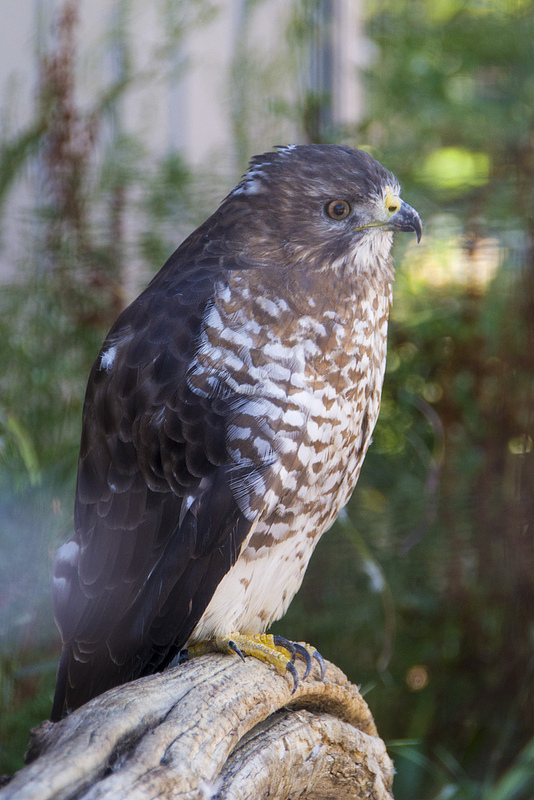
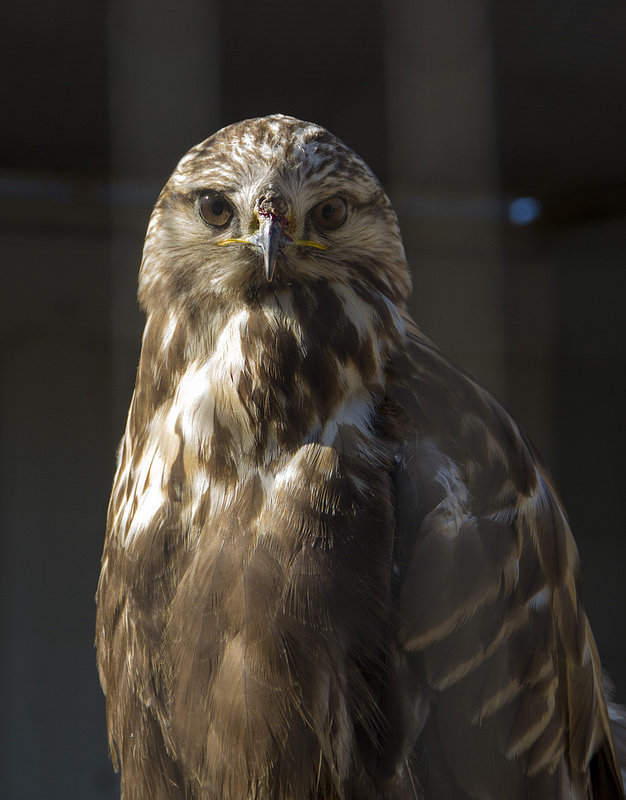
There is a huge portion of the Birds of Prey Foundation that is devoted to rehabilitation of injured or orphaned birds of prey. Some of the current residents are recovering from their injuries, such as the Broad-winged Hawk and the Rough-legged Hawk in their care. Both of these birds are recovering from wing injuries, and will require rehabilitation for quite some time before they can be released back into the wild.

Broad-winged Hawk

Rough-legged Hawk

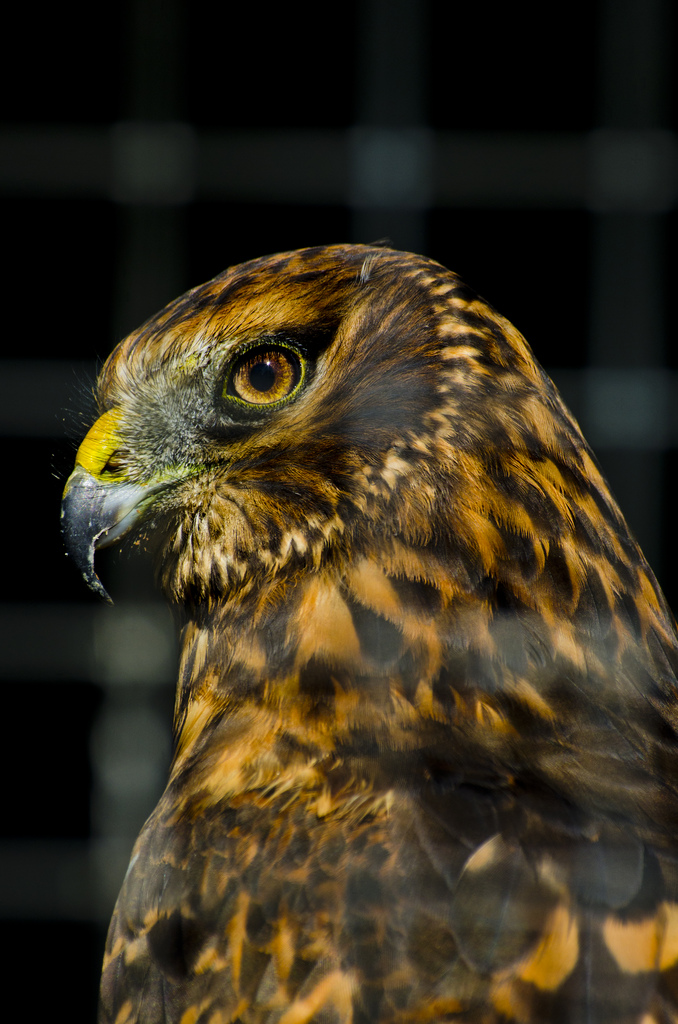
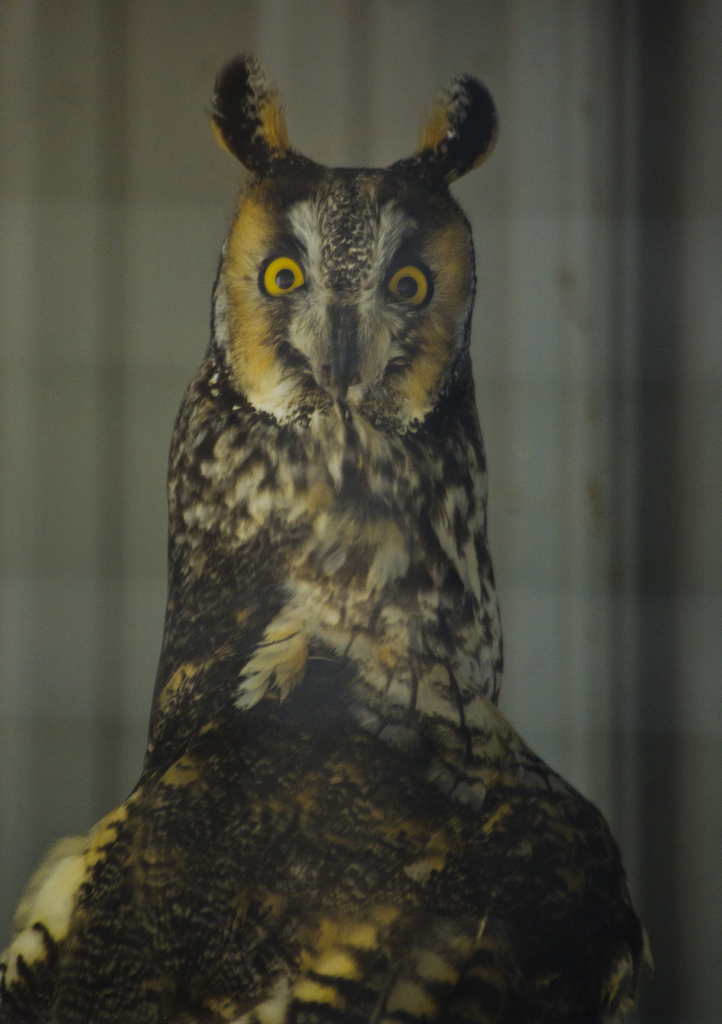
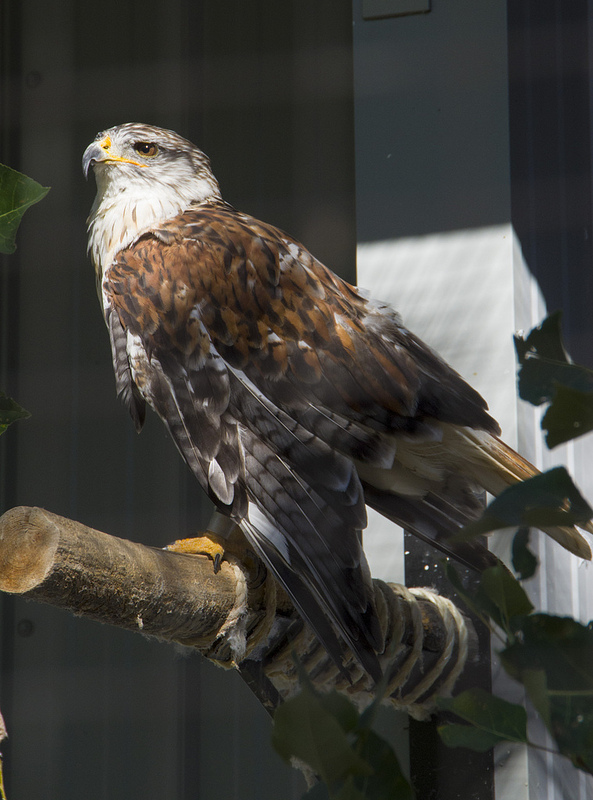
A few others birds on display are of unknown affinity, and I wasn’t able to track any of the volunteers down to ask them for clarification, but they’re beautiful birds nonetheless.

Northern Harrier

Long-eared Owl

Ferruginous Hawk

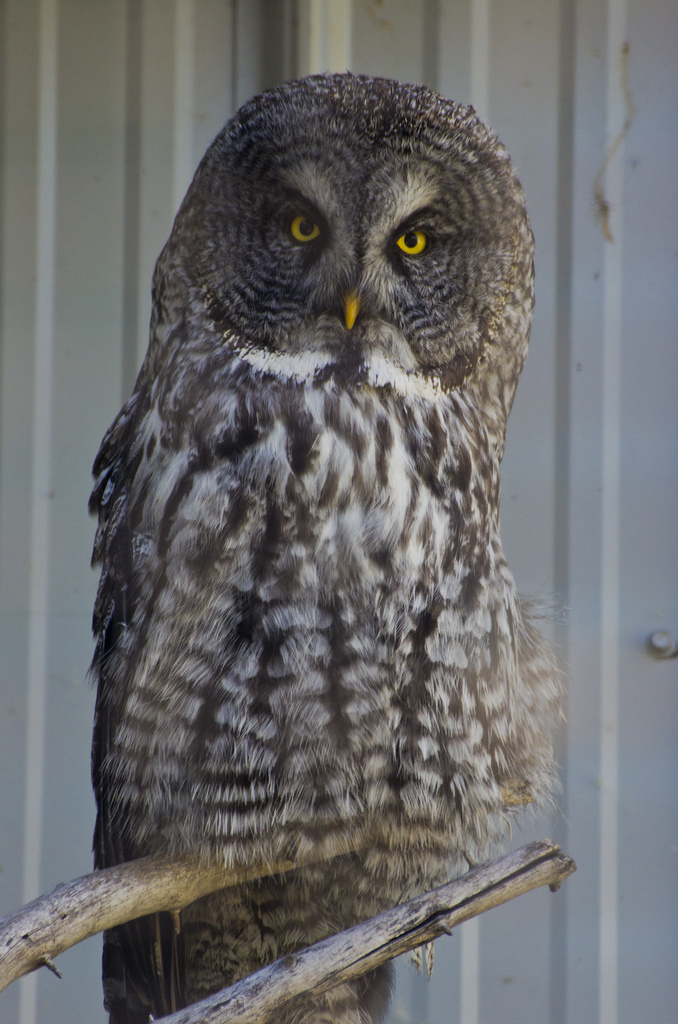
Great Gray Owl

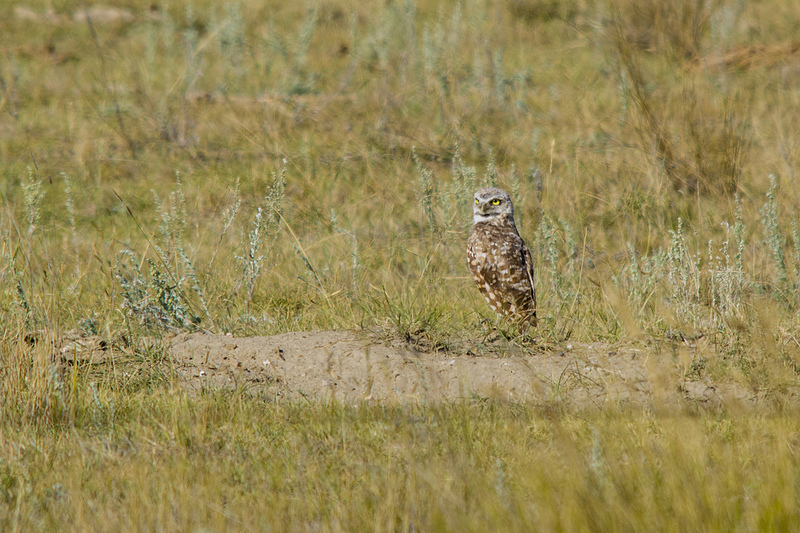
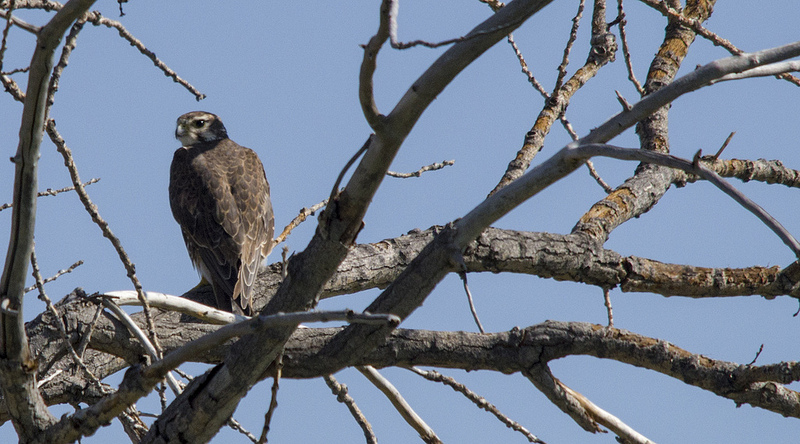
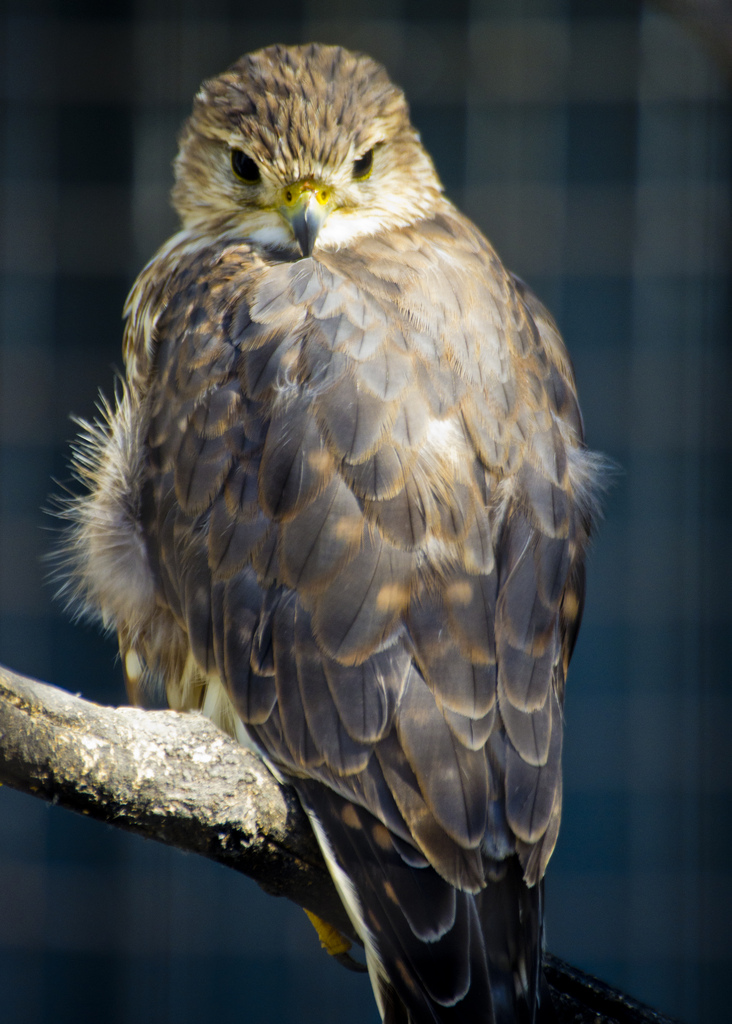
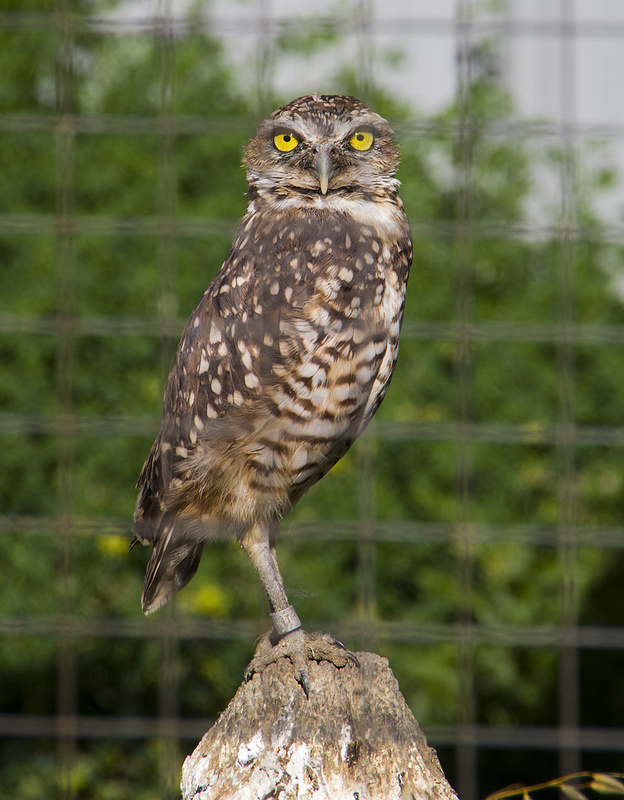
Others are permanent residents of the centre, and are part of breeding programs that are incredibly successful. Both the Merlins and Burrowing Owls are successful parents, and have regularly fledged offspring for quite a few years.

Merlin

Burrowing Owl

Arguably just as important as the rehabilitation, breeding, and even the care of these gorgeous raptors are the educational animals that they keep on hand, (and in some cases, in hand!) for public events, or even just for a private moment or two with visitors to the Birds of Prey Foundation visitors centre.

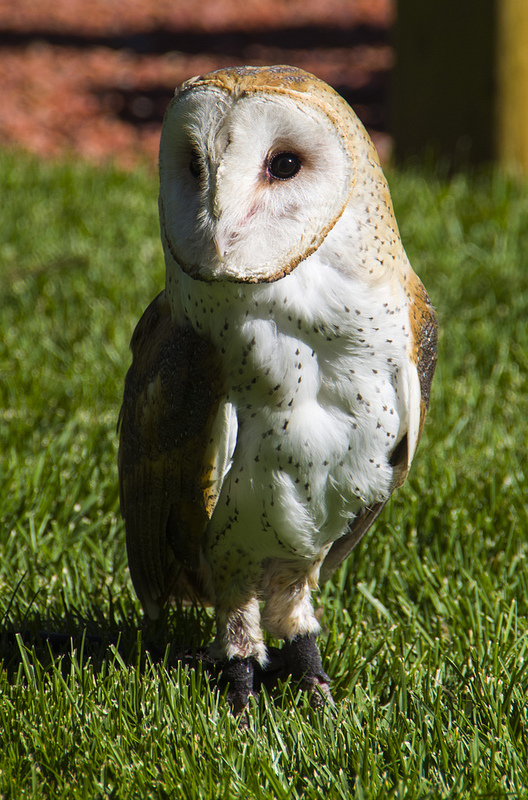
Barn Owl – though not considered “native” to Alberta, they are occasionally reported here.

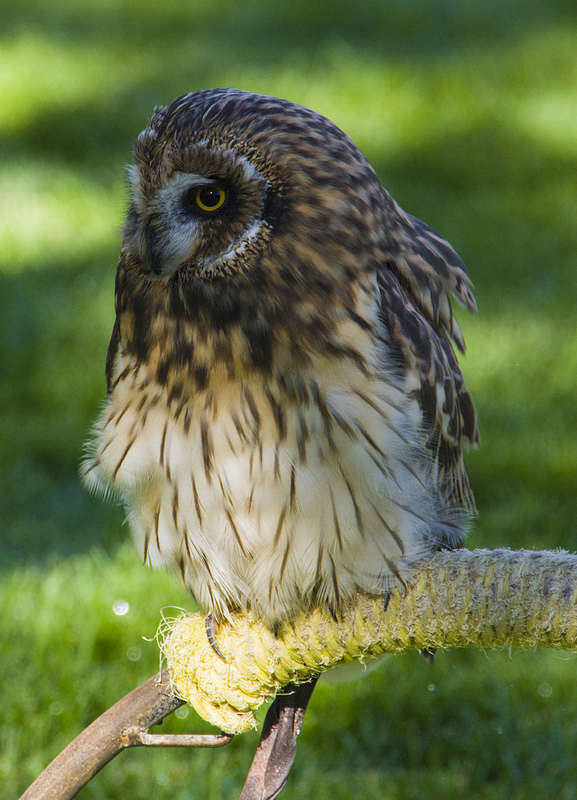
The Short-eared Owl is quite possibly my favourite owl species.

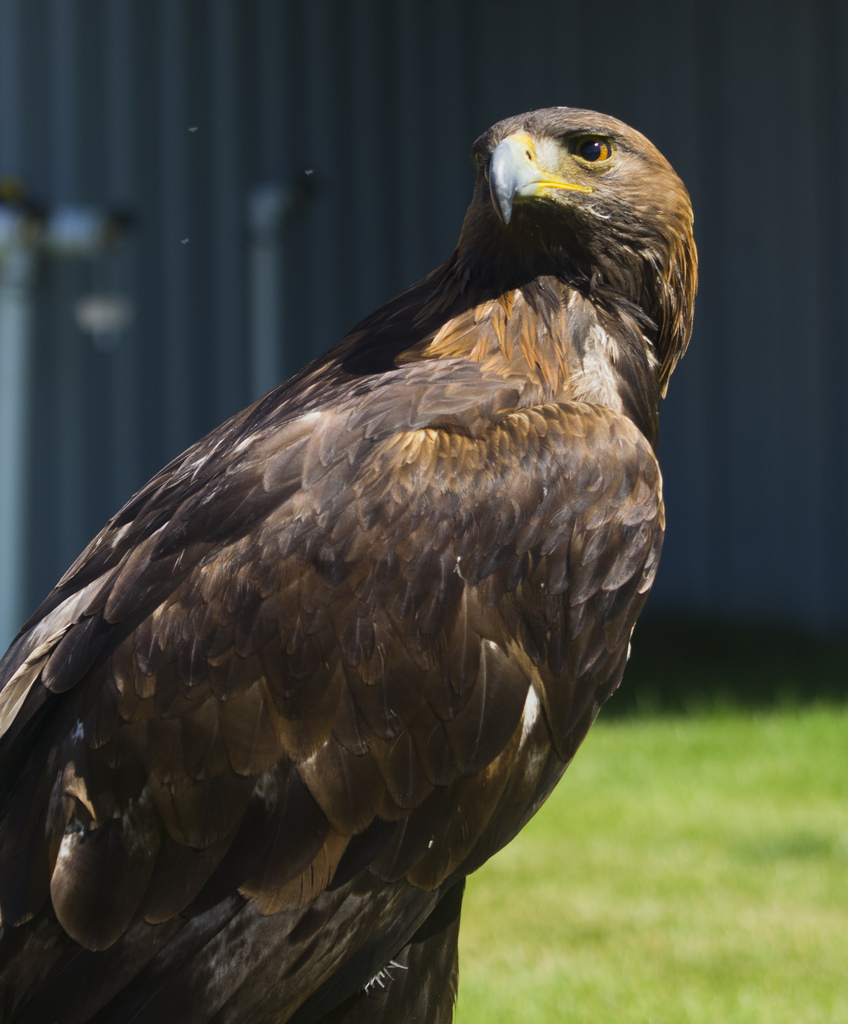
Spirit, the blind Golden Eagle

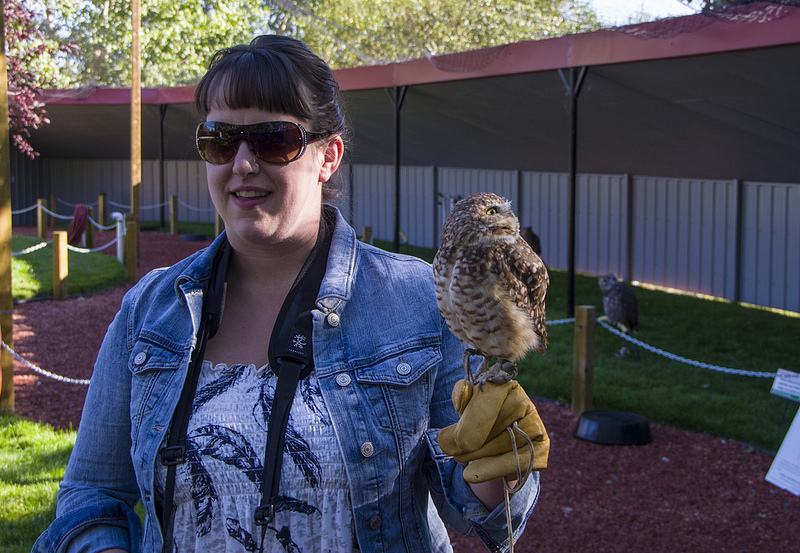
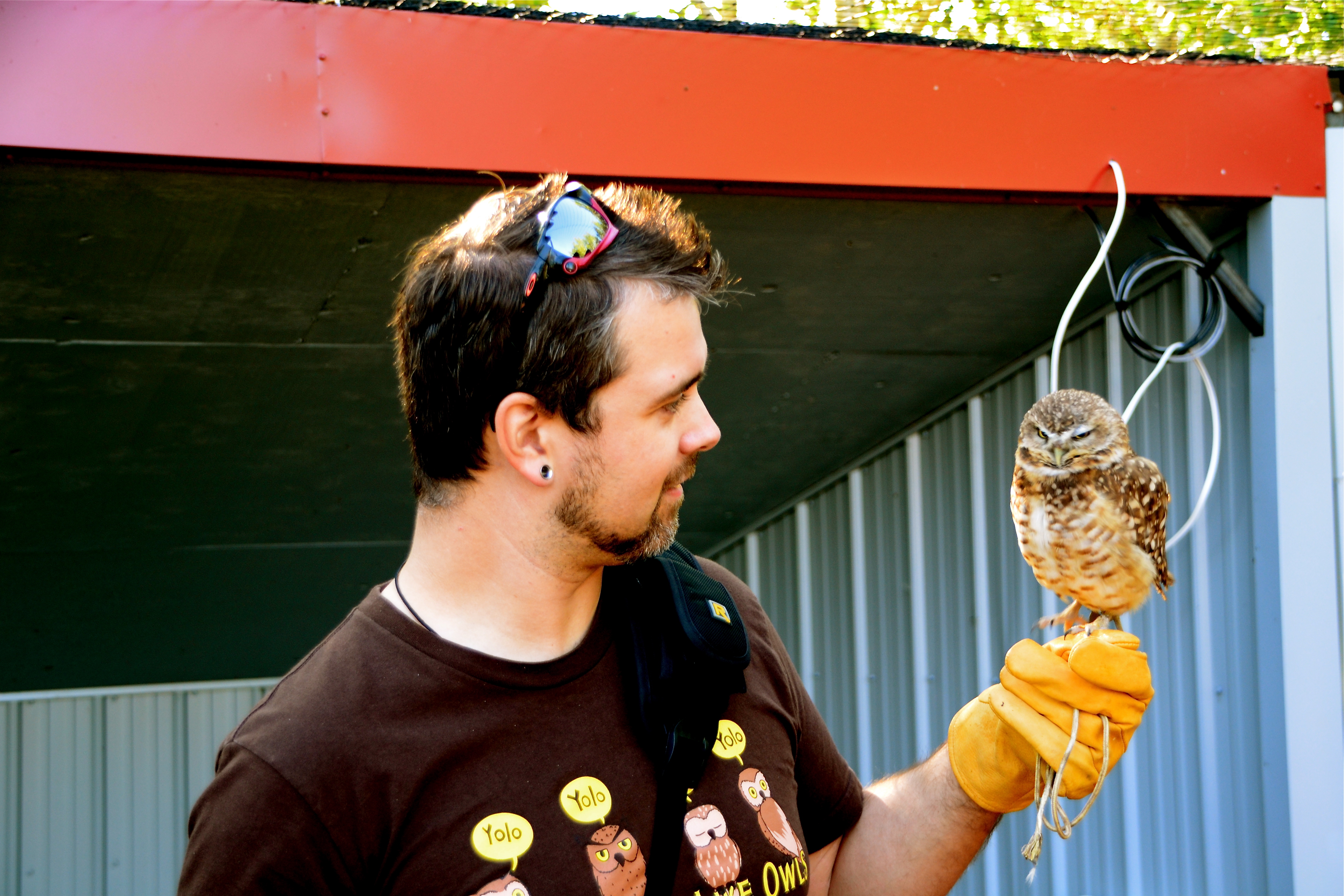
Lauren and Alex Jr., one of the Burrowing Owl mascots of the Birds of Prey centre.


Don’t we just look SO happy together?

It’s hard to narrow down from the dozens of pictures that I took here to figure out just which ones are the best and which ones to post. Even looking over the post now, I know I’ve missed a few species and quite a few great photos that would represent them, but really, it’s worth going and visiting for yourself. They’re open this season until September 10, 2012, and will reopen to the public early next May. Why are you still reading this? Get down there and visit them for yourself!

Birds and Beers reminder – August 28

Posted by Dan Arndt

Just a reminder to all those interested that the next instalment of Birds and Beers is this coming Tuesday, August 28, at Pat Bumstead’s. Her back yard is host to, as counted at the June B&B, Mourning Doves, House Finches, American Robins, and a number of other birds flitting in and out to the feeders while we engaged in some lengthy conversations and a few drinks. To RSVP, email us at birdscalgary@gmail.com for directions!

Hope to see you folks out there!


Sunday Showcase: More on Loons

Posted by Matthew Sim

Here are some more Loon shots from my camping trip; enjoy.

Rare Bird Alert Calgary: Aug 23

Have you seen an unusual bird in Calgary?

If it is on this Reportable_Birds (PDF), please report it to the Nature Calgary Rare Bird Alert line at 403 221-4519 and leave a message after the beep at the end of the recording. If you would like some help with species identification, email us at birdscalgary@gmail.com.  To report injured wildlife call the Calgary Wildlife Rehabilitation Society at 403 239-2488, or the Alberta Institute for Wildlife Conservation at 403 946-2361.

Rare Bird Alert August 23

Aug 19:
PILEATED WOODPECKER E of Bebo Grove Pk lot, FCPP, Carla Holowatinc.

Aug 20:
WESTERN SANDPIPER (1 juv), STILT SANDPIPER (250), at Hwy 799 & 338 Ave SE, Terry Korolyk.
WESTERN SANDPIPER, SEMI-PALMATED SANDPIPER (1000), STILT SANDPIPER (300), at 304 St SE 2 km S of Hwy 552, TK.
HUDSONIAN GODWIT, Weed Lake at Langdon, TK.

Aug 21:
MOURNING WARBLER juv, Glenfield, FCPP, TK.
CALLIOPE HUMMINGBIRD juv, AMERICAN REDSTART (20), Confederation Pk, Bill Wilson.

Aug 22:
BLACKBURNIAN WARBLER juv, MAGNOLIA WARBLER, SWAINSON’S THRUSH (2), PILEATED WOODPECKER,Glenfield FCPP, TK.
TOWNSEND’S WARBLER, Confederation Pk, Keith Sharke.
BLUE-HEADED VIREO, PHILADELPHIA VIREO, MAGNOLIA WARBLER Confederation Pk, BW.
CONNECTICUT WARBLER, BLUE-HEADED VIREO, Confederation Pk, David Pugh.
OLIVE-SIDED FLYCATCHER, RUBY-CROWNED KINGLET, IBS, Nature Calgary trip DP.

Rare Bird Alert August 20

Aug 16:
COOPER’S HAWK (2), SHARP-SHINNED HAWK, FCPP between Votier’s Flats and Bebo Grove, Al & Helga Borgardt.
PACIFIC SLOPE FLYCATCHER at Confederation Park, Bill Wilson.
OVENBIRD, AMERICAN REDSTART (4), IBS, Matthew Sim.
CONNECTICUT WARBLER (2), PHILADELPHIA VIREO (3), OLIVE-SIDED FLYCATCHER (2), IBS, Dan Arndt.
RUBY-THROATED HUMMINGBIRD, juvenile, and an unidentified hummingbird, in her yard in Southview, Carol Coulter.

Aug 17:
CONNECTICUT WARBLER, Hull’s Wood, FCPP, MS.
SAY’S PHOEBE, Lefarge Meadows, MS.

Aug 19:
AMERICAN REDSTART (6), Confederation Park, BW.
WESTERN SANDPIPER, 1 at NW corner of Weed Lake, 1 at Langdon Corner Slough,Andrew Hart with NC field trip.
HUDSONIAN GODWIT, E side of Weed Lake, as above.
SANDERLING, S end Weed Lake, as above.
WESTERN SANDPIPER, S end of Weed Lake, Bob Storms

The next scheduled update of the Bird Alert is on Monday Aug 27.

Nature Calgary Bird Study Group

Wednesday September 5 at 7:30pm: Raptors and Friends – presented by photographer Rob McCay.

Bird Study Group meets 1st Wednesday of the month, 7:30 pm, Room 211, BioSciences Building, U of C. Contact, Andrew Hart 403-279-5209

Migration at Hull’s Wood

Posted by Matthew Sim

Last week I rode my bike down to Hull’s Wood in Fish Creek P.P. twice to see how migration was coming along; I was not disappointed! As I rode through the woods both times, the chips of warblers and sparrows emanated from the trees and shrubs along the river. The woods were full of Yellow Warblers, Chipping Sparrows, House Wrens, Least Flycatchers and Warbling Vireos (not all of these were migrants) while several American Redstarts, Tennessee Warblers, Northern Waterthrushes and Baltimore Orioles were also present. There was also a single male Wilson’s Warbler, a single Yellow-rumped Warbler and a single Connecticut Warbler.

Least Flycatcher

Connecticut Warbler

Tennessee Warbler

This was all quite exciting but by 10:30 a.m. both days things quieted down for warblers so I went to Lafarge Meadows to check out shorebirds. Both days I found 6 species of shorebirds in Lafarge Meadows along the Bow River; Solitary and Spotted Sandpipers, Greater and Lesser Yellowlegs, Killdeer and Wilson’s Snipe.

Lesser Yellowlegs

Greater Yellowlegs

Migration is coming along well, so if you have the opportunity, get out there! There are lots of great spots in and around Calgary for migrating birds whether it be Inglewood Bird Sanctuary, Confederation Park, Weed Lake, Fish Creek P.P. or your own yard, find your favorite spot for migration and sit back and enjoy the show!

Beyond the reflection: the dangers of windows

Posted by Matthew Sim

As the fall migration starts to heat up and southbound warblers, vireos, flycatchers, sparrows and more pass through Calgary, birding can become quite exciting. While for us, this is a great time to be out and about, for the birds, it is dangerous; very dangerous. Migrating passerines (perching birds), for example, have to travel long distances all while on the lookout for predators such as hawks and cats, try to get food themselves and hope they don’t get caught in an early cold-snap which could potentially kill them. And this is just the beginning, there are even more dangers; one of them which is the most lethal of them all.

According to Sibley Guides Bird Mortalities, window strikes (when a bird hits a window) kill between 97 and 976 million birds each year, more than any other cause of bird deaths. (http://www.sibleyguides.com/conservation/causes-of-bird-mortality/).  I was in my neighbor’s yard when I noticed one of these fatalities on his patio. While I had been there, a migrating Ovenbird had struck his window and had died. Though birds can crash into  windows at any time of the year, window strikes tend to happen more frequently during migration as an influx of migrants come through unfamiliar territory, passing from tree to tree. As you can see in the photo below, it is quite easy for a bird to see its habitat reflected in a window and believe that it is simply another tree they are heading to; I’m sure most don’t know what hit them.

If I were a bird, I would probably fly towards these trees too.

Many bird populations are declining already due to a number of reasons and we don’t need to help them along with  reflective windows when we could easily prevent window strikes occurring.

This Ovenbird had struck my neighbor’s window while I was in his yard.

A closer look at the detail on the Ovenbird’s feathers

Probably the worst part of all this is that window strikes are senseless; it’s not like natural selection where it was meant to happen, window strikes are part of our devastating side effects on nature; however, they can also be easily prevented.

There are many ways to prevent birds from striking windows. If you are having birds fly from your feeders or bird baths into windows, you can either move these bird attracting features further away (25-30 feet) from the window or closer (1-3 feet) to the window so that if the birds do hit the window at just 1-3 feet they will not be going fast enough to do any harm to themselves.

Apparently, there is also a material called CollidEscape which can reduce reflectivity and transparency on the outside but still leave the windows transparent from the inside. You can check it out here.

Here are a few more options:

  • plant shade trees outside windows to break down reflections
  • install snap-on window dividers
  • put a hanging plant outside of the window

These are just a few of the ways you can avoid window strikes and help reduce the number of avian mortalities each year. Often, preventing window strikes can be as simple as closing the curtains or blinds when not using the windows. You can see even more solutions here.

If you have birds hitting your windows, there are many ways to stop it; help out bird populations!

Something old, something new

Posted by Matthew Sim

For the third straight year, on a camping trip to southeastern British Columbia, I watched a family of Common Loons as they went about their lives despite living on a very busy lake and getting quite a bit of disturbance from vacationing families. As we watched the parents (something old as I have seen them before) tending to their young (something new) I couldn’t quite help but be amazed at how they can continue call the lake home despite the popularity of the lake among campers.

This year, there were two young loons. You may remember from last year’s post that there was only one chick last year (last year’s post can be seen here). It was quite remarkable to watch how the adult loons worked together this year with two chicks instead of one; sometimes each parent would take care of one of the chicks while at other times, one parent would give the other a break and watch over both chicks for a while before the parents eventually switched.

Though loons can be very sensitive to disturbance, these loons seem to have adapted well to human presence. Also, there is no motorized boat traffic on their lake, so maybe they are fine with kayakers, canoes and swimmers.

Off to feed its young

Common Loons nest on small islands, muskrat lodges and sometimes on the shores of their lake if these shores are forested and undisturbed. They lay one or two (sometimes three) eggs and take turns incubating these eggs for 28-30 days before the black, downy chicks are hatched.  These chicks can swim  immediately and they leave the nest with their parents within 24 hours of hatching. Though they can swim, for the first 2 weeks they will often ride on their parents backs perhaps to stay warm and avoid predators. Within six to eight weeks the young will be the size of the adults but until about eight weeks, they will continue to be fed by their parents. I noticed that of the 2 chicks, one seemed to be very independent already while the other one stayed close to at least one adult. Perhaps they had hatched several days apart?

The more dependent of the two chicks being fed; or maybe it just enjoyed free food?!

By three months, mountain lakes such as this one start to get colder and eventually the loons will have to leave; by three months the young can fly. During the 4 days that I was there,  the young loons attempted flying a few times, though judging by all the splashing and flopping around, they still need some more practice.

Learning to fly

I found it quite interesting to observe the loons. Often, when I would watch them from a distance, patience would pay off and they would eventually swim quite close to me, within a few feet. The young ones seemed to be especially curious and would often linger around my raft. I had a great time watching the loons and spent many hours with them up close, learning different aspects of their lives. I got plenty of photos and as these seem to tell a story better than words I will leave it at that.

Travel Tuesday – Elk Island National Park

Posted by Dan Arndt

While this blog usually focuses on the birds in and around Calgary, many folks travel for work, for pleasure, or just to see new great birds in other areas of the province. In the last year, I’ve been up to Elk Island National Park twice, and each time has been absolutely amazing. I look forward to my next visit, and hope it’ll be sooner than next summer, but time is always fleeting and it can be hard to justify a trip without other things to do up there. Plus, with the Friends of Fish Creek Autumn Birding Course starting up in a few weeks, many of my weekends are spoken for!

The Beaver Hills region of Alberta, which includes Elk Island National Park, are a unique topographical area formed by the retreat of the glaciers at the end of the last ice age. As they melted and stagnated, they formed what is known as “kame and kettle topography”. Why is this important to birds, you might ask? These kettle lakes are home to tens of thousands of gulls, shorebirds, and a water source for the surrounding boreal forest that established along the top of the “kames” which are regional topographical highs. In many cases, these are up to a hundred meters higher than the surrounding landscape, and gently sloped on either edge, forming something similar to the foothills style landscape that we’re so used to around Calgary.

Over Heritage Day long weekend, we spent three days up there relaxing by the lake, enjoying the calm, serene waters, and weathering the sometimes frighteningly extreme weather.

Storm over Astotin Lake

This storm cell over Astotin Lake was so severe that we were asked to evacuate our campsite and take shelter in our vehicle.

Thankfully, the weather lightened up over the next two days allowing for some good sightings of some beautiful and amazing birds, some of which paid us many visits at our campsite over the weekend. This juvenile Yellow-bellied Sapsucker was part of a family group that spent every day in the trees nearby.

Yellow-bellied Sapsucker

Yellow-bellied Sapsucker

Western Tanagers are some of the most colourful birds we get in Calgary, and it was great to find not one but two breeding groups on hiking trails in the park.

Western Tanager

Western Tanager

The main campground is located a stone’s throw from Astotin Lake, which is home to dozens of Red-necked Grebes. Last year, there must have been nearly two-hundred just near the shoreline in late September, but this year, since it was a bit earlier, the numbers weren’t quite so high. The population was still healthy this August, as this adult shows.

Red-necked Grebe

A Red-necked Grebe finds his favourite fish breakfast.

Shorebirds were present in small numbers as well, though I would expect by this time, their numbers are much higher, and will continue to climb until late September as migration steps on its perpetual course. A few Semipalmated Sandpipers and Least Sandpipers seemed to be flocking with, and stalking, this Long-billed Dowitcher, who in turn followed around a Greater Yellowlegs every time it was startled and flew off in another direction.

Long-billed Dowitcher

Long-billed Dowitcher

Greater Yellowlegs

Greater Yellowlegs

Semipalmated Sandpipers (centre, left) and Least Sandpiper (front right).

One of my favourite shorebirds was present on the shores of Astotin Lake, and seemed to be the mother (or maybe father?) of at least three juveniles that tentatively poked their heads out of the long grasses every few minutes. This Killdeer kept a wary eye on me and would fly away any time I moved toward it, or toward the young ones, so I simply sat on a picnic table and waited for him to come to me.

Killdeer

Killdeer

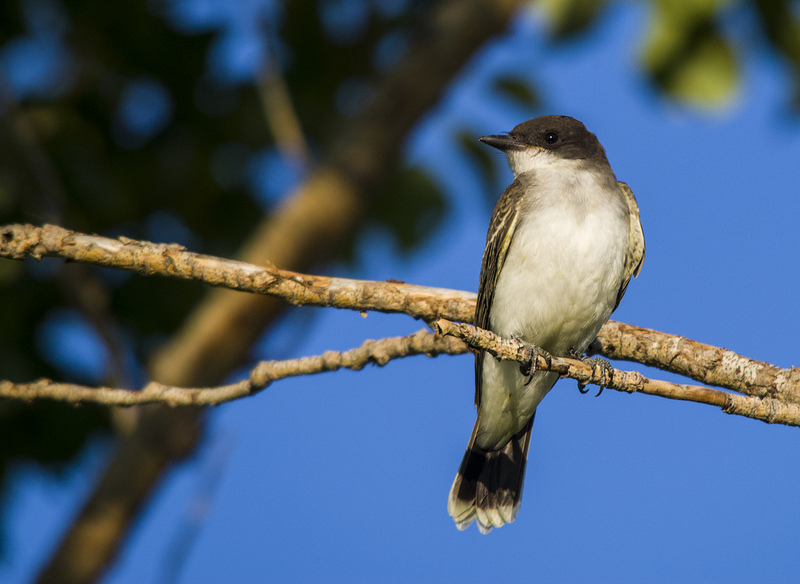
Some of the other birds present in good numbers were a couple of flocks of American White Pelicans, Song Sparrows, and even a few Eastern Phoebe made their presence known.

American White Pelican

American White Pelican

Evil Phoebe

This Eastern Phoebe looks downright evil with the flash reflection in its eye!

By far though, the flocks that outnumbered all other birds combined were the huge numbers of Barn Swallows swarming over the lakes, and the massive flocks of Franklins and Bonaparte’s gulls, both quickly losing their breeding plumage and entering their winter molts.

Mostly Bonaparte’s Gulls with a few Franklin’s Gulls thrown in just to make things interesting (and confusing!).


Good birding!

Sunday Showcase: Sandhill Crane

Rob English photographed this beautiful bird that his wife spotted on Grand Valley Road in mid-July.

Rare Bird Alert Calgary: Aug 16

Have you seen an unusual bird in Calgary?

If it is on this Reportable_Birds (PDF), please report it to the Nature Calgary Rare Bird Alert line at 403 221-4519 and leave a message after the beep at the end of the recording. If you would like some help with species identification, email us at birdscalgary@gmail.com.  To report injured wildlife call the Calgary Wildlife Rehabilitation Society at 403 239-2488, or the Alberta Institute for Wildlife Conservation at 403 946-2361.

Compiled by Terry Korolyk

Aug 13:
PURPLE FINCH, OLIVE-SIDED FLYCATCHER (3), ROSE-BREASTED GROSBEAK , HERRING GULL at Inglewood BS, Bill Wilson.
OLIVE-SIDED FLYCATCHER by bridge 5 , Marshall Springs, FCPP, Al Borgardt.

Aug 14:
WILSON’S WARBLER (8), AMERICAN REDSTART, NORTHERN WATERTHRUSH, SOLITARY SANDPIPER (2), Confederation Park, BW.
WESTERN SANDPIPER, slough at 304 St SE, 2km S of Hwy 552, and 19 species of SHOREBIRDS, slough at Hwy 560 W of Hwy 24, Richard Clarke.

Aug 15:
AMERICAN REDSTART (7), ROSE-BREASTED GROSBEAK, WILSON’S WARBLER, OLIVE-SIDED FLYCATCHER, Willow Pk, Matthew Sim.
TENNESSEE WARBLER (6), NORTHERN WATERTHRUSH at Hull’s Wood, FCPP, MS.
CANADA WARBLER, S end IBS, Pat Mitchell.

The next scheduled update of the Bird Alert is on Monday Aug 20.